-0.2 C
New York
Home Blog Page 344

RWE signs PPAs to supply electricity from German offshore wind farms

0

RWE Supply & Trading signs power purchase agreements (PPAs) for some 1,500 gigawatt hours (GWh) per year with eleven industrial customers as well as one large municipal utility

From 2025 and 2026 respectively, RWE’s Nordsee Ost and Amrumbank West offshore wind farms will supply eleven German industrial customers and one large municipal utility with green electricity. The relevant agreements were signed between RWE Supply & Trading and Badische Stahlwerke, Freudenberg group, Infraserv Höchst, Mainova, Messer, Schott, Telefónica, Verallia, Vodafone, Wacker as well as ZF.

The majority of the contracts will run for a term of ten years. Depending on customer requirements they provide for direct purchase (as produced), scheduled delivery with wind farm profile (as nominated), or delivery structured as a continuous electricity load (baseload delivery). Electricity produced at the two offshore wind farms was already sold based on PPAs to Deutsche Bahn in 2019, 2020 and 2021. With these most recent purchase agreements, all of the electricity generated by these wind farms from 2026 has been sold under contract.

Both wind farms currently receive funding under the Renewables Act (Erneuerbare-Energien-Gesetz, EEG), which is set to expire from 2024 and 2025 respectively. The sale of the electricity took place as part of a structured tendering process, in which the contracts were negotiated and concluded with the respective customers in parallel.

Ulf Kerstin, CCO of RWE Supply & Trading:

“The great interest of our customers in these power purchase agreements shows how important carbon-free electricity has become for the German industry. With these long-term contracts we are ensuring planning security for both parties and helping Germany to remain competitive as a location for production. We are preparing to market further electricity from offshore wind farms that are currently under development to supply industrial customers with high-quality green electricity.”

Both wind farms are located around 60 km off the German North Sea coast and have been producing electricity since 2015. The Nordsee Ost wind farm has a total of 48 wind turbines with a total installed capacity of 295 megawatts. Amrumbank West has 80 wind turbines with an installed capacity of 302 megawatts.
Incat poised to deliver the world’s largest, zero emissions, lightweight ferry

0

Incat Tasmania is currently in discussions to deliver the world’s first large, lightweight, zero emissions ferry.

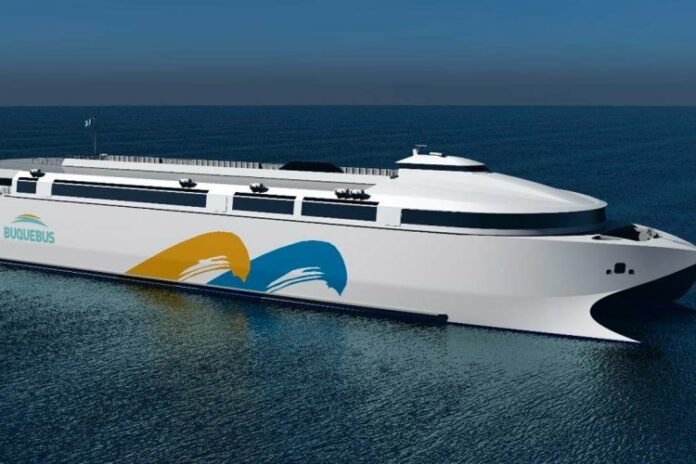
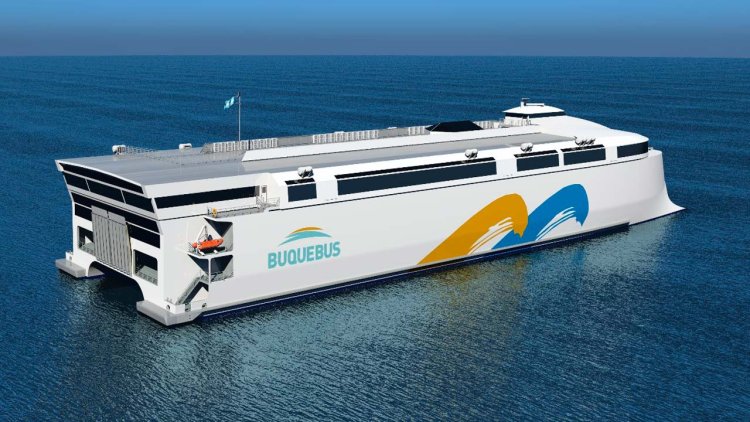
Amongst vessels under construction at the shipyard is a 130 metre lightweight ferry, originally intended to be powered by LNG, that will carry 2100 passengers and 226 vehicles for Incat’s long term South American customer, Buquebús. Following close consultation with the customer, Incat was recently asked to investigate the possibility of replacing the LNG powerplant with a battery-electric solution.

Whilst there are challenges to overcome, the ship which is to be delivered in 2025, when battery electric, would be the world’s largest, lightweight, zero emissions ferry operating on any route in the world.

Incat Group Chairman and Founder Robert Clifford said:

“the customer wants this to happen, Incat wants this to happen, and whilst there are matters to be finalised, I am extremely confident that Incat can deliver this ground-breaking ship. In my experience unless we see something come in from left field, this is a ‘done deal’.   

“Obviously, there needs to be sufficient energy supply in the ports that the ship would visit but we understand that this is progressing positively. The batteries and electric motors are being worked through with our suppliers, to ensure they can deliver the technology required in the timeframe we need them.

“Zero emissions shipping is the future and Incat based in Tasmania, one of the few places on the planet which has already delivered net zero, is now poised to revolutionise the world’s shipping fleet by delivering the world’s first zero emissions, lightweight ship.”.

Incat Managing Director Craig Clifford says this is a unique opportunity for Incat. Whilst there are always challenges if you change any aspect of the design of a ship part way through build, in simple terms, this is just swapping one method of propulsion for another: it will however have significant environmental benefits, and open up a whole new market for these types of vessels.

Former Tasmanian Premier and Incat’s Strategic Adviser Peter Gutwein said:

“delivering the world’s first large battery electric ferry for Buquebus would lead to exponential growth in the international market for large lightweight electric ships. 

“The world wants large, lightweight zero emission ships and we are already scaling up our workforce and production facility in readiness for what will be a significant expansion. 

“It will be a win- win for both the environment and for investment in long-term skilled jobs in Tasmania.”

SCA collaborates with ABS to develop a decarbonization strategy

0

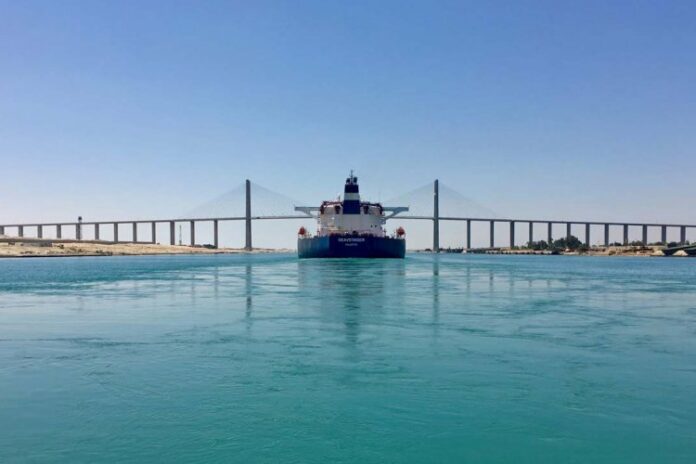
ABS and the Suez Canal Authority (SCA) signed a Memorandum of Understanding (MoU) to develop a long-term sustainability roadmap and decarbonization strategy for the canal, one of the world’s busiest shipping routes.

The MoU will see ABS and SCA work together on issues related to sustainability and the green environment as a part of the SCA’s business plan to transition to a green canal by 2030. Over the year-long agreement, ABS and the SCA will work together to develop a decarbonization strategy and assessment of energy and emission intensity and potential ways of emission reduction.

SCA and ABS will collaborate in developing a long-term sustainability roadmap and embedding sustainability as part of the SCA’s core business strategy with a wide range of services such as technology selection, benchmarking and target setting, regulatory compliance documentation, carbon accounting and verification energy audits and more.

Christopher J. Wiernicki, ABS Chairman, President and CEO, said:

“The Suez Canal is a vital artery for global trade. Ensuring environmental stewardship for trade will make a significant contribution to creating a more sustainable platform for the entire shipping industry. ABS is a leader in maritime decarbonization, and we are proud to be able to use our deep insight to address the complex set of challenges presented by such a key global waterway.”

Admiral Ossama Rabiee, Chairman of the Suez Canal Authority, said:

“We are keen to enhance cooperation with all partners such as ABS, in the field of maritime transport in areas related to environmental sustainability and carbon removal within the authority’s environment-friendly strategy, as a prelude to announcing the Suez Canal a ‘Green Canal.’ This is an important way to achieve environmental sustainability by raising the canal’s efficiency and reducing carbon emissions.”

Houlder collaborates with Blue Sea Power on gas-to-power projects

0

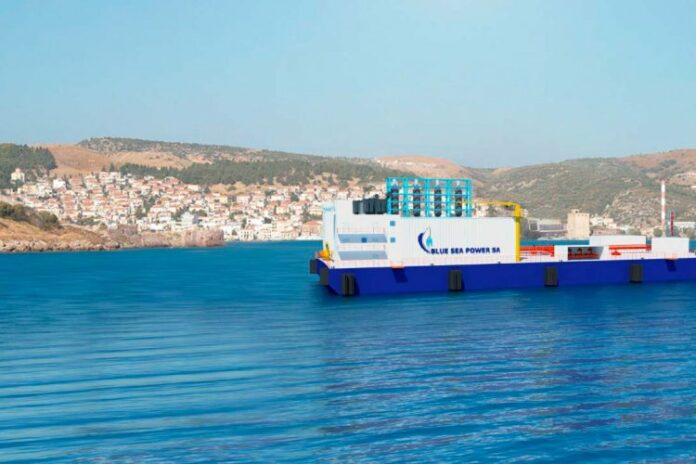
Houlder is collaborating with Blue Sea Power, an integrated energy solution provider as a gas-to-power company based in Athens, to develop three innovative floating LNG-to-power barges (FSRPs). 

The FSRP barges, which are set to be operational by 2025, will efficiently provide greener, lower emission baseload and peak power to the non-interconnected islands of Kos, Chios and Lesvos. This power will be used when existing renewable solar and wind energy utilisation is at its technical limits. The barges will replace the outdated and inefficient existing diesel and heavy fuel oil power generation infrastructure, whilst meeting the EU Taxonomy and new Greek Climate legislation. 

In the current phase, Houlder will complete the barge designs to a level that will achieve approval in principle by the class society, Lloyd’s Register, and will support Blue Sea Power with the design package for securing suitable tenders from shipyards. In a previous phase, Houlder completed the key decision studies on the main power generation engine selection, a cargo containment system, design standardisation, GHG reduction & efficiency options, and CAPEX, as well as an environmental study – looking at elements such as the impact on seawater temperature and noise pollution.

To adhere to ambitious EU greenhouse gas (GHG) emissions requirements, the barges must generate power efficiently. According to EU Taxonomy regulations on GHG emissions for new power plants in Greece, the limit is 270g of CO2 per e/kWh or a 20-year average of 550kgCo2/kWh. Houlder will therefore incorporate innovative, specialist solutions to meet and even exceed these standards.

Blue Sea Power barge solutions are RRF (Reconciliation Recovery Fund) eligible, where EU funding will cover a substantial part of the CAPEX for these additional GHG reduction measures. As the projects are ESG compliant, the team has also leveraged green funding effectively, which it has secured from multiple banks and investors to finance the project.

Boskalis takes on its hundredth offshore windfarm project

0

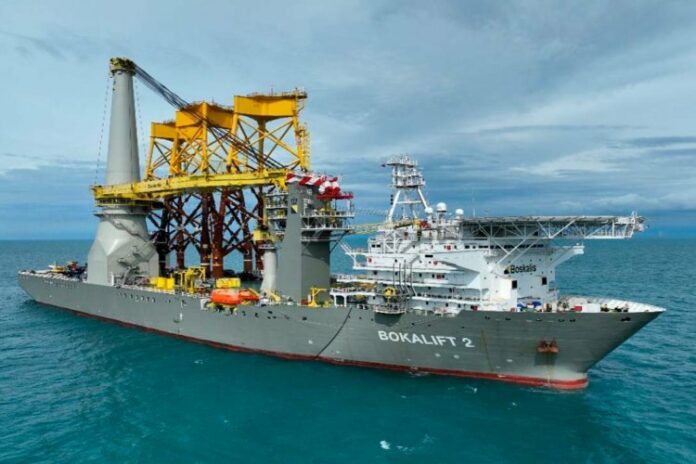
The Boskalis project scope includes the transportation and installation of the wind turbine foundations and power cables for which two crane vessels, several transport and cable-laying vessels will be deployed.

The contract marks a special milestone for Boskalis as this is the 100th offshore windfarm project that Boskalis has worked on over the past decade.

The award of this project follows a busy year for Boskalis in the offshore wind market. The crane vessels Bokalift 1 and 2, as well as the fallpipe vessel Seahorse were active on various projects in Taiwan, and with the survey fleet site investigation campaigns were carried out for numerous offshore wind projects in the United States and Europe, where Boskalis was also active with its cable-laying vessels.

Peter Berdowski, CEO Boskalis, said:

“We are proud to have reached the milestone of our 100th offshore wind farm with the award of this wonderful project. It illustrates the leading role we have established in the offshore wind market over the past decade. In those ten years, we were involved in the realization of almost half of all offshore wind farms worldwide, excluding the Chinese market. With our combination of hydraulic engineering and offshore activities, we are making a unique contribution to the global energy transition.”

Millport flood protection scheme awarded to Van Oord

0

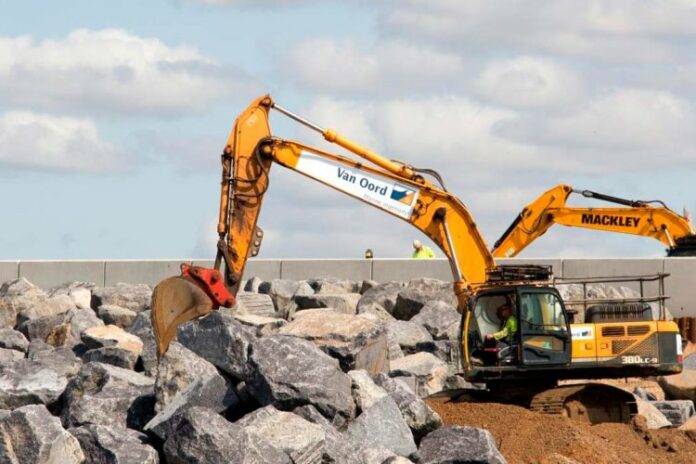
Van Oord will work in partnership with its subsidiary Mackley to deliver the scheme. Preparations have already started and construction is due to commence in March.

The scheme includes the works to improve the condition and flood risk performance of the approximately 2 kilometre-long Millport seafront. Van Oord’s work will include replacing, reinforcing and constructing flood walls, installing offshore and shore-connected rock breakwaters, and other flood risk management-related asset improvement and replacement works.

Van Oord has completed many similar coastal protection schemes in the UK before, such as at Lydd, Dymchurch, Hythe Ranges and the adjacent Broomhill Sands, as well as recently being responsible for construction of the South Breakwater of the new Aberdeen South Harbour.

Councillor Scott Davidson, Cabinet Member for Place of North Ayrshire Council, said:

“We are delighted to confirm the appointment of Van Oord, with support from a range of partners, as we progress with our flood protection plans for Millport. The Millport Flood Protection scheme will further protect properties and land on the islands. It is also important in an economic sense as it will allow us to pursue our ambitious plans for the new marina.” 

Paul Hesk, Managing Director of Van Oord UK, said:

“I am delighted that North Ayrshire Council has entrusted Van Oord with delivery of its critical coastal protection works at Millport. We pride ourselves on working collaboratively with clients in many different countries in their battle against flooding. Our project team is looking forward to working closely with North Ayrshire Council, the local community, and other stakeholders in order reduce flood risk at Millport.”

Wintershall Dea will exit Russia

0

The Wintershall Dea Supervisory Board approved a principle decision by the Management Board to exit Russia. As a consequence, Wintershall Dea intends to fully exit Russia in an orderly manner complying with all applicable laws and regulations.

CEO Mario Mehren:

“Wintershall Dea will end its Russian activities. Continuing to operate in Russia is not tenable. Russia’s war of aggression in Ukraine is incompatible with our values and has destroyed co-operation between Russia and Europe. In recent months, limitations imposed by the Russian Government on operations of Western companies in the country and external interferences in our joint venture operations, made it impossible for Wintershall Dea to operate in Russia as before and resulted in an economic expropriation of the Joint Ventures in Russia.”

The implementation of this decision will be done in compliance with all applicable legal obligations.

Wintershall Dea concluded that it no longer meets the criteria set out under IFRS for having control or significant influence over its Russian joint ventures. Therefore, in Q4, Wintershall Dea deconsolidated all its Russian participations. Until the intended exit is completed, the Russian participations will be accounted for as financial assets measured at fair value according to IFRS 9.

Following the deconsolidation, Wintershall Dea will no longer report financial or operational KPIs (including production and reserves) of the Russian joint ventures in its group financial statements, other than changes in fair value of the financial assets.

The fair value of the Russian joint ventures is significantly impacted by the external interference into the business models, namely, among others, the Russian Presidential Decree No. 943 dated 22 December 2022 and the decision of the Russian Government No. 2544 dated 30 December 2022 that retroactively reduces the prices at which the joint ventures can sell their produced hydrocarbons to Gazprom. Consequently, the company expects to record a non-cash loss from the deconsolidation of the Russian joint ventures that together with other Russia-related impairments, in particular on its participating interests in Nord Stream AG and WIGA Transport Beteiligungs-GmbH & Co. KG, amounts to a total of approximately €5.3 billion.

Since the start of the war in Ukraine, Wintershall Dea has prudently adjusted its financial framework and excluded Russian operations from its planning perimeter.

Having built significant flexibility during the year 2022, the company will take actions in line with its financial policy to maintain a strong balance sheet consistent with its investment grade rating commitment and in parallel profitably grow and diversify its business outside of Russia.

H2Carrier partners with Larsen & Tourbo to develop floating green hydrogen projects

0

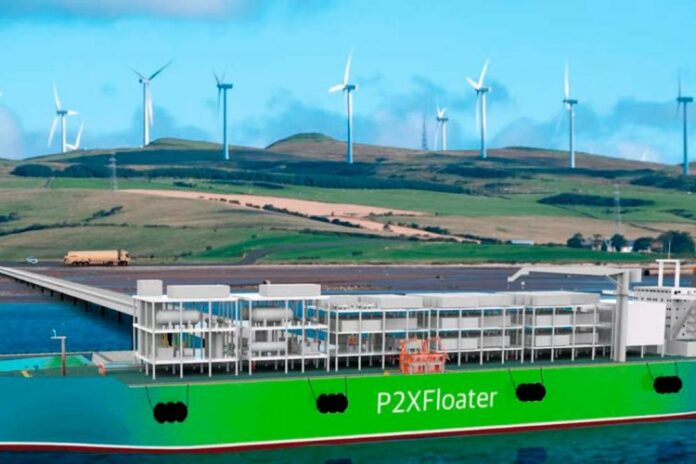
Indian multi-national Larsen & Tourbo (L&T) and Norwegian-based H2Carrier (H2C) have signed an agreement to cooperate on the development of floating green hydrogen and ammonia production projects.

H2C has proven expertise in developing and integrating PtX  projects based on affordable, often stranded, non-commercial renewable power. Under the terms of the MoU, L&T will become a partner for EPCIC of the topsides process plant.  

H2C plans to build the P2XFloater™ hull at yards in Asia while L&T will design & fabricate the topside  process & utility modules for the production of Green Hydrogen & Green Ammonia, including the Electrolysers, the nitrogen generation plant and ammonia synthesis. Installation and integration of  the topsides modules into the hull can be customised as per location preferences, i.e., can be carried  out in India or in other geographies.

L&T has been a leader for decades in the Indian Energy Industry, manufacturing critical equipment  and providing EPC services for the entire energy spectrum including Oil and Gas, Thermal, Renewables and Nuclear Power. The company, leveraging its expertise in the energy sector, has now positioned itself to emerge as a Green Energy major. L&T has over four decades of experience in building large-scale hydrogen, ammonia, methanol and derivative plants. Also, the company has an expertise in delivering comprehensive Modular Business solutions through its substantial experience in undertaking large-scale modularisation works for various applications for Onshore and Offshore projects as well as Power and Offshore Wind Farms. 

H2C is the designer and owner of the proprietary floating energy production and storage system  P2XFloater™, an industrial-scale floating green hydrogen and green ammonia facility. The concept is  based on proven floating production, storage and off-take technologies from the oil & gas industry in combination with an e-control system capable of balancing renewable electricity feedstock through a fully integrated electrolyser and Haber-Bosch system. H2C will build, own/lease and operate a fleet  of P2XFloaters™. The company has developed the P2XFloater™ concept in close co-operation with leading maritime and process engineering companies in Norway, thus building on decades of experience and competence from the Oil & Gas sector, the Marine Industry and the Offshore Wind Installation Industry. The P2XFloater™ has been awarded an AiP – Approval in Principle – by DNV. 

Mr. Subramanian Sarma, Whole-Time Director & Sr. Executive Vice President (Energy), said:

“To fast-track the progress towards the decarbonisation goals, out-of-the-box thinking and innovative  solutions are the need of the hour. In this regard, our partnership with H2Carrier is very timely and is expected to unleash synergies as we enjoy strong complementarities. We are delighted to  collaborate with H2C on their unique & novel P2XFloater™ design and we strongly believe that L&T,  with its globally recognised expertise in Ammonia & Hydrogen production as well as vast experience in design & fabrication of complex process modules, is poised to be the ideal partner for H2C in this venture.”

Mr. Mårten Lunde, CEO of H2C stated as follows:

“Our P2XFloater™ design represents a solution which addresses a number of concerns for renewable energy projects: costs, time, use of land and  environmental footprint, lengthy planning and regulation processes etc. By teaming up with L&T, we have taken a significant step towards creating an optimal supply chain for delivering P2XFloaters™ on a large scale to projects anywhere in the world. We are excited by the markets’ response to our  P2XFloater™, and through the collaboration with L&T, we are confident of being able to establish a  high and reliable production capacity to serve our global customers.” 

Valenciaport to train truck drivers in a new mobile app that will avoid queues

0

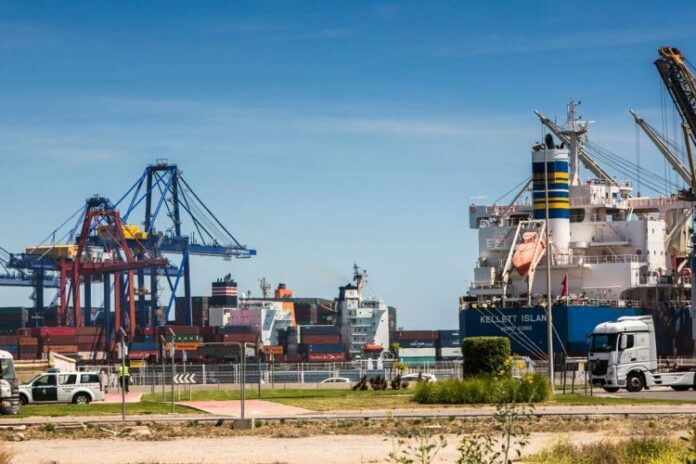
To train 5,000 truck drivers in 35 days in the use of an application (App) for mobile phones. This is the challenge that the Port of Valencia will be facing from Monday 16th January. 

A whole training company at the terminal that has set up the ValenciaportPCS -Port Community System- technological platform with the triple objective of reducing queues and waiting times for hauliers, speeding up container receptions and deliveries, and saving fuel and reducing CO2 emissions.

For months, the Port Authority of Valencia (PAV) has been implementing various alternatives to further streamline import/export traffic in the Port of Valencia to avoid congestion in the management of loading and unloading, and in temporary storage, whether in dry ports, container depots or terminals. In this process, the most technological of these alternatives will experience a boost in the coming days.

From Monday, in the transport support areas of the Port of Valencia and at each access gate to the container terminals of COSCO, APM and MSC, there will be trainers from ValenciaportPCS who will explain to the truck drivers how to enter and how to save time by using the application (App) that the port has designed for the transporters. The trainers will be ready to give explanations and answer questions about the new “Hauliers’ App” both individually and in groups. The trainers will attend the truckers for 35 days, from Monday to Friday, between 9:00 am and 13:00 noon.

An explanation of 10 to 15 minutes will be enough to learn how to track in real time the status of transport orders with origin or destination at the terminals. Through the App, transport professionals can find out what time they have to be at the port to unload a container, detect incidents in delivery orders, modify the number plate on the transport order or view live – through the port’s CCTV camera network – the traffic situation at any point in the port area. These are some of the applications of this new tool designed to make the day-to-day work of the carriers more efficient, effective and convenient.

The PAV has installed information panels at the entrances to the three container terminals and in the transport service area. The mobile application can be downloaded on both Android and iOS via QR codes. In addition, explanatory videos have been included which can be accessed via QR.

Quinto Shipping orders ‘Parsifal’ type inland waterway tanker from Concordia Damen

0

This also marks the switch, after 25 years, that family business Quinto makes from container shipping to tanker shipping.

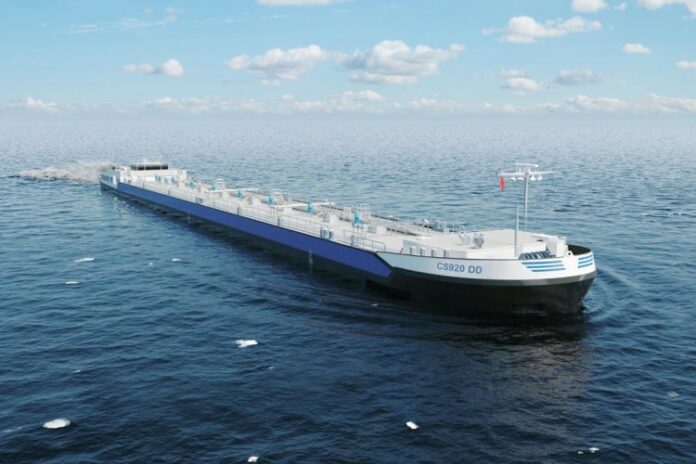
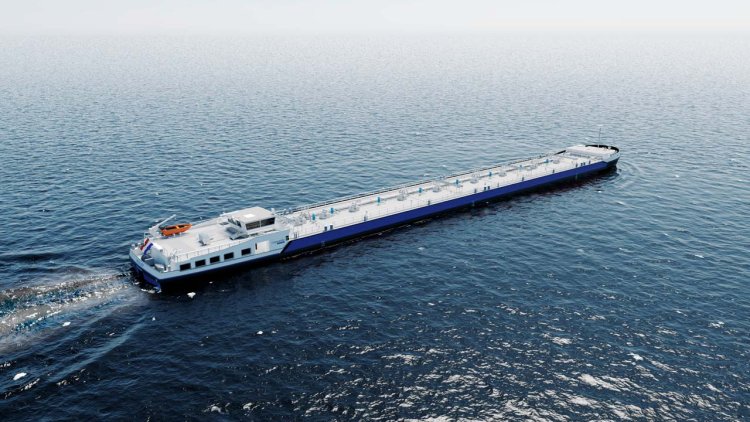
‘Quinto Scheepvaart’ has opted for a tanker of the Parsifal type, a new generation of mineral (oil and light chemicals) tankers that Concordia Damen has developed itself and several of which are already operational. This type of tanker measures 110 x 11.45 metres and has a large carrying capacity at a very shallow draft (2,875 tonnes at 3.25 metres). According to the shipyard, the efficient hull shape creates an optimal ‘speed-power curve’. After all, the ship reaches a high speed with a relatively low power: more than 22 km per hour with 2 x 500 kW engines.

The stern side installation will be split into two ‘houses’; a house for the family and a house for the crew. In addition, the design is adapted on a number of points to the specific wishes of the owner. CCM3, part of the Concordia Damen Shipbuilding, was chosen for the installation and finishing of the vessel.

Inland navigation entrepreneur Luit Nanninga of Quinto says:

“We had been planning to go into tanker shipping for some time. We came to Werkendam for repairs and were interested in the Parsifal tankers. After a conversation with managing director Chris Kornet, we visited the shipyard and viewed the ships. What particularly appealed to us was that this type was designed in such a way that it combines low resistance and a shallow draft with a large cargo capacity. This makes the ship more efficient and the transport per ton also more environmentally friendly.

Another advantage is that smaller propellers can be used, which is very useful when the river is low – something happening quote a lot these days. We quickly came to the conclusion that this barge was a good fit for us. Both my sons then went on a trial run, after which we decided to make a contract for construction and finishing. Of course we have a number of specific wishes and we have had good discussions about them. Concordia Damen nicely picked up on our wishes and adapted their basic design accordingly. We are very much looking forward to seeing our new vessel become a reality.”

Bert Duijzer, Technical Manager at Concordia Damen, says:

“Quinto Scheepvaart is a new customer for us and we are grateful to Luit Nanninga and his sons Nick & Renko with this assignment and the trust they have placed in us. It is also further proof for us that we made the right choice at the right time to build some of our proven designs on stock. In addition to a number of dry cargo vessels that we are building for stock, this tanker was already under construction, which means we can shorten the delivery time by months. That availability played an important role in the purchase, but for Quinto it was about the overall picture. Think of the combination of the proven Parsifal Tanker design, lead time, working method, quality and performance.”

Parsifal inland tankers are designed in such a way that the type of propulsion per ship can be adapted to the wishes of the customer: diesel-electric, diesel-direct or LNG-electric. That also happened here. The ship, with its home port of Zwijndrecht, near Rotterdam, will sail with Caterpillar engines and is Stage V compliant. The tanker is expected to be delivered within a year, in December 2023.