-1 C
New York
Home Blog Page 345

Provaris join forces with Norwegian Hydrogen to rePower the EU

0

Provaris Energy Ltd has executed a Memorandum of Understanding (MOU) with Norwegian Hydrogen AS to collaborate on the development on green hydrogen value chain projects in the Nordics.

The MOU provides a framework to jointly undertake a Concept Design Study to:

  • Review identified sites and select a preferred location suitable for domestic and export volumes of hydrogen.
  • Undertake a technical and economic review for the production and supply of compressed gaseous green hydrogen to nominated European ports.

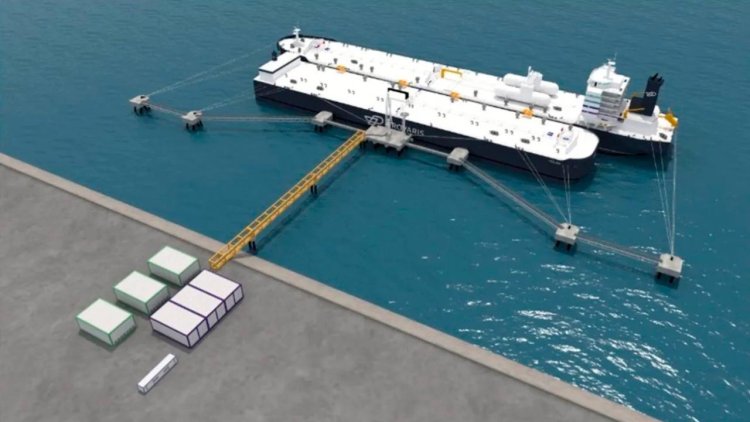
The scope of the study will include the renewable power supply, production of hydrogen, compression facilities, storage, infrastructure for jetty loading and unloading, Provaris’ H2Neo carrier, and import infrastructure required at identified import locations. Application for suitable funding schemes available through national schemes and the European Union will also be made.
Martin Carolan, Provaris Managing Director and CEO commented:

“The Nordic region offers several advantages that can include low-cost hydro power, proximity to offtake markets and supportive governments committed to supplying hydrogen to Europe. This collaboration also has strategic alignment with the development timeline of our H2Neo carrier and validation of the increasing interest for our compressed H2 transport solution for hydrogen supply into Europe.”

With the goal of an export supply chain to be in operation by 2027, the first step will be the completion of a Design Concept Study by the end of 1H2023, at which time the parties will agree on the location and scale of the first fast-track production and export project, responsibilities and timing for a detailed feasibility, along with the identification of additional collaboration partners to establish a green hydrogen value chain and export facility in the Nordics.

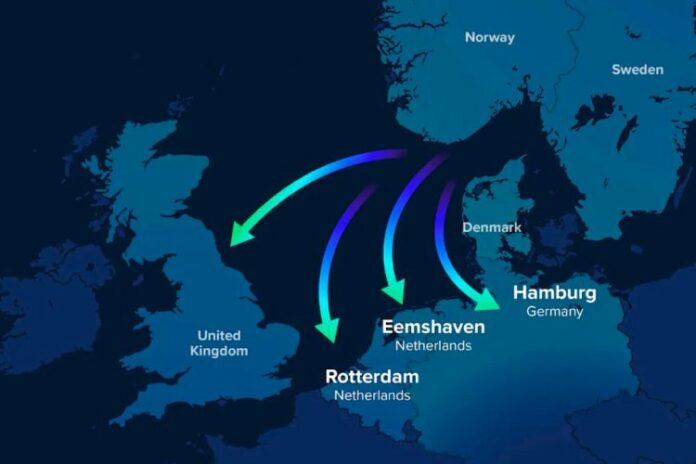
Provaris and Norwegian Hydrogen will focus on identified sites for green hydrogen export, with a short sailing distance to some of the major planned hydrogen import hubs in Netherlands and Germany. This includes sites in Norway, where the government recently announced its agreement with German counterparts for the export of hydrogen. Potential import hubs in the United Kingdom could have equivalent, and advantageous proximity to source location(s). At these short distances, Provaris’ proprietary compressed hydrogen H2Neo carrier has demonstrated to be very cost competitive compared to alternative transportation, storage and conversion vectors of hydrogen. The scope of the MOU will focus on the development of the full value chain, including production, maritime transportation, and distribution to off-takers.

Germany and the Netherlands are considered key import locations in the European Union, and both countries are well advanced in planning and developing hydrogen backbones / pipelines that allows for advantageous integration and operations with Provaris’ compressed hydrogen solution.
Yara looks to ramp-up German hydrogen imports

0

This equates to roughly 530,000 tons of hydrogen and will help speed up the hydrogen economy in Germany.

Ammonia is a hydrogen carrier of energy for use in the transport sector and as a carbon-free shipping fuel. It may also be used as an emission-reducing additive to coal-fired power plants. Yara aims to increase its production of clean ammonia globally to be able to supply Germany’s emerging market.

Yara made the announcement during Vice-Chancellor Dr. Robert Habeck’s visit to Norway.

“Dr. Habeck and other German leaders have been crystal clear in their ambitions to ramp-up the hydrogen economy. As a response, I’m proud to say that Yara has identified a substantial potential to increase ammonia imports to Germany in line with growing market demand”, says CEO of Yara International, Svein Tore Holsether.

“By summer 2023 our export terminal in Brunsbüttel will be modified to import as well. In addition, the terminal in Rostock can increase the imported volumes. In total Yara would be able to deliver 3 million tons of clean ammonia if demand is there. With additional tank capacity we can expand our import capacity much further”, says Yves Bauwens, Plant Manager in Brunsbüttel.

Following one of the greatest German inventions in the 20th century, Yara has almost 100 years of experience using the Haber-Bosch process to produce ammonia. Today Yara is the world’s largest ammonia distributor with the largest global production- and transport infrastructure. Already a major hydrogen player, Yara produces and consumes approximately 7% of European hydrogen.

Yara’s subsidiary Yara Clean Ammonia is currently rolling out a portfolio of decarbonized ammonia production. Green ammonia is produced with renewable energy and electrolyzers. The carbon emissions from blue ammonia production are captured and permanently stored. Together they amount to clean ammonia.

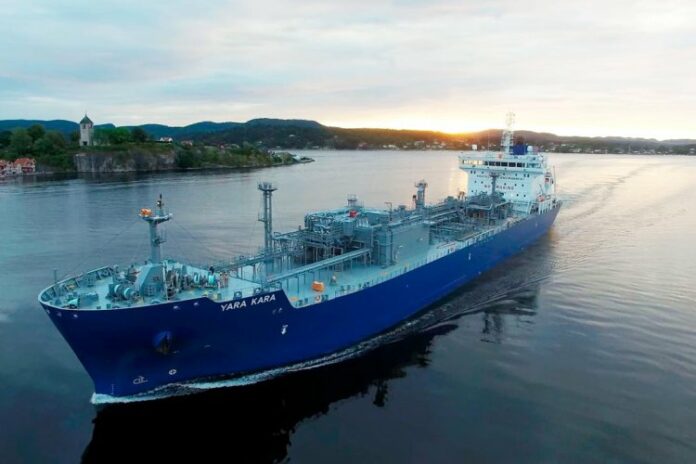
“As we develop our decarbonized projects across the world, we will import clean ammonia to Germany using Yara’s fleet of ammonia carriers, the largest in the world”, says Magnus Krogh Ankarstrand, President of Yara Clean Ammonia.

New ammonia storage requires significant investments in addition to operational and safety experience. Yara’s existing assets and competencies will be critical for a speedy ramp-up.

“Yara operates two deep sea terminals for ammonia in Brunsbüttel and Rostock. In Rostock Yara currently imports 600 kt of ammonia annually. This is Germany’s largest ammonia storage capacity”, says Thomas Schmitz, Plant Manager in Rostock.

“Yara Deutschland and Yara Clean Ammonia are excited to be working closely with the German Government on a local and federal level and with German business partners to enable the German hydrogen economy through its ammonia infrastructure and almost 100 years of operational experience”, says Magnus Ankarstrand.

Advent and Alfa Laval partner in marine fuel cell development project

0

Advent Technologies Holdings has announced that it will collaborate with Alfa Laval on a project to explore applications of Advent’s methanol-powered high-temperature proton exchange membrane (HT-PEM) fuel cells in the marine industry.

Funded by the Danish Energy Technology Development and Demonstration Program (“EUDP”), the project is a joint effort between Advent, Alfa Laval and a group of Danish shipowners. The project will focus on testing Advent’s methanol-powered HT-PEM fuel cells as a source of marine auxiliary power. During the course of the project, the fuel cell system will undergo a risk assessment by a leading international classification society.

At the same time, the project aims to integrate the next generation of Advent’s fuel cells. These fuel cells will be based on Advent’s next-generation membrane electrode assembly, which is currently being developed within the framework of L’Innovator, the Company’s joint development program with the U.S. Department of Energy’s Los Alamos National Laboratory, Brookhaven National Laboratory, and the National Renewable Energy Laboratory. Aiming to meet the ever-growing power requirements of the maritime industry, Advent’s next-generation fuel cells are expected to demonstrate a significant increase in lifetime, efficiency, and electrical output.

Advent’s technology enables its fuel cells to operate at high temperatures of between 160°C and 220°C and serve as a reliable source of on-demand power across various applications and industries, including shipping, power generation and heavy-duty mobility. The Company’s HT-PEM technology can utilize low-cost and abundant hydrogen-carrier fuels, like methanol, e-methanol and biomethanol. Methanol in particular has attracted substantial interest as a future fuel for the marine industry, and Advent’s HT-PEM fuel cells operate perfectly on methanol, using an integrated reformer.

Dr. Vasilis Gregoriou, Advent Technologies’ Chairman and Chief Executive Officer, commented:

“The Advent team is dedicated to accelerating the decarbonization of the shipping industry. Our Serene fuel cells run on methanol – a clean alternative to fossil fuels – which is safer to handle than hydrogen gas and can be easily deployed on-site. Over the past months, we have received significant interest from the marine industry for our methanol-powered fuel cells. This gives us optimism about the future and our contribution to the industry’s goal of net zero by 2050.”

Jeroen van Riel, Alfa Laval’s Business Development Manager for Marine Energy Solutions, stated:

“We are excited to see the result of this promising collaboration with Advent, an experienced partner with innovative fuel cell products deployed in the field today. We are convinced that HT-PEM technology has great maritime potential and look forward to further exploring Advent’s differentiated technology as the marine industry moves towards decarbonization.”

Allseas secures more T&I work for offshore wind industry

0

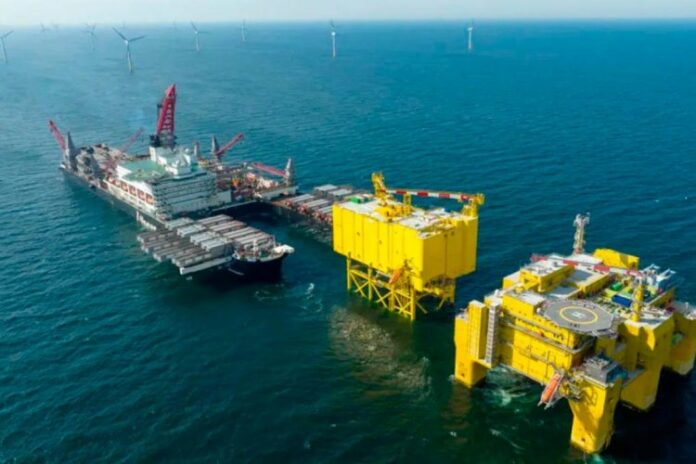
Aker Solutions and Siemens Energy will provide grid connection infrastructure for the Norfolk Boreas Offshore Wind Farm.

On 15 December, the former awarded Allseas with the T&I contract for the Boreas high voltage direct current (HVDC) converter station.

Located 47 kilometres off the Norfolk coast and with a capacity of 1.4 GW, Norfolk Boreas is the first phase of Vattenfall’s Norfolk Offshore Wind Zone.

Allseas also has T&I options for two similar HVDC platforms for the neighbouring Norfolk Vanguard wind farm, pending an investment decision by Vattenfall.

The Wind Zone will produce enough renewable electricity to power around 4.6 million homes and save around six million tonnes of CO² when fully operational.

The three platforms – Boreas, Vanguard East and Vanguard West – will house HVDC conversion technology. Topsides weights are between 10,000 and 11,300 tonnes, with the jackets weighing about 3000 tonnes.

DP World and Maersk enter long-term partnership at Jebel Ali

0

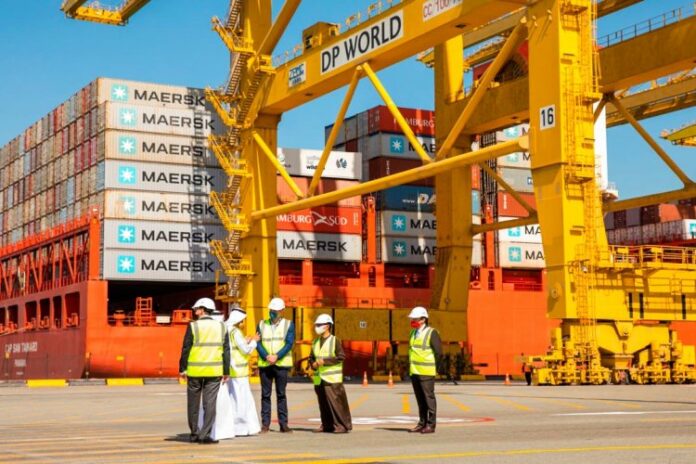
DP World has teamed up with global shipping services provider A.P. Moller-Maersk (Maersk), to improve operational efficiencies, enhance customer service and collaborate on decarbonising.

The long-term strategic partnership will provide support for Maersk’s customers and implement new processes to improve quayside productivity, all leading to faster gate turnaround times at Jebel Ali Port and reduced bunker fuel consumption.

These are alongside visibility tools, which will allow Maersk’s customers to benefit from real-time information relayed by DP World to plan their supply chains better and ultimately cut their carbon emissions. Maersk will deploy two of its solutions for customers moving their cargo through Jebel Ali — Maersk Accelerate, a fast-tracking service through priority cargo handling, and Maersk Flex Hub, a cargo storage solution.

Jebel Ali Port is a leading international gateway port, ideally located to serve the East-West trade corridor connecting to 150 cities globally. Lowering carbon emissions is a common goal for both companies and increasingly demanded by customers, who sit at the heart of every decision the companies take. Maersk and DP World will continue collaborating to create new solutions, such as warehousing to drive better customer experience in the future.

Shahab Al Jassmi, Vice President – Ports & Terminals, DP World UAE said: “Jebel Ali’s success has been built on progressive collaboration with partners such as Maersk, enabling us to combine our operational efficiencies and expertise to ensure we deliver the best end-to-end solutions to our customers. This synergy has allowed us to develop a successful ecosystem at Jebel Ali that continues to evolve and adapt to the dynamic markets we operate in. We will embark on this journey together to exceed our customers’ expectations.”

“This collaboration lets us offer solutions to help a key customer and reliable partner like Maersk to achieve their own sustainability goals. It sits alongside our own commitment to cutting our global CO2 emissions by nearly 700,000 tonnes over the next five years, in part by terminal vehicle electrification, sourcing renewable energy and increasing low carbon fuel use,” Al Jassmi added.

“In our journey as an integrated logistics provider, we look at every opportunity that can create value for our customers. DP World’s Jebel Ali Port has been a strategic partner to us for many years, and we have now extended our partnership with a clear focus on improving service delivery to our customers while reducing the carbon footprint through our operations together”, said Mads Skov-Hansen, Head of Ocean Customer Logistics, Maersk West & Central Asia.

In January 2022, DP World entered a strategic partnership with the Mærsk Mc-Kinney Møller Center for Zero Carbon Shipping, an independent, not-for-profit organisation launched in 2020 to undertake intensive research and development to find practical ways to decarbonise the global maritime trade industry.

Maersk itself aims to reach net zero emissions by 2040 across the entire business with new technologies, new vessels and green fuels. DP World has committed to becoming a carbon neutral enterprise by 2040 and net zero carbon enterprise by 2050.

DP World Group Chairman and CEO, Sultan Ahmed Bin Sulayem announced plans in November to invest up to $500 million to cut CO2 emissions from its operations by nearly 700,000 tonnes over the next five years. The reduction in carbon emissions represents a 20% cut from 2021 levels, through electrifying assets, investing in renewable power and exploring alternative fuels.

Norvic Shipping expands bulk capacity with new long-term charter

0

The deal was signed in Norvic’s New York head office with reputed Japanese shipowner Fujimaru Kaiun, represented by the company’s president Mr. Jiro Nishikawa. Norvic was represented by AJ Rahman, Group CEO, and Michael Fenger, COO & Global Head of Chartering. 

The new 64,000dwt Ultramax, to be named Norvic Copenhagen, will transport dry cargo for customers around the world following its delivery from Imabari Shipyard, Japan in Q2 2023. 

“Norvic has decided to take newbuilding’s into our fleet of 125 vessels in response to our growing business and to meet our commitment to new environmental regulations such as the IMO’s Carbon Intensity Indicator (CII),” said AJ Rahman.

Chartering more newbuilds from Japan on five- to eight-year terms is part of Norvic’s plan. The company also aims to expand its fleet and diversify its service offering in the coming years with the expected delivery of two additional Japanese handymax vessels on long-term charters by the end of 2023.

“Having rapidly established Norvic Shipping as a leading international dry bulk operator, we’re now focused on deepening our existing capabilities by building our own fleet, providing new services and further extending the company’s global reach,” AJ Rahman added.  

Norvic Shipping recently secured a $42.5 million working capital credit facility to finance its growing physical presence in key markets.
 

Damen, NAPA and BV deploy 3D classification approvals for first ship design

0

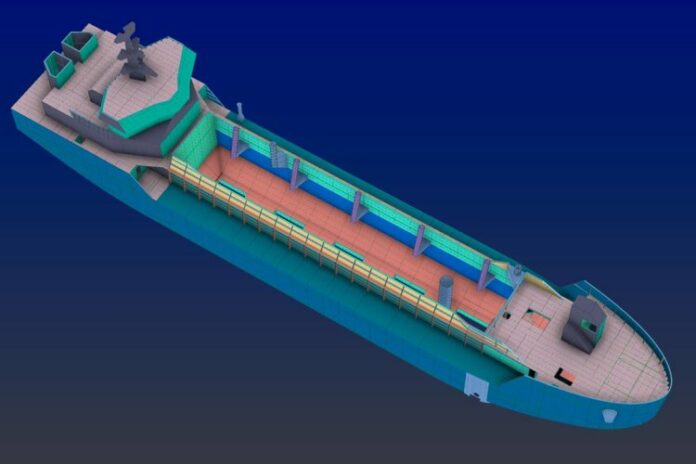
Damen Engineering has announced the completion of its first vessel design to be entirely created, reviewed and class-approved using 3D models in collaboration with leading classification society Bureau Veritas (BV) and global maritime software provider NAPA.

The 2500 m3 dredger concept is the first Damen vessel concept to receive BV certification using 3D model-based classification approval (3D MBA) – a process in which class societies review and approve designs using 3D models rather than 2D drawings, the current norm. Following this successful implementation of 3D MBA, Damen has confirmed that the process is already being applied to further designs including a 1000 m3 and a 4000 m3 hopper dredger.

These 3D model-based designs and approvals are supported by NAPA’s cutting edge technology which enables Damen and BV to work collaboratively on the same 3D model throughout the design and review process. From the very first project, the deployment of 3D MBA has yielded positive results, streamlining communication and saving time. Critically, 3D MBA also eliminates a major potential source of errors, as Damen no longer needs to translate the 3D models it uses to design vessels into 2D drawings for class approvals, and then back again into 3D to implement the changes.

This first approval follows a partnership between NAPA and Bureau Veritas to implement 3D model based approvals using a neutral OCX file format generated by NAPA Designer that enables BV to perform its prescriptive rule checks and calculations utilizing its in-house tools MARS and VeriSTAR Hull.

Kasia Romantowska, Managing Director of Damen Engineering Gdansk, part of the Offshore and Specialized Vessels Division of the Damen Group, commented:

“From the outset, 3D model-based approval has delivered on its promises, helping our teams save valuable time. We have been using NAPA’s 3D design tools for a long time and being able to go through classification reviews and approval on the same 3D model is a game-changer. Now, all stakeholders in the design process have access to a single, reliable and real-time source of information and this is key to facilitate communication and limit the risk of errors. For Damen Shipyards Group, deploying 3D MBA is also an example of our constant commitment to innovation and this move will help us deliver the safe, reliable, efficient and sustainable ships that will help our clients achieve their goals, whether it is to reduce their environmental footprint or improve their performance.”

Mikko Forss, Executive Vice President at NAPA Design Solutions, said:

“Implementing 3D models throughout the design and approval processes of new ships is the way of the future, unlocking a new level of collaboration and information-sharing in the ship design process. This creates a win-win situation that helps teams innovate together, enabling them to make the most of time and resources to deliver the best possible designs. This is particularly important at a time when the decarbonization transition is increasing the pressure on designers and shipyards to create a new generation of greener and more efficient vessels, and incorporate new fuels and technologies on board.  We are proud to see 3D MBA supporting real-life projects today and this is thanks to the pioneering spirit of all partners, supported by robust, transparent and comprehensive digital tools.”

Laurent Leblanc, Senior Vice President Technical & Operations at Bureau Veritas Marine & Offshore, said:

“We are delighted to deliver this approval for Damen’s 2500 m3 dredger concept which is the result of our collective determination to make 3D model-based approvals a reality in our industry. This milestone demonstrates the effectiveness and viability of 3D MBA to support closer and more efficient collaboration between designers and our classification surveyors while ensuring that all safety and regulatory standards are met. This collaboration with NAPA and Damen is a tangible demonstration of BV’s commitment to work with pioneers in our industry, supporting the safe innovation needed to meet the safety and sustainability challenges ahead.”

Proposed requirement for zero emissions in the world heritage fjords by 2026

0

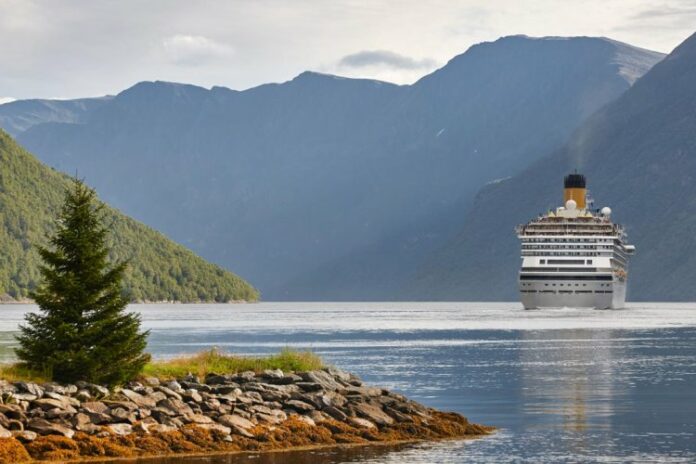
On 2 January 2023, the Norwegian Maritime Authority (NMA) submitted a proposal for a regulation regarding emissions of the greenhouse gases carbon dioxide and methane in the world heritage fjords and the use of the best available technology to reduce nitrous oxide emissions

The amendments will enter into force on 1 January 2026. To give regional authorities and other affected parties a realistic opportunity to adjust and adapt to the new requirements a transitional arrangement is being proposed, permitting the use of biogas under certain circumstances.

This will help ensure that the world heritage fjords will remain ports of call beyond 2026. The proposed measures will reduce the emissions in the world heritage fjords and contribute to preserving the world heritage fjords.

“It has been important for the NMA to stand by the requirement from the Storting to achieve zero emissions in the world heritage fjords by 2026. We want to be a driving force for the green development, and we believe that the industry will succeed,” says Director General of Shipping and Navigation, Knut Arild Hareide.

The NMA has been working with the assignment since March 2022. According to project manager Henrikke Roald, it has been challenging to maintain the balance between a requirement for zero emissions on the one hand with, on the other hand, the wish to facilitate future port calls.

“It is our opinion that the proposed transitional arrangement, permitting the use of biogas, will provide regional authorities and other affected parties a realistic opportunity to adjust and adapt to the new requirements,” Roald remarks.

Opinion: England’s single-use plastics ban is a win for our ocean

0

The ban will cover some of the most common items collected by International Coastal Cleanup volunteers.

On Monday, January 9, the United Kingdom Department for Environment, Food and Rural Affairs (DEFRA) confirmed to multiple news outlets that it is planning to ban the use of some single-use plastics in England. 

The plan, which will cover plastic plates, trays, bowls, cutlery, balloon sticks and certain kinds of polystyrene cups and food containers, will be officially announced on Saturday, January 14. Nicholas Mallos, Ocean Conservancy’s Vice President of Ocean Plastics, issued the following statement in response:

“England’s announcement is a huge win in the growing global movement to reduce our reliance on single-use plastics. In the last 12 months alone, we’ve seen the passage of landmark legislation in California; expansive limitations on the import and manufacturing of single-use plastic items in Canada; and strict bans on plastic cutlery, plates, beverage stirrers and foam food containers in Scotland and Wales.

“These actions are critical for the health of our ocean: in the nearly four decades that Ocean Conservancy has mobilized the International Coastal Cleanup®(ICC), volunteers worldwide have collected more than 381 million pieces of trash from beaches and waterways, the majority of which are food and beverage related items like those covered in England’s new rule. In the U.K. alone, volunteers with our partner Marine Conservation Society have collected 60,515 pieces of plastic cutlery, 44,891 plastic cups and plates, and 35,529 foam takeaway containers as part of the ICC.

“Not only do bans immediately prevent more plastic from entering the ocean, they also clean up recycling streams and play an important role in catalyzing the needed transition to reusable systems. Ocean Conservancy is thrilled that England has taken this critical step to phase out these harmful single-use plastics, and we look forward to seeing the ban implemented.”

Six-week science voyage deep into the waters of Antarctica

0

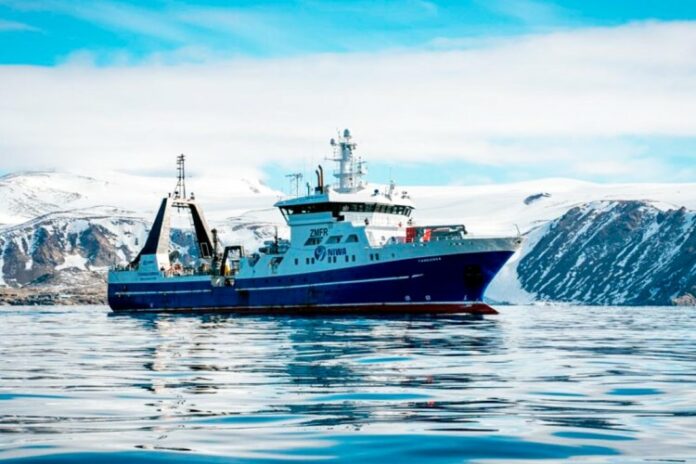
As New Zealanders search for the summer sun, 38 researchers and crew will board RV Tangaroa for a six-week science voyage deep into the waters of Antarctica.

The multi-disciplinary research team will sail more than 3500km south aboard NIWA’s ice-strengthened research vessel. They will undertake a packed science programme focused on the ecosystem and ocean physics within the Ross Sea.

A key focus of the voyage is the 1.5 million km² Ross Sea Marine Protected Area (MPA), which is the world’s largest and protects some of the most productive ecosystems in the Southern Ocean.

Voyage leader and NIWA’s Ocean Strategy Manager Joshu Mountjoy says the rich waters support the large seasonal blooms of plankton and other microscopic organisms at the base of the Antarctic food web:

“The MPA is vital to protect the Ross Sea from unregulated fishing and exploitation. To manage this properly we need a sound understanding of the food web and how changes will impact different parts of it.”

The seas also provide breeding grounds for a host of important fish species, including toothfish, and are also home to megafauna such as penguins, seals, and whales.

The MPA was established in 2017 as a result of a joint New Zealand/United States initiative. New Zealand is committed to on-going research to understand changes in this unique ocean environment and how the protections are working.

The mission is Tangaroa’s 14th to Antarctica. This latest voyage will see a team of New Zealand and international scientists and research technicians working 12-hour shifts to maximise their research time in Antarctic waters.

The team are working towards 15 separate Antarctic research objectives targeted at understanding key physical and biological processes, along with assessing the impacts of climate change.

NIWA marine biologist Sadie Mills leads a team that will focus on collecting marine organisms from the Ross Sea.

“Animal and plant collections give us a library of the Earth’s biodiversity, providing a valuable resource for research. Sometimes, we can even collect species that we never knew existed. It’s a crucial way to learn about the kind of amazing life these environments contain, so we can aid their protection and help them to thrive”, said Mills.

Other voyage workstreams, include:

  • mapping ocean currents and ice/freshwater exchanges
  • underwater video surveys of benthic habitats and sea life along the Victoria Land coast
  • climate and atmospheric process sampling
  • assessment of structure and productivity of Ross Sea microbial and plankton communities
  • fish and marine mammal distribution and abundance surveys
  • biogeochemical analysis of the Ross Sea waters
  • impact of climate changes in the Southern Ocean

Strict covid protocols have been put in place for the voyage and a specialised ice pilot will help guide Tangaroa through the expected sea ice encountered.