0.4 C
New York
Home Blog Page 342

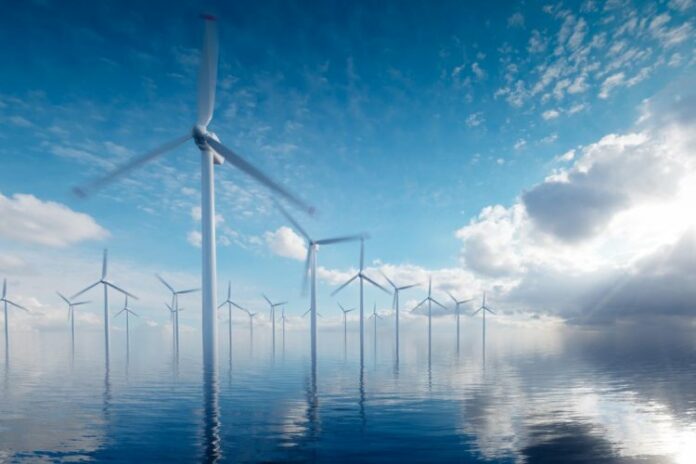
Eolus and PNE start co-developing offshore wind in Latvia

0

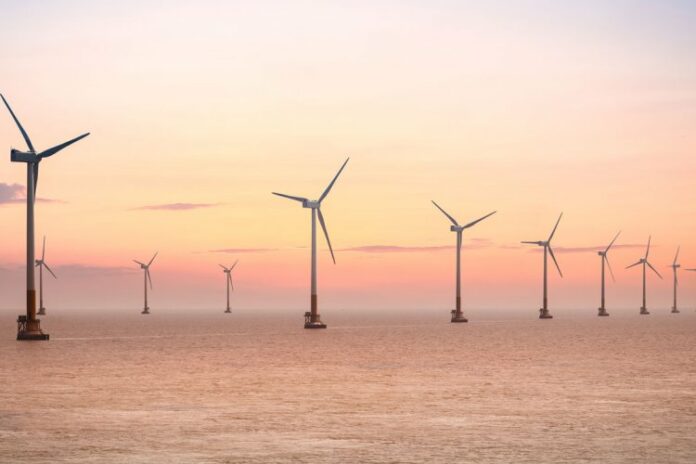
The wind farm will have approximately 1,000 MW installed capacity with planned commercial operation start before 2030.

The project area is located in the Baltic Sea outside the west coast of Latvia and the wind farm will have potential to generate 4,5 TWh renewable electricity per year. 

Eolus has conducted initial studies and developed the project since 2020 and is now adding resources and competence to the project through the cooperation with the German wind developer PNE. As of 18 January, PNE has acquired 50 percent of the shares in the project company SIA Kurzéme Offshore, which is now owned 50/50 by Eolus and PNE.

Per Witalisson, CEO of Eolus, says:

“We have been active in the Baltics for more than ten years and have a solid project portfolio. We see great potential in the Baltic countries, where we are now scaling up our business. PNE is an experienced and competent offshore wind developer, and we look forward to cooperating with them in the Kurzeme project. Together with Eolus’ strong development skills we have great pre-requisites to make this a successful project.”

Markus Lesser, Chairman of the Board of Management of PNE AG, explained:

“We are keen to bring in our long-term offshore wind experience and know-how to this partnership. Jointly with Eolus as reliable partner, we expect to develop the project successfully. The acquisition of the 50 percent stake in SIAKurzéme Offshore is a further step in our strategic development in becoming a Clean Energy Solutions Provider. This expands our “pipeline” of offshore wind projects to the Baltics. We see further attractive prospects for our activities in this area and look forward to working with our new partner.”

Application for the project has been submitted and surveys for the Environmental Impact Assessment (EIA) will be conducted once research license is obtained. The area is subject to an upcoming tender process.
MAN Alpha CP Propeller and EcoBulb to optimise Norwegian gas tanker’s performance

0

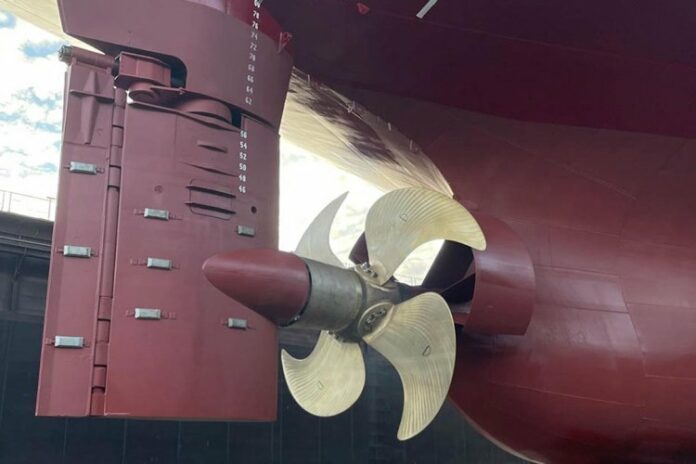
MAN Energy Solutions has announced that its after-sales division, MAN PrimeServ, Frederikshavn is set to perform a radical and extensive optimisation of the propulsion drivetrain of a 2007/2008 gas tanker during its forthcoming dry docking. 

The solution for the Solvang ASA-owned vessel will enable it to meet impending EEXI regulations via main-engine power limitation and brings the vessel’s propulsive efficiency on par with modern buildings via, among other initiatives, clever optimisation of the existing CP propeller and aft-ship system.

The 2007/2008 gas tanker project will entail the introduction of optimised propeller blades, a propeller-hub fairing cone and EcoBulb rudder-bulb integration developed in close cooperation with Becker Marine Systems, Solvang ASA and MAN Energy Solutions’ hydrodynamic experts. Besides MAN Energy Solution’s scope of supply, the vessel will also be permanently power de-rated, EEXI power-limited, and equipped with a Mewis duct installation. The work will position Solvang ASA a first mover within advanced, holistic vessel optimisation.

Tor Øyvind Ask, Fleet Director, Solvang ASA, said:

“We envisage that this significant, eco-concept investment will not just have a positive environmental impact, but that it will significantly prolong the efficiency and life of the vessel too. This investment will enhance the gas tanker’s operational efficiency while minimising its carbon footprint and emissions in accordance with our best business practice.”

Michael Muff Jensen, Senior Sales Manager, MAN Energy Solutions, Frederikshavn said:

“We are very happy to be part of this exciting propulsion optimisation project where, once again, a successful long-term customer relationship has proven vital in putting together such a complex project as this. From a propulsion perspective, the solution is spot on in terms of performance, efficiency and reduced CO2 emissions. This is just Solvang’s latest investment in its current fleet, confirming its position in the market as a committed front-runner in the efficient and environmentally-friendly transport of LPG and petrochemical gases.”

Havyard Leirvik win important contract with a new customer

0

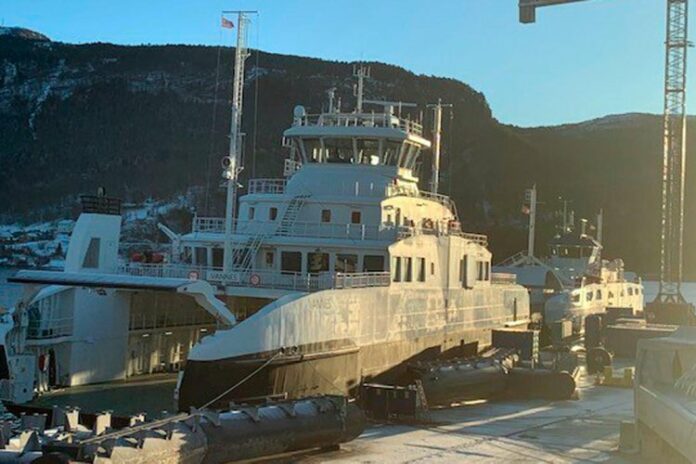
The ferry which is owned by Boreal Sjø will be modified to meet requirements from the Norwegian Maritime Directorate so that it can operate in an extended traffic area.

For Havyard Leirvik and for Eqva, this is an important contract for several reasons. The shipyard focuses particularly on projects related to conversion and upgrading of existing ships. 

The yard is also prequalified for fabrication of steel sections for the oil and gas industry. This means it can take on the most demanding fabrication and modification tasks and opens even more opportunities in the market.

Sales Manager Silje Smådal says:

“The contract with Boreal Sjø is also important because most of the work will be produced locally and carried out at the yard, and we will have the opportunity to get to know a new customer. We are looking forward to this collaboration and are committed to making this the beginning of a long and good collaboration for mutual benefit.”

Managing Director Tor Leif Mongstad says:

“Good and demanding customers are important for us to develop further, and we are looking forward to performing this project together with Boreal Sjø. We are observing a good trend and see more orders within service and maintenance, and with two major projects in the order book, we have secured a strong foundation.”

The second project concerns engine replacement on the ferry M/F Veøy.

The conversion of M/F Vannes is a typical conversion project, of which there will likely be many more in the coming years. The contract value of such contracts are normally between NOK 10 and 20 million, and they require two months to complete. Havyard Leirvik is part of the Eqva ASA group’s business area “Maritime services”.

The Crown Estate signs agreements for lease for six offshore wind projects

0

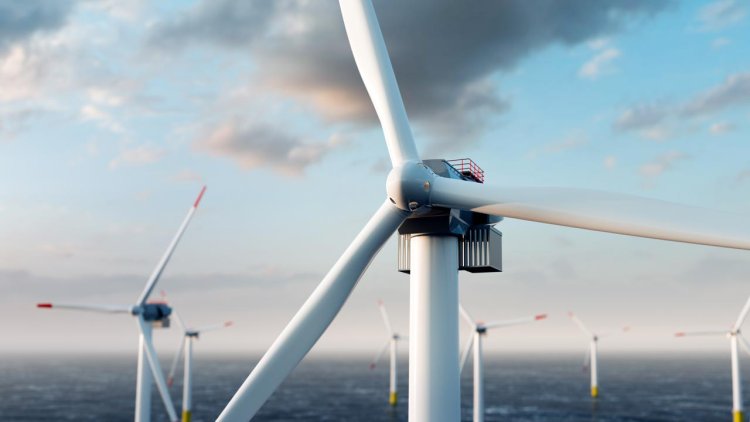
The Crown Estate has signed Agreements for Lease for six offshore wind projects which could begin to generate green electricity by the end of the decade and have the potential to generate c.8GW of renewable electricity, enough for more than seven million homes.

Three of the six projects are located off the North Wales, Cumbria and Lancashire coast, and three are located in the North Sea off the Yorkshire and Lincolnshire coast.

Following The Crown Estate’s final decision to proceed in August 2022, the agreements are the culmination of The Crown Estate’s Offshore Wind Leasing Round 4, adding further strength to the offshore wind sector’s track record in leading the UK’s net zero energy transition. Round 4 follows three previous leasing rounds by The Crown Estate which, along with investment in cutting-edge data and evidence and a commitment to increasing collaboration across sectors, has paved the way for the development of a world-class offshore wind market in the UK, with The Crown Estate having now awarded rights totalling 41GW.

With agreements signed, developers can now further progress their plans for the projects which have the potential to make a major contribution to delivering sustainable, renewable energy for the UK, as well as the Government’s target of 50GW of offshore wind capacity by 2030.

Dan Labbad, CEO of The Crown Estate, said:

“The UK’s offshore wind achievements to date are nothing short of remarkable, and this next generation of projects point to an even more exciting and dynamic future.

“They demonstrate the far-reaching value that our world-class offshore wind sector can deliver for the nation: home grown energy for all, jobs and investment for communities, revenue for the taxpayer, clean energy for the benefit of the environment and a considerate, sustainable approach which respects our rich biodiversity.”

Gus Jaspert, Managing Director, Marine, at The Crown Estate, added:

“As we face up to energy, climate and biodiversity challenges, we will continue to convene the best minds and support new technologies which will help realise the potential of the seabed as a key component of the UK’s renewable energy system; a home to a thriving natural environment; and a route to energy security.”

Minister for Energy and Climate Graham Stuart said:

“Britain’s position as the European leader in offshore wind shows no signs of letting up. These six projects demonstrate how areas across the UK can contribute to ensuring Britain meets its world-leading ambition of deploying up to 50GW of offshore wind by 2030.

“Offshore wind is at the heart of our goal to secure clean, affordable and resilient energy supply for all in the UK, while bringing major business, investment and job opportunities along with it.”

The Crown Estate will now lead a pioneering programme of work to oversee the development of strategic environmental compensation plans for two protected sites, ensuring that the health of the natural marine environment remains at the centre of development plans.

Saipem awarded two offshore contracts

0

The first contract – in partnership with Aker Solutions do Brasil – has been awarded by Total Energies, for the LAPA Southwest (LAPA SW) Development Project, a deepwater oil field  in the Santos Basin in the South Atlantic, 270 kilometres off the coast of São Paulo, in Brazil.

The scope of work encompasses the Engineering, Procurement, Construction, and Installation (EPCI) of Subsea Umbilicals, Risers, Flowlines (SURF) as well as a Subsea Production System (SPS).

LAPA SW Development Project is the first ever integrated SURF and SPS project awarded by TotalEnergies.

Saipem will maximize the local content by making use of its yard Guarujá CTCO (Centro de Tecnologia e Construção Offshore) for logistics activities and Quad Joints Fabrication and some other manufacturing activities.

The other contract has been awarded to Saipem by Equinor for the Irpa Pipeline project. The project, located in deep waters in the Norwegian Sea, consists of the installation of 80-kms-long swagged Pipe-in-Pipe pipeline connecting the subsea production template of Irpa field to the existing Aasta Hansteen platform.

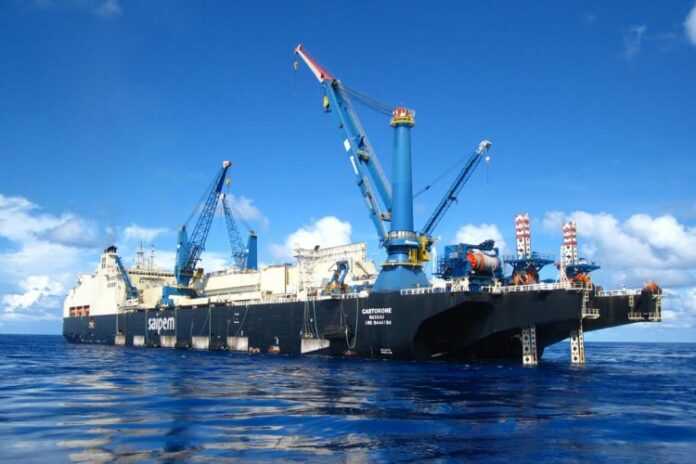
The offshore operations are planned to take place in 2025 and will be performed by Saipem’s flagship vessel Castorone.

Steel cutting ceremony for Acta Marine’s CSOV at Tersan Shipyard

0

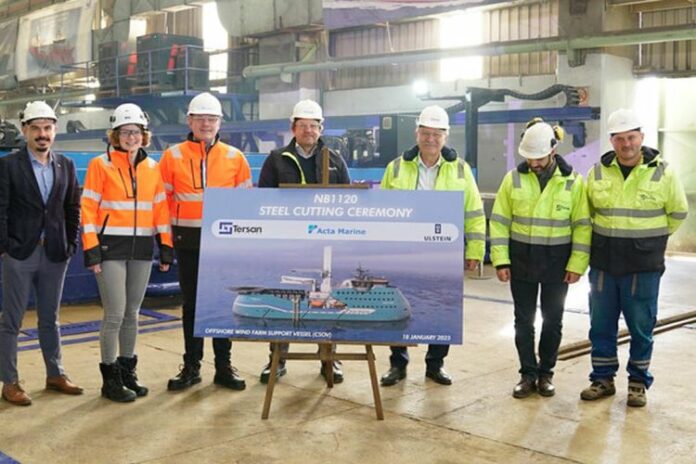
The steel cutting ceremony of the first of two next-generation Methanol MDO/HVO powered DP2 Construction Service Operating Vessels for Acta Marine was arranged on 18 January 2023 at Tersan. 

The SX216 design of the vessel has been developed exclusively and in close collaboration with Ulstein Design & Solutions AS.

The steel cutting is the official kick-off for the construction of the Acta Marine CSOVs at the shipyard. The 89-metre-long vessels will be equipped with an SMST-provided motion-compensated crane and a motion-compensated gangway for safe personnel transfer in significant wave heights up to 3.0 metres. The CSOV provides excellent accommodation facilities for up to 135 people. In addition to the Methanol MDO/HVO engines the vessels feature a battery power storage system creating further energy efficiency and CO2 reduction.

These vessels are the first contracted to implement Ulstein’s TWIN X-STERN design. This design has several unique characteristics, but the main distinguishing features of the vessel are the two sterns and main propeller units at each end. The combination of thrusters and symmetrical hull design results in lower energy consumption and reduced motions, and therefore, higher operability and comfort. This concept dramatically improves the manoeuvrability and ability to stay in position. Further, the design allows for reduced noise, increased comfort on board and the potential to save significant amounts of energy in operation.

The design is being noticed, and the TWIN X-STERN was recently nominated for the Offshore Support Journal Innovation of the Year Award and the Acta Marine CSOV project is nominated for the Offshore Renewables Award.

Together with the second newbuild CSOV, which will follow three months later, these state-of-the-art vessels will be added to the Acta Marine fleet in the second quarter of 2024, enabling Acta Marine to continue its prominent position in the offshore wind market industry.

ADNOC LNGC newbuilds to be equipped with Silverstream’s technology

0

Clean technology company Silverstream Technologies has signed an agreement with CSSC Jiangnan Shipyard Group Co. Ltd to supply its market-leading air lubrication technology, the Silverstream® System, on the newbuild LNG carrier programme being constructed for Abu Dhabi National Oil Company (ADNOC), it has been announced today. 

The proven performance of the Silverstream® System will deliver a 5-10% net fuel burn and CO2 emissions reduction for an initial six new 175,000cbm LNGCs in the programme. The vessels are also the first LNGCs set to be built at Jiangnan Shipyard and will be among the first Chinese-built LNGCs fitted with an air lubrication technology. The first six ships in the series are expected to be delivered in 2025 and 2026. 

Silverstream’s verified air lubrication technology improves efficiency by generating a uniform carpet of microbubbles across the full flat bottom of a vessel. The air carpet reduces the friction between the hull and the water, and is effective in all sea states.    

While the technology is suited to almost all segments in shipping, LNGCs are particularly strong candidates for the Silverstream® System because of their hull form and large flat bottom. Installing the Silverstream® System on ADNOC’s new LNGCs will improve their overall environmental performance and enable greater operational flexibility for the vessels. 

Noah Silberschmidt, Founder & CEO, Silverstream Technologies, said:

“We’re pleased to be able to announce this deal with CSSC Jiangnan Shipyard CO. Ltd for ADNOC, which further cements our strong position within the LNG segment. Partnering with ADNOC to install our Silverstream® System on these vessels will help to create a new benchmark for LNGC efficiency, and reinforces the maturity of our technology as a verified fuel and emissions reduction solution. 

“We look forward to further collaboration with the CSSC Group of shipyards via our Shanghai office, to allow more owners access to the technology and ensure a smooth integration and commissioning process.”
 

NOAA awards $20.5 million for ocean and coastal resource management

0

Bipartisan Infrastructure Law to support regional partnerships, federally-recognized tribes

In a first-of-its-kind deployment under Bipartisan Infrastructure Law funds, NOAA has announced the award of approximately $20.5 million for the coordinated management of ocean and coastal resources around the country. 

The recommended federal funds will significantly enhance existing collaboration between states, tribal governments and the federal government, and provide needed capacity to advance their work.

Through this recommended funding, the awards will support projects to advance regional ocean partnerships and data sharing among ocean users, and include the engagement of federally recognized tribes with existing regional ocean partnerships. Regional ocean partnerships are regional organizations convened by governors to work collaboratively across multiple states, in coordination with federal and tribal governments, on common priorities and challenges.

Secretary of Commerce Gina Raimondo said:

“Advanced climate data is critical to helping communities act on the best available information when disaster strikes. The Biden-Harris Administration is committed to addressing the climate crisis, and thanks to the Bipartisan Infrastructure Law, we can invest in collecting and disseminating lifesaving data to communities across the country, especially those that are often overlooked and left behind.”

Deputy Secretary of Commerce Don Graves said:

“Equity remains at the heart of all we do at the Commerce Department, and this includes the continued effort towards environmental justice for our tribal communities. This funding is a necessary step in building on climate resilience efforts and protecting our coasts.”

NOAA Administrator Rick Spinrad, Ph.D., said:

“This recommended funding allows communities to better plan for future changes as we build a Climate-Ready Nation. NOAA values the contributions of all partners to better understand and manage climate-related risks.”

Exail’s DriX Unmanned Surface Vehicle takes part in Digital Horizon

0

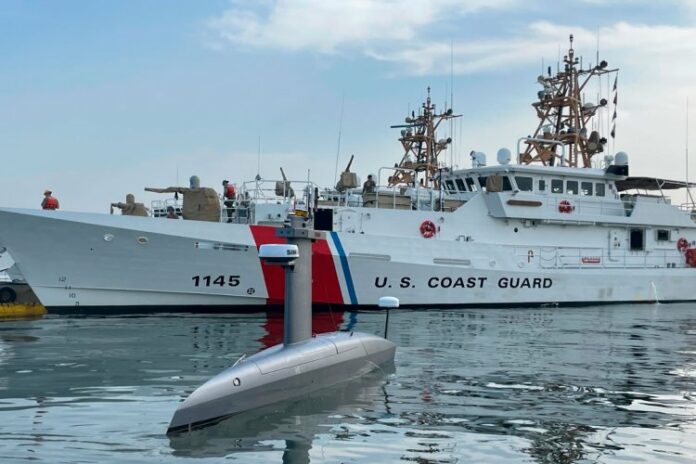
The U.S. Navy’s 5th Fleet held the three-week exercise in December to test new unmanned technologies, as part of its plans to establish the world’s first Unmanned Surface Vehicle (USV) fleet of one hundred drones in the Gulf by the end of the summer.

The current geopolitical situation means that manned assets are in increasing demand elsewhere, leading the Navy to look to the latest unmanned technologies to expand its capabilities. Vice Adm. Brad Cooper, commander of U.S. Naval Forces Central Command, U.S. 5th Fleet and Combined Maritime Forces, set up Task Force 59 last year to speed new tech integration across the 5th Fleet, and seek alternative, cost-effective solutions for conducting Maritime Domain Awareness (MDA) missions. Maritime Domain Awareness can be defined as the effective understanding of military and non-military events in the maritime environment that could impact the security, safety, economy, or environment of a nation or a region.

Exail’s DriX USV was among the fifteen USVs and Unmanned Aerial Vehicles (UAVs) selected to participate in the exercise, which staged a Maritime Domain Awareness (MDA) mission. The USVs and UAVs were tasked with gathering data on the surface in order to detect and identify potential threats. One of the main requirements was for the drones to communicate with each other using a common OPS system. The complementarity aspect of the different drones was also important, as the 5th Fleet aims to leverage the different capacities of each drone to cover a wide array of competencies in order to produce a Common Operating Picture of what is occurring in a specific zone of water.

With its highly hydrodynamic monohull and drop keel, DriX showed high reliability with excellent seakeeping and speed results, accomplishing its mission of gathering data on the surface and proving its capacity to successfully integrate third party radar and cameras. The ability of DriX to integrate within a military communications network was successfully proven, thanks to its wide range of communication means (including Certus, 4G, Wifi and Silvus). The USV further meets requirements in terms of communications redundancy, crucial for minimizing risk during military operations, and is fitted with an advanced collision avoidance system that ensures robust and safe autonomous navigation at sea.
 
Guillaume Eudeline, Exail’s Naval Autonomy Market Director said:

“We’re very happy about the feedback from the TF59 on DriX’s performance. We’d like to thank the US Navy 5th Fleet for their support throughout the exercise and in particular Capt. Michael Brasseur and his staff. For the first time DriX integrated a multiple-unmanned collaborative military organization, alongside some of the industry’s best. It was a real success and we are proud to have collaborated in this group effort, which showed what unmanned technologies can bring to MDA.”

Ørsted to acquire PSEG’s equity share in Ocean Wind 1

0

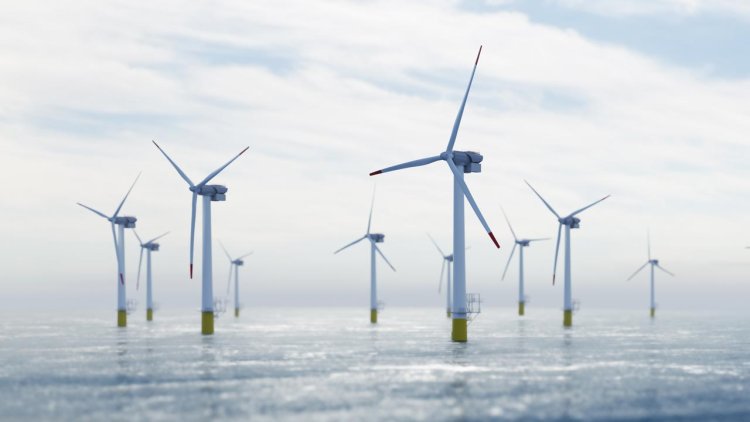
Ørsted has signed an agreement to acquire Public Service Enterprise Group’s (PSEG) 25 percent equity stake in Ocean Wind 1, an 1,100 MW offshore wind energy project located 15 miles off the coast of southern New Jersey. The acquisition provides Ørsted with 100 percent ownership of Ocean Wind 1.

As Ocean Wind 1 continues its planning and development, Ørsted will ensure the project delivers affordable energy to New Jersey, while providing economic opportunity across the state and region. PSEG will support onshore infrastructure construction.

Ocean Wind 1 has committed to $695 million of in-state spending, creating hundreds of jobs during the construction phase of the project. In addition to building an operations and maintenance facility in Atlantic City, NJ, Ørsted has invested more than $100 million to help establish the first American monopile facility at the Port of Paulsboro in New Jersey, committed over $20 million to the Pro-NJ Grantor Trust, established a North American Digital Operations headquarters in Newark and partnered with the New Jersey Institute of Technology on a $1.5 million, 10-year scholarship program.

“PSEG has been a valuable partner as we have advanced Ocean Wind 1 to this point and as we’ve successfully advanced our offshore wind vision in the United States. With a well-established presence in the U.S., we’re confident in our ability to drive the project forward with commercial operations beginning as planned,” said David Hardy, Group EVP and CEO Americas at Ørsted.

Ørsted has 30 years of experience in offshore wind energy, including operating the first U.S. offshore wind farm off the coast of Rhode Island. As the U.S. leader in offshore wind with 5 gigawatts in development, Ørsted is advancing the offshore wind industry supply chain, having stimulated more than $2 billion in U.S. investments to date.

“As Ocean Wind 1 has evaluated the optimal way to move forward, it has become clear that it is best for the project for PSEG to step aside and allow for a better positioned tax investor to join the project so that it can proceed with an optimized tax structure. While this was a difficult decision, it was driven by the best interests of the project and New Jersey’s offshore wind goals. PSEG will continue to actively support offshore wind in New Jersey and the region,” PSEG’s Senior Vice President and Chief Commercial Officer Lathrop Craig said.

The transaction between Ørsted and PSEG is expected to close in the first half of 2023, pending the required closing conditions. The initial delivery of power from Ocean Wind 1 is scheduled for the end of 2024, and full commissioning is expected in 2025.