-2.2 C
New York
Home Blog Page 340

Cyber-attack on ShipManager servers – update

0

External technical experts have been engaged to investigate the attack, which also has been reported to the police and other relevant authorities.

DNV’s ShipManager servers were victim of a ransomware cyber-attack on the evening of Saturday 7 January. DNV experts shut down the servers immediately in response to the incident. All vessels can still use the onboard, offline functionalities of the ShipManager software, other systems onboard the vessels are not impacted. The cyber-attack does not affect the vessels’ ability to operate.

There are no indications that any other data or servers by DNV are affected. The server outage does not impact any other DNV services. The Ship Manager IT-infrastructure is isolated from the rest of DNV’s servers and the forensic investigation conducted by DNV’s global IT security partners has confirmed that no lateral movement to other parts of the DNV IT-infrastructure was detected as part of the attack. Information like DNV user accounts, emails and all other services have not been affected by the incident.

The attack has been reported to the Norwegian Police, who has informed relevant police agencies. It was also reported to the Norwegian National Security Authority, the Norwegian Data Protection Authority (DPA) and the German Cyber Security Authority. All affected customers have been notified about their responsibility to notify relevant Data Protection Authorities in their countries.

As part of the investigation, DNV is working closely with global IT security partners to analyze the incident and ensure secure online operations as soon as possible.

DNV is in regular contact with all ShipManager customers about the situation. About 70 customers, operating around 1.000 vessels, are affected. All affected customers have been advised to consider relevant mitigating measures depending on the types of data they have uploaded to the system.
North P&I launches mobile app to ease evidence gathering burden for marine professionals

0

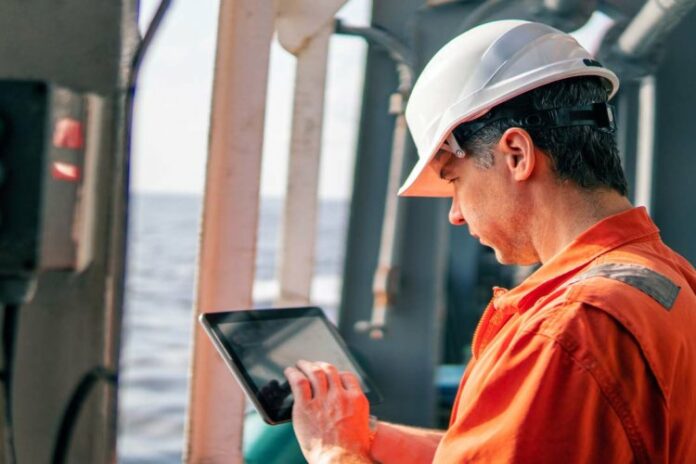
Formally launched to market today, ‘The MRCE Handbook’ app from North will help senior officers, surveyors and shore-based technical and marine personnel gather evidence quickly and efficiently, using standardised formats on mobile phones and tablets.

The MRCE Handbook app has been developed by North’s in-house Loss Prevention Team using proven methodologies established in The Mariner’s Role in Collecting Evidence Handbook. Published by North, the source Handbook outlines the most commonly occurring incidents and accidents on board ship, offering evidence collection checklists for each. It is widely regarded as a leading reference guide for seafarers.

“Evidence that is gathered and preserved at the time of the incident is invaluable to the resolution of claims and disputes,” said Colin Gillespie, Director (Loss Prevention), North. “Using digital tools to streamline its collection helps with speed and accuracy, making it more likely that a comprehensive and objective record of events is established. Timely collection reinforces the value of evidence, both for pursuing and defending claims.”

Compatible with iPhones, Androids and tablets, the app is free to access for all North entered Members and Correspondents. It offers clear guidance on best practice in evidence-gathering methods and covers incidents such as those involving people or cargo, those caused by vessels (including pollution), and those relating to H&M claims or commercial disputes.

The MRCE Handbook app is available 24/7, allowing users to generate a checklist based on the types of incident, available evidence and to upload information on each checklist item – online and offline – to generate a standardised report to share with the shipowner or manager. Users can also save incomplete checklists and return to them later to finish the job.

“Once the facts are known, they can be used to demonstrate compliance or determine liability, but also to learn and help prevent similar incidents from happening in the future,” said Mike Salthouse, Global Director (Claims), North. “Establishing what really happened and how it happened is critical and, as well as making it easier for mariners to fulfil evidence-gathering duties, The MRCE Handbook app will also help to base safety recommendations on more accurate evidence.

“Mobile devices are commonly used to capture still, and video images as incidents unfold. Having The MRCE Handbook app to hand will increase awareness that formalised evidence gathering and reporting is also required and can be accomplished more easily than ever before.”

Damen takes lead in 3D model based class approval

0

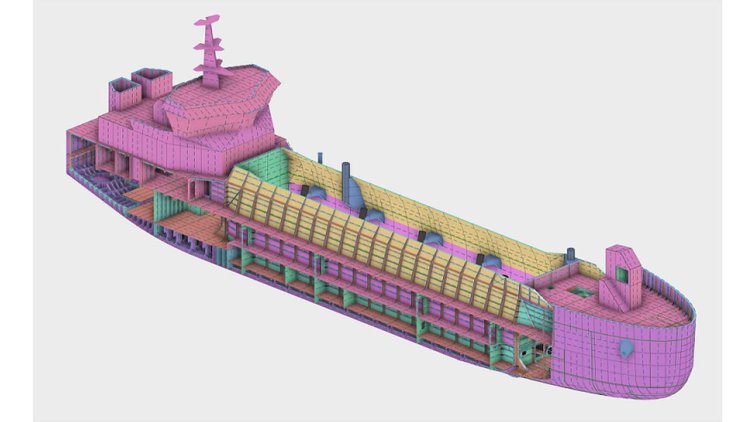
The pilot project for 3D model-based class approval is meant to pave the way towards using three dimensional computer designs as standard procedure to achieve class notation for seagoing vessels.

Vessel steel hull Design evaluation based on 3D models in parallel to its classification review process has become possible thanks to the new data exchange format – OCX. The OCX is an open standard that facilitates data exchange of 3D ship models for class approval. This Open Class 3D Exchange standard has been developed by a consortium of software companies including NAPA and Aveva, together with classification societies including DNV, Bureau Veritas and Lloyds Register.

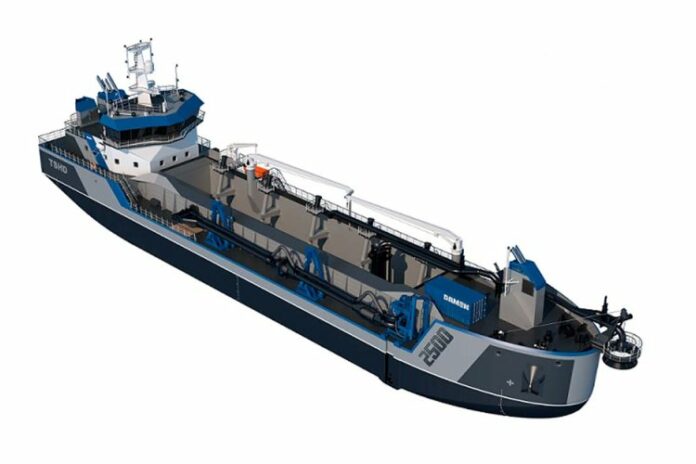
In close collaboration with Finnish software developer NAPA and Bureau Veritas, Damen has presented the three dimensional design of their TSHD 2500 (Trailing Suction Hopper Dredger with 2500 m³ hopper capacity). All the mission equipment as specified for a client had been integrated into this design. Bureau Veritas assessed the steel hull structure to be strong enough and safe to SOLAS standards, with all of the heavy equipment operational.

The OCX format has been available since 2022. First pilot projects for partial designs were finished in November last year. The project for the Damen Dredger with NAPA and Bureau Veritas is the first complete steel hull to achieve class approval by 3D design. Damen intends to apply this approval process with more vessels, also in co-operation with class society DNV and others.

Today’s best practice is 2D technical drawings remain an explicit requirement when naval architects and shipyards submit their hull designs to classification societies, to ensure they fulfill both Class and Statutory requirements. After the class society studies the drawings, sometimes changes are required. The designers take the remarks from the drawings and apply them in the 3D model. Then the process repeats. Presenting the 3D models to classification societies saves a lot of time and present making mistakes. Open data exchange standard facilitate exchange of 3D ship models for class approval.

“Seeing the results of this first class approval for a vessel steel hull, we are certain that this is the way to go,” Managing Director Kasia Romantowska from Damen Engineering Gdansk ensures. “Development time for the steel construction will be shorter thanks to class approval and us using 3D models only. We have more control over the technical risks embedded into a prototype vessel design process. It has been the first time that have we closed the 3D data exchange loop between parties. We expect to be able to save significant percent of design time when we integrate this way of working as a standard. The big benefit is the enhanced project team collaboration within the same, fully digital, transparent daily work context, applicable for designers and approval engineer at the same time.”

Kasia Romantowska announces more demonstrator projects for 3D model based class approval. The co-operation with Bureau Veritas and NAPA is very much appreciated, she underlines.

Thome Group transfers 100 ships to Marlink’s hybrid network

0

Marlink has signed an agreement to provide hybrid network connectivity services to at least 100 ships operated by shipmanager Thome Group. 

The contract will guarantee that the vessels are equipped with Marlink’s high speed VSAT service as well as L-band back-up to ensure  flexible guaranteed bandwidth at all times.

Based in Singapore, the Thome Group is a global provider of integrated ship management, as well as offshore management, oil and gas marine services and crewing – offering a complete range of services and products under one roof with about 200 vessels under full technical management.

Thome selected Marlink as the trusted provider to streamline and harmonise data services across the fleet, accelerating its digitalisation strategy and collecting business critical operational data required for smart vessel operations. The new contract also ensures that Thome managed vessels have sufficient bandwidth to keep crew connected with family and friends.

By choosing Marlink as provider, Thome can tailor the service offered to each shipping company from a variety of service levels. Key to providing this new standard of connectivity for Thome Group is Marlink’s use of a flexible Committed Information Rate (CIR) to deploy guaranteed bandwidth which can be adjusted based on the vessel’s data demand.

Tore Morten Olsen, President, Maritime, Marlink, said:

“Marlink is delighted to be Thome Group’s newest partner for critical connectivity solutions, enabling the company’s digital operations strategy. We look forward to helping Thome create a leaner, more agile fleet, able to work with complete flexibility and achieve higher efficiency.”

Say Toon Foo, Vice President IT, Thome Group, said:

“Thome’s reputation with its customers rests on our ability to present the most innovative solutions in ways that can be easily adopted regardless of ship type or trading pattern. This agreement with Marlink is a further step on a digitalisation journey that will help our customers realise the benefits of digitalisation on a standardised platform.”

Holland Shipyards signs contract with De Bock Maritiem for two new shortsea vessels

0

Holland Shipyards Group expands their sustainable efforts in the shortsea market.

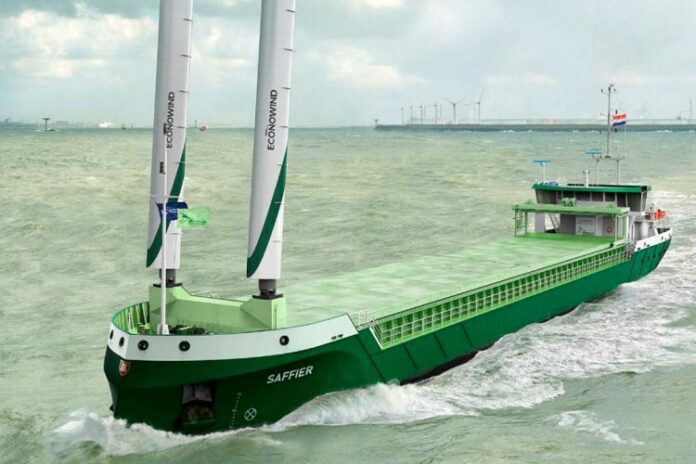
The 3.600 DWT vessels, designed by Conoship, will transport dry cargo and have a low air draft, making them suitable for inland waterways and the Rhine as well. The vessels will measure 88,00 by 13,20 m and have a cargo hold capacity of 5.100 m³.

The vessels will have 50% fewer emissions and the total energy efficiency of the vessels will be 30% higher than the international standards (Energy Efficiency Design Index). This is achieved by, among other things, diesel-electric propulsion, optimized propeller and hull shape, and very low power.

Following the energy transition, and the sustainability goals of De Bock Maritiem, the vessels have a modular built design. The generators are located in an easily accessible space making the vessel suited for future conversions. The E-room remains unaffected by such a conversion.

Alfa Laval introduces the marine industry’s first biofuel-ready separators

0

Biofuels are a current and accessible fuel option that can help marine customers decarbonize. Yet while biofuels reduce CO2 footprint, they also pose new operational challenges. Alfa Laval is first in the market to address them with biofuel-optimized separators and separator upgrades.

Biofuels like HVO (hydrotreated vegetable oil) and FAME (fatty acid methyl ester) can be used by diesel engines without major engine modifications. They can be a carbon-neutral alternative if produced from the right biomass, but they must still be cleaned effectively to prevent performance issues and expensive engine wear. In a marine industry first, Alfa Laval high-speed separators are now compatible with HVO (EN15940) and with FAME (EN14214 or ASTM D6751) blends comprising residual fuel and/or distillate.

“We are proud to support our customers’ decarbonization journey, no matter which fuel path they take,” says Markus Hoffmann, Global Sales Manager, Marine Separation & Heat Transfer Equipment, Alfa Laval. “Biofuels will be the choice for many marine vessels, but customers must be certain that their equipment is prepared for them. With biofuel-ready separators and cost-efficient biofuel upgrades, Alfa Laval can provide that certainty.”

Biofuels are already in widespread use, and ISO is looking to incorporate them into the 2024 revision of ISO 8217. Nevertheless, they can be prepared in various ways and differ widely in their characteristics – both from conventional fuels and from each other. Because of differences in density, moisture absorption and more, they demand additional care when it comes to fuel storage and treatment.

To ensure optimal biofuel separation, Alfa Laval has modified both internal bowl components and the separator software. This makes setting up for HVO, FAME blends or conventional fuels a simple parameter change. Incorporated into new Alfa Laval separators for purchase, the developments are also available as upgrades for existing separators.

“Optimizing for biofuels is nothing that occurs overnight,” says Hoffmann. “Our biofuel-ready separators build on deep fuel insights, extensive research at the Alfa Laval Test & Training Centre and long cooperation with ISO and CIMAC. As biofuels continue to evolve, customers can count on Alfa Laval for efficient engine protection, just as they have with conventional marine fuels.”

London Container Terminal selects Portchain Quay to digitalize berth planning

0

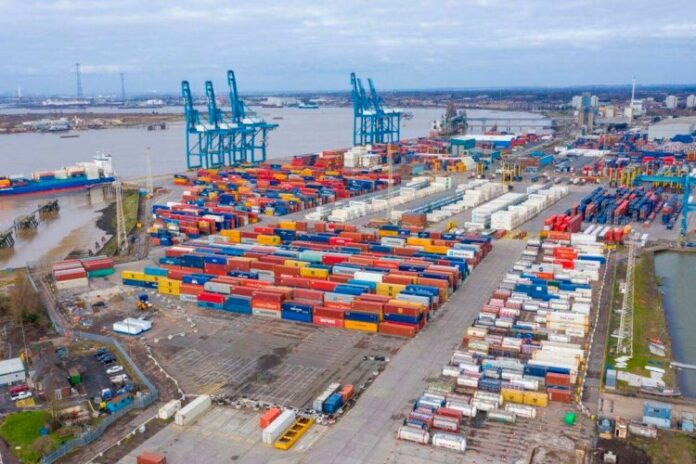
The Port of Tilbury’s London Container Terminal has signed an agreement to use Portchain Quay as their terminal wide berth planning tool for creating reliable berth plans supported by intelligent predictions. 

The deployment of Portchain Quay is an important step in London Container Terminal’s digitization journey, where several key planning processes will be digitized to promote real-time information exchange, transparency and process efficiency across the terminal.

Ross McKissock, Director of Unitised, Forth Ports, said:

“As we continue our investment in the digitization of our busy container terminal, we have chosen Portchain Quay to assist our teams in providing reliable real time berth planning and optimization. Portchain Quay will improve the planning process for both the terminal and our customers, providing intelligent real time updates to our planners and more accurate berth predictions for our customers. The initial feedback has been incredibly positive and we look forward to working with Portchain Quay to develop the solution further.”  

Thor Thorup, CCO & Co-Founder, Portchain, said:

“We are excited to collaborate with London Container Terminal to help them accelerate their digitization journey, while providing them with vessel ETA and port stay prediction tools to optimize their operations.” 

Gascade and Fluxys apply for PCI status on North Sea hydrogen pipeline project

0

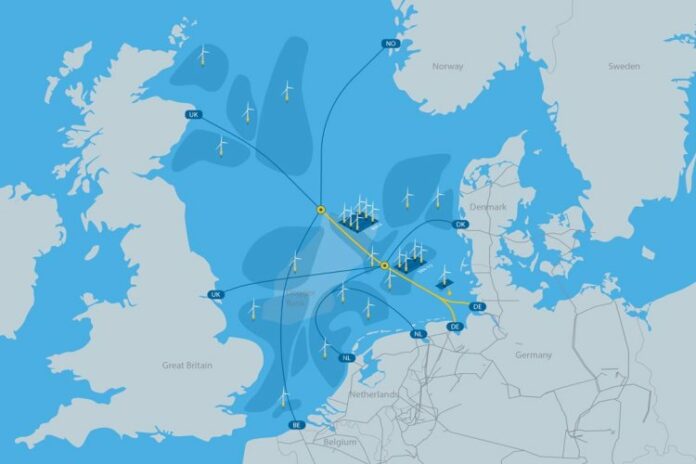
GASCADE and Fluxys have applied to the European Commission for Project of Common Interest (PCI) status for the AquaDuctus project, marking a major step forward in their plans for an offshore pipeline for green hydrogen in the North Sea. 

The move by the two infrastructure operators highlights the project’s importance for the hydrogen ramp-up.

“The offshore pipeline, which will be over 400 km long when completed, will become a linchpin of Germany’s and Europe’s future offshore hydrogen infrastructure,” explains GASCADE Managing Director Christoph von dem Bussche, emphasising the project’s European, interconnecting character.

That is because the pipeline is designed as a ‘backbone’, able to collect hydrogen from multiple production sites while also offering the potential to link up with other international hydrogen flows through the North Sea. Hydrogen will be taken to the German coast via the offshore pipeline and fed into the onshore hydrogen network there. In this way, AquaDuctus will provide large-scale offshore hydrogen infrastructure in the German North Sea for hydrogen to be imported into Germany.

GASCADE and Fluxys have ambitious plans for this project. The first step will see the SEN-1 hydrogen wind farm connected to AquaDuctus, with flows to start in 2030. In subsequent years, wind farms further offshore in Germany’s exclusive economic zone may be linked up as well as hydrogen infrastructure operated by other North Sea countries. By 2035, the offshore pipeline is to develop into a main hydrogen corridor carrying up to one million tonnes of hydrogen a year into Germany. Based on the gas and hydrogen package currently being negotiated at European level, the two long-standing transmission system operators plan the AquaDuctus offshore pipeline as a regulated open access infrastructure available to all future operators of hydrogen wind farms, thereby strengthening security of supply in the future.

“We firmly believe that the AquaDuctus offshore pipeline will be a key element of Europe’s future energy supply picture and a major advance in the drive towards climate neutrality,” says Fluxys Managing Director and CEO Pascal De Buck. The offshore pipeline will make a substantial contribution to security of supply by diversifying Europe’s hydrogen supply sources. “Our specific plans for AquaDuctus will allow Germany’s federal government to put in place concrete actions following up the efforts it has made on hydrogen with European partners such as for example Norway or within the framework of the Esbjerg Declaration,” says von dem Bussche, underscoring the feasibility of the project.

Studies identify up to 100 GW of hydrogen production potential in the German and European North Sea and view an integrated European offshore pipeline network as the ideal transport solution.

“With our AquaDuctus offshore pipeline, we want to jointly enable this potential to be leveraged,” explain the two managing directors.

A comprehensive feasibility study for the project has been successfully completed. The study examined and confirmed the technical and planning feasibility of all phases of the project. Commercial aspects, marketing potential, pricing and regulatory design options were also analysed.

Ballard receives fuel cell order from CrossWind

0

Ballard Power Systems has announced an order for a fuel cell system to CrossWind, a joint-venture between Shell and Eneco. The Ballard fuel cell system will be integrated in the Hollandse Kust Noord offshore wind project.

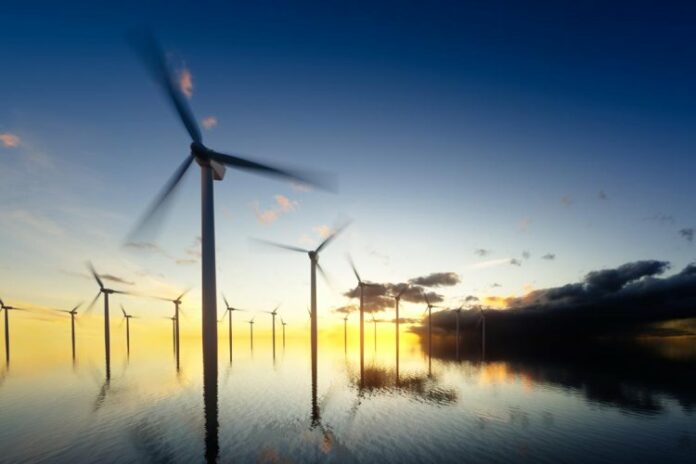
The Hollandse Kust Noord offshore wind project, located off the coast of the Netherlands, will have a capacity of 759 MW to generate at least 3.3 TWh per year. This is enough renewable power to supply the equivalent of more than 1 million Dutch households with green electricity.

CrossWind intends to use various new technologies to manage the intermittent wind power generation, including the use of water electrolysis to convert wind power into green hydrogen for energy storage. Ballard’s hydrogen fuel cells will utilize the green hydrogen as fuel to regenerate stable and dispatchable power.

Ballard will supply a containerized fuel cell power solution with a peak power capacity of 1 MW, with delivery expected in 2024. This is Ballard’s second stationary power project deployed in Europe for peak shaving power generation applications.

Søren Østergaard Hansen, General Manager, Marine and Stationary, Ballard Power Systems Europe A/S, said:

“Hydrogen plays a critical role to support the energy transition. This project is an exciting proof point on how hydrogen and PEM fuel cells can provide an effective storage, load-following and firming solution for intermittent renewables. We are excited to be a part of this milestone demonstration project with CrossWind to prove out the reliability and efficiency of Ballard fuel cells, initially at megawatt scale.”

Maria Kalogera, Crosswind’s Innovation Manager commented:

“In CrossWind, we are committed to demonstrate baseload power on a megawatt scale for a single full-scale wind turbine generator. We will introduce, for the first time, an offshore combination of battery storage and round-trip hydrogen integrated in an offshore wind farm. It’s exciting to have Ballard on board and integrate their fuel cell solutions in our project.”

Value Maritime nets first Filtree System order for newbuild boxship quartet

0

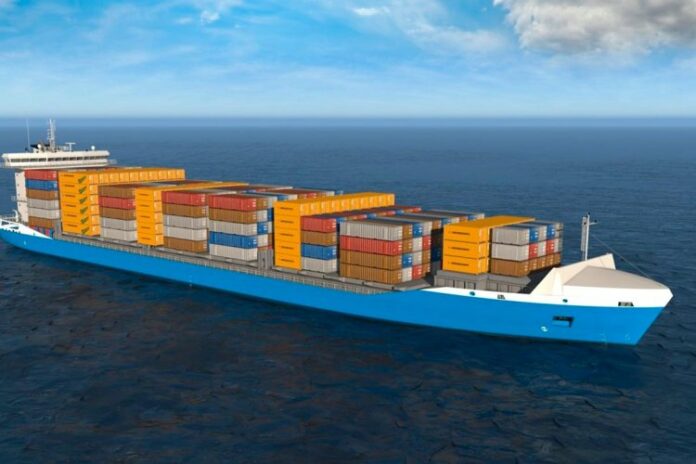
Purus Marine and Nordic Hamburg have placed an order with Value Maritime for four emissions-reducing Filtree Systems, including Clean Loop System and 30% carbon capture. The systems will be installed on its four newbuild container vessels that will be operated by BG Freight Line.

The contract is a milestone for Value Maritime, being the first time the company’s revolutionary product has been ordered for installation on newbuild container vessels. The 12.5 MW systems will be delivered between September 2023 and February 2024 and will be installed at Value Maritime’s berth in Rotterdam.

The newbuild container vessels will be operated by BG Freight Line, who ordered two Filtree Systems with carbon capture for container vessels BG Onyx and BG Ruby earlier in 2022.

The Filtree System is based on innovative technology that filters sulphur, CO2 and 99% of ultra-fine particulate matter from vessels’ exhaust streams. This will enable BG Freight Line to significantly reduce emissions while continuing to sail on high sulphur fuel that is both more cost-efficient and helps to reduce maintenance requirements. In this manner, the Filtree System offers a quick return on investment.

With the Clean Loop mechanism, the system is also able to filter oil residues and particulate matter from its own washing water, giving the water a neutral pH value, which contributes to reducing acidification of seas and rivers.

The Filtree Systems that will be installed on the newbuild container vessels will additionally feature a modular CO2 capture and storage system. This innovative technology captures CO2 from exhaust emissions and uses it to charge a “CO2 battery,” where it is stored and transported to shore. On shore, the CO2 is discharged for use, for example, in the agricultural industry, after which the battery is returned to the vessel to be recharged, thus representing a 100% circular solution.

The Filtree is a plug and play system. The nature of its design has ensured its straightforward retrofitting. This current order suggests a significant shift is taking place in the maritime industry, with more and more companies considering ways to reduce their emissions.

Laurens Visser, Container Vessels Specialist at Value Maritime:

“We are pleased to receive this order, our first for Filtree systems to be installed on newbuild container vessels. This signifies the changes that are presently taking place in decision-making within the industry. Cleaner, more sustainable shipping has risen on the agenda of many maritime companies over the past years. We are now seeing companies proactively looking to reduce their emissions not only retrospectively but from the very outset of operations. This is a welcome development that shows the seriousness with which the industry is taking up the challenges of climate change and the energy transition.”