-2.2 C
New York
Home Blog Page 339

Ørsted and Eversource propose new wind farm in New York

0

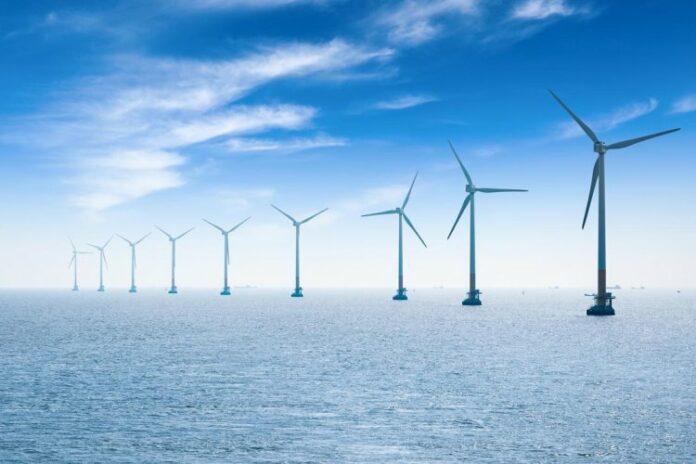
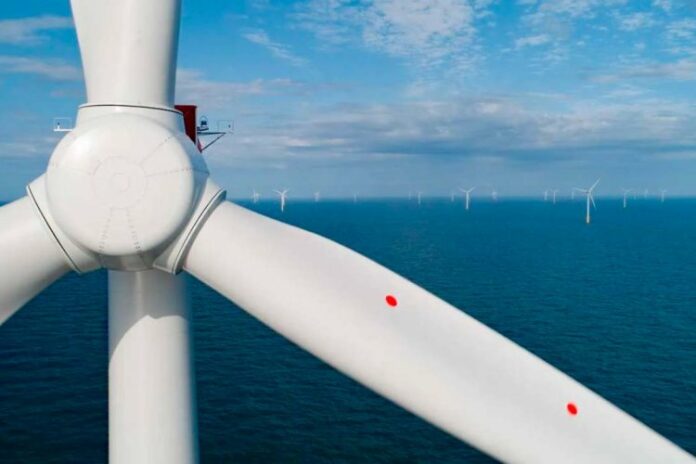
Ørsted and Eversource have submitted a joint proposal in response to New York State’s third round of offshore wind solicitations. Delivering clean, renewable power for at least 1 million New York homes, this submission includes multiple bids with different configurations that will generate billions of dollars in economic activity in the state economy, create thousands of new jobs, advance environmental justice, prioritize disadvantaged communities and minority- and women-owned business enterprises (MWBEs), and integrate clean energy solutions to further support the achievement of New York’s climate goals.

Together, Ørsted and Eversource are building South Fork Wind, New York’s first offshore wind farm, which broke ground early last year and will be operational with 130 MW in 2023, and Sunrise Wind, a 924 MW project that will deliver clean energy to New York in late 2025. As the New York leader in offshore wind, the joint venture has developed extensive partnerships across the state and consulted with dozens of community organizers, labor leaders, and local elected officials to develop a bid for a new project that best meets the needs of New Yorkers.

Under Governor Hochul’s leadership, New York will build upon its nation-leading pipeline of contracted offshore wind projects. Already, the state has become a leader in developing an offshore wind supply chain, begun training the future offshore wind workforce, and committed $500 million in investments for offshore wind ports, manufacturing and supply chain infrastructure to support this growing industry. In July of 2022, Governor Hochul announced New York’s third competitive offshore wind solicitation for a minimum of 2,000 MW of offshore wind, which will power at least 1.5 million additional New York homes with clean, affordable energy. This third solicitation marks additional progress toward achieving New York State’s Climate Act mandate to secure 70 percent of the State’s electricity from renewable energy by 2030 and at least 9,000 megawatts of offshore wind by 2035.

The joint venture between Ørsted, the leading U.S. offshore wind energy partner, and Eversource, New England’s largest energy provider and experts in regional energy transmission, was established in 2016 and together the two companies have invested in building the American offshore wind supply chain and next generation of the nation’s energy workforce. Through its industry-leading National Offshore Wind Agreement, the developers were the first in the U.S. to commit that its offshore construction would be completed by an American union workforce, emphasizing the developers’ commitment to good-paying jobs, workforce training and safety.

David Hardy, Group EVP and CEO Americas at Ørsted, said:

“We’re committed to developing projects that will create good-paying jobs, build up local communities, and generate clean, affordable energy to fight climate change. We’re confident this new proposal offers statewide, comprehensive offshore wind solutions and integrated clean energy innovation for New York, a state where we already have two advanced projects and have invested in supply chain development, workforce training and O&M capabilities. This solicitation further demonstrates New York’s leadership in offshore wind energy, and we look forward to the opportunity to build upon our strong track record here.”

Joe Nolan, Chairman, President and CEO of Eversource Energy, said:

“Today’s proposal builds on the incredible work we are already doing in New York including building the state’s first offshore wind farm and harnesses the unmatched combination of our onshore, regional transmission expertise together with Ørsted’s considerable offshore capabilities. Together, we stand ready to deliver a better, cleaner future that all New Yorkers will be proud of.”

Through two existing projects, the Ørsted-Eversource joint venture is already making significant investments and efforts to grow New York’s clean energy workforce, develop the State’s offshore wind supply chain, and provide renewable energy to nearly 670,000 New York homes. 
DMC to design shock proof rudders for four high speed F126 vessels

0

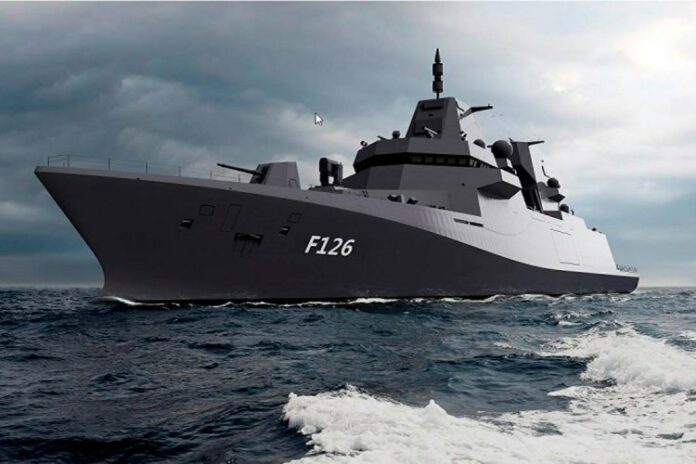
Each vessel will be equipped with two rudders, developed to withstand extreme shocks and to improve the hydrodynamic properties of the fast vessels. 

The full spade rudders of the Atlantic type by Damen Marine Components (DMC) are purpose designed for the frigate project to fit the specific hull form and operational profile of these naval vessels. The rudders have a relatively slim profile to reduce drag and improve course keeping at high speeds, maintaining good manoeuvrability at low speeds in harbours or during special operations.

The unique Asymmetric Rudder Technology (ART) as developed by DMC will be applied. This means that the leading edge of the rudders will be asymmetric, directing the turbulent water flow from the propellers in front of the rudders along the rudder surface more smoothly. This reduces cavitation, increases rudder efficiency, and reduces drag of the vessel. Further improvement of efficiency is acquired by the Silent Bulb that is incorporated in the rudders, right in the wake of the propeller axis.

This is an energy saving addition to the rudder profile, positioned on the centre line of the propeller. The Silent Bulb improves the water flow that comes from the propeller and increases thrust at higher loads. The design of the bulb is significantly influenced by the distance to the propeller, and it is shaped to fit perfectly with the propeller hub.

All of these specific features of advanced rudder design by DMC show best performance on high-speed oceangoing vessels. Based on the principles of improved water flow, drag reduction and fuel saving, DMC designed the rudders with all of these specific qualities specific to the F126 hull. The rudder profile was investigated intensively, tank tests have been performed to obtain the optimum shape with regards to resistance reduction and manoeuvring improvement. As the F126 vessels are equipped with twin counter rotating propellers, the rudders for any vessel are designed to direct the water flows in the wake of propellers moving opposite to each other.

Special requirement for the naval operations of the F126 is to build the whole vessel, including the rudders, to extreme shock resistant specifications. The rudders are designed to withstand enormous shock loads. Based on extensive computational calculations, critical areas are strengthened and special welding details are applied. High strength steel of the best quality is used for construction, honouring the classification rules for naval ships.

“We are happy to contribute to these state-of-the-art vessels,” Sales and Marketing Director Wim Knoester of DMC says. “With these twin-screw high-speed vessels, we can demonstrate the quality, efficiency and durability of our rudders. Being part of this high-profile Damen project allows us to show our capacity of delivering the highest class of ship systems.”

Karpowership, Ukraine sign pact to fast-track 500 MW powerships to ease power crisis

0

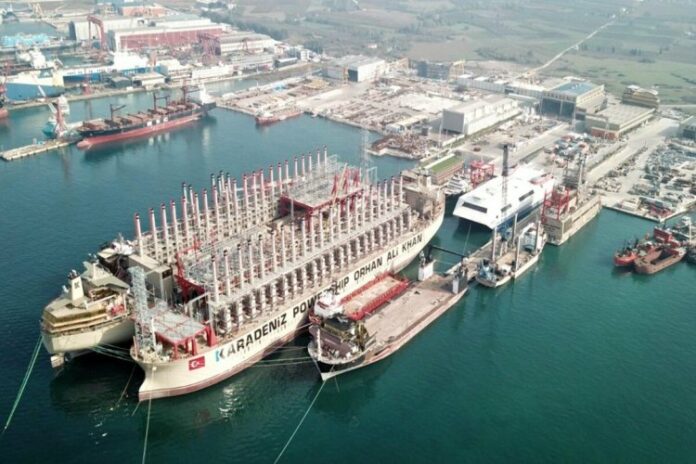
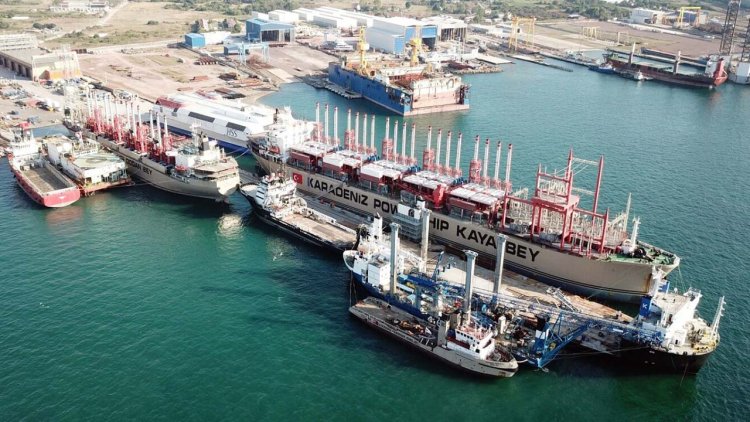
Turkish firm Karpowership has signed a memorandum of understanding with state-owned trader JSC Energy Company of Ukraine (ECU) to enhance electricity supply cooperation and fast-track the use of 500 megawatts (MW) floating power stations to alleviate the nation’s energy crisis, according to a statement on Thursday.

Karpowership and ECU will work alongside national and international organizations to develop and finance the implementation of 500 MW, enough to power over 1 million households.

Mooring in the Black Sea offshore Moldova and Romania with electricity connecting to Ukraine’s grid via transmission lines are among the options being considered for floating power stations.

Karpowership and ECU will engage Moldovan and Romanian authorities to assess the viability of these two options.

“Karpowership is delighted to work with ECU to ease Ukraine’s power crisis,” Zeynep Harezi, Karpowership’s chief commercial officer, was quoted as saying in the statement.

“Powerships are a fast, reliable, and flexible solution to the nation’s electricity shortages, and we are ready to support Ukraine in getting the energy it needs as soon as possible.”

The company has 36 powerships with a total capacity reaching 6 gigawatts.

Both parties have agreed to hold regular meetings to jointly develop and implement the project and work together to secure the necessary permits and approvals to collaborate with third parties, including international organizations, according to the statement.

“Ukraine’s energy system has suffered 12 massive Russian attacks, resulting in damage to its power generation infrastructure and electricity shortages. While the war continues, building new power units to recover lost or damaged generation capacity is not a feasible option and we need to look for innovative solutions to the current crisis,” said Vitaly Butenko, the Ukrainian company’s CEO.

“Karpowership technology allows for rapid deployment of new power generation capacity which will be transferred to the Ukrainian grid. We believe this can create a regional paradigm shift for solving Ukraine’s energy crisis while the nation’s infrastructure is being subjected to Russian attacks,’” Butenko added.

Karpowership already operates across Africa, in New Caledonia and, and Brazil and has been in talks with several European countries to supply as much as 2 GW of electricity via powerships to help ease the region’s energy crisis.

Source: Anadolu Agency

Maersk Supply Service awarded its largest solutions contract to-date in Búzios field

0

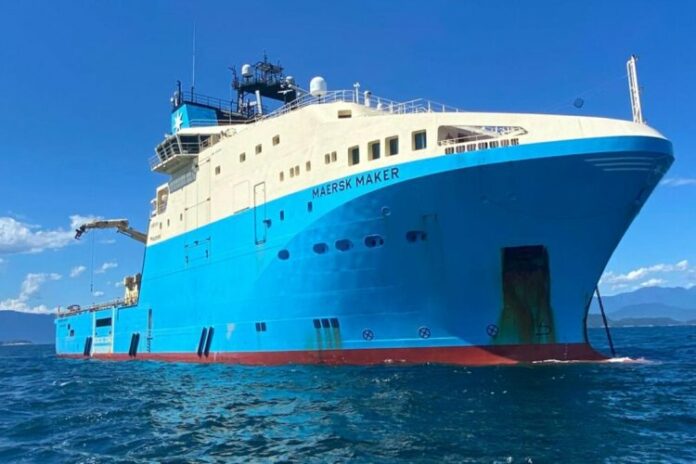
Maersk Supply Service signed an assignment agreement with TechnipFMC for the comprehensive towing and mooring campaign of Petrobras’s Búzios 6 Project (seventh module of Búzios), Offshore Brazil.

The scope covers the pre-installation of the mooring system and hook up of the FPSO P-78. The FPSO P-78 will be the seventh FPSO in the Búzios field, located offshore Santos Basin, Brazil.

The project will be carried out over almost 2 years, with onshore work (including engineering, procurement and project management for such assigned activities) already underway, and offshore work that is expected to utilise two of Maersk Supply Service’s state-of-the-art M-class anchor handlers, which will be supported by an additional four AHTS for the station keeping.

Rafael Thome, Managing Director for Brazil at Maersk Supply Service, says:

“We are very pleased to support the development of the Búzios 6 field and to further expand our operations in Brazil. Our approach is to combine our engineering, project management and operational experience with the best-in-class capabilities of our fleet, providing added value to the Brazilian market.”

Olivier Trouvé, Head of Integrated Solutions at Maersk Supply Service, says:

“We are delighted to have the opportunity to continue building on our positive relationship with Technip FMC, and to further demonstrate our capabilities in delivering challenging EPCI mooring projects in deep-water Brazil. We now look forward to adding to our excellent track record of safe and efficient integrated project executions.”

Norsepower signs agreement with Socatra to install two Rotor SailsTM

0

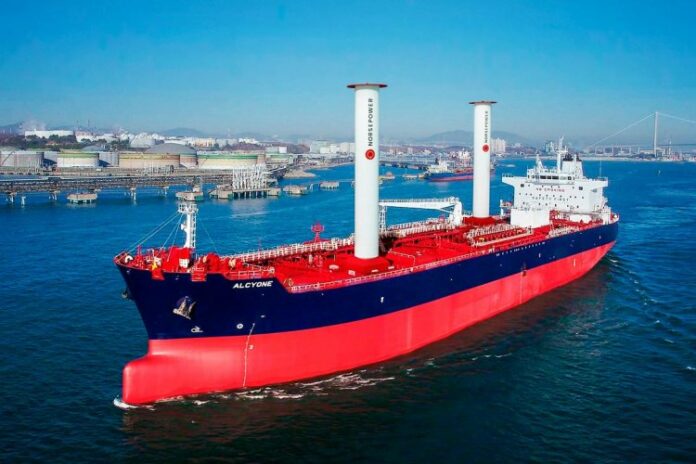
Norsepower Oy Ltd. has signed a contract with Socatra, the French ship owner and operator, for the retrofit installation of two Norsepower Rotor SailsTM on the Medium Range (MR) tanker Alcyone.

The 50’000 dwt, 2022 built, French flag tanker – chartered by global energy company TotalEnergies – will be retrofitted with two 35 m x 5 m Norsepower Rotor SailsTM. The units will be delivered in December 2023 from Norsepower’s new production hub in China, with installation scheduled for Q4 2023 or Q1 2024.

Recent calculations indicate that the average fuel and carbon emission reductions will be 8% for the ship as it transits between South Korea and French Polynesia, with the potential for further savings using voyage optimisation reaching up to 2,000 tons of CO2 per annum. Taking a holistic approach to decarbonisation and combining clean technology solutions enables key progress towards emissions reduction goals, minimising fuel costs, enabling carbon regulatory compliance, and improving IMO Carbon Intensity Indicator (CII) ratings.

Tuomas Riski, CEO of Norsepower, commented:

“It is fantastic to see that the Norsepower Rotor SailTM has been embraced by a leading company like Socatra. We are proud to be working with the team to support them in making critical sustainability progress in their operations. As our first client in the French market, it is a testament to the versatility and adaptability of our technology.

“The Norsepower Rotor SailTM is particularly well-suited to tankers, with a strong track record of proven performance. This is why we are confident that we can achieve at least 8% fuel consumption saving, based on existing data and projections, ensuring Socatra lead the way for more planet-positive operations for others in the oil industry.”

Laurent Bozzoni, Socatra CEO, added:

“As the oil industry is moving towards a low-carbon future, it is everyone’s responsibility to put forward tangible and economically viable solutions. We are pleased to be working with Norsepower to accelerate this transition and minimise our environmental footprint. The Norsepower Rotor SailTM is widely recognised as a proven solution for sea-going vessels, and we believe that our MR tanker Alcyone will benefit from significant efficiency gains and help us reduce our CO2 emissions.”

Jérome Cousin, Senior Vice President Shipping at TotalEnergies said:

“The installation of two Norsepower Rotor SailsTM on Alcyone contributes to TotalEnergies’ Net Zero ambition by providing an immediate reduction of the carbon footprint of our shipping activities. We reaffirm our commitment to promoting innovative solutions for more sustainable shipping and actively support the deployment of the most promising technologies. The success of this project could pave the way for a broader adoption of wind- assisted propulsion for TotalEnergies’ fleet.”

Brunt Ice Shelf in Antarctica calves giant iceberg

0

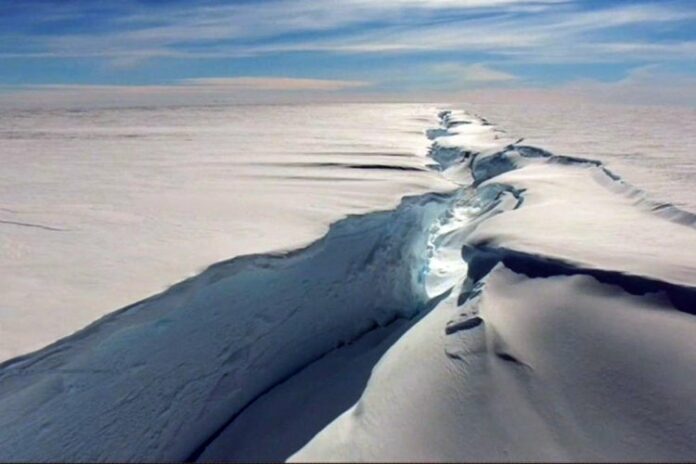
It calved after cracks that have been developing naturally over the last few years extended across the entire ice shelf, causing the new iceberg to break free. This occurred on Sunday 22 January between 19.00 and 20.00 UTC during a spring tide. 

The iceberg calved when the crack known as Chasm-1 fully extended through the ice shelf. The break off is the second major calving from this area in the last two years and has taken place a decade after scientists at British Antarctic Survey (BAS) first detected growth of vast cracks in the ice. 

The Brunt Ice Shelf is the location of BAS Halley Research Station. BAS glaciologists, who have been monitoring the behaviour of the ice shelf, say that the area of the ice shelf where the research station is located currently remains unaffected by the recent calving events.  

The glaciological structure of the Brunt Ice Shelf is complex, and the impact of calving events is unpredictable.  In 2016, BAS took the precaution of relocating Halley Research Station 23 km inland of Chasm-1 after it began to widen.  

Since 2017, staff have been deployed to the station only during the Antarctic summer (between November to March). Currently 21 staff are on station working to maintain the power supplies and facilities that keep the scientific experiments operating remotely through the winter. Their work will continue until they are collected by aircraft around 6 February.  

Professor Dame Jane Francis, Director of BAS says:

“Our glaciologists and operations teams have been anticipating this event. Measurements of the ice shelf are carried out multiple times a day using an automated network of high-precision GPS instruments that surround the station. These measure how the ice shelf is deforming and moving, and are compared to satellite images from ESA, NASA and the German satellite TerraSAR-X. All data are sent back to Cambridge for analysis, so we know what is happening even in the Antarctic winter – when there are no staff on the station, it is dark for 24 hours and the temperature falls below minus 50 degrees C (or -58F).”

Professor Dominic Hodgson, BAS glaciologist adds:  

“This calving event has been expected and is part of the natural behaviour of the Brunt Ice Shelf. It is not linked to climate change. Our science and operational teams continue to monitor the ice shelf in real-time to ensure it is safe, and to maintain the delivery of the science we undertake at Halley”. 

Cadmatic and CONTACT Software enter strategic partnership

0

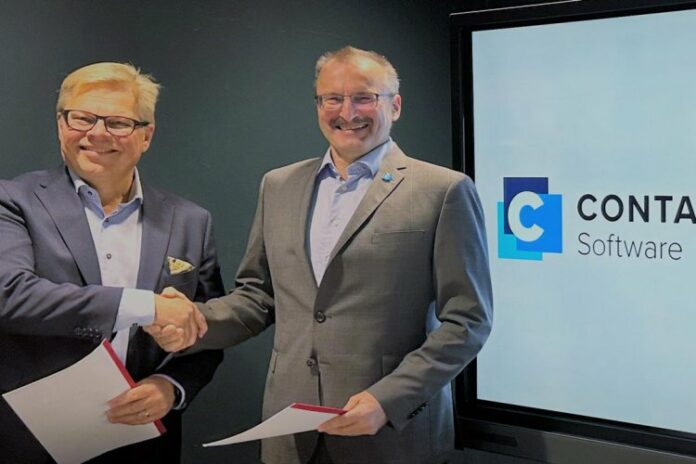
Cadmatic’s enhanced scope will cover the entire lifecycle of shipbuilding projects from design and engineering to prefabrication and production and even to maintenance, and operation. 

The apps of CONTACT Elements will be integrated with Cadmatic’s design, engineering, and information management solutions portfolio to comprehensively address shipbuilding-specific digitalization needs and to optimize future shipbuilding-dedicated business, engineering, and development processes in this challenging domain. 

“Shipbuilding is a unique industry with unique needs and levels of complexity. Our PLM and digitalization solution will come with in-built shipbuilding intelligence with the facilitation of data use and management to effectively support the life cycle of complex engineering systems at shipyards. It will reduce the need for consultancy and implementation services that are typically required for general PLM applications on the market,” says Cadmatic CEO Jukka Rantala. 

A vital pillar of the Cadmatic PLM solution is establishing a single source of truth for all ship data. The organizing, managing, and contextualizing of shipbuilding data can be facilitated by the data fusion of CAE/CAD/CAM/PDM systems to provide higher levels of digitalization. 

The benefits include, among others, increased overall quality and a reduction in the time and resources required for design and virtual prototyping. It also enhances modularization, flexible data management, interoperability across teams, tools and cyber security, provides efficient support for modern robotized fabrication, and boosts integration with operational platforms.

Marinetrans partners with TU Delft Hydro Motion Team’s foiling hydrogen boat

0

Together with other maritime companies Marinetrans now supports this diverse team of students to compete with a foiling hydrogen-power boat in the Monaco Energy Boat Challenge, showing the maritime industry practically viable sustainable propulsion solutions.

Steven Forsberg, Managing Director at Marinetrans, says:

“Since we formulated our ‘Going Green’ mission, we actively seek to align ourselves with sustainable technologies, projects and suppliers. Innovative propulsion systems and other emission-reducing maritime systems, software or equipment are of key interest to that mission. This project, the technical developments behind it and the vessel itself provide all of that. A great example of what is possible today, especially with real teamwork.”

At Marinetrans, several emission-reduction schemes are currently unfolding, incl. its own CO2 Offset Programme that clients can partake in to counter the environmental effects of their operations and the transports handled by Marinetrans to make them happen.

The TU Delft Hydro Motion Team was founded to show the maritime industry a number opportunities to tackle industry-related climate challenges. To this end, a new team of 20+ students is formed every year aiming to push the boundaries of sustainable technology. This year, the team consists of 23 multidisciplinary students who explore innovative developments in collaboration with industry experts, partners and alumni. Over the course of 17 years the teams built a number of solar-powered vessels (top speed of 55 km/h / 29.7 knots!), switching to hydrogen propulsion in 2021 and, among other results, delivering the first foiling hydrogen-powered boat in the world!

The ‘Aurora’ is built from scratch and will become a monohull, carbon fibre, zero-emission vessel. The foiling system has been re-designed and to that end as much weight as possible is being saved, which is important for the Monaco Energy Boat Challenge where all teams compete on Manoeuvrability, Speed and Endurance. All other teams are experienced professionals, making the race and creating their own technology all the more interesting for the student team. They even build their own Lithium battery.

Emma Alblas, responsible for external relations, says:

“We want to inspire the maritime industry to move towards sustainable shipping and shipbuilding. For that, we spend one year in designing, building and racing a zero-emission boat, in this case a foiling hydrogen-powered boat. And of course, we will test it. 

This year, we’ll spend three months of testing the hydrogen system, the vessel characteristics and of course the foiling system; an interesting period in which our partners are regularly updated and invited to see the technology and progress for themselves. As a team we do this to show the world what is possible and we thank Marinetrans and our other partners for enabling us to make this vessel a reality.” 

Single-lift selected for DolWin4 and BorWin4 wind projects

0

Awarded by Dragados Offshore, the contract covers the transport and single-lift installation by Pioneering Spirit of two 900-megawatt converter stations for the transmission of wind-generated power.

With a total transmission capacity of 1.8 gigawatts, the two converter stations are among the most important energy transition projects in Germany. The combined power will be sufficient to meet the power demands of a major city like Hamburg with 1.8 million people.

DolWin4 and BorWin4 are the first offshore grid connection systems to be developed by German transmission system operator Amprion Offshore GmbH. Dragados Offshore is responsible for delivering the two platforms, with partner Siemens Energy providing the HVDC technology.

This contract continues the strong collaboration between Dragados and Allseas, following transport and installation awards for HVDC converter platforms for the DolWin6 and BorWin5 offshore wind farms.

Vice President Projects, Matthijs Groenewegen, says Allseas is aligning itself behind growing demand to bring more wind energy to land and this latest award strengthens Allseas’ claim as the go-to contractor for the transport and installation of converter platforms for offshore wind farm developments.

“Countries like the Netherlands and Germany have set ambitious targets for offshore wind development, with operators fast-tracking plans for next generation offshore grid systems supported by supersized converter stations.

“These are substantial structures, ideally suited to our unique transport and single-lift installation capabilities. We showed what we are capable of with DolWin6 last year and the market has taken notice. As the size of converter stations increases, so does the argument for our significantly safer, faster, and more efficient single-lift solution.”

LPG-fueled LPG carrier LANTANA PLANET delivered

0

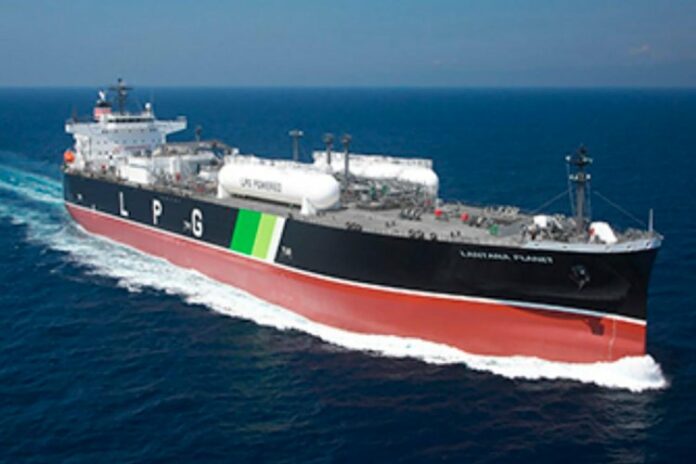
Kawasaki Heavy Industries has delivered the 84,000 m3 capacity liquefied petroleum gas (LPG) carrier LANTANA PLANET (Kawasaki hull No. 1754) for Nippon Yusen Kabushiki Kaisha. This is the 69th LPG carrier built by the company.

This vessel is a dual-fuel LPG carrier using LPG and low-sulfur fuel oil, and their fourth 84,000 m3 LPG carrier adopting a dual-fuel main engine.

In recent years, in order to effectively reduce emissions of greenhouse gases from international shipping, more vessels are adopting liquefied gases as an alternative to heavy fuel oil on a global scale. This very large LPG carrier is powered by LPG, which reduces greenhouse gas emissions and is expected to significantly reduce environmental impact. It is the fruit of the Kawasaki Group’s accumulated knowledge in building LPG and liquefied natural gas (LNG) carriers, and LNG-fueled vessels.

Kawasaki plans to develop and build more LPG-fueled LPG carriers, LPG/NH3 carrier, and other commercial vessels that meet environmental standards, as well as to develop and offer other eco-friendly marine technologies, to contribute to the establishment of a low-carbon/decarbonized society. These products include vessels for transporting liquefied hydrogen, considered to be the next-generation energy source.

Specifications

  • Length overall 229.90 m
  • Molded breadth 37.20 m
  • Molded depth 21.90 m
  • Molded draft 11.60 m
  • Speed Approx. 17.0 kn
  • Crew complement 30
  • Gross tonnage 49,943 T
  • Deadweight 55,153 t
  • Cargo tank capacity 84,169 m3
  • Main engine One set of Kawasaki-MAN B&W 7S60ME-C10.5-LGIP diesel engine
  • Classification/country of registration Nippon Kaiji Kyokai (ClassNK) / Panama
  • Delivery date January 23, 2023

This LPG carrier operates using both LPG and low-sulfur fuel oil. Use of LPG as fuel greatly reduces emission volumes of sulfur oxides (SOx), CO2 and other pollutants compared with use of marine fuel oil. In this way, the new vessel will meet SOx emission standards which were strengthened in January 2020, and EEDI Phase 3 regulations which will further strengthen CO2 emission standards.