-3.8 C
New York
Home Blog Page 33

Wärtsilä to power Denmark’s first high-speed electric ferries

0

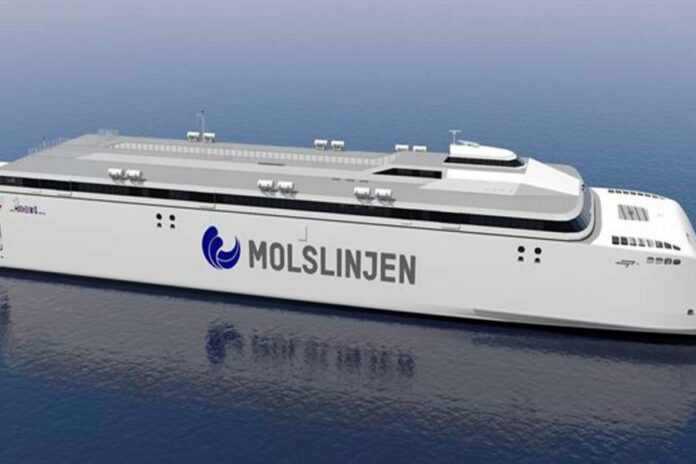
Technology group Wärtsilä has been selected to deliver a fully integrated electric propulsion system with waterjets for two new high-speed catamaran ferries being built for Danish ferry operator Molslinjen. 

The battery-electric vessels are being built at the Incat shipyard in Tasmania, with Wärtsilä supplying the integrated electric propulsion system, the DC power conversion system, its energy management and automation systems, eight electric propulsion motors and waterjets, as well as the Wärtsilä ProTouch propulsion control system for smooth and efficient sailing. 

“This is a major project that supports the ferry industry’s move towards more decarbonised operations. With these electric ferries built by Incat and powered by Wärtsilä’s electrification technology, we aim to remove thousands of tons of CO₂ emissions from Denmark’s climate footprint each year,” comments Kristian Durhuus, CEO, Molslinjen. 

Ferries play a vital role in meeting the growing demand for more sustainable transport options, with ship electrification being a key solution for enabling the sector to transition towards net-zero emissions.  

“Our partnership with Molslinjen and Incat not only brings electric vessels to the Kattegat route, but also continues our joint commitment in accelerating the industry’s path towards net-zero emissions shipping. Wärtsilä’s values and principles in shipping are deeply rooted in sustainability, innovation, and performance, and through our experience in vessel electrification, we have already delivered solutions for 150 hybrid-electric ships, with this number continuing to grow,” explains Roger Holm, President of Wärtsilä Marine & Executive Vice President at Wärtsilä Corporation. 

The two ferries will each measure 129 meters in length and 30.5 meters in width, accommodating up to 1,483 passengers and 500 cars. The addition of these new vessels will increase total capacity for cars and passengers on the Kattegat route by more than 25 percent.

“We’re not just building ships – we are building the future,” says Stephen Casey, CEO, Incat Tasmania. “Large-scale, low-emission transport solutions are not only possible, but are ready now. Incat Tasmania has always been at the forefront of innovating and pioneering new technology and design. The vessels address the market’s needs and requirements by utilising batteries, making this a very viable option for owners and operators looking to increase the sustainability of their fleets. Wärtsilä is a key player in the success of this project, supporting our goal of large-scale, low-emission transport with a completely integrated propulsion package.” 

The eight electric driven waterjet configuration feature low weight, shallow draft operation, low maintenance and easy access, safety and reliability, as well as superb manoeuvrability as a result of its integrated steering and reversing with quick response times. The waterjets have been designed for the highest overall propulsion efficiency. As the power is divided over more jets, the power density is lower, which means a higher efficiency. The Wärtsilä equipment is scheduled for delivery to the yard commencing in 2026.
Twelfth high-speed ferry designed for Tanzania’s Azam Marine hits the water

0

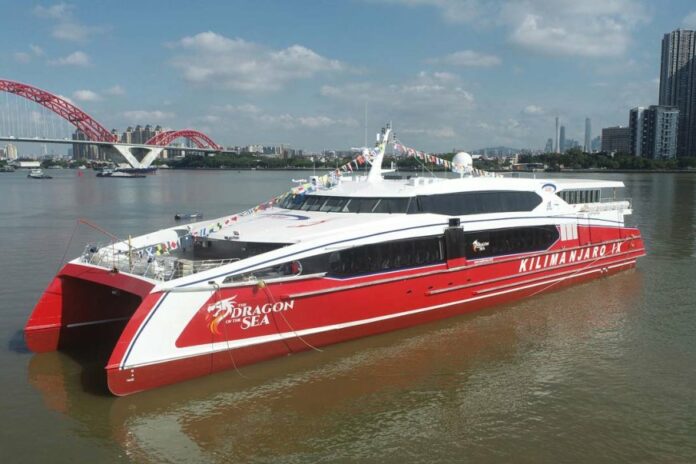
Kilimanjaro IX, a state-of-the-art 53-metre fast ferry designed by global digital shipbuilder Incat Crowther for Azam Marine has been successfully launched by AFAI Southern Shipyard in Guangzhou, China and is now set for sea trials.

The vessel is the twelfth (12th) high-speed ferry designed by Incat Crowther for the Tanzanian operator and will service Azam Marine’s popular routes to and from Dar-es-Salaam on the Tanzanian mainland and the islands of Zanzibar, Pemba, and Tanga.

Azam Marine tasked Incat Crowther with both design and quality assurance services throughout the design, build and sea trials of Kilimanjaro IX. Incat Crowther’s in-depth quality assurance process has seen the digital shipbuilder implement a rigorous risk assessment and quality review process throughout every stage of the project to reduce and mitigate potential risks. Incat Crowther’s service included a dedicated resource to Azam Marine throughout the project to coordinate a formal review programme with AFAI Southern Shipyard to ensure Kilimanjaro IXwas successfully delivered on time, and on budget.

The design of Kilimanjaro IX is based on the successful Incat Crowther-designed ferry platform that has formed the basis of Azam Marine’s growing fleet, while featuring a number of design enhancements that improve operational efficiency and the customer experience. Incat Crowther visited the existing fleet in Tanzania to collaborate with the operations and maintenance teams on a comprehensive change register, capturing key opportunities for improvement. These enhancements were incorporated into the vessel specification and design. The implementation was closely monitored by our quality assurance team on site at the shipyard. This rigorous process gave the owner confidence that every upgrade was executed to the highest standard and in full alignment with their operational requirements.

Capable of transporting 679 passengers at speeds of up to 37 knots, Kilimanjaro IX offers spacious and comfortable indoor seating for 334 passengers on the main deck with 40 additional seats on the fore deck and space for 11 standing passengers on the vessel’s aft deck. The vessel’s air-conditioned main deck also features large luggage storage areas, a kiosk and five bathrooms, including one that is wheelchair accessible.

The vessel’s upper deck features covered outdoor seating for 200 passengers as well as a large, air-conditioned VIP cabin for 72 passengers in two distinct categories – a 56-seat VIP class, and a 16-seat Royal class. The upper deck also features a large kiosk, four bathrooms and the vessel’s wheelhouse.

Abubakar Aziz Salim, Chief Executive of Azam Marine and Kilimanjaro Fast Ferries said: “Incat Crowther has been a trusted partner for our business as we have expanded our fleet. The eleven previous vessels designed by Incat Crowther have been robust, reliable, easy to maintain and fuel-efficient. The launch of Kilimanjaro IX is an important milestone as we grow to meet customer demand. Incat Crowther’s in-depth quality assurance process has ensured this project travelled smoothly from commissioning through to design, construction and trials. We’re looking forward to seeing Kilimanjaro IXin sea trials and welcoming the vessel into service next year.”

Brett Crowther, CEO of Incat Crowther said: “In addition to providing bespoke design support, this project has seen Incat Crowther’s team work closely with our shipbuilding partners at AFAI Southern Shipyard by providing project and quality management services. This partnership sees an Incat Crowther expert regularly on the ground throughout the build phase of the project to streamline communication and has ensured Kilimanjaro IXwas delivered to plan.“

Kilimanjaro IX will undergo sea trials in late 2025 and enter service in early 2026.

Norse Ship Management deploys Inmarsat`s solution to enhance operational connectivity experience

0

Inmarsat Maritime, a Viasat company, together with distribution partner Station Satcom have secured an order to install NexusWave on a bulk carrier managed by Singapore-based Norse Ship Management as the ship manager looks to meet the growing demands for crew and business connectivity across its fleet.

In line with Norse Ship Management’s digitalisation objectives, NexusWave provides uninterrupted remote access to business-critical applications and real-time engine-monitoring, ensuring seamless data exchange between ship and shore. The fully managed bonded connectivity service offers unlimited data and global coverage, enabling the crew to experience a home-like internet on board, where web-based applications perform as smoothly as they do on land.

Capt. Akshay Yadava, Managing Director, Norse Ship Management, said: “Crew welfare is our top priority, and providing a home-like internet experience onboard is increasingly vital to keeping our crews happy and motivated. With growing traffic demands on the commercial side and the need to ensure consistent, high-speed connectivity, we have selected NexusWave to upgrade our current system. We look forward to a continued successful collaboration with Station Satcom.”

NexusWave’s unique network bonding technology is designed to allow applications to leverage the combined speed and capacity of all available network underlays simultaneously, rather than relying on a single network at a time. This means ship owners and managers benefit from reliable, secure, and high-performance connectivity.

Anshul Khanna, Director Station Satcom Private Limited, said: “We are proud to be entrusted by Norse Ship Management to deliver NexusWave across its fleet. This partnership reflects Station Satcom’s commitment to enabling smarter, safer, and more connected maritime operations. Our integrated deployment approach ensures Norse benefits from a single, robust platform tailored to its evolving digital needs.”

Justin Yi, Regional Director, Inmarsat Maritime, said “Norse Ship Management’s decision to adopt NexusWave highlights its forward-thinking approach to digitalisation, with a clear commitment to enhancing crew welfare and operational efficiency. We extend our thanks to Station Satcom for its expert support in successfully delivering this deployment.”

Recovery begins of fallen containers at Port of Long Beach

0

Cargo operations have been temporarily suspended at Pier G, as operations continue to ensure the safety of dockworkers and other Port personnel.

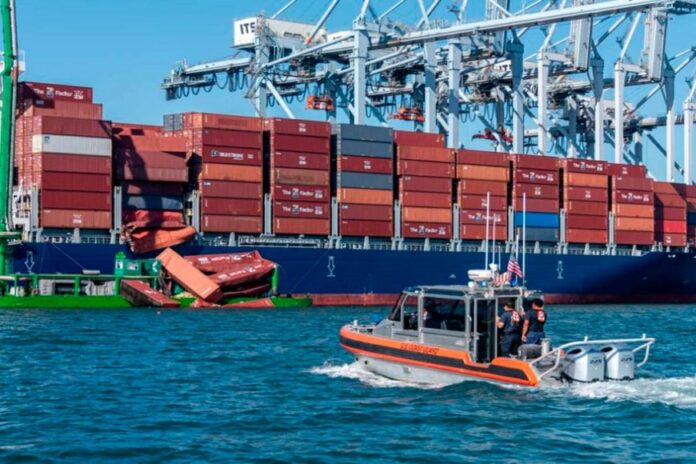
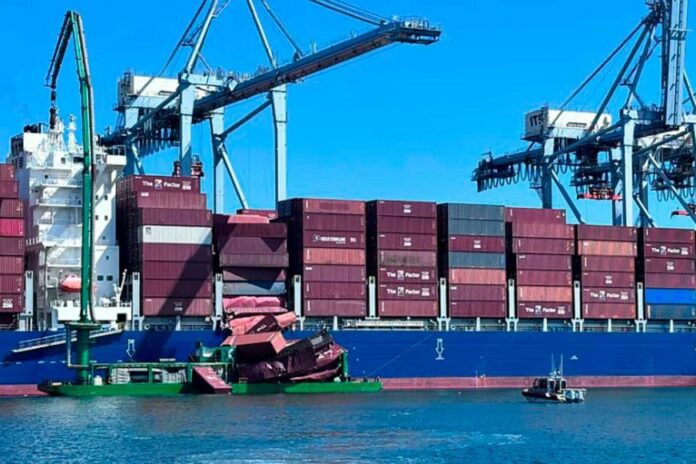
A Unified Command has been established to respond to an incident Tuesday morning that caused an estimated 67 shipping containers to fall off the cargo ship Mississippi and into the water at Pier G within the Port of Long Beach just after 9 a.m.

Representatives from the U.S. Coast Guard, Long Beach Fire Department, Long Police Department, Port of Long Beach, Army Corps of Engineers and other commercial representatives are responding to the incident.

A smaller clean air barge was connected to the Mississippi at the time of the accident and was damaged by several fallen containers.

No injuries have been reported. No other terminals or Port operations have been impacted.

Cargo operations have been temporarily suspended at Pier G, as operations continue to ensure the safety of dockworkers and other Port personnel.

The Coast Guard established a safety zone 500 yards around the Mississippi and is issuing marine safety broadcasts every hour to alert other vessels of the navigation and safety hazards.  The Coast Guard is also leading the effort to determine the cause of the incident.

Two sunken cargo containers were retrieved from the bottom of the basin on Wednesday. Additionally, responders secured the source of a fuel leak originating from an at-berth emissions control barge moored alongside the container vessel. The tank contained about 2,000 gallons of renewable diesel.

Cargo operations at the Port have been mostly unaffected by the incident, except in a 500-yard safety zone placed around the Mississippi, which was carrying 2,412 containers at the time of the incident. Containers began falling at 8:48 a.m. Tuesday. The Coast Guard, Jacobsen Port Pilots and the Port of Long Beach are working together to facilitate navigation in accordance with the safety zone.

There are 22 cargo terminals at the Port of Long Beach. Six handle containers.
 
“Although this incident was at one berth at the Port, we will continue to act with caution as we recover containers and restore full operations at the Pier G terminal as quickly and safely as possible,” said Port of Long Beach CEO Mario Cordero. “Thanks to the quick response by all involved – first the workers and companies right at the docks working the ship, then on to all of the agencies who have responded to protect life, safety and commerce.”

Van Oord’s scope of work on Fish Migration River successfully completed

0

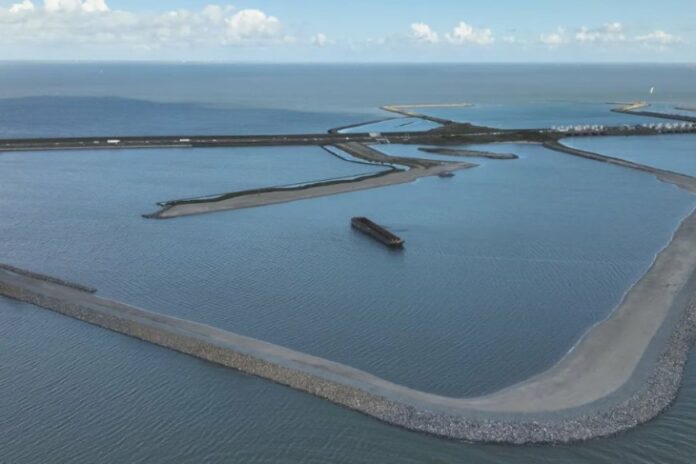
Van Oord has successfully completed its work on the Fish Migration River at the Afsluitdijk. This marks an important milestone in the development of this innovative nature restoration project, which contributes to fish migration between the Wadden Sea and Lake IJsselmeer.

The final part of Van Oord’s contribution comprised the completion of the dam separating the Fish Migration River from the IJsselmeer. The construction of this river was commissioned by the Province of Friesland.

The dam, the final component constructed by Van Oord, surrounds the Fish Migration River and protects it from wind, waves and currents. In addition, the dam plays an important role in managing brackish water in the river. Van Oord previously implemented the estuary on the Wadden Sea side and the Lake IJsselmeer side. In addition, as part of the Afsluitdijk dyke reinforcement project carried out by construction consortium Levvel (consisting of BAM, Van Oord, Rebel and Invesis) and commissioned by Rijkswaterstaat, Van Oord was also involved in the implementation of the gap through the Afsluitdijk. The gap in the Afsluitdijk allows migrating fish from the sea to access the new tidal system.

Matthijs de Vries, Executive Councillor of the Province of Friesland, said:

‘The province and Van Oord have worked closely together over the past few years, from design to execution, with this contour as a wonderful result. Ahead of us lies the final and biggest step: the construction of the meandering river in Lake IJsselmeer. I look forward to the completion of this unique project.’

For the construction of the dam, Van Oord used raw materials from the immediate area as much as possible. The sand was extracted from the Lake IJsselmeer with cutter suction dredger Biesbosch. A total of 400,000 cubic metres of sand was extracted from the sea bed right next to the Fish Migration River, eliminating the need to buy and bring in raw materials. This prevented about 400 shipping movements, or 18,500 truck movements. Some 20,000 tonnes of quarry stone used for reinforcing the Afsluitdijk was also reused. The use of area-specific material also contributes to the success of fish migration: The sand and rock have the same smell and taste as the environment, which helps fish with their orientation.

One more step in the construction of the Fish Migration River will follow: the construction of the meandering river. The Province of Friesland is expected to start implementation in 2026. 

Ronald de Geus, Director Dredging & Infra at Van Oord, said:

‘The successful completion of our contribution to this project is an important milestone for Van Oord. In close cooperation with the province of Friesland and many other stakeholders, we have worked for many years to ensure the sustainable implementation of the Fish Migration River. This project shows how innovative marine engineering and ecological recovery can reinforce each other, and really puts the Netherlands on the map. We are proud of the collective effort and of our contribution to this special initiative.’

About the Fish Migration River

The Netherlands will be the first country in the world to get a Fish Migration River. This is a unique artificial tidal system at Kornwerderzand, which is being built right through the Afsluitdijk. To grow up and reproduce, migratory fish need both salt and fresh water. This link ensures that fish can migrate from salt to fresh water and vice versa through the Afsluitdijk whenever they want. Not only fish will benefit from the Fish Migration River. The creation of the river will increase the amount of flora and fauna in the area, making the Lake IJsselmeer healthier. Apart from being a fish passage, the Fish Migration River will also be a beautiful nature and cultural area where visitors can undertake various activities. 

Containers collapse from ship at Port of Long Beach

0

A unified command has been established to respond to an incident that caused an estimated 67 shipping containers to fall off a cargo ship and into the water at Pier G within the Port of Long Beach in California just after 09:00 local time on Tuesday, September 9.

Representatives from the US Coast Guard, the Long Beach Fire Department, the Long Beach Police Department, the Port of Long Beach (POLB), the US Army Corps of Engineers and other commercial representatives are responding to the incident involving the container vessel Mississippi.

A smaller emissions capture barge was connected to Mississippi at the time of the accident and was damaged by several fallen containers, POLB said in a statement.

POLB has assured that no injuries have been reported and that no other terminals or port operations have been impacted. Cargo operations have been temporarily suspended at Pier G – although the terminal is open to truckers – as operations continue to ensure the safety of dockworkers and other port personnel.

Unified command agencies have dispatched numerous vessels and aircraft to assess the situation and provide assistance.

The coast guard has established a safety zone 500 yards (460 metres) around Mississippi and is issuing marine safety broadcasts every hour to alert other vessels of the navigation and safety hazards. The coast guard is also leading the effort to determine the cause of the incident.

The unified command is asking nonresponding personnel to remain clear of the area around the containers.

Source: bairdmaritime

AquaVentus and Hydrogen Scotland partner to advance North Sea Green Hydrogen Corridor

0

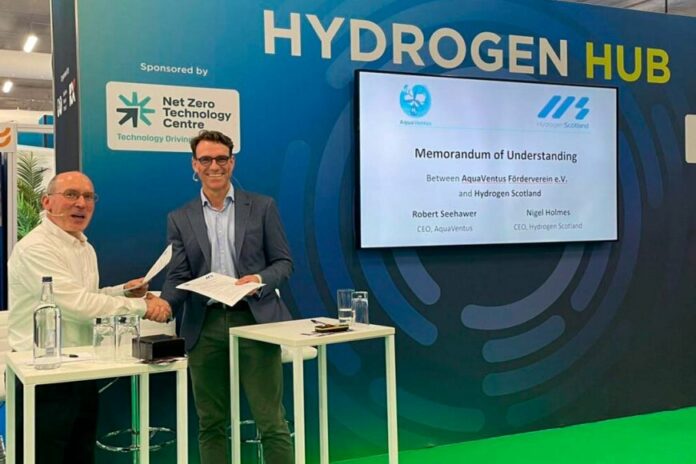
AquaVentus, Germany’s offshore wind-to-hydrogen initiative, and Hydrogen Scotland signed a Memorandum of Understanding (MoU) to deepen cooperation on green hydrogen production, transport, and deployment across the North Sea region.

Green hydrogen—produced using renewable power and transported via dedicated pipelines—offers one of the few viable pathways to cut emissions in steel, chemicals, and other hard-to-abate sectors.

Both organisations emphasised that the collaboration is not only about technology, but also about aligning infrastructure, regulation, and investment to accelerate a European hydrogen market.

AquaVentus, supported by more than 100 companies, research institutes, and industry groups, has set one of the most ambitious targets in the sector: producing one million tones of green hydrogen annually from offshore wind by 2035. Achieving this would require installing 10 GW of electrolyser capacity in the North Sea, which will be connected to land via a new pipeline infrastructure.

Scotland enters the partnership with significant natural advantages. Offshore wind potential exceeds domestic demand, positioning the country as a prospective exporter of green hydrogen to continental Europe.

The move also reflects the geopolitical dimension of energy transition, with the EU targeting 10 million tones of domestic renewable hydrogen production by 2030 and additional imports of the same scale. Cross-border projects like this one address both security of supply and competitiveness.

Research and innovation form another pillar of the MoU. Both organisations intend to intensify joint R&D activities, particularly in scaling electrolysis technology, integrating offshore wind farms with hydrogen production, and standardising quality and safety requirements across the value chain. Aligning technical standards is seen as a prerequisite for creating a functioning internal hydrogen market.

Source: theelectricityhub

Damen signs 24 vessel order with Serco

0

Damen Shipyards Group has signed a contract with Serco for the delivery of 24 vessels of various types. Serco has recently been awarded a ten-year contract with the UK Royal Navy to provide maritime services at His Majesty’s Naval Bases Clyde, Devonport and Portsmouth under the Defence Maritime Service Next Generation (DMS NG) Vessel Replacement Project (VRP). 

As part of its contract with the Royal Navy, Serco is responsible for vessel towage, passenger transfer and barge and tank cleaning, ensuring the continuation of essential harbour movements and support services. 

For the DMS NG VRP, Serco will be the prime contractor, with Damen serving as the subcontractor. By combining their respective capabilities, the two companies have developed a compelling and innovative proposal for the UK Royal Navy.

The contract for 24 Damen vessels includes a wide range of ship types including ASD Tugs, RSD Tugs, pilot boats, barges and cranes barges. The vessels will support the modernisation of the navy’s auxiliary fleet, replacing ageing vessels currently in operation. 

This latest contract with the Royal Navy sees Serco continue the provision of services it has delivered for more than two decades. Serco’s work for the Royal Navy has seen it collaborate with Damen previously. Back in 2007, the two parties signed a contract for the delivery of 29 vessels for the Future Provision of Maritime Services programme with a similar scope to the current order. Since then, Damen and Serco have continued to work together on a number of projects internationally. 

Damen Sales Manager UK and Ireland Frederik van der Linde said, “We are delighted to be awarded this significant contract by Serco. This confirms the suitability and capabilities of all parties involved. It also reaffirms the excellent and complementary relationship that exists between our two organisations. On behalf of Damen, I look forward to the extensive collaboration in the building and delivery of these 24 vessels.”

Commenting on the contract award, Guy Barker, Serco’s Maritime Services Director, said: “Serco is proud to continue its long-standing partnership with the UK Royal Navy and to work alongside Damen once again on this vital programme. The Defence Maritime Services Next Generation Vessel Replacement Project represents a significant step forward in modernising the Ministry of Defence’s auxiliary fleet. By combining Serco’s operational expertise with Damen’s proven shipbuilding capabilities, we are confident in delivering a fleet that will enhance the effectiveness and resilience of maritime support operations across the UK’s naval bases.”

The delivery of the vessels will commence in 2027 and is scheduled to be completed during 2028. Following this, Damen will continue to provide support to Serco via its UK Service Hub. Damen’s network of Service Hubs are located around the world in proximity to its clients. With this, Damen is able to provide ongoing, round the clock services incorporating everything from warranty support, spare parts, training, service and maintenance, throughout the lifecycle of its vessels. 

Stena Bulk appoints exclusive global partner for jettyless LNG technology

0

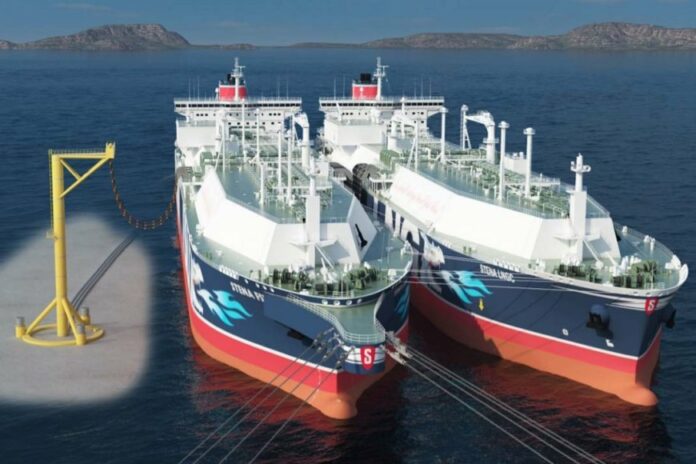
Under the partnership, Seasystems will exclusively market, sell, and deliver Stena Bulk’s proprietary Extended FSU/FSRU Mooring (EFM) system and Jettyless Floating Terminal (JFT) technology. Stena Bulk retains full ownership of the patented technologies, which will remain part of the company’s portfolio.

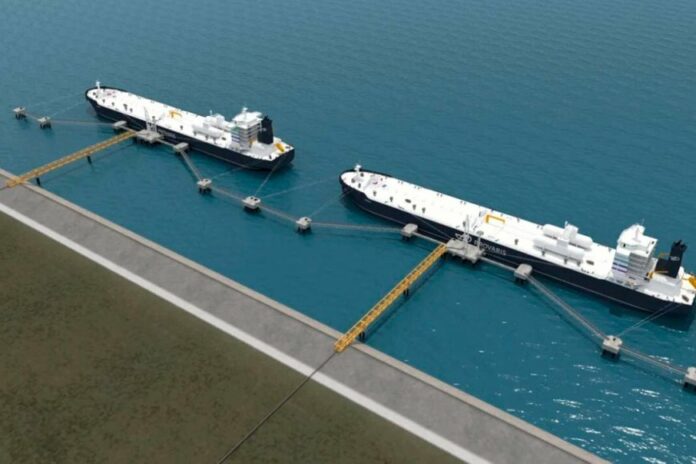
Developed by Stena Bulk, the jettyless systems enable LNG storage and transfer without the need for traditional jetties or costly fixed infrastructure. By requiring only a suitable near-shore or offshore location with sufficient water depth, the technologies deliver flexible, safe, and cost-efficient LNG import and export solutions, even in harsh operating environments.

Göran Hermansson, General Manager LNG WW, at Stena Bulk, said: “This agreement represents a key step in Stena Bulk’s strategy to bring our LNG technologies to market at scale. Our patented jettyless solutions, including the EFM and JFT systems, showcase how LNG can be delivered by providing operators with safe, reliable and cost-effective infrastructure to the global energy market.

“Partnering with Seasystems enhances our ability to deliver these innovations globally, delivering greater value for customers and the wider energy industry.”

Provaris, Baker Hughes sign deal to advance compressed hydrogen systems

0

The Collaboration marks a significant step forward in the development and deployment of compressed hydrogen solutions for marine transportation and storage, leveraging Provaris’ proprietary H2Leo Barge and H2Neo Carrier alongside Baker Hughes’ compression expertise.

The Collaboration Agreement replaces the Memorandum of Understanding signed in August 2024 and formalises the technical cooperation between the two companies. It outlines a framework for advancing hydrogen export and import projects across Europe, with a shared commitment to enabling scalable, efficient infrastructure for the regional supply of hydrogen.

Key elements of the agreement include:

  • Provaris will identify and qualify hydrogen project opportunities where Baker Hughes’ compression equipment and engineering services can be applied
  • Baker Hughes will provide technical support for equipment selection, plant layout, and cost modelling.
  • The parties will continue to refine the Compression Concept Design Paper and collaborate on project-specific engineering inputs.

    Per Roed, Chief Technology Officer of Provaris Energy, said:

“This collaboration strengthens our ability to deliver scalable, efficient hydrogen transport and storage solutions.”

“We are excited to work with Baker Hughes to showcase the benefits of compression using their equipment. The outcomes are already clear, and we look forward to our co-operation to continue to develop regional supply chains for hydrogen using Provaris carriers”.

Provaris and Baker Hughes are already co-operating on hydrogen export opportunities identified in the Nordic region to define equipment and engineering services for Baker Hughes, underscoring the commercial potential of this collaboration.