-6.4 C
New York
Home Blog Page 338

Alma’s marine fuel cell system awarded Approval in Principle by DNV

0

Alma Clean Power announces the achievement of a key milestone towards the development of a marine solid oxide fuel cell (SOFC) system. The company’s design of a 1 MW ammonia fuelled SOFC system received Approval in Principle (AiP) from DNV.

The SOFC system design has been evaluated for compliance with DNV class rules and IMO guidelines for fuel cell installations. The AiP is granted for a containerized module that includes safety systems to handle ammonia as fuel.

Bernt Skeie, CEO in Alma Clean Power, says:

“We’re excited that our design has received approval according to the highest standards in the maritime industry. Excellent collaboration with DNV as a leading class society within fuel cell systems and new fuels, has been key to get this far, and we look forward to continued collaboration as we move to the next phases of the project.”

Fuel cells have great potential to contribute to the achievement of the IMO goals for decarbonization of shipping, mainly because of their high efficiency and capability to run on hydrogen-based fuels.
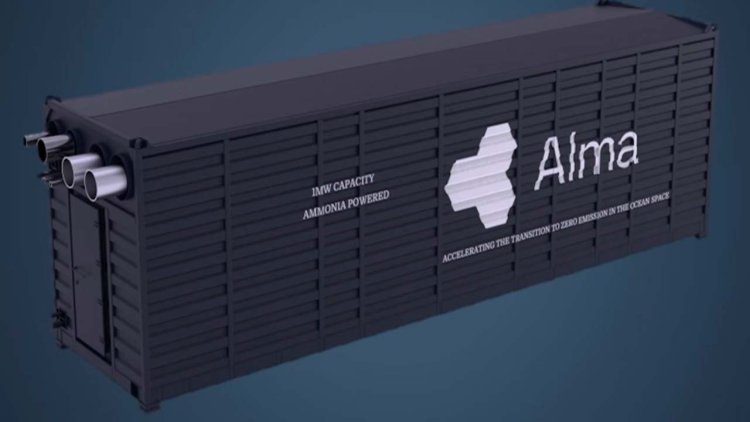
Alma Clean Power’s fuel flexible SOFC systems can achieve more than 60% efficiency with low or zero emissions, depending on the fuel type. Compared to combustion engines, fuel cells do not have any fuel slip or require any blending with carbon-based fuels which would increase emissions.

Erling Johannessen, Senior Advisor in Alma Clean Power, says:

“Our fuel cell systems are designed to operate on a variety of low and zero emission fuels such as ammonia, LNG, LPG, hydrogen, methanol, syngas and LOHC (Liquid Organic Hydrogen Carriers). The AiP is therefore an important verification of key safety principles relevant for all fuel types.”

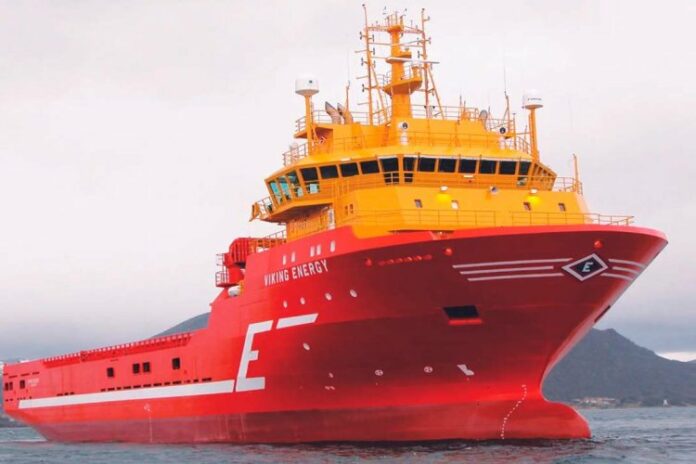
Two modules of the AiP approved SOFC system will be retrofitted as a 2 MW open-deck installation on the offshore supply vessel Viking Energy, as part of the EU-funded ShipFC project. The vessel is owned and operated by Eidesvik, and on contract for Equinor. The SOFC system will be integrated with existing dual fuel gensets and a battery pack, allowing the vessel to sail solely on emission-free, green ammonia for all dynamic positioning operations. The ammonia fuel cell system for ShipFC will be fully tested at the Energy House at Stord in Norway before installation onboard Viking Energy. This will be the first time an ammonia-powered fuel cell system is installed on commercially operative vessel.
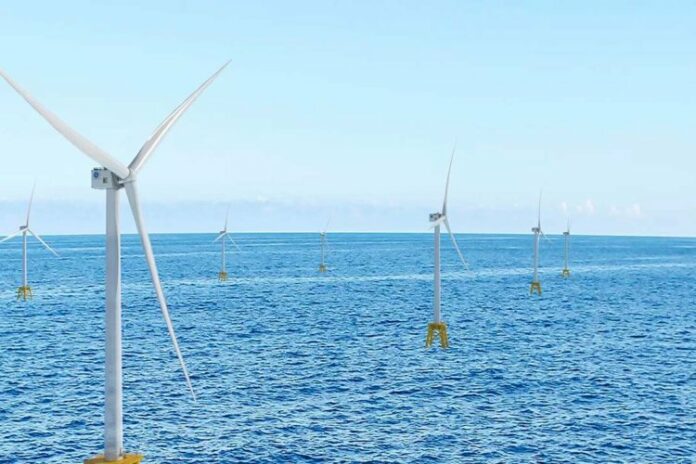
GE proposes building two new offshore wind facilities in New York

0

To support localized content and New York’s vision to become the nation’s offshore wind manufacturing hub, GE proposed building the factories with Carver Companies at their Port of Coeymans site.

These cutting-edge factories are designed to advance New York as the foundation of a clean energy economy while supporting the local community through durable jobs and positive economic impact:

  1. Blades Facility:  Should GE receive sufficient order volume, LM Wind Power, a GE subsidiary, is ready to build a state-of-the-art facility to manufacture offshore wind turbine blades—creating approximately 650 direct jobs, with approximately 35% of those jobs coming from disadvantaged communities. Approximately 900 additional indirect jobs and over 500 construction jobs would be created along with millions of dollars of related economic benefits.
  2. Nacelle Facility:  GE Vernova, GE’s portfolio of energy businesses, proposed building a state-of-the-art facility to build nacelles, which house the generating components of a wind turbine. This facility would create approximately 220 direct jobs, with approximately 35% of those jobs coming from disadvantaged communities. Additionally, almost 500 indirect jobs and approximately 500 construction jobs would be created along with millions of dollars of related economic benefit.

Scott Strazik, CEO of GE Vernova, GE’s portfolio of energy businesses, said:

“As a leading manufacturer and innovator in developing renewable energy technology, GE is ideally positioned to help New York secure its vision of becoming a leading manufacturing hub for offshore wind technology. Our proposal leverages GE’s unique and unparalleled expertise, resources, and track-record – including a 130-year legacy of manufacturing in New York – to make this vision a reality in a durable and sustainable way.”

GE’s proposal includes specific commitments to hire and train new employees from economically disadvantaged communities.  For example, the company will launch an outreach program called Pathways to Wind to provide historically under-served communities exposure, education, and training in the emerging offshore wind industry. In support of that program, GE has engaged 24 educational institutions, including Office of Workforce Development and Community Education at SUNY Schenectady County Community College and SEAT [Social Enterprise and Training] Center, and signed 15 Memorandums of Understanding (MOUs) with New York entities that will enable the company to enhance diversity and inclusion in its efforts to staff the facilities.

GE’s approach to environmental compliance and mitigation will help to ensure that the development and operation of the offshore wind turbine blade and nacelle facilities at the Port of Coeymans will satisfy all federal, state, and local laws. Our approach also will contribute to the advancement of sustainable development practices in the state and beyond.

The two facilities would produce components for the next generation of GE’s Haliade-X offshore wind turbine.  An earlier version of the Haliade-X was the first 12+ Megawatt (MW) turbine in the industry and the only one to have full type certification to operate at 14.7 MW. That model of the Haliade-X has been operating for three years and has been selected by several customers, including for the 3.6 Gigawatt (GW) Dogger Bank Wind Farm. That project will be the largest in the world when completed. Others that have selected the earlier model include the 800 MW Vineyard Wind Project that will be the first large-scale offshore wind project in the United States, and the 1100 MW Ocean Wind 1 project. The next generation model of the Haliade-X builds off the proven platform of its predecessor but contains some design changes and upgrades.

ABL assesses solar powered cold ironing at Mombasa Port

0

A feasibility study conducted by energy and marine consultancy ABL Group has investigated two possible brownfield sites for the installation of a solar photovoltaic (PV) plant to generate renewable energy powered shore power – or ‘cold ironing’ – at the Port of Mombasa, Kenya.

The project was commissioned following the proposed introduction of the Green Ports Policy by the Kenyan Ports Authority, envisaging that all vessels at the port of Mombasa are to turn off onboard generators and operate from shore power.

“A study conducted in 2021 indicated that 25 percent of vessels’ emissions are generated whilst stationary at port. Utilising electrical power from shore brings significant reductions in emissions. However, this study went one step further in exploring the opportunity to generate the electricity from 100 percent clean local solar PV resources, creating an entirely green contribution to the shore power system,” says Aimee Besant, energy storage lead at ABL Group.

As part of the study, ABL’s renewable energy experts conducted a feasibility study for the client to assess the suitability of installing a 5-10 MWp solar plant, energy from which can be harnessed to install a green energy shore power system. The scope of work included provision of a cost indication of a correctly sized solar plant, and evaluation of the typical vessel consumption demand and wider energy demand of the port and berth.

The results of the study assessed two possible brownfield sites deemed viable options for solar PV plant development, following desktop reviews by the ABL team. The work included developing a conceptual design for each site, each designed to maximise the PV output from the sites. The design results were compared to the vessel and port consumption demand and the local cost of heavy fuel oils to determine that, on a kWh basis, a combination of PV-generated and grid supplied shore power could be cost effective compared to traditional onboard generators.

“The study found that significant reduction in the local burning of heavy fuel oils can be secured from the use of cold ironing, resulting in an improvement to local air quality. As cold ironing is being increasingly considered in different countries, this project reflects the scale of the opportunity for other ports around the world to explore the installation of shore power generated from their local green energy resource, as well as the additional potential when combined with energy storage solutions such as lithium batteries or hydrogen,” adds Aimee Besant.

Although this study was designed to assess the feasibility of solar PV generated cold ironing, it has been expanded to explore the feasibility of additional renewable power sources or energy storage.

Austal secures US submarine command deck module contract from General Dynamics

0

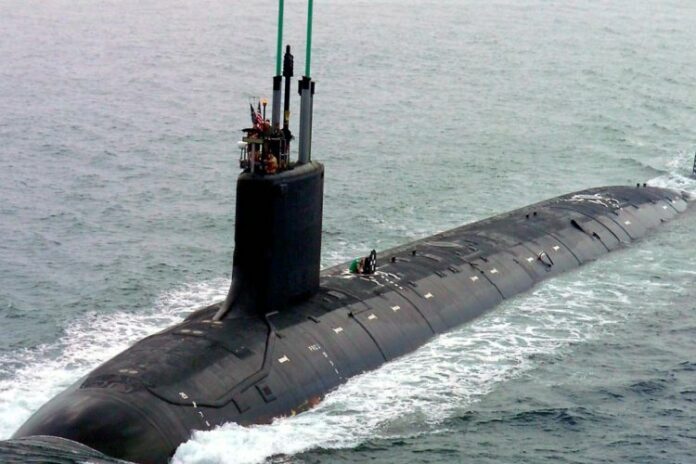
Austal Limited (Austal) has been awarded a time and material (T&M) contract by General Dynamics Electric Boat (GDEB) for structural assembly fabrication in support of the US Navy Virginia Class submarine program.

The contract, awarded to Austal USA, is for structural assembly fabrication in support of the US Navy Virginia Class submarine program. This award is a continuation of previously announced efforts to support Electric Boat in work for the US Navy submarine industrial base. This award is expected to provide potentially up to $25 million USD revenue for Austal USA.

Austal Limited CEO Paddy Gregg said the previous contract to train staff was a key enabler for the current award.

“This style of contract is recognition of Austal’s shipbuilding expertise and provides important revenue diversification and expansion,” Mr Gregg said.

Grimaldi Group brings its ammonia-ready car carrier orderbook to 15

0

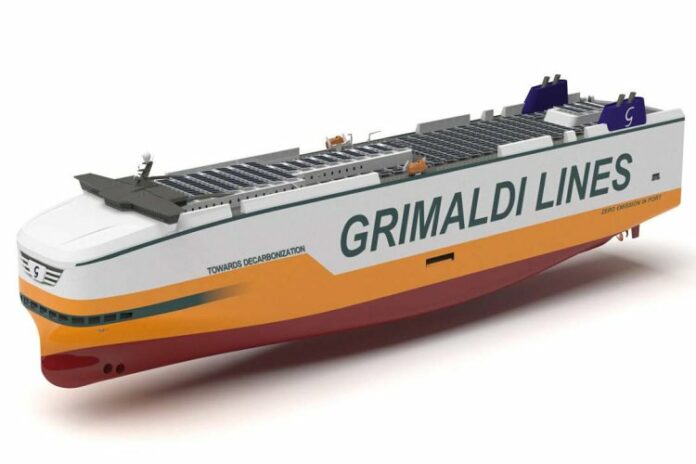
The orderbook for the Grimaldi fleet keeps growing. As part of the agreement signed in late October with China Merchants Heavy Industries Jiangsu (a company part of China Merchant Industry Holdings – CMI) for the construction of five new PCTC (Pure Car & Truck Carrier) vessels, the Group exercised the option for another five units. With this operation, the total number of car carriers ordered by the Neapolitan company in less than three months has risen to fifteen.

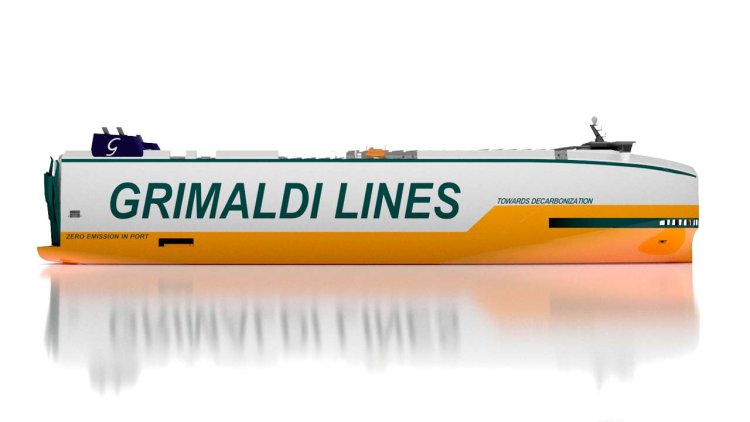
The concept of the new buildings was developed by the Grimaldi Group in collaboration with the Knud E. Hansen naval design and architecture studio. With loading capacity of over 9,000 CEU (Car Equivalent Units), they are designed to transport electric vehicles as well as fossil fuel vehicles. They received the Ammonia Ready class notation from RINA (Italian Shipping Register), which certifies that the ships are designed for eventual conversion for the use of ammonia as marine fuel.

These vessels will be equipped with mega lithium batteries, solar panels and shore connection capability (cold ironing), which – where available – constitutes a green alternative to the consumption of fossil fuels during port stays. Other state-of-the-art technologies will be installed on board with the aim of reducing the carbon footprint – these include an air lubrication system, innovative propulsion and optimized hull design. Overall, the new ships will be able to cut fuel consumption by 50% compared to the previous generation of car carrier vessels.

The new PCTCs will be deployed on voyages between Europe, North Africa, and the Near and Far East to meet the new transport needs of automotive industry players.

“Grimaldi is committed to green shipping and will lead further the car shipping transportation field”, stated CMI President Hu Xianpu. “CMI Group will also take the green technology shipbuilding as a new growth point and cooperate with Grimaldi to achieve common long-term development.”

“Thanks for Grimaldi trust in CMI Group, who will mobilize the resource of the whole Group to provide the best service for Grimaldi, and build high quality vessels with good delivery time to achieve a win-win situation”, added CMI Vice President Wu Sichuan.

“With our recent orders for the construction of new PCTC vessels, we’ve strengthened our long lasting and fruitful collaboration with China Merchant Industry Holdings,” said Grimaldi Group Managing Director Emanuele Grimaldi. “We’ve also reaffirmed our commitment to our customers, especially the world’s leading car manufacturers who continue to reward us with their trust. In this way, we’ll continue to live up to their high expectations and meet their evolving needs, with our offer of increasingly efficient and environmentally sustainable shipping services. Ten out of fifteen of our newly ordered car carriers will be deployed on the Far East trade and support the increasing development of China’s automotive industry.”

The Neapolitan company is vigorously pursuing the upgrade and renewal of its fleet, which currently counts 130 ships deployed worldwide.

The ten vessels commissioned from China Merchants Heavy Industries Jiangsu will be delivered between 2025 and 2027. Overall, thanks to its recent investments totaling about USD 2.5 billion, the Group will take delivery of twenty-five new ultra-modern vessels over the next five years, including fifteen ammonia-ready PCTCs (with option for another two units), six G5-class ro-ro multipurpose vessels, two GG5G-class hybrid ro-ro ships and two Superstar-class ro-pax units (for its subsidiary Finnlines).

Danfoss powers two new zero-emission ferries for Molsinjen

0

In 2024, the short-sea ferry operator Molslinjen will introduce two 100% electric ferries powered by Danfoss drives and power converters. 

Danfoss power converters feature on both vessels, powering battery power conversion on board, and the vessel charging systems onshore. In addition, Danfoss drives will deliver precision control to the electric propulsion motors.

The relationship between Molslinjen and Danfoss is well established after previous electric ferry deliveries, where Danfoss contributed with system design, commissioning, and maintenance to ensure successful and sustainable operation with long lifetime.

“We feel very honored to be selected once again by Molslinjen, especially because of the importance of the project. We look forward to commissioning in the New Year and to follow the project in the future,” says Claus Larsen, Country Manager, Danfoss Drives Sales Denmark.

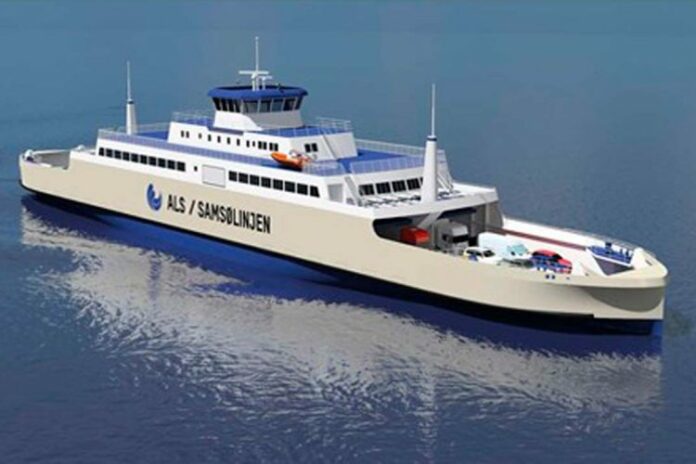
This order represents the next generation and size of passenger vessels which are 100% electric-powered, running on batteries. Each of the new vessels has a total length of 116.8 meters, with capacity for 600 passengers and 188 cars. The vessels are prepared for autonomous sailing between ports, with automatic docking and charging at quay.

For the benefit of passengers, the vessels are designed for rapid charging to ensure fast turnaround in port, so the ferries can sail according to tight timetables. Passengers and crew will experience significantly less noise on board, by comparison with conventional vessels. These vessels also contribute significantly to sustainable RoPax transport of the future, in terms of optimal weight, safety and total cost. As well as reducing emissions at sea, the clean technology on board helps the ports to meet IMO emission targets, for clean air onshore.

Molslinjen aims to connect Denmark by enabling free movement for as many passengers as possible, whilst meeting ambitious climate targets. 

”We have set ambitious goals for fossil-free ferries: we will reach zero CO2 emission on our western routes by 2028. We will reduce CO2 emission by 70% by 2030. And we will achieve CO2-neutrality in 2050,” states Carsten Jensen, Managing Director of Molslinjen.

ClassNK issues AiP for large ammonia fueled BC jointly developed by MOL and MITSUI

0

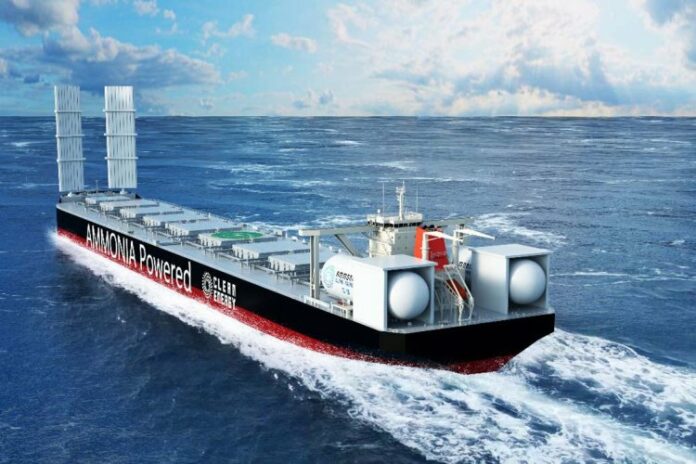
ClassNK has issued an Approval in Principle (AiP) for a large ammonia fueled 210,000 DWT bulk carrier jointly developed by Mitsui O.S.K. Lines, Ltd. (MOL) and MITSUI & CO., LTD (MITSUI).

Ammonia is expected to be used as a ship fuel for decarbonization since it does not emit CO2 when combusted. Meanwhile, adequate safety measures are imperative as it has been pointed out that ammonia is toxic to humans and corrosive to materials.

MOL and MITSUI have jointly determined the size and specifications for the vessel, and its design has been entrusted to Mitsubishi Shipbuilding Co., Ltd. 

ClassNK carried out the review of this jointly developed design in line with Part C of its guidelines and issued the AiP on verifying conformity to the prescribed requirements. In addition, risk assessment (HAZID) will be conducted to confirm that no unacceptable risks exist at the basic design stage and to identify items to be considered in the detailed design.

NYK to build its fifth LPG dual-fuel very large LPG / ammonia carrier

0

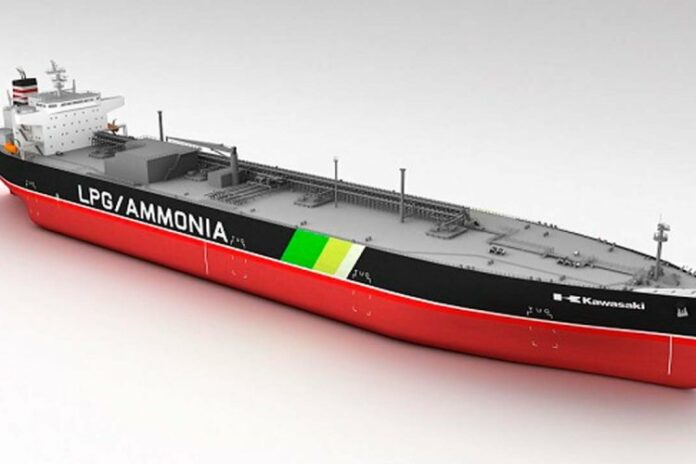
NYK has announced the order of its fifth liquefied petroleum gas (LPG) dual-fuel very large LPG / liquefied ammonia gas carrier (VLGC) from Kawasaki Heavy Industries Ltd. (KHI).

This vessel is the seventh in NYK’s fleet of LPG-fueled LPG carriers and the fifth in a new type of vessel that is also capable of carrying ammonia and will be equipped with separate cargo tanks designed to carry LPG and ammonia at the same time to flexibly respond to various trade patterns.

Furthermore, in addition to the LPG dual-fuel engine, the ship will have a shaft generator that can generate electricity during the voyage by using the rotation of the shaft that connects the main engine to the propeller. Since the diesel generator can be stopped during normal seagoing transit, realizing full navigation with LPG fuel will be possible except for the use of a small amount of pilot fuel.

When LPG is used as fuel, exhaust gas from the ordered VLGC will contain at least 95% less sulfur oxide (SOx) and 20% less CO2 compared to NYK’s conventional VLGCs using heavy-oil fired engines.

This new VLGC will comply not only with the SOx Global Cap regulations that were tightened from January 2020 but also with the IMO’s Energy Efficiency Design Index (EEDI) Phase 3 regulations, which implemented stricter CO2 emission standards from April 2022.

Moreover, the vessel is expected to be given notations by Nippon Kaiji Kyokai (ClassNK) as a VLGC that has a preparatory design in accordance with the guidelines issued by ClassNK so that this vessel may use ammonia fuel in the future.

Vessel Particulars

  • Length overall: approx. 230 meters
  • Breadth (moulded): 37.20 meters
  • Depth (moulded): 21.90 meters
  • Summer draft (moulded): 11.65 meters
  • Tank capacity: approx. 86,700 cubic meters

Harwich Haven dredging in full force

0

Maritime transport is the backbone of international trade and the global economy. Keeping up with the growing volume of maritime transport requires both port and waterway development and maintenance.

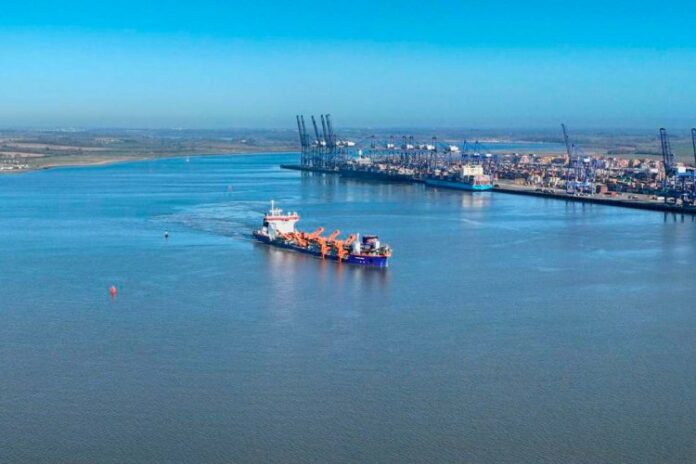
The Harwich project team’s mission is to give the latest generation of container vessels unimpeded access to Harwich Haven and the Port of Felixstowe, the largest container port in the United Kingdom.

Van Oord and its joint venture partner Boskalis started dredging the harbour basin and access channel in October 2021, ensuring that the port will be able to accommodate even the biggest ships. The work is now well underway. About 70% of the channel has currently been deepened from ‑14.5 to ‑16 metres and the expectation is that the project will be completed in the third quarter of 2023. A variety of dredging equipment is being deployed to dredge a total of 15 million cubic metres of silt, sand and clay.

Van Oord’s ambition, to have a net-positive impact on the world, is rooted in our core purpose and values. We engage proactively with the communities that our projects affect and we work to meet local needs and use local knowledge about the environment to improve our sustainable planning and designs. This project involves discharging granular dredged material onto two beneficial islands to protect the coastal area from the effects of climate change and sea level rise. In addition, the islands are a perfect habitat for little terns to thrive and develop into a productive colony. 

Helsinki Shipyard’ NB518 SH Diana floated out of dry dock

0

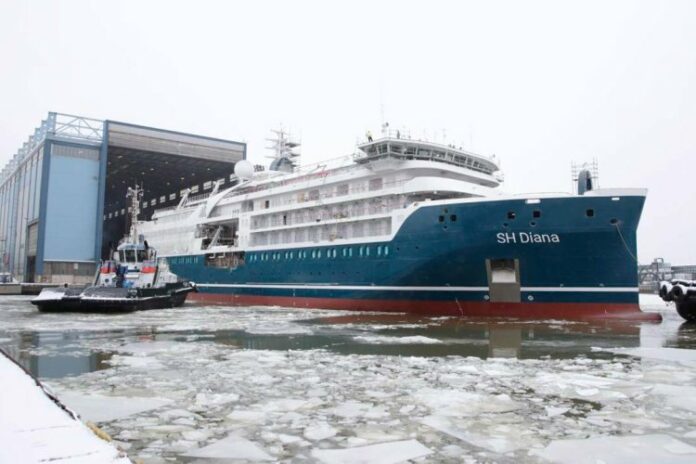
Swan Hellenic has announced that SH Diana, the newest and largest ship in its ultramodern 5-star fleet, was floated out of dry dock at Helsinki Shipyard this Monday 23rd January.

SH Diana’s fitting out is now already under way, leaving her comfortably on schedule for her maiden cruise, “Mysteries of Carthage and the Moors”, which will be leaving Palermo in Italy for Lisbon in Portugal on 15 April. Diana will then make her way up the West Atlantic seaboard of Europe for explorations of the Arctic.

Andrea Zito, CEO of Swan Hellenic Limited, said:

“We are delighted with the construction progress and quality of SH Diana, a Polar Class PC6 vessel with state-of-the-art ship technology and sustainability that will enter service as planned in April. We look forward to welcoming our guests aboard her to experience our cultural expedition cruises with the first-time option of choosing between shore exploration by tender boat as well as expedition zodiac.”

“With exemplary co-operation between our personnel, owner’s representatives and our multiple contractors and suppliers, SH Diana has reached maturity for this milestone and was floated out. Works will now continue with intense commissioning phase, preparing her for passengers in April.” commented Kim Salmi, CEO of Helsinki Shipyard Oy.