-6.4 C
New York
Home Blog Page 337

Correll Group scoops Saint-Brieuc Offshore Wind Farm cable contract

0

The Correll Group, Electrical Engineering Division (CEE) has been awarded a contract from Prysmian Group to complete the 66kV inter-array cable (IAC) termination & testing on Saint-Brieuc Offshore Wind Farm.

The project will be split into two campaigns, with the first campaign starting imminently.

Saint-Brieuc is located 16.3km off the coast of Saint-Brieuc Bay in Brittany, north-western France and is developed, constructed and commissioned by Ailes Marines a company 100% owned by Iberdrola. The proposed development zone extends over an area of approximately 75km² in the English Channel and will consist of 62 Siemens Gamesa 8.0-167 DD offshore wind turbines.

Upon completion, the wind farm will be one of the biggest commercial-scale offshore wind projects in France generating a total installed capacity of 496 megawatts (MW), enough clean energy for 835,000 people.

Sam Dowey, Managing Director at Correll, commented:

“Award of this contract further develops our long term relationship with the Prysmian Group, one of the worlds most experienced offshore renewable cable manufacturers”.

Amer Shipping orders two dry cargo vessels from Concordia Damen

0

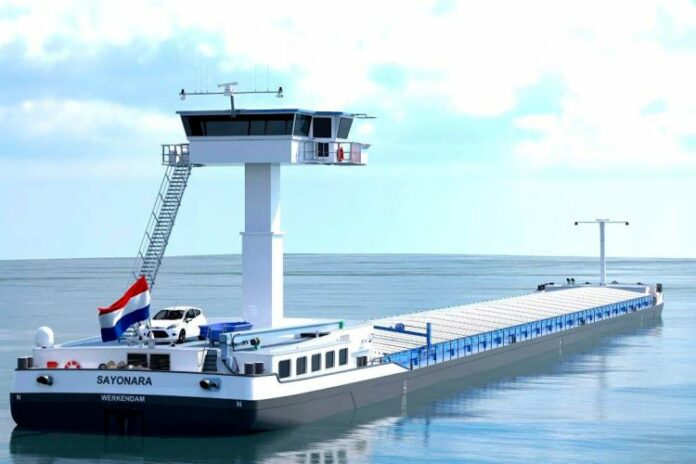
Sustainability considerations and the hull shape of this in-house developed ship type were the deciding factors, partly because it allows skippers to sail longer at (very) low water levels, which is predicted to occur often in the coming years.

Amer Shipping already has a fleet of 57 vessels, including owned tankers, dry cargo and container vessels as well as associated ships. The company transports approximately 8 million tons of cargo per year, mainly raw materials for construction projects and project cargo for various industries. Amer Shipping is mainly active in the Netherlands, Belgium, Germany and Switzerland and is now expanding and adapting its fleet to put its sustainability commitment into practice.

Inland shipping entrepreneur Peter Buijks, co-owner of Amer Shipping, says:

“We have been working on making our daily operations more sustainable for some time now. New ships must match this effort. These two bulk carriers are based on Concordia Damen’s Parsifal tankers and a lot of research has been done on them, such as speed versus fuel consumption, resistance and future adaptability. For example, we’ll install Stage V engines and shaft generators. Our customers are increasingly looking at their CO2 emissions. In order to continue to serve them well, we are developing ourselves along with this trend and are looking at various options to reduce our footprint. These ships fit in well with goal.”

This ship type measures 110 x 11.45 meters and can transport a lot of tonnage at a low draft, which is especially beneficial at low tide and shallow water levels. In addition, the ship has a relatively small footprint, because it can sail faster with lower fuel consumption due to its low resistance.

“The design of the lower section is the same as that of our Parsifal Tankers,” says Pieter Baggerman, Naval Architect at Concordia Damen. “That type has an optimized hull shape. It works really well and so we have applied the same design principles to our container and bulk carriers and with the same results.”

That was also decisive in the choice that Amer Shipping made for their newbuilds. Peter Buijks:

“The CDS Dry Cargo 110 transports no less than 200 tons more cargo compared to an existing ‘110’ in our fleet. At the same time, fuel consumption and emissions are reduced due to the low resistance. In addition, we can continue sailing with it for longer periods in water levels of 1.15 meters, although the ship is of course not fully loaded in those circumstances. That gave us the confidence to contract these vessels. Moreover, in Germany there are not only draft restrictions, but also many waterways spanned by low bridges. Due to the favourable air draught of these ships, we can sail under bridges of 4.30 meters with a draft of 2.50 metres. This way we can continue to do business in a responsible manner in different circumstances.”

Baggerman:

“Both family businesses have known each other for a long time. We are very grateful to welcome Amer Shipping and the Buijks family as a new customer! The favourable ‘speed-power curve’ created by the hull shape and the fact that the design leaves room for adjustments based on the customer’s wishes, makes for a good business case. This also applies to the type of propulsion: you can adjust that quite easily at a later stage if market developments or regulations require it. And what was really important to Amer Shipping: short delivery times. Since we started building some of our proven designs in stock, we can deliver faster. In this case, we expect deliveries in June and the end of 2023.”

NES contracted for system integration of GC Rieber Shipping’s Windkeeper SOVs

0

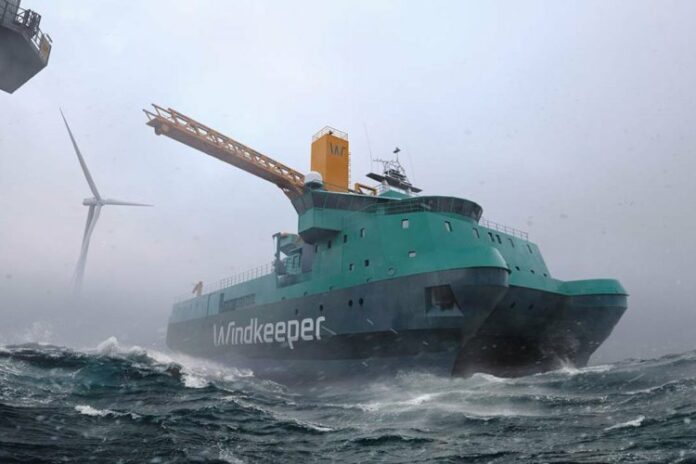
Cemre Shipyard has awarded Norwegian Electric Systems a contract to deliver energy design, and smart control systems for two “Windkeeper” service operations vessels (SOV) that the Turkish shipyard is building for GC Rieber Shipping.

NES’ scope of work is to manage the complete energy design plus act as a system integrator for the vessels’ power system and smart control set-up. NES will supply frequency converters and electric motors for the propulsion system, battery system, transformers, main DC and AC switchboards, integrated automation system, Raven INS integrated navigation system and dynamic positioning system.

“The primary purpose of tailoring the vessels’ energy design and smart control system is to meet the vessels’ strict requirements for redundancy, and in an extension of this optimised energy efficiency.  In turn, this translates directly to lower operating costs and emissions to air,” says sales manager at NES, Egil Bremnes

The unique vessel design requires a power system topology that has a high number of redundancy zones. NES and the GC Rieber team have developed a game-changing energy design that can be operated with a minimum of engines running. The degree of safety, in combination with minimum fuel consumption, is achieved by using the NES portfolio of products, such as ESS, Quadro Master, Odin’s eye, Raven INS and smart control.

“These are highly innovative vessels, and we are delighted that Cemre Shipyard and GC Rieber Shipping have trusted NES with the task of making them as energy efficient as possible. It has been a privilege to work with both GC Rieber and Cemre on this delivery. Two highly competent companies with equal competent project teams,” Bremnes adds.

The Windkeeper SOVs are based on a small waterplane area twin hull (SWATH) methodology, and design, which offers the offshore wind market improved operability, ultra-low fuel consumption, and the option of fully electric operations in the field.

NES will design, assemble, and test the systems at its headquarters at Godvik outside Bergen, Norway. The company’s facilities in Egersund and Ålesund, Norway, will also support the project. Delivery of the equipment is planned for the beginning of 2024.

ABS approves Bassoe Technology’s D-Floater floating wind foundation design

0

The Bassoe D-Floater technology is capable of carrying 15-megawatt (MW) turbines in some of the harshest environmental conditions.

Fifteen-megawatt turbines are the next generation of power producing systems and are as tall as the Eiffel Tower and can weigh upwards of 2,000 tons.

“ABS is proud to add the Bassoe D-Floater to its list of pioneering offshore floating innovations that we have been able to support. This list includes classification of the first and largest floating wind projects. Now we are able to support floating turbines capable of matching the capabilities of fixed bottom equivalents in scale and consequent generating capacity. ABS is leading the development of floating offshore wind capabilities globally,” said Lars Samuelsson, ABS Head, Global Floating Offshore Wind. 

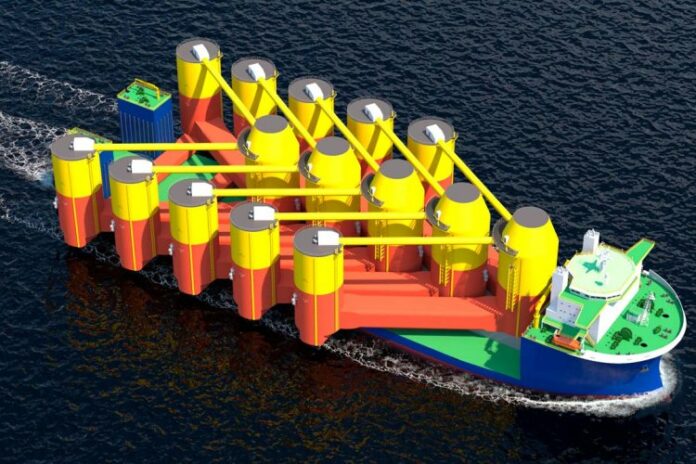
The D-Floater is a three column, semi-submersible unit with a Delta-shaped pontoon configuration that allows the stacking of foundations inside each other, facilitating transport of at least five completed foundations on a single, heavy lift transport vessel and efficient storage in the marshalling port. With a tow-out draft of less than 10 meters with the turbine installed, the design is intended to allow flexibility in “assembly port” selection and to allow quayside installation of the tower and turbine closer to the wind farm, in many cases.

“The D-Floater is a floating foundation designed for cost efficient fabrication and logistical solutions to meet the growing demand for renewable energy. Together with our parent company, CIMC Raffles, we will have the ability to deliver more than 50 D-Floaters per year. The D-Floater’s global supply capability complements our T-Floater that allows for local fabrication, and both concepts now have approval in principle from ABS,” said Tore Ulleland, Managing Director, Bassoe Technology.

The AIP verifies that the design is feasible for the intended application and, in principle, complies with the applicable requirements of the ABS Guide for Building and Classing Floating Offshore Wind Turbine Installations. When constructed, the D-Floater will qualify for the following ABS Class notations:

 ✠A1, Offshore Wind Turbine (Floating), Fatigue Life (FL (25)), Underwater Inspection in Lieu of Drydocking (UWILD), and Inventory of Hazardous Materials (IHM).

Boskalis acquires EUR120M contract in Maldives

0

Boskalis has acquired a contract from the Ministry of National Planning, Housing and Infrastructure of the Republic of the Maldives relating to the further development including climate adaptive measures of Gulhifalhu. 

The contract carries a value of approximately EUR 120 million. This project concerns the second phase of the expansion of the island of Gulhifalhu for which Boskalis also executed the first phase in recent years.

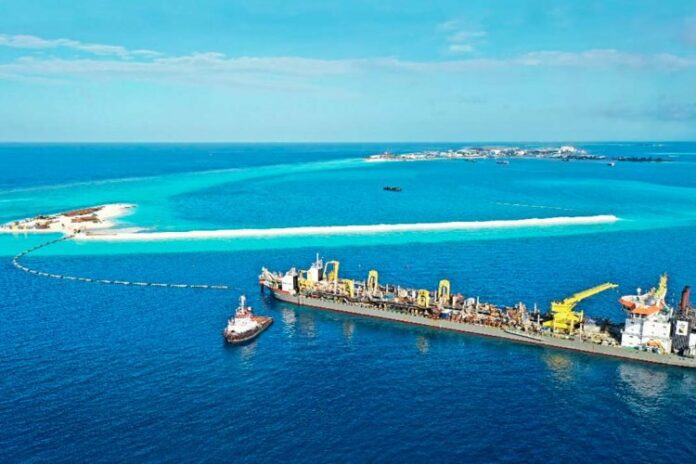
The development of Gulhifalhu, which is located approximately four kilometers from the capital Malé, is part of the Ministry of National Planning, Housing and Infrastructure’s strategic plan to improve and develop the port infrastructure, and will serve as a climate adaptive solution, making this part of the Maldives resilient to rising sea levels. For the second phase of the island’s expansion, Boskalis will deploy a large trailing suction hopper dredger to reclaim new land using approximately eighteen million cubic meters of sand. Boskalis’ activities also include rock revetment work for shoreline protection.

To manage the environmental impacts of the dredging and land reclamation activities, a comprehensive environmental impact assessment was conducted in accordance with the highest international standards. To mitigate possible adverse effects, Boskalis is implementing various measures, including coral relocation and measures to limit the spreading of sediments in the water in combination with regular monitoring of the water quality.

Wärtsilä will supply its solutions for four new PIL container ships

0

The technology group Wärtsilä will supply the LNG Fuel Gas Supply System, Propulsion Control System and Alarm Monitoring and Control System for four new 8200 TEU LNG dual-fuel container ships being built for Singapore-based Pacific International Lines (PIL) at the Jiangsu New Yangzi Shipbuilding yard in China. The orders were included in Wärtsilä’s order book in Q4 2022.

Wärtsilä Fuel Gas Supply System (FGSS) will feed LNG fuel to power both main and auxiliary engines from the vessel’s 7500 m3 membrane tank. The FGSS also includes boil-off gas management and bunkering stations, as well as a Fuel Control System (FCS) completely integrated with Propulsion Control System (PCS) and Alarm Monitoring and Control System (MCS).

Building upon decades of design, engineering experience and expertise in ship alarm, monitoring and control systems, Wärtsilä’s MCS and PCS solutions, which form part of the company’s NACOS Automation platform portfolio, will provide the new container ships with the highest levels of quality and reliability, as well as unprecedented ease-of-use.

Mr. He Minghui, Assistant General Manager, Jiangsu New Yangzi Shipbuilding, said:

“Our strategy is always to build the most optimised, efficient and integrated vessels possible. For this, we have opted to fit these new vessels for PIL with various technologically advanced and highly reliable Wärtsilä solutions. Wärtsilä also provides valuable customer support through its global service network.”

Harald Øverland, Sales Manager, Fuel Supply Systems and small scale and bunker vessels, Wärtsilä, said:

“We are grateful and pleased to be selected for this project. Our experience and market leading position in the LNG segment was a key factor in securing this new order. Our design also prepares for ammonia fuel, which is an important consideration for these ships.”

Chris Chung, Regional Sales Director, Wärtsilä added:

“What’s more, our well-proven, future-proof solutions enable owners and operators to lower operating costs while complying with current and anticipated environmental regulations.”

The Wärtsilä equipment is scheduled for delivery to the yard in early 2024, and the vessels will be delivered progressively commencing in 2025.

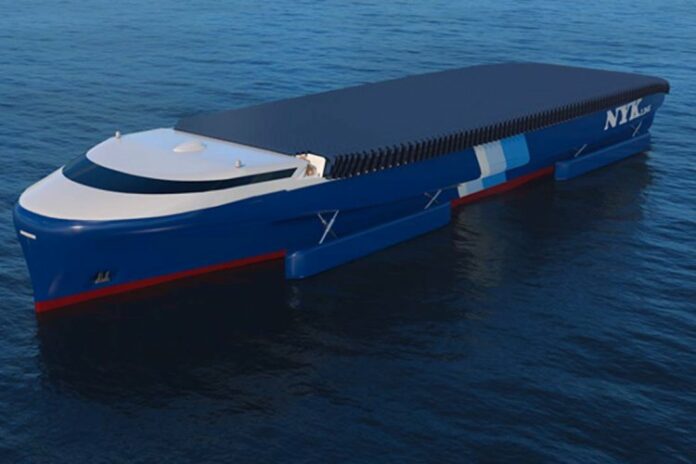
NYK and Ghelia form business and capital alliance

0

Nippon Yusen Kaisha (NYK) and GHELIA INC. (Ghelia) have entered into a business and capital alliance agreement that comes with an investment by NYK in Ghelia. 

The two companies will collaborate on R&D for autonomous ships, avoidance navigation, etc., as well as promote DX by introducing Ghelia’s AI technologies to business processes in NYK’s sales divisions, corporate divisions, and the like.

The shipping industry has recently seen a number of requests involving the development and design of digital engineering and digital twins, the establishment of fully autonomous ship systems, and technological innovation such as next-generation energy for decarbonization. The same can be said for ensuring safety throughout the process of vessel operation.

In accordance with the alliance agreement, NYK and Ghelia will work to realize AI technologies at NYK. In the future, both companies will try to create and utilize advanced, practical AI services, aiming at leading the global shipping industry and contributing to further expansion of the industry.

Hideki Suzuki, executive officer of NYK, said:

“We are convinced that this capital and business alliance with Ghelia, which has been providing AI solutions to a wide variety of customers through the company’s strength in AI development and deep reinforcement learning, will hugely contribute to further technological development in the shipping industry and the promotion of business DX through the utilization of AI. In the future, we expect to not only practically utilize AI technologies in NYK but also work on creating new value by providing AI services that lead the shipping industry.”

Makoto Saito, president and CEO of Ghelia:

“We are very glad to conclude the business alliance agreement with NYK and for its capital participation. We are confident that this alliance will mark another step forward in Ghelia’s mission of “Striving for symbiosis of humanity and AI.” Ghelia, which was founded at Sony CSL, has been working with key players in various industries as a cross-border AI solution vendor, to implement AI solutions in customers’ business operations. Through this alliance with NYK, a pioneer and a leader in the shipping industry, we will lead the practical application of AI solutions in the shipping industry, where digitization and implementation of AI are urgently needed on a global level. Together with NYK, we will promote the transformation of this industry.”

Fugro completes its first fully remote offshore survey inspection in the North Sea

0

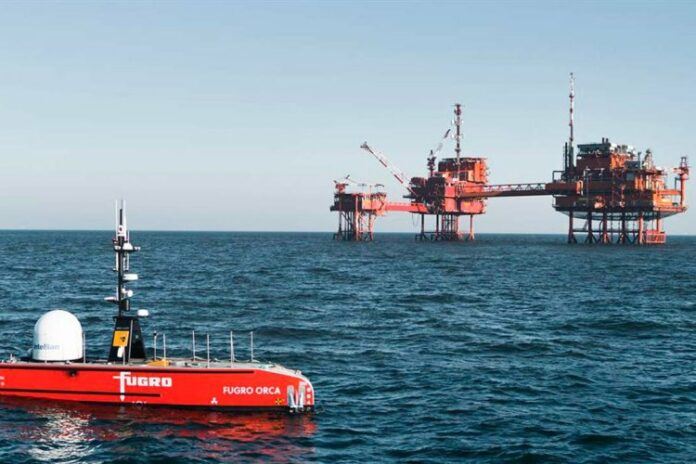
Fugro has completed its first fully remote offshore survey inspection in the North Sea for energy company TAQA using one of its Blue Essence® uncrewed surface vessels (USV) with Blue Volta® electric remotely operated vehicle (eROV).

The inspection investigated the mobility of the seabed, pipeline depth measurements, visual inspections and cathodic protection measurements within the 500-metre zone to ensure the integrity of TAQA’s assets. During operations, both Blue Essence® USV and Blue Volta® eROV were remotely controlled via satellite link by operatives at Fugro’s remote operations centres (ROC) in the Netherlands and Aberdeen. The acquired Geo-data was accessed in near real-time and used to inspect the offshore assets and surrounding seabed environment.

This project forms part of Fugro’s wider strategy towards more uncrewed operations for greater agility, sustainability and safer offshore inspections. Remote operations enable employees to work onshore in ROCs rather than in high-risk offshore environments, the carbon footprint of the USV is up to 95 % less than conventional support vessels and the client has access to near real-time data resulting in faster and more informed decision making.

TAQA’s Netherlands Country Manager René Zwanepol:

“We are very pleased to have been able to cooperate with Fugro on this innovative approach and gain experience with a new technology, and to unlock the potential it holds for us. This campaign has proven to bring many benefits, especially environmental, safety and cost savings. It is definitely the way forward for us for future campaigns.”

Gordon Kennedy, Regional Director of Marine Asset Integrity at Fugro, said:

“I’m so proud of the successful collaboration with TAQA and the Dutch authorities which made it possible to accomplish this survey. Fugro is committed to developing new remote and autonomous technologies that will accelerate the transition towards safer and cleaner inspections and more efficient Geo-data acquisition. In addition, USVs present an exciting solution for offshore wind farm monopile and cable inspections as well as quay walls and other underwater structures.”

NPD prepares resource assessment of the seabed minerals on the Norwegian shelf

0

The Ministry of Petroleum and Energy (MPE) gave the NPD the assignment to assess the resource potential of seabed minerals when the opening process for mineral activity started in 2020.

The MPE is responsible for stewardship of seabed minerals, and is leading the work on the opening process. The report is included as part of the opening process for seabed minerals.

“The NPD has built up expertise over many years, in part through a number of expeditions. We’ve mapped relevant areas, collected data and taken large volumes of mineral samples”, comments Kjersti Dahle, Director, Technology, Analysis and Coexistence.

“In this resource assessment, we’ve estimated how much of the various minerals might be found on the seabed in the studied area. Going forward, we will continue to reinforce the source data and the way we evaluate these resources”.

The transition to a low-emission society enhances the need for specific elements. These elements occur, for example, in deposits on the seabed. They are important raw materials in the energy transition, and they are in demand in relation to industry.

Dahle points out that technology development, together with more and better data, will yield even better understanding of the resource potential.

“The volume of recoverable resources depends on technology and economy. It remains to be seen whether the areas will be opened, and whether production can be profitable from a financial standpoint”.

Collecting, managing and making data from the Norwegian shelf accessible is one of the NPD’s most important tasks.

Since 2011, the NPD has collected data in the deepwater areas in the Norwegian Sea and the Greenland Sea in cooperation with the University of Bergen (UiB). The University of Tromsø (UiT) has also been included since 2020.
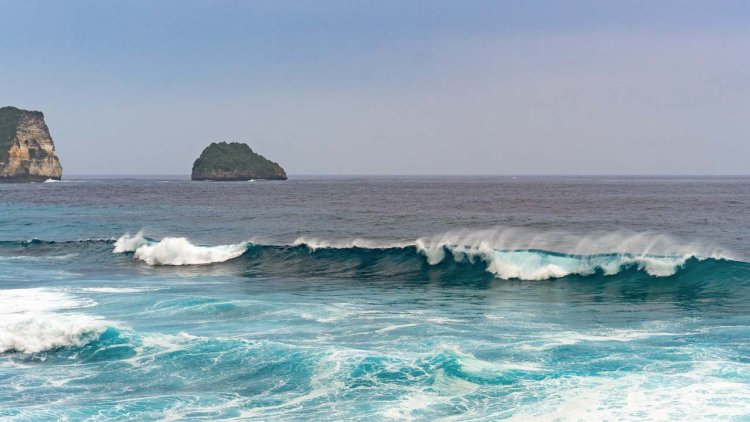
During the period from 2018-2021, the NPD itself conducted four expeditions to collect high-resolution seabed data over the most interesting mineral deposits; drilling operations and collection of mineral samples were also carried out.

Data from these expeditions, supplemented with data from scientific institutions, form the basis for this resource assessment.

“We have extensive experience in mapping the subsurface and assessing petroleum resources. I’m glad that we, with the expertise we bring, can also contribute to identifying resources that could be important in the energy transition”, says Dahle.

There are three types of mineral deposits on the seabed; manganese nodules, manganese crusts and sulphides. All three types contain multiple metals, and they are located at significant sea depths, mainly between 1500 and 6000 metres. On the Norwegian shelf, manganese crusts and sulphides have been found at depths around 3000 metres.

The NPD’s resource assessment for seabed minerals provides estimates of the resources in place; in other words, resources that have been proven, or that are expected to be present.

To confirm whether the mineral resources are recoverable, and can be recovered with acceptable environmental impact, this will require further investigation of the seabed and technological development surrounding recovering methods.

Several international organisations, such as the IEA and IRENA, are pointing to the significant and growing need for metals. As recently as in in 2020, the European Commission prepared an overview of critical input goods for the Union.

“Of the metals found on the seabed in the study area, magnesium, niobium, cobalt and rare earth minerals are found on the European Commission’s list of critical minerals. Costly, rare minerals such as neodymium and dysprosium are extremely important for magnets in wind turbines and the engines in electric vehicles”, says Dahle.

Sempra and PKN ORLEN sign sale and purchase agreement for Port Arthur LNG

0

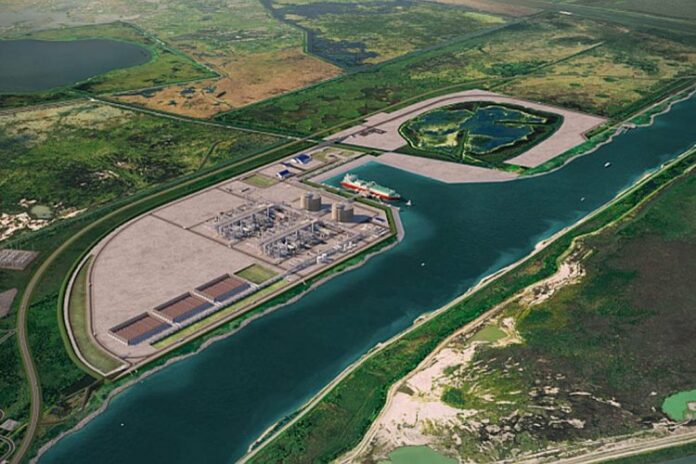
Sempra Infrastructure has entered into a long-term sale and purchase agreement with PKN ORLEN S.A., which recently acquired the Polish Oil & Gas Company (PGNiG), for the supply of liquefied natural gas (LNG) from the Port Arthur LNG Phase 1 project under development in Jefferson County, Texas. 

With this agreement, the projected LNG off-take capacity for the Phase 1 project is now fully subscribed under binding long-term agreements.

Under the SPA, PKN ORLEN has agreed to purchase approximately 1 million tonnes per annum (Mtpa) of LNG from the Port Arthur LNG Phase 1 project on a free-on-board basis for 20 years.

Justin Bird, CEO of Sempra Infrastructure, said:

“We are excited to partner with PKN ORLEN, Central Europe’s largest energy group, as they continue to look for long-term, diverse supplies of secure energy sources. With the long-term off-take capacity for Phase 1 now sold under binding agreements, we expect to reach FID later this quarter and commence construction on the Port Arthur LNG Phase 1 project to help meet the increasing demand for LNG across Europe and the rest of the world.”

Daniel Obajtek, CEO of PKN ORLEN, said:

“We are delighted to enter into this long-term agreement with Sempra Infrastructure. This is an important step towards strengthening PKN ORLEN’s position as a cornerstone of crude and fuel supply security in Central and Eastern Europe. Already last year, during a very tense situation on the EU energy market, the United States became one of the main suppliers of natural gas to Poland. By establishing a partnership with Sempra Infrastructure, we are increasing the diversification of our import portfolio and we are securing additional volumes of natural gas, which will be used both to provide for the needs of the Polish customers and to enhance PKN ORLEN’s presence in the international energy market.”

Sempra Infrastructure has previously announced it has entered into long-term agreements with each of ConocoPhillips, INEOS, ENGIE and RWE for the sale and purchase of LNG from the proposed Phase 1 project. In aggregate, Port Arthur LNG Phase 1 is now fully subscribed with 10.5 Mtpa under binding long-term agreements. The company is focused on completing the remaining steps necessary to achieve its goal of making a final investment decision for the Port Arthur LNG Phase 1 project in the first quarter of 2023, with first cargo deliveries expected in 2027.

The Port Arthur LNG Phase 1 project is permitted and expected to include two natural gas liquefaction trains and LNG storage tanks and associated facilities capable of producing, under optimal conditions, up to approximately 13.5 Mtpa of LNG. A similarly sized Port Arthur LNG Phase 2 project is also competitively positioned and under active marketing and development.

Development of the Port Arthur LNG projects is contingent upon completing the required commercial agreements, securing and/or maintaining all necessary permits, obtaining financing, and reaching a final investment decision, among other factors.