-6.7 C
New York
Home Blog Page 333

First section of Houston Ship Channel expansion complete

0

The Houston Ship Channel expansion project, also known as Project 11, continues to make significant progress. 

Port officials announced that dredging of the first segment extending from Bolivar Roads to Redfish, known as Segment 1A, is complete. The work was completed on schedule and on budget.

Project 11’s Segment 1A constitutes eleven and a half miles in the Bay. 

“The completion of segment 1A is a great step forward to sustain the busiest waterway in the nation,” said Roger Guenther, Executive Director at Port Houston. “It moves Port Houston one step closer to handling unrestricted two-way traffic of larger vessels for the benefit of all stakeholders.”

Project 11 is on track toward its goal of completion in 2025, an aggressive timeline that is necessary to accommodate the future needs of businesses and vessels. 

“The deepening and widening of the channel is a $1 billion commitment to our growing economy, the generation of more jobs in our region, and the safety of the nearly 20,000 vessel transiting the Houston Ship Channel every year,” said Guenther.

Work continues on the construction of Long Bird Island and is expected to be completed later in the year. The 4-5-acre new island habitat includes various land elevations, shore protection, oyster wave trips and a lagoon. Additional dredging is currently underway in the Redfish to Bayport portion of the Channel (Segment 1B) and work in this area is scheduled for 2024 completion.

Infinity signs commercial contract for fuel cell power systems in UUVs

0

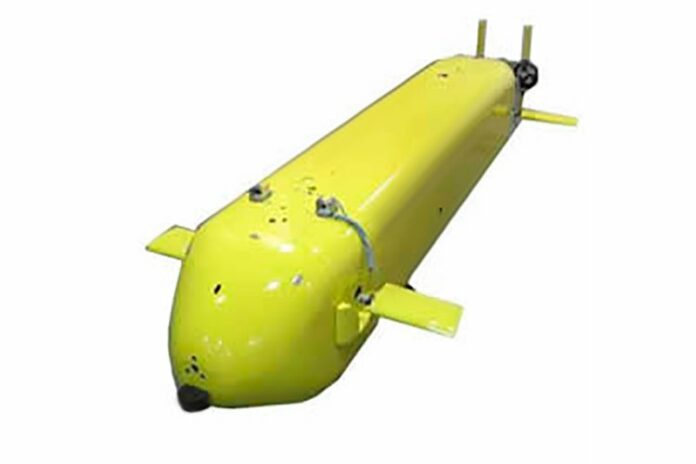
Infinity™ Fuel Cell and Hydrogen, Inc. has announced the recent signing of the first commercial contract for its air-independent hydrogen fuel cell power system for unmanned underwater contracts.

The multi-phase project for an unnamed commercial customer will lead to the delivery of a finished product.  This order comes just three months after Infinity publicly announced its intention to seek new markets for this technology,  which was originally funded through a partnership with the U.S. Office of Naval Research.  That announcement was made in conjunction with the U.S Department of Commerce’s  Discover Global Markets conference in September of last year.

“Landing this opportunity at Infinity was a total team effort. In a brief period,  Engineering, In-house Counsel, Operations & Business Development worked with our client to meet their mission profile thus providing more opportunities in the commercial underwater fuel cell market,” said Richard Mullins, Infinity’s director of business development, and added  “Infinity is grateful to the US Department of Commerce, CT Trade office for their support in formulating this contract.”

UUVs are used extensively for commercial applications such as oil and gas exploration, underwater infrastructure inspection (cables, pipelines, etc.) scientific research and even underwater salvage.  The successful 2021 discovery of the Antarctic site of Robert Shackelton’s 1915 Endurance shipwreck was carried out with the help of an unmanned underwater vehicle.

The primary advantage of hydrogen fuel cell power in larger UUVs is the ability to extend underwater time to weeks or even months.  This eliminates the major expense of tender boats required to frequently resurface and refuel UUVs powered by other more conventional fuels.

Wärtsilä and Carnival Corporation partner in pilot project to reduce plastic waste

0

The technology group Wärtsilä and Carnival Corporation have carried out a joint pilot project to reduce plastic materials being used in marine operations. 

As a result of this pilot, Wärtsilä Global Logistics Services is in the process of changing its spare part packaging to achieve a reduction of approximately 40 percent in the amount of plastic used.

The project was carried out on two Carnival Cruise Line vessels, the Carnival Splendor and the Carnival Freedom. It involved the use of smarter packaging material for spare parts, primarily using recycled paper packaging materials instead of plastic. Despite the challenging sea freight and humid conditions, the quality of the eco-friendly packaging remained at the same level as earlier when plastic was used. The programme resulted in both a considerable reduction in the number of plastic bags used, as well as less weight for the shipments being made. The change in packaging will be incorporated for deliveries to Wärtsilä customers in both the marine and energy sectors.

“Sustainability is all around us, working closely with our very committed business partner Wärtsilä, we are accelerating the process to move from a linear to a more sustainable circular economy, replacing plastic with eco-friendly material,” says Riccardo Cordara, Sr. Director, Fleet Asset Management at Carnival.

“Sustainability is a way of doing business that benefits all stakeholders. We congratulate Carnival for taking positive action to reduce the amount of plastic used, while at Wärtsilä we are now substituting alternative packing materials wherever possible. Our approach is end-to-end, from our suppliers to our distribution centres and onward to the end customer. This highly successful joint effort with Carnival represents one more important step along the road to greater sustainability,” says Saku Mäihäniemi, Vice President, Parts Services, Wärtsilä.

Partners start the EUR 5 million project HyEkoTank

0

TECO 2030 has announced that the HyEkoTank project which has been awarded a EUR 5 million grant under the European funding scheme HORIZON EUROPE has started, together with Shell and the other consortium partners.

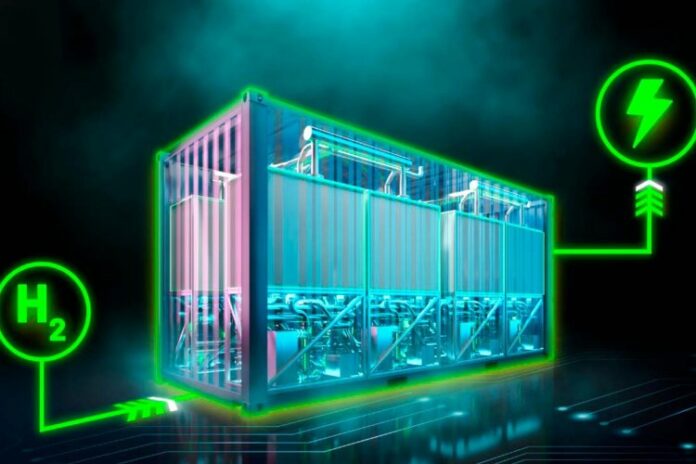
The project has started February 1st and is planned to last for 3 years, with the ultimate goal of eliminating emissions during voyage and in port. TECO 2030 aims to retrofit six 400 kW Fuel Cell Modules in a container solution, and demonstrate power supply for both propulsion and auxiliary loads using hydrogen with zero emissions as fuel.

“I am excited to see the support from the European Union and Shell in realizing a retrofit project with the goal of demonstrating zero emission voyage and port operations. This is one of the largest marine fuel cell projects in the world that I am aware of, and we will do our best to prove that fuel cells are the name of the game in decarbonizing heavy-duty marine applications.” says Tore Enger, Group CEO TECO 2030.

“Shell is proud to be a part of this fuel cell project, which aims to demonstrate the viability of hydrogen as a zero-carbon fuel for the maritime sector. Our target is to be a net-zero emissions energy business by 2050 and to accelerate this transition we are partnering with customers and businesses from across the sectors. Shell will purchase the fuel cell system and provide the renewable hydrogen to power this pioneering project as we continue to drive innovation to deliver the cleaner energy solutions that our customers need,” says Carl Henrickson, General Manager Technology, Innovation & Digitalisation, Shell Shipping and Maritime.

New order for Norwegian fishing company will be unique combi-vessel

0

“The sum of all the new investments means that we will reach the sustainability target by 2030 and limit our footprint on the sea.” That is what the manager, Paul Harald Leinebø, and chairman, Åge Uran, of Leinebris AS say.

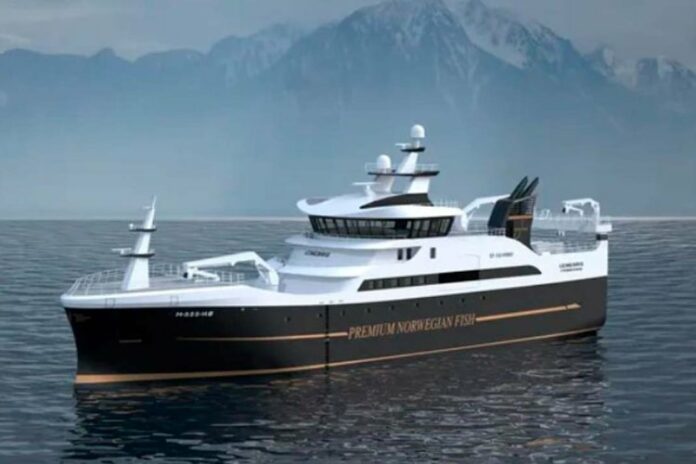
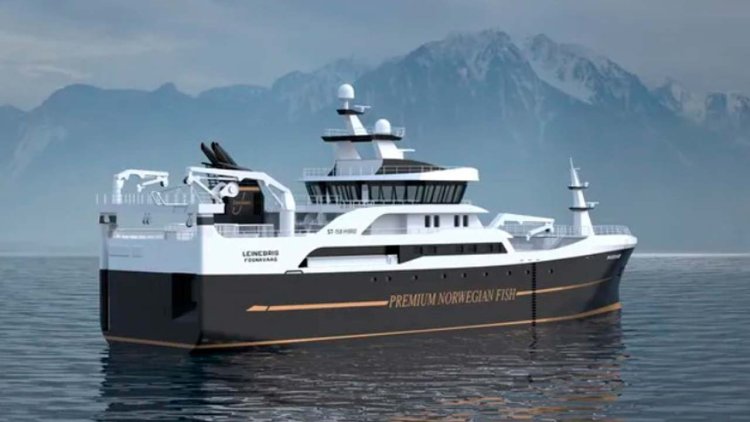
Skipsteknisk reported on Wednesday 01 February, that an agreement has been made for new construction with the Turkish shipyard Tersan Shipyard, with a great design from Skipsteknisk AS.

Over time, the parties have worked closely together to arrive at the best investments and green solutions.

New Leinebris will be equipped with a large battery pack and three generator sets for diesel-electric propulsion.

Innovative are the Azimut thrusters in stern and bow for more efficient energy use and manoeuvring.

In particular, there has been a focus on making use of all the energy produced on board, and the boat has electric deck equipment and winches.

“We want to fish for the future and take care of the resources we have in the best possible way. Then we have to both think new and build new,” says Leinebø.

Through sustainable fisheries and resource management, the management team wants to inspire and contribute to Norway as a seafood nation being able to set an example and make it easier for people to make environmentally friendly food choices.

Source: The Fishing Daily

PowerCell enters final negotiations for hydrogen fuel cell marine project

0

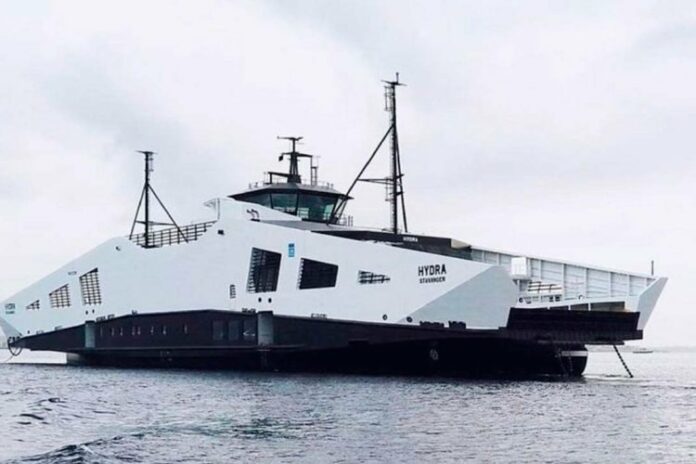
PowerCell has signed a letter of intent to negotiate final terms concerning one of the world’s largest hydrogen fuel cell project in the marine industry. 

The project is headed by Norwegian electrical integrator SEAM, a leading supplier of integrated zero emission solutions to the maritime industry. The final contract is expected to be signed March 3rd 2023 at the latest.

As part of the project, PowerCell will deliver its PowerCellution Marine System 200 which will enable the ferries to produce around 6 MW of power each, combined for the two ferries around 12 MW. The solution has a flexible product design with high power to weight ratio, safe operation and can easily be customized to the energy needs of different projects. The Marine System 200 is also very durable and well adopted to the challenging marine environment and service life of marine vessels.

“We are very excited that PowerCell has been chosen as the sole supplier of this project,” says Richard Berkling, CEO of PowerCell. “This shows that we have a world-leading and industrial stable product offering and ability to create unique solutions tailored to customer needs.”

Wärtsilä and Berge Bulk complete maritime industry’s first inline shaft generator retrofit

0

This is the marine industry’s first-ever shaft generator retrofit, and its successful completion will improve the vessel’s Energy Efficiency Existing Ship Index (EEXI) while reducing overall carbon footprint.

Shaft generator systems onboard ships are driven by the main engine to supply power to the mains, thus saving fuel and emissions. They are sized to eliminate the need to operate auxiliary engines while at sea. While such systems, also referred to as Power Take-Off (PTO) systems, are today’s standard installations on newbuild vessels, large inline versions with the generator sitting directly on the propeller shaft and turning at 50 to 100 rpm have never before been retrofitted.

Paolo Tonon, Berge Bulk’s Technical Director, says:

“Berge Bulk made an industry commitment to go carbon neutral well before the IMO’s plan, and we are installing now the latest fuel-saving technologies, like shaft generators, air lubrication, or wind propulsion on our vessels. Wärtsilä has a proven track record and is one of the market leaders in shaft generator systems and electrical integration.”

Torsten Büssow, Director for Ship Electrification at Wärtsilä, says:

“Berge Bulk is one of the front runners in shipping’s transition to decarbonised operations, and we are proud to support them in this. Wärtsilä is actively working on the development of new technologies that can be integrated into existing vessel systems to make their operations cleaner and more economical.” 

The retrofitted shaft generator will also provide power to an air lubrication system installed at the same time. The system includes a Wärtsilä control system, as well as a converter to allow the generator to operate over a broad span of rpm. The existing intermediate shaft and bearings were replaced to accommodate the increased weight.

Wärtsilä has successfully delivered more than 650 shaft generator systems and has over 50 years of experience in this field.

The ‘Berge Toubkal’ retrofit was completed in Q4 2022, following ten months of preparation time.

Damen presents Floating Offshore Wind Support Vessel

0

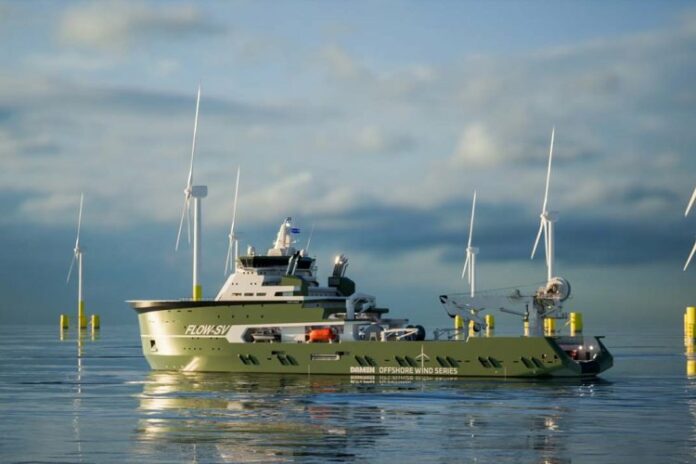
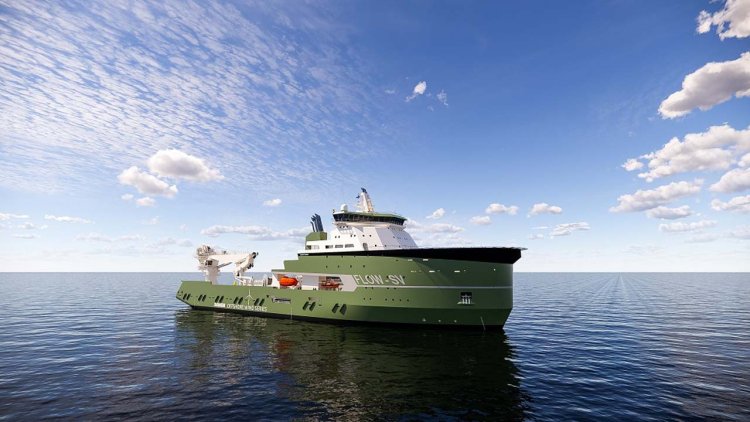
Anticipating upcoming large-scale floating windfarm installation, Damen has developed the FLOW-SV vessel concept that can accelerate the development of this new maritime segment. The Damen FLOW-SV is specially designed to install ground tackles for offshore turbine floaters.

The vessel can load the immense lengths of chain needed to install and secure 9 anchors or suction piles. Instead of mooring 1 floating windmill in a mission, three can be secured. It also applies sufficient proof loading on the anchors to make the installation more efficient.

“With the FLOW-SV, we have developed a vessel which covers the entire process of attaching mooring lines. This vessel, combining the supply, installation, securing and inspection of the ground tackles for floating turbines in one vessel, introduces a big step forward towards large scale installation of floating windfarms. The concept reflects our expertise in operational demands and efficiency,” says Wijtze van der Leij – Sales Manager. “At the moment, we are still in the concept phase. But we are now entering a stage where we would like to partner up to refine and customise this concept. Together with a launching customer, we aspire to accelerate the floating offshore windfarm installation industry.”

Measuring approximately 150 metres in length and a 32-metre beam, the FLOW-SV is a big ship. The size and weight of anchors and chains needed for installing offshore floating wind turbines are so big that a larger vessel is needed than any anchor handling vessel before. As the FLOW-SV will be able to take all the materials and equipment needed to install 3floaters, the vessel saves time on transits and loading. Secured at all three corners, a floater needs three ground tackles.
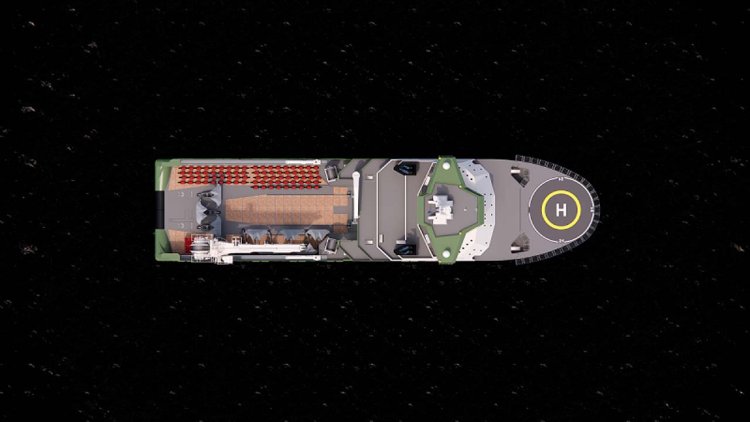
When Damen engineers defined the amounts of gear that the FLOW-SV needs to take onboard to be able to install three floaters in a base case of 100 metres water depth, their calculations added up to five kilometres of chain (chain links of 152 mm diameter) 4.5 kilometres of fibre rope of 112 mm diameter, 9 anchors each weighing 15 tons and almost 100 clump weights of 10 tons each, D-shackles, tensioners, as well as steel cable. Getting the gear to the place of operation means the vessel carries a load in excess of 4,000 tons. Depending on seabed conditions, depth and windfarm operator requirements, anchors can be replaced with suction piles to provide a secure ground tackle. 

When deploying the anchors at sea, the chain is guided to large winches on the forward end of the large open aft deck, from where it leads over the deck to the stern where it is deployed into the water. A 250-ton crane (at 12.5 m reach) with active heave compensation is installed along the aft deck’s starboard side while two smaller cargo rail cranes are available for handling gear on deck. A triple drum anchor winch can deploy 600 tons pulling force. 

A unique feature of the FLOW-SV is the combination of bollard pull generated by the thrusters and added pulling force from the bow reaction anchor winch. This adds up to 1,000 tons of proof load. The FLOW-SV deploys the bow anchor and embeds it by reversed bollard pull. She then moves to the spot where the anchor for the floater needs to be installed. After letting out enough chain length, the anchor for the floater needs to be proof loaded, ensuring a secure seabed connection. Using the four thrusters, FLOW-SV has 400 tons of bollard pull. Pulling strength is enhanced by the forward anchor handling winch, that generates another 600 tons. At that moment, approximately 1,000 tons of proof-load is acting on the turbine floater anchor.

Two fixed propellers in nozzles and two azimuthing thrusters at the stern propel the FLOW-SV and provide forward bollard pull. These propellers in nozzles turn 180 degrees to provide ample reverse bollard pull when the bow anchor is set. The azimuthing thrusters are also engaged for dynamic positioning, together with the retractable azimuthing thruster and tunnel thrusters in the bow section of the vessel.
Sea bottom inspection is needed to determine the best spot to install the anchor. FLOW-SV has two working class ROVs (Remote Operated Vehicle) (remote operated vehicle) with two separate control rooms next to a moonpool (an opening to launch submarine vehicles in the middle of the vessel). After installing the anchors for the turbine floater, the ROVs can be deployed through the moonpool for inspection of the anchor and to see if it has dug in to provide secure ground connection. 

In line with the purpose of installing renewable energy supply, the FLOW-SV is laid out for using the renewable fuel Methanol. Tanks and piping are in place according to safety regulations for this future fuel. Six generators feed the electric thrusters. When the floater anchors are being secured and maximum bollard pull is required, the two fixed 5.5 metres propellers in nozzles are engaged. At transit journeys between harbours and windfarm sites, the azimuthing 4.5-metre propeller size thrusters propel the vessel. This eliminates the need for rudders. All propulsion units are positioned to have the least possible interference with anchor chains.

Analysis of planned installation of floating wind turbines offshore, indicates that this new type of installation vessel is needed. Large anchor handling vessels available today have limited carrying capacity and are booked in long-time charters or in other maritime operations. Planned windfarm installation would require some 100 vessels of the FLOW-SV type. That is why Damen started the development of FLOW-SV with valuable input from industry experts like Temporary Works Design (TWD), First Marine Solutions (FMS) and Intermoor. Knowledge about critical mission equipment specifications was provided by Kongsberg and McGregor. Besides developing this new type of vessel, Damen can also supply the chains, floaters, and the vessels for towing. Damen is the one stop shop for floating windfarm installation operations. We can assist in finance constructions as well.

Tankers International launches a new CII feature for popular VLCC fixture app

0

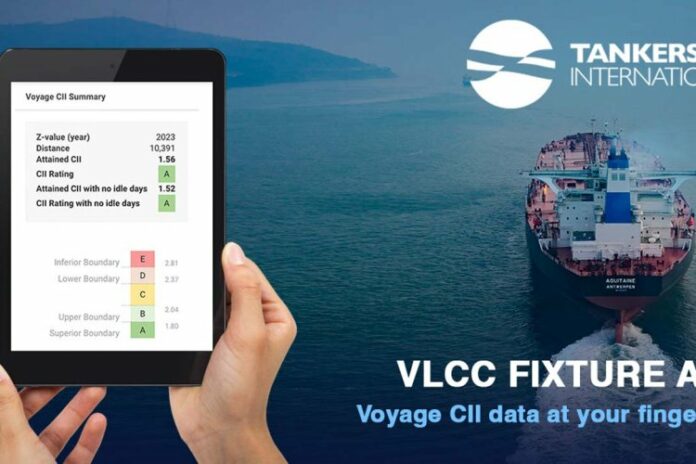
Tankers International has announced the launch of a new CII feature for its popular VLCC fixture app, which uses Tankers International’s comprehensive market data to calculate indicative voyage CII scores for all market fixtures.

The new CII reporting mechanism uses Tankers International’s extensive knowledge of the global VLCC fleet to benchmark any vessel’s bunker consumption against the closest similar vessel out of the 250 vessels that have traded in the Tankers International pool since 2000. This is set against a benchmark speed, which adapts based on Tankers International’s own data on averages across the sector and market conditions. 

Carbon Intensity Indicator (CII) regulations came into effect at the start of January 2023, and represent an ongoing annual measure of the carbon intensity of a ship’s operations in terms of its greenhouse gas emissions relative to the amount of cargo carried and the distance travelled. 

The Tankers International VLCC fixture app’s new CII functionality gives shipowners, charterers, and brokers insight into where a vessel or voyage is ranked on the CII scale, helping to make strategic chartering or operational decisions.

The app’s data will show a precise analysis and a breakdown of how a voyage CII score is calculated, so a shipowner will know how their voyage is ranked and where they may need to improve. In addition, if a voyage incurred a long idle period, the app will provide two clearly labelled and accurate CII estimates to account for this. Calculations are listed in full for PLUS and PRO users.

The Tankers International VLCC fixture app was first launched in 2014 and is the only publicly available source of fixture data for the global VLCC fleet. The app was re-launched in December 2021, and the new CII feature will allow users to integrate even more quality data and analysis into negotiations and strategic decision making. This added insight and market transparency will benefit the entire VLCC sector. 

Charlie Grey, Chief Operating Officer, Tankers International, commented:

“Many people are still uncertain about how to keep up with shipping’s latest regulation, and we recognise the importance and need for quality data, faster to support decision making for shipowners, charterers and brokers. We foresee CII ratings impacting commercial decisions across the sector this year, and providing access to this voyage specific CII information will support key market stakeholders – helping them adhere to decarbonisation regulations and recognise market trends more quickly.”

Vopak and Port of Antwerp-Bruges to sustainably redevelop former Gunvor site

0

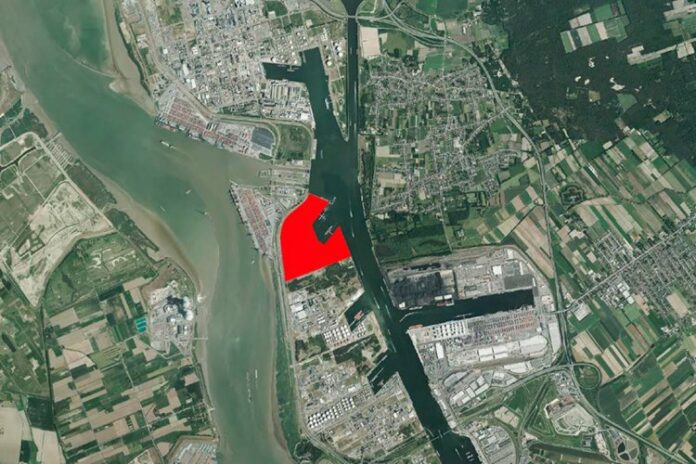
Dutch tank storage company Vopak is acquiring the shares of Gunvor Petroleum Antwerp from commodity trader Gunvor Group Ltd (“Gunvor”), giving it access to the Gunvor concession in the Antwerp port area. 

Vopak is committed to sustainably redeveloping the site. For example, together with the Port of Antwerp-Bruges, the company will focus on joint development/implementation to support renewable energy. This is another important step towards a climate-neutral economy.

The site is some 105 hectares in size and offers deep-sea, river, road and rail access, as well as pipeline connections to Northwest Europe. The adjacent and future pipelines are suitable for transporting i.a. propylene, ethylene, CO2 and hydrogen.

Vopak will reconfigure the concession with the primary aim of making a positive contribution to the decarbonisation of the industrial cluster on the Antwerp port platform. Where necessary, soil remediation will take place in close consultation with internal and external experts and authorities. Furthermore, the Port of Antwerp-Bruges and Vopak will continue their discussions to structure their common strategic ambition, which is to jointly develop a new green energy hub.

Jacques Vandermeiren, CEO Port of Antwerp-Bruges:

“As Port of Antwerp-Bruges, we’re very pleased that Vopak has found expansion opportunities on the Gunvor site. This Dutch global player has been an established value on the Antwerp port platform for many years and will continue to focus on green ammonia, sustainable fuels and finer chemical products at the new site.Not only does this allow Vopak to continue to grow within our port in line with the strategy of the Port of Antwerp-Bruges, but we’re also demonstrating how, as a port, we’re shaping the energy transition together with businesses.”

Annick De Ridder, Vice-Mayor of the City of Antwerp and President of the board of directors of Port of Antwerp-Bruges:

“The collaboration with Vopak fits perfectly with Port of Antwerp-Bruges’ ambition to become the energy gateway to Europe as a ‘green port’. That this global player that has been anchored in our port for years can now sustainably expand within Europe’s largest petrochemical cluster is excellent news. In this way, the Dutch company Vopak makes Flanders’ economic engine continue to turn swiftly.”

Patrick van der Voort, President Europe & Africa, Royal Vopak:

“We’re very pleased to have access to this prime location in Europe’s leading petrochemical cluster. It offers us a unique opportunity to implement our strategy, forge new partnerships and support the industry in its decarbonisation by developing critical infrastructure. The site’s extensive size, strategic location and connectivity to Northwest Europe offer unparalleled opportunities.”

Shahb Richyal, Global Head of Portfolio, Gunvor:

“Since rescuing GPA from insolvency in 2012, Gunvor has been committed to operating the refinery and terminal as a responsible tenant and employer in the Port of Antwerp. Over many years of operations, Gunvor invested considerably in the asset, and even through the mothballing process and subsequent cessation of all activities sought to ensure that all stakeholders and employees were treated fairly, and that the environment remained respected. By reaching an agreement with Vopak for the acquisition of the shares of GPA, Gunvor is ensuring the site will have a new future under responsible leadership”.