-1.9 C
New York
Home Blog Page 332

TotalEnergies completes first biofuel bunker term delivery in Singapore

0

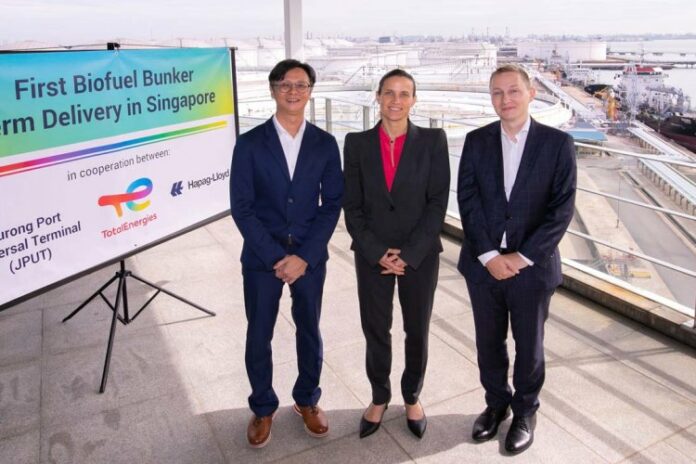
TotalEnergies Marine Fuels has successfully completed its first refuelling of a Hapag-Lloyd container vessel in Singapore with sustainable, UCOME (Used Cooking Oil Methyl Ester)-based, marine biofuel.

This inaugural bunker operation marks the start of a term supply agreement between the two companies, which commits TotalEnergies to provide VLSFO (Very Low Sulfur Fuel Oil) blended with 24% second-generation, waste-based and ISCC-certified UCOME to Hapag-Lloyd’s fleet.  Based on a well-to-wake assessment, this B24 biofuel blend will reduce approximately 20% of Greenhouse Gas (GHG) emissions compared with conventional fuel oil.

As part of this milestone operation, Hapag-Lloyd’s 15,000 TEU container vessel, Afif, took on 2,000 MT of biofuel on 20th January 2023. The ship-to-ship biofuel transfer was made possible with the services rendered by Jurong Port Universal Terminal Pte Ltd (JPUT). JPUT also took on 100 percent UCOME bio-component into their storage tanks for the first time, which further underscores the significance of this operation.

Jan Christensen, Senior Director, Global Fuel Purchasing of Hapag-Lloyd, said:

“We are very pleased with the cooperation with TotalEnergies for the supply of biofuel in Singapore. This is another early step for Hapag-Lloyd on our decarbonization journey. In combination with other green fuels, biofuel will play an important role towards a carbon-free environment by 2045. Consistent supply of biofuel in Singapore will allow us to offer sustainable transportation solutions to our customers, thereby supporting them in their efforts to reduce their carbon footprint.”

Louise Tricoire, Vice President of TotalEnergies Marine Fuels, said:

“We are excited to support Hapag-Lloyd’s decarbonization strategy with the development of this new supply chain for marine biofuels. It underlines both companies’ long-term collaboration to explore and develop initiatives that promote the introduction of clean, low-carbon alternative fuels. Importantly, this biofuel bunker term contract also ushers a new chapter for TotalEnergies Marine Fuels, as we build on our operational expertise gained from multiple biofuel bunker trials we have done in 2022, to provide a scalable solution of this lower-carbon marine fuel.”

Loh Wei, Chief Executive Officer of Jurong Port Universal Terminal, said:

“JPUT is excited to work with TotalEnergies Marine Fuels as our first customer for the bulk storage and delivery of biofuel bunkers in Singapore. As the largest independent petroleum storage terminal in Asia, JPUT has been working on several new initiatives on low-carbon fuels for the last two years. We are glad to be able to bring this UCOME initiative to the market in record time, thanks to the close collaboration with TotalEnergies. With this and other new initiatives focused on carbon reduction, clean fuels and sustainability, JPUT is well-positioned to be a leading clean and sustainable future fuels storage provider, reinforcing Singapore status as the world’s leading bunkering hub.”
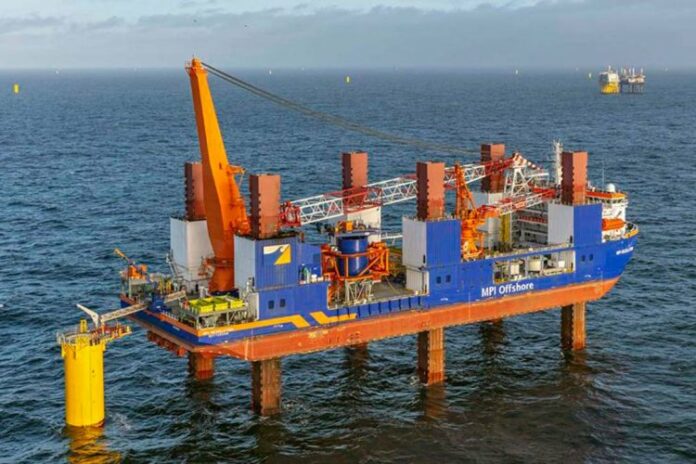
 

Final monopile installed at Hollandse Kust Noord offshore wind farm

0

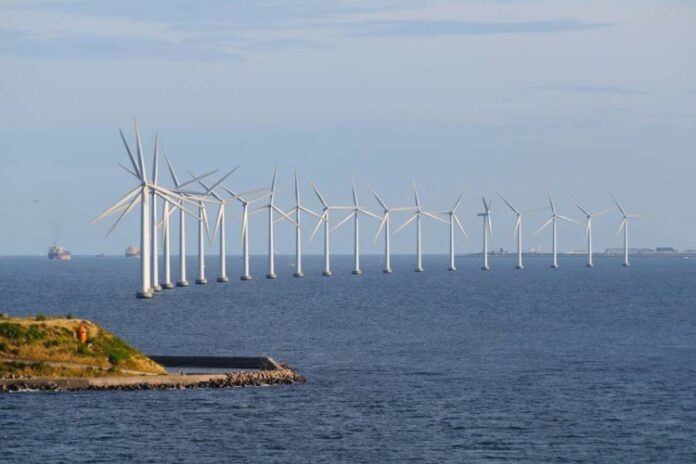
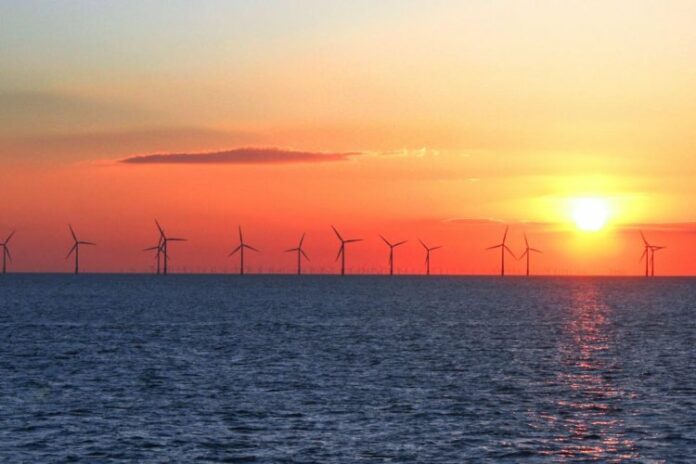
The offshore wind farm is located 18.5 kilometres off the coast of the Netherlands, near the seaside resort of Egmond aan Zee. 

Once finished it will have a total installed capacity of 759 MW, generating at least 3.3 TWh per year. This is enough renewable electricity to meet 2.8% of the Netherlands’ electricity demand. The monopiles are the foundations for the wind turbines. The first monopile was installed less than four months ago, on October 17th 2022.

Roeland Ris, Project Director Van Oord said:

“After an extensive period of preparations, it’s great to now actually see the outlines of the offshore wind farm. Thanks to the project team and all partners involved who worked with great efforts and enthusiasm on reaching this important milestone to have all monopiles in place. With the supply of secondary steel and inter array cables on target and our offshore installation vessels fully operational, the construction of the Hollandse Kust Noord offshore wind farm is progressing well on schedule.”

Wybren de Vries, Balance of Plant Package Manager at CrossWind said:

“The installation of the monopiles was an immense operation, with the monopiles weighing between 788 tons and 960 tons each. During the installation works CrossWind and Van Oord promoted and maintained an open culture, in which we acted as one team. I am convinced that this approach defined a big part of our success in reaching this milestone in a safe and timely manner.”

Van Oord installed all 70 monopiles in a short period of time despite strong wind and cold weather. As a Balance of Plant contractor of CrossWind, Van Oord activities encompass the design, engineering, procurement, construction and installation of the wind turbine foundations. Van Oord engaged DEME to deploy the jack-up vessel Innovation to install the monopiles.

Damen Marine Components supplies smart dock winches

0

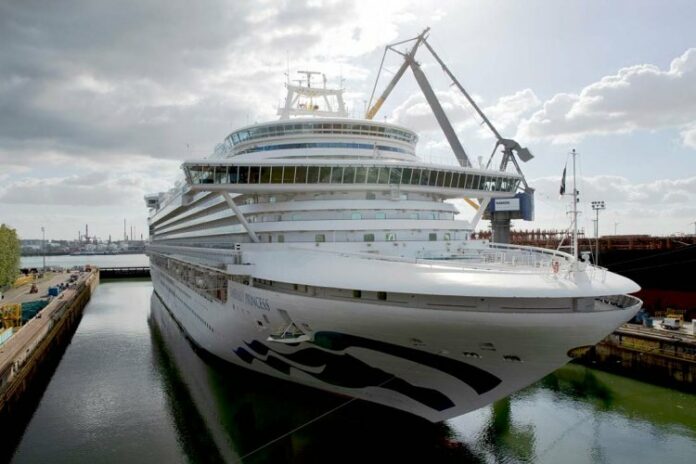
Evidence of the correct functioning of the innovative dock winches developed by Damen Marine Components (DMC) was provided during the controlled towage of the huge cruise ship Emerald Princess in the dock of Damen Shiprepair Rotterdam on 11th October. 

The winches were specially developed for this 405 metre-long and 90 metre-wide ship dock. A very smart interplay of four winches ensures a ship is pulled in smoothly and in a controlled manner under all circumstances.

The four winches provide 40 tons of pulling power per winch. There is a winch at each corner of the dock. Two winches pull a ship in and the two others at the ‘entrance’ of the dock control the speed and position of the ship by providing the exact amount of counterforce required. The winch system is controlled by a central computer.

This winch system is powerful enough to pull any floating object into a dock. Floating objects require relatively little force to be towed, but a tall ship such as the Emerald Princess can catch a lot of wind and create large forces that must be controlled by the winches.

The Emerald Princess is 290 metres long and 36 metres wide. The first real operation of the dock winches developed by DMC went beyond expectations. Electrical engineers from DMC Dynamics and the engineering department that develops the physical construction of the winches worked closely together.

ABL Group wins contracts for French Round 2 offshore wind farms

0

ABL Group’s Paris office has been awarded contracts to provide marine warranty survey (MWS) services to support the development of two Round 2 French offshore wind farms (OFW) with a combined capacity of nearly 1 GW.

The two offshore wind farms are the 496 MW Iles d’Yeu et de Noirmoutier and the 496MW DieppeLe Tréport, respectively being developed by Éoliennes en Mer Îles d’Yeu et de Noirmoutier (EMYN) and Éoliennes en Mer Dieppe Le Tréport (EMDT). Both companies are partnerships between Ocean Winds (the 50/50 joint venture between ENGIE and EDP Renewables), Sumitomo Corporation, Banque des Territoires and Vendée Energie (for EMYN wind farm).

Under the terms of the agreement, ABL’s Paris office will review and approve the loadout, marine transportation, and installation operations for the components of the substation, foundations, inter array cables and wind turbine generators. ABL will also inspect and approve the marine spread intended to be used during the construction – meaning all the barges, tugs, floating crane vessels and jack-up vessels.

“We are delighted to be awarded these two contracts by EMYN and EMDT. This follows our past project wins on the three offshore windfarm projects of Round 1 – respectively Saint-Nazaire OWF, Fécamp OWF and Courseulles OWF – in France. It reaffirms ABL’s recognised reputation as a leading provider of MWS services in France, and more widely for the whole offshore wind industry,” says Fabien Thomas, Head of Marine Warranty services at ABL France.

The EMYN offshore wind farm will be located at 11.7 kilometres from Yeu island and 16.5 kilometres from Noirmoutier island, in waters ranging between 19 and 36 metres. It will consist of 62 wind turbines of 8 MW each, installed on monopiles, and one offshore substation, connected via inter-array cables.

The EMDT project will be located at 15.5 kilometres from Tréport and 17 kilometres from Dieppe, in waters ranging between 14 and 24 metres. It will consist of 62 x 8 MW wind turbines installed on jacket foundations, and one offshore substation, connected via inter array cables.

The first offshore construction activities should start during 2023. Once online, each project should be able to provide green energy to cover the annual needs of approximately 800,000 persons.

Tracking ocean microplastics from space

0

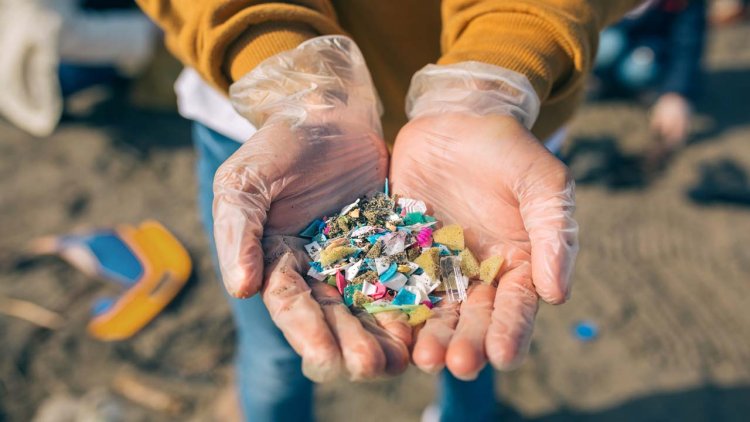
It turns out that satellites are best at spotting soapy or oily residue, and microplastics appear to tag along with that residue.

Microplastics—tiny flecks that can ride ocean currents hundreds or thousands of miles from their point of entry—can harm sea life and marine ecosystems, and they’re extremely difficult to track and clean up. However, a 2021 discovery raised the hope that satellites could offer day-by-day timelines of where microplastics enter the water, how they move and where they tend to collect, for prevention and clean-up efforts.

The team noticed that data recorded by the Cyclone Global Navigation Satellite System (CYGNSS), showed less surface roughness—that is, fewer and smaller waves—in areas of the ocean that contain microplastics, compared to clean areas.

In preliminary testing, they used the technique to spot suspected microplastic releases at the mouth of China’s Yangtze River and to identify seasonal variations in the Great Pacific Garbage patch, a convergence zone in the North Pacific Ocean where microplastic collect in massive quantities. But until now, the team was unsure about the nature of the relationship between microplastics and surface roughness.

A newly published study in Scientific Reports shows that the anomalies in wave activity are caused not by the plastics themselves, but by surfactants—soapy or oily compounds that are often released along with microplastics and that travel and collect in similar ways once they’re in the water.

Chris Ruf, the Frederick Bartman Collegiate Professor of Climate and Space Science at U-M and an author of the study, explains that a satellite-based tracking tool would be a major improvement over current tracking methods, which rely mainly on spotty reports from plankton trawlers that net microplastics along with their catch.

“NOAA, the Plymouth Marine Lab in the U.K. and other organizations are very aware of what we’re doing, but we need to be cautious and fully understand the system’s limitations before putting it into widespread use,” said Ruf, who also leads CYGNSS. “These new findings are an important step in that process.”

The research team, which also included former naval architecture and engineering graduate researchers Yukun Sun and Thomas Bakker, gathered the data at U-M’s Aaron Friedman Marine Hydrodynamics Lab. Using the facility’s wave tank, they measured the effects of surfactants and microplastic pellets on waves generated both mechanically and by wind from a fan.

They found that, in order for microplastics to affect surface roughness, their concentrations had to be much higher than those typically found even in polluted areas of the ocean. Surfactants, however, had a pronounced effect. The researchers found that surfactant-laden water required more wind to generate waves of a given size, and that those waves dissipated more quickly than they would in clean water.

Yulin Pan, U-M naval architecture and marine engineering assistant professor and corresponding author on the paper, says that this initial discovery will drive further research into how surfactants and microplastics interact in the ocean.

“We can see the relationship between surface roughness and the presence of microplastics and surfactants,” Pan said. “The goal now is to understand the precise relationship between the three variables.”

They plan to use a combination of water sampling, satellite observations and computer modeling to build that understanding. Ultimately, they hope to develop a system that governments, cleanup organizations and others can use to both spot existing microplastics and predict how they’re likely to travel through waterways.

HPC to perform concept study for Heligoland hydrogen bunker

0

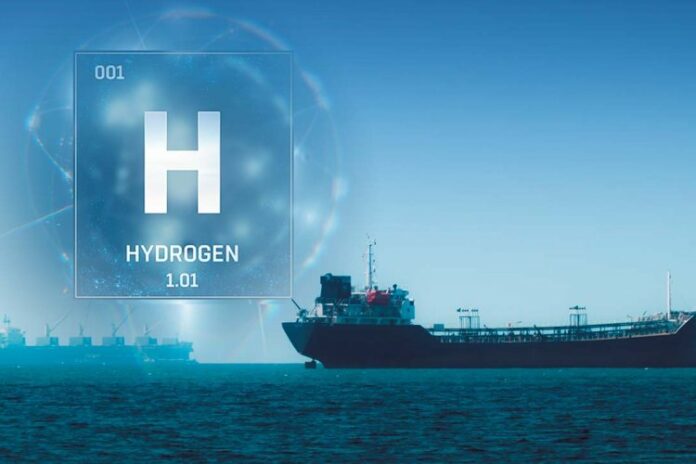
The municipality of Helgoland has commissioned HPC to carry out a concept study for the construction of a hydrogen bunker station on the deep-sea island. The study will require HPC to investigate the commercial and infrastructural suitability of the island as a potential location for H2 fuel supply for shipping traffic on the North Sea.

Driven by international sustainability goals and efforts to significantly reduce climate-damaging carbon dioxide emissions caused by shipping, ship owners are looking to power their vessels using alternative fuels. While the use of LNG-powered container ships has already become standard, the market is looking for renewable alternatives with long-term potential. Current research focuses on methanol, ammonia and hydrogen drives to replace conventional marine diesel fuels.

So that alternatively powered ships can be employed on a large scale, a corresponding bunker infrastructure must be available in ports. The island of Helgoland is frequented in particular by crew transfer vessels (CTVs), passenger and research ships and recreational craft. At the same time, green hydrogen from the AquaPrimus project will be available on Helgoland in the future.

“Taking into account the good availability of green hydrogen in the area of the island, we would like to examine the extent to which Helgoland can also reliably provide a supply for ships calling there in the future,” says Christoph Tewis, project manager for AquaCore and the TransHyDE project Helgoland.

The concept study carried out by HPC includes, on the one hand, evaluating the market potential of alternative fuels for island shipping with the aim of estimating the potential demand. Taking the local framework conditions into consideration, various refuelling concepts for hydrogen are then examined. Another focus is to investigate the conditions and prerequisites for the possible location of a hydrogen bunkering station with reference to suitable plans to ensure the logistics of supplying the fuel. In addition to evaluating and recommending such plans, the study will include initial estimates of the necessary investments.

“The results of the study will better enable the municipality of Helgoland and its partners to make an investment decision based on realistic costs,” says Patrick Specht, Head of Sustainability at HPC.

HPC is already credited with carrying out various national and international innovative energy projects for ship technologies and port infrastructure, including the preparation of a test centre for fuel cell vehicles in the port context for a Hamburg terminal operator.

The concept study for a hydrogen bunker station on Helgoland is funded by the German Federal Ministry of Education and Research as part of the hydrogen lead project TransHyDe. One of three hydrogen lead projects of the Ministry, TransHyDE supports the goals of the National Hydrogen Strategy, which was adopted by the Federal Government in 2020. The hydrogen lead projects involve the research and development of new technologies and application solutions for the production, storage and transport of green hydrogen.

Singapore and Vietnam to partner on maritime and port cooperation

0

The Maritime and Port Authority of Singapore (MPA) and the Vietnam Maritime Administration (Vinamarine) signed a Memorandum of Understanding (MoU) today to enhance maritime and port cooperation between Singapore and Vietnam.

The exchange of the MoU was witnessed by Singapore Prime Minister Lee Hsien Loong and Vietnam Prime Minister Pham Minh Chinh at The Istana, in conjunction with Prime Minister Chinh’s visit to Singapore.

Under this MoU, MPA and Vinamarine will explore collaboration and exchange views on areas including maritime digitalisation, port state control inspection, maritime training of personnel, and green shipping initiatives, to promote safe, secure, clean and efficient shipping.

Mr Teo Eng Dih, Chief Executive of MPA, said:

“The MoU is testament to the commitment between Singapore and Vietnam to address common challenges, exchange of experiences and to co-develop practical solutions towards more efficient and sustainable shipping. I look forward to working with the Vinamarine team to achieve our shared objectives.”

Mr Nguyen Dinh Viet, Acting Administrator of Vinamarine, said:

“The signing of this cooperation document further strengthens the cooperation relationship between the two maritime authorities of Vietnam and Singapore. I look forward to further cooperation between Vinamarine and MPA, for the sake of companionship and development.”

New discovery by North Sea Troll field

0

This is the seventh discovery in this area since the autumn of 2019.

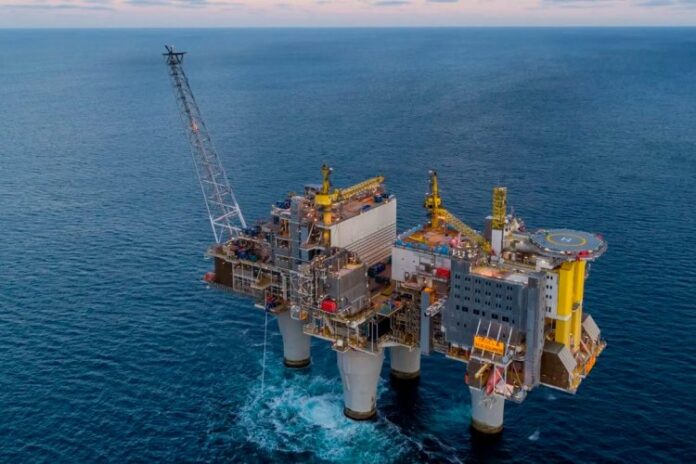
The name of the discovery is Røver Sør. According to preliminary estimates the size of the discovery is between 17 and 47 million barrels of recoverable oil equivalent, of which the majority is oil.

Equinor is operator of the production licence. The partners are DNO, Wellesley Petroleum and Petoro.

“Discoveries close to existing infrastructure are important to maintain oil and gas production from the Norwegian continental shelf. They need smaller volumes to be profitable and can be put on stream quickly with low carbon emissions. As this discovery is close to the Troll field and other discoveries we have made in the area, we can already now state that it will be commercial,” says Geir Sørtveit, Equinor’s senior vice president for exploration and production west operations.

The two exploration wells of the discovery were drilled by the Transocean Spitsbergen rig.

The six discoveries that Equinor have made earlier in this area are:

  • Echino Sør: 2019
  • Swisher: 2020
  • Røver Nord: 2021
  • Blasto: 2021
  • Toppand: 2022
  • Kveikje: 2022

There is uncertainty as to the size of the discoveries, but an average of the various estimates gives a total volume of around 350 million barrels of oil equivalent, corresponding to a medium-sized Norwegian oil or gas field, and the size of the Aasta Hansteen field in the Norwegian sea.

“Equinor has started field development projects to coordinate the development of these discoveries by utilizing existing infrastructure in collaboration with our partners. This discovery will be part of this work,” says Sørtveit.

The name of the next exploration well in this area is Heisenberg. The results of this well are to be ready in March. More exploration wells are planned in the area later this year.

Siemens Gamesa and Doosan pursue South Korean offshore wind market

0

Siemens Gamesa and Doosan Enerbility, formerly Doosan Heavy Industries, announce the signing of a binding framework agreement for a strategic partnership for the South Korean offshore wind market. Marc Becker, CEO of Siemens Gamesa’s offshore business and Hongook Park, CEO of Doosan Enerbility’s Power Service Business Group represented the parties at the partnership framework agreement signing ceremony held in Hamburg, Germany. 

The agreement follows successful exploration of potential cooperation made possible by a memorandum of understanding signed in June 2022. This next step lays the foundation for strong local content offerings in the South Korean offshore wind market in the future. The implementation of the partnership scope is subject to successful offshore wind power orders in the South Korean market. 

The framework agreement covers three areas for knowledge exchange on technology in which the two companies will collaborate closely in South Korea. Doosan will assemble Siemens Gamesa’s offshore wind turbine nacelles in a Doosan facility currently in the design phase, undertake turbine assembly for Siemens Gamesa machines in staging harbors as well as the offshore construction of projects using Siemens Gamesa machines, and perform offshore service on selected orders involving Siemens Gamesa machines.

The alliance between the companies bolsters Korea’s burgeoning offshore wind industry. Among the benefits are efficient and environmentally conscious local assembly and local job creation to serve the South Korean offshore wind market. 

Marc Becker, CEO of Siemens Gamesa’s offshore business, said:

“We are delighted to enter into this framework agreement with Doosan Enerbility. We are eager to bring our market-leading offshore skills including our unique offshore Direct Drive nacelle technology to South Korea. We will also greatly benefit from Doosan’s deep understanding of the Korean market to accelerate the country’s energy transition. In doing so, the partnership intends to promote local job growth and inward investment while delivering clean, green energy.”

“Both of us being companies with our own offshore wind turbine models and solid track record, we aim to cooperate on broadening our participation in the Korean offshore wind power market and actively pursue promotion of the domestic offshore wind power ecosystem,” said Hongook Park, CEO of Doosan Enerbility’s Power Services Business Group. He added, “Through this partnership, Doosan looks forward to boosting its competitiveness across the overall offshore wind power sector through measures, such as the upgrading of existing products and diversification of models.”

Doosan Enerbility started its wind power business in 2005 and leads the South Korean domestic offshore wind energy market with projects such as the 60-MW Southwest Offshore Wind Power Phase 1 development.

Explora II is under construction in Genoa

0

A first section, assembled in recent months in Castellammare di Stabia, reached the Genoese shipyard by sea a few days ago, where the ship will be built over the next 18 months and will be delivered in August 2024.  The Coin Ceremony took place today in Sestri Ponente – an important ancient seafaring tradition where the ship owner and builder place two coins in the keel of the ship as a sign of good luck.

The event was attended by the President of the Liguria Region, Giovanni Toti and the Mayor of Genoa, Marco Bucci. The Executive Chairman of the Cruise Division of the MSC Group, Pierfrancesco Vago, and the Chief Executive Officer of Explora Jouneys, Michael Ungerer, were present on behalf of the shipowner. Doing the honors for Fincantieri were the company’s Chief Executive Officer, Pierroberto Folgiero, and the General Manager of the Merchant Ships Division Luigi Matarazzo.

Pierfrancesco Vago stated:

«I am particularly proud that Explora Journeys ships are also built in Italy. In fact, they are destined to represent Italian excellence in the world, honoring an engineering, innovation and design capacity that has no equal at an international level. The building of these ships bear witness to our concrete and tangible commitment in Italy and for Italy. Together with our confidence in the prospects of a country in which the MSC Group has been operating for half a century and employs over 15,000 direct employees, generating an employment impact of a further 40,000 people».

Pierroberto Folgiero commented:

“It is exciting to see the advancement of this construction. The Explora class is meaningful of the progress of our journey: a concentrate of high technology which, with the subsequent units, will reach even higher levels, following a precise planning towards the ship of tomorrow”.

The construction of Explora II required an investment of approximately euro 500 million on the part of the Cruise Division of MSC Group with significant economic and employment effects both for Genoa and the entire Ligurian and national territory. From an economic point of view, for example, the construction of an Explora Journeys ship is capable of generating an overall impact of more than euro 2 billion on the Italian economy, while in terms of employment, the construction requires over 7 million man-hours of work and the average employment of 2,500 people for about two years in the Genoese shipyard and related industries.

Explora II is part of an order for four luxury ships for over euro 2.2 billion, to which two options have been added – Explora V and Explora VI – which would bring the total value of the order to around euro 3.5 billion, with an impact of over euro 15 billion on the country’s economy. At the same time, the investment will ensure employment in the coming years at the Sestri Ponente shipyards where, along with Explora II, Explora III and Explora IV will also be built and will join the fleet, between 2024 and 2027.

The environmental technologies featured on the Explora ships are particularly sophisticated. The last four vessels (from III to VI) will be equipped with industry-first solutions and, specifically, they will be powered by LNG, the cleanest marine fuel currently available at scale, which virtually eliminates local air pollutant emissions like sulphur oxides (99 per cent), nitrogen oxides (85 per cent), particles (98 per cent) and CO2 (25%). Explora V and Explora VI will feature a containment system for liquid hydrogen, a low-carbon fuel, that will power a six-megawatt fuel cell to produce emissions-free power for the hotel operation and allow the vessels to run on ‘zero emissions’ in port, with the engines turned off.

All vessels will also be equipped with the latest environmental and marine technologies, including the latest selective catalytic reduction technology, shore power plug-in connectivity, underwater noise management systems to help protect marine life, and a comprehensive range of onboard energy efficient equipment to optimise engine use to further reduce emissions.