-1.9 C
New York
Home Blog Page 331

New German offshore wind farm renamed Nordlicht I

0

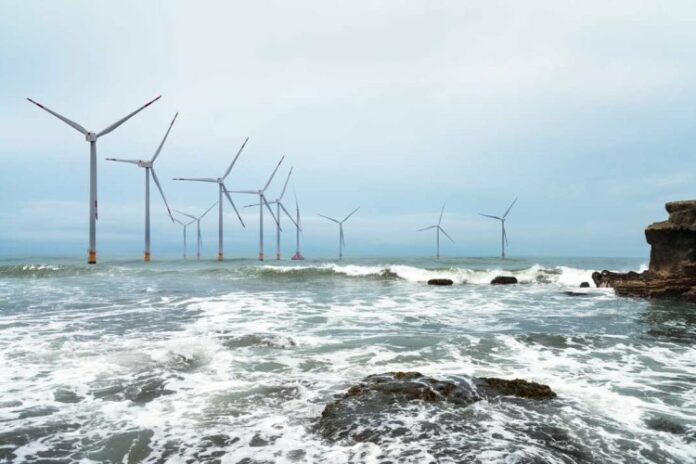
The German 980 MW wind project “N-7.2” located in the North Sea has been renamed Nordlicht I. 

In the coming years, Vattenfall intends to build Nordlicht I, a state-of-the-art offshore wind farm with an installed capacity of 980 megawatts without government subsidies. Subject to the company’s final investment decision, Nordlicht I can go online by the end of 2027. In continuous operation, the wind farm can then produce an amount of electricity per year that corresponds to the annual consumption of more than one million average German households.

The construction area for Nordlicht I is around 85 kilometres north of the island of Borkum. As part of the bidding process for this area, Vattenfall asserted its so-called right of entry in autumn 2022.

The responsible project manager at Vattenfall, Matthias Buko, says about the naming of Nordlicht I:

“The name N-7.2 was a standardized identifier for the project area. Traditionally, offshore wind projects have been given individual names. Accordingly, the project team decided early on that the wind farm to be built on this area needed a new and more personal name. The new name refers to the location of the wind farm in the North Sea. Also the fossil-free electricity produced there is symbolically in harmony with the generation of light.”

Hydrogen-fueled research vessel to be built to ABS Class

0

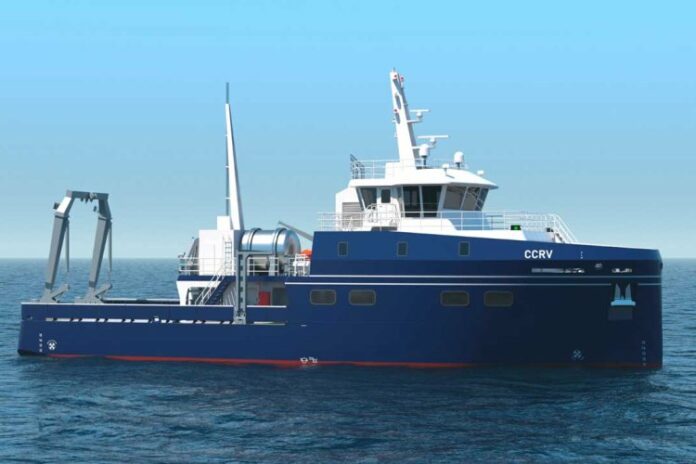
Designed by Glosten, the vessel will feature a new hydrogen-hybrid propulsion system that integrates hydrogen fuel cells alongside a conventional diesel-electric power plant, enabling zero-emission operations. 

The design is scaled so the ship will be able to operate 75 percent of its missions entirely using hydrogen. For longer missions, extra power will be provided by diesel generators.

The 150-foot vessel will be equipped with advanced instruments and sensing systems, along with state-of-the-art laboratories, enabling multidisciplinary research, advancing understanding of the physical and biological processes active in California’s coastal oceans.

“ABS is proud to pioneer the development of hydrogen as marine fuel technology with these partners in a project that has the potential to make a significant contribution to the understanding of our oceans. This project will be closely watched by the industry as it breaks new ground and demonstrates the capabilities of this promising alternative fuel at sea,” said Christopher J. Wiernicki, ABS Chairman, President and CEO.

KOTUG and GIT work together to help reduce underwater radiated noise in oceans

0

KOTUG Canada has worked extensively with Graphite Innovation and Technologies (GIT), an industry leader focused on manufacturing graphene-based sustainable marine coatings to meet these goals.

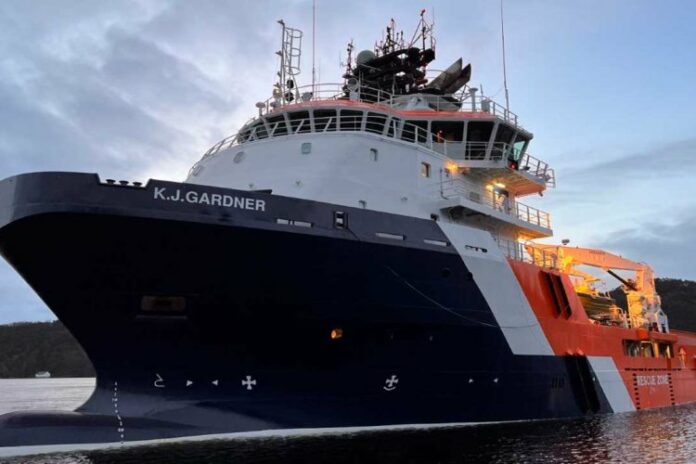
KOTUG Canada used GIT’s XGIT-URN coating to help reduce underwater radiated noise emitted from the ship’s hull and the vibrations that disturb marine life. Aquatic life, such as mammals and the endangered Southern Resident Killer Whale reside within the area of employment for KOTUG Canada’s vessels. These mammals rely on underwater noise to communicate, navigate, and find food.

The K.J. Gardner is the first of three vessels using the GIT applications in support of KOTUG Canada’s mission to reduce the impact on the environment, specifically related to the reduction of noise that potentially disturbs aquatic life in the Salish Sea and adjacent waters. Steve Widmeyer (Director with KOTUG Canada) reports:

“This is a major step forward to strengthen our focus to be a sustainable company. We have set a high standard to meet these goals by using GIT’s XGIT-URN coating which significantly impacts meeting those targets.”

Further applied to the K.J. Gardner were GIT’s XGIT-FUEL and XGIT-PROP coatings. These coatings will enhance the reduced impact with the additional benefits of considerably improving fuel efficiency and decarbonization. It is expected that this vessel will significantly reduce CO2 emissions over the next five years.

Mo AlGermozi (Chief Executive Officer at GIT) stated:

“Our team is excited to work with KOTUG Canada in meeting their sustainability goals. Our XGIT-URN, along with our other two marine coatings, will support their desire to maintain healthy and vibrant oceans while still supporting the needs of their clients. Our shared goal of reducing the environmental impact on the world’s oceans is of paramount importance. GIT is on a mission to contribute to the movement of green shipping activities in the world’s oceans.”

METS Technology chooses EST-Floattech Battery System for the refit of Swedish vessel

0

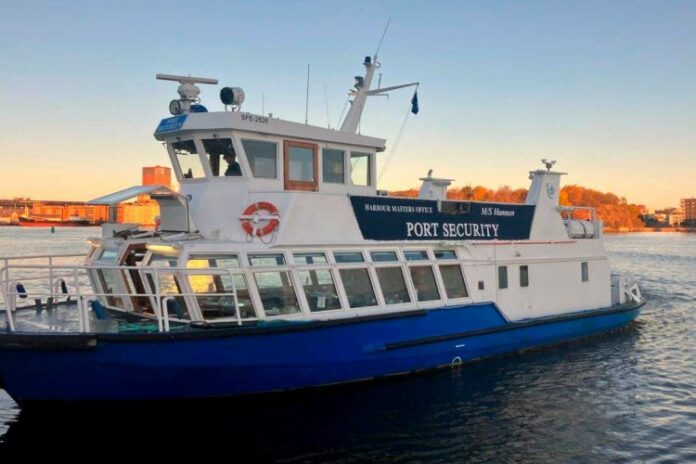
Swedish system integrator METS Technology has, together with main contractor Ö-VARVET AB, decided on EST-Floattech’s new Octopus Series battery system for the retrofitting of the MS ‘Hamnen’. 

Shipyard Ö-VARVET will conduct a major rebuild, as the diesel engine will be replaced by a parallel hybrid system with Power Take Off/Power Take Inn functionality. 

“We are proud to deliver our new Octopus Series product to METS Technology and contribute again to the transition to zero-emission shipping and Gothenburg’s goals of emission-free sailing,” says Walter van der Pennen, CCO.

EST-Floattech will deliver the Octopus High Energy Battery System, tailored to the space available on the MS Hamnen and the energy requirements. Shipyard Ö-VARVET has designed a battery compartment in collaboration with METS and is enthusiastic about the installation of the EST-Floattech modules. The battery system provides flexibility, and there is space reserved for an additional battery pack if the shipowner is looking to expand the battery capacity in the future. The batteries will provide enough power for the vessel to sail for at least 4 hours at 6 knots, and will also provide energy for the vessel’s hotel load and the bow thruster.

“Fitting a battery system is often about weight and dimensions. Especially when it comes to a refit, the available space is limited. However, the Octopus system offers great flexibility to make optimal use of the available space,” says Jelle Meindertsma, Sales Manager.

New project to adapt certification process of installation aids for offshore wind farms

0

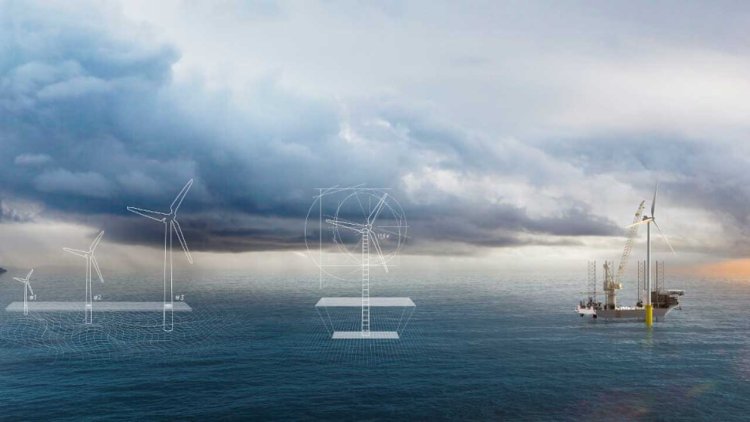
DNV is launching a JIP to develop a decision tool and reference that can be used by all stakeholders during the specification; design; manufacture; procurement and approval of any equipment intended for the installation and decommissioning of bottom-fixed wind turbines. 

DNV forecasts that wind energy capacity will expand 15-fold, rising from 5% of global electricity production currently to 33% in 2050. With higher and more-reliable wind speeds, and less constraints on hub heights and site locations, offshore wind will continue to show a 14% average annual growth, and bottom-fixed offshore wind power will constitute 11% of the global grid-connected electricity supply by 2050.

However, as Kim Sandgaard-Mørk, Executive Vice President for Renewables Certification explains:

“Increasing and complex demands on the fixed offshore wind turbine installation aids are pushing existing processes and standards to the limit. Different practices and a lack of standardization are creating inconsistency, unnecessary costs, and risks throughout the industry. The outcome of the JIP will be a reliable benchmark for the industry to save time and money for all involved stakeholders.”

Dr. Marius Popa, Naval Architect and Project Manager at DNV, adds:

“We are not reinventing the wheel – relevant parts from existing codes will be reused for building a clear and pragmatic certification scheme. We shall identify potential gaps  and incorporate proper solutions for closing them in the outcome of the JIP. The development of a unified, technology-agnostic approach will ensure consistency across the supply chain without excluding customization, such that any user can refer to internal standards during their decision-making process, without deviating from the industry standard.” 

For this initiative, DNV is partnering with players from all parts of the offshore industry, such as equipment manufacturers (wind turbine components and installation aids), offshore constructors and field developers, operators of wind turbines fields, and insurers.

DNV is now in advanced discussions over the initial JIP scoping proposal with Caley Ocean Systems (A Pryme Group Company), Huisman Equipment B.V., IMECA (a brand of Reel), Jan de Nul Group, Osbit, Remazel Engineering S.p.A, Saipem, SSE Renewables and TWD. A call for additional partners remains open and more interested partners are likely to join. The pace of the initiation process is also likely to accelerate in the coming months, so that the JIP will be kicked off by May this year.

Whale warning as clock ticks towards deep-sea mining

0

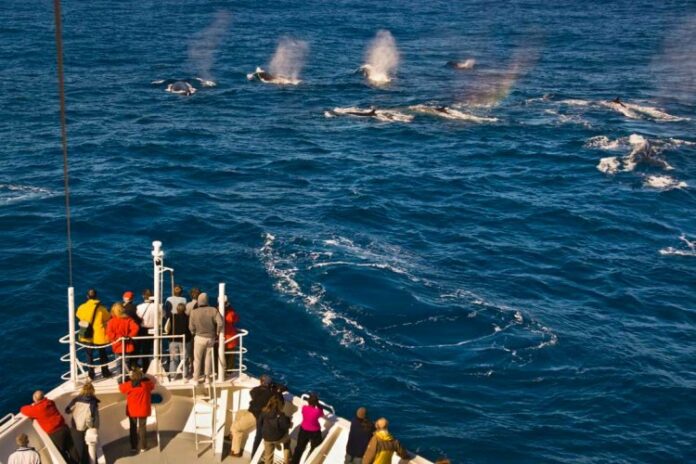
Commercial-scale deep seabed mining in international waters could be permitted for the first time later this year.

In a new paper, scientists from the University of Exeter and Greenpeace Research Laboratories say that deep seabed mining could be a “significant risk to ocean ecosystems”, with “long lasting and irreversible” effects.

The study focuses on cetaceans (mammals such as whales, dolphins and porpoises) and says urgent research is needed to assess potential impacts.

Dr. Kirsten Thompson, of the University of Exeter, said:

“Like many animals, cetaceans are already facing multiple stressors including climate change. Very little research has examined the impact that deep-sea minerals extraction would have on cetaceans. Cetaceans are highly sensitive to sound, so noise from mining is a particular concern.”

The sounds expected to be produced by mining operations, including from remotely operated vehicles on the seafloor, are likely to overlap with the frequencies at which cetaceans communicate, the researchers stress.
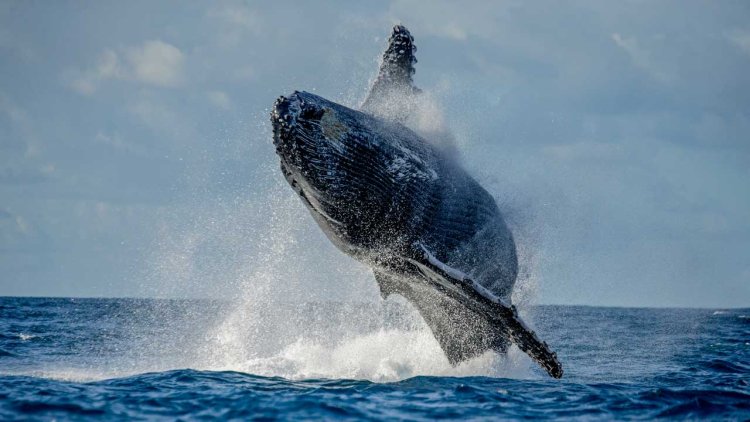
Dr. Thompson added:

“We searched for data on how much noise such mining would cause, but no published assessment is available. We know noise pollution in the ocean is already a problem for cetaceans and introducing another industry that is expected to operate 24/7 would inevitably add to existing anthropogenic noise were deep seabed mining to go ahead. Despite this lack of information, it appears industrial-scale mining could soon begin in one of the planet’s few remaining undisturbed environments.”

The Clarion-Clipperton Zone (CCZ) in the Pacific Ocean, which provides habitat for about 25 cetacean species, including dolphins and sperm whales, is of particular interest to mining companies aiming to exploit polymetallic nodules.

In addition, mining companies are also looking to target seabed mineral resources in areas around seamounts and deep sea hydrothermal vents.

Dr. Solène Derville, of Oregon State University, said:

“Seamounts are now known as important offshore habitats for some cetacean populations that forage or regroup around them but we still lack basic knowledge of these fragile ecosystems. In this context, it is very hard to assess the magnitude of the impacts of seamount seabed mining on the animals that live and feed around these structures.”

No commercial-scale seabed mining has yet occurred outside the exclusive economic zones (EEZs) of coastal nations, although 31 exploration permits have been issued for areas beyond national jurisdiction by the International Seabed Authority, a United Nations body.
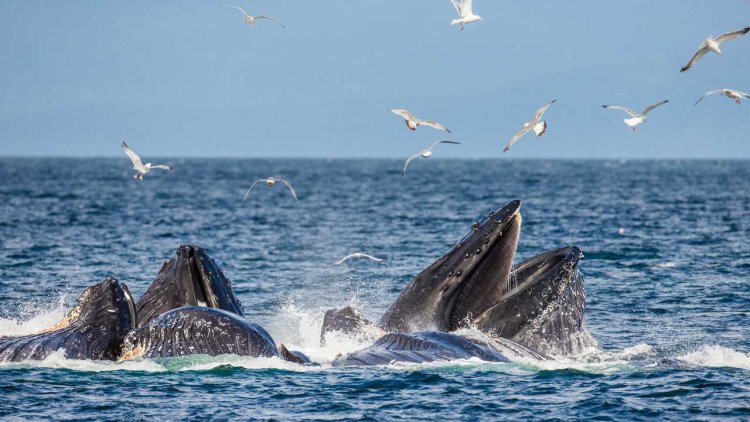
However, in June 2021, the Pacific island of Nauru triggered the so-called “two-year rule” and informed the International Seabed Authority (ISA) that it plans to mine the deep sea—meaning that mining could go ahead in June this year with whatever regulations the ISA has formulated by that time.

Nauru is working with a Canadian firm called The Metals Company, which has already begun testing mining equipment in Pacific waters.

Dr. Thompson said:

“Commercial-scale mining is expected to operate 24-hours a day, with multiple operations extracting minerals across an area of the seabed. We don’t know how this will affect cetaceans or the vast range of other marine species. What we do know is that it will be difficult to stop seabed mining once it has started. Given the imminent threat that the two-year rule presents to ocean conservation, we suggest there is no time to waste.”

The paper, published in the journal Frontiers in Marine Science, is titled: Urgent assessment needed to evaluate potential impacts on cetaceans from deep seabed mining.

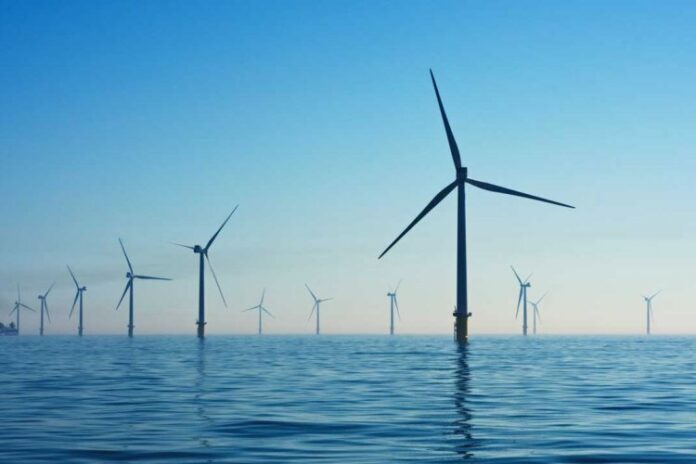
Fincantieri and Leonardo signed multiple MoUs with Greek suppliers

0

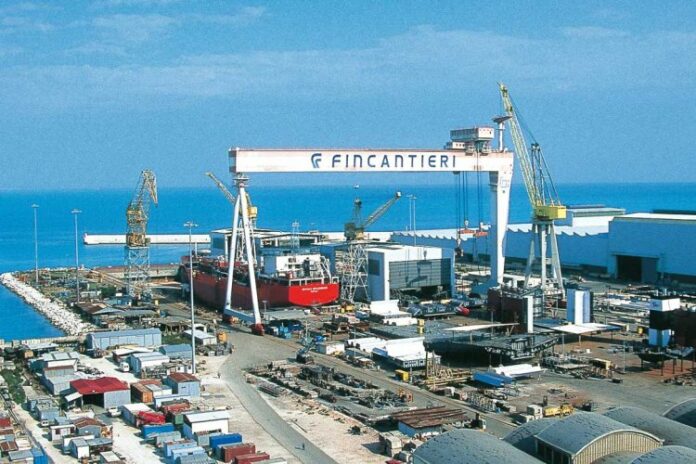
Within the framework of teaming up with the local industrial eco system and strengthening the collaboration between Italy and Greece, Fincantieri and Leonardo have signed a number of further memorandum of understanding (MoU) with potential new Greek suppliers.

The event has taken place in Elefsis, where the Onex Elefsis Shipyards is based. 

After the ones to start a possible supply network in Greece, Fincantieri signed an official agreement with ONEX Shipyards & Technologies Group last December for the creation of a corvettes manufacturing line & their life-cycle support base, that will be located at Onex Naval and Maritime Elefsis Shipyards. The agreement:

• provides the terms of collaboration for the construction of 2+1 state-of-the-art technology and top-standard corvettes at Onex Elefsis Shipyards along with the necessary upgrades, improvements, know-how & transfer of technology, equipment, which are estimated at approximately euro 80 millions;

• is expected to generate the creation of 2.500 direct and indirect new jobs in the shipbuilding industry;

• constitutes a cooperation with multiple benefits for the Greek economy and defense sector, while enhancing the prospect of further cooperation between the two Groups in future construction programs of warships and commercial ships.

The agreement was an important step in the empowerment of the domestic defense production. The know-how that will be acquired through the ONEX-Fincantieri collaboration, that involves the whole Italian industrial ecosystem, will be an important cornerstone for the development of competitive products that will meet the defense requirements of various markets, giving even greater impetus to the rebirth of the Elefsis Shipyards.

Oldendorff Carriers launches Centre Of Excellence

0

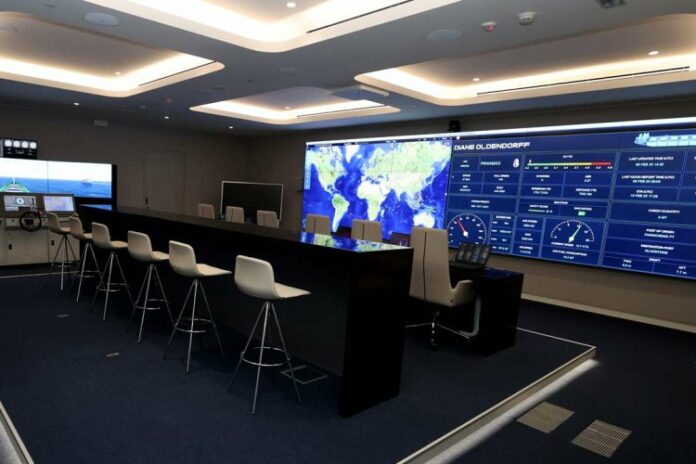
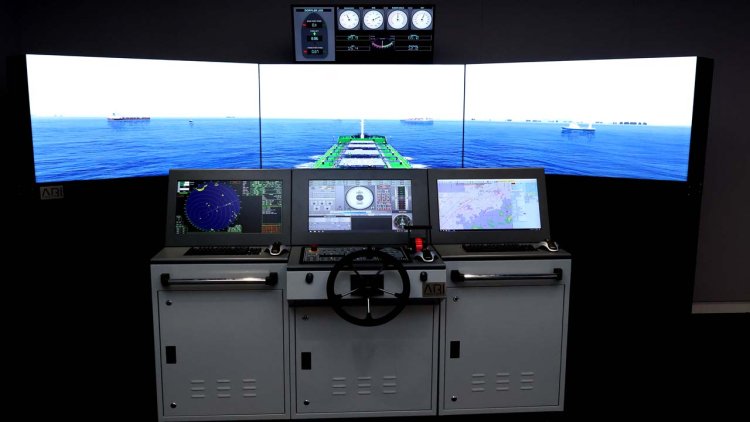
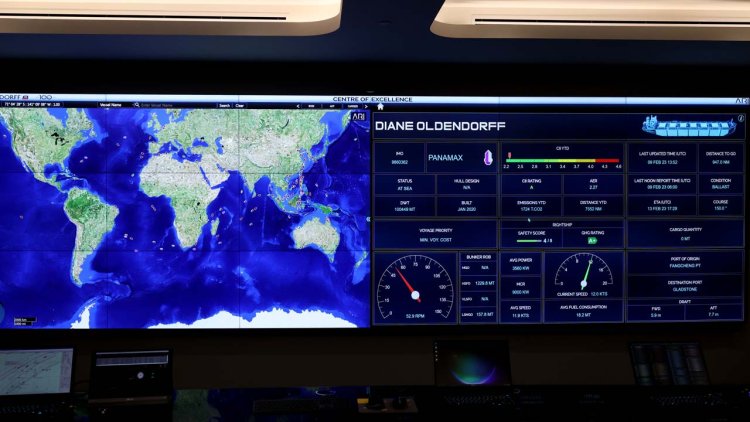
Oldendorff Carriers recently opened a Centre Of Excellence (COE), at it’s new office premises in the DIFC in Dubai. 

The facility is designed to harness the power of real time data, generating information for faster decision making and helping achieve cost efficiencies and lower emissions.

Since 2017, Oldendorff Carriers has been installing fleet performance management technology onboard our vessels. The COE provides a platform with impressive power to analyze and process big data received from the vessels. The analyzed data is displayed in a clear and concise format on the video wall allowing close monitoring of vessel performance. The COE supports our pursuit to further improve the technical and operational efficiency of our modern fleet of eco-ships.

Oldendorff Carriers has collaborated with Applied Research International (ARI) to build the customized Fleetview applications which enables live performance data of multiple vessels to be displayed simultaneously on the video wall. Visual displays of Vessel position, speed, weather, consumption, emissions, and a host of additional performance data are continuously updated.

In addition, the COE includes a state-of-the-art Ship (Bridge) Simulator and desk top engine simulator. These simulators have been customized by ARI for Oldendorff Carriers operations. The simulators will provide training in realistic maritime environments for safe operations, research and other purposes, to both ship and shore based staff. 

DEME awarded contracts for wind farm projects

0

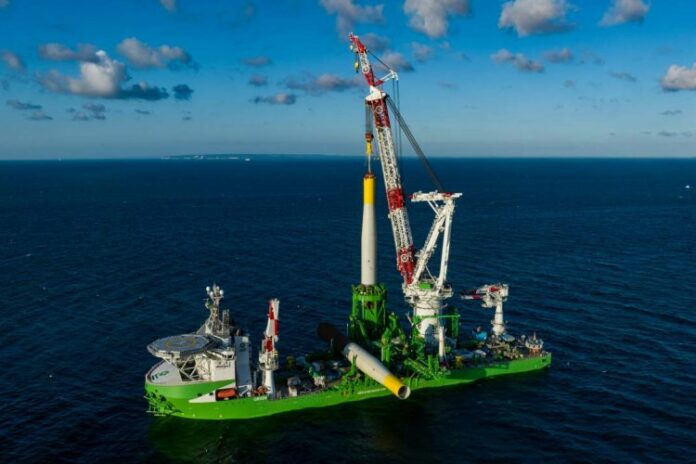
DEME has been awarded two transport and installation contracts for the foundations and the offshore substation for the Yeu and Noirmoutier islands’ offshore wind farm. For DEME this is the second major offshore wind farm project in France following groundbreaking solutions and industry-first technology deployed at Saint-Nazaire.

DEME Offshore will execute the pre-piling works for the offshore substation jacket, and the transport and installation of the 2,700-tonne topside. The scope of work also includes the transport and installation of monopile foundations and transition pieces. The wind farm is being developed by Éoliennes en Mer des Îles d’Yeu et de Noirmoutier (EMYN), a consortium including Ocean Winds (an ENGIE and EDPR joint venture), Sumitomo Corporation, La Banque des Territoires and Vendée Energie.

Just like Saint-Nazaire, the wind farm is located in a very rocky area, with challenging ocean conditions. Therefore, the installation of the monopile foundations will again require DEME’s state-of-the-art drilling technology and some of the equipment, methods and tools deployed at Saint-Nazaire will be reused. This includes the giant 350-tonne Offshore Foundation Drill developed together with Herrenknecht and the so-called MODIGA. At 60 m high, the MODIGA encapsulates the drilling and installation operations, protecting them from the harsh marine conditions, which in turn, improves operational working time substantially.

DEME’s offshore installation vessel ‘Innovation’ will carry out the foundation installation. Similar techniques and vessels successfully deployed at the Saint-Nazaire wind farm will be used for the substation pre-piling works, which will be executed in the second half of 2023. Allseas’ vessel ‘Pioneering Spirit’ will be used to install the substation jacket and topside. The installation of the monopile foundations, substation jacket and topside are scheduled to start in the first half of 2024.

Yves Chiffoleau, Business Unit Director South Europe at DEME Offshore, comments:

“We are absolutely delighted to be awarded a second major offshore wind project in France. Saint-Nazaire was an extraordinary project and a challenging one. Many thought it was impossible to drill an entire wind farm into rock, but our expert project team successfully accomplished the project ahead of schedule. We will again deploy our cutting-edge technology and the innovative methodologies developed by our fantastic engineers at Yeu and Noirmoutier. We look forward to working closely with our client to bring clean energy to thousands of French households and to support the country on its journey to achieve the energy transition.”

“This contract signature for the transport and installation of the monopile foundations and substation is an important step towards the EMYN’s construction phase ensuring a proven technology for a challenging installation in safe conditions. As from 2025 the Yeu and Noirmoutier offshore wind farm will produce clean energy for almost 800,000 people – more than the current population of the Vendée department  – helping to diversify the energy mix and to continue the quest for carbon neutrality,” added Paolo Cairo, President of the company Eoliennes en Mer des Iles d’Yeu et de Noirmoutier.

The first RL 2600 crane shipped for DolWin epsilon platform

0

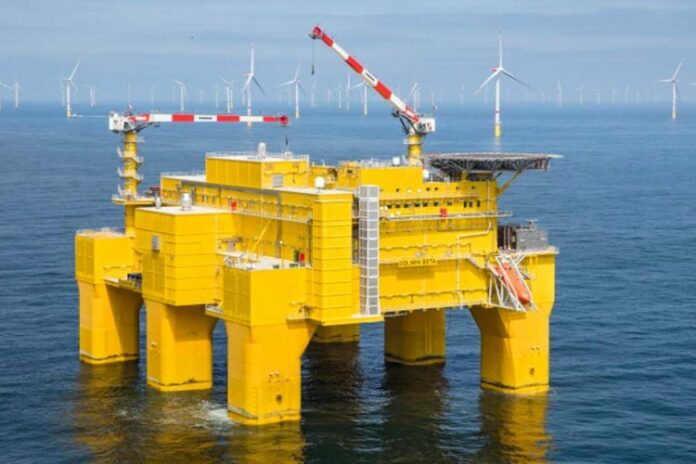
The Liebherr crane was shipped to Singapore on 27 December 2022 and installation on the DolWin epsilon platform is planned for March. The DolWin5 platform is scheduled to enter service in 2024. 

The RL 2600-35 Litronic is a weight-optimised and compact designed offshore crane. The cylinder-luffing crane is the ideal equipment for small platforms, where space is limited. The RL 2600 has a box boom with a maximum working radius of 52 metres and a maximum lifting capacity of up to 35 tonnes.

“With the delivery of the RL 2600, we conclude a successful cooperation with Aibel and TenneT and enable highly efficient and reliable operation of the offshore converter platforms, which is particularly important in times of the energy transition,” comments Matti Basan, Senior Sales Manager for Liebherr Offshore Cranes. “We are confident about the future and expect more projects to be launched in the offshore wind sector. Our goal is to continue to play a leading role in the development and supply of crane solutions for the offshore industry.”

The RL 2600 is the first crane for TenneT to be equipped with a Master V control system, which was developed for the latest maintenance systems such as LiMain. Despite difficult circumstances during the production period, in the middle of the COVID phase, the crane was delivered on time.

“We are very happy to have an experienced and reliable partner on board with Liebherr. As with previous projects, Liebherr has been very cooperative and the RL-cranes are at the top level in their segment, both technically and in terms of quality,” states Martin Lundgren, Aibel AS Project Procurement Manager DolWin5.