-3.8 C
New York
Home Blog Page 32

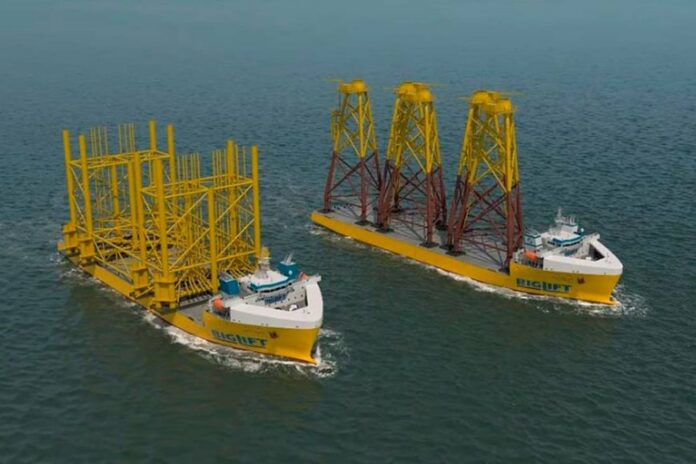
CY Shipping and BigLift order two additional newbuilds in China

0

The first vessel, owned by CY Shipping will be delivered in Q4 2025 and the second vessel, owned by BigLift Shipping, in Q2 2026.

Newbuilding contracts for the two new HTVs have been signed with Jing Jiang Nanyang Shipbuilding Co., Ltd, China. The vessels, jointly designed by CY Shipping and BigLift Shipping, are called the BC-Class.

The vessels are designed to transport ultra-large and heavy modular cargoes worldwide, with a focus on reliable service speed, low accelerations and optimized loading and discharge times. Because of the similar frame spacing, depth, ballast and tidal compensation capacity they will be interchangeable with BigLift’s MC-Class vessels BigLift Barentsz and BigLift Baffin, offering even more deck length and stern loading capability.

The overall length of the BC-Class is 180 metres, the beam is 43 metres, and the deck measures 43 by 140 metres, resulting in an impressive fully unobstructed deck space of 6,020 m2. Cargoes can be loaded and discharged over the vessels’ stern or side by ro-ro or skidding. The BC-Class has a depth of 12 metres, a maximum deadweight of 25,000 mt, and the ballast capacity is 12,000 m3/hr. The vessels are not semi-submersible.

James Jung, Director at CY Shipping, says “I’m very proud and excited to strengthen our partnership with BigLift Shipping further. As a modern company, we understand the importance of being ahead of the market requirements, making a difference, and adding value to customers’ requirements.”

Johan Boer, Commercial Director at BigLift Shipping, adds “it’s great to see how an initial idea turns into such a strong partnership. Both companies share many of the same values, and we are pleased to start this newbuilding program together with CY Shipping.”

Exail to equip Deep Ocean Search with next-generation navigation for deep-sea missions

0

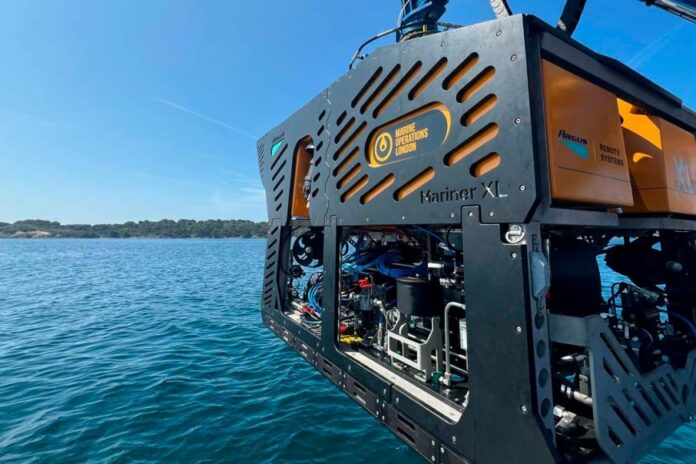
Deep Ocean Search (DOS) has selected Exail to provide the navigation and acoustic positioning capabilities required for its upcoming missions. As part of this collaboration, DOS will deploy Exail’s Rovins 9-DVL navigation system and Gaps M7 acoustic positioning system, enabling operations at depths of up to 6,000 meters.

“These systems were chosen not only for their compact design and advanced capabilities but also for their proven track record in the marine industry,” said Sébastien Bougant, Ashore Manager at DOS. “The combination of Rovins 9-DVL and Gaps M7 will allow us to achieve new levels of precision and reliability in the most demanding subsea missions.”

Quentin Chiche, Regional Sales Manager at Exail, added: “We are proud to support DOS in pushing the boundaries of deep-sea exploration. By delivering the accuracy and autonomy required in such environments, we help operators focus on their mission objectives with full confidence in their navigation and positioning systems.”

The Rovins 9-DVL will be integrated into DOS’ XL Mariner work-class ROV (Remotely Operated Vehicle), built by Argus in Norway. Combining Exail’s fiber-optic gyroscope technology with Nortek’s DVL (Doppler Velocity Log), Rovins 9-DVL ensures accurate seabed-relative navigation in GNSS-denied environments. By reducing drift and maintaining precise velocity tracking, it enhances the efficiency and predictability of subsea operations.

The Gaps M7 USBL system complements this by providing rapid deployment and omnidirectional long-range tracking, even in acoustically challenging conditions. Its pre-calibrated design ensures continuous real-time positioning of subsea assets, offering greater operational agility, minimized downtime, and enhanced control during demanding missions.

OKEA and its partners make an oil discovery near the Brage field

0

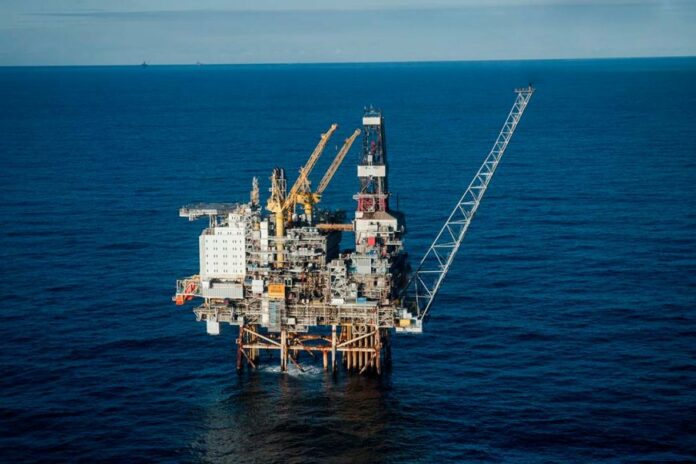
The preliminary estimated size of the discoveries in well 31/4-A-15 B is 0.3-1.11 million  standard cubic metres of oil equivalent (2-7 million barrels) in the Cook Formation and 2.2-4.1 million standard cubic metres of oil equivalent (14-26 million barrels) in the Statfjord group in theTalisker area.

The well was drilled from Brage, and the licensees in production licence 055 are considering tying the discovery back to the Brage field. 

The objective of the well was to prove petroleum in Lower Jurassic reservoir rocks in the Cook Formation and the Statfjord group.

Wellbore 31/4-A-15 B encountered 25 metres of oil in the Cook Formation, in sandstone layers totalling 52,4 metres, with moderate reservoir properties. The oil/water contact was not encountered. 

In the Statfjord group, the wellbore  encountered 63 metres of oil in a total of 171 metres of sandstone with moderate to good reservoir properties. The oil/water contact was encountered at 2616 metres below the sea level.

The well was not formation-tested, but data collection and sampling have been carried out.

The wellbore was drilled to respective measured and vertical depths of 10,223 metres and 2759 metres below the sea level. It was terminated in the Lunde Formation in the Upper Triassic. 

The wellbore has been permanently plugged and abandoned.

ABB and Blykalla to collaborate on nuclear power technology for maritime industry

0

ABB has signed a memorandum of understanding (MoU) with Swedish nuclear energy company Blykalla to support and accelerate the deployment of small modular lead-cooled reactors to the maritime industry.

Building on the terms of an existing MoU between Blykalla and ABB signed in October 20241 , which targets developing lead-cooled SMR technology to support Sweden’s clean energy requirements, this agreement expands the partnership and aligns with growing momentum for nuclear energy as a marine power source. 

In June, International Maritime Organization administrations at the Maritime Safety Committee (MSC 1102) approved recommendations to amend the Code of Safety for Nuclear Merchant Ships to account for advances in nuclear technology – including SMRs – since the Code entered into force.

Blykalla’s Swedish Advanced Lead Reactor (SEALER) is a highly compact, passively safe reactor with inherent safety structures which means they do not require any operator actions. It was one of three reactors identified in the Nuclear Propulsion for Merchant Ships I (NuProShip I) project, which aims to adapt a Generation IV SMR to the requirements of maritime vessels – in particular larger ships. ABB’s expertise in system integration as well as power distribution, control, and automation technologies, will be key to ensuring the successful deployment of the SMR as a shipboard solution.

“We’re pleased to extend our partnership with ABB into this strategically important vertical. With our compact reactor design, we see a unique opportunity to lead the way in maritime nuclear propulsion – a solution uniquely positioned to meet the sector’s demand for clean energy,” said Jacob Stedman, CEO at Blykalla. “Realizing this vision will require an ecosystem of committed partners, and this collaboration is a critical building block.”

“SMRs hold significant potential to drive decarbonization, and our collaboration with Blykalla will help to advance their viability in maritime applications,” said Juha Koskela, President, ABB’s Marine & Ports division. “Next-generation SMRs will enable innovative ship designs that can help to reduce emissions compared to vessels powered by carbon-based fuels. We are proud to partner with Blykalla on what represents an important step on shipping’s decarbonization journey.”

Israeli Skana Robotics presents new naval drones Bull Shark and Stingray

0

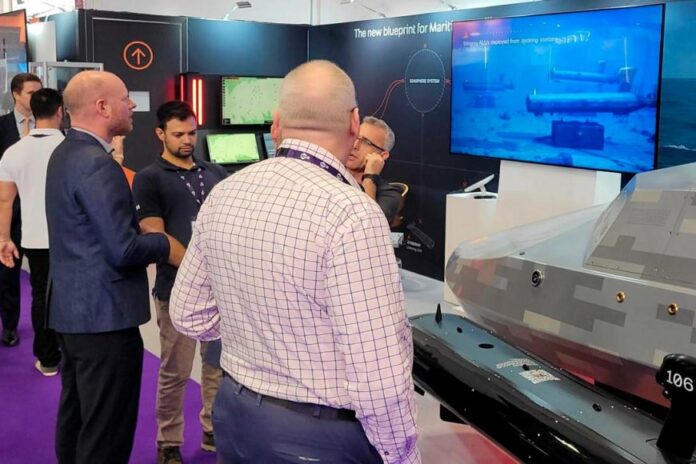
Israeli company Skana Robotics has presented two new autonomous sea drones — the Bull Shark surface drone and the Stingray underwater drone.

Bull Shark is a tactical unmanned surface vehicle designed for reconnaissance, surveillance, and interception.

It’s capable of carrying up to 150 kilograms of payload and serves as a communication node for coordinating operations between surface and underwater systems.

Stingray is an autonomous underwater drone designed for reconnaissance, anti-submarine warfare, and protection of critical infrastructure.

The drone supports autonomous navigation, can be fixed on the seabed, and can remain in standby mode without generating noise.

The standard operating time of both platforms is 24 hours, extendable with additional battery modules.

The drones can be launched from underwater stations, patrol boats, submarines, or other ships, increasing their flexibility in various combat conditions.

A key advantage of the new systems is their software-defined architecture, which allows scaling the platforms’ functionality and adapting them to tasks of varying complexity.

The company states that this approach eliminates traditional constraints on fleet expansion, as production is not dependent on shipbuilding capacity or complex logistics.

The control center for the devices is the SeaSphere software core, responsible for mission planning and resource allocation.

It is complemented by the Vera system, based on ROS 2. Vera enables autonomous task execution, translates general directives into specific actions, and adapts to environmental changes in real time. This architecture ensures distributed command, coordination between unmanned platforms, and integration with manned ships.

Skana Robotics said it has already received the first orders for the new systems and plans large-scale deployment with international partners in the near future.

Source: militarnyi

Woodside and PETRONAS strengthen partnership with 15-year LNG supply agreement

0

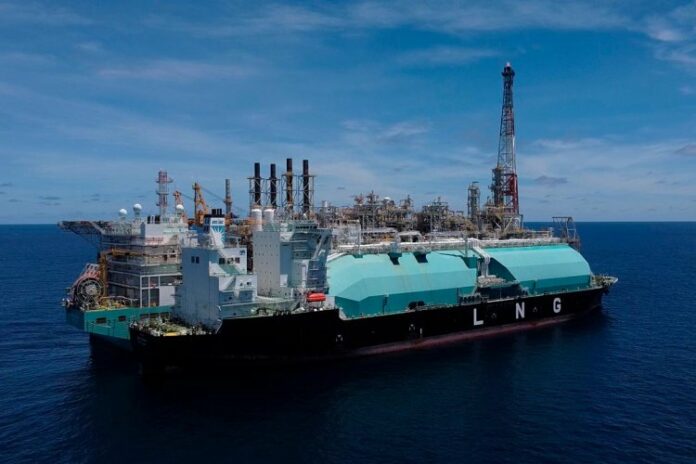
Woodside Energy Trading Singapore Pte Ltd and PETRONAS have finalised a fully termed sale and purchase agreement (SPA) for the supply of 1 million tonnes per annum (Mtpa) of liquefied natural gas (LNG) to Malaysia from 2028 for a period of 15 years.

This milestone marks the successful conversion of the non-binding Heads of Agreement (HOA) signed in June 2025 into a binding commitment, reinforcing the shared ambition of both companies to deepen cooperation across the LNG value chain.

Under the agreement, LNG will be supplied from Woodside’s global portfolio, which may include volumes from the recently approved Louisiana LNG project in the United States.

Woodside Executive Vice President & Chief Commercial Officer Mark Abbotsford said:

“Finalising this long-term LNG supply agreement with PETRONAS represents a strategic milestone for Woodside as it is our first long-term LNG supply arrangement with Malaysia.

“The agreement is another demonstration of the strength and flexibility of Woodside’s diversified global portfolio and reinforces our position as a trusted energy supplier in Asia, supporting long-term value creation and regional prosperity.”

The SPA also supports PETRONAS’ efforts to enhance energy security in Peninsular Malaysia by integrating upstream gas developments with LNG imports to meet rising demand from the power and industrial sectors, driven by data centre growth, the wider adoption of artificial intelligence technologies and the transition away from coal-fired generation.

PETRONAS Vice President of LNG Marketing & Trading Shamsairi Ibrahim commented:

“As a responsible energy company, PETRONAS is committed to safeguarding Malaysia’s energy security while advancing the transition to a lower carbon future. We see natural gas as a long-term solution in this journey, and our collaboration with Woodside Energy represents an important step towards ensuring reliable and flexible supply for Malaysia’s growing economy, while enhancing PETRONAS’ global portfolio to deliver energy responsibly and sustainably.”

Woodside and PETRONAS share a long-standing relationship, having previously collaborated on exploration studies, research and development initiatives, and both spot and mid-term LNG transactions.

Van Oord reinforces the coast of Noord-Beveland with Bio-LNG hopper dredger

0

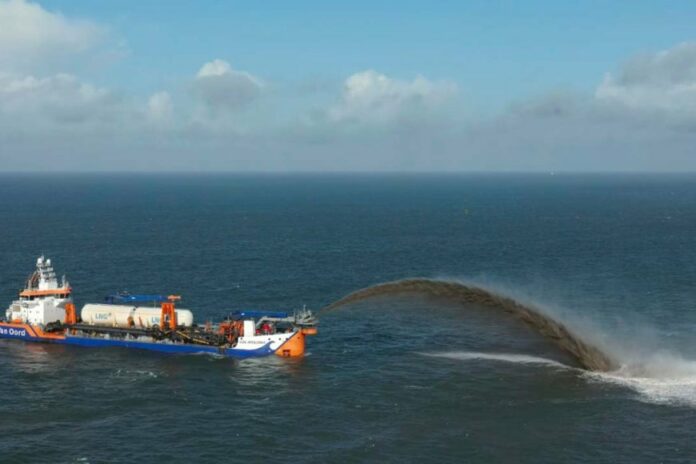
For coastal maintenance, an LNG-powered trailing suction hopper dredger will deposit 1 million cubic metres of sand on and just in front of the beach. For the first time in the Netherlands, this replenishment is being carried out by a trailing suction hopper dredger that runs largely on Bio-LNG.

Rijkswaterstaat awarded the beach replenishment contracts for Heemskerk, Goeree Westkop, and Noord-Beveland to Van Oord in March of this year. These contracts are part of the Coastline Care programme, which focuses on strengthening the Dutch coastline through regular sand replenishment.

Van Oord, together with client Rijkswaterstaat, is committed to executing the work in a way that minimises emissions. For the first time in the Netherlands, the replenishment is being carried out with a dredger that runs largely on Bio-LNG, resulting in a significantly lower CO₂ footprint compared to conventional fuels.

Bio-LNG is produced from sustainable bio-based materials, including organic household waste and agricultural waste. The bunkered fuel is certified under the ISCC EU certification system, which ensures compliance with the European Union’s legal requirements for sustainable fuels.

By deploying the LNG hopper dredger powered by Bio-LNG, Van Oord emphasizes its pioneering role in the sustainability of the maritime sector. As the first maritime contractor with climate targets approved by the Science Based Targets initiative (SBTi), Van Oord is actively working on decarbonisation to achieve its net-zero ambition. In close collaboration with clients and stakeholders, we continue to develop innovative and sustainable solutions for our projects worldwide.

Saipem awarded new offshore contract for Sakarya gas field development

0

Saipem has been awarded a new offshore contract by Turkish Petroleum OTC for the third phase of the Sakarya gas field development project in Turkey. 

Sakarya is the largest offshore natural gas field discovered in Turkey and is located about 170 km off the coast of Filyos, Zonguldak. The third phase of development entails a new dedicated floating production unit (FPU), fed by 27 wells located in the Sakarya and Amasra fields, connected by a new trunkline to the onshore facility located in Filyos, on the Turkish Black Sea coast.

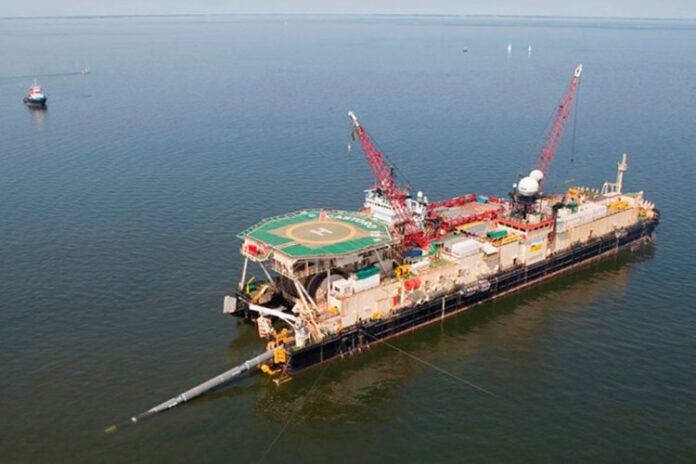
Saipem’s scope of work encompasses the engineering, procurement, construction and installation (EPCI) of 8 rigid flowlines and a 24-inch diameter Gas Export Pipeline (GEP), approximately 183 km long, connecting the offshore field, at a maximum depth of 2,200 meters, to Filyos. The overall duration of the contract is approximately 3 years, while the offshore campaign will be conducted by Saipem’s Castorone pipelay vessel in 2027.

Saipem has successfully completed the first phase of the Sakarya field development project awarded in 2021 and is finalizing activities related to the second phase awarded in 2023. With the signing of this new contract, the company further consolidates its presence in Turkey and its involvement in a strategic project that contributes to the country’s energy independence.

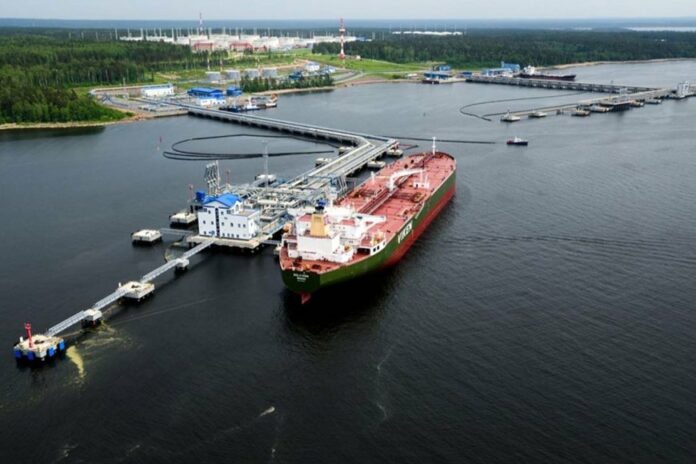
Drones attack Russia’s largest oil port, fire erupts on ship at Primorsk

0

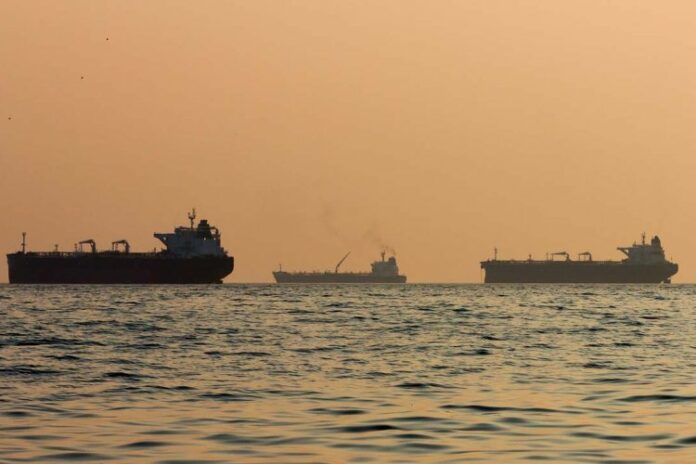
As a result of the attack, a fire broke out on one of the ships. A blaze also occurred at a pumping station within the port.

The region’s governor, Alexander Drozdenko, stated in the morning that Russian air defenses had allegedly shot down 30 drones over the region.

“A fire on one of the vessels at the Port of Primorsk is being extinguished. The fire suppression system was activated,” the official wrote on Telegram.

Later, he reported that the fire on the ship had been fully extinguished.

Just half an hour later, the governor also announced that the fire at the pumping station in the Port of Primorsk had been extinguished.

The residents of Russia’s Leningrad region and the city of St. Petersburg reported continued explosions as of 7 a.m. and described it as one of the largest drone attacks on the region since the start of Russia’s full-scale invasion of Ukraine, according to Astra.

Source: militarnyi

MODEC awarded AiP from Bureau Veritas for LCO2 Floating Storage and Injection Unit

0

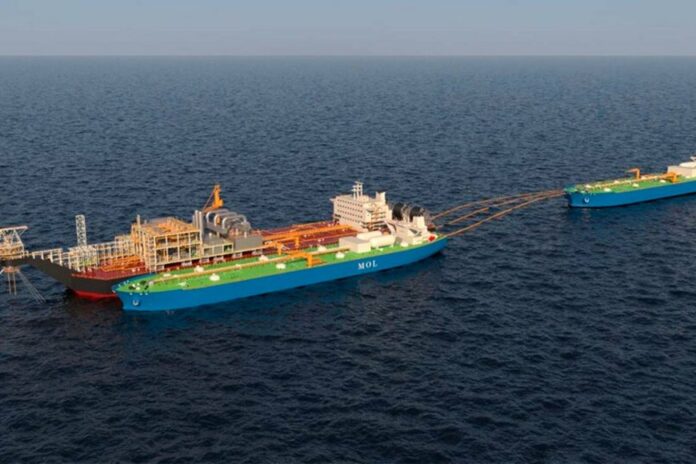
The FSIU would be able to receive LCO₂ transported in low pressure condition, store, and inject it into subsea wells at high pressure for permanent sequestration, which eliminates a need for onshore LCO₂ receiving plant and pipeline to injection wells. 

The unit is engineered for a maximum CO₂ injection capacity of 10 million tonnes per annum (MTPA), with a minimum total tank storage capacity of 100,000 m³.

To support uninterrupted injection operation, the FSIU will feature both tandem loading at the aft and simultaneous side-by-side loading at the midship port side, enabling flexible and efficient LCO₂ transfer from LCO₂ carriers, up to 90,000 m3 capacity (tandem) and up to 50,000 m3 (side-by-side). 

The FSIU hull was developed in collaboration with Mitsubishi Shipbuilding Co. Ltd. (MSB), while the mooring system incorporates a SOFEC External Turret to allow dual loading operation as well as station keeping in non-directional environment as often found in Southeast Asia. The FSIU will also be equipped with diesel engine generators integrated with a carbon capture system on the topside, minimizing operational CO₂ emissions.

This concept was developed in collaboration with Mitsui OSK Lines Ltd. (“MOL”), to leverage their experience and market position with LCO₂ carriers and its proven methods of safe storage, transport and offloading.

By serving as an offshore storage and injection hub, the FSIU enables the sequestration of CO₂ into qualified reservoirs. By offering large-scale, flexible, and reliable offshore CO₂ storage, this solution supports the global transition to low-carbon energy.

This collaborative approach is positioned as a further example of a “Concept Design of Floating Alternative Energy Production Facility” as stated in the Mid-term Business Plan 2024-2026“Explore a Sustainable Future with Innovation”. The concept of carbon storage and injection is achieved by leveraging MODEC’s expertise in overall layout, hull design and mooring technology, cultivated in Oil & Gas FPSO projects, with MOL’s expertise in LCO₂ transport. This FSIU is designed for a wide range of offshore field locations and potential clients.

For the purpose of this AiP, BV’s technical experts conducted a comprehensive design review of the LCO₂ FSIU. The review encompassed critical safety aspects associated with the hull structure, mooring system, and LCO₂ storage, handling, and injection systems. By rigorously assessing the design against applicable BV Rules and international regulations, BV’s technical experts validated the FSIU’s technological and operational feasibility.

MODEC considers this AiP as further demonstration of a floating solution for alternative energy production and will continue to strive to refine and mature this concept to address the key challenges for commercialization identified during this development. We will contribute to the effective reduction of emissions through innovative, technically sound and cost-effective solutions, continuing in striving to achieve the decarbonization of the global energy supply chain through developing new technologies for a sustainable future.

Arata Kamishohara, VP Business and Project Development at MODEC noted:

“While this FSIU is a new concept, each component on the unit is not necessarily new to MODEC. MODEC has experience of CO₂ injection (removed from pre-combustion produced gas) and dual (oil) offloading system. All the utility systems are similar to what we do on FPSOs every day.
We collaborated with MOL, who cover the transportation portion of CCUS value chain, for interfaces between LCO₂ carriers and the FSIU.
With this, we are planning to achieve $5/tCO₂ or less, which I don’t think is a stretch target.”

Matthieu de Tugny, Executive Vice President, Industrials and Commodities at Bureau Veritas, said:
“We are delighted to award this Approval in Principle to MODEC for its innovative Floating Storage and Injection Unit concept. This project demonstrates how established offshore expertise can be applied to enable safe, reliable and scalable carbon storage solutions. Bureau Veritas is committed to supporting the development of technologies that accelerate the transition to a low-carbon future, and this AiP reflects our role in helping industry stakeholders bring practical maritime solutions to market with confidence.”