-1.2 C
New York
Home Blog Page 329

Kongsberg to provide cutting-edge simulation technology to the Royal Navy

0

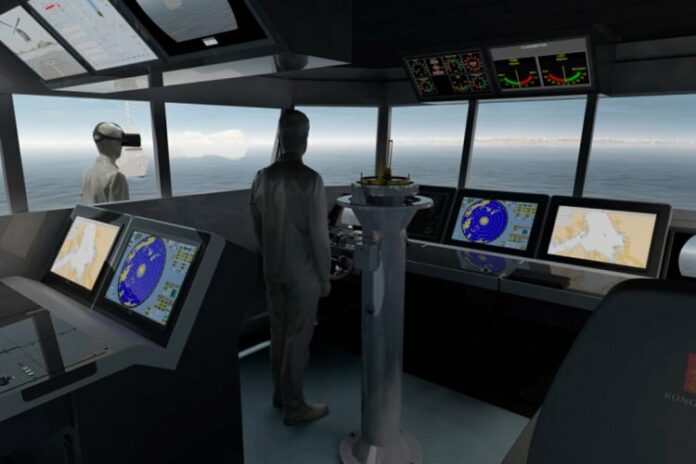
The Kongsberg Digital simulation technology will ensure that Royal Navy personnel can maximise operational effectiveness in all types of situations, from single unit pilotage through to Replenishment at Sea and Task Group manoeuvres, day and night and in all weather conditions. 

The simulators will enable teams to train together with multiple vessels in the same scenarios, reducing associated risks, logistics and cost of seagoing training programmes. In future, the new simulators will be able to integrate across different training establishments allowing Bridge Teams at Britannia Royal Naval College (BRNC), HMS Collingwood and HMNB Faslane to operate together.

Existing trainers which have served the Royal Navy well for the last 20 years will be replaced with cutting edge simulators to support the next generation of Warfare Branch personnel. Additional simulators will be installed at HMS Collingwood, enhancing capacity and training resilience.

Kongsberg Digital has been awarded the contract to deliver the new simulators by Capita, who are running Project Selborne, a 12-year programme to modernise and deliver training for the Royal Navy.

Using customised bridge configurations and instruments, Bridge Teams will experience ultimate realism in a range of training scenarios. Advanced engineering and hydrodynamic vessel modelling in the simulators ensure vessels, objects and equipment behave realistically, equipping personnel to meet future challenges in various missions. Also, for the first time, VR headsets will be used to provide an immersive training experience for evolutions such a ship handling and Replenishment at Sea.

Metaverse VR, an SME providing immersive training solutions based in Portsmouth, will provide modelling support to the project, including Virtual Reality training systems.

Andreas Jagtøyen, Executive Vice President of Digital Ocean, Kongsberg Digital, says:

“We are proud to deliver advanced simulator systems contributing to building competence for safer operations at sea, and it’s an honour to provide the Royal Navy with our solutions. A number of naval academies worldwide are using our simulator systems today for education and training purposes. The Royal Navy contract recognises our technology and will strengthen our position within the naval simulator training domain.”

David Hook, Managing Director of Capita Defence Training, said:

“This new suite of simulators will not only create highly realistic training scenarios for Royal Navy trainees but will also deliver significant resilience to the Navy’s training programme by allowing us to run, test and roll out regular updates without the need to wait for holiday downtime.”

“This is a significant milestone in Project Selborne’s mission to get better trained people to the front line, faster, and I’m proud to be working with Kongsberg Digital to deliver world-leading training for our Royal Navy personnel.”

Colonel Aaron Fisher, Commandant, Royal Navy Training Management Group said:

“The new Bridge Trainers will modernise the world class navigation training synonymous with the Royal Navy. The future upgrades will provide the ability to train across multiple RN establishments, via a secure network, and provide a tangible example of RN and ‘Team Fisher’ collaboration to deliver training modernisation for our people.”
Costa Group and Proman join forces towards decarbonisation of the cruise industry

0

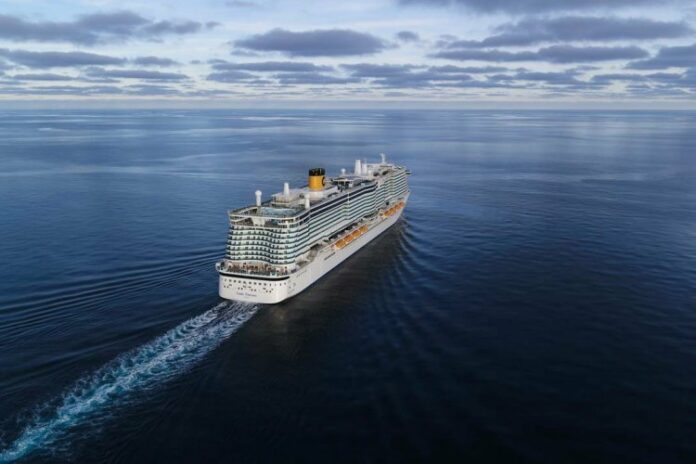
Costa Group and Proman have signed an MOU to drive further the implementation of methanol as a marine fuel for the cruise industry.

The partnership aims to accelerate the energy transition and decarbonisation of the existing fleet by enhancing the supply of sustainable methanol, paving the way for the retrofitting of existing vessels to operate on clean fuel, as well as investment in further methanol-fueled new builds.

The MOU reaffirms methanol’s potential to play a key role in the ongoing reduction of GHG emissions of the cruise sector and other shipping segments. It is a cleaner-burning fuel which virtually eliminates airborne pollutants such as particulate matter and sulphur oxides and is widely available and increasingly produced via lower-carbon, biogenic or hydrogen-based pathways. When used in fuel cells, methanol has the potential to allow for lifecycle zero emissions in the near future.

Methanol is emerging as a leading alternative fuel to meet GHG reduction goals due to its easy-to-handle properties, making it attractive for both new builds and for refitting existing ships. As one of the most widely traded chemical commodities, the infrastructure for ship supply could be adapted from existing infrastructure. All forms of methanol, whether natural-gas based, low-carbon or renewable, can be blended regardless of production pathways. It therefore enables a reliable transition pathway from today to fully GHG neutral cruise ships in near future.

“The technology to retrofit a vessel to accept methanol as a fuel is available today.  Our methanol products can facilitate the transition to low carbon intensity fuels. Methanol-powered vessels have a proven track record of reducing and eliminating major greenhouse gas emissions, delivering immediate air quality improvements around major ports and shipping lanes. We are excited to bring our expertise along the full methanol value chain to help deliver on Costa Group’s bold ambitions” – said Tim Cornelius, Proman’s Managing Director of Corporate Development.

“We are reducing the carbon footprint of our fleet while at port and at sea, investing in advanced environmental technologies and partnering with companies such as Proman who share a passion for sustainable energy transition. By enabling cruise ships to use methanol as a propulsion fuel, Costa follows the ambition to take the next big step towards GHG neutral operations of our fleet by 2050” – said Dr. Christoph Schladoer, VP Decarbonisation Costa Group.


MAR Marine extends dredging capabilities with a new Damen CSD500

0

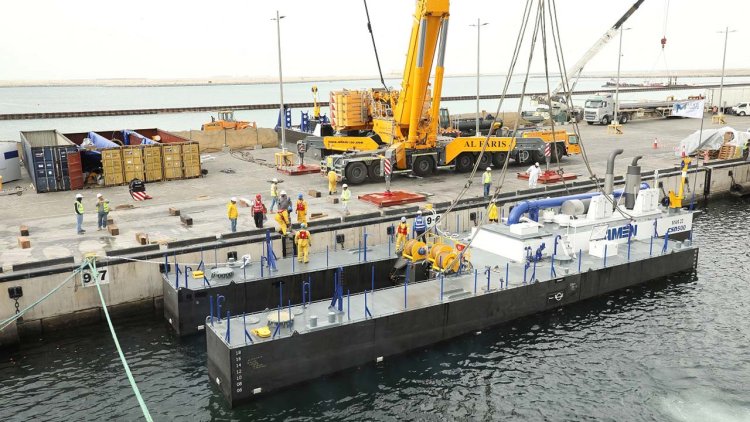
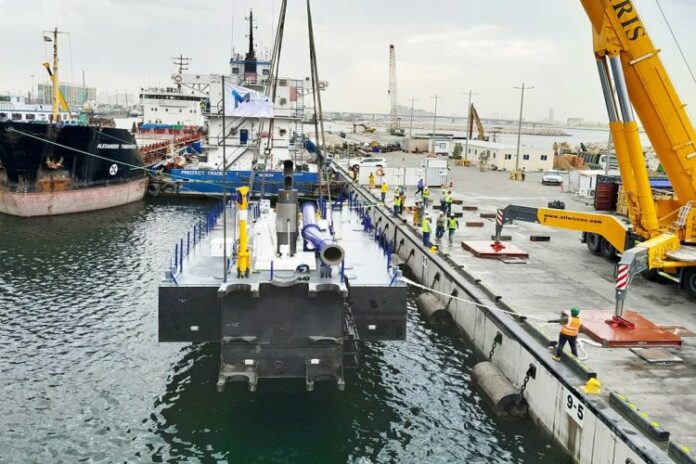
Damen Shipyards Group has delivered a Cutter Suction Dredger CSD500 to MAR Marine & Building Contractor L.L.C., a UAE-based contractor. The dredger has been shipped from Damen Dredging in the Netherlands to Dubai. 

The CSD500 has been named MAR 22. Upon its delivery in Dubai, Damen’s client, a leading contractor in the region, played a vital role in the reassembly of the modular dredger.

“We are happy to welcome the MAR 22 to our marine equipment fleet,” Mr Paul Abou Rjaili, Operations Manager at MAR Marine states: “We are further reinforcing our dredging equipment and capabilities, and this customised dredge exactly matches our requirements for the upcoming Al Hamriyah Port Expansion project.” 

The standard dredger has been fitted out with additions boosting its dredging efficiency such as anchor booms, a spud carriage system, as well as the possibility to both enlarge and decrease the cutter depth. Moreover, practical additions include an accommodation unit located underneath the operating cabin, plus a navigation and communication package.

After assembly afloat alongside quay the CSD500 is ready to start its maiden dredging job at the Al Hamriyah Port expansion project, where it will remove 650,000 m3 of soil. With plenty of other marine works planned in the region for the coming years, this is just the start of things to come.

“This dredger demonstrates clearly the benefits of Damen’s standardised shipbuilding philosophy,” says Pascal Slingerland, Damen Shipyards Sales Director. “Although built in series, which offers rapid access to proven technology, the dredger has been customised significantly in order to meet the requirements of MAR Marine & Building Contractor L.L.C’s requirements.”

Siemens Gamesa сharters NYK CTV for Japanese Offshore Wind Farm

0

NYK and Siemens Gamesa Conclude Charter Agreement for Crew Transfer Vessel for Offshore Wind Power Generation at Ishikari Bay New Port

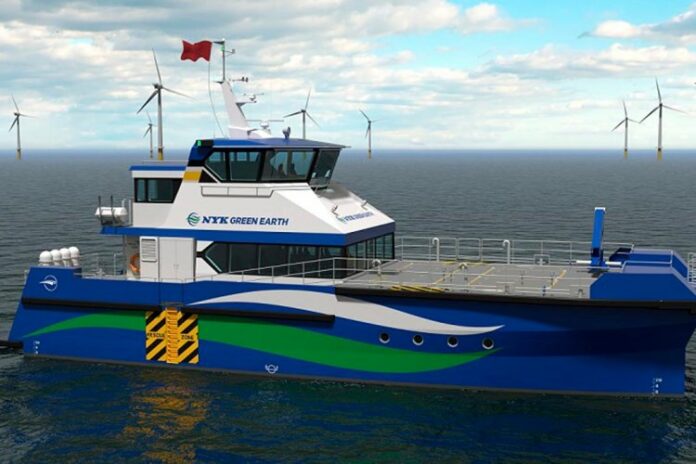
On February 15, NYK has concluded a time charter contract with Siemens Gamesa, the world-leading provider of wind power solutions, for a crew transport vessel (CTV)* for an offshore wind power generation facility.

The CTV will be owned by NYK and managed by Hokkaido-based Hokuyo Kaiun Co., Ltd., an NYK Group company. The vessel will be engaged in transporting workers to the offshore wind power generation facility at Ishikari Bay New Port, which is scheduled to begin commercial operation in December 2023.

The Ishikari Bay New Port offshore wind farm project is being developed by Green Power Ishikari LLC, a special purpose company (SPC) established by Green Power Investment Corporation. It plans to construct, operate, and maintain 14 units of SG 8.0-167 DD offshore wind turbines manufactured by Siemens Gamesa in a sea area of approximately 500 hectares.

The CTV will be used to transport workers between the offshore work site facilities and the onshore base for maintenance work after the offshore wind turbines are in operation.

The market for CTVs is expected to grow to over 100 vessels in about 20 years, starting around 2026, when the construction of offshore wind power generation facilities in Japan is expected to begin in earnest. This will be the first CTV operation inside Japan by the NYK Group, and we aim to use this as a foothold for further expansion into the offshore wind power generation business, which is expected to grow in the future.

Fugro and IOC/UNESCO launch working group to unlock private-sector ocean data

0

The Ocean Decade Corporate Data Group—co-chaired by Fugro and the Intergovernmental Oceanographic Commission of the United Nations Educational, Scientific and Cultural Organisation (IOC/UNESCO)—was officially launched last week during an online kick-off meeting.

Organised in support of the United Nations Decade of Ocean Science for Sustainable Development, the working group is focused on creating frameworks and mechanisms to make privately owned ocean science data publicly available for the benefit of humanity.

Joining the group as founding members are five private-sector companies representing a diverse range of industries. They include Alcatel Submarine Networks, Ava Ocean, CGG, Equinor and Ørsted. Discussions are ongoing with other industry-leading companies who are expected to join the group at a later stage. Together with co-chairs, members will explore data sharing challenges and opportunities to develop solutions and best practices for making private-sector ocean data publicly available, including during a special session at this week’s Oceanology International Americas Conference.

Dr. Vladimir Ryabinin, IOC/UNESCO Executive Secretary, said:

“We are delighted to officially launch this working group to establish ways to unlock the huge potential of industrial ocean data that is currently inaccessible to science. Such collaborations amongst science, industry and governments are transformative in enhancing ocean knowledge and information, and to developing the long-term sustainable solutions that we need to return to the clean, healthy, productive and resilient ocean. I am very grateful to the founding members of this group for engaging proactively with us in this movement and I know they will inspire many others to join.”

Fugro CEO Mark Heine concurred, stating:

“It is heartening to have such high-calibre businesses answer the call to join this critical working group. As companies who actively collect and own a wide range of ocean data useful for the global science community, we have a unique opportunity to contribute to the Ocean Decade movement through data sharing, collaborative partnerships and technology innovations that will help increase our collective understanding of the ocean and restore its health.”

Shell starts production at Vito in US Gulf of Mexico

0

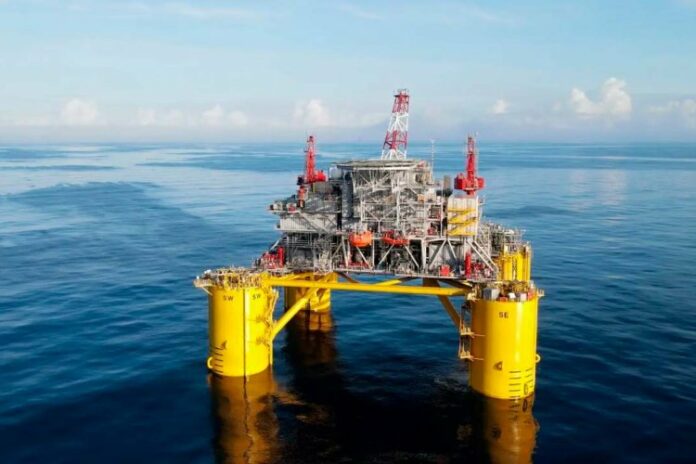
With an estimated peak production of 100,000 barrels of oil equivalent per day, Vito is the company’s first deep-water platform in the GoM to employ a simplified, cost-efficient host design.

“Vito is an excellent example of how we are approaching our projects to meet the energy demands of today and tomorrow, while remaining resilient as we work toward achieving net zero emissions by 2050,” said Zoe Yujnovich, Shell’s Upstream Director, adding, “Building on more than 40 years of deep-water expertise, projects like Vito enable us to generate greater value from the GoM, where our production has amongst the lowest greenhouse gas intensity in the world for producing oil.”

The Vito development is owned by Shell Offshore Inc. (63.11% operator) and Equinor (36.89%). In 2015, the original host design was rescoped and simplified, resulting in a reduction of approximately 80% in CO₂ emissions over the lifetime of the facility as well as a cost reduction of more than 70% from the original host concept.

Vito also serves as the design standard for the Whale project that will feature a 99% replication of the Vito hull and 80% of Vito’s topsides.

Kongsberg signes contract with Grimaldi for their new class of hybrid Ro-Ro ships

0

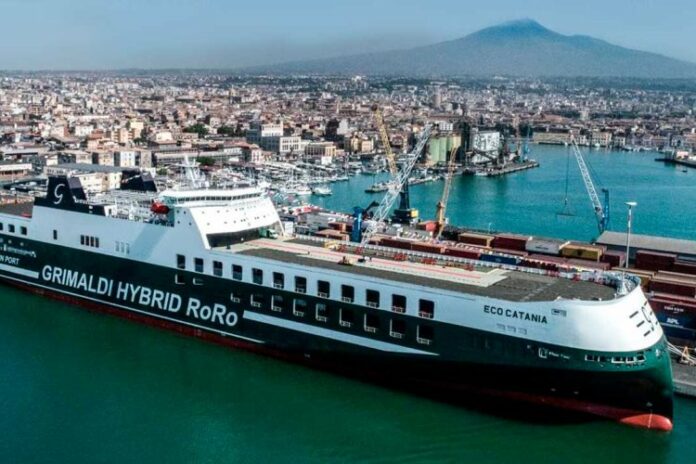
Kongsberg Maritime has signed a repeat order from client Grimaldi Group to supply engineering and technology for two new 7800-line metre (LM) Roll on – Roll off (Ro-Ro) vessels, which will be built at China Merchant Jinling Shipyard. The contract was signed in Q4 2022, and the vessels are scheduled for delivery in 2025.

The vessels will join Grimaldi Group’s fleet of low emission, hybrid Ro-Ro vessels known as the Grimaldi Green 5th Generation (GG5G) class. Twelve GG5G vessels have been completed, with the latest, Eco Italia, delivered in October 2022.

The two new vessels will operate in hybrid mode and on a fully battery electric system when in port. The GG5G vessels reduce carbon dioxide emissions by half per unit transported on shorter routes.

Lisa Edvardsen Haugan, Kongsberg Maritime President, said: 

“Continuation of these vessels represents the future of commercial maritime vessels, incorporating practical hybrid technology that allows major cuts in carbon emissions. We have been developing integrated solutions for hybrid propulsion for years, reducing capex costs for ship owners and opex for operators, while ensuring high performance standards in battery-electric operation.”

At 238 metres in length, with a beam of 34 metres and gross tonnage of 64,000 tonnes, the GG5Gs are among the largest Ro-Ro vessels in the world for short route operation.

“With their outstanding operational and environmental performance, our ‘Eco’ ships are revolutionizing short sea shipping in Europe,” said Grimaldi Group Managing Director Emanuele Grimaldi in a statement at the delivery of Eco Italia. “We will continue to invest in this green revolution.”

Kongsberg Maritime will supply marine automation system and Auto Chief 600 propulsion control systems, hybrid systems, converters, battery energy storage of 5MWh, battery management system, manoeuvring and propulsion systems. The contract has a value of 220 million NOK.

Siemens Gamesa intends to establish an offshore wind turbine nacelle facility

0

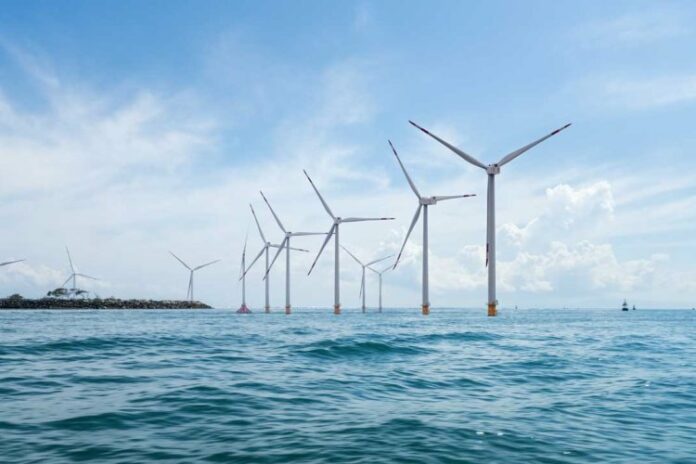
Siemens Gamesa has announced its intention to build a major offshore nacelle manufacturing facility in New York state, subject to the company’s wind turbines being selected by the New York authorities in their third offshore wind solicitation.

It would create up to approximately 420 direct jobs, support a significant rise in indirect jobs, and represent an investment of around $500 million in the region.

Siemens Gamesa is also committing to localizing several new component supplier facilities, including steel component fabrication, bearings, and composite components, demonstrating the further development of a sustainable local supply chain ecosystem. This could help double the number of jobs created by the facility.

New York expects to procure a minimum of 2 GW of offshore wind energy, and up to 4.7 GW in this third round of procurement to achieve a total of 9 GW of offshore wind energy. This is a significant part of the United States’ target to realize 30 GW of offshore wind power by 2030.

The announcement builds on Siemens Gamesa’s successful track record of establishing major manufacturing facilities in markets with attractive and stable frameworks to meet the growing demand for offshore wind. Siemens Gamesa has secured a site in the state’s capital region; advanced engineering plans and 3D visualizations have already been developed. The facility has been designed with the capacity for potential expansion to guarantee its long-term development. 

“The announcement of this proposed facility in New York is a major step forward in our desire to lead the massive U.S. offshore wind market. We’re excited by the opportunity presented by the State of New York to further develop our manufacturing footprint. We have a solid history in delivering on our commitments across the globe, including the establishment of offshore wind-focused plants in Denmark, France, Germany, Taiwan and the United Kingdom. The numerous economic, employment, and environmental benefits that offshore wind presents are enhanced by solid policies and frameworks, which are critical for financial success,” said Marc Becker, CEO of Siemens Gamesa’s offshore business.

The proposed facility and supplier network in New York would supply components for all Siemens Gamesa offshore wind power projects along the U.S. East Coast. 

The planned New York offshore wind turbine nacelle facility further solidifies Siemens Gamesa’s commitment and strategic plans for manufacturing and job creation in the United States. It is part of the company’s integrated plan to localize its offshore wind power supply chain on the U.S. East Coast and also builds upon Siemens Gamesa’s planned offshore wind turbine blade finishing facility in Portsmouth, Virginia as announced in October 2021.

First LNG cargo from ADNOC arrived at Brunsbüttel Elbehafen port

0

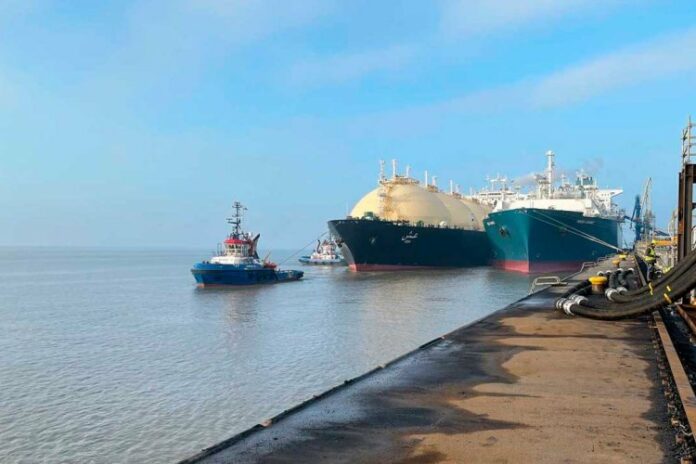
The partnership between RWE and the Abu Dhabi National Oil Company (ADNOC) for the supply of Liquefied Natural Gas (LNG) is becoming visible with the arrival of the “Ish” as the first LNG cargo at the Brunsbuettel Elbehafen port. 

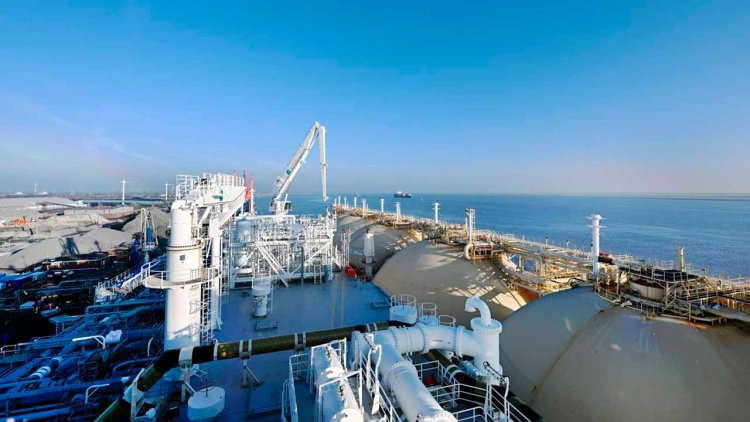
Here, the LNG will be regasified and fed into the German gas grid via the Floating Storage and Regasification Unit (FSRU) “Hoegh Gannet”, which was chartered by RWE on behalf of the German government. 137,000 cubic metres of LNG were shipped by ADNOC from Das Island, Abu Dhabi, to Brunsbuettel. This corresponds to more than 82 million cubic metres of regasified natural gas and to approximately 900 million kilowatt hours of energy. The LNG is to be fed into the grid from the end of February as part of the commissioning phase of the FSRU, which is currently underway.

In addition, RWE and ADNOC already signed a memorandum of understanding (MoU) last year on several years of LNG supplies to be delivered to Germany from 2023. LNG supplies from ADNOC can be delivered to Germany through either floating or land-based regasification terminals as these become operational.

Andree Stracke, CEO of RWE Supply & Trading says:

“After the arrival of the floating terminal in mid-January, the first LNG delivery from Abu Dhabi is the next important step. The development of the LNG supply infrastructure in Germany continues to make rapid progress. RWE provides support wherever we are needed. I am pleased that we have ADNOC as a strong partner at our side and that we are working together to make Germany’s energy supply as secure as possible.”

Ahmed Alebri, Acting CEO of ADNOC Gas says:

“The successful delivery of the Middle East’s first LNG cargo to Germany demonstrates how the UAE is continuing to work closely with our strategic partners in responsibly providing secure, sustainable, and affordable energy supplies. The global demand for energy is increasing and as we build on the strong economic, energy security and climate action ties between our two nations, ADNOC Gas stands ready to provide further shipments of this key transition fuel to our partner, RWE and German industry.”

As a centre of technology and industry, Brunsbuettel will also be an important location for future imports of green molecules. In the immediate vicinity, RWE plans to build an import terminal for green ammonia, which – as a liquefied hydrogen derivative – can make an important contribution towards supplying Germany with green hydrogen. Around 300,000 tonnes of green ammonia are to be imported and distributed to customers annually via this terminal from 2026. German LNG Terminal GmbH plans to build and operate a multi-functional LNG terminal close by. As a shareholder, RWE supports the subsequent conversion of the terminal for importing green molecules.

Finnlines expands its Ireland–Belgium freight service by adding a second vessel

0

To meet the increased capacity and frequency demand from customers, Finnlines is strengthening its Ireland–Belgium freight service. With the addition of a second ro-ro vessel to service, Finnlines will provide a significant increase of capacity on the direct connection between Ireland and Europe mainland.

MS Finnpulp will join MS Finnwave on the route in week 8, departing from Zeebrugge on 23 February.

Finnlines launched the new service between Rosslare and Zeebrugge in July 2022. The service has been well received by Irish transport operators and provides an important link for Irish industry. Via transhipment in Zeebrugge, the Irish connection is also available to the Finnish, German, Estonian and Spanish industries as well as the whole Grimaldi Group network.

“We are adding an additional departure from both ports on our Ireland–Belgium service. We have seen increased demand and are pleased to be able to offer additional capacity. By adding a second vessel and expanding our service, we strengthen our product to better serve our Irish and European markets. We provide an excellent transport link for Irish trade to the Continent by offering tailor-made capacity for our customers whose business depends on reliable sea transportation services,” says Antonio Raimo, Line Manager at Finnlines.

MS Finnpulp has a capacity for 3,259 lane metres of cargo, equivalent to around 225 trailers. MS Finnwave has a capacity for 4,192 lane metres, equivalent to around 300 trailers. Both vessels can also accommodate 12 drivers.