0.1 C
New York
Home Blog Page 328

ONE announces project with Sony to create a smart container solution

0

ONE announces plans to develop and integrate a smart container solution across their global fleet. 

The development of the smart container solution will be done in collaboration with Sony Network Communications Europe (“Sony”). As one of the largest container carriers in the world, this collaboration brings together ONE’s extensive cargo shipping experience with Sony’s expertise in the development and innovation of world-class sensing and connectivity technologies.

The technology-enabled containers will give ONE greater insights about their container fleet.

The data will enable better visibility of the containers, faster and proactive decision making and more, allowing more efficient container movement.

Customers will also stand to benefit from smart container solutions as they will be able to access live updates throughout a shipment’s journey. It will also provide more reliable shipping data for easy, transparent communication with relevant stakeholders.

Hiroki Tsujii, Managing Director, Product & Network, Ocean Network Express, said:

“From its very inception, ONE is a business that believes in the value of collaboration. Now, together with Sony, we are excited to create the future of container shipping. This is a future where we have access to the insights we need to offer our customers a higher quality of service to forge a new standard of process excellence. The development of this smart container solution will combine the very best from experts in our respective fields. Our joint mission will aim to push the limits of what we are capable of with innovative logistics technologies.”

Erik Lund, Head of the Tracking Division, Visilion, Sony Network Communications Europe, said:

“We are honoured to collaborate with ONE and dedicated to creating an advanced solution for smart containers. The real-time insights gained across ONE’s fleet will allow them to further optimise their shipping business and in doing so, improve customer service. We look forward to working together and creating the future of logistics.” 
Equinor sells its oil terminal at the Bahamas

0

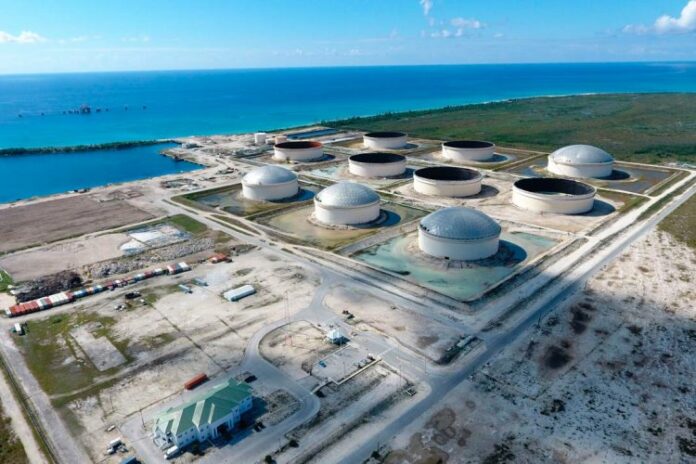
The terminal was purchased by Equinor in 2009 to enable the company to trade oil primarily originating from the American markets.

“Since we bought the South Riding Point terminal in 2009, the flow in the oil market in North America has changed significantly for Equinor and the company has increasingly sold crude to other regions globally. Consequently, we believe a new owner would be better positioned for the further development of the terminal,” says Alex Grant, Equinor’s senior vice president for Crude, Products and Liquids.

“This transaction supports our strategy to focus and concentrate the portfolio around core areas and allows us to redeploy capital where we believe we have a stronger competitive advantage. Liwathon will now take over ownership and commence a process to restart regular operations of the South Riding Point terminal.”

Liwathon will assume the responsibilities for the employees of South Riding Point.

The transaction is approved by Bahamian authorities.

Further commercial details on the transaction will not be disclosed.

Liwathon Group is an integrated logistics and investment business. The company currently operates four facilities in Estonia with a storage capacity of over one million m3. The company provides an extensive range of services in the area of handling, transport and storage of liquid fuels traded globally.

The South Riding Point terminal located at the Grand Bahama was commissioned in 1973 and was acquired by Equinor in 2009. The total storage capacity is 6,8 million barrels.

In September 2019, the South Riding Point terminal was in the direct path of Dorian, a violent category five hurricane, and sustained extensive damages including an oil spill which affected the terminal site and a forest area north-east of the terminal.

Since then, extensive clean-up operations have been performed by Equinor in close collaboration with Bahamian authorities. The clean-up operations outside the fence were concluded in March 2021 and extensive testing of the groundwater outside the terminal has shown no sign of hydrocarbon deposits.

Ulstein captures its 7th cruise ship design contract for SunStone

0

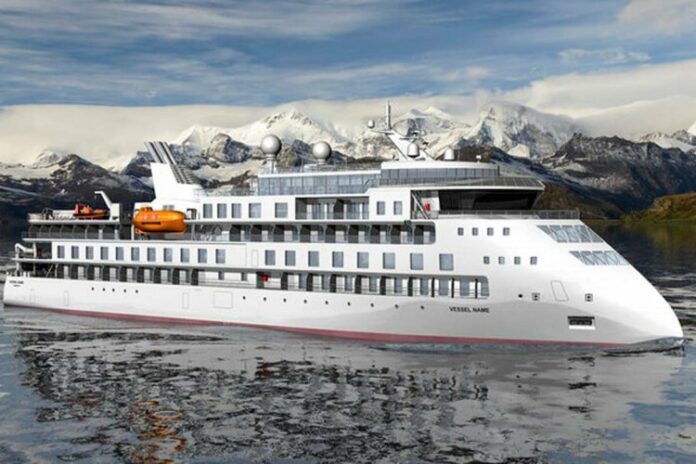
These vessels were the first to introduce the patented X-BOW design in the cruise industry, a solution that has been warmly welcomed by cruise passengers and crews alike.

“We are immensely pleased to announce that we have signed a new contract with the CMHI Haimen yard for the construction of a new X-BOW expedition cruise vessel of the ULSTEIN CX103 design”, states Lars Ståle Skoge, commercial director at Ulstein Design & Solutions.

Although all the SunStone vessels in this class are designed on the same platform, being 104.4 metres long and 18.4 metres wide, they are all customised to accommodate a varying number of passengers and crews, and the public spaces are also carefully designed according to the client’s request. This new vessel shares the feature of three other vessels in the INFINITY class of having windows all around the bow lounge to give a lot of light and a feeling of being in nature whilst indoors.

Tomas Tillberg Design is responsible for interior design.

“Our main focus is to bring the outdoors inside, capitalizing on the big windows like the two-story atrium ones and especially the spectacular FWD bow windows that Ulstein made possible thus furthering the small ship to a big ship feeling,” states Tomas Tillberg.

The vessel holds accommodation for 199 passengers, and a crew of 101. She is ICE CLASS 1A certified for polar cruising, holds the highest comfort class, and is SOLAS* certified including a Safe Return to Port passport.

Stena Line and Peel Ports sign new deal for port operations until the year 2100

0

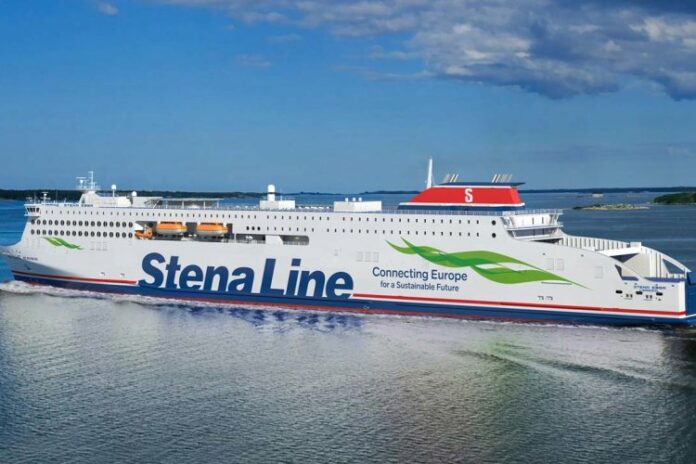
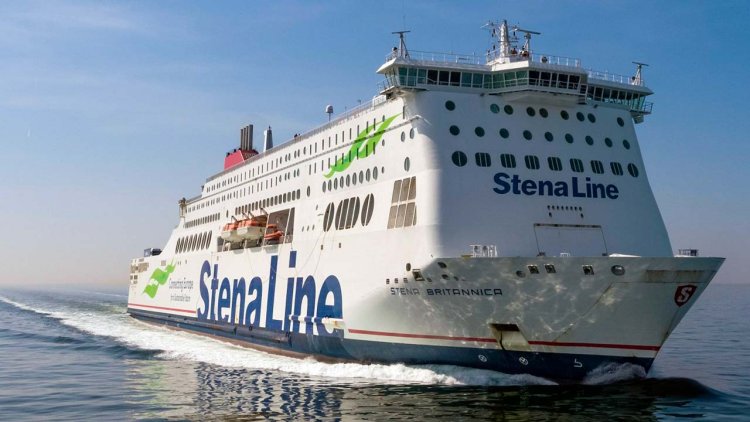
The Swedish company has operated twice daily ferry services to Belfast since 2011 and this new deal will see them continue to operate there for at least another 77 years, until 2100.

The length of this deal demonstrates the success of the working partnership between the two companies, which now want to further strengthen their relationship together for the long term. Significant investments have been made to meet current and future needs of their customers, providing them with the right opportunities for them to expand. This approach has proved to be successful with trade in Birkenhead growing continually over the past 12 years.Stena Line operates 6 routes and 12 vessels across the region and Birkenhead has been a key focus for investment in recent years. In 2021 and 2022 Stena Line launched two new E-Flexer ferries on their Birkenhead to Belfast service, Stena Edda and Stena Embla. These brand-new state-of-the-art ferries increased passenger and freight capacity on the route to Belfast by a third. 

Subsequently Stena Line has made further investments with the recent purchase of two sites adjacent to the 12 Quays Terminal, to provide additional freight storage for its freight customers as they continue to expand their businesses there.

Niclas Martensson, CEO of Stena Line, says:

“After 12 successful years in 12 Quays our business in Birkenhead continues to flourish year-after-year. This deal is a sign of our long-term commitment to Birkenhead and Peel Ports, with whom we have a very strong partnership. We will continue to make significant investments to increase our services to our customers across the Irish Sea.” 

Carl-Johan Hellner, Chief Operating Officer Ports & Terminals says:

“This deal signifies the  strengthening of our partnership with Peel Ports. We have a long-term commitment to our Irish Sea customers, and together we will continue to provide value and to enable continued growth for their businesses here in Birkenhead and across this very important region for us.” 

David Huck, Chief Operating Officer at Peel Ports Group says:

“We have built a highly successful partnership with Stena Line over the years for the developing of services across the Irish Sea, and we are delighted this long-term agreement reaffirms our commitment to enable further investment into Birkenhead and the Mersey cluster.”

The value of the deal has not been disclosed. 


Fugro Blue Essence® receives approval from UK MCA to undertake fully remote surveys

0

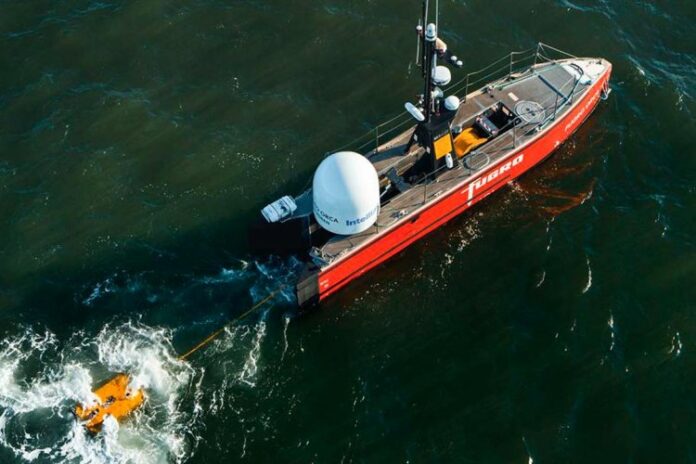
The MCA is the government body that regulates vessels in the UK ensuring they meet technical, safety and environmental requirements of the region. Fugro sees this as a breakthrough development as USVs play a vital role in the future of the maritime sector by improving safety, reducing carbon emissions, and delivering data more efficiently.

With previous maritime regulations based on crewed vessels, the MCA has been working in consultation with companies like Fugro to help drive innovation without compromising safety. Fugro was able to demonstrate the operational safety of its USVs to the satisfaction of the MCA as maritime regulator.

The MCA granted Blue Essence® category 2 approval, meaning the vessel can be operated within 60 nautical miles of a ‘safe haven’; the next stage in the UK regulatory process will be to obtain Category 0 MCA approval which will allow the vessel unrestricted service subject to agreement of relevant port authorities.

The uncrewed vessel, developed in partnership with SEA-KIT International, is equipped with Fugro’s Blue Volta® eROV and an array of geophysical equipment to undertake subsea inspection and site characterisation surveys. Blue Essence® allows experts to deliver projects from Fugro’s onshore remote operations centres (ROCs) safely out of harm’s way while experiencing a healthier work-life balance. The USV consumes significantly less fuel than large ROV support vessels resulting in a 95% reduction in carbon emissions and enables real-time data delivery, leading to faster and more informed decision making.

Katy Ware, Director of UK Maritime Services for the MCA said:

“Technology has allowed incredible innovation in the maritime sector. Our role in all of this is to make sure that we have the regulation and training regimes which allow it to develop without jeopardising safety or welfare.”

Nick Simmons, Director USV and Remote Working Europe and Africa at Fugro commented:

“The opportunities this development opens for UK operations are really exciting. Fugro’s Blue Essence® fleet has already been successfully operating in Europe and Australia and recently completed a fully remote inspection off the coast of the Netherlands, in Europe’s busiest part of the North Sea, demonstrating the benefits of this innovative way of working. We are delighted that the USV can fly the UK flag and are looking forward to undertaking our first operations in the UK soon.”

Carisbrooke Shipping to trial 50kW hydrogen engine onboard cargo-vessel

0

Following design, simulations and rigorous testing, the revolutionary single-fuel hydrogen 50kW engine will be integrated into a containerised system and mounted on the deck of one of our cargo vessels for a 40-day sea trial in early 2025 to partially supply electrical power to the vessel. 

The core goal is to validate the decarbonising impact that high efficiency, zero emission engines can have in the maritime industry and build on work from the previously successful CMDC 1 & 2 grants.

In the future, this technology could be used to power tug-boats, ferries, cargo vessels, tankers and container ships.

Bureau Veritas and The Maritime and Coastguard Agency are also being engaged as the vessel’s regulatory authorities to ensure a safe path to regulatory compliance. This will be among the first projects to achieve Approval in Principle for a Hydrogen power generation technology on board a UK Flagged vessel.

Archie Watts-Farmer, CARNOT Founder:

“Over the last two years, Carisbrooke have been championing our efforts in bringing a double efficiency fuel agnostic engine technology capable of halving emissions using traditional fuels or reducing marine emissions to zero using next generation fuels such as hydrogen, while maximising range. They have supported our grant application processes and been the voice of the customer, helping us to 3 Clean Maritime grant awards the first of which, a feasibility study, was completed successfully with their help in 2022. They have gone over and above to provide us with information and support relating to operations, regulations and business case development and we would not have been successful without their involvement.”

The global shipping industry faces an enormous decarbonising challenge, currently accounting for 3% of global Greenhouse gas emissions. Existing IMO regulations stipulate that by 2030, all vessels must reduce their CO2 per ton-mile 40% compared to 2008 levels, and by 2050 must be completely Net Zero.

EnBW and Equinor to jointly pursue German offshore wind opportunities in 2023

0

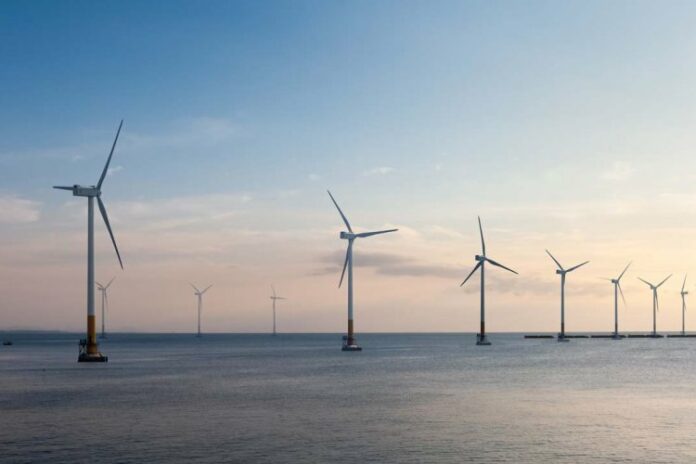
EnBW and Equinor have announced their interest in developing offshore wind together.

Michael Class, Head of Portfolio Development Renewables at EnBW, said:

“In a tough international field, we are delighted to be working together with a strong partner like Equinor and combining the individual strengths of the two companies to develop German offshore wind. EnBW is among today’s leaders in offshore wind in Germany. In partnership with Equinor, a global offshore wind major, we will continue to significantly contribute to a climate-friendly energy future in Germany and Europe.”

Jens Økland, Senior Vice President for Business Development Renewables in Equinor, said:

“Equinor has a long energy history in Germany and views the upcoming offshore wind opportunities with great interest. We are excited about teaming up with EnBW. Together we combine excellent capability in delivering renewables projects specifically in Germany with international offshore experience, all needed to provide sustainable, reliable, and affordable energy.”

AI Tech is key to protecting whales from deadly collisions with ships

0

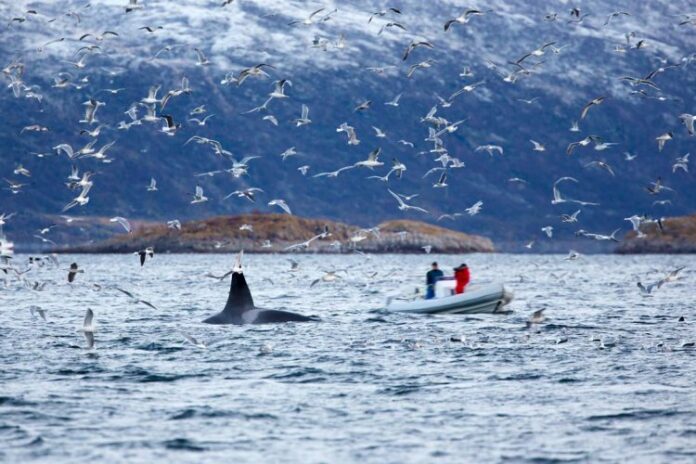
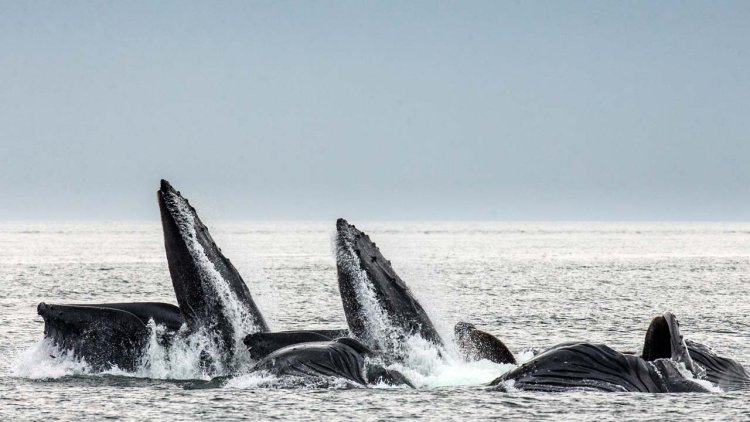
Up to 20,000 whales die in ship collisions every year, according to sustainable seafood and fisheries certifier Friend of the Sea. 

This sobering statistic comes on this year’s World Whale Day, 19 February, an annual awareness day aimed at highlighting the challenges that marine mammals face including climate change, loss of habitat and ship collisions.    

Shipping companies can better protect marine life and drastically reduce the thousands of whales killed each year by passing vessels, if they embrace advanced technologies to support safe navigation and improved situational awareness. 

 
Yarden Gross, CEO and Co-founder of Orca AI, the developer of a marine-purposed smart situational awareness platform, said:

“The vast number of whales killed by vessels is startling and must be addressed. Many shipping companies have started to leverage AI and computer vision based technologies on their vessels to detect, track, and alert the navigating crew to sea mammals in the surrounding area. This is a major leap in curbing marine mammal strikes and reducing whales’ mortality rates.

“The Orca AI platform taps into six external cameras installed on the vessel’s monkey island [the top most accessible height of a ship], and relays the information to a digital display that officers use for navigating, enabling them to spot any potential hazards including marine life.”

Gross added that an AI platform makes up for the limitations of people’s eyesight, by providing safe ship navigation in low-visibility conditions. Other industries such as aviation and automotive have already recognised the limitations of humans in real-time decision making. As such, automation has become an integral part of cars and planes today. 

“The essential role of navigating safely and avoiding collisions with sea life and other vessels can be performed by AI-powered technology that constantly observes and analyses a ship’s surroundings,” Gross said. “The shipping industry must recognise this reality and adopt the same approach as other sectors. In waterways with low-to-zero visibility, and which are also becoming increasingly congested with larger vessels, the risks are too high.” 

See also Whale warning as clock ticks towards deep-sea mining

Emilsen chose AKVA group as barge supplier

0

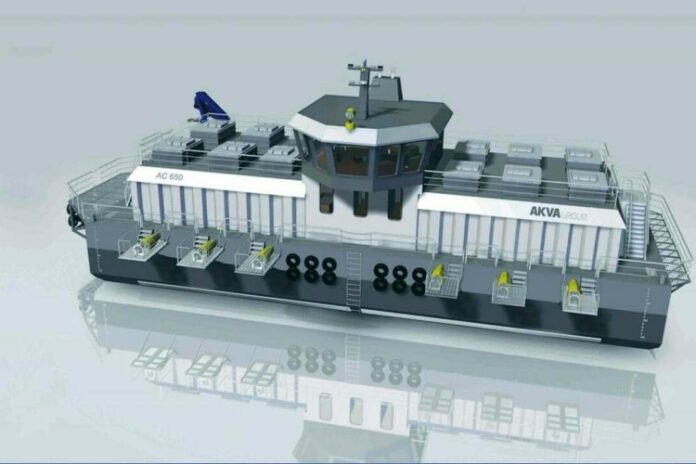
As Emilsen Fisk increases the production of salmon, they want a top-equipped barge, which can withstand all kinds of weather and wind and which can be used in any location.

“Since 2005, we have been supplied with feed barges from AKVA group and are therefore well acquainted with the barges and the equipment. So, it was an easy choice when we needed a new and bigger barge. It is important to us that the operators have the opportunity to live on the barge, in case we change locations in the future. We will have five feed barges from AKVA group with the new barge,” says Production Manager Robert Aakvik at Emilsen Fisk.

The feed barge is delivered with 650T feed capacity and an 8-line feeding system with airborne feed transport. The barge contains a control room with a kitchen, and space for daily operations and meetings. A great bathroom with toilet and shower, wardrobe with cupboard and washing machine is also part of the inventory.

The barge is designed to withstand the toughest conditions, therefore Emilsen Fisk has great flexibility for where they want to place the barge in the future.

“We have chosen a feeding facility with airborne transport of the feed out to the cages. We have always had a good experience with airborne feeding. With a battery pack in combination with generator operation, we get a significant saving on fossil fuel, and thus a reduction in CO2 emissions. In addition, there is less noise,” he says.

The feed barge is of the type AC 650 Panorama and will be delivered from Tallinn in November 2023 and will be in operation in November in the Rørvik area.

“Our production is increasing, and in line with that, we need a larger feed barge, which is ready for use with top equipment and all facilities. If we are to keep up with the times, we must upgrade and get ready for the future,” says Aakvik.

The feeding barge is supplied with the latest generation of AKVA connect, which takes care of feeding, camera management and barge management. The barge is delivered with feeding facilities, energy supply, control rooms and specially adapted equipment such as silage systems, camera systems and a wide range of integrated special adaptations. The barge has 12 silos and is delivered with 2x250kva generators in combination with an AKVA hybrid battery pack.

AIMS appoints consortium to design new research vessel

0

A consortium of world-renowned vessel designers has been appointed by the Australian Institute of Marine Science (AIMS) to complete the detailed design of a new state-of-the-art marine research vessel. 

United States-based marine consultants Glosten will partner with One2three Naval Architects from Sydney and Maritime Surveyors Australia from Melbourne on the vessel design. The collaborative design process with AIMS is due to be completed by June 2024. 

AIMS CEO Dr Paul Hardisty said the new vessel will feature an environmentally friendly design with high efficiency, reduced fuel usage, good sea keeping and modular capabilities. This will ensure it can operate effectively to meet AIMS’ research needs and be a platform for the latest technology for integrated data collection, both now and into the future. 

“Our research vessels are integral and essential to Australia’s marine research capability, giving our scientists access to the diverse habitats that make up our remote and extraordinary tropical waters and enabling them to conduct experiments at sea,” said Dr Hardisty. 

“We need a new generation of vessel, one that will enable us to keep delivering the science Australia needs to protect our tropical oceans, and support the sustainability of our blue economy, both now, and over the 30-year life of the vessel.” 

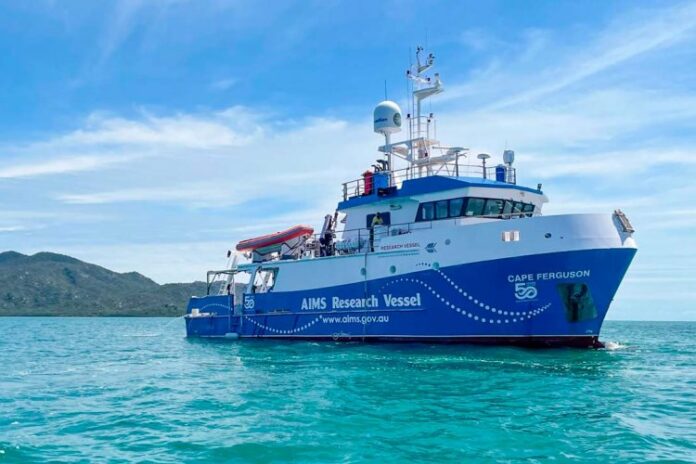
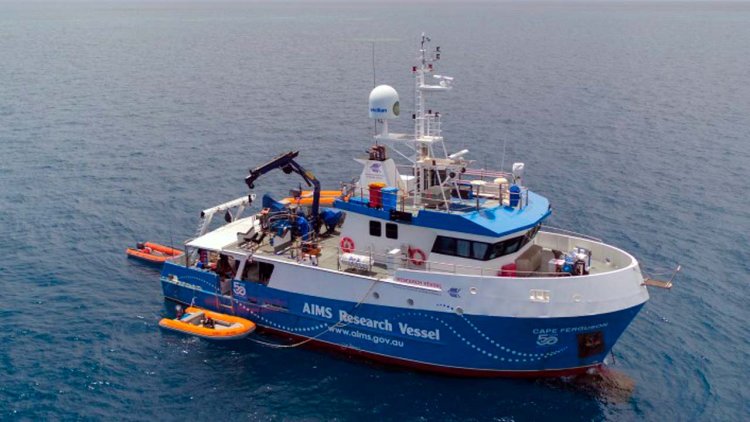
The new research vessel is designed to replace the RV Cape Ferguson, which joined AIMS’ research fleet in 2000 and has been the work horse of AIMS’ field research and monitoring programs in northern Australia. It has typically travelled more than 15,000 nautical miles annually, during more than 270 days at sea each year, but is now at the end of its operational life.

The new vessel will be bigger and more capable than its predecessor, with a larger work deck, room for more scientists on board, and the ability to act as a multi-technology and sensor platform, coordinating a range of autonomous systems. The design consortium will produce three concepts for consideration by AIMS, including multi-hulled options. 

Dr Hardisty added: “RV Cape Ferguson, or The ‘Fergie’ as she is affectionately known to our staff, has served our researchers and partners well, supporting many projects including AIMS’ Long Term Monitoring Program of the Great Barrier Reef, the most comprehensive monitoring program of any reef system in the world.” 

Funding worth $5.3million for the design phase of the new vessel leading to a detailed business case was announced by the Australian government in March 2022.