0.1 C
New York
Home Blog Page 327

DNV to launch phase 2 of offshore hydrogen pipelines Joint Industry Project

0

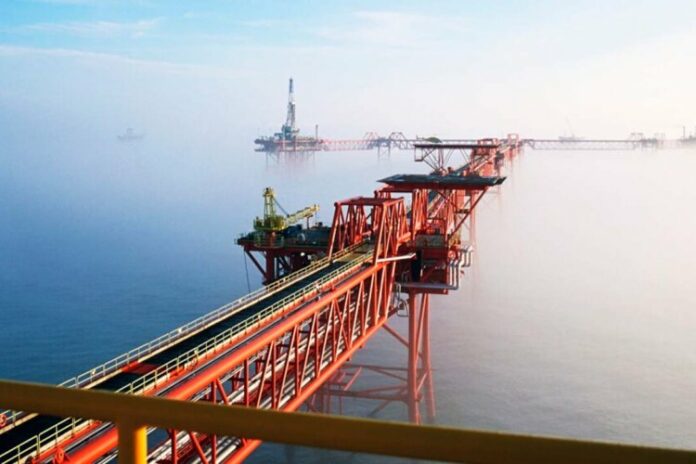
DNV is launching the second phase of H2Pipe, a joint industry project (JIP) aiming to develop a new code for the design, re-qualification, construction and operation of offshore pipelines to transport hydrogen – either pure or blended with natural gas.

DNV’s Hydrogen Forecast to 2050 anticipates that over 50% of hydrogen pipelines globally (and as much as 80% in some regions) will be repurposed from existing natural gas pipeline networks, as it is expected to cost less than 35% of new builds.

A large-scale deployment of hydrogen transport through pipelines requires the best possible balance between safety and cost-effectiveness. It is essential to develop more accurate, reliable, and possibly less conservative code requirements for the optimal design of newbuilt pipelines and the assessment of the requalification of existing infrastructures, as well as a better understanding of the real design limitations.

Industry players are exploring ways of transporting hydrogen as an additive or replacement for natural gas, but currently, offshore pipeline codes insufficiently cover the transport of hydrogen or hydrogen blends by offshore pipelines. The DNV standard for submarine pipeline systems (DNV-ST-F101) includes hydrogen as a listed transport product, but additional considerations are required to meet the target safety level for an increased use of hydrogen. A special concern in this respect is the potential detrimental influence of hydrogen on resistance to cracking in carbon steels. To support the uptake of hydrogen as an energy carrier, it is imperative to update the standard, to reach design and material requirements that do not compromise pipeline integrity and safety.

To address these challenges, DNV started the first phase of H2Pipe in 2021: an initial test program looking into potential degradation of steel pipe mechanical properties was carried out to fill gaps in existing knowledge and to explore various test parameters as a preparation and narrow down the number of variables for the main test program planned for Phase 2. The first revision of the guideline was delivered to participants the same year. The guideline is currently at a high level, and more work is needed to develop more specific acceptance criteria.

“We invest in initiatives such as the FutureGrid Project at our Spadeadam Test Facility in the UK, for the purpose of understanding how a gas transmission network will need to be developed and operated, to deliver sufficient quantities of hydrogen safely. This JIP for offshore pipelines is another contribution in the move to decarbonize the energy system, and to ensure an efficient and safe hydrogen infrastructure,” said Prajeev Rasiah, Regional Director, Northern Europe, Energy Systems, DNV.

Phase 2 of H2Pipe is planned to start in Q1 2023 and last 2 years. It will consist of a comprehensive experimental test program to enhance the understanding of the governing hydrogen embrittlement mechanisms and how hydrogen affects the integrity of the line pipe material. In addition to the experimental test campaign, Phase 2 will also include tasks such as a feasibility level design of offshore hydrogen pipelines and a risk assessment study to look at safety aspects of offshore hydrogen pipelines. The primary outcome of Phase 2 of the JIP is expected to be a detailed guideline offering specific guidance for use in design and re-purposing of offshore pipelines for hydrogen transport.

 “The results from this JIP will allow us and our partners to further develop the guideline to a level where it can offer direct and detailed support in the design and re-qualification of offshore hydrogen pipelines. With real design limitations, industry players will be able to design – or repurpose – pipeline systems fit for the safe transportation of hydrogen, and to implement adequate mitigation measures if necessary,” said, Jan Fredrik Helgaker, Senior Engineer and JIP Lead, Energy Systems at DNV.

Although less efficient as an energy carrier than electricity, hydrogen is used as a form of chemical energy storage, which helps balance out the variability in power generation from intermittent renewable sources like wind and solar PV.

Energy storage is required to manage demand and supply dynamics to prevent grid stress, and is essential in reducing dependence on fossil fuels. Hydrogen, in particular, is desperately needed as a low-carbon energy carrier in hard-to-abate sectors (difficult or impossible to electrify), like aviation, shipping, and high-heat industrial processes. In some countries, like the UK, hydrogen can also be delivered to end users by the existing gas distribution networks at a lower cost than a wholesale switch to electricity. Hence, low-carbon hydrogen is expected to play a significant role in decarbonizing many industries to mitigate climate change.

DNV’s 2022 Hydrogen Forecast to 2050 finds that to reach Paris Agreement targets, hydrogen would need to meet around 15% of the world’s energy demand by mid-century. Global spending on producing hydrogen for energy purposes from now until 2050 will be USD 6.8trn, with an additional USD 180bn spent on hydrogen pipelines and USD 530bn on building and operating ammonia terminals.

Phase 2 will be kicked off late March 2023 and is open for more partners to join . Please contact Jan Fredrik Helgaker.

LR announces a new research project with Icebreaker One

0

The research will aim to help identify and amplify discussions around the key barriers that organisations face for net zero shipping investment and how to overcome these with a ‘net-zero data sharing ecosystem’ that encourages first movers to invest with data-driven rationale.

This project includes interviews and a creative workshop between key stakeholders at both organisations to investigate the potential data sharing has for the maritime energy transition.

By pooling resources, the project will see research with key stakeholders to propose and assess innovations in data sharing, data transparency and ways to best support shipping industry funders to make net zero investments. The project will consider the current available frameworks for assessing decarbonisation technologies and how data contributes to the outcome of these assessments.

Duncan Duffy, Global Head of Technology – Electro Technical Systems, Lloyd’s Register said:

“Lloyd’s Register is excited to be involved in this research project with Icebreaker One which will underline the value in data sharing if the maritime industry is to achieve its decarbonisation goals.

“LR is a driving force in enabling and supporting shipping industry funders to make net zero investments and this research, along with its potential results, will encourage new processes and systems as tools in the energy transition journey. The project will equip LR with the knowledge and understanding of the barriers for investing in net zero shipping and enable us to offer effective solutions which address the crucial challenges our industry faces.”

Gavin Starks, CEO and Founder at Icebreaker One, Icebreaker One said:

“To get to net zero, we have to finance the decarbonisation of shipping. This means maritime investors need access to trusted, accurate data. Our work with LR will help develop new processes and systems for sharing data that support the race to zero. We’re delighted to be working together to build a web of net-zero data for shipping.”

This research will encourage new processes and systems in the drive for zero emissions and further underlines LR’s commitment to the maritime energy transition, supporting the recent announcement of a Zero Ready Framework to provide the industry shipping with clarity over zero carbon readiness.

The findings from the research project will be presented in a workshop scheduled for early 2023. The workshop will be split into different sessions exploring identified the core challenges for data sharing in the shipping industry. Participants will then co-create and discuss solutions as a group.”

Stena Line to introduce Stena Nordica on Fishguard-Rosslare service

0

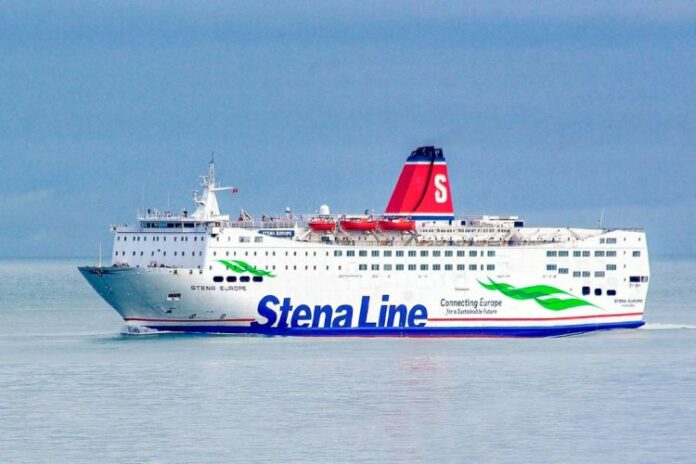
The Stena Nordica, which has been operating in the Baltic Sea, is a familiar ship on the Irish Sea having provided temporary relief cover on several Irish Sea routes over the last few years. It is scheduled to replace the older Stena Europe vessel in July.

The Company will now commence a formal consultation with the unions representing the crew of Stena Europe, which has operated on the route since 2002. A commitment has been given to ensure they will all be offered roles on the Stena Nordica or other Stena Line vessels on the Irish Sea.

Paul Grant, Trade Director (Irish Sea) said:

“Over the last decade, Stena Line has invested heavily in its Irish Sea routes with a combination of new tonnage and a range of port facility upgrades. I’m pleased to announce that we have now managed to secure an upgraded vessel from within our fleet, which is fully equipped for the purpose of operating full-time on our popular Fishguard-Rosslare service. 

“Stena Europe has operated on the route for many years, and we are delighted we have been able to secure the Stena Nordica on a permanent basis.  Stena Nordica is currently being upgraded with increased passenger capacity and a range of new and improved facilities, which will offer an enhanced customer experience.”

Paul Grant concluded:

“We are mindful that Stena Europe has been operating Fishguard – Rosslare for many years, so we will be doing our level best to ensure as smooth a transition as possible as we embark upon an exciting new chapter for the route.”

Stena Line also owns the port of Fishguard in Wales, where employees remain unaffected by today’s announcement.

DOE announces new actions to accelerate U.S. floating offshore wind deployment

0

These announcements are part of the Biden-Harris Administration’s Floating Offshore Wind Shot Summit, with the Departments of Energy, the Interior, Commerce, and Transportation convening stakeholders to drive progress. 

With two-thirds of America’s offshore wind resource located in deep-water areas that require floating platforms, capturing this vast potential could bring the benefits of clean power to millions of American homes and businesses. These new actions support the goals of the Administration’s Floating Offshore Wind Shot to reduce the cost of floating offshore wind energy by more than 70% by 2035 and deploy 15 gigawatts of floating offshore wind by 2035.

“Floating offshore wind offers untapped opportunities for us to produce clean, reliable and affordable power for millions,” said U.S. Secretary of Energy Jennifer M. Granholm. “President Biden wants America to become a global leader of offshore wind technology and deployment, and with his historic climate investments, DOE is capturing this potential to spur private investment, boost the domestic supply chain and deliver on our bold clean energy goals.”  

With funds from the President’s Inflation Reduction Act, DOE is launching a new West Coast Offshore Wind Transmission Study, a 20-month analysis examining how the country can expand transmission to harness power from floating offshore wind for West Coast communities. The study will use its findings to develop practical plans through 2050 to address transmission constraints that currently limit offshore wind development along the nation’s West Coast.  It is also expected to evaluate multiple pathways to reaching offshore wind goals while supporting grid reliability, resilience, and ocean co-use.  

This study marks the first announcement stemming from $100 million included within the Inflation Reduction Act for transmission planning and complements an analysis released today by DOE that evaluates existing West Coast offshore wind energy transmission research. The analysis identifies deployment gaps that the wind industry must address to successfully develop offshore wind energy off the nation’s West Coast.   

Eni and Saipem sign a memorandum for the use of renewable fuels on naval fleet

0

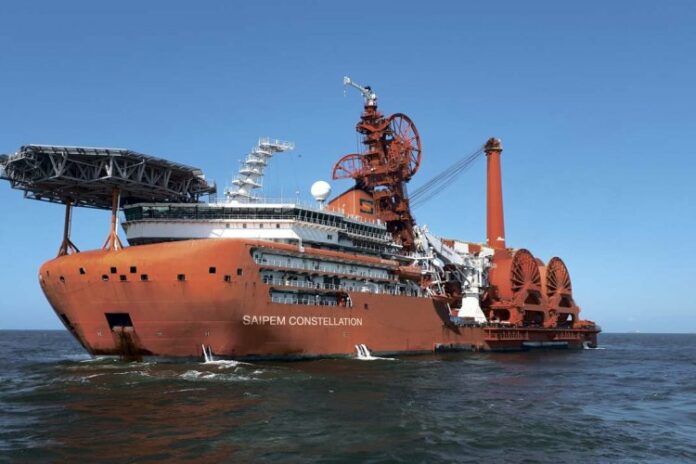
Eni Sustainable Mobility and Saipem have signed a Memorandum of Understanding (MoU) with the aim of employing biofuels on Saipem’s drilling and construction naval vessels, with particular attention to operations in the Mediterranean Sea.

Saipem has a global fleet consisting of 45 vessels for construction and drilling.

Eni has been producing biofuels since 2014, thanks to the conversion of the Venice and Gela refineries into biorefineries, which have been palm oil free since the end of 2022. Through the proprietary Ecofining™ technology, vegetable raw materials or animal waste and HVO (Hydrotreated Vegetable Oil) biofuel products are processed. Biofuels are one of the pillars of Eni’s strategic plan to achieve carbon neutrality by 2050, through a decarbonisation process that aims to reduce emissions from industrial processes and products.

This agreement forms part of the execution of Saipem’s strategy for the reduction of GHG emissions and implements, together with the other initiatives and investments envisaged in the Group’s strategic plan, which encompasses the reduction of its Scope 1 and Scope 2 emissions by 2035 and the achievement of Net Zero (including Scope 3) by 2050.

Thanks to the use of biofuel, Saipem will potentially be able to reduce emissions by around 550,000 Tonnes of CO2eq per year, equal to 60% of its total annual Scope 1 emissions.


CapeOmega, Neptune announce cross-border CO₂ transport & storage development

0

NoordKaap would involve transporting CO2 via vessels suitable for directly injecting the CO₂ at offshore locations and for terminal offloading. 

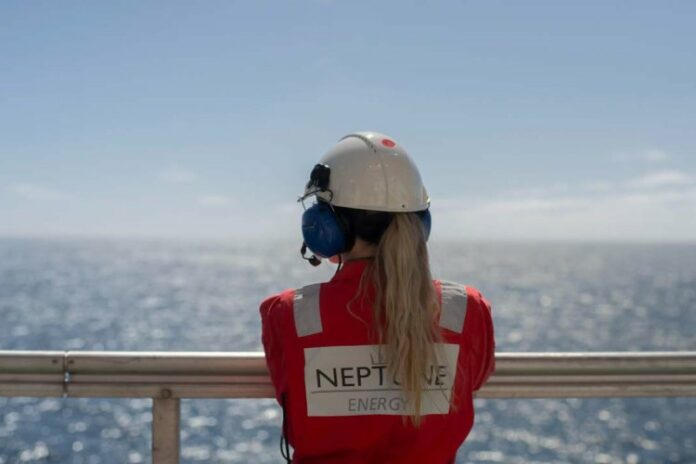
RWE has signed a Letter of Intent with CapeOmega and Neptune Energy in order to assess the possibility to ship green CO2 from their biomass Eemshaven facility for offshore storage in the Dutch North Sea.

NoordKaap will examine the potential for a network-based approach to Carbon Capture & Storage (CCS) via marine transport, and could make a crucial contribution to Dutch, Norwegian and European climate and energy goals. The overall objective of NoordKaap is to provide cost-effective, scalable infrastructure solutions to facilitate large-scale, flexible CO2 transport and storage from multiple industrial emitters clusters. 

NoordKaap aims to offer CCS solutions to industrial clusters where ship transport is the primary or earliest available export option. The project will also examine opportunities for industrial clusters in Germany, Belgium, Scandinavia and northern France. It would provide access to CO₂ subsurface storage sites offshore the Netherlands and Norway. NoordKaap is supported by partners Groningen Seaport, KNCC, Vopak and Return Carbon. 

NoordKaap is planned to be operational in 2028 and has been submitted to the EU as a Project of Mutual Interest on the 6th PCI List.

Evy Glørstad, CEO CapeOmega AS said:

“NoordKaap comprises an integrated partnership of all stakeholders in the value chain, from emitters to storage facility owners, to ensure close coordination of these proposals as part of the development of a successful decarbonization strategy. CapeOmega aims to support the value chain with the infrastructure needed to safely and successfully transport and store CO2. NoordKaap would enable us to use our position and experience in pipeline, terminal, shipping and offshore licence ownership to support CCS and decarbonisation.”

Lex de Groot, Managing Director of Neptune Energy in the Netherlands, said:

“CO₂ storage is a crucial component for meeting the EU’s climate goals and for a well-functioning CCS market. Both emitters and storage providers need to be able to transport CO₂ safely, and we know access to pipelines will be limited for some, so we are focusing on both types of transport to offshore storage facilities: piping and shipping. CCS also supports Neptune’s strategy to store more carbon than is emitted from our operations and from the oil and gas products we sell by 2030.”

Roger Miesen, CEO RWE Generation, said:

“RWE is keen to explore this opportunity together with CapeOmega and Neptune Energy. As RWE, we are currently assessing the possibility to ship and store green CO2 from our biomass Eemshaven plant to offshore storage in the Dutch North Sea, resulting in negative emissions. Our ambition is to make this happen in 2030. That is why the NoordKaap project is such an interesting opportunity for us.”

ONE announces the successful completion of the biofuel trial

0

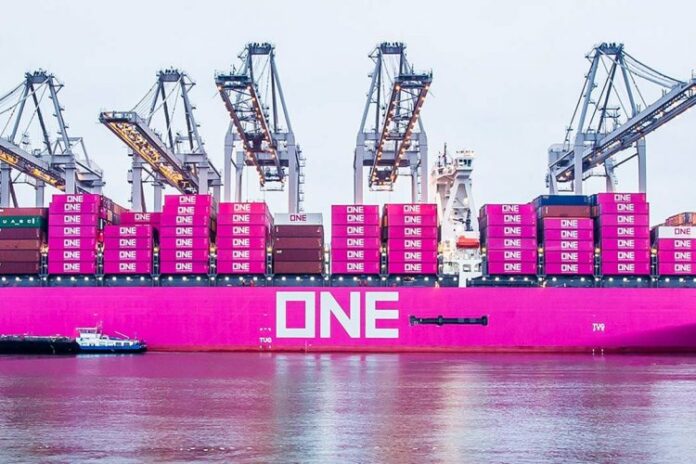
Conducted as part of the Global Centre for Maritime Decarbonisation’s (GCMD) pilot project to establish a quality, quantity and GHG abatement assurance framework for drop-in biofuels, the M/V MOL ENDOWMENT was refuelled with 992 metric tons of marine biofuel product at the Port of Singapore, on December 21st, 2022. 

The vessel, deployed on ONE’s Japan Straits Malaysia (JSM) service, fully utilized the biofuel in 20 days. Biofuel consumption started on January 7th, 2023, after the vessel left the port of Kobe in Japan, passing Keelung, Hong Kong and then sailed to Southeast Asia. The biofuel was fully consumed on January 26th, 2023, on its return voyage to Japan from Port Klang.

The biofuel used was B24, a blend of Used Cooking Oil Methyl Ester (UCOME), and Very Low Sulphur Fuel Oil (VLSFO). UCOME is produced from Used Cooking Oil (UCO), which is derived from residue or feedstocks labelled as 100% waste and has been certified for its sustainability in accordance with internationally recognized ISCC standards. The biofuel blend was supplied by Chevron, and it is considered a sustainable fuel that is similar to petroleum-derived marine fuels in terms of its operational application. 

Tracing these biofuels along the supply chain from production to use is a key aspect of GCMD’s pilot to articulate a robust GHG abatement assurance framework. As such, the biofuel and its blends were dosed with a physical tracer and subjected to multiple samplings across its supply chain for laboratory analysis. The resultant data will be used by GCMD as inputs in developing the assurance framework.

The trial required no modifications to the marine engines or fuel infrastructure. It also demonstrated that marine biofuel products can be considered ‘Drop-in fuels’ for reducing carbon emissions from ships. The use and testing of the biofuel were performed in partnership with shipowner Mitsui O.S.K. Lines, Ltd., and the biofuel was supplied in accordance with the standard on specifications of marine biofuel established by the Maritime and Port Authority of Singapore.

The trial also marked a step forward in digitization as the biofuel transaction was made digitally through the Singapore Trade Data Exchange (SGTraDex). SGTraDex is a digital utility that facilitates the sharing of data between supply chain ecosystem partners through a common data highway to enable secure exchange of information.

During the biofuel trial, the exchange of documents between ONE and Chevron were made through SGTraDex. These documents include the Certificate of Quality, Bunkering Sales Confirmation, Bunker Delivery Note, Bunkering Sales Invoice (Delivery). Additionally, supporting documents, such as Mass Flow Meter (MFM) receipts, MFM seals checklist, meter recording form and International Sustainability and Carbon (ISCC) Certification, were also done digitally. This digitization of bunkering documents helped to reduce the paper-based processes and made the transaction both more efficient and secure.

Jeremy Nixon, CEO of Ocean Network Express, said:

“The maritime industry has many interconnected players, and collaboration is key in moving our decarbonization ambition forward. It is encouraging to see the various partners at different points of the supply chain come together in this biofuel trial for the common goal of a better, more sustainable future. At ONE, digitization and decarbonization are some of our top business priorities.

This 4th biofuel trial marks a step forward in our goal to achieve net-zero by 2050.” 

Studying ship tracks to inform climate intervention decision-makers

0

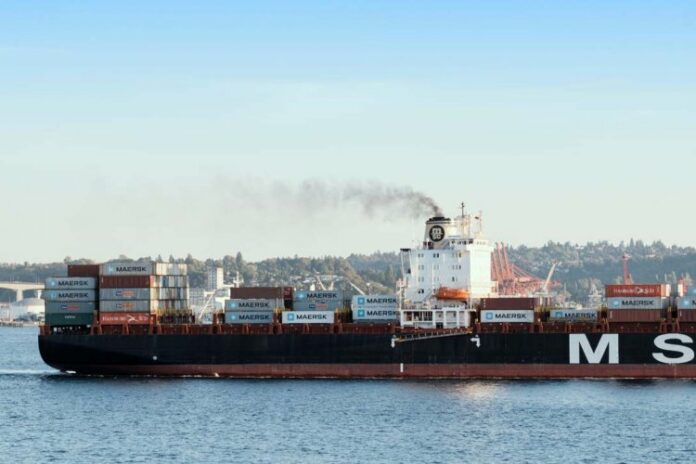
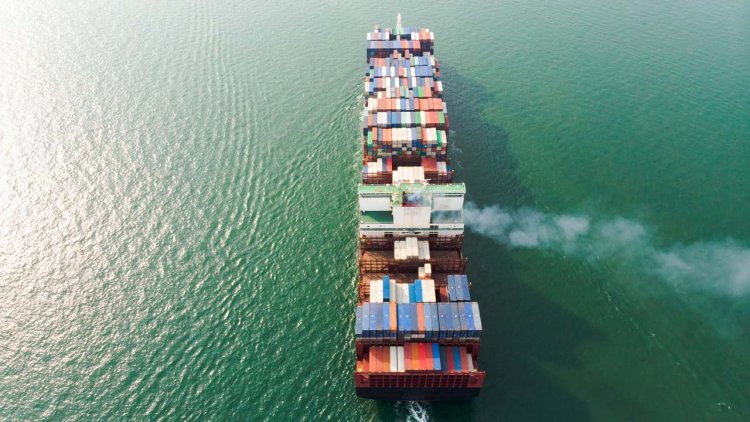
To understand how these ship tracks move and dissipate, the scientists created a mathematical model of ship tracks and how long they last, which they shared in a paper recently published in Environmental Data Science.

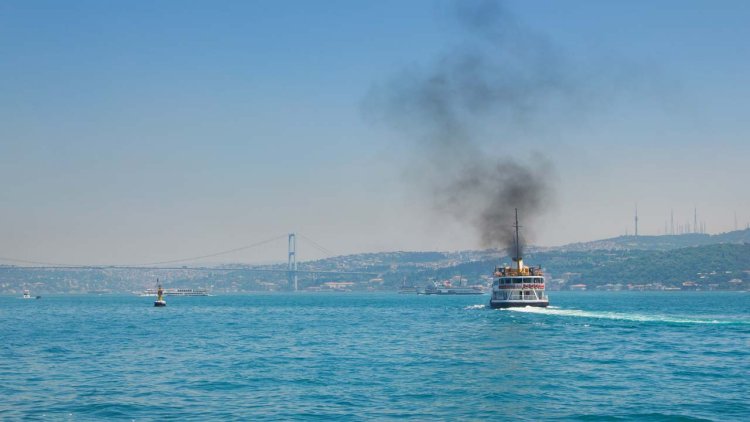
“Ship exhaust is an example of aerosol injections into the lower atmosphere, impacting the local environment, and is a daily occurrence,” said Lyndsay Shand, a Sandia statistician and the project lead.

“We’ve been developing analytical tools to understand exhaust impacts on clouds from observational data collected by satellites. For example, we can locate a newly formed ship track and follow its evolution to better understand how it affects the local marine environment over time. We have found ship tracks to persist for more than 24 hours, longer than previously documented.”

Ship tracks are an unintentional example of marine cloud brightening, a group of technologies being considered for slowing climate change and its impacts. Marine cloud brightening works by creating ocean clouds that reflect some sunlight back to space before its heat is absorbed in the atmosphere or by Earth’s surface.

Another, similar group of climate intervention technologies are called stratospheric aerosol or gas injection. This involves adding tiny particles, called aerosols, or gases high into the upper atmosphere, mimicking the effects of a large volcanic eruption, to reflect some sunlight and reduce climate change.

These two groups of technologies have the potential to counteract the effect of greenhouse gases, which work by trapping heat, but could have negative side effects.

Climate scientists, across the nation and around the globe, want to understand how marine cloud brightening and other climate intervention technologies affect both the local and global climate to better inform decision-makers, said Erika Roesler, a Sandia atmospheric scientist heavily involved in the project.

The Sandia researchers hope to understand the potential effects of marine cloud brightening on global precipitation, regional temperature differences and more well before any large-scale experiments are conducted on the planet we all call home, Shand and Roesler said.

The focus of Shand’s project was to develop analytical tools to understand the formation and behaviors of ship tracks. The goal was to be able to determine when ship tracks form and how long they last using publicly available satellite images and ship location information.

Ship tracks, formed by water vapor in the air condensing around ships’ emissions, reflect sunlight, Roesler said. Ship tracks have been spotted across the globe, far more frequently than previously thought, providing inexpensive and unintentional experiments for the research team.

“Understanding how aerosols from ships, power plants and other human activities impact the climate is one of the biggest sources of uncertainty in climate models,” Shand said. “If we can better understand those effects, we can reduce the uncertainty in climate models and lead to improved decision-making for policymakers.”

Through this project, the team can now identify and follow a newly formed ship track as it moves with the cloud layer while the ship that produced it continues to move in another direction and form new track segments, Shand said. This is important to better understand the long-term impacts of ship exhaust on the surrounding clouds. This knowledge can help the scientific community to refine and improve climate models, she added.

For this study, the researchers used data from the National Oceanic and Atmospheric Administration and NASA’s Geostationary Operational Environmental Satellites. Each satellite takes a snapshot of a fixed region of the Earth every five to 15 minutes. Each pixel in a single snapshot represents a region of 500 meters squared to two square kilometers, or about one-fifth of a square mile to three-quarters of a square mile, Shand said.

The team focused on satellite images from three three-day periods in 2019 of the North Pacific Ocean from Baja California up to Alaska. They have also observed ship tracks in the South Pacific Ocean off the coast of Chile and in the East China Sea from Shanghai to Japan.

“In the paper, we introduced two new algorithms to follow ship track formations,” Shand said. “One algorithm uses observed images, and one algorithm uses physical phenomena, such as known wind speed and direction. Both algorithms allow us to determine how long the ship tracks persist, but the image-based one performs much better for tracks persisting more than eight hours. This enables us to study how the ship exhaust dissipates into the cloud bank and how long it takes to disappear from sight.”

With its new image-based algorithm, the research team was able to follow the behavior of ship tracks for more than 12 hours and sometimes up to 29 hours, Shand said. This is significantly longer than most atmospheric modeling simulations, which study ship tracks for six to eight hours. It’s also longer than most airplane contrails last, created high above where ship tracks form, which can remain visible for up to four to six hours, in the right conditions.

To make such a big performance improvement, the team needed to overcome two key challenges. First, they adapted a motion-tracking algorithm to follow low-forming ship tracks, less than 3,000 feet above the ocean surface. Low clouds are more challenging to track than faster and larger clouds at an altitude above 30,000 feet.

Second, the new algorithm also can follow the tracks through the challenging light changes at sunset and sunrise. “One of the really neat things about this project is that we can follow the track through a full daily cycle,” Shand said.

In addition to following ship tracks, the algorithms should be helpful in studying any future intentional marine cloud brightening experiments. The team is working on making its algorithms available to other researchers.

This project has led to collaborations and conversations with federal and academic researchers, Shand said. The tools developed during this project are being expanded as part of multiple projects that started last year.

“There are risks in doing these kind of climate interventions,” Roesler said. “It is the role of the climate science community to understand these emerging technologies, their risks and benefits, to better inform decision-makers in the future, should climate intervention be necessary to save the planet.”

Russia targets Netherlands’ North Sea infrastructure, says Dutch intelligence agency

0

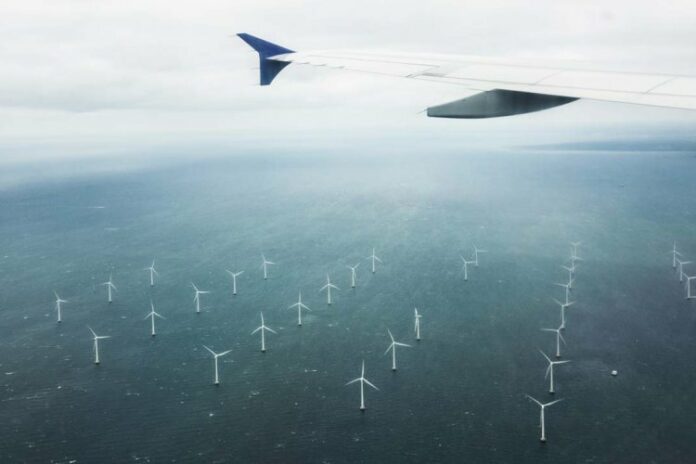
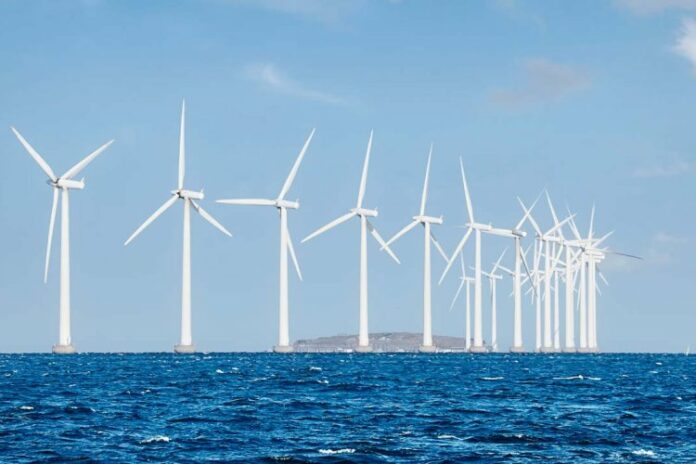
A Russian ship has been detected at an offshore wind farm in the North Sea as it tried to map out energy infrastructure, MIVD head General Jan Swillens said at a news conference.

The vessel was escorted out of the North Sea by Dutch marine and coast guard ships before any sabotage effort could become successful, he added.

“We saw in recent months Russian actors tried to uncover how the energy system works in the North Sea. It is the first time we have seen this,” Swillens said.

“Russia is mapping how our wind parks in the North Sea function. They are very interested in how they could sabotage the energy infrastructure.”

Dutch intelligence agencies MIVD and AIVD, in a joint report published on Monday, said critical offshore infrastructure such as internet cables, gas pipes and windmill farms had become the target of Russian sabotage activities.

“Russia is secretly charting this infrastructure and is undertaking activities which indicate preparations for disruption and sabotage”, the agencies said.

Covert threats by Russia to water and energy supplies in the Netherlands were also conceivable, they added.

The Netherlands said on Saturday it would expel an undisclosed number of Russian diplomats as it accused Russia of continuously bringing in spies under diplomatic cover.

It also ordered Russia to close its trade mission in Amsterdam and said it would shut down the Dutch consulate in Saint Petersburg.

Source: Reuters

ZeroNorth acquires bunker supplier software provider BTS

0

Technology company ZeroNorth has today announced that it has acquired BTS PTE Ltd., a software platform for marine fuel suppliers, headquartered in Singapore. 

The deal will see ZeroNorth acquire BTS’s flagship suite of services – iBMS (Intelligent Bunker Management System) – which is software specially tailored for the marine fuel supply chain. iBMS helps to increase the efficiency and profitability of marine fuel suppliers, traders and brokers by digitalising their business processes through eliminating unproductive tasks, automating work processes, greater sharing of information and enhancing decision making.

iBMS was one of the first projects supported by the Maritime and Port Authority of Singapore (MPA) under the Maritime Innovation and Technology Fund in the early 2000s. BTS is also the leading company within an industry consortium of seven organisations that has been tasked with developing mobile applications for bunkering documentation and workflows, as awarded by the MPA’s digital bunkering Call for Proposals in January 2022.

ZeroNorth will build a fully cloud-based iBMS solution, which will improve the overall offering to current and future clients. The service will eventually be incorporated into ZeroNorth’s unified platform for optimisations across maritime operations. The ZeroNorth platform functions as a collaboration point, where a seamless flow of data breaks down existing silos between stakeholders, and enables total visibility and alignment around shared goals. 

BTS brings more than 15 years of market expertise and marine fuel trading and supply processes to ZeroNorth, as well as a well-established presence in Singapore, the largest global marine bunkering hub. The ambition is to also expand these improved marine fuel services for suppliers to other global ports. 

The acquisition supports ZeroNorth’s growth strategy and focus specifically within the marine fuel industry and follows the acquisition of Prosmar Bunkering just 3 months ago. ZeroNorth is dedicated to accelerating the digitalisation and decarbonisation of the marine fuel industry by providing more accurate fuel prices and contextual insights that enable more sustainable strategies for bunker procurement, storage, blending and selling.  

Commenting on the announcement, Kenneth Juhls, Managing Director of ZeroNorth Bunker, said:

“The marine fuel industry is taking centre stage in shipping’s green transition. With the increasing pressure to digitalise and optimise your marine fuel supply chain, and the influx of alternative fuel options becoming available, equipping our customers with the ability to make better decisions in regards to procuring, storing and selling fuel is becoming a key priority for ZeroNorth. 

“By acquiring BTS, we are taking the next step towards delivering an end-to-end marine fuel service that aligns all stakeholders across the same data through the ZeroNorth platform. Moreover, by building a bridge between stakeholders, we are increasing collaboration across the maritime value chain and accelerating our goal to drive decarbonisation alongside the wider industry.”