-0.5 C
New York
Home Blog Page 325

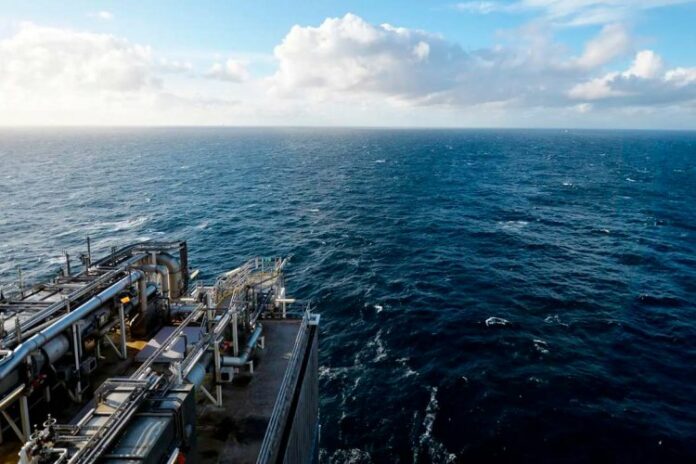
Equinor strengthens its position in the northern North Sea

0

The transaction adds to Equinor’s equity share in the following discoveries: An additional 18.8% in Grosbeak, 45% in Toppand, 40% in Atlantis and 20% in Røver Nord and Røver Sør.

“With this transaction, we strengthen our position in one of our core areas on the Norwegian continental shelf. These discoveries can be put into production with low costs and low CO2 emissions by being connected to the suitable infrastructure in the area. Discoveries close to infrastructure are important for our ambition to maintain production at current levels from the NCS beyond 2030,” says Kjetil Hove, executive vice president for Exploration and Production Norway.

Although a mature part of the Norwegian continental shelf, the Troll and Fram area has emerged as an exploration hotspot over the last years, and Equinor has made a number of discoveries in this area, including Swisher, Toppand and Røver Nord and Sør.

Equinor has started field developments projects to coordinate the development of these discoveries in collaboration with partners. 

Alexandroupolis FSRU project kicks off with conversion works at Keppel shipyard

0

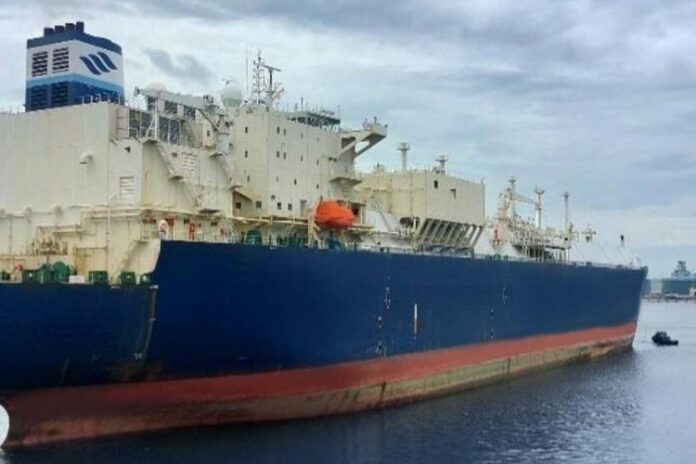
The work to develop Greece’s first Floating Storage Regasification Unit (FSRU) commenced recently at the Keppel shipyard in Singapore with the conversion of GasLog’s DNV classed LNGC Gaslog Chelsea, recently renamed as Alexandroupoli. 

The 155,000-cbm LNG carrier, recently reflagged to the Greek flag, is the first FSRU conversion under the Greek Flag for operation in the Aegean Sea. The project’s owner, Gastrade, is a consortium of key players in the wider region’s energy market: Mrs. Elmina Copelouzou, GasLog, DEPA Commercial, the Public Gas Company of Greece, DESFA, the Hellenic Natural Gas Transmission System Operator, and Bulgartransgaz, the Bulgarian natural gas transmission and storage system operator.

Kostas Karathanos GasLog’s COO said:

“GasLog believed in the FSRU Alexandroupolis endeavor from the very beginning, and at a time when energy security in Europe was taken for granted. We worked patiently and diligently to reach this stage and we are extremely proud to soon offer the first ever FSRU in Greek waters. Through GasLog’s renowned high standards of safety and reliability, the FSRU Alexandroupolis will offer energy diversification and security to the wider region and establish GasLog as an integrated provider of natural gas solutions. We are thankful to DNV for their support and partner-mindset throughout the project,” he concluded.

Martin Cartwright, Business Director – Gas Carriers & FSRUs, DNV Maritime, said:

“This is an exciting milestone in a project that is the result of an exceptional collaborative effort. This will be our record 9th FSRU conversion project as a classification society, and we take great pride in being entrusted with supporting this initiative. By choosing DNV and our pioneering REGAS (ES) and ASP notations, the consortium demonstrates that they are focused on delivering an installation that meets the most innovative and rigorous standards in the industry.”  

The FSRU Alexandroupolis is designed to add a new gateway for natural gas in the Greek and wider Balkan region, improving the region’s energy mix and diversifying energy sources to enhance energy security. It is expected to have a regasification capacity of around 8 billion cubic meters annually.

Leonidas Karystios, Regional Business Development & Gas Segment Director, DNV Maritime, said:

“We are extremely proud to be part of a project with such a significant role in the improvement of energy security and autonomy in Greece and the entire southeastern Europe. In DNV we have been providing technical support and risk management consultancy in all phases throughout the project’s development, and we are honoured to be the classification partner of this game-changing project.” 

The existing LNGC is currently in DNV class. As an offshore-classed FSRU, the vessel will have the following notations: OI Ship-shaped LNG Storage Installation, Field (Alexandroupolis), REGAS(ES), POSMOOR, UWILD, BIS, TMON, Clean, NAUT(OC), NAUTICUS(Newbuilding), ASP(MRU).

The vessel is expected to be delivered at the end of 2023 and will be connected to the National Natural Gas Transmission System (NNGΤS) of Greece via a 28km long pipeline.

Marlink providing network solutions for Quark Expeditions

0

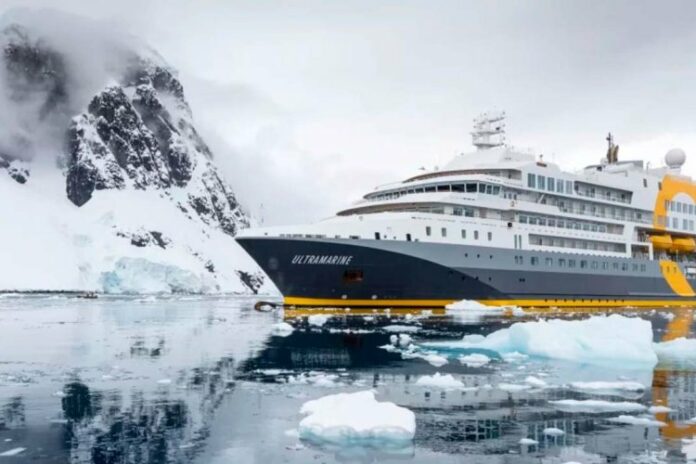
Quark Expeditions has operated a fleet of chartered vessels and icebreakers taking guests on unforgettable experiences for more than thirty years. Ultramarine is Quark’s first fully owned newbuild and is the newest ship in their fleet, designed to go beyond the familiar in polar exploration and answer passenger requests to discover new places.

Ultramarine began its first full season of operations in October 2021. The 199-guest vessel is equipped with two twin-engine helicopters, 20 quick-launching Zodiacs, spacious suites, wellness amenities and numerous outdoor wildlife viewing spaces.

Marlink has provided a seamless hybrid bespoke solution, including dual C-/Ku- Band and Ka-band VSAT with dual L-band back-up over LEO and GEO constellations and 4G/LTE connectivity with global roaming, to maximize passengers experience onboard. Marlink will further extend connectivity options on Ultramarine in spring 2023 when the vessel will trial the new Starlink LEO service, bringing faster throughput, lower latency services in a combination with guaranteed VSAT bandwidth to meet crew and passenger needs and extend access to more cloud-based applications.

Traffic is managed using software-defined routing (SD-WAN) which automatically selects the most efficient connection channel for data transmission, streamlining and securing the process for passengers, crew and business communications alike. To enable passengers and crew to share their experiences with friends and family, Marlink has provided an Internet Café solution from a third party to manage Internet access, billing and security.

David Blancard, Head of Information Technology, Quark Expeditions, says:

“Quark Expeditions is focused on creating unforgettable experiences for our guests, using small vessels to visit places that bigger ships cannot go and so making our itineraries unique. For this, we rely on partners like Marlink who can provide reliable and innovative solutions that keep our customers connected and enable our ships to operate safely and sustainably in remote and delicate environments.”

Tore Morten Olsen, President Maritime, Marlink, says:

“Marlink is the leader in leveraging our technology and know-how to enable seamless, reliable connectivity in remote regions. Our experience in managing and providing hybrid network solutions in the expedition cruise sector was a key factor for Quark Expeditions. Applying cutting edge technologies like SD-WAN and in future helping them adopt next generation LEO services, means we can support providing the best possible experience to their customers.”

Extensive range of Wärtsilä solutions chosen for two Chilean Navy vessels

0

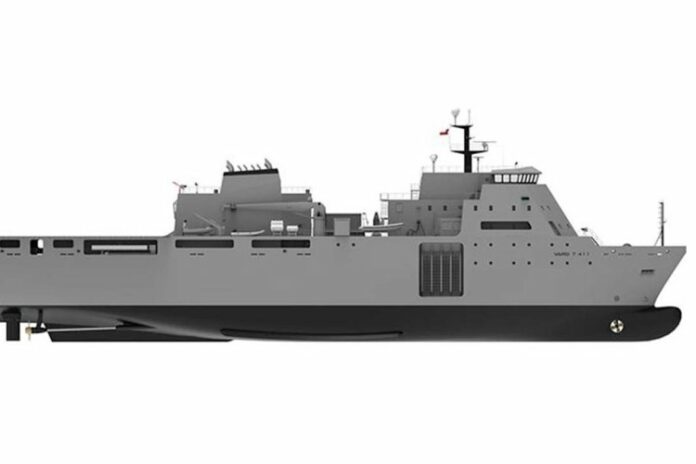
The order was placed by Astilleros y Maestranzas de la Armada (Asmar), the state-owned shipyard constructing the vessels and it was included in Wärtsilä’s order book in February 2023.

The Escotillón IV project, under which these ships are being built, will not only increase Chile’s defence capabilities, but will also allow the ships to be used for humanitarian operations.

The full Wärtsilä scope for each ship includes two Wärtsilä 26 main engines and four Wärtsilä 20 auxiliary engines, an emergency generating set, two Wärtsilä gearboxes, two controlled pitch propellers (CPPs) with efficiency rudders and steering gear, the Wärtsilä ProTouch control system, a Wärtsilä tunnel thruster, a main switchboard, a power management system (PMS), two power take-in/take-out (PTI/PTO) drives, two uninterruptable power supply (UPS) systems, the transformers, and a bow thruster drive.

The energy efficient rudders are combined with high efficiency propellers, fairing caps and a bulb on the rudders. Testing has shown that this results in the required power values being reduced by 3-4 percent at the required vessel speed. The rudders and steering gears are the result of cooperation between Wärtsilä and Damen Marine Components. 

“From previous experience, we know and trust Wärtsilä to deliver high quality and reliability in all their products and systems. These specialised vessels require superior performance and we are confident that the Wärtsilä solutions selected will meet this requirement,” says Alejandro König Scheihing, Shipbuilding Manager, ASMAR.

“We are very proud that Asmar has again put their trust in Wärtsilä to be the supplier of this extensive scope of equipment for the Escotillón IV vessels. Thanks to Wärtsilä’s advanced technologies, the overall Wärtsilä solution has been optimised to provide the best possible efficiency for these two Chilean Navy vessels. This efficiency will also minimise emissions, which is in line with our core strategy of enhancing sustainability wherever possible,” says Simon Riddle, General Manager, Naval Sales at Wärtsilä.

During the early development stages of the project, Wärtsilä introduced the concept of a PTI / PTO system. This improved the specific fuel oil consumption of the vessel during low speed manoeuvres. Supported by the use of efficient medium speed diesel generating sets, this has further assisted in bringing the overall yearly fuel burn down compared to conventional diesel mechanical propulsion systems.

The Wärtsilä equipment is scheduled for delivery to the yard commencing in 2024.

BAE Systems awarded $145 million contract for USS Nitze modernization

0

The value of the competitively awarded contract could reach $161 million if all options are exercised.

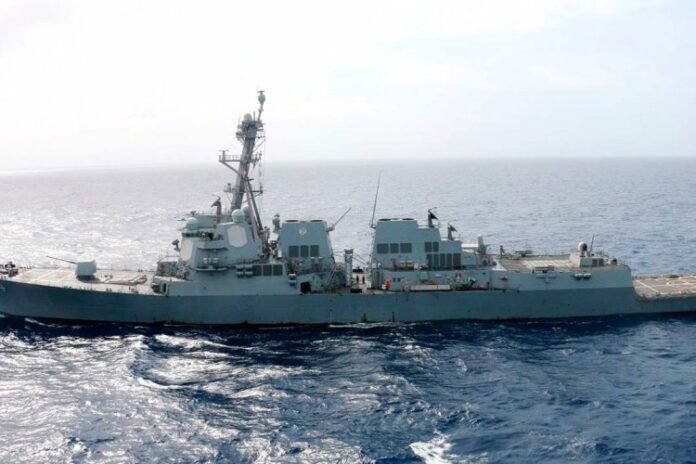
Under the depot maintenance period (DMP) contract awarded, BAE Systems’ Norfolk shipyard will dry-dock the ship, perform underwater hull preservation work, upgrade the ship’s Aegis combat system and its command and control equipment, and refurbish the living spaces for the ship’s 325 crewmembers. The work is expected to begin in July. 

“The depot maintenance periods are necessarily complex and critical to maintain the combat effectiveness of DDGs,” said David M. Thomas Jr., vice president and general manager of BAE Systems Norfolk Ship Repair. “BAE Systems Norfolk looks forward to conducting the assigned DMP work that will enable the USS Nitze to move into its next phase of fleet readiness.”

BAE Systems recently began DMP work aboard the USS Lassen (DDG 88) in its Jacksonville, Florida shipyard, and is conducting similar work aboard the USS Mustin (DDG 89) in its San Diego shipyard. 

USS Nitze is the 44th ship in the Arleigh Burke class and was commissioned in March 2005. The ship is named in honor of former Secretary of the Navy and chief U.S. arms control advisor Paul Nitze (1907-2004). 

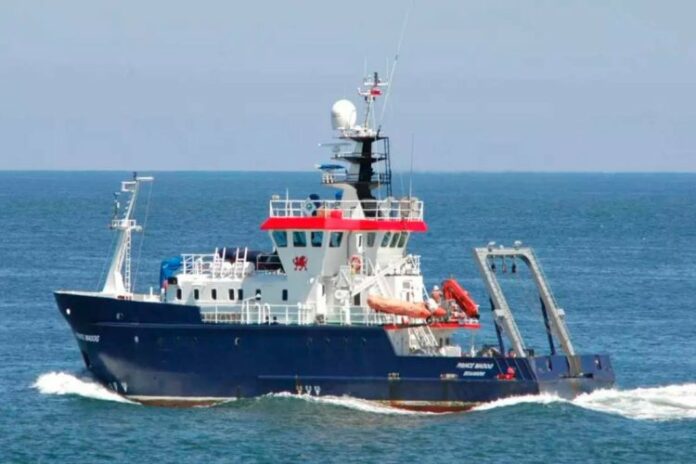
Prince Madog research vessel to be powered by hydrogen in £5.5m Transship II project

0

The Transship II project is the largest retrofit of its kind to-date and will see the Prince Madog retrofitted with a hydrogen electric hybrid propulsion system that will enable zero to low emission operation by 2025.

The project is part of the Clean Maritime Demonstration Competition Round 3 (CMDC3), funded by the Department for Transport in partnership with Innovate UK. It will be delivered by a consortium of major UK innovators in green maritime technology and hydrogen systems, led by O.S Energy who own and operate a fleet of dedicated offshore service vessels.

Other consortium partners include H2Tec, part of Edinburgh-based hydrogen technologies expert Logan Energy, as well as Solis Marine Engineering, Newcastle Marine Services, Chartwell Marine, Cedar Marine, Stone Marine Propulsion and the universities of Exeter and Newcastle-Upon-Tyne. The consortium was supported in its bid by Menter Môn, the developer of the Holyhead Hydrogen Hub, a potential local green hydrogen supply partner for the consortia.

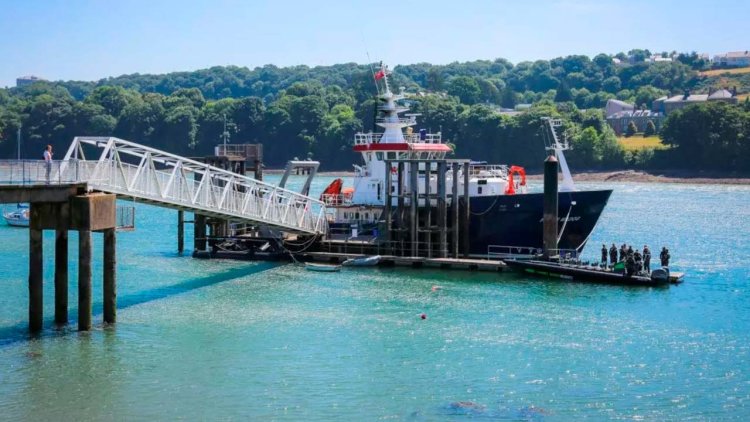
The Prince Madog, co-owned by Bangor University in Wales, recently celebrated 20 years of service to education and science. The research vessel has changed the way we understand marine and coastal sciences and is the only one of its kind in the UK and one of the largest in Europe.
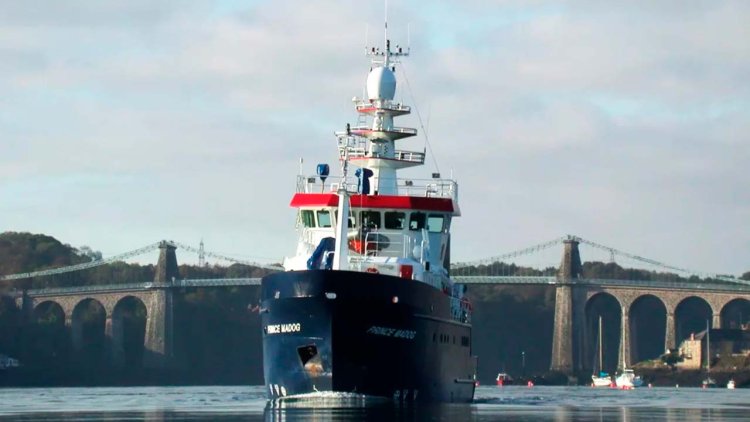
The new hydrogen propulsion system, which will work in conjunction with a diesel-fuelled main engine, will enable zero emission operation at slow speeds or over short distances – such as daily teaching trips with the students from the School of Ocean Sciences at Bangor University. In normal operation, the hybrid system and new novel propulsion design will reduce emissions by up to 60%.

According to Offshore Renewable Energy Catapult (OREC), it is estimated the offshore support sector will be worth £26 billion by 2050 and that an additional 1,200 vessels will be needed to service the UK’s industry and support the transition to net zero by 2050. 

Around 90% of all consumables are moved by sea and the shipping industry globally is responsible for 940 million tonnes of CO2 – the equivalent of at least 2.5% of the world’s total CO2 emissions.

The International Maritime Organisation has set a target to cut these emissions by 50% by 2050 and the UK government is the first in the world to include emissions from international shipping in its domestic carbon budget.
Professor John Turner, head of Bangor University’s School of Ocean Sciences, said, 

“With a renewed focus on the marine renewable energy industry, this is an exciting and welcome development for the Prince Madog in facilitating our teaching and research. With an ambition to be leaders in this field, it is only fitting that our vessel is moving over to cutting-edge technology which significantly reduces emissions. Reducing our carbon footprint by moving over to hydrogen power means Bangor University can continue to build upon our world-leading understanding of the environment and physical positioning of marine energy sites in a sustainable way.”

Dafydd Gruffydd, Managing Director of Menter Môn, said:

“This is great news for the consortia and Menter Môn as it provides us with the opportunity to support the enlargement of an emergent local green hydrogen circular economy from our Holyhead Hydrogen Hub production facility at Parc Cybi, currently under development. This will be powered by our Morlias tidal energy infrastructure providing a truly green transport and marine energy solution and to the benefit of the local economy.”

Anglesey Council’s Climate Change Portfolio Holder, Councillor Nicola Roberts, said:

“This initiative is a positive step on the journey to develop a low carbon economy on Anglesey and it also compliments Anglesey’s Energy Island programme. We are delighted to see that this innovative project will enable the Prince Madog research ship to be powered by hydrogen, thus reducing CO2 emissions, and developing a cleaner energy solution for the shipping industry.”

The Prince Madog is a multi-purpose research vessel used to conduct marine research along the British coastline and in the Irish and Celtic Seas. As the only fully seagoing research ship ni a UK university, it’s commonly used to train future marine scientists at Bangor University and further afield.

The retrofit work, which will take up to two years, is set to begin in April. Once complete, the Prince Madog will receive hydrogen from the Holyhead Hydrogen Hub on Anglesey, North Wales.

Subsea7 awarded contract offshore Angola

0

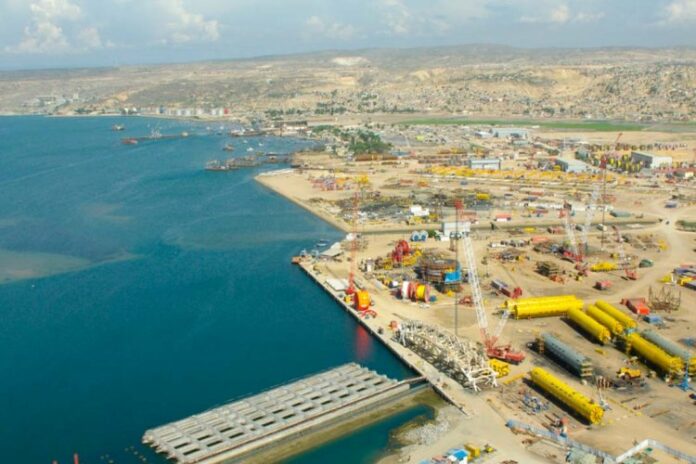
The contract scope includes the transport and installation of approximately 98 kilometres of flexible pipes, 30 kilometres of umbilicals, and associated subsea structures in water depths of around 1,700m.

Project management and engineering have commenced and will be managed from Subsea7’s offices in Angola, France, UK and Portugal. Fabrication will take place at the Sonamet yard in Lobito. Offshore operations are planned between Q4 2024 and Q4 2025.

Franck Louvety, Africa, Middle East & Caspian Vice President said:

“We are pleased to have our first contract with Azule Energy and to continue supporting the development of the Angolan offshore energy industry. Subsea7 has been working for over 40 years in Angola and has an important track record in-country. We look forward to reinforcing our relationship with Azule and to delivering the project safely and as planned.”

Fish recognition algorithms can stop invasive species

0

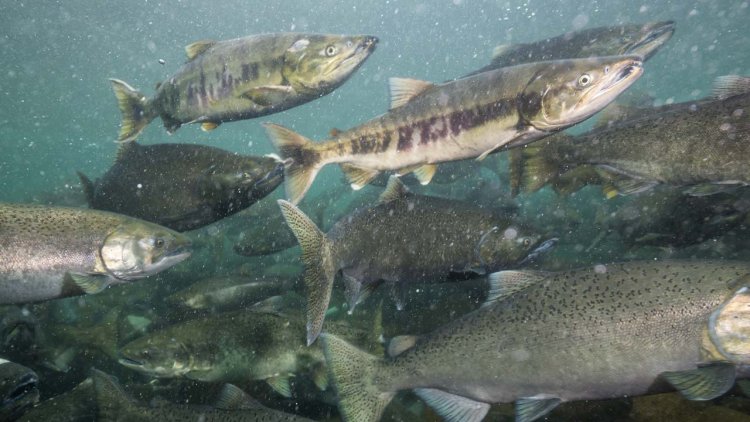
The meeting between energy production and nature is rarely as clear as in the case of hydro power plants and migrating fish. On the one hand, you have the force of enormous amounts of running water that create energy for the whole of Sweden, and on the other, salmon and other fish that want to migrate both up and down rivers and need routes past the power plants.

Stornorrfors is one of the largest of the 2,000 plants in the country and is located in Umeälven River, just west of Umeå in northeast Sweden. In 2010, Vattenfall installed a new fish ladder here, which would help spawning fish bypass the power plant, and a couple of years ago they took the first steps toward a fish recognition system that would make it easier for Vattenfall to monitor, categorise and analyse the fish and their movements.

“We worked out a way to determine the characteristics of salmon,” says Patrik Andreasson, Specialist for Research & Development at Vattenfall.

“And today we have working algorithms, which are really good at recognising size and the presence of fungal attacks, and at distinguishing whether the fish is wild or farmed, as seen by the clipped andipose fin on the salmon’s back.”

The purpose of the technology is to more clearly control which fish travel up and down the fish ladders that bypass the hydro power plants, and to monitor the evolution of species over a longer period of time. For example, when farmed salmon is released into Umeälven River, it is possible to use the artificial technology to see how many of them then return and also follow the wild salmon’s way to adjacent Vindelälven river.

In recent years, fish recognition has developed rapidly and there are several providers of the technology. Still, there is room for improvement and changes, not least in terms of what characteristics the algorithms recognise in the salmon.

Gender is a crucial, and one of the most difficult, characteristics to recognise in spawning salmon. It is especially important to track females. The more females, the more roe and fry and, in the long run, the more adult fish. Because it is extremely difficult to distinguish between females and males, especially early in the season, gender recognition at Stornorrforsen is currently done manually and visually by highly skilled staff. 

“If we’re going to use algorithms instead of people, the algorithms have to be just as good,” says Andreasson. “This is very difficult now, especially at the beginning of the season. We’ve made a first attempt to develop an AI that also recognises gender. It works, but not quite well enough yet. So we’ll continue developing it and give it a test run at the end of this season or at the beginning of next. This is an issue we will be working on throughout this year.”

Chevron announces lower carbon LNG fleet modification project with Sembcorp Marine

0

Chevron Corporation, through its subsidiary Chevron Shipping Company LLC, announced entrance into an agreement with Sembcorp Marine Repairs & Upgrades Pte. Ltd, a wholly owned subsidiary of Sembcorp Marine Ltd. (Sembcorp Marine), intending to reduce the carbon intensity of their LNG fleet operations. 

Under the agreement, with Sembcorp Marine’s support, Chevron will install new technologies aboard Chevron vessels to support their energy transition goals. The changes are also in alignment with decarbonization targets set by the International Maritime Organization (IMO).

Chevron aims to lower the carbon footprint of LNG transportation by installing new technologies such as a reliquefication system, hull air lubrication, and a new gas compressor. Together, these changes are expected to reduce cargo boil-off, lower fuel consumption and increase volumes of cargo delivered.

Mr. Mark Ross, President of Chevron Shipping Company, said:

“We are excited to work with Sembcorp Marine to help us advance our lower carbon goals. We believe LNG will be a key  component of the global energy transition for years to come, and Chevron is focused on continuing its disciplined capital investment in our LNG fleet.”

Sembcorp Marine has significant expertise in complex LNG fleet modifications and has a proven track record for lower carbon solutions for the maritime industry. Sembcorp Marine will provide Chevron with engineering, procurement, installation, and commissioning (EPIC) services and expects to complete the work by mid-2025.

Mr. Wong Weng Sun, Sembcorp Marine President and CEO, said:

“Sembcorp Marine is committed to advancing environmental sustainability through the development of industry-leading solutions. Working with Chevron on its LNG fleet upgrades is an immediate way to accelerate the lowering of the carbon footprint in the maritime industry, to achieve the IMO’s target to reduce emissions from international shipping by at least half by 2050, compared to the levels in 2008.”

Boskalis acquires multidisciplinary offshore wind farm project Moray West

0

Boskalis has secured a multidisciplinary role in the development of the Moray West offshore wind farm in Scotland. On behalf of its client, Boskalis will carry out a large number of the activities contributing to the development of this renewable energy project in the coming 12 months. The  contract was awarded by Ocean Winds, the 50:50 joint venture between EDP Renewables and ENGIE dedicated to offshore wind energy.

The Moray West offshore wind farm is located off the east coast of Scotland in the Moray Firth. The 882 MW wind farm will have the capacity to power up to 640,000 homes in United Kingdom. The development consists of 60 offshore wind turbines and two substations, all fixed on monopile foundations. Based on the large turbine size (14.7 megawatts) and water depth (up to 54 meters), extremely large XXL monopiles weighing up to 2,000 tons each will be required for this development.

Boskalis has been able to offer its broad range of its capabilities in this project and already carried out offshore geophysical site survey that also included survey for identification of unexploded ordnance.

In the coming months, Boskalis will transport a large number of the monopiles from the Far East to discharge at the port of Invergordon, near the project site. These monopiles – eight per voyage – will be transported on the heavy transport vessel White Marlin.

Prior to the installation of the foundations, Boskalis will carry out the seabed preparation activities by installing a layer of rock that will act as a filter and scour protection for the monopiles.

Subsequently, Boskalis will deploy its DP crane vessel Bokalift 2 for the installation campaign. With its 4,000-ton crane the Bokalift 2 will install the monopiles using its new upending hinge and motion-compensated pile gripper. Furthermore, in addition to a very large impact hammer, Boskalis will also deploy a vibro-hammer on this project. As a part of its campaign, Boskalis will also install two substations with their respective transition pieces.