-3.2 C
New York
Home Blog Page 324

MAN Energy Solutions ships world’s largest salt bath reactors to China

0

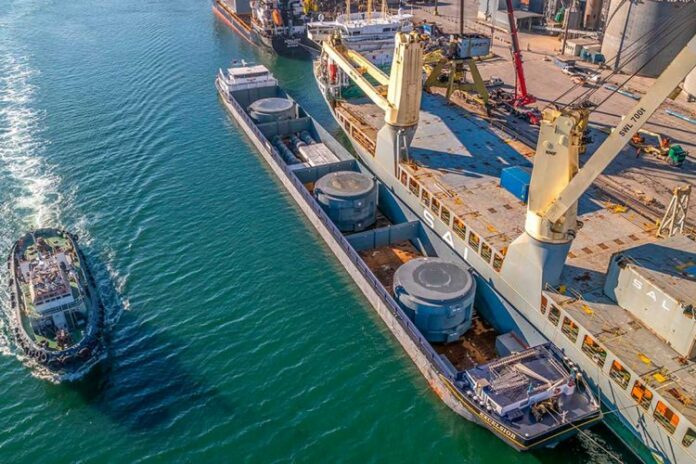
MAN Energy Solutions has completed the world’s largest salt-operated reactors for a new maleic anhydride plant for the production of biodegradable plastic. The three reactors, each weighing 655 tons, have now been loaded onto the 135 meter long Danube ship “Excelsior” at the MAN Energy Solutions site in Deggendorf (Germany).

From there, the reactors will first be transported via the Danube to the Romanian port of Constanta, from where they will then reach their destination in the Chinese city of Yantai (Shandong province) by ocean-going vessel.

The customer is Wanhua Chemical Group Co. Ltd., a leading supplier of chemical products in China, which will use the three salt bath reactors to produce maleic anhydride. This chemical product is in turn required for the production of PBAT (polybutylene adipate terephthalate), a raw material for biodegradable plastics. With a total capacity of 200,000 tons per year, Wanhua will start up one of the world’s largest production plants for maleic anhydride.

Norbert Anger, MAN Energy Solutions’ Head of Site in Deggendorf, says:

“With an annual capacity of 67,000 metric tons each, the three salt bath reactors are the largest ever built anywhere in the world. Currently, only MAN Energy Solutions has the know-how and capabilities required to build such large reactor systems.”

The salt-operated reactors each measure nearly 7 meters in height and around 12 meters in diameter. Each reactor consists of 38,500 tubes. The power consumption of the system is optimized and a higher efficiency of the process is achieved through an optimized tube diameter, which leads, among other things, to a lower pressure drop across the catalyst bed. The reactors reach an operating temperature of up to 450°C. Thanks to the excellent temperature control provided by the DWE® reactors, the operating conditions for each of the 38,500 tubes are practically identical, maximizing selectivity and yield.
Bollinger delivers 52nd Fast Response Cutter to U.S. Coast Guard

0

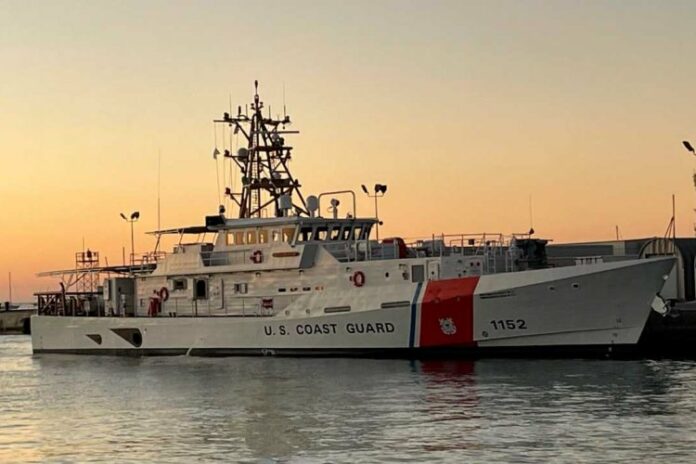
Bollinger Shipyards LLC has delivered the USCGC Maurice Jester to the U.S. Coast Guard in Key West, Florida. 

Bollinger President & C.E.O. Ben Bordelon said:

“We’re incredibly proud to deliver another Fast Response Cutter to be homeported in Boston, the birthplace of the U.S. Coast Guard. We’re confident that pound for pound, the quality and capabilities of the FRC platform are unmatched, and that this vessel will outperform its mission requirements and expectations in the challenging conditions where it will operate in the North Atlantic. Our unique experience building for the Coast Guard is unparalleled and has shown time and time again that we can successfully deliver the highest quality vessels on a reliable, aggressive production schedule. We look forward to continuing our historic partnership with the U.S. Coast Guard.”

The USCGC Maurice Jester will be the third of six FRCs to be homeported in Sector Boston, which is known as “The Birthplace of the Coast Guard.” The sector is responsible for coastal safety, security, and environmental protection from the New Hampshire-Massachusetts border southward to Plymouth, Massachusetts out to 200nm offshore. Sector Boston directs over 1,500 Active Duty, Reserve, and Auxiliary members whose mission is to protect and secure vital infrastructure, rescue mariners in peril at sea, enforce federal law, maintain navigable waterways, and respond to all hazards impacting the maritime transportation system and coastal region.

Each FRC is named for an enlisted Coast Guard hero who distinguished themselves in the line of duty. Maurice Jester enlisted in the Coast Guard as a Surfman in 1917, working his way up to Chief Boatswain’s Mate by 1935 while serving on five cutters. Commissioned as a Lieutenant and promoted to Lieutenant Commander, he was the first Coast Guardsman to earn the Navy Cross in World War II, and the first Coast Guard Officer to receive the award for a combat action in direct confrontation with enemy forces. During World War II, Coast Guard cutters battled Nazi submarines in an area off the North Carolina Coast termed “Torpedo Junction.” Jester commanded the Coast Guard Cutter Icarus in the sinking of a German U-352 off the Outer Banks of North Carolina. This historic event resulted in the war’s second U-boat sinking by U.S. forces and the first U.S. capture of German combatants.

Svitzer expands in Brazilian market

0

The new port location adds to Svitzer’s reach and ability to deliver high-quality towage services to its customers in the region.

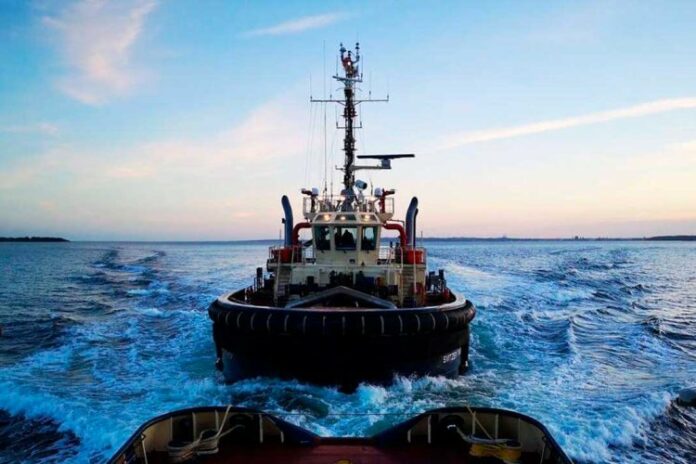
Svitzer will deploy two modern and high-powered tugs, the Svitzer Jamil Darian and Svitzer Zoe, in the Port of Salvador to attend to its diverse portfolio of customers in the region. Svitzer’s two modern tugs will bring new possibilities for more complex manoeuvres and assistance of different ship sizes at the Port of Salvador.

To service the port, Svitzer has hired a total of 12 crew members, creating jobs for those living in the local region. The crews have undergone substantial training in line with Svitzer’s international standards and will operate with an uncompromising focus on safety.

Commenting on starting operations in Salvador, Daniel Reedtz Cohen, Managing Director of Svitzer Brazil, said:

“I am very pleased to announce our expansion into the Port of Salvador and Aratu Port Complexes, which marks another important milestone in our Brazil growth strategy. Brazil continues to grow in its role as a key player in the global trade ecosystem, with resulting increased port activity. Svitzer is dedicated to its role in the supply chain and to servicing customers in the region. With this latest entry into Salvador, we strengthen our coverage on the Brazilian coast and presence in the country.”

As part of its general expansion in Brazil and to support continued organic growth, Svitzer has announced a new build programme consisting of six new tugs, the first of which was delivered and put into operation in the Port of Pecem earlier this month. With the new build programme, Svitzer aims to continue to expand its coverage on the Brazilian coast in the years to come.

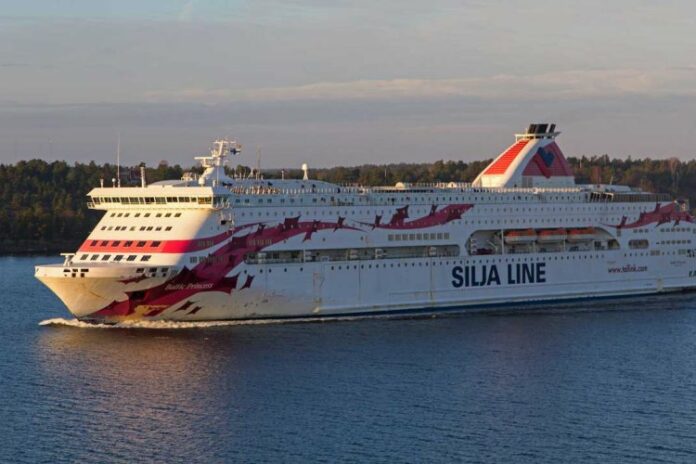
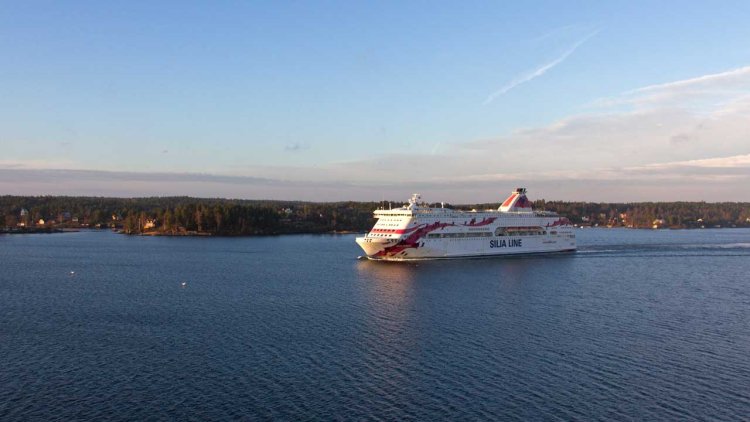
Tallink Grupp’s vessel Baltic Princess head to Naantali, Finland for regular dry-docking

0

During the dockings many technical upgrades and underwater hull works will be carried out, including maintenance of the vessel’s bow thrusters and also the installation of ballast water treatment plant and commissioning.

In addition to the technical works, some of the vessel’s passenger areas will be refreshed; carpets will be renewed, and furniture will be coated. The curtains in the cabins will also be renewed. In addition, 750 mattresses will be replaced, and all cabins will be thoroughly cleaned.

Baltic Princess will be out of service after arriving in Turku in the evening on Sunday 5th March 2023 and will return to service on Sunday 19th March 2023 with an evening shift from Turku. There will be no replacing vessel on the route for that period. The Galaxy, which operated on the Turku-Stockholm route, has been leased to Holland for accommodation since September.

Odfjell Oceanwind launches the Deepsea Star™ 15MW floating wind foundation

0

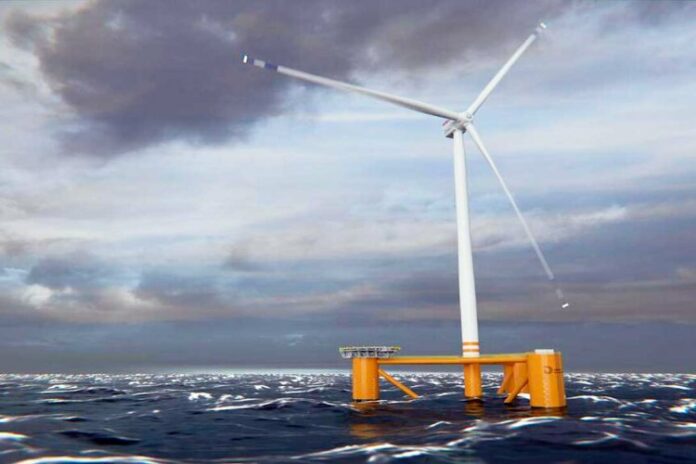
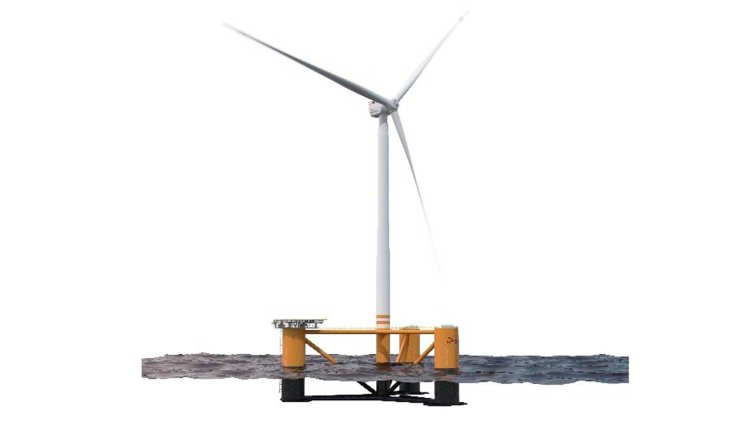
Odfjell Oceanwind launches the Deepsea Star™ designed to take 15MW and larger Wind Turbine Generators (WTGs).  

The Deepsea Star™ is a column-stabilised, semi-submersible steel design with centre WTG tower, designed to take the weights and loads from the 15MW WTGs which will become available for floating wind from 2025 and onwards. The Deepsea Star™ is currently undergoing the Basic Design Approval from DNV based on Siemens Gamesa’s SG 14-236 DD and a multi-location design basis which includes the harshest environment locations relevant for floating offshore wind globally.  

“With the Deepsea Star™ we have compiled Odfjell’s 50 years learnings from operating semisubmersible structures in harsh environment conditions with 20 years’ experience in designing floating wind solutions. Stepping up to the 15MW WTGs makes floating wind relevant for larger utility scale wind parks and will be a significant contribution to lowering the LCOE in the coming years”, says Per Lund, CEO of Odfjell Oceanwind.

“The new design has successfully completed the model tank test and our design team is now working in close collaboration with the WTG supplier and DNV to complete the qualification process to a Basic Design Approval (BDA) level. Having a BDA qualified design for 15MW WTG and a multi-locational, harsh environment design basis offer developers of seabed leases in tough locations to potentially cut significant time and reduce risk in their development programs. This is particularly the case for Scotwind, INTOG and Utsira Nord. The Deepsea Star™ can also be optimised to site specific metocean data.”  

One of the inventors of the Deepsea Star™ design and CTO in Odfjell Oceanwind, Eystein Borgen, explains some of the features of the new design:

“When going through the Early Works engineering process with the WTG supplier and the Basic Design Approval with DNV for the Deepsea Semi™ 12MW, we realised that it will be challenging to scale a semi-submersible floater with the WTG in the corner beyond 15MW, for a number of reasons.

The centre tower reduces the required displacement which gives many benefits like reduced draft at quayside, lower environmental loads acting on the structure and reduced overall steel weight. Furthermore, it enables installation of tower and turbine on a floating structure. The bracing structures transfers the loads efficiently between the satellite columns and the tower. These loads are extreme for harsh environments and large WTGs, in particular when considering load scenarios like cross-sea waves and “split forces” acting between the columns, torsion loads from the tower and mooring line failures.

The symmetric design simplifies the supply chain and lends itself well to mass production, lowering the unit cost and increasing the supply chain efficiency which will be required to develop large wind parks in short time frames.”  

Confirms oil discovery near Goliat in the Barents Sea

0

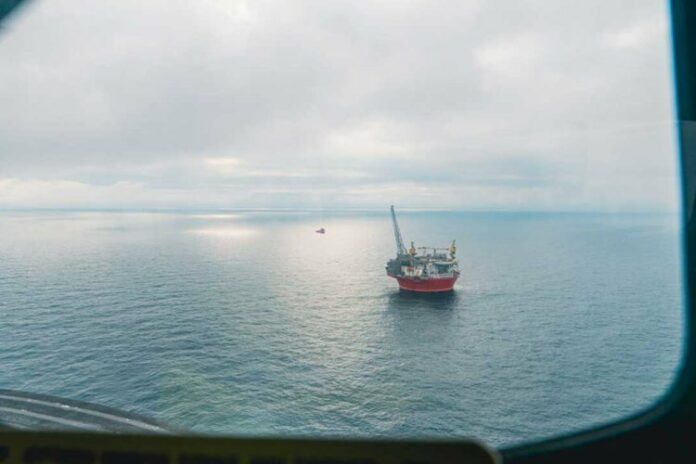
Vår Energi ASA confirms discovery of oil in the operated 7122/8-1S Countach well in production licence PL229 (Goliat), northwest of Hammerfest, including updated volume estimates.

The well was drilled in one of the segments that form the Countach prospect. Preliminary estimates place the size of the discovery in the tested segment between 0,5 – 2,1 million Sm3 (3-13 million bbls) of total recoverable oil equivalents. The potential of the Countach prospect, in the undrilled segments, is estimated at up to 3,7 million Sm3 (23 million bbls) of total recoverable oil equivalents. 

The well will now be permanently plugged and abandoned, and the licensees will evaluate drilling an appraisal well in the future.

Rune Oldervoll, EVP Exploration and Production in Vår Energi, says:

“Countach reinforces the company’s position as the leading exploration company on the Norwegian shelf. This discovery is yet another in a series of successful exploration wells in the Barents Sea in recent years, including Lupa – the largest discovery on the Norwegian shelf in 2022. At the same time, the discovery confirms our exploration strategy and our position in the area. We will consider potential commercial development options and tie-in of the discovery to Goliat FPSO. Due to late arrival of the drilling rig on the field this winter, we have not been able to carry out the planned sidetrack before the environmental drilling restrictions commence on 1 March. We look forward to continuing to explore the area around Goliat at a later point in time”.

The Countach well was drilled about 13 kilometres northeast of the Goliat field in the southern part of the Barents Sea and 91 km from Hammerfest.   

The well was drilled to a measured depth of 2958 metres and oil was encountered in the Realgrunnen and Kobbe formations. Extensive data has been collected for further assessment. The well will now be permanently plugged and abandoned.  

Vår Energi is the operator with an ownership interest of 65%, while Equinor owns the remaining 35%. 

Hiroshima Port welcomes its first LNG-fueled PCTC

0

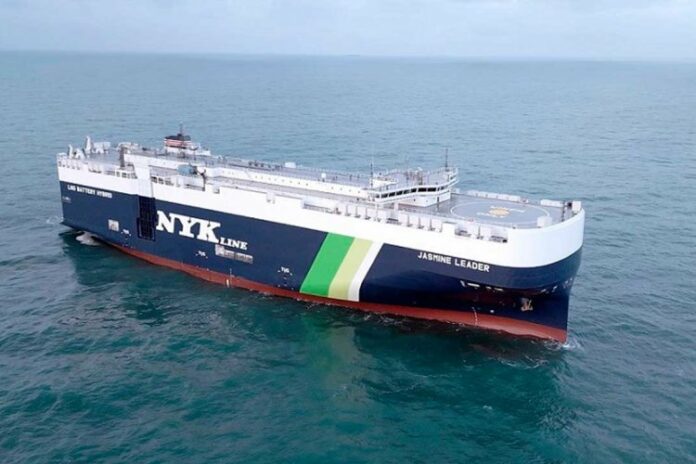
The vessel, Jasmine Leader, is NYK’s third LNG-fueled PCTC and the first of four to be delivered from China Merchants Jinling Shipyard (Nanjing) Co. Ltd.

Before entering port, the vessel received LNG fuel from Kaguya, an LNG-bunkering ship operated by Central LNG Marine Fuel Japan Corporation, which is a joint venture owned by NYK and other companies.

Jasmine Leader is named after the jasmine flower, which is a symbol of beauty and known for its rich fragrance. Desiring to realize and pass on a healthy global environment through environment-friendly transportation, NYK is naming its LNG-fueled PCTCs after flowers.

Before entering port, the vessel received LNG fuel from Kaguya, an LNG-bunkering ship operated by Central LNG Marine Fuel Japan Corporation, which is a joint venture owned by NYK and other companies.

Jasmine Leader is named after the jasmine flower, which is a symbol of beauty and known for its rich fragrance. Desiring to realize and pass on a healthy global environment through environment-friendly transportation, NYK is naming its LNG-fueled PCTCs after flowers.

The vessel will transport finished vehicles produced by Mazda Motor Corporation (head office: Aki-gun, Hiroshima Prefecture; Representative Director, President and CEO: Akira Marumoto), and seeks to fulfill customers’ demands for a lower environmental burden in the logistics field.

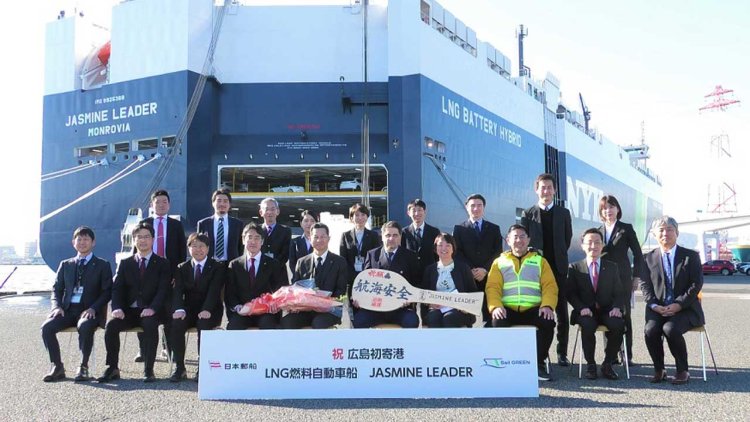
On the same day, a commemoration ceremony was attended by related parties of Mazda Motor Corporation and NYK. The participants celebrated the vessel’s entrance into Hiroshima port and wished it a lifetime of safe voyages.

RWE and Northland Power select Vestas as preferred supplier for offshore wind cluster

0

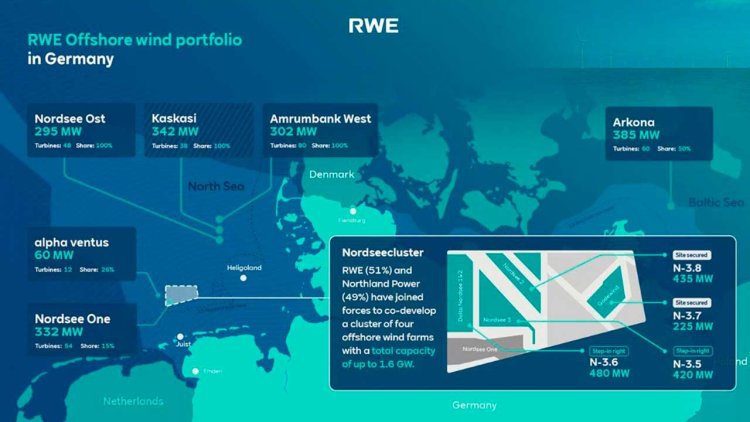
RWE and Northland Power are making significant progress on the deployment of their Nordseecluster. 

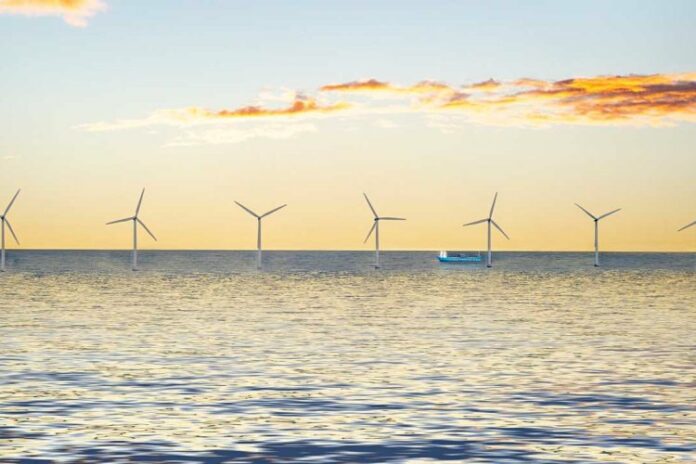
The companies have selected Vestas as the preferred supplier for their up to 1.6-gigawatt (GW) cluster consisting of four offshore wind farm sites in the German North Sea. A minimum of 104 Vestas offshore wind turbines (Type: V236-15.0 MW) with a capacity of 15 megawatts (MW) each are planned to be installed north of the island of Juist. A service contract for the wind turbines will be also included. All deliverables are subject to the final investment decision for the individual phases of Nordseecluster (A and B).

Last year, RWE (51%) and Northland Power (49%) established a joint venture to develop the Nordseecluster. The partners expect to achieve substantial economies of scale and leverage synergies during the development, construction and subsequent operation of the four wind farm sites. The preferred supplier agreement (PSA) recently signed with Vestas, which encompasses all four projects, reflects the efficiency created when bundling activities such as procurement.

Sven Utermöhlen, CEO RWE Offshore Wind:

“The expansion of renewable energies must be rigorously driven forward. Faster offshore expansion is particularly important to simultaneously achieve climate targets and to create more energy independence. RWE is making its contribution to this. This includes the collaborative delivery of the 1.6-gigawatt Nordseecluster with Northland Power, through which we can achieve considerable synergies at our new wind farms, while at the same time actively supporting the energy transition in our home market Germany.”

David Povall, Executive Vice President of Offshore Wind, Northland Power:

“This is an important milestone for the Nordseecluster and we appreciate all the OEM participation throughout procurement process. Having clarity on the market and the cost of delivering an offshore wind farm is crucial.”

The Nordseecluster will be constructed in two phases: Two wind farms (N-3.8 and N-3.7) with a combined capacity of 660 MW are currently in the permit application phase. Turbine installation at sea is expected to start in 2026, with commercial operation in early 2027. Of the 104 Vestas turbines in total, 44 are reserved for this initial stage (Nordseecluster A). The two wind farms (N-3.6 and N-3.5) of the second phase (Nordseecluster B) will add a further 900 MW of capacity. For both sites the partners plan to bid and to exercise their step-in rights in the German Government’s offshore wind auctions this year – as they did in 2021 for the sites N-3.8 and N-3.7. Offshore construction works for Nordseeclsuter B are scheduled to begin in 2028 with commercial operation to start beginning of 2029.

Nils de Baar, President of Vestas Northern & Central Europe:

“We are proud to announce this preferred supplier agreement with RWE and Northland Power, two important partners, to jointly support the German energy targets and increase the security of energy supply. Once completed, the Nordseecluster will contribute significantly to add clean electricity to the German grid. This agreement also shows the competitiveness of the V236-15.0 MW wind turbine for projects scheduled in the second half of this decade.”

The Nordseecluster will be in close proximity to the existing 332 MW Nordsee One wind farm which RWE and Northland Power co-developed and continue to operate jointly. In order to deploy the cluster, the partners will rely on experienced suppliers, like Vestas, and on their own expertise in offshore wind.

DEME and Jan De Nul joint venture is set to build the energy island for Elia

0

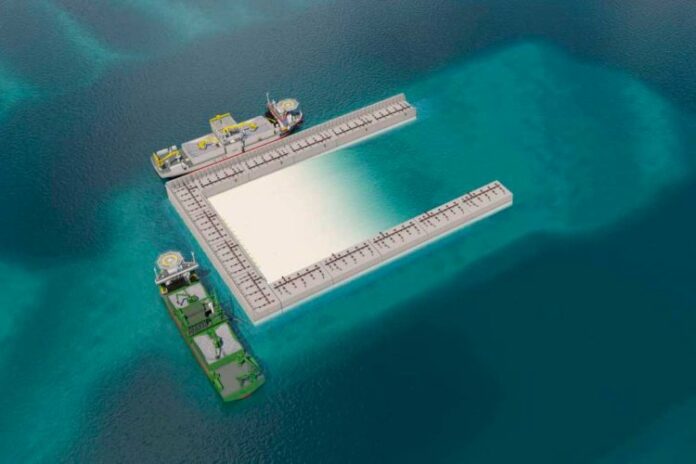
The construction of the foundations of the Princess Elisabeth Island will begin in early 2024 and will last 2.5 years. After that, the installation of the high-voltage infrastructure can be started.

The latter will be necessary for bringing the electricity from Belgium’s future offshore wind zone to shore. The island will also be the first building block of an integrated European offshore electricity grid that will connect various hubs and countries together. For instance, Belgium wants to build additional joint interconnections with Great Britain and Denmark. These will give our country access to the massive amounts of renewable energy that are needed to make our industry less dependent on fossil fuels in the short term.

The tender process for the island started in January 2022. Elia received multiple bids from companies based in Belgium and abroad. On the basis of the defined criteria, the Belgian consortium TM EDISON emerged as the winner. Elements such as technical quality and commercial and contractual conditions played a significant role. Attention to safety also played a decisive role. In addition to a specialised fleet, DEME and Jan De Nul hold experience and expertise in the field of dredging, land extension, coastal protection and civil engineering. 

The Princess Elisabeth Island will be the world’s first artificial energy island that combines both direct current (HVDC) and alternating current (HVAC). The island’s high-voltage infrastructure will bundle the wind farm export cables of the Princess Elisabeth zone together, whilst also serving as a hub for future interconnectors with Great Britain (Nautilus) and Denmark (TritonLink). These are so-called ‘hybrid interconnectors’ that have a dual function and are therefore more efficient. They facilitate the exchange of electricity between countries and are also connected with gigantic offshore wind farms in the North Sea that will in due course provide our country with large volumes of renewable energy.

The energy island will be located about 45 kilometres off the coast. The area set aside for the installation of the electrical infrastructure will be approximately 6 hectares in size, which is equivalent to about 12 football pitches. The artificial island will be located within the Princess Elisabeth wind zone and will be constructed from concrete caissons filled with sand. A small harbour and helicopter platform will also be provided in order to allow maintenance crews to visit the island. The energy island has received funding from the European Covid Recovery Fund. The Belgian government decided to award the island with a grant of approximately €100 million.

Now that the construction contract has been awarded, the design of the island can be finalised. The construction of the island will start in early 2024 and will continue until August 2026. The caissons will be built and installed in 2024 and 2025. These will form the contours of the island. After that, the base of the island will be raised and prepared for the construction of the electrical infrastructure. It will be connected with the new offshore wind farms and with the Elia onshore grid. In order to deliver the additional electricity to consumers, it is crucial that the Ventilus and Boucle du Hainaut grid reinforcement projects are realised at the same time. Elia aims to ensure all wind farms are fully connected to the mainland by 2030.

Brazilian terminal goes digital with container stowage

0

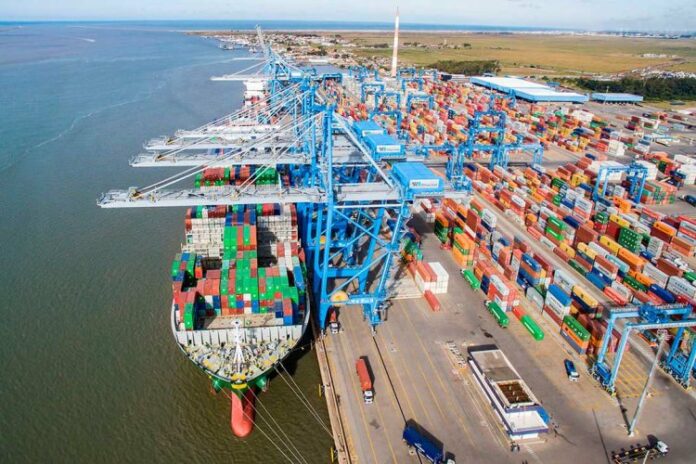
Wilson Sons, the largest integrated port and maritime logistics operator in the Brazilian market, has selected ABB’s Optical Character Recognition (OCR) system for ship-to-shore (STS) gantry cranes at Rio Grande container terminal, including the QuayPro module to digitalize container stowage confirmation processes. 

The company has been using ABB’s automated gate systems both at its Rio Grande and Salvador container terminals since 2013. Adding Crane OCR with QuayPro to the existing gate system supports their vision to automate and digitalize terminal processes.

The ABB Crane OCR solution automates the process of capturing data as containers are loaded and discharged by STS cranes. Using ABB’s advanced AI imaging technology, the system captures container numbers, ISO codes, door orientation, bolt seal presence and hazardous material labels, as well as recording images for damage inspection purposes. With the exception management system clerks can correct or adjust transactions in real time from a remote location. The solution also includes ABB MatchMaker™ which identifies the terminal trucks, allowing for the automated handoff between crane and terminal vehicles.

“ABB Crane OCR gives us an efficiency edge while the ability to streamline the stowage process automatically represents a productivity differentiator,” said Giovanni Phonlor, Operations Director of the Rio Grande terminal. “Minimizing the risk of error on data entry means more efficient operations. Technology works hand in hand with leaner, greener operations, ready for growth in traffic and in vessel capacity,” he added.

The combination of ABB Crane OCR and the QuayPro module makes it possible to streamline the stowage confirmation process, with increased productivity as a result. The module determines the actual stowage position of containers during vessel loading operations, providing input to the terminal operating system to create an accurate outbound BAPLIE (bayplan/stowage plan occupied and empty locations message) file, in addition to confirming the accuracy of inbound stow positions. Any deviation from the load or discharge plan is reported in real time enabling the terminal to adapt to dynamic variations. In addition, crane drivers get audio-visual work instructions.

“The new QuayPro module is more than an extension of the OCR system; it will change the way container terminals operate. We are proud to further strengthen our relationship with Wilson Sons and to see the positive impact of our technology on the Rio Grande container terminal operations,” said Richard Micheli, Product Line Manager OCR, ABB Marine & Ports.