-3.2 C
New York
Home Blog Page 323

Kongsberg to supply propulsion systems for the Philippine Navy’s new offshore patrol vessels

0

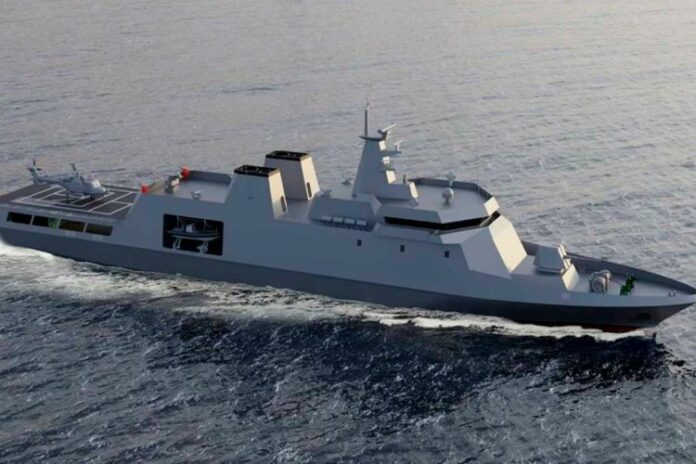
Each propulsion set will consist of twin KONGSBERG Kamewa Controllable Pitch Propeller (CPP) 86 A/5 D-B systems, as well as shaft lines, hydraulic power units, local operating panels, and accessories. The first shipset will be delivered in August 2024.

The six new offshore patrol vessels (OPVs) are part of a major upgrade to Philippine naval capacity. The new vessels are to have a displacement of 2,450 tonnes, maximum speed of 22 knots, 15-knot cruising speed and a range of 5,500 nautical miles. The vessels will be able to provide long range patrol capability.

“Our propulsion equipment is vital to the performance of these sophisticated new vessels for the Philippine Navy,” said Ottar Ristesund, Senior Vice President, Propulsion and Engine Sales, Kongsberg Maritime. “We are proud to secure this important order for Kongsberg Maritime – it showcases our good and strong collaboration with our clients.”

Kyung-Hoon Lee, Senior Sales Manager for Kongsberg Maritime Korea, said that good business cooperation with HHI-EMD helped Kongsberg Maritime secure this ground-breaking new contract.

“Some years back we discussed our CPP business cooperation with HHI-EMD (Hyundai Heavy Industries Engine & Machinery) to make a package proposal to HHI-EMD for their own 4-stroke engine (“HiMSEN Engine”) to meet market demands,” said Lee. 

The good business cooperation has now led to securing the contract for these propulsion systems.

Petrobras and Equinor sign agreement to evaluate seven offshore wind projects in Brazil

0

The letter of intent expands the cooperation between the two companies to assess the technical, economic, and environmental feasibility of seven offshore wind power generation projects off the Brazilian coast with the potential to generate up to 14.5 GW.

With these studies, the expectation is to advance in the country’s energy transition projects.

“This agreement will pave the way for a new frontier of clean and renewable energy in Brazil, taking advantage of our country’s significant offshore wind potential and boosting our trajectory towards the energy transition. We will combine our world-renowned offshore technological innovation capacity and our experience in the Brazilian electricity generation market with Equinor’s expertise in offshore wind projects in several countries. It is worth mentioning, however, that the phase is for studies and the allocation of investments depends on in-depth analyzes to assess their viability, in addition to regulatory advances that will allow the authorization processes for the activities, to be carried out by the Union”, said Petrobras president and CEO Jean Paul Prates.

The agreement is the result of the partnership signed between Petrobras and Equinor in 2018 – and had its scope expanded beyond the two wind farm opportunities – Aracatu I and II (located on the coastal border between the states of Rio de Janeiro and Espírito Santo), initially planned.

In addition to these two projects, the new agreement provides for an assessment of the viability of wind farms Mangara (on the coast of Piauí); Ibitucatu (coast of Ceará); Colibri (on the coastal border between Rio Grande do Norte and Ceará); besides Atobá and Ibituassu (both on the coast of Rio Grande do Sul) – in a total of seven projects, effective until 2028.

Zeaborn transforms fleet operations with ShipIn’s AI-powered FleetVision platform

0

With operations in various locations across Europe and Asia to represent shipowners, Zeaborn wants to take a unified approach to enhance transparency, efficiency and drive better outcomes. 

The decision to implement ShipIn System’s digital platform onboard Zeaborn-managed vessels aims to add value to existing safety and operational compliance, as well as support overall performance goals. 

ShipIn’s patented FleetVision™ solution delivers visual data in near real-time, which is shared seamlessly between ship and shore, providing actionable insights into areas such as Bridge conduct, safety, security, cargo handling, and maintenance across all fleet operations. This is achieved by harnessing AI-powered cameras and visual analytics to assist onboard and on-shore teams in identifying hazards, removing obstacles, and gathering information to create processes that prevent future issues from occurring. 

Stefan Schindler, Senior Vice President Projects and Performance of Zeaborn Ship Management, noted:

“After an intensive operational pilot phase on board different vessel types, we’re thrilled to partner with ShipIn, with the ultimate target to implement FleetVision™ across our managed fleet. ShipIn has already added significant value to our organization, and we strongly believe this solution will improve transparency, safety, and security, thus improving overall operations for our entire fleet.

“Furthermore, safety is a part of our DNA and value proposition. The safety of our workforce and the continuous training of various critical safety situations on board, including new tools and software, is also a part of our ESG strategy as a responsible third-party ship manager. FleetVision™ gives us the opportunity to enhance the safety awareness of our most important asset, our colleagues on board, on a real case basis.”

Osher Perry, CEO and Co-Founder of ShipIn Systems, added:

“Seafarers’ workload is continuously increasing, without the tools necessary to help them do their jobs efficiently and safely. ShipIn bridges that gap by providing a single platform for crew, managers and owners to collaborate on the same information in real time. We’re delighted that Zeaborn recognizes the value of our platform, and we look forward to a fruitful, long-lasting collaboration.”

With AI-powered cameras and real-time visual analytics, FleetVision™ translates tens of thousands of hours of footage per vessel each month into real-time intelligence that shapes behavior onboard – increasing safety, reducing risk, and enhancing productivity. In addition to operational insight, the analytics dashboard centralizes all data so that there is a consistent source of information for performing remote audits and benchmarking performance to help track ROI. 

Marine biofuel demonstration on LPG carrier completed

0

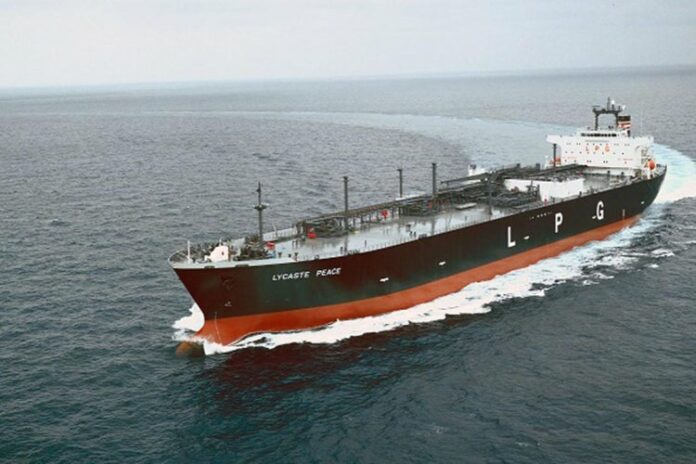
Astomos Energy Corporation (Astomos) and NYK Line have completed a pilot on the liquefied petroleum gas (LPG) carrier Lycaste Peace (owned by NYK Line and chartered by Astomos), bunkering FAME B24 marine biofuel in Singapore. 

The test voyage was completed on February 26. The demonstration is part of a project to establish an assurance framework for the supply chain of sustainable biofuels led by the Global Centre for Maritime Decarbonisation (GCMD), a non-profit organization in Singapore that aims to support the decarbonisation of the shipping industry.

In this demonstration test, Astomos and NYK Line, together with the biofuel bunker supplier, proved that the sustainable biofuels in this case is traceable along the supply chain, by tracking the transportation of biofuel from the place of production to Singapore, blending the biofuel with conventional fuels, the site of bunkering, and management of the blended fuels.

Biofuels can be used without modifying the existing ship’s engines and port infrastructure. Furthermore, although biofuels generate carbon dioxide (CO2) when combusted, they are considered carbon-neutral because they are made from biomass and feedstock, such as waste cooking oil. So biofuels are expected to be one of the most promising next-generation fuels for decarbonization.

This project, announced at the end of July 2022, involved Astomos and NYK Line, as part of a consortium consisting of 19 industry partners and 13 vessels, including container ships, tankers, and bulk carriers, bunkering in five supply chains. The trials aim to establish a framework that provides transparency in the supply chain of marine biofuels from upstream to downstream in order to ensure their wider adoption by the industry. The framework will help to establish supply chain transparency for next-generation fuels other than biofuels, such as ammonia.

Ørsted joins Global Offshore Wind Alliance

0

GOWA is a new global organisation that brings together governments, the private sector, international organisations, and other stakeholders to accelerate the deployment of offshore wind power. 

The alliance was launched last year at COP27 by the International Renewable Energy Agency (IRENA), the Global Wind Energy Council (GWEC), and the Danish government.

Mads Nipper, Group President and CEO of Ørsted, says:

“GOWA holds magnificent potential because it enables countries and governments to share learnings and best practices within offshore wind and thereby save valuable time by speeding up the much-needed global build-out of offshore wind. At Ørsted, we’re happy and proud to join GOWA to share our expertise and help governments build offshore wind faster, while also unlocking its many benefits to the climate, nature, and local communities.”

“Today, it often takes longer to plan than to build an offshore wind farm. Governments and the private sector must collaborate to create an enabling regulatory environment and streamline permitting processes. Through GOWA, we can fast-track offshore wind deployment and help emerging markets off to a good start. I encourage our industry peers to also join GOWA and share their learnings.”

GOWA member countries include Australia, Belgium, Colombia, Denmark, Germany, Ireland, Japan, the Netherlands, Norway, Portugal, Spain, Saint Lucia, the UK, and the US, and more countries are expected to sign up.

According to forecasts by the IEA and IRENA, 2,000 GW of installed offshore wind capacity will be needed by 2050 to keep the 1.5 °C scenario within reach and achieve net-zero by 2050. According to a World Bank analysis based on The Global Wind Atlas, more than 71,000 GW of technically extractable offshore wind resources have been identified worldwide. Nonetheless, global installed offshore wind capacity was only 57 GW in 2021.

By joining GOWA, Ørsted seeks to share knowledge and best practice to help meet the alliance’s ambition of seeing at least 380 GW offshore wind capacity built by 2030 and an installed capacity increase of at least 70 GW per year from 2030.

Wärtsilä to supply systems for new Very Large Ethane Carriers in China

0

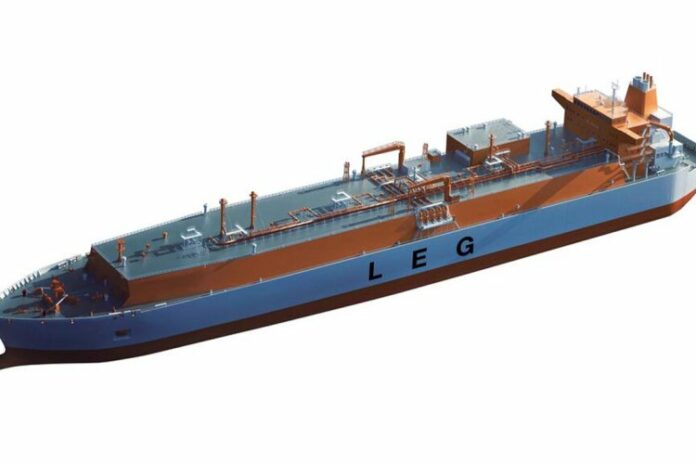
The technology group Wärtsilä will supply the Cargo Handling and Fuel Supply systems for four new Very Large Ethane Carrier (VLEC) vessels. The order was booked into Wärtsilä’s order intake in February 2023.

This latest order strengthens Wärtsilä’s position as a market leader for systems of this type for large ethane carriers. The company’s depth of experience was cited as a key consideration in the award of this contract.

The new VLECs are mainly designed for the transport of ethane, and will use ethane as fuel. In addition to the Cargo Handling and Fuel Gas Supply systems, Wärtsilä will also provide basic and detailed engineering services, along with supervision and commissioning at the yard. The equipment is scheduled for delivery to the yard during the first half of 2024, and the first vessel is expected to commence commercial operations in autumn 2025.

“The aim with all our products is to secure good quality and functionality that supports optimal operations for the vessel, while adding value to the customer’s business. Our track record speaks for itself, and this contract further extends our market position,” says Harald Øverland, Sales Manager, Cargo Handling and Fuel Supply Systems, Wärtsilä Gas Solutions.

Green ammonia import terminal to open in Liverpool

0

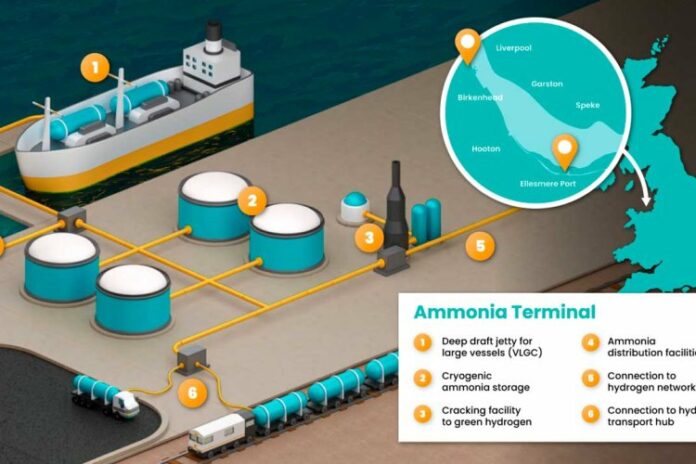
The new terminal, which will be an expansion of Stanlow Terminal’s existing facilities, will provide the connecting infrastructure to enable significant volumes of green ammonia to be imported into the UK.  

Green ammonia is a highly effective liquid carrier of hydrogen, which allows for the safe and cost-efficient transport of green hydrogen at scale.  The new terminal will enable the import and storage of more than one million tonnes per year of green ammonia for onwards distribution into the UK or conversion back to green hydrogen for supply to the North West’s industrial customers.

The green hydrogen produced will be used by a wide range of industries in the region, including as a sustainable fuel for marine shipping and to help decarbonise energy usage and, in doing so, contribute significantly to the UK’s net zero ambitions.  

Green ammonia is a crucial component in the development of the global hydrogen economy and is expected to develop into one of the world’s major sustainable energy commodities. Once operational, the new terminal will put Stanlow Terminals at the heart of the global hydrogen energy market, with ready access to large scale international green ammonia imports. This can include imports from Essar Energy Transition’s own 1 GW green ammonia project in Gujarat, India.

The new terminal will be advantageously located within Stanlow Terminal’s existing facilities, where it will benefit from the Port of Liverpool’s unique combination of competitive geographical location, deep water access and maritime infrastructure which is capable of handling the largest gas carrier vessels.  The terminal will also benefit from direct connectivity with Hynet, the UK’s leading low carbon hydrogen project in terms of scale and speed to market.

Feasibility studies are currently being undertaken, with the terminal currently scheduled to commence operations in 2027.

The development of the green ammonia terminal is the latest phase in Stanlow Terminal’s long-term plan to become the UK’s largest bulk liquid storage and energy infrastructure solutions provider.

Michael Gaynon, Chief Executive, Stanlow Terminals, commented:

“This new terminal is the latest milestone in Stanlow Terminal’s and Essar’s ongoing commitment to leading the UK’s low carbon transformation. By investing in new energies infrastructure and building a secure supply chain of green ammonia into the UK, we are building on our expertise in storing and blending of bulk liquids to put the North West economy at the forefront of the UK’s energy transition to net zero.”

Prashant Ruia, Director Essar Capital, said

“Essar Energy Transition is putting the UK at the forefront of the low carbon energy transition. We’re excited to be sharing more detail of our investment plans.  The new terminal, provides the connecting infrastructure to enable Essar’ ambition to be a major hub of low carbon energy innovation and a leader in production globally.”

Claudio Veritiero, Chief Executive Officer of Peel Ports, said

“The Port of Liverpool is one of the world’s leading ports and we welcome Stanlow Terminals’ investment in its exciting future. Liverpool’s strategic location means it’s perfectly placed to support energy transition with exciting projects like this major new open access import terminal for green ammonia.”

Chris Shirling-Rooke, Chief Executive Officer of Mersey Maritime, said

“As the fastest growing maritime region in the UK, the Mersey is once again at the forefront of global maritime innovation. We welcome this announcement from Stanlow Terminals and welcome the commitment to support our environmental goals, and to see a positive impact on jobs and growth in our coastal communities.”

Equinor acquires Suncor Energy UK

0

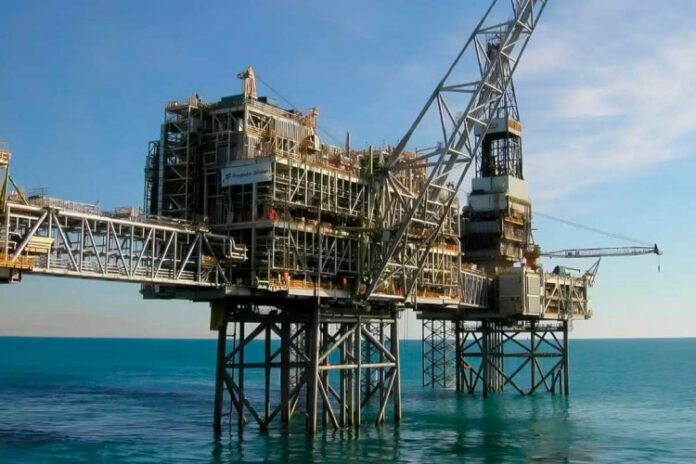
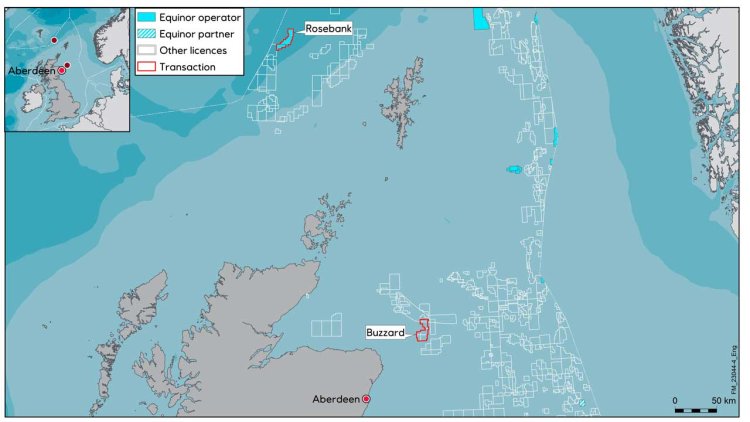
The transaction includes a non-operated interest in the producing Buzzard oil field (29.89%), an additional operated interest in the Rosebank development (40%) and Suncor employees based in the UK who work with these assets.

Philippe Mathieu, executive vice president for Exploration and Production International, said:

“This transaction is in line with Equinor’s strategy of optimizing our oil & gas portfolio and deepening in our core countries. We are building on our longstanding position as a broad energy partner to the UK, strengthening our position as a reliable energy provider in Europe, while continuing to deliveron our ambition of becoming a net-zero company”.

Equinor has been a reliable, broad energy partner to the UK for almost 40 years, developing domestic energy resources, generating low-carbon electricity, and supplying the equivalent of 29% of the UK’s total natural gas demand in 2022. Equinor is looking to further support the UK economy by investing billions in crucial energy infrastructure, including offshore wind, carbon capture and storage (CCS), hydrogen, power, and oil and gas.

The transaction will add approximately 15,000 barrels of oil equivalent per day in equity share in 2023 and create synergies with Equinor’s existing operations.

The transaction will increase Equinor’s operated share of the Rosebank development with an additional 40%. Rosebank is being developed in line with the UK Government North Sea Transition deal and the Rosebank partners are targeting a final investment decision in 2023, subject to the UK Government’s and partners’ approval. USD 250 million of the consideration is contingent upon a final investment decision for Rosebank.

The transaction is subject to relevant regulatory approvals.

Final acceptance audit of Wilhelmshaven LNG terminal successful

0

On February 28, 2023, the final acceptance audit took place at the Wilhelmshaven LNG terminal by the responsible authorities under the leadership of the Oldenburg State Trade Supervisory Office (GAA Oldenburg). 

This final acceptance is stipulated in the BImSchG approval notice (BImSchG = Federal Immission Control Act) dated December 16, 2022.

Acceptance took place without any objections.

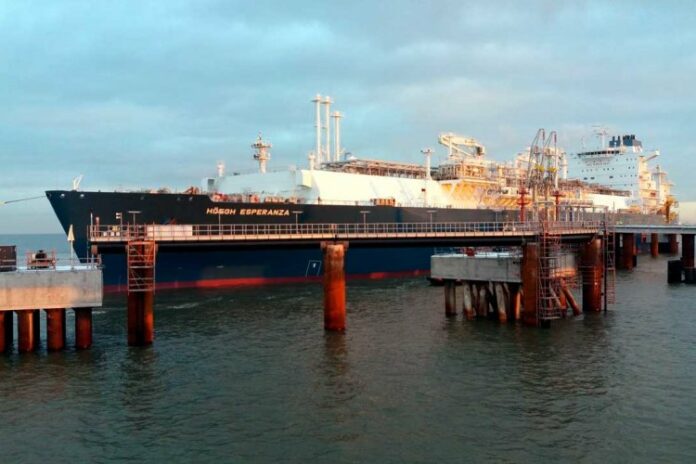
The facility was built by Uniper in record time and became the first German LNG import terminal to start operations on December 21, 2022, initially in trial operation. Since then, one LNG tanker is unloaded every week and the liquefied natural gas (LNG) is regasified at the FSRU “Höegh Esperanza” and injected into the natural gas grid from there.

It is currently the only LNG import terminal that contributes reliably and with significant volumes of natural gas to the security of supply in Germany. Around six percent of Germany’s gas demand can be met via the terminal. Uniper, as the installer and operator of the terminal, will continue to play a key role in ensuring that there are no gas shortages in Germany in the future, especially in the coming winter of 2023/24.

Since the start of commercial operation on January 15, 2023, the federal government company, Deutsche Energy Terminal GmbH (DET), has assumed the role of plant operator and permit holder. LNG Terminal Wilhelmshaven GmbH (LTeW) has taken over the task of technical and commercial management of the LNG terminal on behalf of DET.

Future information will be provided by LTeW GmbH.

Fincantieri to build four vessels for new client Edda Wind

0

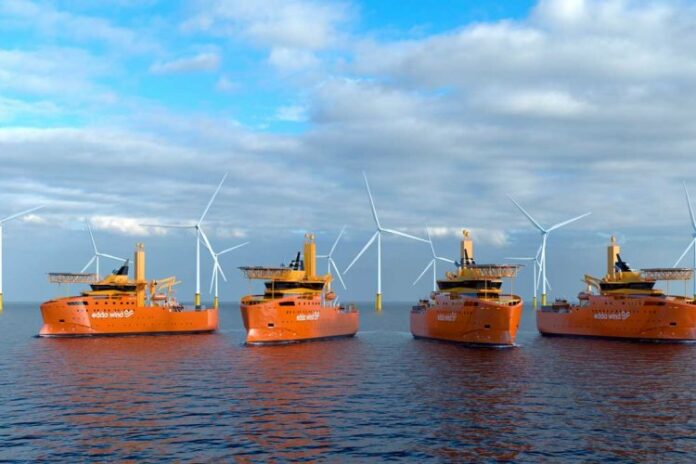
Fincantieri, through its subsidiary Vard, has signed the contract with a new client, Edda Wind, for the construction of four Commissioning Service Operation Vessels (CSOV). 

The first two vessels are expected to be delivered in Q1 2025, the third in Q2 2025 and the fourth in Q1 2026.

The contract has a total value of approximately euro 250 million.

Edda Wind has also secured options for 2+2 additional CSOVs at the same contract prices, with deliveries in 2025 and 2026, if declared.

Pierroberto Folgiero, CEO of Fincantieri, stated:

“We are particularly satisfied with this result, which meets many directions of our development. It restates the value of the offshore wind sector as the third cornerstone of our core business, alongside cruise and defense, adding a new and ambitious client to our portfolio. Furthermore, the order confirms Fincantieri’s role as a technological partner for companies intending to strengthen their fleet with cutting-edge products. A double recognition by the market, which reflects the industrial identity that our Group intends to affirm with determination”.