-7.4 C
New York
Home Blog Page 322

Houlder collaborates on ‘Winds of Change’ FastRig retrofit project

0

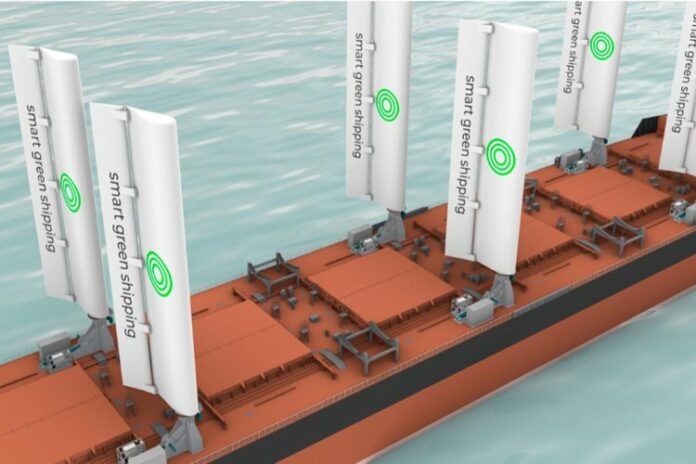
Design and engineering consultancy, Houlder, will participate in the ‘Winds of Change’ project led by Smart Green Shipping (SGS). The project will see an SGS FastRig wing sail retrofitted to a large vessel.

The project recently received funding from the UK Department for Transport as part of the Clean Maritime Demonstration Competition Round 3 (CMDC3) – delivered in partnership with Innovate UK. The collaboration involves the University of Southampton, SGS, Humphreys Yacht Design, Houlder, Malin Group, Caley Ocean Systems, Argo Engineering, Lloyd’s Register, MOL DryBulk and Drax. It will run from April 2023 to 2025.

Houlder’s role will span engineering system integration and vessel performance monitoring. Houlder will initially complete a vessel survey and then study the integration feasibility of the FastRig on the ship, identifying any safety risks and ensuring that regulatory and class society technical requirements are addressed in full. It will further develop the concept design for the integration of the FastRig, before working closely with Malin Group and Caley Ocean Systems on the installation and vessel modifications required.

Subsequently, the Houlder team will support the sea trials and demonstration of the wing sail. Sensors will be installed to monitor the performance of the vessel and its engine throughout operations, both before and after the FastRig has been installed, and when the wing sail is both stowed and active. This monitoring will allow calculation and verification of the power savings, and therefore the fuel and emission savings, available from the FastRig, as well as specific items of technical interest such as leeway angle, heel angle and motion damping due to its presence. The data collection and analysis will also support SGS’s computational simulation requirements.  

Arun Pillai, Project Director of Houlder, commented:

“At Houlder, we have extensive experience in innovative design and engineering projects with sustainability at their core. We recently interviewed shipowners on maritime clean technology adoption – and a lack of accurate, verifiable and thorough performance data was a key barrier to commercialisation. Together, we are making sure that the performance data of the innovative FastRig wing sail is useful and dependable.”

Diane Gilpin, CEO of Smart Green Shipping, said:

“We are pleased to have received backing from the UK Department for Transport, via CMDC3, for our Winds of Change project. We look forward to continuing to highlight the value and safety of our FastRig wing sail to the shipping industry, particularly as we complete ongoing key project milestones. One such milestone is the calculation and verification of the fuel savings, and resulting emissions reductions, offered by FastRig. We are grateful to have Houlder’s support in this and throughout the project.”

The ‘Winds of Change’ project will act as a testbed and showcase for the FastRig wing sail. Looking ahead, the outcome of this project will be a clean technology with clear, proven safety credentials and processes, as well as verified, thorough data on achievable emissions reductions. The solution can then be deployed across the shipping industry to support the decarbonisation of the global fleet.

Yinson and AVEVA sign MoU to develop sustainable and autonomous FPSO solutions

0

Yinson Production has entered into a Memorandum of Understanding (MOU) with AVEVA. The agreement builds on the companies’ existing relationship and aims to enable YP to develop fully autonomous and sustainable Floating Production Storage and Offloading (FPSO) solutions.

AVEVA’s software, in combination with YP’s FPSO expertise and extensive data sets will enable YP to operate its FPSO with minimal human involvement, and with a vision for them eventually to become fully autonomous. The key to developing fully autonomous FPSO solutions is through the adoption of the digital twin, a virtual model designed to accurately reflect the floating structure. Leveraging AVEVA’s solutions, YP will enhance its operational strategy and optimise efficiencies by utilizing analytics, machine learning (ML), and Artificial Intelligence (AI) to enrich the digital twin across the entire asset lifecycle.

Autonomous technology can greatly enhance the energy and resource efficiency of assets, whilst significantly lowering emissions. Furthermore, autonomous technologies can reduce human error and manual intervention, leading to stronger safety and environmental performance.

YP Chief Executive Officer Flemming Grønnegaard commented,

“The adoption of digital technologies will be crucial to accelerate the implementation of sustainable operations across all industries. With AVEVA’s leading software and domain expertise and YP’s deep knowledge of FPSO design, operations and marketplace, this partnership will allow us to create a sustainable, differentiated offering that can pave the way for an industry-wide shift to safer, more sustainable, low carbon operations.”

The current MOU expands on YP’s existing partnership with AVEVA, where AVEVA PI System is already implemented on FPSO assets in the Yinson fleet, as well as AVEVA Engineering tools being leveraged for design and construction.

“The industry has a responsibility to take action towards achieving net-zero carbon emissions, and we are committed to helping our customers and partners unlock the benefits of digital transformation to drive operational efficiency and sustainability,” said Emon Zaman, Asia Pacific Senior Vice President, AVEVA. “We are pleased to be partnering with YP to develop autonomous and sustainable FPSO solutions. It will provide enhanced visibility of integrated engineering and operational data, improved critical decision-making and help YP realise its vision of becoming carbon neutral by 2030 and net zero by 2050.”

Jan De Nul, Tractebel, and DEME present new offshore floating solar technology

0

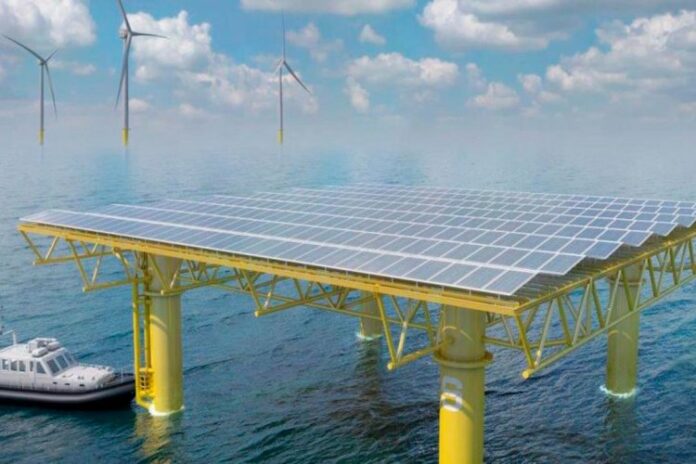
Belgian partners Jan De Nul, Tractebel, and DEME introduce SEAVOLT©, a new offshore floating photovoltaic (PV) technology. This technology is a result of joint research and development, combining the expertise of solar, environmental and offshore experts.

SEAVOLT technology (patent pending) can withstand harsh offshore conditions while creating large surfaces that are protected from the waves. The modular design allows for easy adaptation to different sites and demands. Benefits include local renewable energy production and the possibility to install the panels in offshore windfarms (where local authorities permit multi-use concessions). Another advantage is the addition of large volumes of renewable energy capacity in a relatively short time.

The partners, together with Ghent University, started the VLAIO-funded research project MPVAQUA (Marine PV Aquaculture) within the frame of Blue Cluster four years ago. A marine floater concept was developed together with initial research on effects on the marine ecosystem, integration of aquaculture, and a financial assessment. Following laboratory testing, the partners are currently developing an offshore test installation which will be launched off the Belgian coast in summer 2023. Furthermore, in collaboration with RBINS, parallel tracks focusing on the ecosystem, the environment and cost effectiveness are being launched with the support of the Energy Transition Fund and the Federal Relaunch Fund.

The interest from the PV sector in offshore locations stems from land scarcity, combined with the need for local production and rapid acceleration of the energy transition. Photovoltaic technology is developing faster than ever: The “magic” 1-TW milestone of installed capacity was reached in 2022, the need for local renewable energy production is increasing drastically, and the complementarity between wind and solar technology has been confirmed all over the world. As authorities allow for multi-use concessions and the grid infrastructure shows good potential for combined use, the addition of offshore floating solar to current and future offshore wind sites presents an opportunity to add large volumes of additional renewable energy.

Philippe Hutse, Offshore Director at Jan De Nul Group:

“We are thrilled to launch the SEAVOLT technology, which represents the culmination of years of hard work and innovation in offshore PV technology together with our partners. SEAVOLT is a reliable, cost-effective, and environmentally friendly solution that can be deployed in even the harshest offshore conditions. As the offshore wind industry continues to grow, we believe that it has the potential to play a crucial role in optimizing the use of space on the sea by complementing offshore wind farms. We are excited to see how SEAVOLT will shape the future of renewable energy and contribute to a more sustainable future.”

Philippe Van Troeye, CEO of Tractebel:

“In the same way that we have seen wind technology moving from land to the sea, we are seeing the extension of the whole energy system towards offshore locations. Along with offshore green fuel production, offshore energy islands, interconnectors and potential solutions for energy storage, we believe offshore floating PV has an important role to play in the acceleration of the energy transition. While this technology is still in its infancy, we are convinced that with such strong partners on board we are giving SEAVOLT all possible chances to succeed.”

Luc Vandenbulcke, CEO of DEME-Group:

“With our focus on working towards a sustainable planet, DEME is again showing its pioneering spirit. By working closely with like-minded partners, we have developed SEAVOLT – a new renewable energy solution which has great potential to accelerate the clean energy transition. DEME has decades of knowledge about what it means to operate in an offshore environment, and we are already the leading contractor in the offshore wind sector. We believe combining solar and wind energy offshore provides fantastic opportunities for the future.”

Wärtsilä to deliver its first CCS-Ready scrubber systems

0

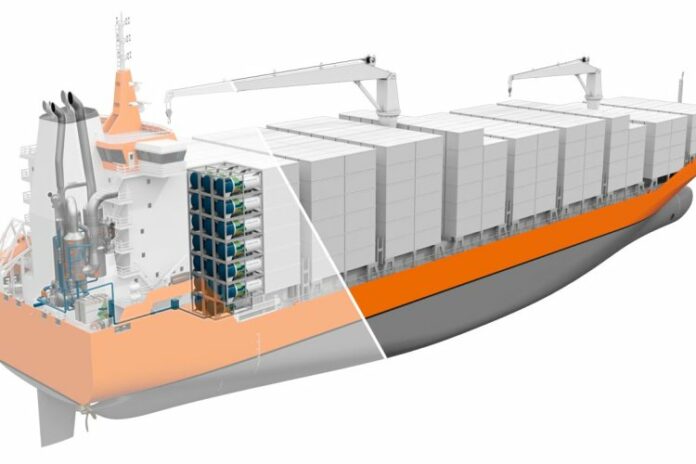
The technology group Wärtsilä has received its first order for carbon capture and storage-ready scrubber systems – CCS-Ready scrubbers – the company has announced. The order was booked in Wärtsilä’s order intake in November 2022 and the delivery is expected to take place in 2023. 

The scrubbers are termed CCS-Ready because, as part of their installation, Wärtsilä will perform additional design and engineering work to ensure that future retrofits for a full CCS system on the vessels have already been accounted for during the newbuilding construction stage.

Wärtsilä will take measures to ensure adequate space for the future installation of CCS system, incorporate considerations for minimising idle load and optimising utilities, and prepare the control and automation system accordingly. CCS-Ready scrubbers will also be designed for integration with a Particulate Matter filter.

Having a CCS-Ready solution assures that the undisclosed ship owner has continued regulatory compliance for SOx emissions today and opens the door to smooth CCS system adoption in the future.

By installing scrubbers that have been designed with the space and capabilities to have a CCS unit added, Wärtsilä is enabling ship owners to futureproof their existing assets, while remaining competitive and compliant.    

Scott Oh, Director at Wärtsilä’s Exhaust Treatment Asia, said:

“We are very excited to announce this world-first order for our CCS-Ready scrubber solution. By investing in a CCS-Ready scrubber, ship owners will futureproof their assets and enable a smooth transition to CCS adoption once the technology is mature in the very near future. CCS is one of the key solutions to enable maritime decarbonisation in a short timeframe, and we look forward to progressing our technology further.”

Wärtsilä is currently testing its CCS system at 70% capture rate and a pilot installation will take place within the next twelve months.

RWE’s Sofia offshore wind farm to use recyclable blades

0

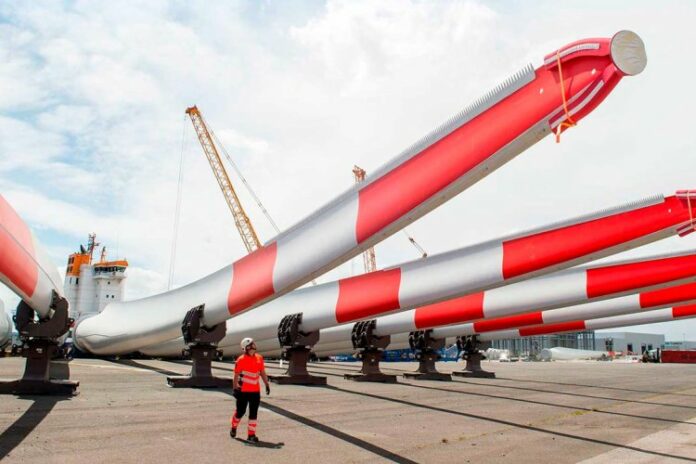
RWE announces that its UK flagship offshore wind project Sofia, in construction off the North East coast, has signed an agreement with Siemens Gamesa to deploy recyclable blades on 44 of its 100 turbines. 

This follows the successful installation of recyclable blades at RWE’s Kaskasi wind farm off the German island Heligoland.

In total, 132 individual recyclable blades will be installed at the 1.4 gigawatts (GW) offshore wind project. This is the maximum available given the current market capacity for the new specialist resin used in the blades.

Sven Utermöhlen, CEO RWE Offshore Wind:

“Sofia is our largest offshore wind farm to date and this world first is a significant step in taking the long-term sustainability of offshore wind farms to the next level. RWE believe this is the right direction for the future of our sector, which has sustainability at its core.” 

Clark MacFarlane, UK Managing Director, Siemens Gamesa:

“When we began working with RWE on installing our recyclable blades for their Kaskasi project, we knew that we had taken the first major steps on delivering a major change to the renewable wind sector. Having the opportunity to produce even more for Sofia is fantastic and fully demonstrates our and RWE’s focus on developing and delivering even greater levels of sustainability for renewable generation globally.”

While many components of a wind turbine, such as the tower and nacelle, already have established recycling practices, the composite materials used in wind turbine blades have been more challenging to recycle. This difficulty is primarily because they use a specific resin to bind all their elements together. 

In its recyclable blades, Siemens Gamesa will use a new resin type, with a chemical structure that can be efficiently separated from other elements. The process protects the properties of the materials and so allows them to be reused in new casting applications, for example in the automotive industry, or in consumer goods like suitcases and flatscreen casings.

As part of the agreement, 50 percent of Sofia’s turbine blades will be produced in the UK at Siemens Gamesa’s Hull factory. This supports local supply chain ambitions and reinforces the growing role the Humber region has to play in supplying the growing offshore wind industry.

Other technologies are being developed to recycle conventional turbine blades that reach the end of their lifecycle.  However, these new blades, made recyclable from the outset, represent a key next step in terms of maximising sustainability and environmental benefits.

ARC and Liberty partner with Orca AI

0

Maritime technology company Orca AI has secured deals with US Ro-Ro operators Liberty Maritime Corporation (Liberty) and American Roll-On Roll-Off Carrier (ARC) to deploy its automated situational awareness platform across their respective fleets. 

Liberty was one of the early collaborators with Orca AI, deploying the first Orca AI unit on a US flag Ro-Ro vessel (Liberty Pride) in 2019.

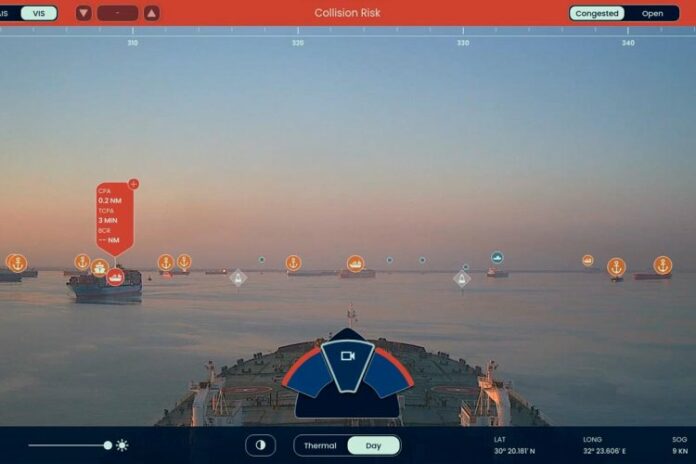
The platform, which is installed on Liberty’s ro-ro vessels and on ARC’s entire fleet, acts as a fully automatic watch-keeper, powered by computer vision and deep learning algorithms that detect, track and classify navigation-applicable targets that may pose a risk to the vessel. 

It is operational 24/7, prioritises risk and presents it in a user-friendly interface. An office dashboard also highlights potential high-risk events, providing the operations teams ashore with insights and recommendations that help them to enhance the safety of their fleets. 

Fred Finger, SVP of Operations of American Roll-On Roll-Off Carrier (ARC), commented:

“ARC is pleased to have added Orca AI to our suite of bridge resource tools. This technology brings an additional level of situational awareness to assist our bridge teams in their decision-making process.”

Joshua M. Shapiro, COO of Liberty Maritime Corporation, said:

“We were looking for a solution that allows our operations team and masters to optimise vessel safety while adhering to vessel schedule requirements. We chose to partner with Orca AI to enhance the safety of our operations and to provide our fleet management team a more in- depth understanding of how our ro-ro vessels are performing under various navigational conditions”.

Commenting on the deal with ARC and Liberty, Yarden Gross, CEO and Co-Founder of Orca AI, said:

“We are excited to work with Liberty and ARC, two of the US’ leading ro-ro operators and innovation- driven companies, who understand that technology is a key enabler of safer and more operationally efficient shipping operations.” 

Concrete slip completed for Tilbury’s new 34k tonne grain silo

0

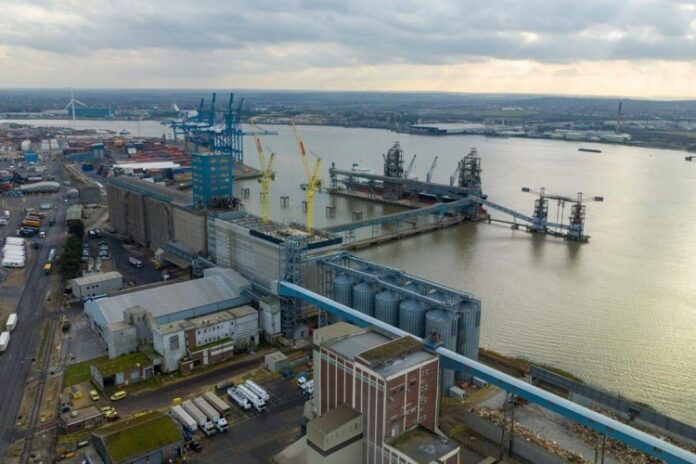
The Port of Tilbury’s Grain Terminal has reached an important construction milestone with the completion of the concrete slip form for the new silo, which will add a further 34,000 tonnes of automated storage at the busy Thames based terminal.

Once the mechanical and electrical fitting is complete, the new concrete silo is expected to be fully operational in January 2024, bringing a combined total storage on site to 134,000 tonnes, underpinning the grain terminal as the UK’s largest import and export grain handling facility.

The new concrete silo will be in addition to the ten steel silos and flat store with a combined storage capacity of 34,000 tonnes, which became operational in September 2022. These steel silos are filled with a 650 tonne per hour transfer conveyor system which also serves the automated filling system for the 14,000 tonne flat store. The transfer conveyor also delivers grain directly from the terminal to two adjacent customer flour mill sites.

The concrete silo rebuild has been undertaken following a fire in 2020.

Peter Ward, Commercial Director at The Port of Tilbury said:

“We are making great progress towards the complete reconstruction of our busy grain terminal. Once the new concrete silo is operational, the Grain Terminal will be back to full capacity on one site.

“Over the past two years, our team has worked hard to ensure that our customers have not experienced any service interruption and we are extremely proud of the high level of service that we have provided for this important industry.”

The Tilbury Grain terminal has been in operation for over 50 years and is a key strategic facility in the South-East of the UK for the grain import and export markets handling over 2 million tonnes of product from around the world. Grain is a key commodity in the UK food supply chain for a number of uses, most notably within the flour milling and bakery industries. The terminal also operates a monthly coastal shipping service from Tilbury to its sister port in Kirkcaldy, Scotland for Carr’s Milling.

MOL and VALE to retrofit a 200,000-ton class bulk carrier

0

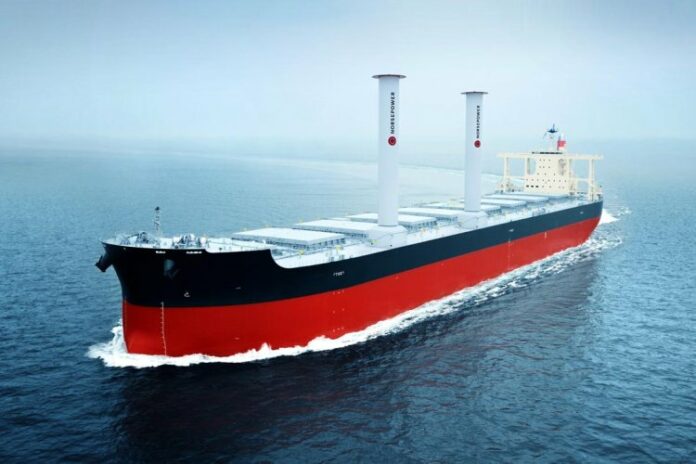
Mitsui O.S.K. Lines and Vale International SA have announced a partnership to retrofit a 200,000-ton class bulk carrier, currently employed under a mid–term contract for transportation of iron ore for Vale, with two 35m x 5m rotor sails produced by Norsepower Oy Ltd.

The installation of the rotor sails is expected in the first half of 2024. 

The Norsepower Rotor SailTM made of lightweight and strong composite material and with a fully automated control system, produces thrust as the wind generates differential pressure around the slewing rotor while the vessel is sailing. 

By applying this solution, the vessel is expected to achieve about 6-10% fuel and GHG emissions reductions, combined with voyage optimisation technology – enabling significant advancements towards decarbonisation goals and reducing fuel consumption.

JF Renewables and TÜV SÜD to support Taiwanese Offshore Wind Project

0

Building on 15 years of renewable energy expertise, JF Renewables is leveraging its experience to provide development-stage guidance on the wind farm being constructed by Foxwell Power Co. This role will also affirm its commitment to fostering Taiwan’s energy transition ambitions.

Partnered with TÜV SÜD, JF Renewables will act as an impartial and independent mediator between Foxwell and the wind turbine generator original engineering manufacturer. JF Renewables’ contract will support TPC Offshore Phase 2 from early construction to development in its first year, with the view to expanding the scope into additional services down the line including operations and maintenance.

JF Renewables will be providing key project management oversight, as well as administering, coordinating, and testing the project. In addition, it will undertake vital Health, Safety and Environment (HSE) management, inspection activities and oversee claims and payment certificates. This ensures that the project operates safely and efficiently, reducing cost to customer, contractor, and owner.

TPC Offshore Phase 2 is a pivotal project for Taiwan’s energy transition against the backdrop of significant offshore wind targets, pandemic-induced delays, and stringent local content requirements.

Matthew Paterson, Operations Director APAC, JF Renewables commented:

“We are delighted to be TÜV SÜD’s trusted partner in the development and delivery of this project to Foxwell. We have a proven track record in ensuring quality and HSE standards, and strong knowledge of the local supply chain and content regulations.”

“For Taiwan in particular, having experienced offshore wind project delays due to supply chain challenges from the pandemic and a lack of local resources, our role is critical to ensure smooth execution and timely delivery within budget. By helping developers and owners to get it right first time, we can speed up the energy transition and bolster energy security for the region while also safeguarding costs for consumers.”

Gary Wang, Wind Business Development Manager, TÜV SÜD, said:

“It was crucial for us to select the right company as our trusted long-term partner, to both facilitate the contractor-developer relationship and to ensure smooth project delivery. With a high level of expertise, JF Renewables will be able to safely optimise construction and development here in Taiwan and fulfil our goals of reducing cost to customer and accelerating the energy transition.”

Maersk Supply Service wins 3-year contract with Petrobras in Brazil

0

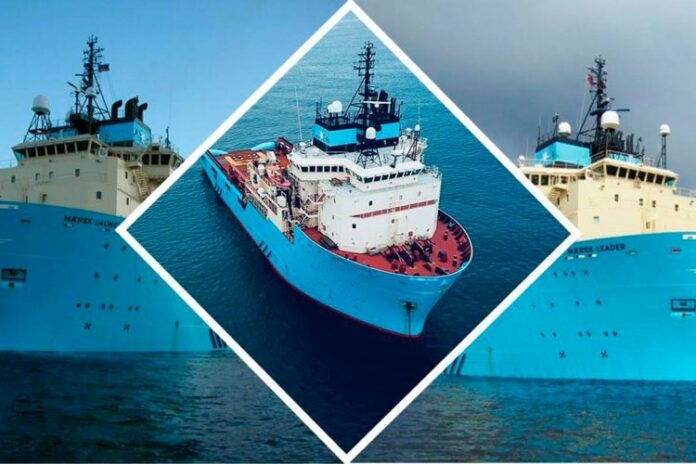
Maersk Leader, Maersk Launcher and Maersk Lancer have been delivered in Brazil. This now sees twelve vessels from the Maersk Supply Service fleet currently serving the Brazilian and Latin American markets.

“Maersk Supply Service is committed to investing in the Brazilian market and to delivering safe, efficient and sustainable solutions for our customers in this strategically important region. We are pleased at the trust Petrobras has again shown in us, and we look forward to continuing our positive collaboration,” says Rafael Thome, Managing Director for Brazil.

This contract comes as Maersk Supply Service continues to consolidate its presence in Brazil, establishing itself as a recognised integrated solutions supplier in the region. It follows a series of solutions contracts for the FPSO Fluminense on behalf of Shell, as well as the Mero 2 contract for Petrobras. 

Since 2017, Maersk Supply Service has expanded its portfolio to delivering EPCI solutions for the safe and efficient fabrication, assembly, and installation of large floating assets, building on its expertise and 50-year legacy of deep-water towing and mooring scopes.