-7.4 C
New York
Home Blog Page 321

Welsh government grants consent for 100-MW Erebus floating wind project

0

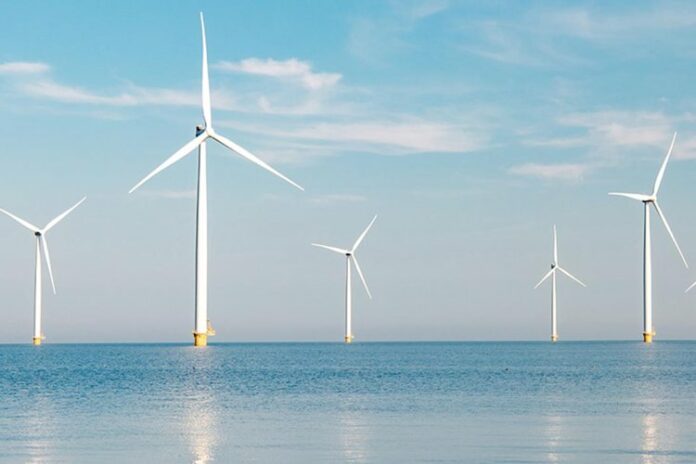
Welsh Ministers have now granted a Section 36 consent with deemed planning permission to Blue Gem Wind to build and operate the Erebus wind farm.

The news follows the recent decision by Natural Resources Wales to provide Blue Gem Wind, the joint venture between TotalEnergies and Simply Blue Group a marine licence. First Minister of Wales, Rt Hon Mark Drakeford, said:

“The Erebus project has the potential to show the world that Wales and the Celtic Sea can deliver renewable energy alongside the sustainable management of our marine resources. In determining the marine license and the planning consents, the Welsh Government and our partners in Natural Resources Wales have enabled this project to move forward to apply for subsidy support from the UK Government.”

Mike Scott, Project Managing Director at Blue Gem Wind, added:

“We welcome the decision from Welsh Ministers to grant the necessary planning consents for project Erebus and have been working with Planning and Environment Decisions Wales and other key stakeholders since 2019 to develop a project that is sympathetic to the natural environment and minimises impacts to local communities and stakeholders. Erebus, which will be the first floating wind farm in Wales, will play a crucial role in advancing the deployment of what will become a globally important low carbon technology.”

Erebus is due to be commissioned in 2026.

Fugro and Petrobras pioneer remote subsea inspection survey in Brazil

0

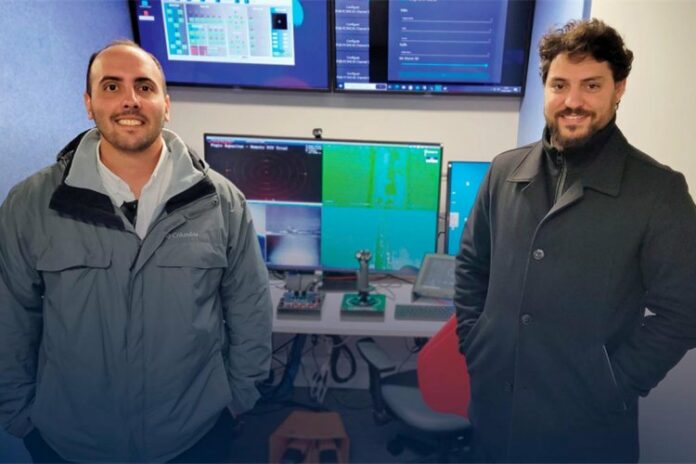
Fugro and Petrobras have successfully completed Brazil’s first-ever remote subsea inspection survey.

This technology trial was carried out by Fugro in collaboration with Petrobras under an existing multiyear contract with the aim of minimising risk and improving sustainability during inspection, repair and maintenance (IRM) projects.

Fugro utilised a remotely operated vehicle (ROV) deployed from the Fugro Aquarius to conduct the survey. Office-based personnel piloted the ROV from an operations centre in Aberdeen, Scotland, instead of from the vessel itself. The approach was informed by Fugro’s remote ROV piloting experience in other parts of the world, and was accomplished using a high-speed datalink provided by Petrobras. For future projects, remote ROV piloting may help Petrobras limit the number of crew deployed to the field, resulting in safer operations with a reduced carbon footprint.

“This landmark project represents a significant achievement in our ongoing work with Petrobras to support safer and more sustainable offshore energy production in Brazil,” said John Chatten, Business Development Manager for Fugro’s marine operations in Brazil. “As the country’s foremost provider of ROV services, we look forward to implementing this approach on future surveys and to bringing additional remote and autonomous innovations to the region.”

Wärtsilä signs Optimised Maintenance Agreement with NPCC

0

The technology group Wärtsilä has signed a five-year Optimised Maintenance Agreement with National Petroleum Construction Company (NPCC), a subsidiary of National Marine Dredging Group (NMDC Group). 

The agreement covers seven vessels in the NPCC fleet and is designed to maximise operational uptime. It will also provide flexibility in maintenance scheduling, which will ease chartering arrangements, while providing long-term cost predictability. The order was included in Wärtsilä’s order book in December 2022.

Based in the United Arab Emirates, NPCC is a major Engineering, Procurement and Construction (EPC) contractor to the offshore oil, gas, and petrochemical industries, and is a well-established customer for Wärtsilä.

The scope of the agreement includes Data-Driven Dynamic Maintenance Planning and 24/7 remote operational support, including Wärtsilä’s unique Expert Insight service. Expert Insight provides predictive maintenance support by combining artificial intelligence (AI) and advanced diagnostics with Wärtsilä’s in-house expertise to identify anomalous behaviour in a ship’s machinery. By identifying potential failures and delivering early indication of equipment deterioration, specialists at Wärtsilä Expertise Centres can remotely provide proactive recommendations for preventing issues from occurring. 

Eng. Yasser Zaghloul, Group CEO of NMDC Group said:

“NMDC Group and its subsidiaries are always keen to strengthen our operations by working with reputable partners and key industry players. This new agreement is yet another important step towards ensuring that we are well-equipped to deliver diverse EPC projects that meet our customers’ objectives.”

Eng. Ahmed Al Dhaheri, CEO of NPCC, said:

“Increasing availability and reducing operational risks is a priority for our company, and this agreement with Wärtsilä will help us maximize our fleet’s potential. We appreciate the support and professionalism of Wärtsilä and we look forward to working together to enhance our fleet and ensure our ability to continue executing specialized EPC projects around the world.”

Henrik Wilhelms, Director Agreement Sales at Wärtsilä, said:

“This agreement is a renewal to a five-year agreement we have had for five of the ships, and we are proud to extend this agreement and add two more ships to the scope. This new Optimised Maintenance agreement is tailored to meet the specific needs of NPCC and targets to deliver services and solutions that improve availability and optimise efficiency of the vessels – thus reducing carbon footprint.”

DNV officially authorized to issue certificates for offshore wind projects in Poland

0

DNV has been authorized by the Polish Ministry of Infrastructure to issue certificates for offshore wind farms and assembly of power output equipment in Poland. 

The certification will be executed according to Polish law requirements, reflected in DNV’s Service Specification ”Project certification of wind power plants”.

“Poland is planning impressively rapid growth in offshore wind,” says Kim Sandgaard-Mørk, Executive Vice President for Renewables Certification at DNV. “Bringing a technology to a new market with new players also brings new challenges. Certification offers a proven, structured, and well trusted way to minimize and manage the risks of rolling out a technology in an emerging offshore wind market like Poland. We are honoured to continue serving the Polish wind energy market.”   

Krystian Słodzinka, Project Manager Renewables Certification at DNV adds:

“We are working closely with the Ministry of Infrastructure and are very happy to see the industry’s positive reception to DNV’s Polish-dedicated certification scheme. This scheme has significantly helped the industry to establish a shared understanding between the globally accepted certification process and the specific requirements of Polish law. This official authorization is reflecting the confidence that the Ministry of Infrastructure has placed in our expertise and commitment to support the safe and reliable growth of Poland’s offshore wind industry.”   

This move by Poland to expand its offshore wind capacity is supported by DNV’s 2022 Energy Transition Outlook Report which states that the share of offshore wind in total wind electricity generation will increase steadily, rising globally from 8% in 2020 to 34% in 2050. 

In terms of the percentage of regional electricity demand supplied from bottom-fixed and floating offshore wind, Europe will remain in the leading position throughout the forecast period.   

Freire Shipyard building support vessel for Briggs

0

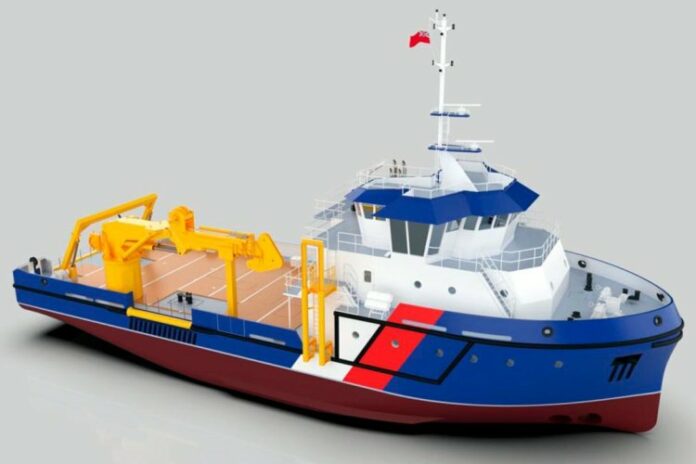
Freire Shipyard has secured a contract from the leading UK marine contractor Briggs Marine for the design and construction of a new Maintenance Support Vessel.

This modern and efficient vessel is optimally configured to support Briggs’ ongoing contracts for the inspection, servicing and replacement of navigation marks and heavy inshore moorings, operating as required with an attendant onboard diving team. 

The new building, is schedule for delivery in 2024. It will have 40m in length with a diesel-electric DP-2 propulsion system configured for maximum efficiency and designed for operations in UK and Northern European Waters. Crew comfort is important to Briggs and the vessel has excellent seakeeping and noise reduction features to enable 24/7 operations.  And will have a crew of 6 and accommodation for a further 10 project personnel.

Maximum flexibility has been built into the design to support a range of diving, survey and other maintenance support and project activities, without compromising the vessels’ primary role. Amongst other features the vessel is fitted with a moonpool, detachable A frame, 4-point mooring system and survey project office. In addition, a demountable Crew Transfer Vessel (CTV) boarding ladder has been incorporated into the design to support offshore windfarm projects.

For Collieson Briggs, Managing Director, of Briggs Marine Contractors, “this latest vessel order further demonstrates Briggs’ commitment to maintaining its position as the UK’s nearshore marine experts. The vessel will further enhance our marine project support capability for both the growing renewables sector as well as the more traditional marine construction tasks upon which Briggs has built its solid reputation”.

Freire Shipyard considers that “it is a privilege to build a reference for the extensive fleet of an important company such as Briggs Marine and to be able to contribute to its reinforcement in the United Kingdom market with the construction of this Maintenance Support Vessel”.

DNV awards AiP for a floating ammonia production unit

0

An industrial scale concept for a floating production unit to produce green ammonia has secured Approval in Principle (AiP) from DNV, affirming the technical feasibility of the design. The project is now ready to start the Basic Design phase.

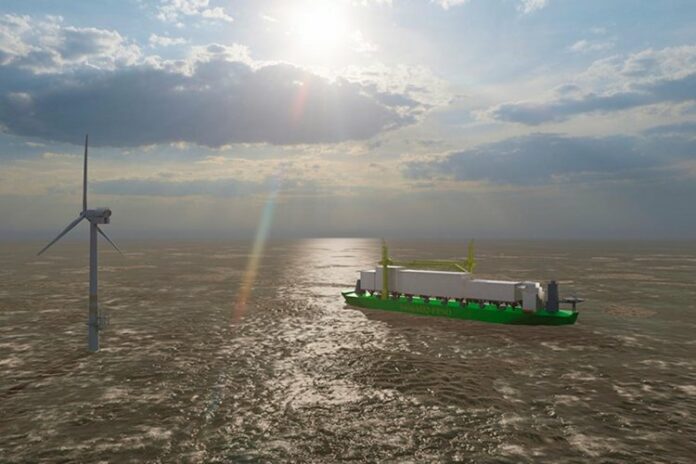
The so-called NH3 FPSO concept is being developed by Netherland-based SwitchH2 BV and Norway-based BW Offshore and will be built through conversion of an existing Very Large Crude Carrier (VLCC) or a dedicated newbuild vessel. Receiving power primarily from a wind farm, the unit will produce hydrogen by electrolysis of seawater and nitrogen through the use of an air separation unit, combining these in an ammonia synthesis unit. 

The ammonia gas produced by the unit will be condensed, and the liquid ammonia will be stored in the hull in order to be subsequently offloaded to an ammonia carrier. The NH3 FPSO will be permanently moored but can be relocated as necessary through planned disconnect. The offloading will be done through a floating hose, reeled from the aft ship to the shuttle ammonia carrier midship manifold. 

DNV’s Vice President, Business Development for Floating Production, Conn Fagan, says:

“The AiP covers all aspects of the integrated vessel concept including structural integrity, mooring, ammonia production, ammonia storage and cargo handling.

“We are pleased to see such developments both with regard to use of renewable energy and as a contribution to emission reduction across many potential applications in different industry sectors.”

Bob Rietveldt, Member of the Management Board of SwitcH2, says:

“We are delighted we have been awarded the AiP from DNV for our concept and we look forward to working with DNV in the next stages of the project.”

Fredrik Savio, SVP Project Development at BW Offshore, says:

“At BW Offshore, we leverage our offshore experience to support and expedite the energy transition by engineering next generation floating production solutions. Achieving this AiP is an important milestone and an encouraging step towards a cleaner energy mix.”

NYK and FueLNG achieve first LNG bunkering of PCTC in Singapore

0

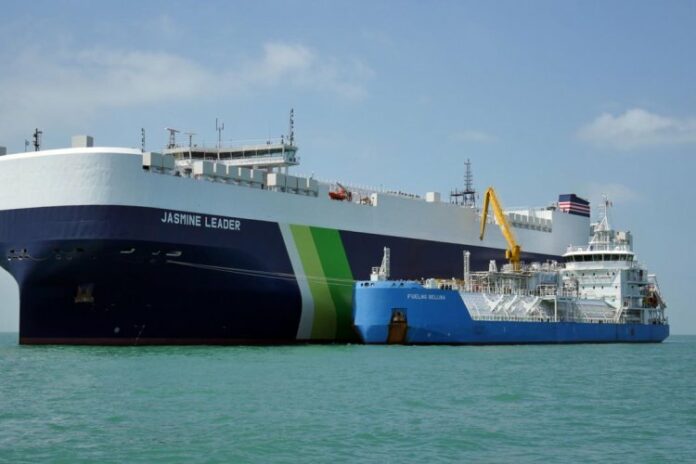
Nippon Yusen Kabushiki Kaisha (NYK) and FueLNG have completed the first bunkering to an LNG-fueled pure car and truck carrier (PCTC) in Singapore.

This marks a significant milestone in NYK’s sustainability efforts and FueLNG’s mission to promote LNG as a marine fuel.

Yuji Nishijima, executive officer in charge of fuel procurement at NYK, said:

“We are delighted to have achieved the first PCTC LNG bunkering in Singapore through Jasmine Leader. This marks a significant step towards achieving our long-term target of net-zero emissions of greenhouse gas (GHG) by 2050 for the NYK Group’s oceangoing businesses, and we are grateful to FueLNG and the Maritime Port Authority of Singapore for their collaboration and support in making this possible.”

Mr Tahir Faruqui, Chairman of FueLNG and head of Shell Downstream LNG, said:

“This achievement highlights FueLNG’s commitment to advancing the adoption of LNG as a marine fuel, and we are pleased to work with NYK to demonstrate the feasibility and safety of this technology for a large-scale PCTC in Singapore. LNG is the lowest carbon fuel currently available at scale today and we will continue to collaborate with our customers to drive the growth of decarbonized LNG bunkering in the region.”

The bunkering operation was carried out in accordance with Singapore’s Technical Reference 56 for LNG Bunkering. This standard is a key part of Maritime and Port Authority of Singapore’s framework to ensure safe, reliable and transparent LNG bunkering operations in Singapore.

Float out ceremony takes place for next-generation Sun Princess

0

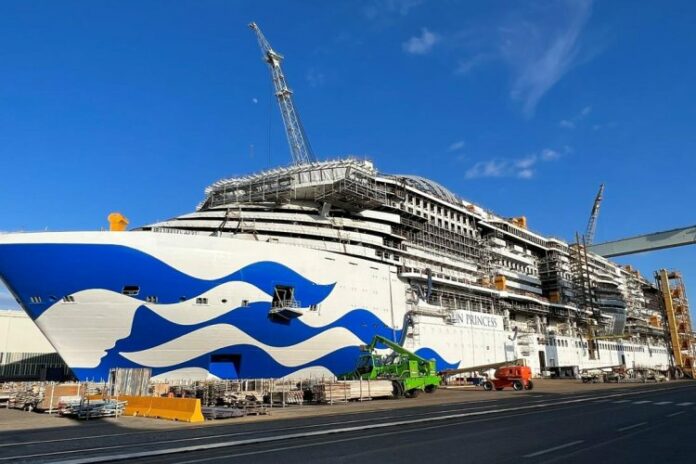
Princess Cruises celebrated a momentous construction milestone with the float out of the cruise line’s bespoke, next-generation ship – Sun Princess – at the Fincantieri Shipyard in Monfalcone, Italy.

Following the Italian shipyard’s tradition, the float out is marked by a special ceremony where a “Madrina” is named to offer blessings and best wishes for the vessel, celebrating the flow of water into the ship’s building dock. 

The float out completes the first comprehensive phase of construction for Sun Princess which now transitions to focus on building the ship’s interiors.

Princess also announced that it has appointed Gennaro Arma as captain, leading Sun Princess shipbuilding operations, readiness and delivery, and overseeing the ship’s final stages of construction, working closely with brand’s naval architects, engineers and shipbuilding experts, as well as the shipyard management team.

The 175,500-tonne, 4,300-guest Sun Princess will offer an array of exciting new dining, entertainment and activity offerings, as well as luxurious staterooms and suites across a broad spectrum of categories. The ship will be highlighted by amazing, never-before-seen spaces such as The Dome, a transformational entertainment venue inspired by the terraces of Santorini, the next-level, brand-iconic Piazza, and three-story Horizons dining room that are sure to have everyone talking.

Wintershall Dea initiates first CO2 storage in the Danish North Sea

0

Carbon capture and storage (CCS) will play a key role in mitigating climate change worldwide as well as in Europe. Denmark is leading the way and assuming a pioneering role among European countries with Project Greensand, as the first storage of CO2 in a reservoir in the Danish North Sea has now been initiated.

“Project Greensand marks a leap forward for the development of a Europe-wide CCS infrastructure and therefore for climate protection. We are showing that it is possible to capture, transport, and store CO2 safely and reliably across national borders and the CCS technology will be able to contribute to a decarbonised tomorrow in the near future. Along with our partners, we are pioneers in this game-changing technology,” said Mario Mehren, CEO of Wintershall Dea, at today’s official ceremony for the first storage of CO2 in Esbjerg, Denmark.

His Royal Highness the Crown Prince Frederik of Denmark initiated the first CO2 injection in Denmark. Lars Aagaard, the Danish Minister for Climate, Energy and Utilities, was also present at the ceremony. Ursula von der Leyen, President of the European Commission, delivered a video address.

Project Greensand ranks among the most advanced CCS projects in the EU. For the first time, the entire CCS value chain (capture, transport, and storage) will be implemented across borders. By early April 2023, residual emissions from a Belgian industrial plant, collectively representing up to 15,000 tonnes of CO2, will be stored during the ongoing demonstration phase. The depleted Nini West oil field in the Danish North Sea will serve as a storage site for the CO2. By 2025/ 2026, 1.5 million tonnes of CO2 could be stored per year as part of Project Greensand. In the final expansion phase, scheduled to begin in 2030, plans call for storing up to 8 million tonnes of CO2 each year. This is more than 13 per cent of the total annual emissions of Denmark. The main goal is to store the industrial emissions that it will not be possible to avoid in the future.

“I am proud that our team is making a decisive contribution to the success of this pioneering project and, in doing so, showing that Wintershall Dea can do CCS,” said Hugo Dijkgraaf, a Member of Wintershall Dea’s Board of Executive Directors as well as its Chief Technology Officer. “Our success is based on the knowledge we have gained from over 120 years of gas and oil production as well as on our geological and engineering expertise. And we aim to draw on this foundation for our other CCS projects in other countries – such as Norway, the Netherlands, and the UK.”

Wintershall Dea is a leading member of the Greensand consortium. In addition to Wintershall Dea, the project is also being carried out by INEOS Energy in the role of operator. In addition, more than 20 other partners are involved – including start-ups, independent institutes, and the Geological Survey of Denmark and Greenland (GEUS), an institution within the Danish Ministry of Climate, Energy and Utilities. The Danish Government is supporting the project with a total of €26 million in public funding.

Transporting the CO2 from Belgium and Denmark has been made possible by a bilateral agreement that these two countries concluded last year.

“If Project Greensand and other CCS projects in the North Sea are to be successfully implemented, policymakers must establish the appropriate regulatory framework,” Dijkgraaf noted. “The first steps have been taken. Now we need more bilateral agreements to link emissions-intensive industries to CO2 storage sites in the North Sea.”

For Wintershall Dea, Greensand is a pioneering CCS project. Via CCS and low-carbon hydrogen projects, the company plans to annually avoid up to 30 million tonnes of CO2 beginning in 2040. This represents a substantial portion of the residual emissions expected in Germany at that time.

METIS adds DTN Vessel Routing API to improve quantifiable ship performance gains

0

Rather than aiming to avoid adverse weather completely, weather-optimized routing helps find the most efficient route available to plan and maintain safe navigation, with the officer of the watch updated with actionable insights and alerts throughout the voyage. 

Based on the unique characteristics and specifications of individual ships and their cargoes, both METIS Augmented Routing Optimization and the DTN Vessel Routing API continuously optimize for speed, cost, fuel consumption and emissions. Powered by AI, the integrated analytics cover not only the efficiency of the ship but its changing operating environment: routing optimization can adapt to conditions and to the relationships between different performance parameters. 

Integrating weather-optimized decisions with Augmented Routing Optimization delivers a comprehensive analysis of ship performance in real time, so that vessels can respond to the needs of ETA, contracted speeds, bunker consumption or emissions reporting. Onshore, managers can calculate and recalculate routes to optimize schedules, propose route adjustments, and better evaluate voyage performance against charter party expectations.

“Formalising the agreement with DTN is highly significant, because integrating weather-optimized routing functionality with Augmented Routing Optimization changes what is achievable for ship performance,” said Andreas Symeonidis, Marketing & Partner Relations Manager, METIS Cyberspace Technology. “Just as METIS analytics optimize performance for machinery, hull fouling and damages, maintenance and repairs, fuel oil and crew skills on each and every vessel, Augmented Routing Optimization can now adapt to weather conditions.” 

Including all variables in a single interface to choose the ‘best route’ is highly beneficial to ship safety, as well as for efficiency and emissions, Symeonidis emphasised.

“With every ship needing to report efficiency and emissions on an individual basis under the International Maritime Organization’s new EEXI and CII regimes, owners, managers and charterers have already entered a new era of accountability,” said Eleni Polychronopoulou, CEO, METIS. “Rather than simply avoiding ‘unwanted weather’ in a generalised way, this integration of weather-optimized routing from DTN means Augmented Routing Optimization helps ensure the safety of the ship, its crew and its cargo while simultaneously basing routing decisions on optimized performance.”