-6.4 C
New York
Home Blog Page 320

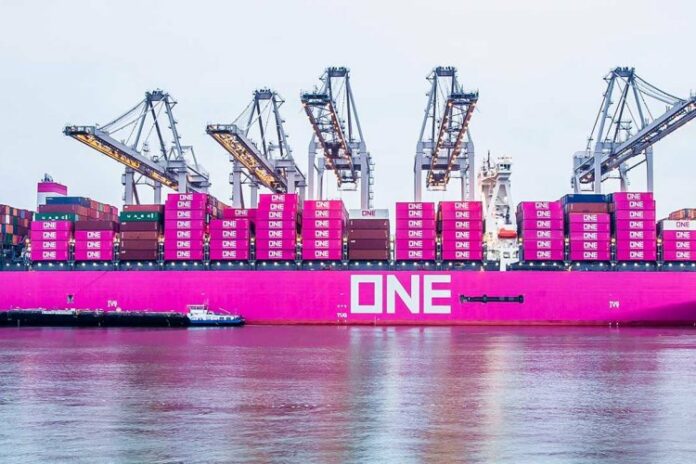
ONE orders 10 new state-of-the-art large container vessels

0

Ocean Network Express Pte. Ltd (ONE) announces that it has ordered 10 large new container vessels with a carrying capacity of over 13,700 TEU to be delivered in 2025 and 2026.

This new order is in line with the company’s medium-term strategy announced in March 2022 and follows the 10 vessels ordered in May. By ensuring a stable deployment of new, state-of-the-art container vessels without constrained by short-term fluctuations in the container market, the company aims to strengthen its fleet competitiveness and meet customer demand for building and maintaining an efficient and reliable supply chain.

The 10 new vessels will be ready for Methanol and Ammonia and equipped with a bow cover and other energy saving technologies. ONE has also started discussions with the shipyard and equipment manufacturers to implement onboard carbon capture and storage on delivery.

For ONE, green strategy is a top management priority, and it aims to achieve carbon neutrality by 2050. The company committed to achieving sustainable maritime transportation by continuing to invest in greener assets and technologies and, as a leader in decarbonization in shipping, to decarbonize maritime transport through extensive collaboration with industry stakeholders.

Dongara Marine to build Fremantle Ports’ two new pilot boats

0

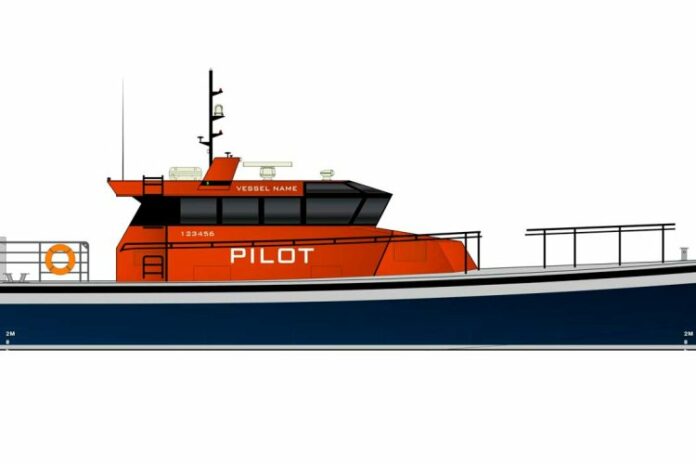
The contract has a total value of $7.6 million, with delivery of the first pilot boat scheduled for mid-2024.

The pilot boats, designed by Southerly Designs of Port Denison, will be essential for the transportation of maritime pilots – highly-experienced mariners with extensive local knowledge who safely guide ships in and out of port.

The acquisition of these new pilot boats will benefit port users by improving safety, security and adding capacity to assist in facilitating efficient ship movements.

Originally growing out of the fishing boat industry, Dongara Marine has a proven track record of building a wide range of vessels operating successfully in Western Australian waters and elsewhere. The company has been expanding its workforce to take on this and other contracts, with all its 59 staff, including five apprentices, expected to work on the pilot boat project.

Dongara Marine anticipates over 95 per cent of its contract expenditure will flow to WA-based suppliers, contractors, and staff. Of this, approximately two-thirds will be in regional WA.

The new vessels will be designed and built to the National Standard for Commercial Vessels and will be required to undergo a range of tests and sea trials prior to handover.

Port of Fremantle pilot boats provide services to ships arriving and departing both the Inner Harbour and Outer Harbour, with pilot runs of up to 14 nautical miles (26km) one-way.

Comments attributed to Ports Minister Rita Saffioti:

“Fremantle Ports choosing a local manufacturer for its new pilot boats reflects well on the high quality of Western Australian marine designers and manufacturers. Western Australia’s coastline is challenging, and the port therefore requires suitable craft for the job.

“This contract will support jobs locally in Geraldton and showcase their work every day at the Port of Fremantle in the years ahead.

“Without fast, efficient, reliable and safe pilot vessels, our ports can’t operate. These new assets will assist Fremantle Ports in providing the safest and most efficient service to ship owners, operators and the crew and pilots who board them every day and night of the year.”

DMC delivers rudder and steering gear for new coastal research vessel

0

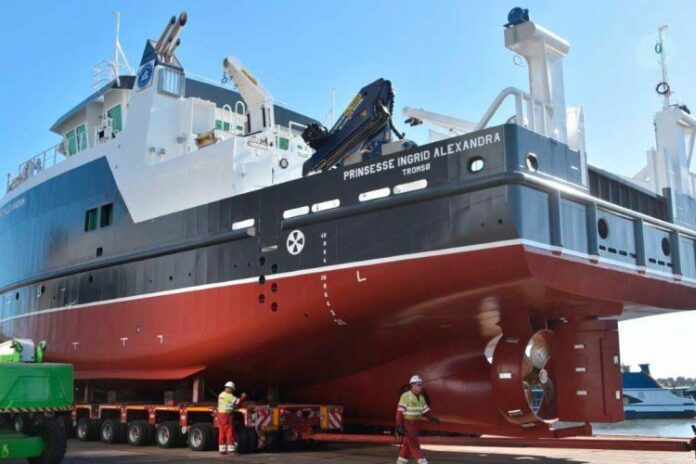
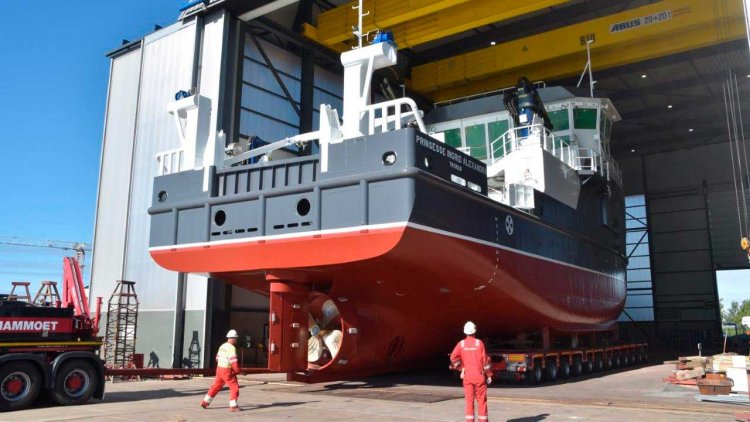
A single high-lift Barke® flap rudder together with a piston-type steering gear system was delivered by Damen Marine Components’ (DMC) to Holland Shipyards Group’s yard in Hardinxveld-Giessendam. There they were fitted into a 35-metre coastal research vessel that was built for the Norwegian Institute of Marine Research (IMR) and which is named the RV Prinsesse Ingrid Alexandra. 

DMC’s Barke® flap rudders are specifically designed for ships engaged in activities such as research, fishing and dredging that require excellent manoeuvrability, low noise and vibration levels, and first-rate fuel economy. Their progressively rotating flaps generate high lift forces at large rudder angles and low drag at small rudder angles, delivering the necessary performance in all situations. The enclosed linkage system also provides overload protection and prevents any material present in the surrounding water from entering the rudder assembly.

DMC’s piston-type steering gear systems are an ideal match for the Barke® flap rudders. They are highly reliable and, with multiple options regarding rudder stock connections, rudder angles and cylinders, the installation process is both efficient and economical when it comes to the space required. 

The state-of-the-art ship will undertake a wide variety of duties. These will range from data collection and fish stock sampling to the deploying and retrieval of ROVs, buoys, ocean landers, autonomous ocean gliders, AUVs and other equipment. 
Barke® flap rudders can be found installed on other specialist vessels including the UK’s 90m RRS James Cook research ship and the MN Colibri, a unique RoRo vessel built to transport launcher components for the Ariane 5 and Soyuz heavy-lift space launch vehicles. DMC also supplied the complete steering system for Australia’s recently delivered 160-metre, Research and Supply Vessel (RSV) Nuyina, including full-spade rudders, steering gear and control systems. Last, a Barke® rudder and piston-type steering gear were delivered for the Multi-Purpose Research Vessel of NIWA (National Institute of Water and Atmospheric Research) in New Zealand.

DMC’s Sales and Marketing Director Wim Knoester commented,

“We are confident that the combination of our Barke® flap rudder and piston-type steering system will serve the IMR’s latest research vessel well for many years into the future. It has been, as always, a pleasure to be continuing our cooperation with Holland Shipyards Group that dates back to its formation over 40 years ago.”

Jules Custers of Holland Shipyards Group added,

“We have every confidence in the quality and performance of the equipment designed, built and delivered by Damen Marine Components. They will contribute to what is a first-class research vessel capable of fulfilling a wide range of roles.”

The two organisations already have another project underway, with DMC contracted to build five Optima nozzles Ø2625 for two, newbuild, 3,600 DWT inland waterway cargo vessels and three, new 3,800 DWT MPP coasters.

Christening ceremony for Van Oord’s second LNG-powered trailing suction hopper dredger

0

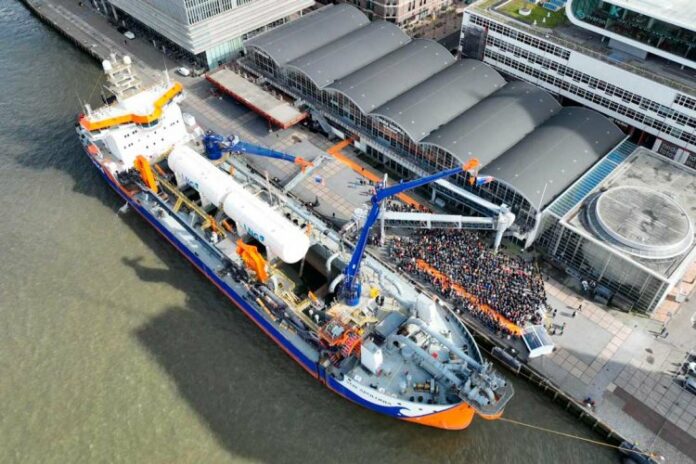
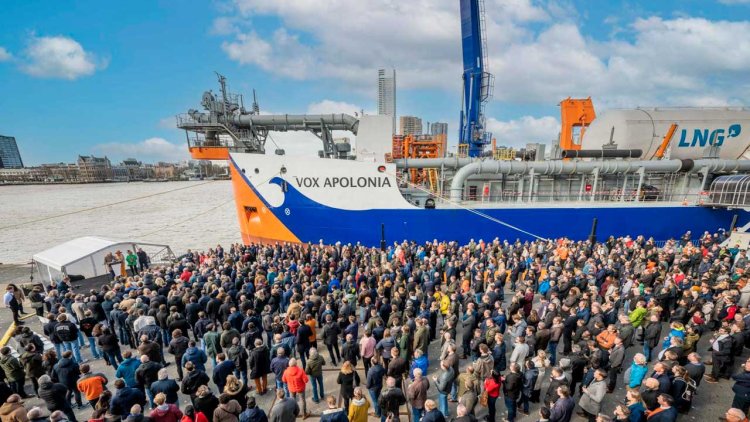
During a two-day christening event, Vox Apolonia was moored along the Wilhelminakade in Rotterdam city centre. Guests and employees came together to celebrate this memorable moment. They had the opportunity to board the new vessel for a guided tour before its deployment on dredging projects worldwide.

Vox Apolonia is the sister vessel of the LNG-powered trailing suction hopper dredgers Vox Ariane and Vox Alexia. Vox Ariane was christened in June 2022 and has already been successfully deployed on several projects. Triplet sister vessel Vox Alexia is in the final stages of construction in Singapore. These new vessels have a hopper capacity of approximately 10,500 cubic metres and measure 137.50 metres in length and 27.60 metres across the beam. Van Oord operates trailing suction hopper dredgers for a wide range of global activities, such as coastal protection, port construction, deepening waterways and land reclamation.

The three new vessels will help Van Oord accomplish the aim of modernising its fleet and making it more economical and energy efficient. Their LNG fuel system and energy-efficient design will reduce fuel consumption and carbon emissions substantially.

In 2022, Van Oord won the Maritime KNVR Shipping Award for its contribution to innovation in the Dutch maritime industry by commissioning the three new trailing suction hopper dredgers. According to the jury, Van Oord’s introduction of the three vessels marks it as ‘a trailblazer for international standards aimed at minimising climate and environmental impact within the available technological capabilities.

Vox Apolonia is named after Apolonia Adriana van Oord-Visser. She was married to Jac G. van Oord, the founder of the Utrecht branch of the company. Apolonia was one of the first board members and the first woman to join the supervisory board. And even today, the name Apolonia still runs in the Van Oord family. The vessel was christened by Polien Fijan-van Oord and Polianne van Oord. Two granddaughters of Apolonia who are named after her and who belong to the fourth generation of this family-owned company.

Second discovery of the year near the Troll field in the North Sea

0

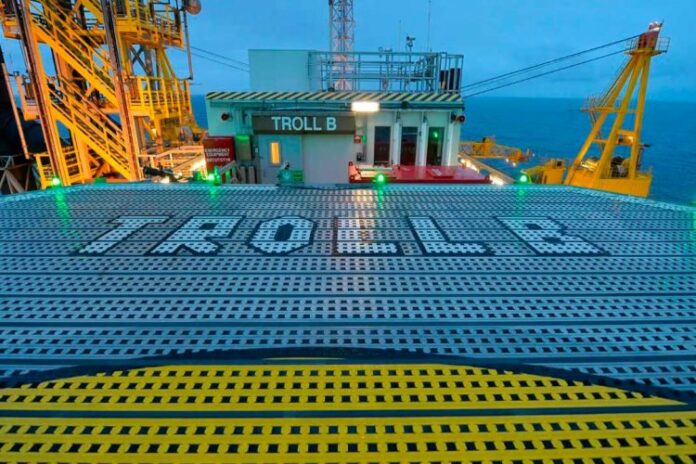
The volumes are estimated at between 24 and 84 million barrels of oil equivalent, with slightly more oil than gas. Named Heisenberg, the discovery well was drilled by the Deepsea Stavanger drilling rig. Equinor is the operator, and DNO is a partner.

The discovery is considered commercially interesting, partly because it can utilise existing infrastructure connected to the Troll B platform. However, an appraisal well is needed to get a more precise estimate of the size before it can be concluded whether the volumes can be recovered. The parties are considering drilling the appraisal well in 2024.

“Our Troll exploration play keeps delivering. With discoveries in eight out of nine exploration wells, we are approaching a success rate of 90%. We plan to further explore the area, while looking at possible development solutions for the discoveries that have been made. We have a good infrastructure in the area and can quickly bring competitive barrels from here to the market at low cost and with low CO2 emissions,” says Geir Sørtveit, Equinor’s senior vice president for exploration and production west.

Five of the eight discoveries have been made in licences awarded through APA rounds.

It is just over a month since Equinor together with partners made the Røver South discovery in the same area. Through acquisitions two weeks ago, Equinor increased its ownership interests in four of the discoveries made in the area.

The seven previous discoveries are: Echino South, Swisher, Røver North, Blasto, Toppand, Kveikje and Røver South.

ERM delivers first RAmparts 2300-ERM Tug to Svitzer Brazil

0

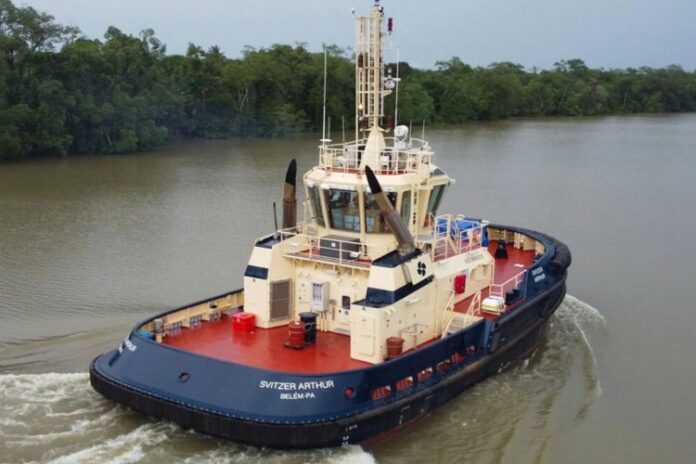
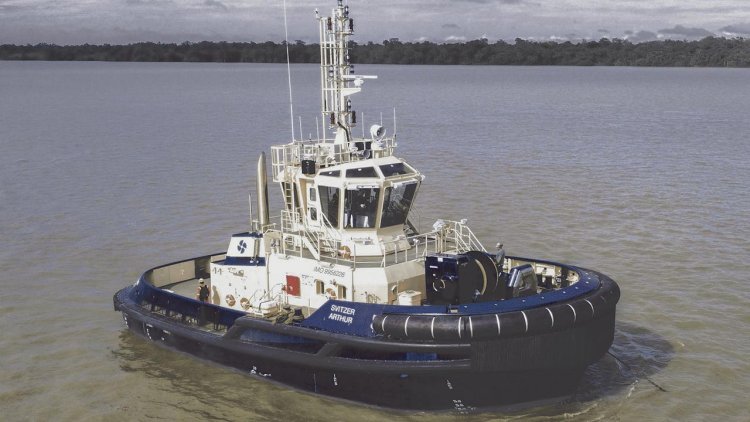
Robert Allan Ltd. has announced that the Svitzer Arthur, a RAmparts 2300-ERM tug, has been delivered by Estaleiro Rio Maguari. This marks the successful delivery of ERM’s first ASD tug, designed by Robert Allan Ltd., for Svitzer Brazil. 

The RAmparts 2300-ERM design is optimized for maximum efficiency in ship-handling operations in harbours. With an overall length of 23.2 metres, the tug features a raised fo’c’sle deck for safer operations in heavier weather.  Operational requirement are met with a single drum hawser winch from Ibercisa Deck Machinery, and heavy duty cylindrical fendering at the bow.

Key particulars of the RAmparts 2300-ERM are:

  • Length, overall (excluding fenders): 23.2 m
  • Load Line length: < 24.0 m
  • Beam, moulded: 11.4 m
  • Depth, least moulded: 4.4 m
  • Maximum draft (navigational): 5.5 m
  • Gross Tonnage: < 300

Main tank capacities at 100% are:

  • Fuel oil: 65 m3
  • Potable water: 12 m3

Propulsion machinery consists of:

  • 2 x MTU 16V4000M63 main diesels
  • 2 x Kongsberg US205S FP, 2,800 mm diameter Z-drives

Ship-handling fenders at the stern consist of a row of W-fender. Sheer fendering consists of “D” rubber and “W” block type fendering at the bow. The accommodations for a crew of six have been outfitted to a high standard for crew comfort. The deckhouse contains an entrance lobby with a public WC, galley, mess, and one officer cabin with ensuite WC. The lower deck contains two double cabins with ensuite WC, and an additional officer cabin with ensuite WC. The wheelhouse is designed with a single split forward control station which provides maximum all-round visibility with exceptional visibility to the bow and side fendering, as well as operations on the forward deck.

Royal Navy warship escorts Russian task group in the English Channel

0

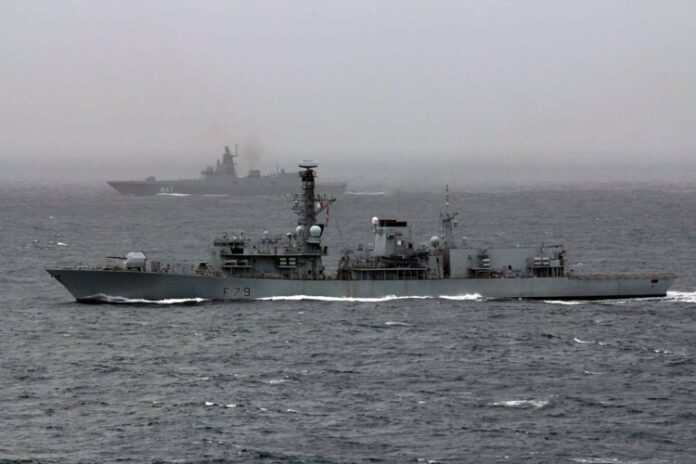
The British Type 23 frigate shadowed the Russians through the English Channel on Sunday morning as they headed towards the North Sea – after watching every move they made as they sailed north through the Bay of Biscay. 

The Admiral Kasatonov of Russia’s Northern Fleet has been operating in the eastern Mediterranean since early 2022, amid Russia’s illegal invasion in Ukraine, while Akademik Pashin was in the region later in the year.

Portland with her specialist Merlin helicopter embarked – both equipped with cutting-edge sonars, sensors and torpedoes for specialist operations – are reporting on the movements of the Russian ships.

The ship’s Commanding Officer, Commander Ed Moss-Ward said:

“The Royal Navy routinely responds to escort warships in our territorial waters and the adjacent sea areas to ensure compliance with maritime law and to deter malign activity.

“Escorting the Russian task group alongside allied partners demonstrates the commitment of the Royal Navy and the NATO alliance to maintaining maritime security which is crucial to our national interests.”

The Russians passed through the Strait of Gibraltar last Wednesday and NATO warships have escorted them throughout their journey.

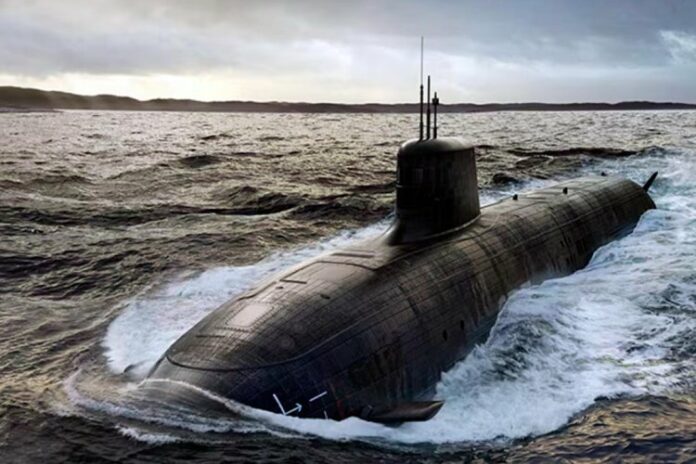
Nuclear reactors from Rolls-Royce to power Australian submarines

0

The announcement will see thousands of jobs created for Rolls-Royce and across the UK supply chain. Rolls-Royce Submarines, based in Derby, UK currently employs more than 4,000 people and designs, manufactures and provides in-service support to the pressurised water reactors that power every boat in the Royal Navy’s submarine fleet.

Steve Carlier, President – Rolls-Royce Submarines Ltd, welcomed the news, saying:

“We are delighted to be asked to play our part in delivering this element of the AUKUS Agreement and are well prepared to support through our nuclear expertise and engineering excellence. For over 60 years we have provided the power to the Royal Navy’s nuclear submarines and we are proud to be playing a critical role in helping Australia acquire their own nuclear propulsion submarine capability.”

“This is great news for Rolls-Royce and for the country as a whole with the creation of more UK jobs and an opportunity to showcase British innovation and expertise on the world stage.”

Rolls-Royce is currently supporting the existing Astute and Dreadnought boat build programmes through the delivery of reactor plant and associated components. Additionally, it provides frontline support across the world for reactor plant equipment from its Operations Centre in Derby and supports the submarines when in the Barrow-in-Furness shipyard and the naval bases at Devonport and Faslane.

To ensure a steady pipeline of future talent into the industry, Rolls-Royce last year opened a new Nuclear Skills Academy in Derby, which will provide 200 apprenticeships each year for at least the next decade.

Ørsted and Eversource propose new offshore wind farm in Rhode Island

0

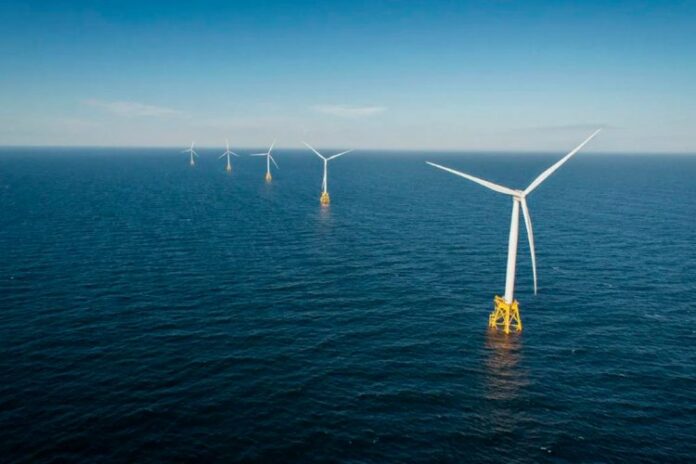
Ørsted and Eversource have submitted a joint proposal in response to the state’s offshore wind solicitation. Delivering clean, reliable renewable power for more than 500,000 Rhode Island homes, the proposed 884-megawatt Revolution Wind 2 represents more than $2 billion in direct economic benefits to Rhode Island’s blue and green economies, including the creation of hundreds of local jobs and unprecedented investments in port improvements and shipbuilding.

If selected, Revolution Wind 2 will create hundreds of jobs; deliver crucial port investments that expand Rhode Island’s role in the offshore wind industry; advance environmental justice; and create inclusive training and career opportunities for historically marginalized Rhode Islanders.

Together with Ørsted and Eversource’s Revolution Wind – the state’s first utility-scale offshore wind farm – Revolution Wind 2 would help advance the state’s 100-percent clean energy by 2033 climate goal. The carbon emissions achieved by Revolution Wind 2 would be the equivalent of taking more than 265,000 cars off New England roads.

Joe Nolan, Chairman, President and CEO of Eversource Energy, said:

“Our latest proposal harnesses the unmatched combination of our onshore, regional transmission expertise together with Ørsted’s considerable offshore capabilities. We applaud state leaders for their commitment to combatting climate change and delivering a clean-energy future for Rhode Islanders.”

Revolution Wind 2 will also make tens of millions of dollars of direct investments to support Rhode Island’s supply chain and supplier diversity, workforce training, education and research, environmental justice and biodiversity, putting Rhode Islanders front and center.

Ørsted and Eversource are developing the 704MW Revolution Wind project and are expected to start construction on the project later this year. Revolution Wind will deliver 400 megawatts of clean, affordable offshore wind power to nearly 200,000 Rhode Island homes. The project is expected to be operational in 2025.

KN to support Snam FSRU Italia in the commissioning of the Piombino LNG terminal

0

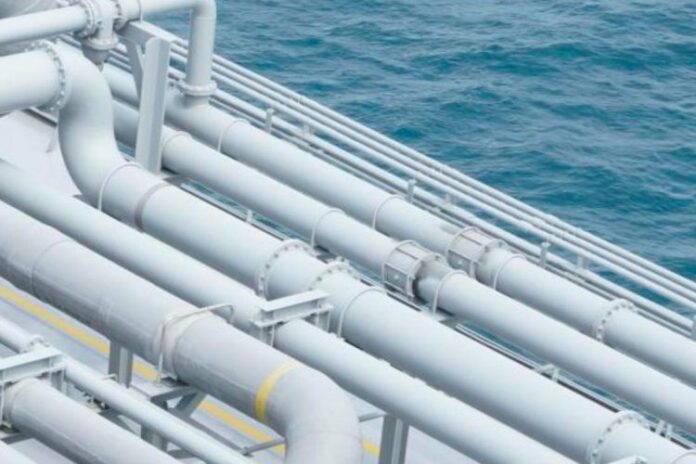
Oil and liquefied natural gas (LNG) terminals’ operator KN (AB “Klaipėdos nafta”) has been successfully expanding its involvement in rapidly growing international LNG import terminal market. The company has been chosen by Italian energy company Snam FSRU Italia to cooperate in the start-up of a greenfield FSRU based LNG terminal project in the port of Piombino.

KN will support Snam in the FSRU installation and subsequent commissioning and testing of the floating LNG terminal.

The new LNG terminal in Tuscany, in the province of Livorno and the west coast port of Piombino, is a strategic project to help ensuring country’s energy needs, increasing security of supply and diversification.

The terminal design is based on the floating storage and regasification unit (FSRU), Golar Tundra, purchased by Snam FSRU Italia, with a capacity of 170,000 cubic metres and a nominal throughput of 5 billion cubic metres of natural gas per year.

Darius Šilenskis, CEO of KN, notices that in the expanding LNG market there are growing opportunities for the company to get involved in international LNG projects.

“I am glad that KN is helping Europe to enhance its energy independence with its experience and knowledge. Having done our homework in 2014 and ensured alternatives for the supply of natural gas to Lithuania, today being the main gas supply route to the Baltic region, we can get involved in the implementation of strategic projects of other European countries. We are starting this year with great partnership with Snam FSRU for an equally strategic LNG terminal project. Undoubtedly, one of the most important achievements of the past year was the decision of the German energy giant Uniper to select KN to provide commercial operation services for Germany’s first floating LNG terminal in the port of Wilhelmshaven on the North Sea coast”, says the CEO of KN.

According to him, the recent growth of LNG terminal construction projects in the market contributes to such success. Before the Russian invasion to Ukraine only six out of twenty-three potential LNG terminal projects in Europe were likely to be built. However, as the war continued – the number of such projects has almost tripled to seventeen.

“We receive enquiries from such project developers, whether for advisory, operational or co-investment activities. Therefore, such increase in the demand for LNG terminal development in Europe opens up even more opportunities for us to utilize our existing knowledge and competences in the new international LNG projects, where we would be selected as consultants, operators or investors”, notes Darius Šilenskis.