-6.4 C
New York
Home Blog Page 319

BV-classed hybrid ferries with battery and solar power to be deployed in Hong Kong

0

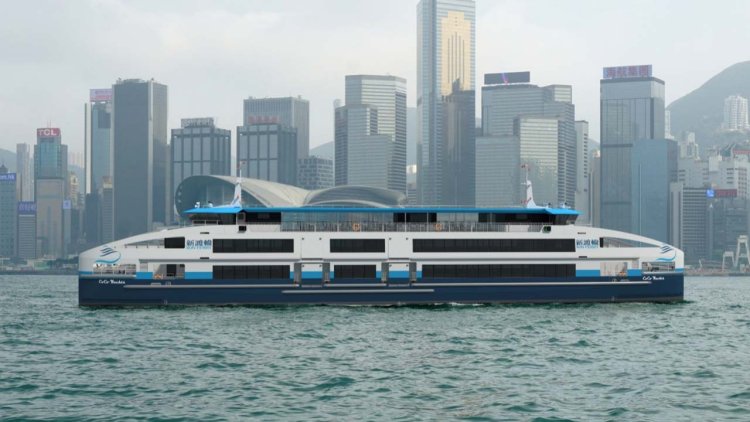
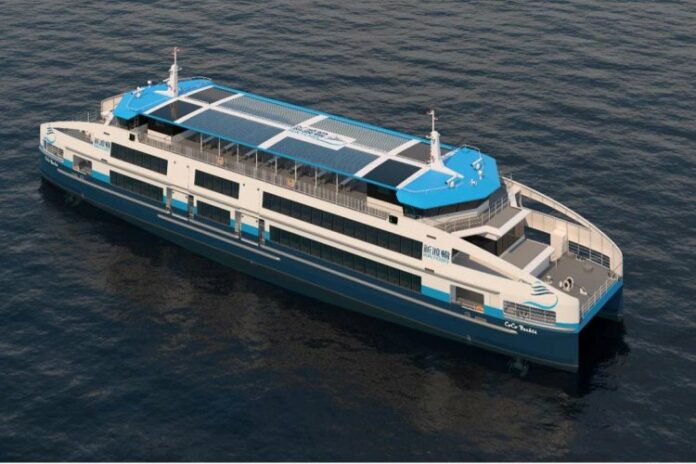
Designed by CoCo Yachts, a Dutch naval architect design and development company, the Urban Sprinters 1000 vessels will be operated by Sun Ferry Services Company Limited. They will transport around 4 million passengers a year between Central Pier and Cheung Chau Pier, in Hong Kong domestic waters.

Both Urban Sprinter 1000 ferries will be built by YaGuang Technology Co. Ltd in Zhuhai, China, and will have an aluminium hull and superstructure. The first vessel will be built with hybrid diesel-electric propulsion and will be zero emission when sailing within pier boundaries as well as during berthing. The second vessel will be built with diesel-electric propulsion. Both ferries will have a battery pack for overnight energy to avoid diesel generators running.

Each vessel will be fitted with four IMO tier III diesel generators, of which three will typically be in service, and one will be on standby. The service speed will be 16 knots. The vessels will also be equipped with four Azimuth L-type thrusters, each fitted with a PM electric motor.

The third deck will be an open area accessible to passengers for sightseeing purposes. The area will be partly covered by solar panels, which will help to reduce the vessel’s overall emissions. The ships have been designed to offer luxurious and functional passenger accommodation on the main and upper deck, and minimise noise and vibration levels.

The design and building of the vessel will be surveyed and certified by Bureau Veritas. All flag related items, including safety and stability will be delegated from Hong Kong Marine Department to BV. Previous projects with similar delegated works have proven to be an efficient and reliable method.

The first Urban Sprinter 1000 hybrid is expected to be delivered in Q2 2024, while the second vessel will be delivered in Q1 2025.

Equinor welcomes OKEA as new partner in the Statfjord area

0

The total consideration is USD 220 million plus a contingent payment element based on oil and gas prices over a 3-year period. A 28% working interest in PL037 gives 23.9% in Statfjord Unit, 28% in Statfjord Nord, 14% in Statfjord Øst Unit and 15.4% in Sygna Unit.

“With this transaction, we continue to optimize our oil and gas portfolio, welcoming an industrial player with late-life expertise into the Statfjord partnership. This will contribute to diversification and high value-creation from the Statfjord area in the years to come,” said Camilla Salthe, senior vice president for Field Life Extension, FLX.

FLX is a unit within Equinor that is responsible for safe and efficient operations of late life assets through new ways of working.

“Taken together with the recent acquisitions from Wellesley in Norway, the transaction demonstrates Equinor’s approach to long term portfolio optimisation and high-grading,” adds Salthe.

In December 2021, Equinor signed an agreement with Spirit Energy to acquire its interests in the Statfjord area. The acquisition resulted in Equinor holding a 78.6% working interest in Statfjord Unit, with Vår Energi holding the remaining interest. Following the transaction with OKEA, Equinor will have a 54.7% working interest and remain the operator of the Statfjord field.

Since production start in 1979, Statfjord has produced more than 5.1 billion barrels of oil equivalent and created gross revenues of over NOK 1,675 billion.

“We still have high expectations for Statfjord and by developing new ways of working we aim to extend the lifetime of the field towards 2040 and reduce emissions with 50% by 2030,” adds Salthe.

The closing of the transaction is subject to customary government approval and is expected to be completed in fourth quarter of 2023.

DNV Study shows high offshore hydrogen infrastructure potential for Europe

0

Offshore hydrogen production is paramount to meet the substantial increase expected in European hydrogen demand. Hydrogen is due to play a significant role as a low-carbon energy carrier, not only to decarbonize hard-to-abate sectors, but also to boost security of energy supply in Europe.

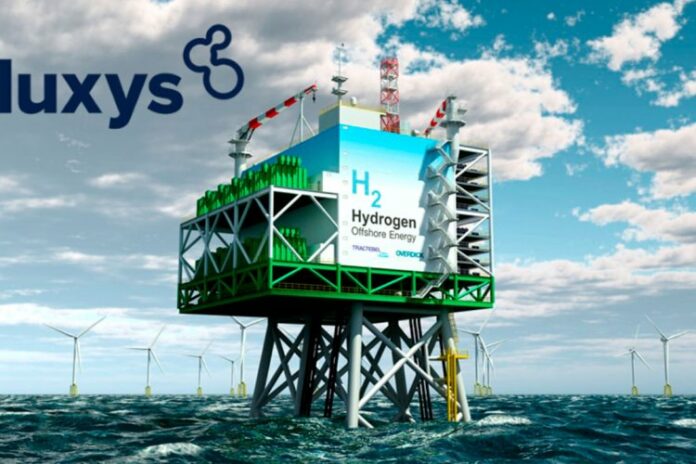
The “Specification of a European Offshore Hydrogen Backbone” study, commissioned to DNV by infrastructure system operators GASCADE and Fluxys, highlights the significant advantages of an offshore hydrogen backbone in the North and Baltic Seas.

The potential energy generation from offshore wind in the North Sea and Baltic Sea is immense, and possible greater than what the electricity system alone can handle. The DNV study finds that offshore hydrogen production connected by pipeline is cheaper than onshore hydrogen production. The pipeline connection and high load factors make the North and Baltic Sea some of the lowest cost sources of green hydrogen for North-western Europe.

“The EU expects demand for climate-neutral hydrogen to reach 2,000 terawatt hours (TWh) by 2050, and DNV sees the potential to produce 300 TWh/a of hydrogen using electricity from offshore wind farms in the North Sea by 2050. This would make a significant contribution to reducing dependence on energy imports. This positive aspect for increasing supply security can hardly be valued highly enough after the experiences of the recent past”, says GASCADE Managing Director Ulrich Benterbusch.

Given the lower costs of hydrogen transmission compared to electricity and the possibility for large pipelines to aggregate offshore hydrogen production from several windfarms, the report assesses that offshore hydrogen production is an attractive option for offshore wind production, certainly at distances of more than 100 km from shore.

With regards to transport infrastructure, the study draws two different pictures based on location:

For the North Sea, a large area and production potential meet the 100 km criterion. To bring the hydrogen produced offshore to land, a meshed pipeline connection – a European backbone – could sensibly connect production sites to the existing onshore pipeline network.

The situation is somewhat different in the Baltic Sea region, where fewer areas currently meet the 100-km criterion. However, if Sweden and Finland decide to produce hydrogen on a large scale and transport it to demand centers in Central Europe, a combined pipeline is likely to make sense there as well.

The spatial distribution of the potential offshore hydrogen production sites shows that the sea areas of different countries are involved.

“This suggests that transnational coordination will be necessary to develop the full identified hydrogen generation potential”, says Christoph von dem Bussche, Managing Director of GASCADE.

It will be equally important to strike the right balance between the potential use of wind for electricity generation and the potential generation of hydrogen across countries. To further optimize this hydrogen supply chain, the study suggests storing up to 30% of the produced hydrogen in salt caverns to efficiently increase the flexibility of the system. To support the political discussion, the study also contains an initial cost estimate: in the North Sea, the cost of pipelines and compressors for the offshore hydrogen backbone is estimated to account for 10% of the total cost of hydrogen produced offshore.

The study strengthens GASCADE and Fluxys in their conviction that the AquaDuctus project is a key building block to achieve a green transition and meet the decarbonization targets of the EU Green Deal and REPowerEU package.

This large-scale offshore pipeline project, conceived to efficiently carry hydrogen produced from wind farms in the North Sea onto the German onshore hydrogen grid, is indeed designed as a backbone able to collect hydrogen from multiple production sites while also offering the potential to link up with other international hydrogen flows through the North Sea.

Pascal De Buck, CEO of Fluxys, says:

“The AquaDuctus offshore pipeline, thought as an open access infrastructure available to all future operators of hydrogen wind farms, will make a substantial contribution to security of supply by diversifying Europe’s hydrogen supply sources.”

Ridgebury Tankers identifies fleet emissions reductions with digital tool

0

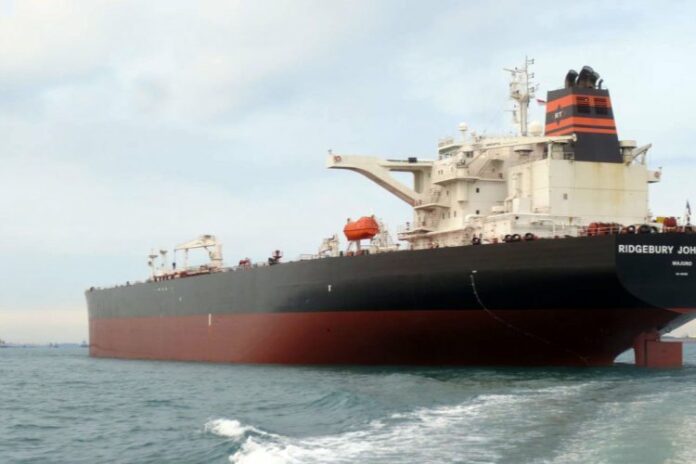
FuelTrust has announced results of its work with Ridgebury Tankers to validate emissions reductions for its fleet. Using FuelTrust’s AI technology, Ridgebury has established a carbon baseline for its Suezmax tanker, Ridgebury John Zipser, and assessed improvements in the vessel’s performance following a retrofit in 2019, demonstrating return on an investment in scrubbers as well as carbon savings.

Ridgebury appointed FuelTrust to assess fuel and operations data from past years for its tanker, comparing month-by-month and year-by-year performance to establish a baseline for carbon emissions, from which they could measure vessel improvements. The analysis also showed the value of a scrubber retrofit for the vessel and the impact of HFO fuel quality on carbon emissions.

Analysis using FuelTrust’s AI-based Carbon Baseline solution has helped Ridgebury to understand, to the kilogram, the entire emissions stack of the vessel, covering CO2, NOx, SOx, CAP and HAP emissions. At low cost, Ridgebury has been able to analyze the effects on vessel performance of installing a scrubber, a silicone hull coating, and buying higher quality fuels. The insights available to Ridgebury through FuelTrust’s technology would previously have been possible only by using an extensive and costly assortment of physical sensors and emissions-lab assessment consulting.

FuelTrust uses its patented artificial intelligence technology to trace the links between fuel bunkers at source, through combustion and subsequently emissions. This quickly and reliably delivers insights into the quality, density, GHG emissions, and the provenance of fuel. In an opaque bunkering market, where carbon emissions reports have been based on generalized estimates, FuelTrust’s AI analyzes the chemical interactions that take place during onboard combustion to accurately report emissions.

FuelTrust’s approach goes beyond simply applying a reduction in estimated emissions for each new piece of technology fitted to a vessel. FuelTrust uses AI-based virtual models of engines, scrubbers, coatings, and other clean technology when it analyzes ship performance. FuelTrust’s AI technology can switch a particular virtual technology ‘on’ or ‘off’ and observe outcomes for past and future investments. It can therefore provide insights into investments in technology, changes to operational practices and fuel choices, and accurately model the benefits of combining these decisions.

Robert Burke, CEO at Ridgebury, said:

“Our commitment to operating a sustainable business means that when we add a tanker to our fleet of vessels, we first consider how our investment will benefit the environment. Working with FuelTrust gives a higher level of detail and accuracy about how our investments affect emissions in any scenario. For the benefit of our seafarers, our investors, and the environment, we can use this insight to deliver measurable improvements to our vessels.”

Jonathan Arneault, CEO at FuelTrust, added:

“Ridgebury is forward thinking in maximizing the value and environmental sustainability of its vessels, and FuelTrust’s unique approach fits perfectly with their desire to uncover the real ROI from their investments. We look forward to continuing to support Ridgebury’s goals as the company invests to improve the environmental and commercial performance of its vessels.”

Building on this initial project FuelTrust is now analyzing additional tankers to assess how fuel choice and operational behaviors could reduce emissions. As part of the next phase, FuelTrust will produce an analysis of the relative financial and environmental benefits that could be accrued through the installation and effective operations of a scrubber by model. FuelTrust will also provide insight into optimal HFO outcomes versus continued use of VLSFO without retrofit. For these Suezmax tankers, FuelTrust’s analysis will aid Ridgebury in making the best investment choices for reducing emissions and optimizing returns, as well as identifying operational behaviors that could provide increased benefits for Ridgebury and its charterers.

Seabourn announces sale of Seabourn Odyssey to MOL Group

0

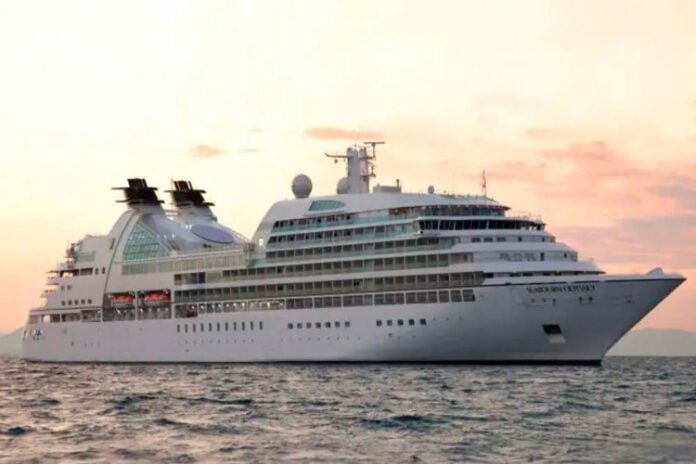
Seabourn Odyssey will be delivered to MOL after the charter agreement.

“We are proud that Seabourn Odyssey carried our guests across the world for the last 14 years and are happy to see her join a great company, MOL,” said Seabourn President Natalya Leahy. “As we prepare to say farewell to Odyssey in September 2024, I am excited to further optimize our fleet as we grow our expedition business. With the addition of Seabourn Pursuit this summer, Seabourn will have one of the most modern fleets in the ultra-luxury segment with an average age of just seven years.”

Seabourn’s fleet expansion into the ultra-luxury expedition market allows for a more diverse offering of deployment opportunities, which will lead to new and exciting itineraries across all seven continents with a higher guest capacity compared to 2019 even after Seabourn Odyssey’s departure. 

“With this elite, modern fleet, Seabourn continues as the leader in ultra-luxury travel, providing highly curated and immersive experiences and unique ‘Seabourn Moments’ for our guests,” Leahy said.

British scientists tracking two enormous icebergs larger than London

0

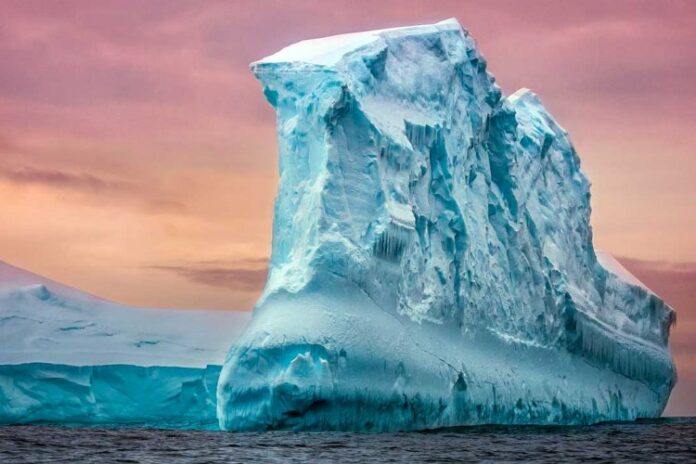
British scientists are tracking two enormous icebergs that broke off from Antarctica and could intrude on shipping lanes.

The smaller of the icebergs is called A81 and it’s bigger than Greater London, according to BBC. Its larger travel companion is called A76a.

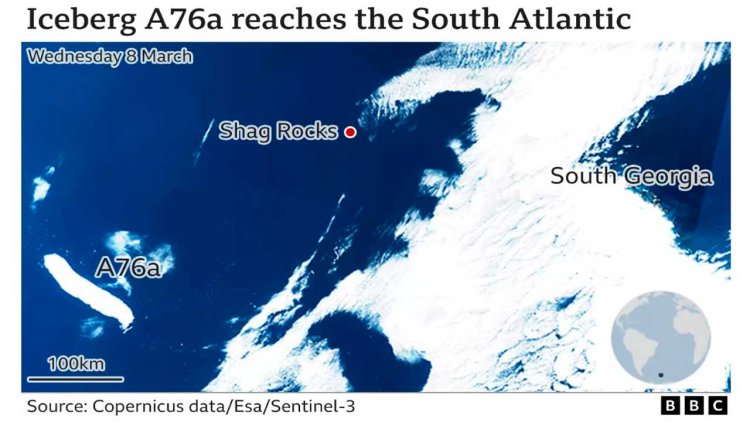
The Royal Research Ship Discovery inspected the latter berg as it entered the southern Atlantic Ocean.

“It was directly in our path as we sailed home so we took 24 hours out to go around it,” British oceanographer Geraint Tarling told the BBC. It’s slowly approaching the Falkland Islands, which are a British territory. Researchers’ biggest concern is that A76a would get grounded and further break into smaller pieces that could obstruct shipping and fishing operations.

NASA said in October that a chunk of ice that broke from the world’s largest iceberg, A76, was floating in the Drake Passage off of Cape Horn, Chile. Such icebergs typically melt as they enter warmer waters near the equator.

A81 broke off Antarctica’s Brunt Ice Shelf in February after being weakly tethered to the mainland for years, according to The British Antarctic Survey.

It’s expected to follow A76a’s path and also poses potential inconveniences to ships. Researchers flying from the United Kingdom’s Halley VI Research Station recently photographed the small portion of the iceberg that could be seen above water.

Both icebergs—up to 90% of which are underwater—could weigh a trillion tons, the BBC reports.

While icebergs can be disruptive, they also bring fresh water to sea life as their frozen surfaces melt.

GasLog implements BASSnet crew Self-Service app

0

The app is integrated with BASSnet’s Human Resources Manager, a powerful ERP solution to streamline crewing and payroll management.

Mrs. Taisa Tsermidou, Marine HR Manager at GasLog., says:

“BASSnet HR Manager will significantly streamline our HR processes and improve ship-shore communication. BASSnet’s Crew Portal app is a significant step forward to optimise our HR management using remote crew ‘self-service’. We are confident BASSnet will make a positive impact on our operations.”

All GasLog crew personal and activity data has been migrated from a third-party system to BASSnet. For the successful roll-out, BASS’s dedicated project management outsourcing service was deployed (in addition to standard implementation) to coordinate all tasks and deliverables for both companies within schedule and on budget.

The Crew Portal app will now function as an additional, two-way communication channel between the Greek industry leader’s marine HR and their sea personnel. The app will also allow the crew to take ownership of their data.

Per Steinar Upsaker, CEO & Managing Director at BASS Software, says:

“BASSnet’s HR Management solutions are designed to elevate efficiency and communication. The Crew Portal is a game changer for crew to instantly access information regardless of location. They will be able to view and directly update time sensitive data on personal information, travel arrangements and training.”

Stockholm Norvik Port potential CCS hub in Sweden

0

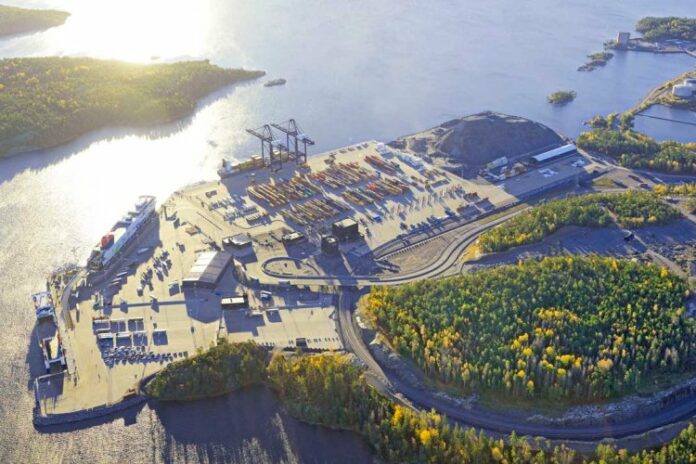
The goal is to increase the possibilities for emission reduction and negative emissions by establishing a regional, sustainable and cost-efficient carbon dioxide infrastructure in eastern Sweden. A solution for transport and handling between facilities that are source of the emissions to the end capture site would be a major contribution to Sweden achieving its environmental goals.

An initial general proof of concept study was designed together with all of the participating stakeholders to clarify the prerequisites and conditions for establishing an interim storage facility at Stockholm Norvik Port. Now Ports of Stockholm is taking the work to the next stage in a more detailed Feasibility Study where the goal is to develop a proposal for a system solution. The study includes risk analyses, business models and permit issues. The project has been named NICE – Norvik Infrastructure CCS East Sweden.

“Stockholm Norvik Port has large potential to become a carbon dioxide hub. The proposed transport solution would be able to handle a significant proportion of the carbon dioxide transport from Sweden, potentially around 9 million tonnes per year, with a potential to become the largest of all similar projects in Sweden,” explains Clara Lindblom, Chair of the Board at Ports of Stockholm.

The system would be open to third-party access to be even more cost-efficient and increase the potential for reduced emissions and negative emissions over the longer-term. The work will also inspire others to establish similar regional collaborations with regard to carbon dioxide infrastructure.

“Stockholm Norvik, Sweden’s newest freight port, opened three years ago. With our state-of-the-art facilities and the perfect location in the heart of the Stockholm region, be involved in and enabling a future sustainable transport and infrastructure solution was an obvious choice for us,” says Johan Wallén, Chief Commercial Officer at Ports of Stockholm.

The Feasibility Study will function to provide support for future decision-making by Ports of Stockholm and other stakeholders about the possibilities to go further with the planning for a regional carbon dioxide hub at Stockholm Norvik. The Feasibility Study will be carried out in collaboration with Stockholm Exergi, Mälarenergi, Söderenergi, Vattenfall, Heidelberg Materials, Nordkalk and Plagazi.

DNV and KEPCO to develop zero-carbon offshore wind power for South Korea

0

DNV is assisting KEPCO (Korea Electric Power Corporation) Research Institute in the development of a long-term offshore power grid plan to deliver renewable offshore wind power to South Korea. The project is scheduled for completion by mid-2025.  

As technical advisor, DNV will develop a conceptual design and routing plan to enable the technically and economically optimal integration of large-scale offshore wind to the grid. Suitable analysis models of offshore network systems will be proposed in order to investigate the optimal topology and design standards for the offshore system.  

South Korea has set a goal of deriving 20 percent of its power from renewable sources by 2030, and wind energy is a rapidly growing industry, supported by the policy ambition to grow the wind share of the country’s energy mix from 1% in 2015 to 6% by 2030 and various measures – including tax incentives.  

In February 2021, the government presented an 8.2 GW and KRW48.5tn ($43.2bn) mega-project that, when completed in 2030, should become the world’s largest single offshore development. However, grid integration has to be worked on in parallel.  

KEPCO aims to expand its network along the western coast of South Korea and deliver power from high capacity renewable Offshore Wind Farm (OWF) sites to key demand centres in the country’s capital, Seoul. The city houses around 10 million people, and nearly 26 million, half the country’s population, live in the greater Seoul area, which is also the country’s main industrial location. 

DNV will develop system analysis models to study the design specification and optimal topology for gigawatt (GW) scale high-voltage direct current (HVDC) linkage technology to improve system acceptability and transferring capacity from OWF projects in the southwestern coast of the country. DNV will also estimate the costs of the proposed optimal integration plan to minimize the total investment needed for integrating OWFs into the onshore power grid. 

DNV’s detailed work scope includes collecting and analysing offshore wind farm data; preparing a conceptual design of the power collecting element (bus) for the OWF; drafting functional specifications for AC/DC converter stations; analysing the impact of the offshore DC system to the onshore AC system; reviewing the relevant environmental and code limitations for the network routing and delivering a detailed design of the multi-terminal DC system including the converter topology, location and control/operational strategy.  

Dr. Yang Byeong Mo, DNV’s project manager, said:

“The KEPCO HVDC Research project is increasing our expertise and experience in this growing market segment in South Korea. It has taken a year of detailed discussion with KEPCO to define and secure the work. The project scope requires close cooperation with our European power grids team, which will lead to technology improvements and boost local knowledge on renewables-grid integration in South Korea.”

Vale and Kongsberg Digital join forces to reduce emissions

0

After implementing the vessel-to-cloud Vessel Insight technology to Guaibamax Bulk Carriers in 2020, Vale, iron ore producer and charterer of one of the world’s largest fleet of ore carriers, has signed with Kongsberg Digital to install Vessel Insight on four Valemax vessels.

Over the last years, Vale has invested heavily in technology to develop more efficient vessels, such as the  Valemax and Guaibamax freighter classes. These vessels are considered the largest and most efficient ore carriers in the world as they emit up to 41 per cent less greenhouse gases and transport 2.3 times more than Capesize, the standard freighter. An important goal when developing these vessels was to invest in innovative technologies to make these vessels greener.  

To meet these goals, Vale newly signed an agreement with Kongsberg Digital to implement Vessel Insight Connect to Valemax bulk carriers, which are long-term charted and owned by Asyad Shipping. Kongsberg Digital’s Vessel Insight provides instant and easy access to fleet overview, vessel-specific dashboards and analysis tools. Vessel-to-cloud data infrastructure captures and aggregates quality data in a cost-effective and secure way.  

Vale is expected to use the data gathered from Vessel Insight Connect to check and confirm fuel and emissions savings as part of their Ecoshipping programme. The programme was developed by Vale to foster the adoption of new technologies by the maritime industry the aim of reducing carbon emissions from shipping. The first two Guaibamax vessels covered by Vessel Insight featured wind-assist rotor sails and air lubrication technology, which uses a layer of air bubbles under the hull to increase hydrodynamic efficiency. Now the four Valemax vessels are testing new fuel efficiency technology. 

Christopher Bergsager, VP Growth Digital Ocean at Kongsberg Digital, says:

“Vale’s investment in sustainable shipping technology, including efficient Valemax and Guaibamax bulk carriers, positions them as a leader in driving sustainable solutions in the industry. We are thrilled to partner with Vale and provide them with our vessel-to-cloud infrastructure to help monitor fuel and emissions savings and support their efforts towards reducing their carbon footprint. Together, we are working towards a more sustainable future for shipping.”

Rodrigo Bermelho, Shipping Technical Manager at Vale, says:

“Vale transports iron ore in the most efficient vessels in the world, but we believe there are still further energy efficient gains to be captured to reduce fuel consumption and CO2 emissions.  Data analytics is key to measure the performance of the new technologies and make evidence-based strategic decisions. This pioneering project shows our commitment to supporting the shipping industry in fulfilling the ambitions of the International Maritime Organization (IMO)“