-1.6 C
New York
Home Blog Page 315

Aker BP and OMV awarded licence for CO2 storage

0

Aker BP ASA and OMV (Norge) AS have entered into a collaboration agreement for carbon capture and storage (CCS) and have been awarded a licence in accordance with the CO2 Storage Regulations on the Norwegian Continental Shelf (NCS).

“We expect CCS to play a key role in the transition to a low-carbon energy future, and the NCS holds significant potential for carbon storage. As a leading operator on the NCS, Aker BP is well positioned to take an active role in this area. This licence award provides us with an opportunity to explore both the technical and commercial potential of carbon storage. We look forward to collaborating with our partners to develop this into a sustainable and profitable business”, says Karl Johnny Hersvik, CEO in Aker BP.

“With this licence award, which will materialize our collaboration with Aker BP, we will invest and leverage our expertise to expand into CCS activities offshore Norway. Safe and permanent storage of CO2 is one major pillar of the strategy for OMV to become carbon neutral by 2050”, says Alfred Stern, CEO and Chairman of the Executive Board of OMV.

The licence awarded to Aker BP and OMV is located in the Norwegian North Sea and will be named Poseidon. Aker BP (60%) and OMV (Norge) AS (40%) have interest in the licence, which will be operated by Aker BP. The licence comes with a work program which includes a 3D seismic acquisition and a drill or drop decision by 2025.

The Poseidon licence could potentially provide storage of more than 5 million tons CO2 per year. The intention is to inject CO2 captured from multiple identified industrial emitters in North-West Europe, including from Borealis’ various industrial sites in Europe. 

Aker BP and OMV (Norge) AS have entered, as Poseidon partners, into a collaboration agreement with Höegh LNG to provide the marine CO2 infrastructure required to collect, aggregate, and transport the CO2 from emitters on the European continent to the NCS. Höegh LNG has developed cost efficient marine CCS solutions based on its experience as one of the world’s largest and most technically advanced operators of LNG infrastructure that includes Floating Storage and Regasification terminals such as the three fast track floating LNG import terminals which were completed last year in Germany. 

Aker BP is evaluating CO2 storage opportunities on the NCS as a potential new business opportunity and a potential decarbonisation lever for Aker BP in the longer term. The award of the Poseidon licence represents the first milestone to assess and mature CO2 storage resources, in support of the deployment of CCS within North-West Europe. Aker BP has in-depth expertise in reservoir management, drilling and wells and logistics offshore Norway. 
Damen completes Vlissingen part of complex Midlife Update of HNLMS Johan de Witt

0

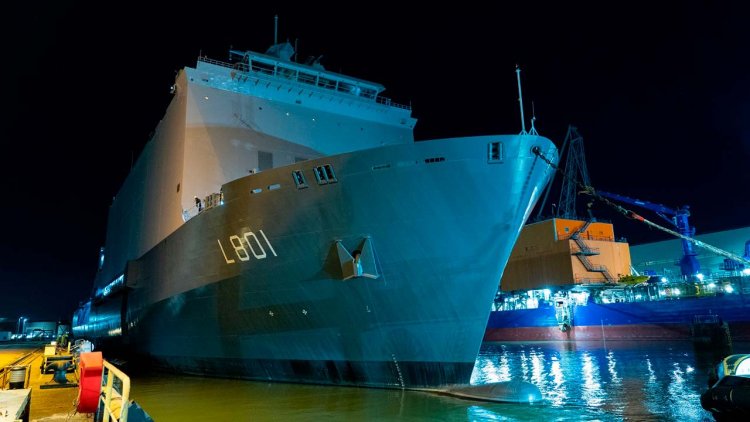
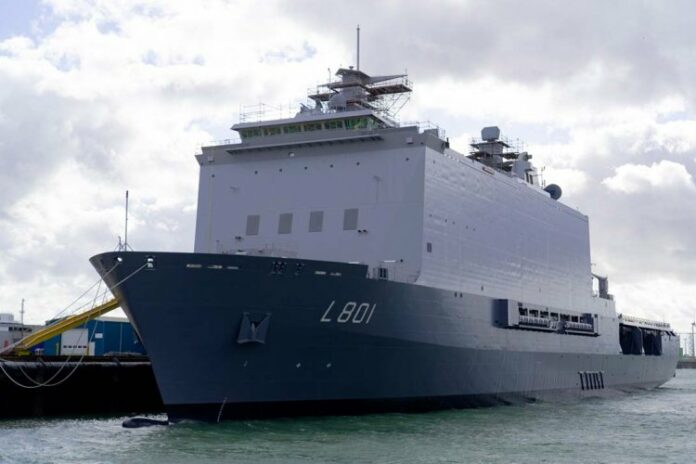
Over the past 13 months, the amphibious transport ship has undergone a comprehensive Midlife Update (MLU) in conjunction with the third period of Appointed Maintenance (BO3).

Despite the tight schedule and several challenges, the ship was handed over to the Defence Materiel Organisation (DMO) on Friday 31 March on schedule. The ship will now be towed to Den Helder, where the Naval Maintenance and Sustainment Agency, together with Damen Naval, will carry out some additional work.

“We are extremely proud, together with Defence, to have been able to complete this complex project as planned. We have worked extremely hard over the past year and the result exceeds our expectations,” said Damen Naval’s Project Director Fer Tummers. “Our company has had a close relationship with the Royal Netherlands Navy since 1905 and this project is the most recent example of the excellent cooperation between Damen Naval and the DMO, the Naval Maintenance and Sustainment Agency (DMI) and the crew of the Johan de Witt.”

The MLU/BO3 was a joint project between Damen Naval and Damen Shiprepair Vlissingen (DSV). The companies share a shipyard in Vlissingen-Oost, where the Johan de Witt arrived on 3 March 2022. In July 2022, the ship was moved to DSV’s dry dock for, among other things, conservation work on the underwater hull, superstructure, and all tanks. In November 2022, the Johan de Witt left the dry dock ahead of schedule and work continued quayside.

There were 69 MLU items planned, including refurbishment or replacement of equipment such as armament and communication systems, freshwater production (RO units), seawater pumps for firefighting and cooling, and more. The bridge, joint operations room, command, and engineering centre were completely refurbished, and the masts were also rebuilt. Over 60 km of new cables were pulled, and new decking installed. Medical facilities on board, such as the operating room, IC beds and nursing room, were completely modernised.

HNLMS Johan de Witt is the second Landing Platform Dock that Damen Naval has built for the Royal Netherlands Navy. Construction of the 176.35-metre vessel began in 2003 at the Damen Naval shipyard in Romania, and in 2004 the hull was towed to Vlissingen, where it was further completed. Completion and commissioning followed in 2007.

Fer Tummers: “HNLMS Johan de Witt is a maritime all-rounder and one of the finest ships we have had the pleasure of building for the Royal Netherlands Navy. It is therefore extra special to have her back in Vlissingen 15 years after delivery for this MLU/BO3. With the maintenance and upgrades the LPD has now had, the ship is all set to be able to her job for the next 15 years.”

Wärtsilä providing advanced technical support for De Beers Marine Namibia vessel

0

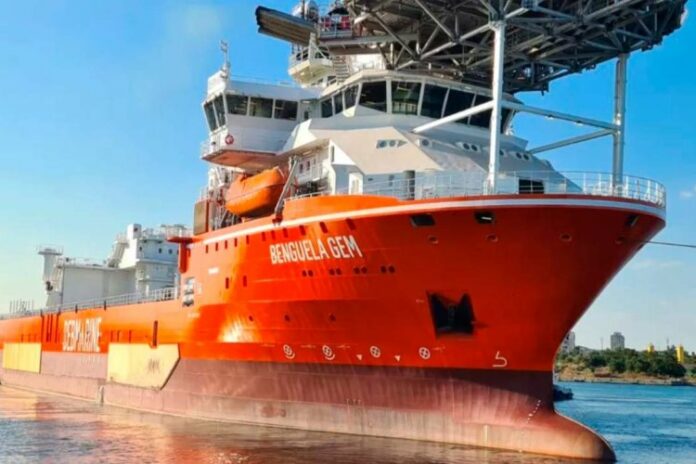
Technology group Wärtsilä has signed a Technical Management Agreement (TMA) with Debmarine Namibia. The agreement is designed to provide advanced technical support to the latest Debmarine Namibia vessel, the ‘Benguela Gem’. This is the first Lifecycle Agreement signed by Wärtsilä in Southern Africa. The order was entered into Wärtsilä’s order book in December 2022.

The ’MV Benguela Gem’ operates with six Wärtsilä 32 engines. The scope of the three-year TMA includes maintenance support for the engines and digital solutions to optimise the performance and prevent unnecessary downtime. The Dynamic Maintenance Planning solution optimises the time between overhauls and provides flexibility for maintenance scheduling. The Expert Insight, Wärtsilä’s unique predictive maintenance solution, secures asset availability by preventing potential problems before they occur. Through constant attention to the operational data from the engines, optimal performance can be achieved.

Debmarine Namibia Production Engineer David Shivute says:

“We have Wärtsilä engines installed on vessels throughout our fleet, and we are familiar with their quality and reliability. With this Technical Management Agreement, we are strengthening the cooperation between our companies through the supply of additional services, such as Expert Insight. We feel that this will support our operations even further.”

Henrik Wilhelms, Director of sales at Wärtsilä, says:

“We already support six vessels in the Debmarine Namibia fleet, but this agreement for their latest ship takes the support to a new level. This is completely in line with our lifecycle support approach, designed to ensure maximum efficiency and operational uptime for our customers’ vessels.”

The Debmarine Namibia fleet of diamond recovery vessels are mainly equipped with Wärtsilä engines. The 177-metre long ‘Benguela Gem’ commenced commercial operations off the Namibian coast in March 2022. It is reported to be the most technically advanced diamond recovery vessel in the world. The Wärtsilä agreement is effective from the beginning of 2023.

APM Terminals maps out $1 billion Rotterdam terminal expansion

0

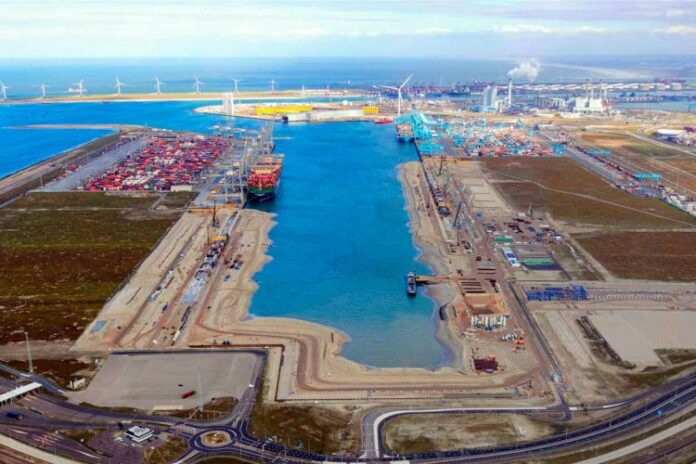
One of the world’s leading container terminal operators, APM Terminals, part of A.P. Moller – Maersk, has announced the expansion of its Maasvlakte II terminal in Rotterdam. 

The project involves a site of approximately 47.5 hectares with 1,000 metres of deep-sea quay. The Port of Rotterdam Authority is now constructing the new quay walls, which will be completed by mid-2024. The expansion will increase the terminal’s capacity by approx. 2 million TEU (standard size for containers) and the new section is expected to be operational in the second half of 2026.

APM Terminals opened at Maasvlakte II in 2015 as a fully automated facility with zero carbon emissions. The additional section of the terminal will also operate with net-zero emissions and be fully automated and prepared for shore power installation.

Allard Castelein, CEO of the Port of Rotterdam Authority:

“We are very pleased with APM Terminals’ decision to expand the terminal and to choose Rotterdam as the hub for its Western European operations. This additional terminal capacity is much needed to continue handling the increasing container volumes in the coming years in an efficient and sustainable way.”

Keith Svendsen, CEO of APM Terminals, commented:

“Our decision to invest further and expand in Maasvlakte II is a confirmation of Rotterdam’s importance for global supply chains and for our global network. We look forward to this important project and the opportunities it will unlock.”

Last year, 18.5 hectares of land in the same area were already leased to A.P. Moller – Maersk for the development of cross-dock and cold store facilities which will open during 2024. The facilities will provide ‘on-dock’ services for Maersk, which is one of the terminal’s main shipping-line customers.

With this announcement for Maasvlakte II, all the remaining vacant sites for APM Terminals in the Amaliahaven area of the port have now been leased for expansion projects.

The aim of the Port of Rotterdam Authority is to strengthen the competitive position of the port of Rotterdam as a logistics hub and a world-class industrial complex in terms of both size and quality. The Port Authority is able and willing to make an impact and so it is focusing on accelerating sustainability in the port and it is a partner in the digitalisation of the port and logistics chains. 

The Port Authority’s core tasks are the sustainable development, management and operation of the port, the maintenance of the smooth and safe handling of shipping and supporting the future-resilience of the port of Rotterdam.

Enefit Green acquires Liivi offshore wind farm project

0

According to Aavo Kärmas, Chairman of the Management Board of Enefit Green, offshore wind energy development will play a significant role in the expansion of renewable energy production in the upcoming years.

‘Estonia aims to generate a significantly higher amount of renewable electricity by 2030, and offshore wind energy is expected to be a critical component in achieving this goal. Therefore, it is crucial to sustain the pace of development work. The Liivi offshore wind farm is among the most progressive projects in the Baltic States, and the development project is geared towards commencing production before 2030,’ Kärmas explained.

He believes that offshore wind has immense potential in Estonia’s energy system.

‘There is a growing need for environmentally produced and affordable electricity, as many of the current technologies are being replaced by electricity-based solutions. Electricity production is more stable in an offshore wind farm, and only 50 wind turbines can provide half of the electricity currently consumed in Estonia,’ he added.

Liivi Offshore OÜ, formerly owned by Eesti Energia, was purchased by Enefit Green for a sum of nearly 6.2 million euros.

By order of 5 January, the Estonian Government authorised the Minister of Finance to decide on the separation of the Liivi offshore wind farm from Eesti Energia via division. In February, the Minister of Finance approved the division plan of Eesti Energia AS and approved the Articles of Association of Liivi Offshore OÜ. In March, the Minister of Finance granted permission for the transfer of Liivi Offshore OÜ to Enefit Green, followed by the preparation of the transaction and an audit of the terms.

The offshore wind farm in the Gulf of Riga is planned to have a capacity of one gigawatt and is expected to produce around 4 TWh per year. The area of development is situated between the coasts of Kihnu and Häädemeeste. At present, the surveys required to evaluate the wind farm’s environmental impact and the preliminary technical analysis of the project are being conducted. Estonian state has initiated spatial planning for the construction of a wind farm grid connection. In 2021, Eesti Energia signed a cooperation agreement with Ørsted, the world’s leading offshore wind developer, to build an offshore wind farm.

The Liivi offshore wind farm is the second offshore wind project in Enefit Green’s portfolio. The company is also developing a 1.1 gigawatt offshore wind farm in the north of Hiiumaa, which is scheduled to start production after 2030.

European consortium launches HyEkoTank hydrogen-powered maritime project

0

The consortium includes Shell International Exploration and Production Bv, TECO 2030, Fartygskonstruktioner, Umoe Advanced Composites, TECO Solutions, BLOM Maritime and Tarbit Shipping, representing the Netherlands, Norway and Sweden.  

HyEkoTank is funded by the EU, under the Horizon Europe programme, and will receive a €5m ($5.4m) grant.  

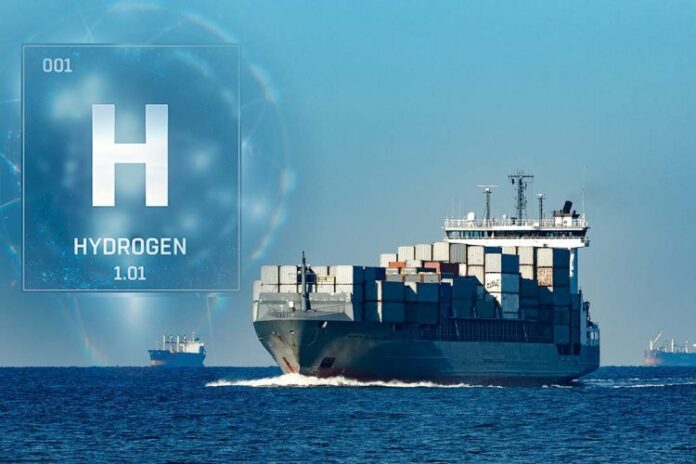
The 36-month project plans to develop and install a retrofit solution to transform the existing fleet and accelerate the goal of achieving climate neutrality of sea-going and inland waterway transport, by 2024.  

The solution will include a standardised 40ft ISO container, utilising a 2.4MW fuel cell system, hydrogen fuel gas conditioning, air filtration systems, power converters, battery storage and automation system.  

It will also incorporate a containerised, 350 bar, compressed 400kg hydrogen storage with type approval to perform hydrogen refuelling by swapping of containers using cranes.  

The project will also carry out a feasibility assessment, a model to optimise the hydrogen supply chain to ports and concept designs to standardise the technologies, making it easy to install.  

TECO 2030 revealed last year it had finalised the €5m grant for its hydrogen-powered tank project, HyEkoTank.  

The project will demonstrate zero emissions at berth and could reduce up to 60% of greenhouse gases (GHG) during voyage. The company believes it could become a ‘first mover’ in the maritime shipping sector and contribute to EU climate targets. 

TenneT awards 22GW of offshore grid contracts

0

With 40 gigawatts, Transmission System Operator (TSO) TenneT will account for almost two-thirds of the 65GW offshore wind energy target by 2030 agreed by Germany, the Netherlands, Denmark, and Belgium in the Esbjerg Declaration of May 2022 at the North Sea Energy Summit. 

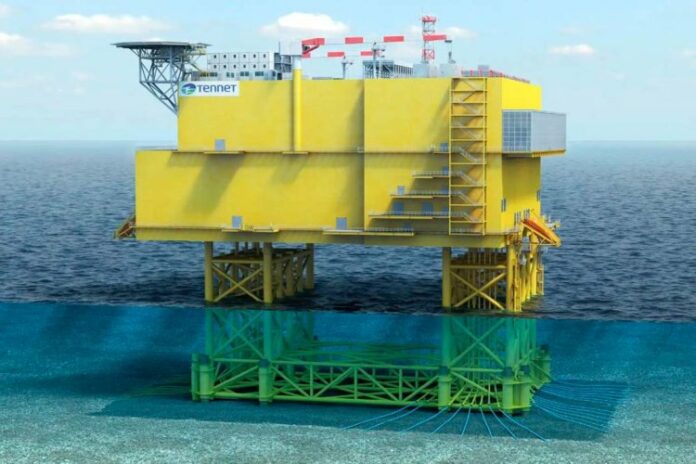
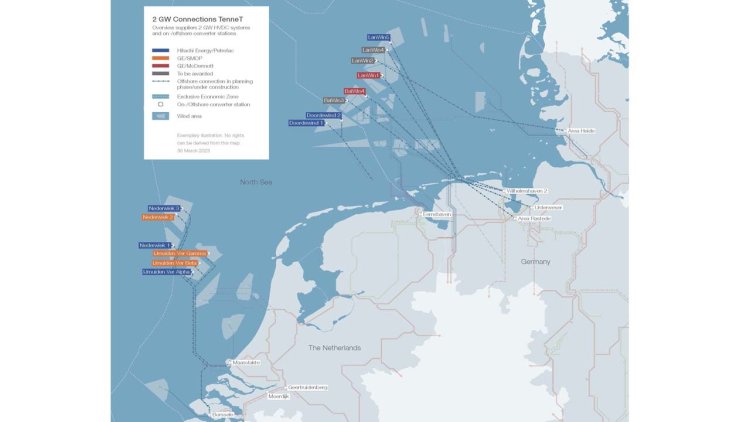
TenneT will build 20 gigawatts (GW) each in the German and Dutch North Sea with its innovative 2GW Program and pave the way for our next generation of offshore grid connection systems. The 2GW program consist of a new standardised platform and a new certified cable system with a higher transmission capacity. It plays a crucial role in developing the offshore energy transition and will help Europe become the world’s first climate-neutral continent.

In a collaboration with Hitachi Energy and Petrofac and consortia of GE/SMOP and GE/McDermott TenneT awarded multiyear agreements to connect eight offshore wind farms in the Netherlands and three offshore wind farms in Germany until 2031. Future additional HVDC stations are planned to be called off at a later stage. The announced agreements cover offshore platforms and onshore stations, as well as the HVDC system for the two-way conversion between alternating and direct currents.

The awarded suppliers will start preparatory work for the realisation of the projects with immediate effect to ensure that all projects can be delivered until 2031. The total volume of the eleven orders is approximately 23 billion euros.

Tim Meyerjürgens, COO TenneT said:

“TenneT has the technical know-how, scale and geographical position to connect wind energy from the North Sea. This is one of the most important infrastructure projects of the century; the green transformation of the energy system is key for the decarbonisation of industry. Together with our market partners we are very proud to have achieved another important milestone. Together we secure decisive acceleration of the offshore grid development and set the course for the future European energy landscape.”

Niklas Persson, Managing Director at Hitachi Energy’s Grid Integration business, said:

“This  innovative business model will set the course for the integration of a huge amount of offshore wind power and gives visibility for the future. In fact, we are already hiring to expand our global delivery capacity and effectively fulfill these and other orders.”

Sami Iskander, Petrofac’s Group Chief Executive, said:

“Today’s announcement represents an exciting next step in Petrofac and Hitachi Energy’s collaboration. We have already secured key resource and the yard capacity required to expedite the first two projects in TenneT’s ground-breaking programme. By combining Petrofac’s industry-leading EPCI expertise and Hitachi Energy’s well proven technology, we look forward to supporting TenneT to connect larger, more effective wind farms to deliver affordable clean energy for millions of European homes.”

Philippe Piron, CEO GE Grid Solutions, said:

“Together with our consortium partners Sembcorp and McDermott, we are honoured and pleased to play a key role in this critical infrastructure project for European energy security and decarbonisation. These awards confirm that GE’s Voltage-Sourced Converter HVDC technology is now recognised as one of the most advanced in the world.”

Chris Ong, CEO of Sembcorp Marine, said:

“We are delighted together with our partner GE, to be selected by TenneT for three of their eleven two-gigawatt offshore converter platforms in the Netherlands. These are our largest and most advanced state-of-the-art offshore renewable energy projects to date.”

Vaseem Khan, McDermott’s Senior Vice President for Onshore, said:

“Our integrated EPCIC delivery model, combined with nearly a century of executing some of the most challenging offshore projects in the world, make us ideally suited to support TenneT on this important offshore grid connection systems project.”

Marco Kuijpers, Director Large Projects Offshore TenneT said:

“The new long term approach goes hand in hand with a fundamental change in values towards a strong partnership. This approach enables both sides with more flexibility, technological progress, and planning security. This benefits all parties and secures employment, growth, and the strengthening of supply chains. We can already see that our partners invest in extra resources and facilities.”  

With its 2GW Program, TenneT has developed the global offshore standard in cooperation with leading global suppliers. This new standard combines TenneT’s extensive expertise in offshore grid development with a unique transnational approach. With its strong focus on harmonisation and standardisation, it provides a blueprint for future offshore grid connection systems and enables faster deployment. At the same time, the larger capacity of two gigawatts per system reduces the number of grid connections required. The 2GW Program sets a new pace for the European energy transition. It will provide Europe and its inhabitants with more green energy in a safe and cost-effective way – all with the lowest possible environmental impact.

Wintershall Dea awarded second storage licence for CO2 in Norway

0

Wintershall Dea and its partner Altera have been awarded the Havstjerne CO2 storage licence in the Norwegian North Sea by the Norwegian Ministry of Petroleum and Energy. The licence is located 135 kilometres southwest of Stavanger and will be operated by Wintershall Dea, holding 50 per cent of the shares. The estimated annual storage capacity amounts to up to seven million tonnes.

Hugo Dijkgraaf, member of Wintershall Dea’s Board of Executive Directors as well as its Chief Technology Officer, said:

“This second licence award in Norway supports our ambitious target to build a global carbon management portfolio that potentially can abate 20 to 30 million tonnes of CO2 per year by 2040. We are working intensively on delivering the infrastructure Norway needs to become a hub for European carbon storage.”

The Havstjerne partnership sees the award as a necessary step towards developing the Norwegian Continental Shelf into a leading European CO2 storage area. Norway has the largest underground storage potential in Europe and can play a key role in efforts to achieve climate targets when efficiently linked to continental European emitters. 

Wintershall Dea and Altera intend to develop a system for transporting CO2 by ship to the Havstjerne license and thus offer a flexible and scalable solution, offering storage to emitters from around Europe. The partnership has already investigated clusters of emitters in the Baltics, the Netherlands, Portugal, and Spain for sourcing CO2 for storage.

“CCS as a decarbonisation strategy is expected to expand and grow significantly in Europe the coming years, so this is only the beginning. The world needs CCS on a massive scale, and we are proud to be part of the solution.  Together with our strong partner Wintershall Dea, we are ready to do our part in leading the industry towards a sustainable future”, said Ingvild Sæther, CEO of Altera Infrastructure Group Ltd.

In addition to the awarded Havstjerne licence, Wintershall Dea operates the Luna licence in the Norwegian North Sea for future storage of CO2 and is working with Equinor in the NOR-GE project on a 900-kilometre-long CO2 pipeline. The company is ideally placed to build a European value chain from the planned carbon collection points in Wilhelmshaven, Germany, to suitable storage reservoirs in Norway and thus offers a large-scale solution for European industrial emissions to be stored safely and cost efficient under the North Sea.

In March 2023, Wintershall Dea initiated the first CO2 storage in the Danish North Sea as part of Project Greensand and proved the technology’s feasibility and safety. For the first time in the EU, the entire CCS value chain is being implemented across European borders. Together with its CCS plans in Norway, Wintershall Dea is underlining its ambition to make a vital contribution to Europe’s climate targets.

Norsepower and IINO Lines to install Norsepower Rotor Sails on a newbuild VLGC

0

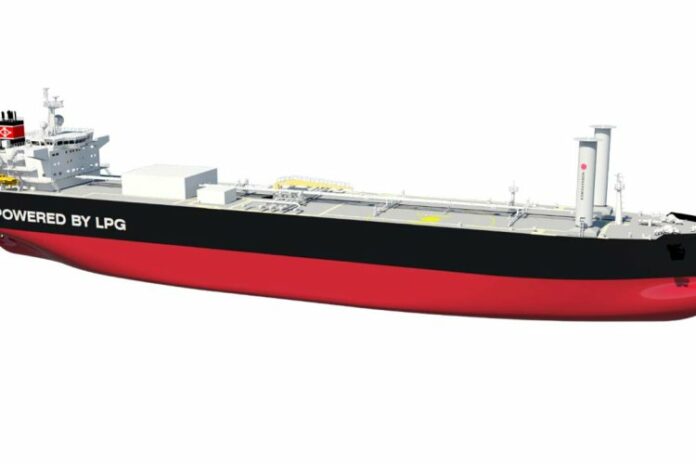
Norsepower and global shipping company IINO Lines have announced a contract for the delivery and installation of two Norsepower Rotor Sails™ on a newbuild Very Large Gas Carrier (VLGC). 

The new vessel – delivered today from Daewoo Shipbuilding & Marine Engineering Co., Ltd in Korea is ready to be equipped with two bespoke 20m tall Norsepower Rotor Sails™ side by side. The new, specially designed, 20m x 4m units have been developed to accommodate the vessel’s specific air draught limits. The units will be installed on board the vessel in Q2 2024.

The Norsepower Rotor Sail™ is an innovative, modernised version of the Flettner rotor. A small amount of electricity is used to spin the cylinder on the deck. The spinning cylinder and the wind create the Magnus effect to generate thrust supporting the main propulsion which reduces fuel consumption, emissions, and fuel costs.

Following calculations, Norsepower estimates the Rotor Sails will reduce the fuel consumption and CO₂ emissions from the vessel by approximately 4%. The performance of the Norsepower Rotor Sails™ is estimated by methodology verified by ClassNK. The saving will help the vessel meet international emissions reduction targets, including the Carbon Intensity Indicator (CII), and save on rising fuel costs, while also can be future proofing from anticipated carbon pricing.

Hiromi Tosha, President of IINO Lines, commented:

“IINO Lines is committed to taking an innovative approach to meeting and exceeding local and international decarbonisation targets. Investing in sustainable vessels is central to our approach and working with Norsepower will enable us to use innovative, and proven technologies which fit in seamlessly with our operations.”

Tuomas Riski, CEO of Norsepower, added:

“With more stringent environmental regulation being enforced, interest in the Norsepower Rotor Sail™ is increasing significantly and our latest agreement shows how action is being taken today across multiple stakeholders including charterers. This is being underpinned by the real-life performance data from the 15 Norsepower Rotor Sails™ which are in action today. The data taken from eight years of operations demonstrates the reduction of fuel costs and emissions that are achieved, which in some cases is over 25%. It is also Norsepower’s third gas carrier installation contract.”

The LPG dual fuel ship will be delivered in March 2023 with the Norsepower Rotor Sail™ foundations fitted, and the units will be installed in Q2 2024 after the vessel is in operation.

Wärtsilä to supply systems for new VLEC vessels

0

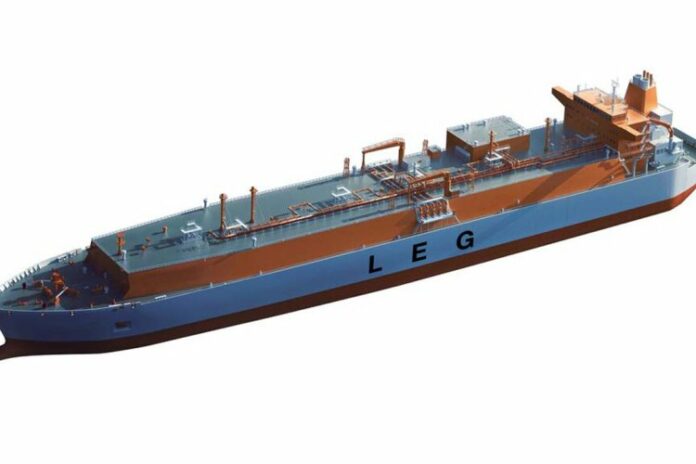
Technology group Wärtsilä has again been contracted by the Hyundai Heavy Industries (HHI) shipyard to supply the Cargo Handling and integrated Fuel Gas Supply systems for Very Large Ethane Carrier (VLEC) vessels. 

This latest order, booked by Wärtsilä in Q1, 2023, is for two VLECs being built for Japanese ship owner Iino Line.

It follows a series of ongoing deliveries of similar newbuild VLEC vessels at HHI. Wärtsilä has had a long-standing relationship with HHI, especially regarding a wide range of gas related products and systems for various types and sizes gas carriers.

Mr. Sangryul Kim, Vice President, Hyundai Heavy Industries, said:

“We have great respect for Wärtsilä as a provider of high-quality cargo handling and fuel gas supply systems, which are essential elements in the design of these ships. In today’s maritime market, close cooperation with trusted partners is increasingly important for ensuring that projects are completed in the most efficient way possible.”

Harald Øverland, Sales Manager, Cargo Handling and Fuel Supply Systems, Wärtsilä Gas Solutions, commented:

“It is satisfying to be awarded the order, and we are grateful for the trust shown in our products by HHI. This latest order further strengthens Wärtsilä’s position as a market leader in cargo handling and fuel supply systems, and notably for large sized ethane carriers. These are advanced and very specialised vessels requiring advanced and specialised solutions, which we are proud to deliver.”

The Wärtsilä equipment is scheduled for delivery to the yard in mid-2024.