-0.9 C
New York
Home Blog Page 314

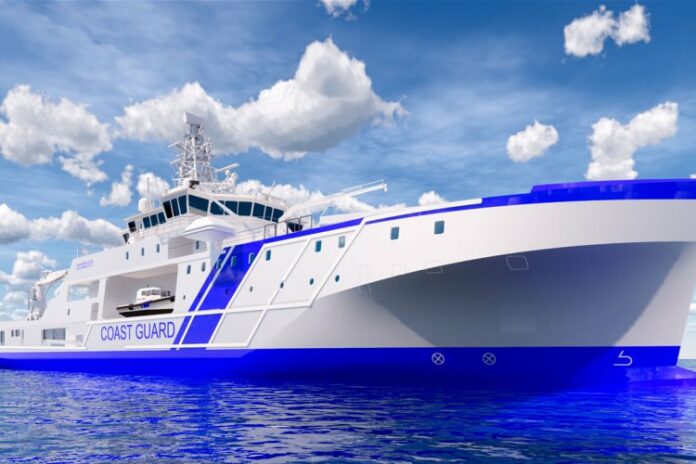
ABB to power two new multi-purpose patrol vessels for Finnish Border Guard

0

Azipod® propulsion system ensures high maneuverability and ice-breaking capabilities to support demanding operations, and Onboard DC Grid™ provides enhanced power train efficiency and compatibility with alternative energy sources

Designed for low emissions and energy efficiency, the vessels ensure continuous readiness to keep people, property and nature safe
ABB has secured a contract with Finnish shipbuilder Meyer Turku to supply an integrated power and propulsion package comprising two Azipod® propulsion units and the Onboard DC Grid™ power system for two new, advanced multi-purpose patrol vessels of the Finnish Border Guard.

Due delivery in 2025 and 2026, the 98-meter ships will replace the outgoing Tursas and Uisko patrol vessels. Alongside the existing Turva, they will be guarding Finland’s borders, performing maritime rescue operations and helping mitigate environmental impacts. The new vessels will also serve as command bases for other vessels, helicopters, rescue swimmers, divers, and, when necessary, other public security authorities during joint operations. With them, the ability to carry out mass evacuations will grow to more than 400 people and the capacity to collect spilled oil will approximately double from the present level.

Patrolling the Finnish coast, which is characterized by rocky waters, jagged shoreline and challenging winter conditions, sets high demands for the vessels. ABB’s dual Azipod® propulsors will provide the maneuverability and ice-breaking capabilities to optimize performance and safety while enhancing crew comfort by minimizing vibrations.

“Our new patrol vessels will be at sea about 330 days a year, performing operations under busy and diverse conditions,” said Commander Marko Aheristo, Head of Ship Technical Unit at the Finnish Border Guard. “The vessels are designed for low-emission operations and for energy efficiency, and need a versatile and sophisticated power and propulsion system based on advanced, proven technology. ABB provides us with an integrated package that meets our stringent requirements, ensuring rapid functional capacity and continuous readiness to keep people, property and nature safe.”

By increasing power train efficiency and future-proofing the vessels for the adoption of alternative energy sources, ABB Onboard DC Grid™ will help the Finnish Border Guard to meet environmental targets in the short and long term. The system platform’s flexibility will also facilitate the integration of additional mission systems as requirements evolve, while its high fault tolerance and reliability will result in safer, more efficient operations.

Alongside Onboard DC Grid™ and Azipod® propulsion, ABB’s scope of supply includes the Power and Energy Management System (PEMS™). As the core of a vessel’s combined power and control system, ABB’s PEMS™ ensures optimal use of total onboard power resources in a safe, energy-efficient and environmentally-friendly manner.

“We are proud to have been chosen by the Finnish Border Guard for this important and forward-thinking project and look forward to continuing our long-standing collaboration with Meyer Turku,” said Antti Ruohonen, Head of Marine Propulsion, ABB Marine & Ports. “With this order, ABB further demonstrates its position as preferred system integrator for challenging and diverse vessel operations.”

Ocean Installer and Baker Hughes extend North Sea alliance

0

The new global agreement will minimise the total expenditure and delivery time of offshore developments, including energy transition projects, by innovatively pre-provisioning the deployment of key components and providing flexibility on vessel and equipment delivery schedules.

The one team philosophy combines Baker Hughes’ extensive technology and engineering offering with Ocean Installer’s subsea and marine operations expertise and enhances an already successful North Sea collaboration that was first concepted on the Balder Future integrated subsea production system, umbilicals, risers and flowlines (SPS+SURF) project for Vår Energi in Norway in 2019.

The duo will work closely with global customers to de-risk their commercial and operational activities and deliver significant project efficiencies, as well as continuing to focus on safety and emissions reductions.

Kevin Murphy, Ocean Installer CEO said:

“We have enjoyed a highly successful relationship with Baker Hughes for many years and are delighted to formally continue and enhance that partnership for our global customer-base. We have built a strong culture of trust with Baker Hughes and are aligned in delivering projects that assist the local communities we operate in and reduce the carbon footprint of our customers’ developments. We look forward to advancing these aims further in our new global agreement.”

“Having successfully worked together on several projects in the North Sea, Baker Hughes looks forward to continuing our collaboration with Ocean Installer to deliver integrated solutions for targeted projects,” said Dave Dillon, senior vice president, Subsea & Surface Pressure Systems at Baker Hughes. Together, using our Subsea Connect framework, we will continue to advance innovation, deliver optimal solutions to our customers and drive positive change in the industry.”

MacGregor receives RoRo equipment order for Grimaldi Group’s Pure Car and Truck Carriers

0

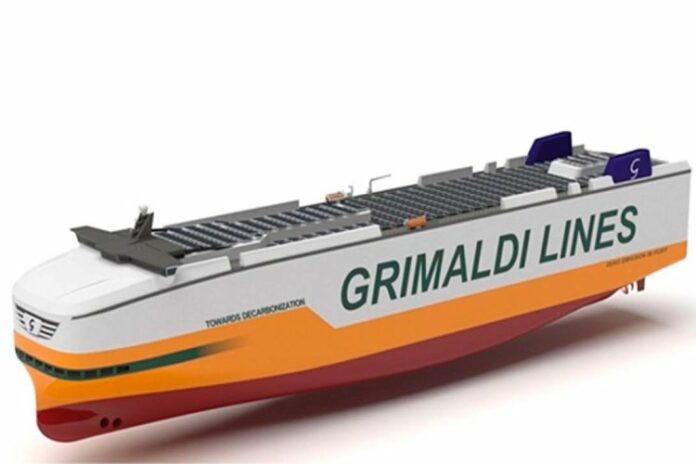
MacGregor, part of Cargotec, has received a significant repeat order with a total value of more than EUR 20 million for comprehensive packages of RoRo equipment for a total of five Pure Car and Truck Carriers (PCTC) vessels. 

These vessels will be built at China Merchant Heavy Industries for Grimaldi Group. This deal will extend MacGregor’s supply of RoRo equipment from five to ten of Grimaldi’s new PCTC vessels.

The orders were booked into Cargotec’s 2023 first quarter orders received. The vessels are scheduled to be delivered to the shipowner between the third quarter of 2024 and the third quarter of 2026.

MacGregor’s scope of supply encompasses design, supply and installation support of RoRo  and car deck equipment to all of the five ordered vessels. The equipment includes quarter stern ramps, internal ramps, covers and doors, both liftable and electrical hoisted car decks. MacGregor’s equipment is designed for multi purpose use with a high level of flexibility.

The vessels have a loading capacity of over 9,000 CEU and have been designed to transport Electric Vehicles. The vessels have received the Ammonia Ready class notation by Rina, which certifies that the ships have been designed and will be built to be later converted to use ammonia as marine fuel. The vessels will also be equipped with mega lithium batteries, solar panels and shore connection, which will allow them to achieve the Zero Emission in Port ®. Another main technical innovations are the air lubrication system, an innovative propulsion and optimized hull design, which aim to reduce the carbon footprint.

Emanuele Grimaldi, managing director of the Grimaldi Group, stated:

“With our recent orders for the construction of new PCTC vessels, our Group has reaffirmed its commitment to its customers, especially the world’s leading car manufacturers who continue to reward us with their trust. In this way, we will continue to live up to their high expectations and meet their evolving needs, with our offer of increasingly efficient and environmentally sustainable shipping solutions”

Magnus Sjöberg, Senior Vice President, Merchant Solutions, MacGregor, says:

“I’m proud to see shipowner’s and shipyard’s  continued strong trust in the MacGregor brand and our long experience and great track-record  with RoRo solutions. We very much value the solid relationship that we have with both China Merchant Heavy Industries and Grimaldi Group. MacGregor supported Grimaldi already in the planning stage by finding cost savings and giving technical guidance for optimised cargo flow. We are extremely committed to maintaining this trust in future” 
 

Gulf offshore oil and gas production has double the climate impact as inventories report

0

The work could have bearing on future energy production in the gulf, as decisions about expanding oil and gas harvesting depend on calculations of the climate impact.

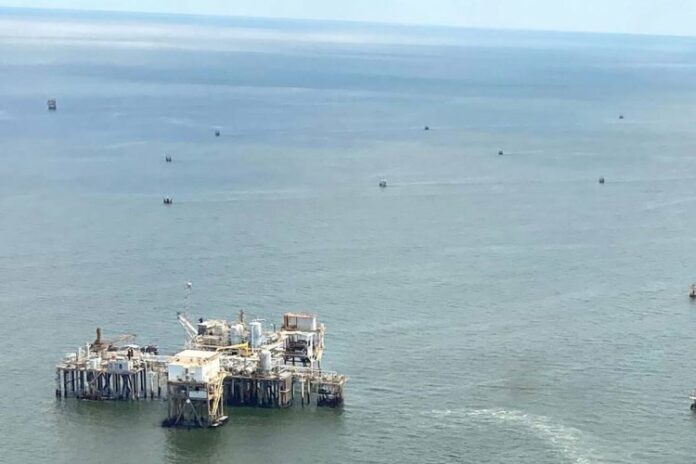
While a gap between reported and measured methane emissions in the basin has been noted in the past, this study is believed to be the first to quantify methane and carbon dioxide emissions and identify the main culprits. It turns out older platforms located closer to land emit far more methane than is reported in government inventories.

Simple steps could go a long way in mitigating those releases, the researchers say.

To conduct their atmospheric measurements, the researchers flew upward and downward in a cylindrical pattern around the platforms and measured amounts of both carbon dioxide and methane being released. They combined aircraft measurements with all previous field surveys to gather the largest sample size of Gulf of Mexico platform GHG emissions. Their observations quickly put a spotlight on certain oil and gas producing operations.

“What we found is that a certain type of shallow water platform had large methane emissions that elevated total greenhouse gas emissions for the entire Gulf of Mexico,” said Eric Kort, U-M associate professor of climate and space sciences and engineering, principal investigator of the F3UEL project and corresponding author of the study published in the Proceedings of the National Academy of Sciences. So if we can direct mitigation efforts at those sources to address the problem, it could have a huge positive effect.”

These sources are larger “central-hub” multiplatform complexes that collect oil and gas from small production platforms for processing. Sampling showed these emit more methane than expected, due to direct venting into the atmosphere or releases from tanks and other equipment.

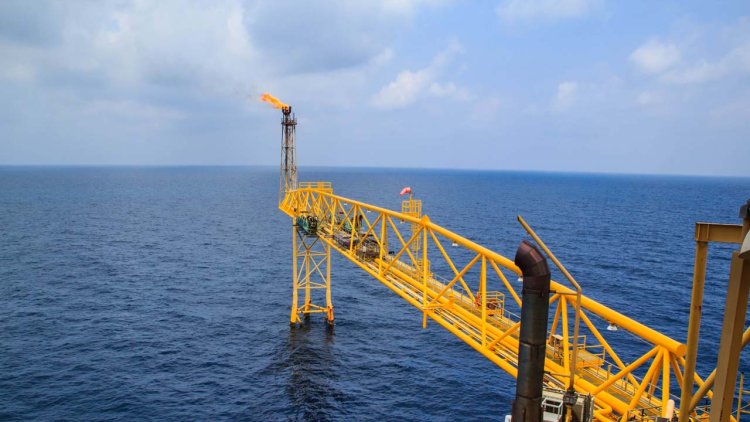
Actions to address these large methane emissions, whether through capturing the gas, flaring it instead of venting, or repairing or abandoning of facilities, could have outsized climate benefits.

The finding is similar to research published in September by the same team that showed inefficient flaring operations on land were releasing five times more methane into the atmosphere than expected. Together, these studies demonstrate the need for a more comprehensive way of assessing greenhouse gas emissions, and thus the climate impact of oil and gas production for a given region. Climate impact is determined by “carbon intensity,” a metric for the levels of greenhouse gasses that are emitted per unit of oil or gas produced.

When new oil and gas projects are under consideration, regulators assess whether the new builds will have the same or lower than the carbon intensity of expanded production elsewhere. This has already impacted decisions about oil and gas lease sales in the Gulf of Mexico. However, in these assessments, estimates of the carbon dioxide and methane released into the atmosphere have not historically been based on direct measurements, and many of them have not included methane emissions.

“We have presented the climate impact of both oil and gas production as an observation-based carbon intensity,” said Alan Gorchov Negron, a U-M graduate student research assistant and the study’s first author. “This metric reflects a snapshot of real-time climate impacts and offers an easy way to integrate the growing number of field surveys of emissions from fossil fuel production into a consistent metric.

“Moving forward, policy or investment decisions can use consistent metrics such as this to choose fossil fuels from locations that minimize their climate impacts.”

The study also involved researchers from Stanford University, Scientific Aviation, Carbon Mapper and Environmental Defense Fund.

The biggest offshore wind ‘living lab’ in the world to be developed in the Humber

0

The £2.8m project will accelerate the development of a new generation of digital technologies essential for the huge expansion of offshore wind generation required to meet climate targets. It is being driven by a consortium led by the Offshore Renewable Energy (ORE) Catapult and bringing together the expertise of Microsoft, Vilicom, JET Connectivity, XceCo, Associated British Ports (ABP), Acceleran and Satellite Applications Catapult.

The offshore wind sector is growing rapidly, increasing the need for Operations & Maintenance (O&M), which can be both expensive and hazardous. On average, O&M accounts for 25% of the total lifetime cost of an offshore wind farm, and as the sector expands, there is a strong push to reduce this cost by using robotics and autonomous solutions to support necessary inspections, maintenance and repair.

The 5G Testbed will allow technology providers to test and demonstrate their equipment in real world conditions, with access to reliable, high-speed communications. It aims to kickstart a digital revolution in offshore wind O&M in the region and attract users from the global offshore wind sector.

Ben George, head of Smart Operations and Maintenance (O&M) at ORE Catapult, said:

“This 5G Testbed is a hugely exciting development for O&M in offshore renewable energy, as it establishes the core communications infrastructure for the biggest offshore wind ‘living lab’ in the world. The Testbed will demonstrate the benefits of new remote digital solutions that require high bandwidth, low latency wireless communications – aimed at making O&M safer, greener and more effective.

“It will provide a real-world development, demonstration and test zone for robotics and autonomous systems (RAS), remote sensors, wearable technology, cyber security, zero emission vessels, smart ports, and aquaculture that will drive the digital future of O&M. This gives UK innovators and technology developers the upper hand as they bring new products and services to market, including for export into an offshore wind sector that is booming around the world.

“We are delighted to be working with our group of expert partners as we seek to transform the Humber into a new ‘silicon estuary’.”

To create the Testbed, two 5G technology development and demonstration zones over the existing fibre network will be built – one at Grimsby Port and the other within the Lynn and Inner Dowsing wind farm. Fifteen 5G radio transmitters will be placed across five sites including wind turbines and a radio mast, and two 5G solar powered buoys will provide an extended 5G network beyond the range of the wind farm. JET Connectivity is providing the 5G solar powered buoys for the project.

Credited for being the world’s largest operations and maintenance (O&M) offshore hub, the Port of Grimsby is an established centre of excellence for these activities for Round 1 and 2 wind farms in the North Sea. The port offers a number of sites suitable for the development of the operations and maintenance (O&M) industry, as well as other offshore wind-associated activities.

Simon Bird, ABP Humber Regional Director, commented:

“We are very proud that our Port of Grimsby has been chosen as the primary site for the 5G network and look forward to working with partners on this project to make it a success. At ABP, we’re committed to supporting innovation in the renewable energy sector, alongside decarbonising our own operations, as reflected in our net zero sustainability strategy, Ready for Tomorrow, which was launched last month.”

The offshore wind sector is growing rapidly, increasing the need for O&M, which is currently expensive and hazardous. On average, O&M accounts for 25% of the total lifetime cost of an offshore wind farm, and as the sector expands, there is a strong push to reduce this cost by using robotics and autonomous solutions to support necessary inspections, maintenance and repair.

However, many new digital solutions rely on high-fidelity wireless data communications that 5G provides, and while 5G is being installed in new wind farms, these are not available for wider development and testing. This project will create the 5G infrastructure that provides an accessible and operationally integrated Testbed for new technologies that are essential to the roll out of offshore wind globally.

The project will be funded with £1m from the Innovate UK Cyber Physical Infrastructure (CPI) fund, an expected £1m from the Greater Lincolnshire Local Enterprise Partnership (LEP), and industry match funding.

Halina Davies, Partnerships and Programmes Executive Manager for the Greater Lincolnshire LEP, added: “We are delighted to be working with ORE Catapult to enable progression of this exciting and innovative scheme and have provisionally agreed support via our Clean Growth Accelerator Fund Programme.

“The 5G testbed will create a unique asset, expertise and capability that will attract inward investment from the UK and around the world, enabling innovation in leading edge technologies to be proven in an operational setting, ultimately creating 200 jobs, assisting over 120 businesses and creating 20 new enterprises.”

In the UK, offshore wind capacity is predicted to grow from 13GW to 50GW within the next decade, and globally, the rapid investment in offshore wind will create huge opportunities for the UK wind industry. The 5G Testbed project will be based at ORE Catapult’s Operations and Maintenance Centre of Excellence in Grimsby, the UK’s largest O&M port.

Vitol’s V-Bunkers unveils first electric-hybrid bunker tanker in Singapore

0

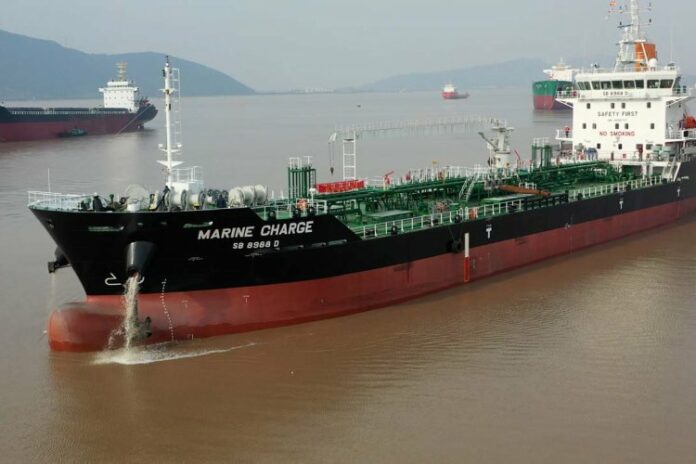
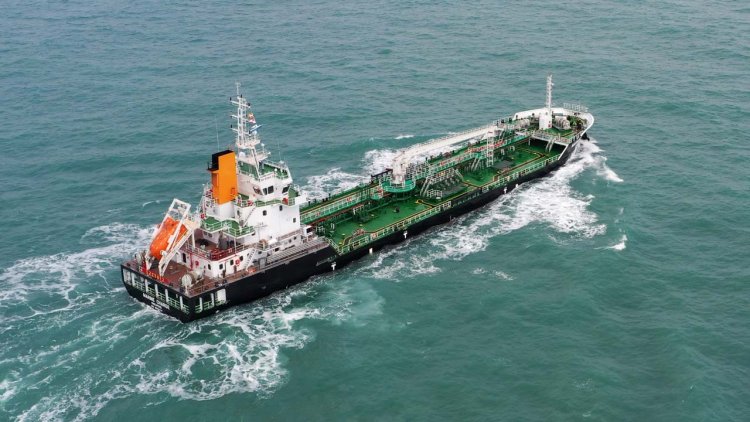
Classed by Bureau Veritas (BV), a world leader in testing, inspection and certification, the electric-hybrid bunker tanker features advanced energy storage and charging technologies that will help curb greenhouse gas emissions (GHG) from port operations in Singapore. 

V-Bunkers placed an order to build two of these cutting-edge vessels in 2021, with the second tanker, MARINE DYNAMO, scheduled for delivery in Q2 2023. These electric-hybrid bunker tankers are designed to significantly reduce carbon emissions in port locations and will be deployed for harbour operations within Singapore. 

The vessels have been built by Zhejiang Shenzhou Sunshine Heavy Industry Co., Ltd. and were designed by a Singapore-based designer. The BV-classed bunker tankers are built with BV’s Electric-Hybrid notation and feature state-of-the-art Energy Storage Systems (ESS) technology, comprising Lithium-ion batteries and a highly automated Power Management System (PMS), to achieve an estimated 10% reduction in GHG emissions. The design configuration enables the auxiliary engines to operate at the most optimal specific fuel oil consumption (SFOC), while the ESS performs peak shaving during low power consumption periods for usage of stored energy during high consumption periods. The ESS has recharging capabilities, and while onshore power supply is currently unavailable, the bunker tankers are ready for when charging infrastructure and facilities become available in Singapore.

BV’s ‘Electric-Hybrid’ notation addresses the complexity of electric hybrid system implementation, defining requirements for storage, power distribution, control, and instrumentation, as well as tests that must be carried out to validate power management and critical safety considerations, such as thermal runaway. Bureau Veritas is continuously working towards the development of a standardised safety framework for on-board batteries, which is crucial as the industry explores various options to achieve carbon-neutral shipping.

David Barrow, Vice-President South Asia and Pacific, Bureau Veritas Marine & Offshore, commented:

“Bureau Veritas is committed to supporting the safe development and deployment of batteries within the maritime sector, and it is heartening to see the industry embrace sustainable solutions to reduce carbon emissions and improve energy efficiency. V-Bunkers’ electric-hybrid bunker tankers are a positive step towards building a greener and more sustainable future for Singapore’s port operations.”

The launch of these electric-hybrid bunker tankers is a significant milestone for V-Bunkers and demonstrates the company’s commitment to sustainable shipping practices. By deploying these vessels in Singapore’s port, V-Bunkers aims to reduce carbon emissions and pave the way for a more sustainable future in the maritime industry.

Mike Muller, Head of Vitol Asia, said:

“We are delighted to be the first to bring ESS technology to the local bunker craft sector and thus contribute to the reduction of emissions in the port of Singapore, the world’s largest bunkering port. We shall continue to support Singapore’s aspirations, led by the Maritime Port Authority of Singapore, to be a leader in maritime decarbonisation. We consider deployment of these two electric-hybrid bunker tankers to be an important step forward in Singapore’s decarbonisation journey.”

Laskaridis Shipping announces launch with ShipIn Systems

0

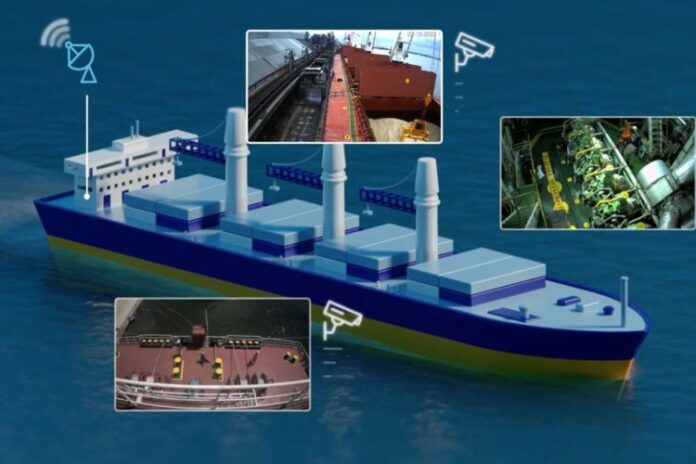
Laskaridis Shipping Company has announced that they have started a project with maritime technology company ShipIn Systems, the world’s first FleetVision™ Platform.

The innovative visual analytics solution provides a digital bridge between ship and shore, enabling real-time collaboration between ship owners, managers, and crew onboard to enhance vessel safety and productivity.

Laskaridis Shipping controls a fleet of 90 vessels. The team will install ShipIn’s fleet of AI-powered CCTV cameras onboard to detect discrete events like maintenance, navigation, and cargo operations. The platform will automatically alert the Laskaridis team both onboard and onshore to any safety or security risks, creating a digital source of truth that rolls up to powerful, fleet-wide analytics.

“We’re proud to be the very first ship management company in Greece to implement this innovative technology solution,” said Laskaridis Shipping COO Georgios Christopoulos. “The FleetVision™ system will become an important part of our digitalization strategy and will help us better pursue our policy towards operational excellence.”

A long-time innovator in the maritime industry, Laskaridis Shipping will now have access to onboard operational data in near real-time. ShipIn enables collaboration between captains and crew onboard vessels and operations ashore through a patented communication protocol that minimizes required data bandwidth.

“FleetVision is able to detect near-miss incidents in real-time before they bring accidents. This is expected to improve safety performance and awareness,” said Catherine Prifti, DPA-HSQE Director of Laskaridis Shipping.

FleetVision™ provides visibility to low-traffic areas onboard, enabling early hazard detection, protection from external damages like drug smuggling and stevedore damages, and more. With all ship activities rolling up to an analytics dashboard, it makes it easy to benchmark performance, perform remote audits, and improve the operational ROI of the entire fleet.

“We’re honored to work with Laskaridis Shipping, a prominent owner and manager, and look forward to providing the full benefits of FleetVision™ across their fleet,” said Osher Perry, CEO and Co-Founder of ShipIn Systems.
 

24 wind turbines in Arcadis Ost 1 OWF up and running

0

Parkwind successfully finishes the current installation campaign of the Arcadis Ost 1 wind farm. 

After a 3-year break for new offshore wind in the German Baltic Sea, Arcadis Ost 1 marked the restart of offshore wind farm build-out in the area.

The installation of 24 turbines of Parkwind’s Arcadis Ost 1 offshore wind farm has been completed and most turbines are already producing green electricity and thus contributing to the German Energiewende. This marks the end of the first installation campaign of the wind farm using the revolutionary floating RNA installation method developed together with Heerema MC and Vestas. Due to some delays on blade deliveries, the remaining three turbines will be installed upcoming Autumn, completing the 257 MW windfarm.

The Rotor Nacelle Assembly (RNA) method has proven to be a successful and reliable method for installing wind turbine generators with floating installation vessels. Installation cycle times were consistent and competitive with traditional methods while the floating installation introduces various specific benefits, such as zero seabed interaction which is especially important in areas of significant water depth or challenging soil conditions.

“The success of the RNA installation method marks a significant achievement for the offshore wind industry. Parkwind has been at the forefront of innovation in offshore wind for the last decade, and with Arcadis Ost 1 we continue to do so. As offshore wind energy targets grow, this kind of innovation is key if we want to move towards a sustainable future as fast as possible. As zones go further offshore and turbines increase in size, we are certain to see a continued demand for substantial innovation in our industry. We are delighted to be a part of this journey,” commented Eric Antoons, co-CEO of Parkwind.

Heerema’s Project Manager, Thijs Postma, added:

“Knowing that the entire market was watching the first commercial floating installation of wind turbine generators was a unique and special experience and I’m especially proud of the huge team effort that made this project possible. We thank all of our partners and subcontractors and look forward to the second campaign for the remaining turbines later this year.”

Ramon de Haas, CTO of Heerema, said:

“The floating installation of Arcadis Ost 1 has demonstrated Heerema’s ability to make a real change in the offshore wind market. We continue to be committed to introducing new methodologies that can solve industry challenges.”

Finnish offshore wind project moves forward

0

Ilmatar Offshore was granted a seabed survey permit for the 1.2 GW offshore wind project area Vågskär in the Finnish Exclusive Economic Zone (EEZ) and contracted Ramboll to start with the environmental impact assessment.

Ilmatar Offshore identified a new 367 km2 offshore wind area in the Finnish exclusive economic zone, the company said. The project area called Vågskär is located in the southern part of the Bothnian Sea and has a potential capacity of 1.2 GW, based on 15 MW turbines, the technology already in use today.

The Finnish Government granted the seabed survey permit to Ilmatar. Ramboll Finland will now conduct the area’s environmental impact assessment (EIA) based on existing data.

Stefan Husa, Leading Expert in Marine Planning at Ilmatar Offshore, said:

“Ramboll is an established environmental consultant with experience from many marine and offshore wind projects in Finland and offers all the necessary expertise to investigate our project areas. We also create synergies, as Ramboll Finland acts as our EIA consultant also for the Stormskär and Väderskär project areas in the Åland territorial waters.”

As part of the EIA process, several field surveys, marine archaeological and biological investigations will be carried out to map species that occur in the area, which ecosystems need to be considered and what environmental impacts the wind farm has during the construction, operation and dismantling phase. Also examined are the geophysical character of the area, i.e. the depth of the seabed, sediment type and bedrock depth, and the characteristics of the sea, such as water currents and ice conditions. Another essential part of the EIA work is to investigate existing activities in the area and how they may be affected when the wind farm will be built.

Technical and environmental studies will be conducted in the project area in 2023 and 2024. According to the preliminary schedule, the EIA work for Vågskär will be finalised in mid-2025.

QatarEnergy enters exploration offshore Mauritania

0

Pursuant to the terms of the agreement, and subject to customary approvals by the government of Mauritania, QatarEnergy will hold a 40% working interest in the Exploration and Production Agreement pertaining to the C-10 block. 

Shell (the operator) will hold a 50% interest, while Société Mauritanienne des Hydrocarbures, (“SMH”) will hold a 10% interest.

Commenting on the signing of this agreement, His Excellency Mr. Saad Sherida Al-Kaabi, the Minister of State for Energy Affairs, the President and CEO of QatarEnergy, said:

“We’re excited about the opportunity to participate in Mauritania’s upstream sector which further builds on our exploration footprint in Africa, and we look forward to a successful exploration program.”

Minister Al-Kaabi added:

“We are delighted to have the opportunity to work with our strategic partner Shell and with SMH. We also look forward to collaborating with the Mauritanian government and thank them and our partners for their valuable support and cooperation.”

The C-10 block covers a total area of approximately 11,500 square kilometers and is located approximately 50 kilometers off the coast of Mauritania in water depths of approximately 50 to 2,000 meters.