0.4 C
New York
Home Blog Page 310

Ørsted enters strategic partnership with Acciona

0

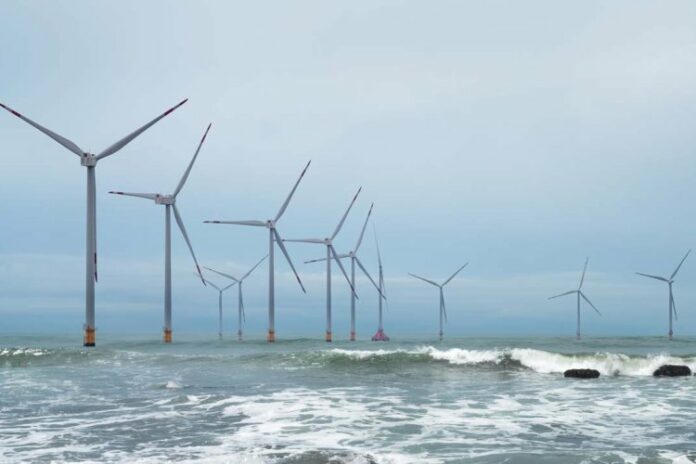
Acciona is a global engineering and construction firm focused on renewables and a leading designer of innovative floating wind foundation solutions. 

The collaboration will combine Ørsted’s world-leading expertise in offshore wind with Acciona’s unique experience in large-scale construction projects and focus on carbon reduction through the use of carbon-neutral materials.

As part of the Ørsted-Acciona MoU, the companies will work together to reduce floating wind levelised cost of electricity (LCoE) and environmental footprint, industrialise the fabrication of concrete foundations, and establish a European supply chain to support Ørsted’s European project pipeline for floating wind.

More than 20 % of new offshore wind farms are estimated to be floating by the mid-2030s. Ørsted is taking steps to commercialise floating wind technology as demonstrated most recently with its Salamander project in Scotland.

Rasmus Errboe, Executive Vice President and CEO of Region Europe at Ørsted, says:

“The goal of our collaboration with Acciona is to take floating wind from the innovation to the industrialisation stage. Ørsted intends to further grow our European floating pipeline, with Spain being a key market of interest for us. Advancing floating wind technology and bringing it to market is a key strategic aim for Ørsted’s floating wind programme, and supply chain partnerships are the way to do just that.”

A key element of the Ørsted-Acciona MoU will be to jointly explore the use of carbon-neutral bio-cement, bio-concrete, and other materials and solutions that support Ørsted’s and Acciona’s biodiversity and carbon reduction goals.

Huberto Moreno, CEO of Acciona’s construction division, says:

“This alliance will help us accelerate the development of our business as a supplier of offshore platforms for the wind power industry. The expertise that Ørsted brings to the table, as well as Acciona’s knowledge – as a group – of infrastructure and renewable energy, will be key to the success of this agreement.”

Gabriel Davies, Head of the Floating Wind Programme at Ørsted, says:

“With floating wind, we can deliver renewable electricity, energy independence, and clear pathways to net-zero to many more markets around the world. Working with Acciona will help us take the next step to realise the potential of floating wind at scale here in Europe – to innovate, invest in the supply chain, and bring costs down, all while reducing carbon emissions. Ørsted has done just that with seabed-fixed offshore wind, and we’re going to do it all over again with floating wind.”
Provaris launches H2Leo – a bulk-scale compressed hydrogen floating storage solution

0

The American Bureau of Shipping (ABS) has provided ‘Approval In Principal’ for the H2Leo storage solution, enabling greater flexibility and optimization of Provaris’ compressed hydrogen supply chain projects under development in Asia and Europe.

Provaris’ Managing Director & Chief Executive Officer, Martin Carolan commented:

“Provaris sees the development of a floating storage solution as a natural extension of its compressed hydrogen IP, providing an alternative to current high-cost bulk-scale storage solutions and improving the economics of its existing projects. We believe a floating storage solution will complement our pipeline of hydrogen production and transport projects and decrease timelines to first revenues and IP commercialisation.”

With an increasing demand for clean renewable energy, the ability to store compressed hydrogen is an integral part of the hydrogen supply chain. Over the last 18 months Provaris has been studying ways of leveraging its shipping IP, engineering and Class approvals obtained to date on cargo containment and ship designs, to develop a solution for the industry that is in need of hydrogen storage at scale.

Provaris’ Chief Technical Officer, Per Roed added:

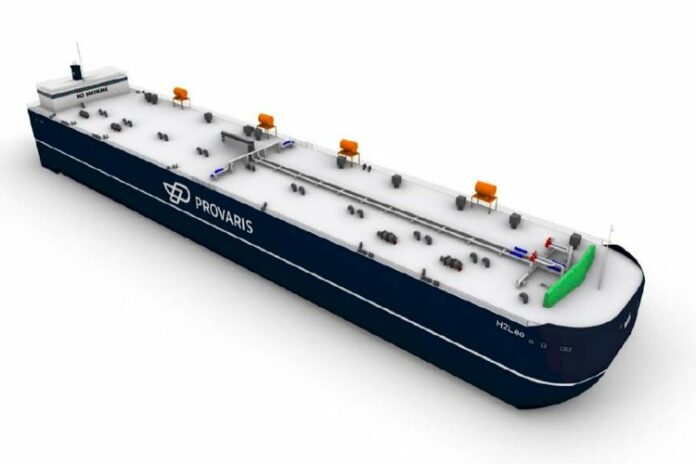
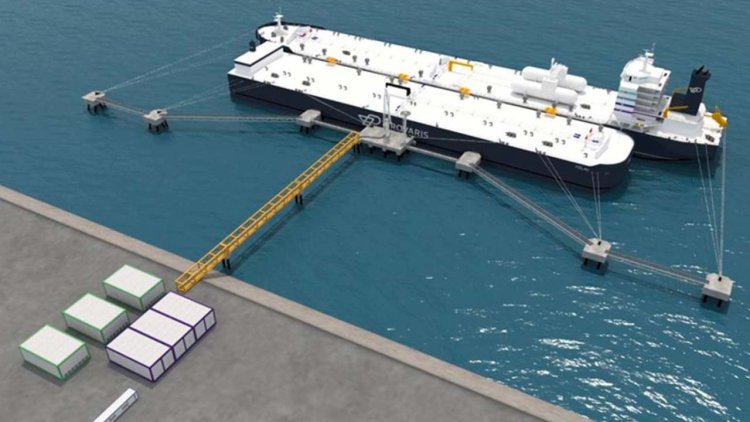
“The H2Leo is a flexible hydrogen floating storage unit that can be optimized in size, capacity, and operations for different applications. Its SIMOPs capability allows for continuous operations, and it has a large working deck and hull for installing auxiliary systems such as compression and H2 bunkering. Provaris is developing production capacity for cargo tanks that can be operational for floating storage by 2025 which will cater to short term demand for storage and allow Provaris to gain operational experience and de-risk the continued development of the H2Neo carrier.”

‘Approval in Principle’ milestone for the H2Leo leverages the completion of extensive FEED, critical safety studies and ‘Design Approval’ for the H2Neo carrier.

Leveraging the FEED-level engineering, safety studies, and Design Approval for the H2Neo carrier received in December 2022, the American Bureau of Shipping (ABS) has provided ‘Approval In Principal’ (AIP) for a compressed hydrogen floating storage solution (the H2Leo class), the first of its kind to receive this level of approval.

The AIP allows for a flexible solution for specific industry applications with a design capacity range of 300 to 600 tonnes of hydrogen. The future development and approvals include expanding the storage capacity from 100 to 2,000 tonnes of hydrogen storage.

The H2Leo floating storage unit will have two cargo tanks with independent isolation, safety valves, and manifolds for compressed hydrogen transfer. The SIMOPS capability allows for continuous production and discharge. ABS has carried out risk and safety workshops to assess and mitigate hydrogen handling risks. Provaris will work with ABS for Design Approval, cargo tank testing, and construction. The H2Leo class will have a fixed beam and depth of 31.00 m and 17.00 m, respectively, with length and draft varying according to the specified cargo capacity.

Saipem: successfully concluded the activities for the Seagreen project

0

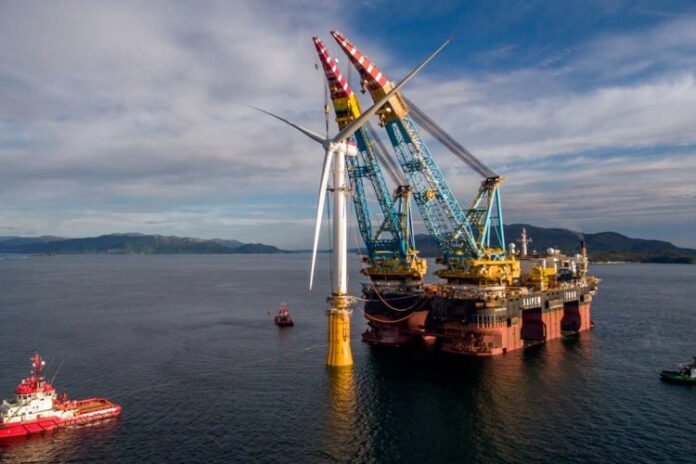
Saipem has successfully completed the installation of 114 offshore wind turbine foundations, part of the development of the Seagreen offshore wind farm, located approximately 27 kilometres off the coast of Angus, in the North Sea.

The wind farm is being developed by Seagreen Wind Energy, a joint venture between SSE Renewables and TotalEnergies, and Saipem has executed the activities on behalf of the client Seaway7.

Seagreen, once completed, will be Scotland’s largest offshore wind farm and will have the capacity to power over 1.6 million homes.

The installation of the foundations has been carried out by the Saipem 7000 vessel, one of the largest semi-submersible crane vessels in the world, during a series of offshore campaigns.

Gianalberto Secchi, COO of Saipem’s Offshore Wind Business Line, commented:

“This new milestone achieved by Saipem consolidates our strategic positioning in the offshore wind sector, a fundamental part of our offer of solutions for the energy transition. It also demonstrates the competitiveness of our assets in this market, as well as the professionalism of our people, who have achieved this milestone by employing more than one million hours of work with the highest health and safety standards”.

Vega to tackle fleet cyber-security with Inmarsat fleet secure solution

0

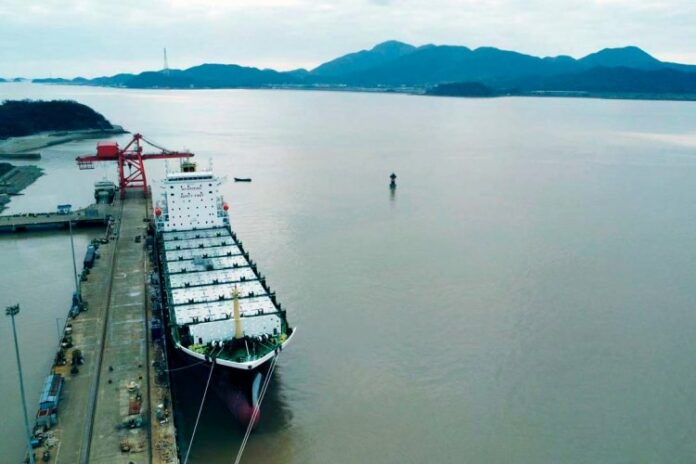
Inmarsat has secured an agreement with long-standing Fleet Xpress customer Vega-Reederei (Vega) to install Fleet Secure Unified Threat Management (UTM) across the Hamburg-based ship manager’s fleet of existing and newbuild vessels.

The deal represents a proactive move to secure Vega’s fleet against growing cyber threats while achieving regulatory compliance, as the company rejuvenates with four 1,868 TEU eco-consumption newbuilds and plans to add more new ships to expand in the security sensitive European coastal services by 2024.  

A 2022 study by Inmarsat and partner Thetius showed almost half of the 200 maritime businesses surveyed reporting that they had suffered a cyber-attack in the previous three years. Three per cent of those attacks resulted in a ransom being paid by the victim to the attacker, at an average cost of $3.1 million. Even without the payment of a direct ransom, the costs to shipping from cyber threats averaged $1.8 million per year over the study period.

Henrik König, Company Security Officer at Vega said:

“Although our vessels have not so far fallen victim to cyber-crime, we are aware that both the frequency and severity of network attacks in shipping are growing fast. As our fleet grows, this threat becomes more significant and difficult to manage. Through Fleet Xpress and Fleet Secure UTM, Inmarsat offers the global coverage and cyber-security capabilities required to keep our managed fleet safe from the risks of an increasingly connected maritime industry.”

Fleet Secure UTM is a part of Inmarsat’s wider cyber-security offering available through Fleet Xpress. The solution is a comprehensive suite of network security tools designed to protect the vessel network in its entirety. By intelligently scanning all connected networks for malicious traffic, UTM safeguards against cyber-attacks and intrusion from infected devices. It also provides real-time digital security status updates, allowing users to monitor and mitigate network threats as they arise.

Crucially for ship managers like Vega, the solution is backed by Inmarsat’s dedicated Cyber Security Operations Centre (CSOC), which offers round-the-clock human support in addressing customers’ security concerns. The CSOC deploys a range of industry-leading technologies to monitor and detect threats – including the latest methods of attack – across Inmarsat’s core infrastructure, networks, and services. Any irregular activities are investigated by in-house cyber-security experts.

Scott Middleton, Regional Director North Europe Inmarsat Maritime, said:

“With Fleet Secure UTM, Vega meets not only the International Maritime Organization’s 2021 requirements on cyber security but also the expectations of its customers, the owners of its managed vessels, who can now rest assured that their ships are comprehensively protected from cyber threats. We would like to thank our partner, Port-IT for its ongoing support with this project and development of Fleet Secure UTM.” 

DEME and Liftra join forces for installation of next-generation wind turbines

0

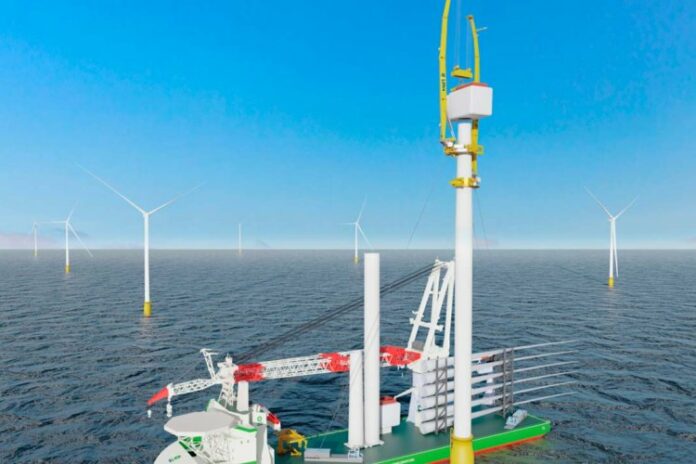
DEME Offshore and Liftra ApS will join forces to develop a novel offshore installation methodology for the next generation of offshore wind turbine generators. 

Aalborg-based Liftra is providing the design and engineering, based on its patented LT1500 Turbine Installation Crane technology, and this is combined with DEME’s engineering, operations and installation technology.

The Offshore Turbine Installation Crane offers the possibility of erecting higher and heavier turbines using existing vessels at a lower cost, while at the same time reducing the environmental footprint, and is suitable for both bottom-fixed and floating turbines.

Bart de Poorter, General ManagerDEME Offshore Renewables, comments:

“DEME Offshore is excited to again bring a game-changing installation concept to the industry. Our exclusive partnership with Liftra combines the best of both worlds – DEME Offshore’s expertise and our long track record of successful wind turbine installation with Liftra’s crane technology. There are many advantages of this new joint technology, the major one being the ability to install fixed or floating turbines from a floating vessel, which naturally means there are no limitations regarding water depth. As well as this, there are no longer any lifting height issues and relative motions at high heights can be controlled. This new method also reduces the environmental footprint on the seabed at the wind farm’s location and in port.”

Per Fenger, CEO of Liftra, emphasises:

‘’This offshore partnership with DEME Offshore underlines that Liftra’s lifting and transport technology is state of the art, also in the offshore wind sector. Liftra is proud to contribute with our innovative LT1500 installation crane technology which is based on 10 years of Self-Hoisting crane product experience, and the special configuration with two cranes working in parallel, is also proven and goes back many years. Liftra very much looks forward to collaborating with DEME on this new offshore turbine installation methodology. Liftra cranes always incorporate an extremely compact design, and are well known for their efficiency and sustainable setup. Liftra is thrilled to team up with DEME, given its entrepreneurial drive and proactivity to bring state-of-the-art offshore solutions to the wind turbine industry.’’

Due to its flexibility, the system can be exclusively integrated for use on board DEME’s floating offshore heavy-lift vessels such as ‘Orion’ or ‘Green Jade’, as well as its existing jack-up vessels.

The partners will develop and integrate the technology in stages and following an extensive testing programme, the pioneering new system is expected to be operational in 2027.

Wärtsilä’s advanced simulator technology will enhance training capabilities

0

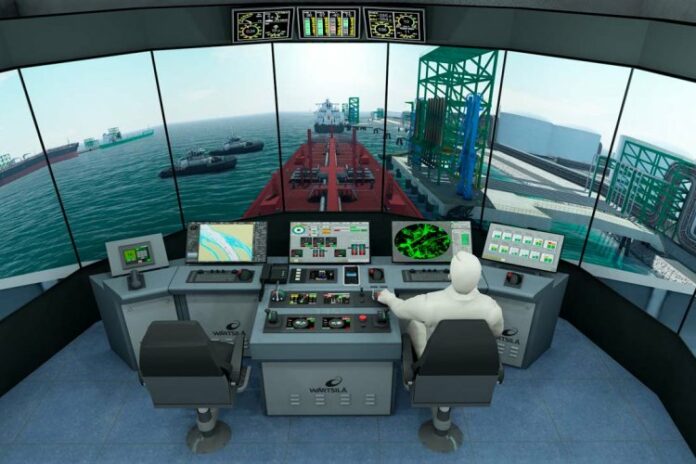
Technology group Wärtsilä will supply a new maritime educational centre with a simulation training lab equipped with the most sophisticated technology available. 

The centre, located on the island of Donsö in Sweden, has been developed by Swedish shipping company Furetank. It will provide state-of-the-art simulation services, allowing crews to receive training, assessment, and certification. The order with Wärtsilä was booked in February 2023.

Wärtsilä has designed the simulation lab to address the very latest developments in operational equipment and systems, the facility can accommodate 14 students at one time. Physical simulation bridges are combined with virtual, augmented, and mixed reality applications. Together, they create highly realistic learning environments for navigation, manoeuvring, docking, cargo handling and safety procedures. The system also replicates and teaches the correct way to utilise new ship technology, such as shore power connections or LNG/PBG bunkering.

Jonas Gunnarsson, Personnel Manager at Furetank, says:

“Until now, the lack of access to simulator technology has been a bottleneck for us and many other fleet operators. New vessels are being ordered and manning them with fully trained and competent crews is a challenge, which is why this centre is so important. Thanks to Wärtsilä’s technology, we can simulate 50 ship models, from pilot boats and cruise ships to tankers and towboats. Fairways for various ports can be navigated on the system, and we can simulate moving through ice or rough seas, the possibilities are endless.”

Steffen Fäldt, Area Sales Manager for Wärtsilä in Scandinavia, says:

“Among the many features of this simulator facility, the ECO module is one of the most relevant. This is a proven tool to practise eco driving, the means for determining the most energy efficient way to operate a vessel. This training will play an important role as the maritime sector works to decarbonise its operations”.

The Wärtsilä equipment includes a full-sized class A navigational bridge simulator using nine portrait-mounted and one landscape-mounted rear view 75 inch displays, giving a 240 degree horizontal view and good vertical height. Furthermore, there will be a virtual reality bridge and bridge wing, a tug simulator, and an engine room simulator including a virtual machinery space.

Portsmouth secures funding to transform processes across the port

0

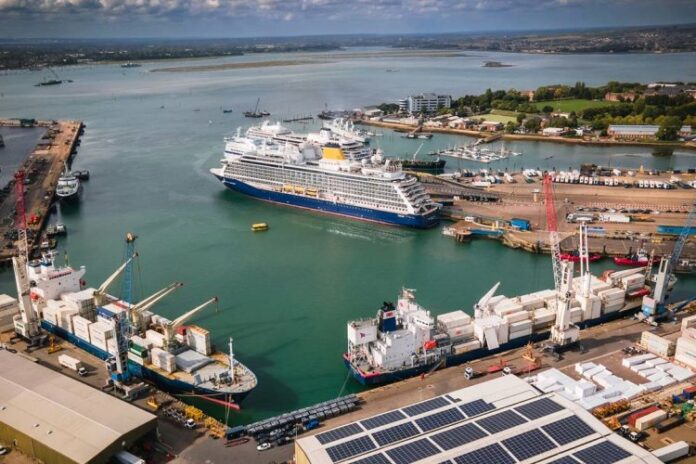
Estudio Cactus, in cooperation with Portsmouth International Port, has been awarded £100,000 to trial its health, safety, security and environment software to provide operators with real-time information to improve resource management.

This is one nine projects that have been awarded a total of £1.2 million by the UK government through Connected Places Catapult’s first accelerator programme as part of the Freight Innovation Fund.

The Freight Innovation Fund aims to help accelerate the adoption of existing freight technologies within the freight sector and develop a future pipeline in line with the freight industry’s real-world needs. It is a three year, £7 million programme designed to make delivering freight across the UK more efficient and cleaner.

The winning projects are led by small and medium-sized enterprises (SMEs) who have been partnered with larger firms to explore the viability of their solutions in real-world conditions.

SMEs will receive business support to help them access private investment, and get the chance to join a Freight Innovation Cluster designed to bring a community of innovators together to collaborate and generate new opportunities.

Ports can choose between different modules, creating a software adapted to the needs of the company and under its corporate identity. The available modules are: digitalised security induction, 3D map of the port facility, visitor and contractor registration, work permits, geolocation of visitors, sanctions system and incident reporting.

MPA and Shell sign MoU to accelerate maritime decarbonisation efforts in Singapore

0

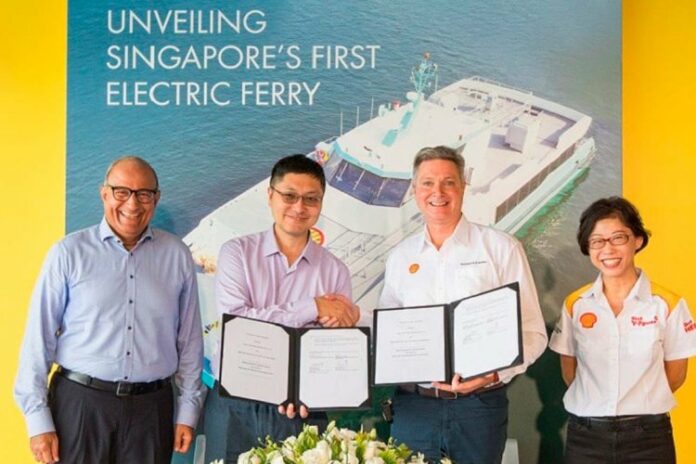
The Maritime and Port Authority of Singapore (MPA) and Shell Eastern Trading Pte Ltd (Shell) signed a memorandum of understanding (MoU) to expand collaboration on the maritime decarbonisation efforts in Singapore. 

The MoU was signed by Mr Teo Eng Dih, Chief Executive of MPA and Mr Nick Potter, General Manager of Shell Shipping and Maritime for Asia Pacific and the Middle East. The signing was witnessed by Mr S Iswaran, Minister for Transport and Minister-in-Charge of Trade Relations and Chairman of Shell Companies in Singapore, Ms Aw Kah Peng. 

As part of the five-year MoU, MPA and Shell will work together to advance the adoption of electric harbour craft and the development of low-and zero-carbon fuels in Singapore.

To support the adoption of electric harbour craft, MPA and Shell will identify energy-related development opportunities. This includes collaboration on charging infrastructure for electric harbour craft. Both parties will also work together on the research and development of low-and zero-carbon fuels. This includes the training of crew in the handling, operations and maintenance of vessels operating on such fuels.    

Mr Teo Eng Dih said:

“MPA is committed to working with industry partners, like Shell, to drive decarbonisation efforts in the maritime sector. Our partnership with Shell will tap into both MPA’s and Shell’s expertise in maritime decarbonisation, renewable energy and innovation. The MoU is an important step towards achieving our 2030 goal for all new harbour craft to be fully electric, be capable of using 100% biofuels or be compatible with net zero fuels, and achieving net zero emissions in our harbour craft,pleasure craft and tugboat sectors by 2050.”

Mr Nick Potter said:

“We are delighted to sign this MoU with MPA which paves the way for continued collaboration on a variety of decarbonisation solutions, including electrification and low-and zero-carbon fuels. Shell is working closely with industry stakeholders from across the value chain to explore the fuel and technology pathways to shipping decarbonisation, and later this year, we plan to kick off a hydrogen fuel cell trial on a Shell-chartered vessel.”

The MoU signing took place at an event held by Shell to unveil the first of a series of electric ferries in Singapore, and the first for Shell globally, held at the Shell Energy and Chemicals Park Singapore on Pulau Bukom. Shell worked with a Singaporean homegrown shipbuilder and shipowner, Penguin International, on the first fully-electric ferry service in Singapore. Penguin is the turnkey designer, builder, owner and operator of the electric ferries and their rapid shore chargers.

Dubbed by Penguin as the Electric Dream project, the first electric ferry, Penguin Refresh, is scheduled to commence operations in May, ferrying Shell personnel, contractors, and visitors between Pasir Panjang Ferry Terminal and Pulau Bukom. Two additional electric ferries will be operational in August 2023. 

Fugro wins contract for extensive offshore surveys in UAE

0

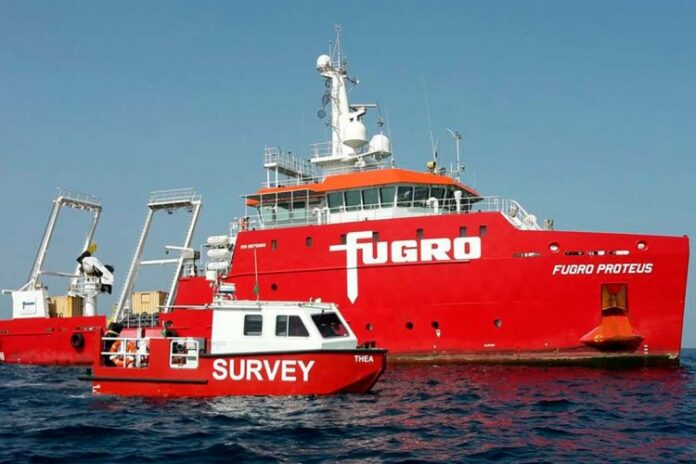
Commencing April 2023, Fugro will perform a series of offshore surveys including geophysical, geotechnical and remotely operated vehicle (ROV) inspections supported by advanced engineering and geoconsulting studies to help inform the Front End Engineering Design (FEED).

The project consists of approximately 600 km pipeline route assessment with 800 crossings, 49 jacket surveys and island offshore surveys.

Near real-time insights into the ground conditions will be available using Fugro’s remote data management solutions. Delivered via Fugro’s digital platform, these insights will allow the client to reduce uncertainties related to ground conditions, make timely and well-informed design decisions and realise significant capital expenditure savings across the field development programme.

Tim Lyle, Group Director Middle East and India at Fugro said:

“We are delighted to be supporting a  project of such calibre. This significant award will allow Fugro to support our client’s vision and sustainability targets whilst strengthening our commitment to in-country value (ICV) by working closely with our local supply chain.”

First turbine rises at Hollandse Kust Noord offshore wind park

0

The wind park is expected to deliver first power to the Dutch grid by summer and to be fully operational by the end of 2023.

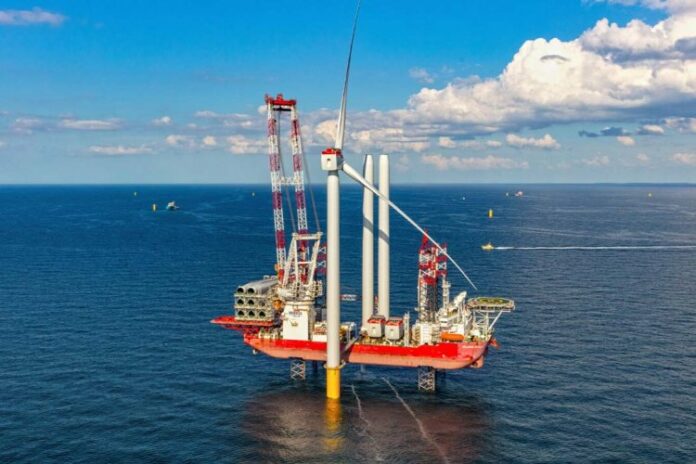
CrossWind’s partners Siemens Gamesa Renewable Energy and Van Oord use the offshore installation vessel Scylla to transport and install the turbines. Scylla sailed out with the first wind turbine from the Eemshaven to the offshore HKN site last week and installed the turbine on its foundation on April 15. The wind turbines have a rotor diameter of 200 meters. One turbine blade is 97 meters long, which is 17 meters longer than the wingspan of an Airbus A380.​​​​​​​

One Siemens Gamesa 11.0-200 DD wind turbine can generate up to 11 MW. Once all 69 turbines are installed and commissioned, the Hollandse Kust Noord wind park will have a total installed capacity of 759 MW, generating at least 3.3 TWh per year. This is enough green electricity to meet 2.8% of the Netherlands’ electricity demand.

The installation of the wind turbines takes place around the clock, 24 hours per day and 7 days per week. Stefan Hartman, Wind Turbine Generator (WTG) Package Manager at CrossWind, explains:

“First the tower is installed on the monopile, then the nacelle on top of the tower. Then come the blades, which are usually the most critical lift with respect to weather conditions. Blade installation will commence if there is a sufficiently long-time window of windspeeds below 12 m/s. For comparison, 12 m/s is a windspeed at which it becomes hard to hold an umbrella.”