-1.1 C
New York
Home Blog Page 303

GIDARA Energy secures environmental permit for advanced methanol facility

0

GIDARA Energy has secured a key environmental permit for its Advanced Methanol Amsterdam (AMA) facility, which is a major step forward in the company’s mission of decarbonizing the industry. The environmental permit, granted by the province of Noord-Holland, allows GIDARA Energy to build its advanced methanol facility which will convert local waste into advanced methanol.

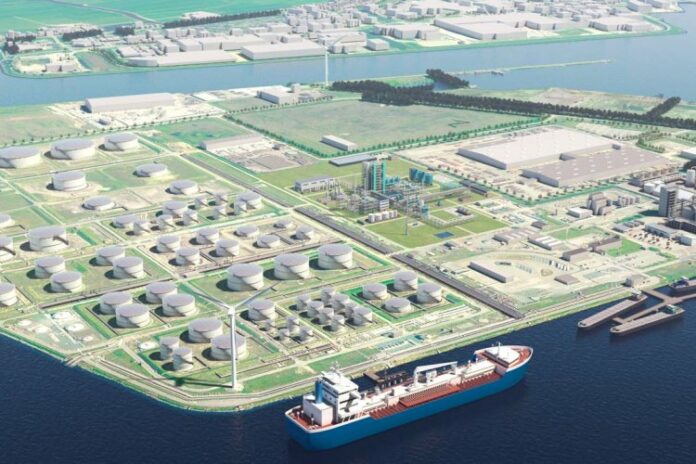
The renewable methanol facility, located in the Port of Amsterdam, will use GIDARA Energy’s patented HTW® gasification technology to convert waste into bio methanol, a versatile fuel that can be used in road transport, in the maritime sector, and for producing sustainable aviation fuels. Obtaining this permit is a major milestone in the development of the facility, enabling the production of renewable fuels and, in the future, high quality circular chemicals.

The process of obtaining the permit included a detailed review of the project, including a thorough assessment of its potential environmental impacts, a public consultation process, and a full review of its proposed design and construction plans to ensure the facility meets all applicable environmental standards. GIDARA Energy has worked closely with the local authorities and scientific experts to ensure that the facility will have minimal environmental impact and be safe for the community, while meeting the growing global demand for advanced methanol and renewable energy.

GIDARA Energy’s Founder, Wim van der Zande, and CEO Dr. Norbert Kamp expressed enthusiasm for the permit, stating,

“We are thrilled to have earned this permit and are eager to get to work building our advanced methanol facility. This facility is a major step forward in our mission to reduce global carbon emissions and create a more circular economy. We thank the permitting authorities for their diligent and thorough review and look forward to continuing to work with them as we move ahead with the construction of our facility.”

Advanced Methanol Amsterdam (AMA) is set to be built at BioPark, the primary development site for producers of renewable fuels in the Port of Amsterdam. The facility will convert approximately 360,000 tons of waste into 90,000 tons of renewable methanol every year.

Roon van Maanen, Head of Energy & Circular Industry at the Port of Amsterdam, said,

‘’Congratulations to GIDARA Energy on this important step in the realization of their sustainable methanol plant. The Port of Amsterdam facilitates companies that promote circular activities and the energy transition. GIDARA’s plant, which transforms waste into methanol, is a stellar example that will fit seamlessly into our port’s sustainability goals. We look forward to the moment they break ground.”
Port of Long Beach releases pier wind project concept

0

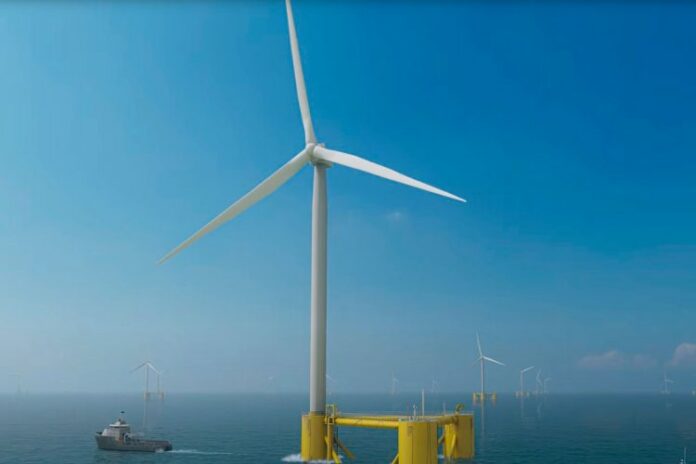
The floating offshore wind facility – known as Pier Wind – would support the manufacture and assembly of offshore wind turbines standing as tall as the Eiffel Tower. It would be the largest facility at any U.S. seaport specifically designed to accommodate the assembly of offshore wind turbines.

“Imagine fully assembled wind turbines capable of generating 20 megawatts of energy towed by sea from the Port of Long Beach to offshore wind farms in Central and Northern California,” said Port of Long Beach Executive Director Mario Cordero. “As society transitions to clean energy, our harbor is ideally located for such an enterprise – with calm seas behind a federal breakwater, one of the deepest and widest channels in the U.S., direct access to the open ocean and no air height restrictions. No other location has the space to achieve the economies of scale needed to drive down the cost of energy for these huge turbines.”

“Building Pier Wind lays the foundation for a zero carbon energy future, not only for the public but for our operations as well,” Long Beach Harbor Commission President Sharon L. Weissman said. “Offshore wind is essential to the Port of Long Beach’s own goals to transition to zero emissions, and ensuring there is a ready supply of reliable, resilient, and renewable power is vital for the work we do moving commerce.”

The Pier Wind project helps California harness the powerful wind in deep waters in order to generate renewable energy while enhancing air quality by reducing reliance on fossil fuels; meet the state’s goal of producing 25 gigawatts of offshore wind power by 2045; and contribute toward lowering the national cost of offshore wind power by 70% by 2035.

The facility would span up to 400 acres of newly built land located southwest of the Long Beach International Gateway Bridge within the Harbor District. The Port’s concept study, available here, provides information to continue planning and discussion with state and federal officials, developers and funders for the $4.7 billion project. Pier Wind would also create new jobs and career opportunities for the communities closest to the Port that have been disproportionately impacted by climate change and port operations. Community members would participate and benefit as California transitions away from fossil fuels and into a green economy. Construction could potentially start in January 2027, with the first 100 acres operational in early 2031, the second 100 acres operational in late 2031, and the last 200 acres coming online in 2035.

Van Oord’s LNG-powered sister vessels join forces protecting the Dutch coast

0

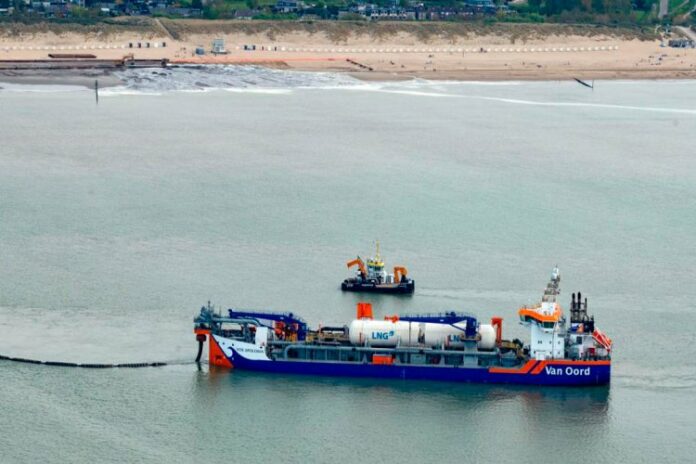
The project concerns beach nourishment works along the Dutch coast. These works are part of the Netherlands’ Coastline Care programme of Rijkswaterstaat, the executive agency of the Dutch Ministry of Infrastructure and Water Management, intended to reinforce the Dutch coast.

Van Oord’s scope includes beach- and trench wall replenishment at the Westkapelse Zeedijk, Oostgat and Nieuwvliet-Groede in the province of Zeeland. During beach replenishment, sand is pumped to the beach by a trailing suction hopper dredger via a pipeline. Applying this replenishment method allows us to stabilise the coastline, protecting coastal communities and infrastructure. The trench wall replenishment method means that we fill parts of the channel just off the coast, the Oostgat, with sand. If it becomes less deep, the current can carry less sand and the coast stays in place longer. In total, approximately 4 million cubic metres of sand will be applied.

What makes this project extra special is that Vox Ariane and Vox Apolonia are running on LNG during the project execution, a more sustainable alternative for Marine Gas Oil (MGO), free of sulphur and particulates. The combustion process is also different to that of MGO, resulting in far less nitrogen dioxide being emitted. Switching to this kind of alternative sources of fuel for our fleet will help us to achieve our net-zero emissions targets by 2050, in line with the Paris Agreement.  

Vox Apolonia and Vox Ariane are part of a series of three brand new trailing suction hopper dredgers that are being added to our fleet. The third sister vessel Vox Alexia will be christened this September. These vessels will help Van Oord to further modernise its fleet, making it more innovative and energy efficient. Their LNG fuel system and energy-efficient design will reduce fuel consumption and carbon emissions substantially. It is precisely for this reason that the three vessels were presented with the Dutch Maritime KVNR Shipping Award in 2022. According to the jury, Van Oord’s introduction of the three vessels marks it as ‘a trailblazer for international standards aimed at minimising climate and environmental impact within the available technological capabilities’.

MODEC awarded contract by Equinor to supply the 2nd FPSO in Brazil

0

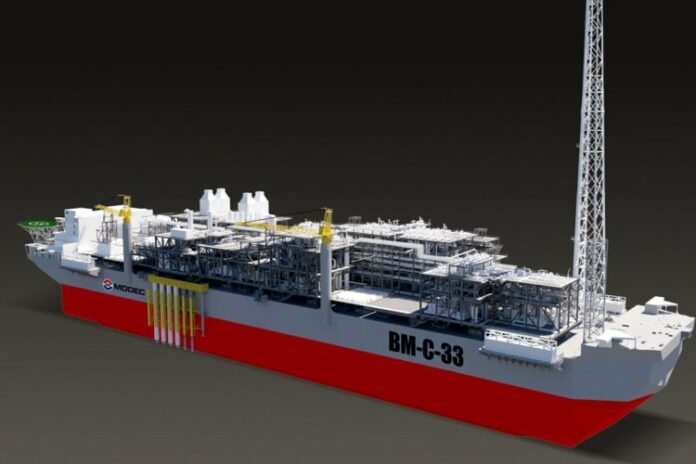
MODEC has signed a Sales and Purchase Agreement (SPA) with Equinor Brasil Energia Ltd, a subsidiary of Equinor ASA (“Equinor”), to supply a Floating Production, Storage and Offloading (FPSO) vessel to produce the field cluster of Pao de Acucar, Seat & Gavea in the BM-C-33 block of the Campos Basin offshore Brazil. The FPSO is one of the most complex facilities in MODEC’s history, handling large volumes of exported gas with a major focus on GHG emissions reduction.

The SPA is a two-phase lump sum turnkey contract covering both Front End Engineering Design (FEED) and Engineering, Procurement, Construction and Installation (EPCI) for the entire FPSO. As Equinor and partners announced the Final Investment Decision (FID) on May 8,2023 after the completion of the FEED which had started on April 2022, MODEC has now been awarded phase 2 of the contract for EPCI of the FPSO. MODEC will also provide Equinor with operations and maintenance service of the FPSO for the first year from its first oil production, after which Equinor plans to operate the FPSO.

The FPSO vessel will be deployed at the field, located in the giant “pre-salt” region at the southern part of Campos Basin, approximately 200 kilometers off the coast of Rio de Janeiro, and permanently moored at a water depth of approximately 2,900 meters. The spread mooring system will be supplied by MODEC group company, SOFEC, Inc. Equinor’s field partners are Repsol Sinopec Brazil (35%) and Petrobras (30%). The FPSO delivery is expected in 2027.

MODEC will be responsible for the design and construction of the FPSO, including topsides processing equipment and hull marine systems. The FPSO will have topsides designed to produce approximately 125,000 barrels of crude oil per day as well as produce and export approximately 565 million standard cubic feet of associated gas per day. Its minimum storage capacity of crude oil will be 2,000,000 barrels.

The FPSO will apply MODEC’s new build, full double hull design, developed to accommodate larger topsides and larger storage capacity than conventional VLCC tankers, with a longer design service life.

Taking advantage of this larger topside space, this FPSO will be the second fully electrified FPSO equipped with Combined Cycle System for Power Generation which significantly reduces carbon emission compared with conventional Gas Turbine driven systems.

“We are extremely honored and proud to be selected to provide an FPSO for the BM-C-33 project,” commented Takeshi Kanamori, President and CEO of MODEC. “We are equally proud of the confidence Equinor obviously has in MODEC. We believe this award represents a strong relationship of trust between us built upon the ongoing Bacalhau FPSO project as well as our robust track record in the pre-salt region. We look forward to cooperating closely with Equinor and partners to make this project a success.”

The FPSO will be 18th FPSO/FSO vessel and 10th FPSO in the pre-salt region delivered by MODEC in Brazil.

Stena Line acquires the ferry and RoRo port operations in Ventspils, Latvia

0

Stena Line has acquired the operations of the ferry and RoRo terminals in the Port of Ventspils, Latvia, representing the latest in a range of investments in the Baltic region, including the addition of upgraded ferries and new ferry routes.

Direct ownership of the operations in Ventspils will give Stena Line the initiative in future expansion opportunities as Latvia continues to grow its importance as a maritime nation with increasing trade volumes.

“The Baltic Sea is a major growth region for Stena Line and our investment in Ventspilsshows how committed we are to develop our business with Latvia”, says Niclas Mårtensson, CEO Stena Line. He continues: “With this strategic move we have secured a long-term position in an essential part in our European network and I am looking forward to working with our customers and partners to continue expanding in the region”.

The growing customer demand on the route connecting Latvia and Sweden recently called for a capacity boost through two ferries – Stena Baltica and Stena Scandica. These extended ferries added 30 per cent of freight capacity on the route as well as offering a new modern onboard experience for a maximum of 970 passengers in each vessel.

A similar expansion was made to the route Liepaja, Latvia – Travemünde, Germany in 2021and 2022, adding 40 per cent freight capacity through the introduction of Stena Livia and Stena Flavia, also shortening the crossing time substantially.

The company’s Baltic Sea expansion also includes the opening of a new route between Nynäshamn, Sweden and Hanko, Finland in February 2022. The new route has been well received by customers with growing freight volumes while also travelers by car are growing in numbers.

The Norvik Port in Nynäshamn, just south of Stockholm, Sweden has recently expanded, adding critical capacity and infrastructure which supports Stena Line’s operations to both Latvia and Finland.

During 2022, the company also took delivery of two all-new E-Flexer ferries – the Stena Estelle and Stena Ebba for use on its growing route between Karlskrona, Sweden and Gdynia, Poland. The Verkö Port in Karlskrona has recently gained added capacity while the Port of Gdynia inaugurated an all-new terminal last year.

The acquisition of the ferry and RoRo port operations is subject to authority approval for competition compliance. Commercial details of the agreement will not be disclosed.

Plastic can drift far away from its starting point as it sinks into the sea, study says

0

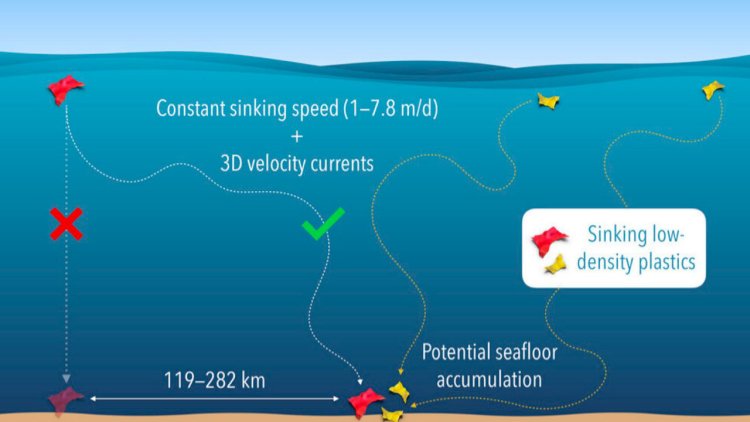
Discarded or drifting in the ocean, plastic debris can accumulate on the water’s surface, forming floating islands of garbage. Although it’s harder to spot, researchers suspect a significant amount also sinks. In a new study in Environmental Science & Technology, one team used computer modeling to study how far bits of lightweight plastic travel when falling into the Mediterranean Sea. Their results suggest these particles can drift farther underwater than previously thought.

From old shopping bags to water bottles, plastic pollution is besieging the oceans. Not only is this debris unsightly, animals can become trapped in it or mistakenly eat it. And if it remains in the water, plastic waste can release organic pollutants.

The problem is most visible on the surface, where currents can aggregate this debris into massive, so-called garbage patches. However, plastic waste also collects much deeper. Even material that weighs less than water can sink as algae and other organisms glom onto it, and through other processes.

Bits of this light plastic, which typically measure 5 millimeters or less, have turned up at least half a mile below the surface. Researchers don’t know much about what happens when plastic sinks, but they generally assume it falls straight down from the surface. However, Alberto Baudena and his colleagues suspected this light plastic might not follow such a direct route.

To test this assumption, they used an advanced computer model developed to track plastic at sea and incorporated extensive data already collected on floating plastic pollution in the Mediterranean Sea. They then simulated nearly 7.7 million bits of plastic distributed across the sea and tracked their virtual paths to depths as great as about half a mile.

Their results suggested that the slower the pieces sank, the farther currents carried them from their points of origin, with slowest traveling an average of roughly 175 miles laterally. While observations of the distribution of plastic underwater are limited, the team found their simulations agree with those available in the Mediterranean.

Their simulations also suggested that currents may push plastic toward coastal areas and that only about 20% of pollution near coasts originates from the nearest country. These particles’ long journeys mean this plastic has greater potential to interact with, and harm, marine life, according to the researchers.

CMA CGM committed to purchase Bolloré Group’s transport, logistics operations

0

The CMA CGM Group granted a put option to the Bolloré Group to sell the transport and logistics operations of Bolloré Logistics.

The put option was granted at the end of the period of exclusive discussions announced on April 18. Bolloré Group has accepted the proposal as a put option. Final completion of the transaction remains subject, first, to the examination by employee representation, and then to customary regulatory approvals.

If the acquisition is finalized, it would significantly strengthen the CMA CGM Group’s logistics business and make a top five player in global logistics.

The combined operations of the CMA CGM Group’s logistics activities and Bolloré Logistics would have combined revenues of approximately USD24 billion (based on 2022 results). Following the acquisitions of Ingram Micro Commerce & Lifecycle Services and Colis Privé, then of GEFCO, which boosted CEVA’s capabilities in eCommerce contract logistics and automotive logistics respectively, the acquisition of Bolloré Logistics would further strengthen the sea and air freight activities of the Group’s logistics division. The combined entity would have an annual shipping volume equivalent to more than 2 million TEUs of sea freight and 0.8 million tons of air freight.

The CMA CGM Group already operates in more than 160 countries, with 155,000 employees. This deal would add more than 14,000 new employees operating out of 350 offices in 63 different countries.

The Group’s warehouse space would increase by more than 900,000 square meters at 115 different warehouses, in addition to the 10.3 million square meters already managed by CEVA at its 900 warehouses around the world. The acquisition would also open up access to major logistics hubs, especially in France and Asia.

With the addition of Bolloré Logistics, the CMA CGM Group and its subsidiary, CEVA Logistics, would gain further expertise in high-value sectors, both in sea and air freight management and in contract logistics. Bolloré Logistics is currently a world leader in transport and logistics solutions for the luxury goods, fragrances and cosmetics, healthcare, aerospace and defense sectors.

The experts set to join the CMA CGM Group have built up a roster of top-tier customers, including some of the top names in French industry and other leading multinationals, which CEVA Logistics would strive to continue serving.

For the CMA CGM Group, this acquisition would represent a major step forward in its development of a full range of solutions supporting customers’ supply chains through handling end-to-end transport and logistics.

The deal would be the largest since the CMA CGM Group was founded in 1978 and would represent a major strategic milestone in the Group’s development of its logistics activities, which the Group has been building since 2019, alongside the original CMA CGM shipping business.

Bureau Veritas delivers AiP to GTT for LNG dual-fuel VLCC design

0

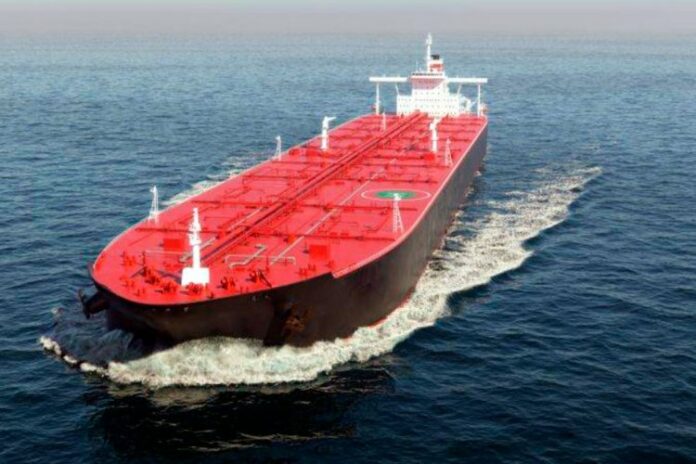
Bureau Veritas has delivered an Approval in Principle (AiP) to GTT and Shanghai Waigaoqiao Shipyard (SWS) for the design of a Liquefied Natural Gas (LNG) dual-fuel Very Large Crude Carrier (VLCC). 

This approval is part of a Joint Development Project (JDP) initiated in May 2022, and was successfully carried out by Shanghai Waigaiqiao Shipyard (SWS) and Bureau Veritas (BV).

The greater operational flexibility offered by this new 10,000 m3 capacity fuel tank concept, enables owners and charterers to conduct round trip voyages between the Middle East, Asia, and Europe with just one LNG bunkering operation. The fuel tank is located below the main deck to avoid exposure to bad weather and the risk of piracy, while lowering the centre of gravity of the propulsion systems. It features Mark III membrane containment technology, developed by GTT.

In addition to its operational benefits, the new LNG dual-fuel VLCC concept complies with key environmental requirements. Its Energy Efficiency Design Index (EEDI) is more 37% under the baseline, its Nitrogen Oxides (NOX) emissions meet the IMO’s Tier III requirements, and its Carbon Intensity Index (CII) is projected to be rated A by 2030.

Adnan Ezzarhouni, General Manager of GTT China, said:

“We are delighted to be granted with this AiP by Bureau Veritas with whom GTT has had a close partnership for many years. Following our successful references in LNG-fuelled container and cruise vessels, we are pleased to offer this fit-for-purpose membrane tank solution to the LNG-fuelled tanker market.”

Hyphen Hydrogen Energy signs Letter of Intent with Koole Terminals

0

Hyphen Hydrogen Energy (Hyphen) has signed a Letter of Intent (LOI) with Koole Terminals. The LOI covers the proposed important of green ammonia into north-western Europe by Hyphen to supply its customers through the import terminal being developed by Koole Terminals, located in Rotterdam, the Netherlands.

CEO Hyphen Hydrogen Energy Marco Raffinetti:

“This agreement represents another key milestone in our ambition of enabling Namibia’s rise as a global leader in green hydrogen production.”

Over the past year, Hyphen has signed Memorandums of Understanding (MoUs) with a number of potential European customers, targeting the supply of up to 750,000 tonnes of green ammonia annually.

Marco Raffinetti, CEO of Hyphen Hydrogen Energy, said:

“The Port of Rotterdam is a critical hub servicing north-western Europe and has moved rapidly to support the establishment of new green hydrogen import capacity to facilitate this region’s energy transition, with import capacity and access to markets being a key constraint in the supply chain. Koole Terminals, is one of the most advanced import terminals under development and we look forward to working with Koole Terminals and the Port of Rotterdam to meet first supply of ammonia from our project into Europe by early 2028.”

John Kraakman, CEO of Koole Terminals, said:

“We are pleased to work with Hyphen to become a launching customer of our planned Port of Rotterdam import terminal for Ammonia. This cooperation will allow us to further scale-up the multi-million tonne facility. Koole is an experienced independent operator of twenty-one liquid bulk terminals across seven countries, already handling and storing Ammonia. With our current and planned infrastructure, terminals, modalities, and integrated solutions, we play a leading role in facilitating the energy transition.”

CEO Koole Terminals John Kraakman: “This cooperation will allow us to further scale-up the multi-million tonne facility.”

Hyphen is targeting annual production of one million tonnes of green ammonia to come on line by the end of 2027, expanding to two million tonnes of green ammonia by 2029.

ABB collaborates with Lhyfe and Skyborn on renewable hydrogen project

0

ABB is collaborating with Lhyfe, a world pioneer in the production of renewable hydrogen, and Skyborn, a global leader in renewable energy, to jointly realize and optimize one of Europe’s most ambitious renewable hydrogen projects ever, SoutH2Port.

The new hydrogen production plant, operated by Lhyfe and Skyborn, will be located in the municipality of Söderhamn, Sweden, and connected to Skyborn’s 1 GW offshore wind farm in nearby Storgrundet. When fully operational, it is expected to produce about 240 tons of hydrogen per day, with an installed capacity of 600 MW, making it one of the largest suppliers of renewable hydrogen in Europe.

“This collaboration is a key part of our strategy in both the hydrogen and offshore wind markets,” said Brandon Spencer, President of ABB Energy Industries. “Creating a seamless supply chain, through partnerships such as these, is essential to accelerate the energy transition. Hydrogen plays a crucial role in helping achieve the world’s climate goals when it comes to decarbonizing the industrial and transportation sectors.”

As part of the Memorandum of Understanding signed between the companies, ABB will apply critical expertise to optimize the integration of the hydrogen and electricity production across the entire ecosystem including automation, electrical and digital technologies and drive the development of scalable, commercial energy transition projects in and around the region. The aim is to explore opportunities to tie-in Power-to-X conversion technologies turning renewably sourced electricity into carbon-neutral energy carriers, such as hydrogen, and storing the energy for later use.

“We are delighted to have such a global technology leader as ABB, who shares our conviction in the Power-to-X potential of the SoutH2Port project, join our collaboration with Lhyfe. I look forward to taking this project to the next level with the help of ABB and their unrivalled expertise within this field,” said Achim Berge Olsen, Chairman of Skyborn Renewables Sweden.

“By combining our expertise and solutions, we can cost-effectively and safely expand the value creation attached to the scale up of renewable hydrogen production,” said Taia Kronborg, co-founder and Chief Business Officer at Lhyfe. “Skyborn’s track record in offshore wind power, Lhyfe’s expertise in renewable hydrogen production coupled with ABB’s technological expertise creates new opportunities for enabling Power-to-X solutions linked with renewable hydrogen production at scale.”

The new plant will support the decarbonization of the Swedish energy system, either directly with hydrogen supply or by further downstream production of refined fuels such as methanol, sustainable aviation fuel or ammonia – contributing to the government’s plans to become the world’s first fossil-free welfare country by 2045. SoutH2port will also further contribute to boosting the attractiveness and competitiveness of the region and local society through the creation of new jobs and business opportunities.