-1.1 C
New York
Home Blog Page 302

Höegh Autoliners and North Ammonia seal green ammonia deal

0

Höegh Autoliners and North Ammonia have announced a partnership for the supply, distribution, delivery, and consumption of green ammonia, a carbon free fuel produced using renewable energy.

The partnership will enable Höegh Autoliners to meet the commitment to powering at least 5% of the deep-sea operation with green ammonia by 2030 (part of our First Movers Coalition pledge) and its aim of consuming at least 100 000 metric tons of green ammonia within the fleet by that same year.

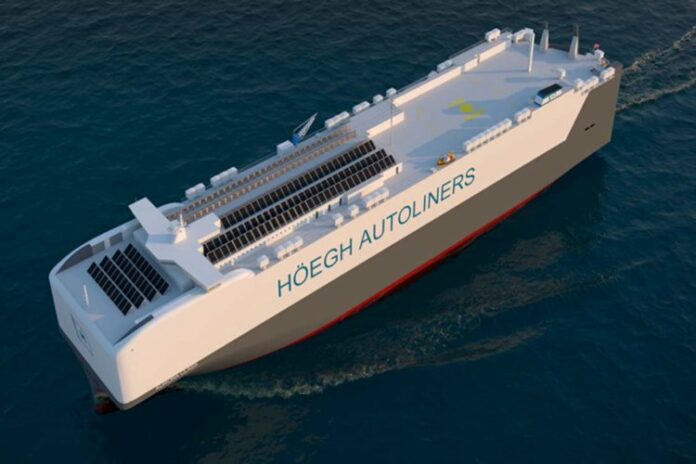
The green ammonia is meant for the ammonia-ready dual-fuel Aurora class vessels – the world’s largest and most environmentally friendly Pure Car, Truck Carriers ever built. Höegh Autoliners has ordered eight Auroras – expecting the delivery of two every six months starting from the second half of 2024.

Designed to carry up to 9,100 cars, the Auroras are designed for future cargo as the vessels’ strengthened decks and enhanced internal ramp systems enable electric vehicles on all decks and provide more flexibility for heavier project cargo. Securing the supply and delivery of green ammonia from North Ammonia’s planned production facility in Arendal in southern Norway will help us source green ammonia safely, efficiently, and cost-competitively as a first mover and industry frontrunner sailing for sustainability in the maritime sector.

Höegh Autoliners’ CEO, Andreas Enger, says:

“This collaboration will not only reduce our environmental impact and carbon footprint. It will also set a new standard for the industry as a whole and assist our partners and customers in decarbonizing their supply chain. We are receiving positive feedback and strong signals from major car manufacturers in Europe about enabling lower-emission transport of cars from the manufacturing site to the customers.”

COO of Höegh Autoliners, Sebjørn Dahl, says:

“The fact that green ammonia is becoming a totally viable maritime fuel is a game-changer for our industry. We believe it will set the standard for others to follow. I thought this development would be achievable in 10 years’ time. But technology is moving faster than expected and the future is here. This partnership will ensure that we and our Norwegian industry suppliers will be well-positioned for seizing that very future. With this partnership, we are adding yet another steppingstone in designing the infrastructure of the future – with a green and sustainable focus.”
Multraship names two Damen tugs in Terneuzen

0

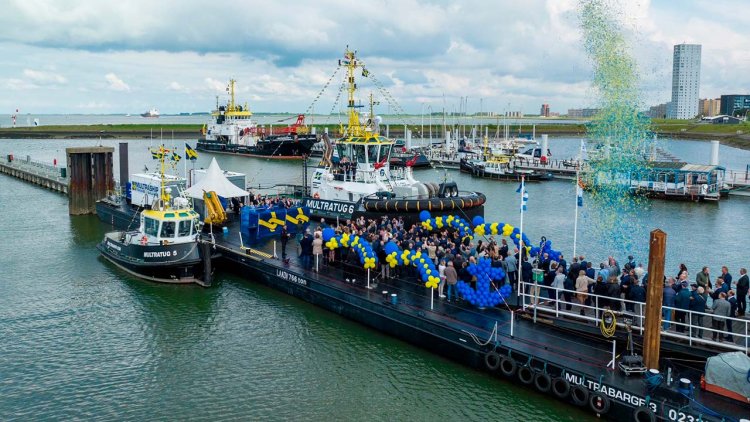
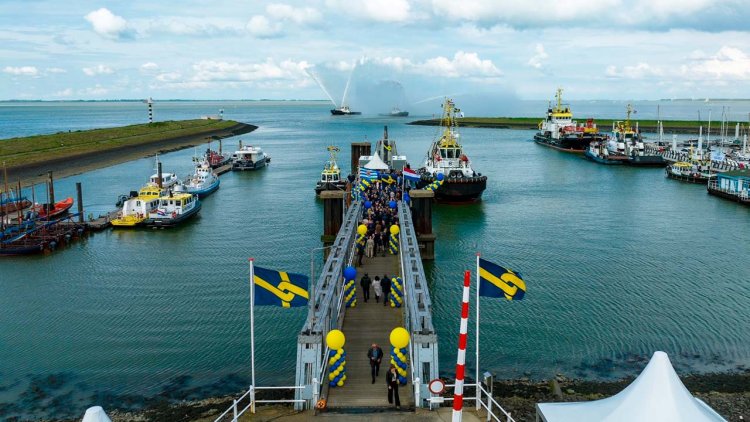
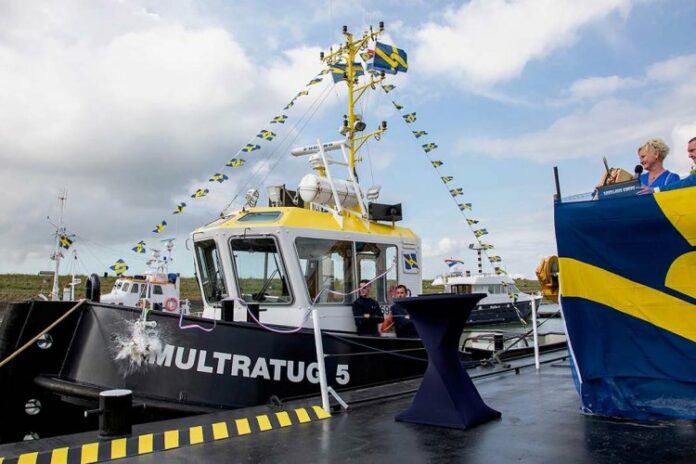
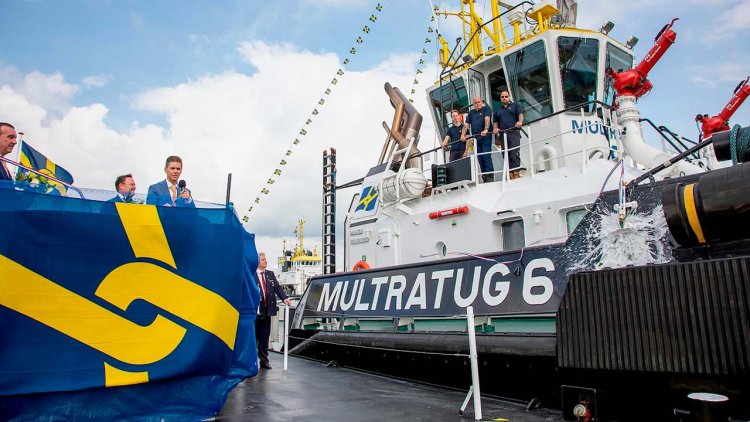
Multraship Towage & Salvage has named two Damen-built tugs at a Christening ceremony held at Multraship’s home port of Terneuzen, the Netherlands

The speed with which the tugs were delivered was thanks to Damen’s practice of building in series and for stock – a feature that Multraship, as a long-term client of Damen’s – has long benefitted from.

Although based on proven, standard designs, Damen is able to tailor its vessels to the requirements of ­its clients. In the case of Multratug 6, this included a winterisation package, FiFi-1 class notation and installation of an aft winch, amongst many other additional features.

Multratug 6 also has the distinction of being the last Damen ASD Tug 2810 ever to be built. Following the sale of over 200 vessels, the ASD Tug 2810 is Damen’s most successful design to date and can be found operating in harbours all around the world.

Captain Leendert Muller, Managing Director, Multraship, commented at the ceremony:

“We work hard to ensure that our fleet reflects the needs and requirements of our customers and that we are best equipped to provide rapid, reliable and safe towage and salvage services at any time. For this, we need to have high-quality tugs with a range of operational capabilities. We know we can rely on Damen to meet our specifications and deliver high-spec vessels and we are very pleased to formally welcome Multratug 5 and Multratug 6 to our fleet.”

The naming ceremony was attended by a number of guests on behalf of Damen including Mijndert Wiesenekker, sales director Benelux, and Vincent Maes, sales manager Benelux.

 Mr Maes said, “It’s a pleasure to be here to witness this special occasion. The event is made even more poignant with Multratug 6 being the last ASD Tug 2810 to be delivered. The design of the tug, like all vessels in our portfolio, has been developed with lots of valuable input from our clients. Multraship, as a long-standing customer of many years, has provided with us many useful insights that have been incorporated into the evolution of our tugs. We’re grateful to enjoy this relationship of mutual benefit and look forward to continuing our collaboration in the years ahead.”

The vessels were delivered to Multraship during a period of wider fleet expansion, with the company also adding two ERTVs, Multraship Commander and Multraship Protector, as well as the Multrasalvor 6, a Damen Multi Cat and salvage support vessel along with another Damen harbour tug, Multratug 9, over the past year.

 Multraship is a division of the Muller Maritime Group, which has been engaged in the shipping industry for more than 230 years. Multraship’s core activities include harbour towage, salvage & wreck removal, ocean towage and support to offshore energy & dredging industries.

Princess Cruises names second Sphere Class ship Star Princess

0

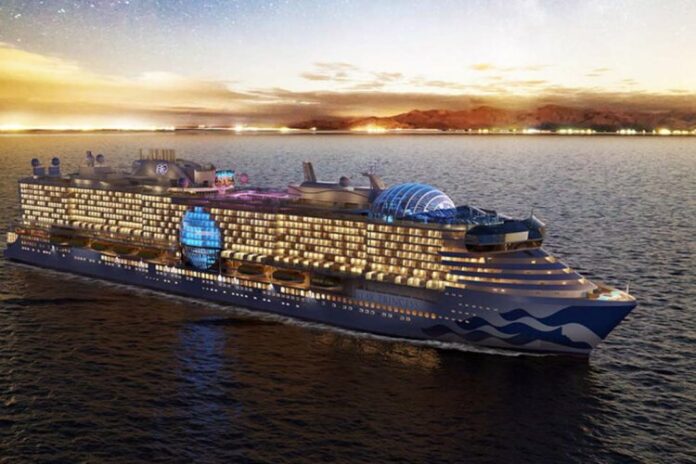
Currently under construction at the Fincantieri shipyard in Italy, Star Princess joins Sun Princess as the largest ships ever built for Princess at 175,500 tons and carrying 4,300 guests. 

The new ship is built on a platform that is distinctly different and unique to Princess, designed to simultaneously embrace the Princess heritage while celebrating the romance of the sea by offering more dynamic, outward views.

The new ship will be the second in the Princess fleet to be powered by LNG fuel technology and also is being built with the most advanced sustainable innovations available.

Star Princess debuts August 4, 2025, sailing a nine-day Inaugural Italy & Greece roundtrip voyage from Rome (Civitavecchia), featuring the destinations of Corfu, Kotor, Mykonos, Santorini and Naples (for Capri and Pompeii), followed by a variety of 9- and 10-day cruises sailing from Rome, Athens or Trieste (Venice) that visit idyllic coastal ports.

“There’s much to be admired about Star Princess – her sleek, eye-catching design, spacious interiors, and of course, the remarkable views of the sea and sky, just like the features found on Sun Princess that have prompted cruise lovers to snap up inaugural year bookings,” said John Padgett, president of Princess Cruises. “We’ve carefully designed these ships to feel familiar to our guests yet significantly advanced with lots of exceptional new and expanded experiences to embrace and explore.” 

Princess’ first Star Princess ship initially launched in 1988 as Sitmar Fair Majesty. With the merger of Sitmar Cruises into Princess, she then entered service as Star Princess in 1989, and was christened by legendary actress and humanitarian Audrey Hepburn. The second Star Princess launched in 2002, as the third Grand-Class vessel playing an instrumental role in the evolution of the brand with popular offerings like Anytime Dining, the only dining program in the industry at the time to give guests freedom to dine where, when and with whom they wish. 

Gazelle Wind Power acquires naval engineering firm F. Carceller

0

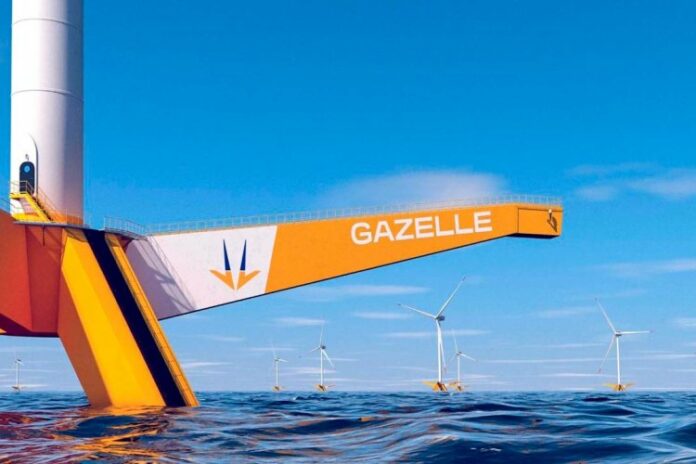
Gazelle Wind Power (Gazelle), the developer of a hybrid modular floating offshore wind platform, has agreed to take a controlling stake in Spanish-based naval architect and marine consulting firm Faustino Carceller, S.L. (F. Carceller). 

Gazelle’s shipbuilding approach for construction creates synergies for both companies, making this acquisition a practical fit to help the company accelerate the technical development of its floating offshore wind platform.

F. Carceller will continue to operate as an independent subsidiary of Gazelle while remaining focused on the commercial fishing, marine, and shipping industries. As part of this transaction, Pablo Carceller has been appointed CEO and Director of F. Carceller. The Carceller family remains an important shareholder in the company.

Jose Ramon Anton Vilasanchez will remain as Technical Director of Carceller. Inigo Zavala Ortiz de la Torre—the Vice President of the Corporate Social Responsibility Commission for the Spanish Confederation of Business Organizations (CEOE)—will serve as Chairman of the Board of Carceller. Additional board members include Gazelle General Counsel Ena Carballo and Spanish businessman and entrepreneur Valentin de Torres-Solanot del Pino.

“This agreement allows us to continue servicing the needs of shipowners and shipyards to the highest ability—while giving us and our customers a pathway into the burgeoning offshore wind market,” said F. Carceller CEO Pablo Carceller. “Gazelle’s unique offshore platform technology works in harmony with fishing corridors, making this partnership an ideal fit for both companies.”

This acquisition represents a pivotal addition to Gazelle’s technical capabilities as it continues its mission to unlock, enable, and accelerate the offshore wind industry, which must deploy 2,000 GW by 2050 to achieve net zero emissions, according to the Global Wind Energy Council (GWEC). Recently, Gazelle announced an agreement with renewable energy developer WAM Horizon to work together on a pilot project in Portugal, as well as further enhancements to the design of its third-generation floating offshore wind platform technology, which utilizes shipbuilding industry processes for sourcing materials, construction, assembly, and transport.

Nauticus Robotics and Leidos execute $2.7M contract extension

0

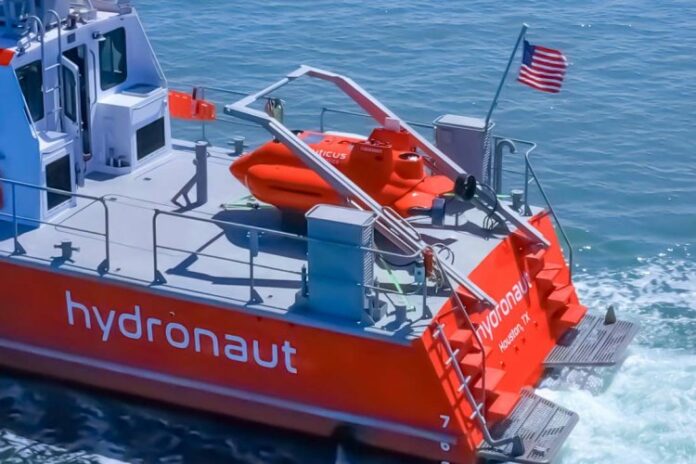
Nauticus Robotics, a developer of autonomous robots using artificial intelligence for data collection and intervention services for the ocean economies, today announced it has been awarded an additional $2.7 million under its current contract with Leidos Holdings, a FORTUNE 500® science and technology leader. The funded extension allows continued development of an Aquanaut-derivative in preparation for customer adoption decisions and government opportunities expected later this year.

The state-of-the-art subsea platform, an unmanned underwater vehicle (“UUV”) with advanced artificial intelligence, sensing capabilities, and more can perform a growing number of jobs without hazarding human divers. This program has received $14.5 million in funding from Leidos since 2022, and the technology developed is expected to underpin major future government opportunities.

Like Nauticus’ commercial UUV platform, Aquanaut, this derivative robot features technology to support security activities and is advancing to complete longer and more challenging missions. In addition, this award allows further autonomous behavior and operational capability enhancements to toolKITT, Nauticus’ proprietary software package developed to enable an ecosystem of autonomous actions for subsea vehicles and serves as the foundation for this work.

“I am very proud of our team’s performance resulting in this follow on award, further cementing our partnership with Leidos,” said Nicolaus Radford, founder and CEO of Nauticus. “This very important work combines great attributes from each company to deploy a truly novel subsea capability.”

Octopus Series Battery System receives type approval for maritime applications

0

The Type Approval of Lloyd’s Register was issued on April 17, 2023. Bureau Veritas issued the Type Approval for the Octopus Series last Monday, May 8th. The first projects for this newly designed and assembled marine Energy Storage System are already being delivered.

Both Lloyd’s Register and Bureau Veritas witnessed the rigorous tests that EST-Floattech conducted on the Octopus Series Battery System to ensure its compliance with the latest industry standards and regulations. The large and experienced classification societies approved the tests performed and showed by granting marine Type Approval that the safety and performance of the system meet their standards.

“We are glad that our ‘safe by design’ mentality has been recognized through this Lloyd’s Register and Bureau Veritas Type Approval for Maritime Battery Systems,” said Diederick Stam, CTO at EST-Floattech. “This achievement reinforces our commitment to providing the safest and most reliable battery systems to the maritime industry.”

Marine Type Approval for a battery system from respected organizations such as DNV, Bureau Veritas, and Lloyd’s Register is important for shipowners and shipbuilders to ensure that the products they are considering meet the highest standards in the industry. As neutral third-party organizations, Lloyd’s Register, Bureau Veritas, and DNV conduct independent and impartial assessments of maritime equipment and systems.

With the Type Approval they assign to a product, in this case the Octopus Series of EST-Floattech, a buyer of a product with Type Approval will know that the product is certified to be placed on board their vessels according to the highest maritime standards. 

OceanEnergy sign up to EMEC wave energy test berth

0

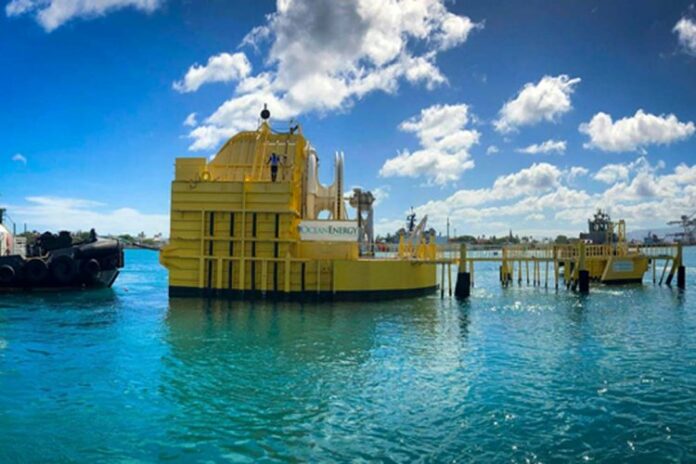
OceanEnergy intends to demonstrate the OE35 over two winter periods from 2024 at EMEC’s Billia Croo wave energy test site off the west coast of Orkney, Scotland.

The 1 MW OE35 wave energy converter floats on the ocean’s surface, with the lower part of the machine open to the sea. Waves cause a water column within the device to rise and fall, creating pressurised air to rotate a turbine. This generates electricity which will be fed into the UK grid via EMEC’s subsea cable and onshore substation.

The OE35 incorporates well-proven ship-building techniques and has only one moving part which is above sea level, increasing survivability, reliability and availability.

EMEC will support OceanEnergy with environmental monitoring. A series of field campaigns will include underwater and airborne acoustics, biophysical assessment of wave dynamics, fish aggregation and seabird analysis to assess the potential interactions between local species and the operation of the technology.

As an accredited test facility, EMEC will undertake technical inspection and performance assessment to confirm that the OE35 and moorings satisfies reliability, survivability and performance targets and adhere to IEC international standards.

The demonstration is supported by the WEDUSEA project, co-funded by the EU Horizon Europe Programme and Innovate UK.

Prof Tony Lewis, Chief Technical Officer at OceanEnergy, said:

“The signing of the berth agreement with EMEC is an important milestone in this exciting project. We have been working closely with EMEC and the other project partners to reach this key stage. The project is a continuation of the commercialisation of the technology which will become a key component in the suite of renewable energies to develop a sustainable green energy future.

“The demonstration will provide key metrics and operational experience for the commercial deployment of the OE technology.”

Carly Tait, Project Manager at EMEC for WEDUSEA said:

“We’re working closely with the OceanEnergy team on the design for the OE35 device, in preparation for their demonstration programme at EMEC. We have provided metocean, bathymetry and geophysical data to feed into the design criteria and are facilitating planning of offshore operations.

“During the demonstration of the OE35, EMEC will collect valuable data on the performance of the device. This data will provide OceanEnergy with third party assurance on the power performance of the device, which will be shared with investors and funders to increase their confidence in the technology and enable progression towards commercialisation. Environmental data will also be captured, building on existing environmental studies, to provide regulators with improved understanding and reduced uncertainty around environmental impacts of wave energy.”

IberBlue Wind announces offshore wind project on the Spanish-Portuguese border

0

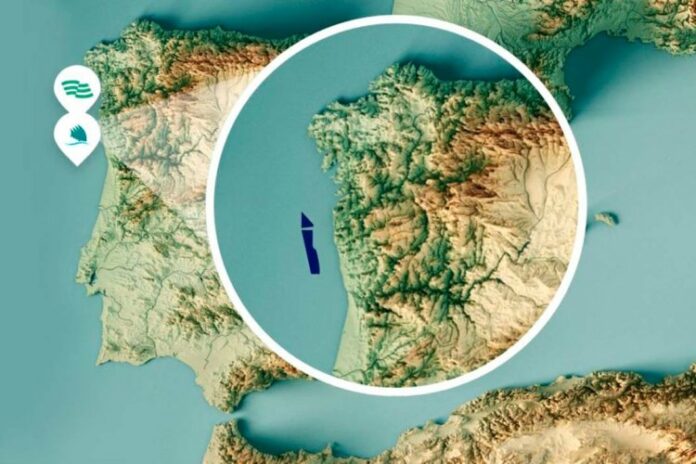
IberBlue Wind, a joint venture operating in the Iberian market, has announced  two floating offshore wind projects on the North Atlantic coast. They will be located on the border between Spain and Portugal and, have a combined capacity of up to 1.96 GW.

The projects named Juan Sebastián Elcano and Creoula will have approximately 109 turbines and will occupy an area of 530 square kilometers off the coasts of Baixo Miño in Pontevedra and Viana do Castelo. When operational, they will have the capacity to supply electricity to over one million homes. The names Juan Sebastián Elcano and Creoula were chosen for the projects as a tribute to two historic training ships that are part of the Spanish and Portuguese Navy.

The global investment required for the construction and maintenance of the two projects could exceed 4,000 million euros and generate more than 5,000 jobs. These projects represent a pioneering approach to offshore floating wind development that will bring important benefits for both countries. It is estimated that the cost of their joint development could be 32% lower than if they were to be developed separately. This will maximise synergies in resourcing and economies of scale during both the construction phase and operation phases. Consequently, reducing energy prices for both countries, which operate as one within the Iberian Electricity Market – MIBEL.

Adrián de Andrés, Vice President of IberBlue Wind said;

“It is very exciting to develop cross-border floating offshore wind projects and to collaborate with both Portuguese and Spanish governments on this positive opportunity for both countries. We have already engaged with both authorities when we presented our projects to the Spanish and Portuguese authorities, and we look forward to continued engagement.”

Juan Sebastián Elcano will consist of 29 wind turbines, of 18 MW each, which gives it a nominal capacity of 522 MW. The wind turbines, installed on floating platforms anchored to the seabed, will extend from As Mariñas to A Guarda, over an area of117 square kilometers. At between 20 and 35 kilometers from the coast, their visual impact will be much reduced.

The location is within the delimitations recently established by the Spanish Government under their Maritime Space Management Plans (POEM), among which is the North Atlantic demarcation, called NOR-1. The project will support local Galician industry which has the ability and experience to undertake this kind of project.

Creoula will have 80 turbines of 18 MW each and an installed capacity of 1,440 MW. The project will cover an area of 413 square kilometers and be between 20 and 40 km from shore.

Creoula is also located within the areas proposed by the Portuguese Government for offshore wind farm development and will contribute to the target set to install 10 GW of offshore wind by 2030.

The construction and operation of both projects will require ongoing collaboration between the developers and many different stakeholders, including civil society, coastal communities and other sea users. IberBlue Wind has already established relationships with port authorities, regional and local administrations, and representative bodies in the two areas, with the aim to positively integrate the projects into the local environments and deliver a sustainable socio-economic opportunity.  

Port of Kaohsiung’s container terminal officially open for business

0

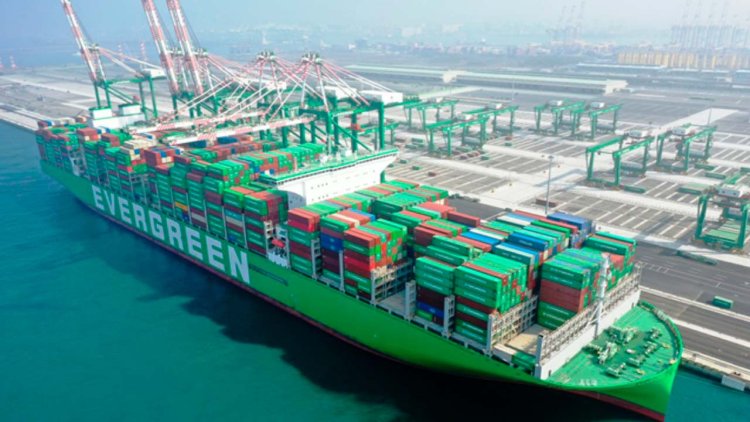
Port of Kaohsiung’s 7th Container Terminal formally commenced operations on May 1st (2023).

The 7th Container Terminal’s 5 container wharves are the nation’s largest, with maintained depths of -18m and a combined length of 2,415m capable of concurrently berthing four 24,000-TEU VLCSs. 

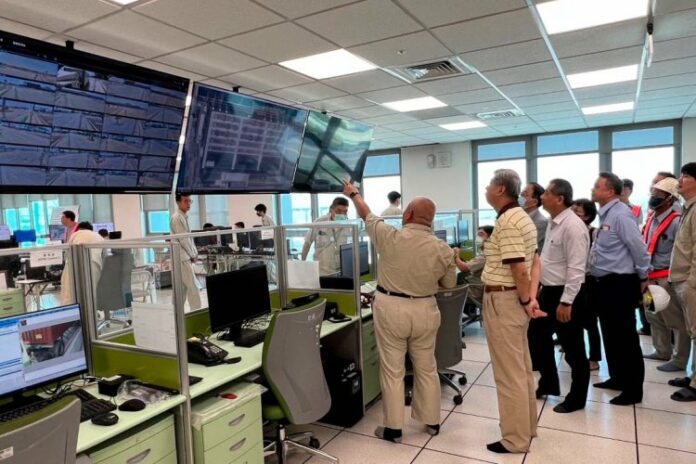
The terminal will also be the first in the nation to install remotely controlled 25-container-outreach ship-to-shore (STS) cranes, fully automated driverless transtainers, and smart gate controls in both quay and inland operations areas. Terminal-wide automation and smart operations will be further supported by comprehensive standalone-5G, fiber-optic, and Internet of Things (IoT) systems coverage; Evergreen Marine’s own fully automated terminal operating system (TOS); and real-time power monitoring system, ensuring the 7th Container Terminal’s role in global and regional shipping as a highly automated and intuitive, advanced container terminal.

TIPC Chairman Hsien-yi Lee remarked that the 7th Container Terminal is home to “Taiwan’s first automated container-handling wharves.” “The UAVs, remote control technologies, and AI systems already installed,” he continued, “will noticeably increase operational efficiencies at the terminal’s container yards while significantly upgrading the quality of the port’s working environment.” 

The onset of the worldwide COVID-19 pandemic in 2020 brought widespread shortages in available labor and unplanned port lockdowns, resulting in a global rash of shipping schedule delays, port congestion, and container-handling mistakes and mishaps. Although major shipping companies have all already fully transitioned to digital information platforms, most ports still lack the artificial intelligence (AI) and automated infrastructures necessary to effectively utilize digital data. Thus, highly labor-intensive port operations became a major impediment to global shipping operations during the recent pandemic. Today, even with the continued and steady waning of pandemic-related disruptions, fully automated, fully digitalized operations remain a key element in modern port transformation. Thus, TIPC and Evergreen Marine jointly allocated NT$40.95 billion for related preparations and, in less than 5 years’ time, have together made the nation’s first fully automated container yard a reality and created the necessary conditions for delivering world-class, state-of-the-art port operations for decades to come. 

“Developing and implementing pioneering innovations is a difficult path to take,” notes TIPC Chairman Lee. “It is a path that has been made all the more difficult by the recent pandemic and severe labor shortages, both of which greatly increased the engineering problems in need of resolution. TIPC, working with core project partners CECI Engineering Consultants and Union-Tech Engineering Consultants, worked closely with Evergreen Marine for over four years, engaging in the regular consultations, discussions, and decisions necessary to apply advanced engineering methods, tendering strategies, and closely synchronized work schedules to overcome a myriad of difficulties and complete the 7th Container Terminal in the shortest possible timeframe. In the process, we have significantly enhanced our competitive position and attractiveness in the fast-changing shipping market and created the most-modern mega container terminal in the Asia Pacific region.”

TIPC is also continuing to rationalize Port of Kaohsiung’s container wharf allocations and infrastructures to maximize resource utilization and operational effectiveness, promote long-term resilience, and further bolster the competitiveness of Port of Kaohsiung as a global hub for container shipping and of Taiwan’s international commercial ports in general.

Two new Stena Line ships to boost Heysham-Belfast freight capacity by 80%

0

The multi-million pound investment will significantly increase freight capacity on the route.

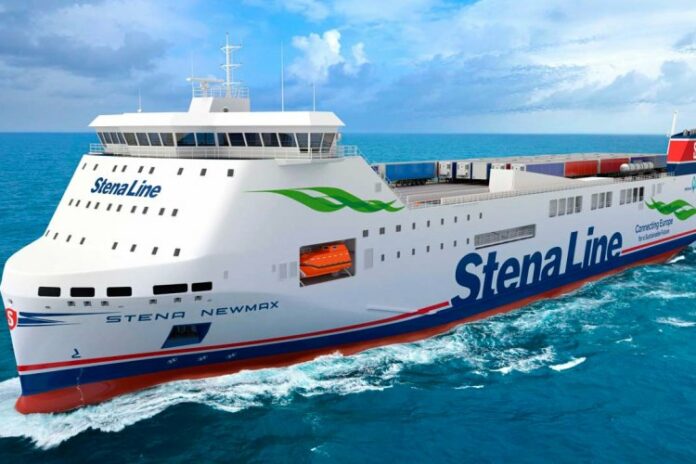
Each of the two new 147-meter vessels has been designed to maximise freight volumes and will provide 2,800 lane meters of capacity which is an 80% increase on current ship capacities.

The new vessels, the first of which is due to enter service on the route in autumn 2025, will be equipped to carry 12 passengers and 26 crew.

The ‘NewMax’ vessels will be able to operate on methanol fuel. Stena Line is currently working closely with the supply chain of methanol and has secured future volumes of e-methanol to fulfil its strategic ambition of shifting to renewable fuels and cutting 30% of its CO2 emissions by 2030.

Future proofing of the new vessels for electrification will also be another priority during construction providing in-built technologies that can take advantage of both battery propulsion and shore power, where this is available.

The unique tidal systems prevailing in Heysham can be challenging, so each vessel will be fitted with a bespoke marine technology configuration making it more resilient to the prevailing weather conditions. Three bow thrusters will provide optimum maneuverability and reliability and a specially designed engine/propeller configuration will further enhance berthing capability in extreme weather.

Paul Grant, Stena Line Trade Director said:

“This is very significant day for Heysham-Belfast freight traffic.  By adding an extra 80% capacity to the route, Stena Line has responded to growing demands from customers. 

“We have operated a very popular service on Heysham-Belfast for several years now but with restricted capacity it has been challenging to meet increased market growth.  With the extra capacity, we will now be able to significantly enhance our service on this route and complement our Birkenhead, Cairnryan and Holyhead services.”

Phil Hall, Mersey Port Director at Peel Ports Group, said:

“The Heysham-Belfast freight service is extremely important to the Port of Heysham. The construction of Stena Line’s two new ferries will go a long way towards meeting increased customer demand, while the additional capacity will allow for enhanced services for our port users. It’s a fantastic project to be supporting, and we look forward to delivering a bigger and better freight service for our customers from 2025 onwards.”