-1.1 C
New York
Home Blog Page 304

Equinor and partners announce final investment decision for BM-C-33, in Brazil

0

Equinor (operator), Repsol Sinopec Brasil and Petrobras have taken the investment decision to develop the BM-C-33 project in Brazil. The investment is of approximately USD 9 billion.

Located in the Campos Basin, BM-C-33 comprises three different pre-salt discoveries – Pão de Açúcar, Gávea and Seat – containing natural gas and oil/condensate recoverable reserves above one billion barrels of oil equivalent.

The concept selected for BM-C-33 is based on an FPSO (Floating production storage and offloading unit), capable of processing gas and oil/condensate and specifying these for sale without a need for further onshore processing.

The FPSO’s production capacity is of 16 million cubic meters of gas per day with average exports expected of 14 million cubic meters of gas per day. Start-up is planned in 2028.

“The final investment decision of BM-C-33 is an important milestone for the partners and for Equinor. Together with partners and suppliers we have developed a significant project which will provide Brazil with energy to meet its growing energy demands and create value for owners and society, contributing to local industrial development. Brazil is one of Equinor’s core areas and the investment in BM-C-33 emphasizes the strategic importance of our Brazilian portfolio,” says Geir Tungesvik, executive vice president for Projects, Drilling & Procurement.

“BM-C-33 is one of the main projects in the country to bring new supplies of domestic gas, being a key contributor to the further development of the Brazilian gas market. Gas exported from the project could represent 15% of the total Brazilian gas demand at start-up. Its development will also contribute to the energy security and economic development, enabling a lot of new job opportunities locally,” says Veronica Coelho, Equinor’s Country Manager in Brazil.

BM-C-33 will be Equinor’s second FPSO in Brazil using combined cycle gas turbines, significantly reducing carbon emissions during operations.

The technology will also be applied in Bacalhau, in the Santos Basin, and it combines a gas turbine with a steam turbine to take advantage of the excess heat that would otherwise be lost. By implementing this technology, the average CO2 intensity of BM-C-33 over its lifetime will be lower than 6 kilos per barrel of oil equivalent.

BM-C-33 will be the first project in Brazil to treat the gas offshore and be connected to the national grid without further onshore processing. The sales gas is planned to be exported through a 200 kilometres offshore gas pipeline from the FPSO to Cabiúnas, in the city of Macaé, in the state of Rio de Janeiro. Liquids are planned to be offloaded by shuttle tankers.
Nexans awarded agreement to support energy transition in Europe with TenneT

0

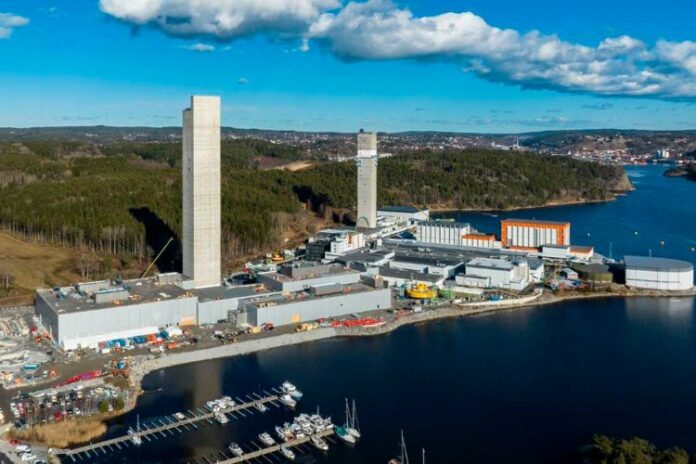
Nexans has been awarded a frame agreement by TenneT, the Transmission System Operator (TSO) for the Netherlands and a significant part of Germany, for turnkey high voltage direct current projects for offshore wind farms.

Under this frame, Nexans will be responsible for three grid projects, connecting the future offshore wind farms BalWin 3, LanWin 4, LanWin 2, in the German North Sea to main land. The initial value is 1.7bn EUR, with major subcontracted works to be added once the project-specific call-offs are signed.

Nexans will be responsible for the full Engineering, Procurement, Construction and Installation – including civil works (EPCI) of over 2,160 km of subsea and land cables.

In 2022, Nexans made a major step forward with the successful development and testing of the first 525 kV DC cable with key features to enable a substantial increase in transmission capacity. The awarded projects are the first in which the Nexans group is deploying its breakthrough 525 kV offshore cable technology, specifically designed to support the energy transition, that will provide a total of 6 GW of energy from the North Sea to Germany The subsea cables will be manufactured at Nexans’ flagship factory in Halden, Norway.

After the successful completion of the DolWin 6 project and the award of the BorWin 6 project in 2022, the frame agreement continues Nexans’ long-term partnership with TenneT, contributing to the acceleration of Germany’s energy transition. It confirms that Nexans is a reliable partner to support the energy transition and reduce net GHG emissions to meet the carbon neutrality targets set at COP21. These projects will further increase energy security in Europe; they will be operational between 2029 and 2031.

Vincent Dessale, COO and senior executive vice president of Nexans, said:

“The uncertainty on the energy supply has again underlined the need to invest in offshore grids throughout Europe. This can only happen by creating strong and long term partnerships between suppliers and transmission system operators. The frame agreement developed by TenneT is the perfect answer to those challenges, and is consistent with Nexans’ risk reward model.”

Tim Meyerjürgens, COO TenneT, said:

“After recent awarding of the first five cable connections and the announcement of the suppliers for the sea- and land-based converter stations, we are again very proud to announce the partners for the multi-year agreement to produce and install the cables for these crucial and innovative grid connection systems for the energy transition. ”

World first in Antwerp port area: drone network officially launched

0

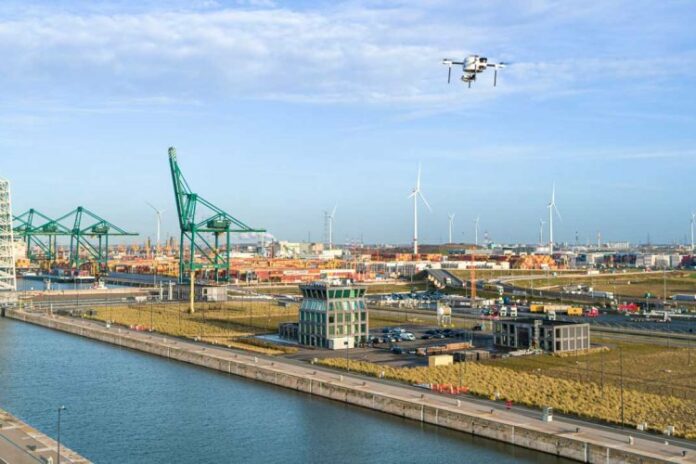
Launched, the ‘D-Hive drone-in-a-box’ network is the result of a partnership between the Port of Antwerp-Bruges, DroneMatrix, SkeyDrone and Proximus.

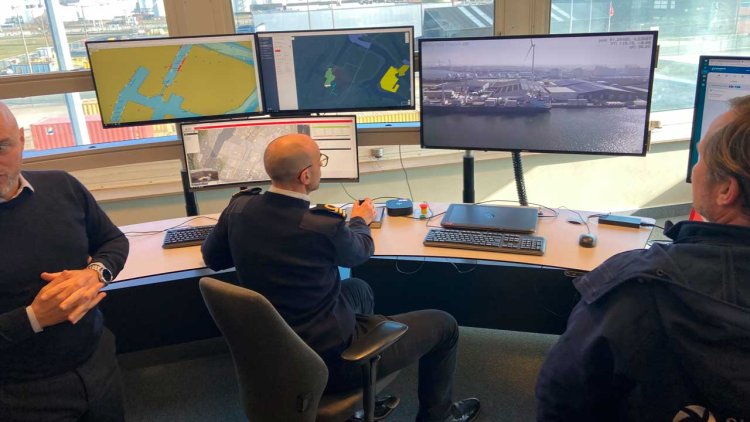
​The Antwerp port area is more than 120km², an area that will now be covered by the D-Hive network of six autonomous drones. They will provide extra pairs of eyes to help coordinate smooth, safe and sustainable operations in this complex environment. The drones will offer a unique perspective from the air and enable the port authorities to manage, inspect and supervise a large area, quickly and effectively.

The port will use the drones for a range of functions including berth management, monitoring, infrastructure inspections, oil spill and floating waste detection, and to support security partners during incidents. The 18 daily BVLOS (Beyond Visual Line of Sight) drone flights will be remotely controlled from a Command and Control Centre in the heart of the port.

This is the first implementation worldwide of BVLOS flights on this scale in a complex industrial environment. Unlike VLOS (Visual Line Of Sight) flights, these will take place out of the pilot’s sight. Port of Antwerp-Bruges is working with partners DroneMatrix, SkeyDrone and Proximus for the D-Hive network. Two months ago, the partners were given the green light to launch the drone network. This operational permit was built around a new BVLOS framework (known as pre-Uspace airspace), built by Skeydrone and approved by the BCAA (Belgian Civil Aviation Authority) and EASA (European Union Aviation Safety Agency), as a appropriate and safe framework for BVLOS drone flights.

​Port of Antwerp-Bruges already had the vision of building a network of autonomous drones in 2019, because of the important rol they could play in helping to create the port of the future. Several tests have taken place and there was participation in the SAFIR project to investigate the feasibility of drones at the port. As a result, the ambition of a network of autonomous drones is now a reality.

Jacques Vandermeiren, CEO of Port of Antwerp-Bruges:

“Given the huge surface area of the port, drones provide us with leverage when it comes to carrying out our core tasks as a port authority. This drone network will play a crucial role in the further roll-out of the port’s digital twin, a digital copy based on thousands of pieces of data from a network of cameras, sensors and drone, giving a real-time picture of what is happening at the port every second. This first takes us an important step further in developing a fully digital nervous system that will help us manage our port more efficiently and make traffic even safer and smoother.”

Annick De Ridder, Vice-Mayor of the City of Antwerp and President of the board of directors of Port of Antwerp-Bruges:

“Thanks to this drone network, we will have a more accurate sense of what is going on at the port as we, along with our innovative partners, work towards the achievement of a safe, efficient and smart port – the port of the future.”

Hendrik-Jan Van Der Gucht, Managing Director SkeyDrone:

“A seaport is probably one of the most difficult areas to fly drones. Especially when flying beyond visual line of sight (BVLOS). SkeyDrone therefore developed the “BVLOS framework” that ensured that these D-Hive drones can be deployed daily in a safe and scalable way. ​ This framework now serves as the template for the future U-space airspace, for which again the Port of Antwerp Bruges will pioneer.”

Anne-Sophie Lotgering, Enterprise Market Lead of Proximus:

“This newly launched network of autonomous drones will help the port authority in its day-to-day activities, for example by facilitating the detection of oil spills and floating debris or by supporting the coordination of calamity and incident response operations. It will also benefit the many companies that are active in and around the Antwerp port area in a broader sense. This project shows the potential of our state-of-the-art 5G network, combined with a wide range of software-based services, to boost innovation in our country.”

Crowley to launch service between Mexico and the U.S. Midwest and Canada

0

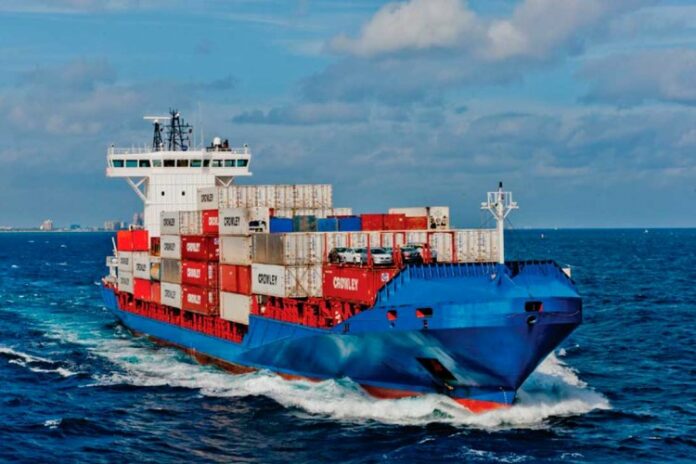
Featuring Crowley’s new Mexico-U.S. ocean route in the Gulf, the service will leverage the highly efficient inland rail network of Canadian National Railway Company and its U.S. rail subsidiaries (CN). The companies’ combined network provides broad reach across the Midwest and into Canada to increase solutions for global customers in North American markets.

Crowley is a global supply chain provider that provides end-to-end supply chain solutions in the U.S., the Caribbean and Central America, and soon from Mexico via ocean shipping to connect the Midwest and Canada with Canadian National (CN) rail.

“With this collaboration with Canadian National, Crowley has further expanded market reach for our customers and the communities they serve with the fast, reliable transport of goods across the entirety of North America,” said Brett Bennett, senior vice president and general manager, Crowley Logistics. “Leveraging each side’s unmatched supply chain capabilities and commitment to customers long-term, we are creating even more efficiencies to advance the power of today’s innovative and demanding global supply chain.”

In addition to a new ocean shipping route from Tuxpan, Mexico, to Mobile, Alabama, which avoids inland transportation congestion at the U.S.-Mexico border, the linkage to CN best-in-class rail service from Mobile to the Midwest and into Canada will offer customers the fastest, most environmentally efficient transit times versus emissions from trucks with five to six times less fuel used per ton transported. Ships making a roundtrip between Tuxpan and Mobile weekly in September will carry up to 1,000 TEU (20-foot equivalent unit) containers and more than 200 refrigerated containers.

After transiting on Crowley’s vessel from Mexico to the Port of Mobile, containers will be loaded onto daily CN trains traveling through the Midwest into Canada, offering some of the fastest rail service connecting Mobile and Chicago; Detroit; Minneapolis; Memphis; and Canadian cities such as Toronto, and Montreal, among others.

“We are pleased to be joining Crowley with our extensive inland rail network for this innovative service. We share similar values about providing solutions for complex supply chain needs, and we are excited to support their first venture via the Port of Mobile into the U.S. and Canada,” said Doug MacDonald, Chief Marketing Officer of CN. “We can better serve our customers in Mexico, the U.S., and Canada by assisting Crowley in providing a reliable, and seamless door-to-door customer experience. The new service will enable more efficient supply chain corridors and increased market access throughout North America.”

Bollinger Shipyards to refit NOAA ship Ronald H. Brown

0

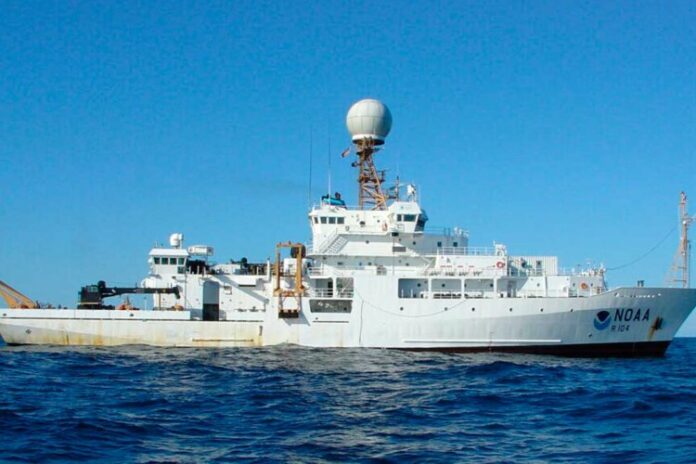
Bollinger Shipyards has begun fabrication at its newly acquired Mississippi repair facility, Bollinger Mississippi Repair, in preparation to refit the National Oceanic and Atmospheric Administration (“NOAA”) Ship Ronald H. Brown, the largest ship in NOAA’s fleet. The overhaul is expected to extend the life of the vessel, first launched in 1996, by an additional 15 years. Work is scheduled to be completed by summer 2024.

Ben Bordelon, President and CEO of Bollinger Shipyards, said:

“Here on the Gulf Coast, we’re intimately familiar with the breadth and importance of NOAA’s mission, so we’re proud to be entrusted to extend the service life of the Ronald H. Brown. The refit will be performed by our team at our newly acquired Bollinger Mississippi Repair facility, which is capable of executing projects from simple to the most complex, and doing so with the highest levels of quality, support and service in our industry. We look forward to supporting the NOAA mission with a vessel that will continue to serve as a platform for cutting-edge research and exploration for many years to come.”

NOAA Commissioned Corps Capt. Amanda Goeller, Commanding Officer of NOAA Marine Operations Center – Atlantic, said:

“NOAA Ship Ronald H. Brown is a global class vessel supporting scientific research to increase our understanding of climate and the ocean. These repairs, system overhauls and modernization will allow the ship to continue operating for many years to come.”

The refit of the 27-year-old ship will be performed at Bollinger Mississippi Repair in Pascagoula, Mississippi, adding an additional 15 years to the original 30-year expectant service life of the vessel. During the refit modification, the propulsion system will largely be replaced with new more environmentally friendly diesel generators, renewal of the bow thruster and propulsion motors, new switchboards, control systems, and alarms. Additional ship systems that are scheduled to be upgraded include the potable water plants, sewage plant, uncontaminated seawater sampling system, HVAC systems, tank level indicators, navigational components, radar renewals, overhead lighting, and ballast and exterior fuel tank vent renewals. Bollinger will replace much of the ship’s piping, along with steel as identified by the American Bureau of Shipping (ABS).

The vessel refit is scheduled to be completed and redelivered to NOAA in August 2024.

To perform the work, over 100 jobs will be created at Bollinger Mississippi Repair, where the company will be looking to hire Pipefitters, Pipe Welders, Shipfitters, Ship Welders, Riggers, Scaffold Builders, and other production support positions. Additional positions need to be filled to continue repair work on semi-submersible rigs and marine vessels on drydock and at the wet dock.

The ship is named to honor the late Ronald H. Brown, the first African American to serve as Secretary of Commerce. Brown made it his mission to generate jobs and provide opportunities for ordinary Americans, and he was an ardent supporter of the NOAA fleet. He was killed in a plane crash on April 3, 1996, while on a trade mission to Bosnia.

Saipem has completed the first installation campaign for the Dogger Bank project

0

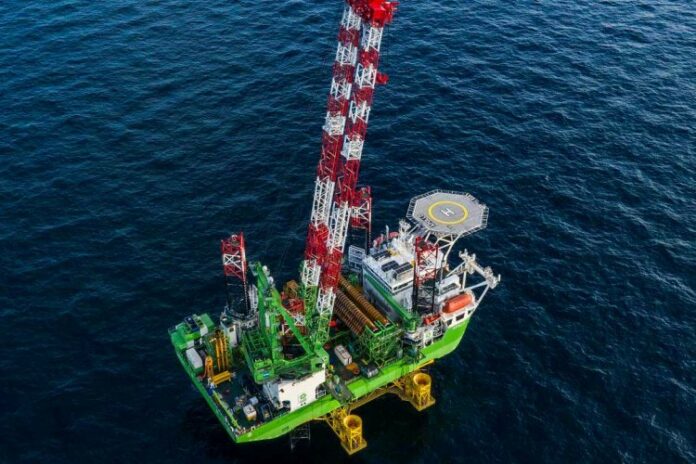
Saipem has achieved a new milestone in offshore wind with the completion of its first installation campaign for the Dogger Bank Wind Farm development.

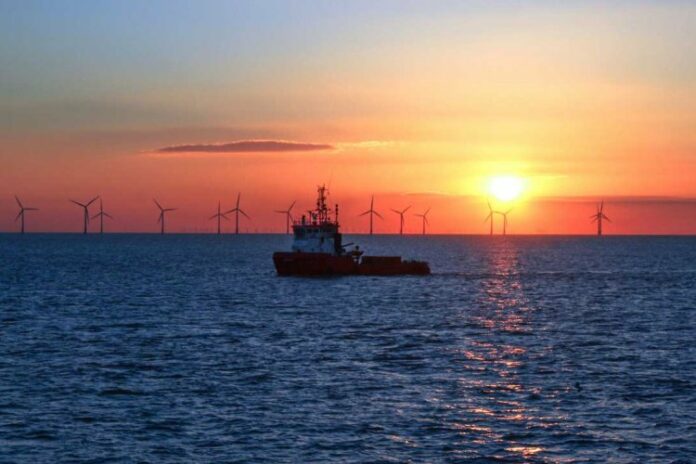
Located over 130 km off the North East coast of England, Dogger Bank Wind Farm will be, at the time of completion, the world’s largest offshore wind farm and will be capable of powering 6 million British homes.

In 2020 Saipem was awarded a contract by Dogger Bank Offshore Wind Farms, a joint venture between SSE Renewables, Equinor and Vårgrønn for the transportation and installation of the jackets and topsides of two offshore HVDC (High Voltage Direct Current) substations for Dogger Bank A and Dogger Bank B, as well as a contract from Aibel for the Engineering, Procurement and Construction (EPC) of the aforementioned jackets.

Each substation will consist of a topside and a four-legged jacket of over 3,100 tons installed at a water depth of approximately 28 metres, and will have a capacity of 1.2 GW. 

The two jackets were fabricated at the Saipem fabrication yard in Arbatax, Sardinia. The yard is currently involved in fabrication activities for other Saipem projects in the offshore wind sector.

With the conclusion of this first campaign, Saipem has successfully installed the jacket and topside for Dogger Bank A and the jacket for Dogger Bank B.

Saipem will complete its scope of work with the installation of the topside for Dogger Bank B in 2024.

Gianalberto Secchi, COO of Saipem’s Offshore Wind Business Line, commented:

“This success confirms once again Saipem’s capability of delivering full EPCI projects within the offshore wind sector, a key market for Saipem’s value proposition for the energy transition”.

C-Job and Amogy partner to retrofit tug with ammonia-to-power technology

0

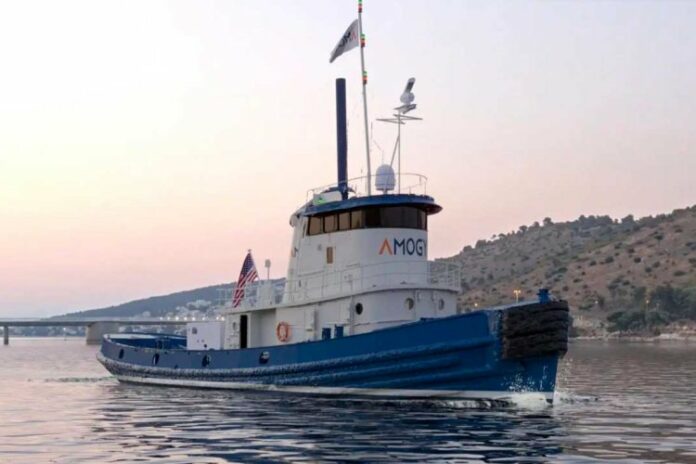
As the ship design partner for Amogy, C-Job Naval Architects will integrate Amogy’s revolutionary ammonia-to-power system into the tugboat and lay out the framework for execution activities at the shipyard, including retrofitting construction, engine removal, and more.

Hans Stoit, On-site Project Manager at C-Job Naval Architects, expresses his pride in being part of this ground-breaking project:

“We’re excited to be integrating Amogy’s technology into an existing tugboat and be able to fulfill the crucial risk-based design role that overcomes the challenges with ammonia as a fuel onboard a vessel.”

The tugboat will be both the first ammonia vessel planned to set sail as well as the first US Jones Act ammonia-powered vessel. The unique system onboard provides a total power output of 1 megawatt, three times larger than what has been field tested on Amogy’s ammonia-powered semi-truck earlier this year.  Slated as the world’s first ammonia-powered ship to set sail, this project came with a range of exciting opportunities and unique challenges, making the collaboration between Amogy, C-Job, DNV class, and the US Coast Guard (USCG) essential.

Since this project is one of a kind and pushes boundaries, risk-based design is used extensively where overall safety follows from the application of functional rules and risk assessment. This methodology was applied to design areas including mitigation of ammonia emissions, design precautions around potential leaks, and principal design choices to manage hazardous and dangerous zones.

Hans continues,

“The to-be-converted vessel will be considered a hybrid vessel with an ammonia-to-electricity power source using Amogy’s technology. With our extensive and broad maritime knowledge of newbuild and converting vessels (like repowering) with modern and out-of-the-box technology as well as our holistic approach towards all systems in the vessel, together we can make the difference to a scalable and worldwide applicable system towards a greener shipping industry. C-Job has been a strong believer in ammonia as a renewable fuel for years. We’re excited to apply our knowledge and experience on this first-ever ammonia-powered vessel.”

DEME awarded three contracts for Dieppe Le Tréport offshore wind farm

0

DEME Offshore has been awarded three contracts for the Dieppe Le Tréport offshore wind farm in France. This is the third large-scale offshore wind farm project for DEME in France following groundbreaking solutions deployed at Saint-Nazaire and the recent contract award of Iles d’Yeu and Noirmoutier wind farm.

The contracts include the transport and installation of the pin piles and jackets forming the foundations for the turbines, as well as the transport and installation of the pin piles, the jacket and the topside for the offshore substation. DEME Offshore will also carry out the EPCI scope (Engineering, Procurement, Construction and Installation) for 120 km of inter-array cables.

The Dieppe Le Tréport wind farm is owned by a consortium made up of Ocean Winds (Engie-EDPR), Sumitomo Corporation and  Banque des Territoires. 

Dieppe Le Tréport has similarities to the 950 MW Moray East offshore wind farm in Scotland, whereDEME Offshore performed the full EPCI scope for 100 foundations and three offshore substations for Ocean Winds. DEME Offshore developed its own techniques for this project, and these will also be deployed at Dieppe Le Tréport, including a specialised rig and a jacket levelling and fixation system.

Piling operations for the offshore substation foundation are set to start in 2024 and the jacket foundation installation in the following year. One of DEME’s cable installation vessels is set to perform the cable laying scope, following the installation of the substation. 

Austal Vietnam launches 66 metre high-speed catamaran for french Polynesia

0

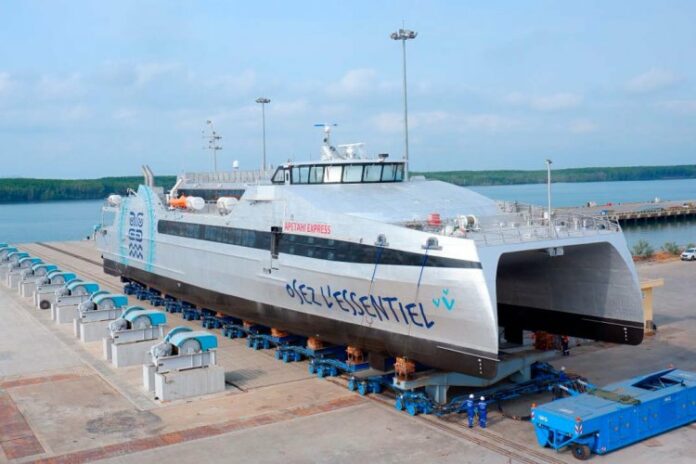
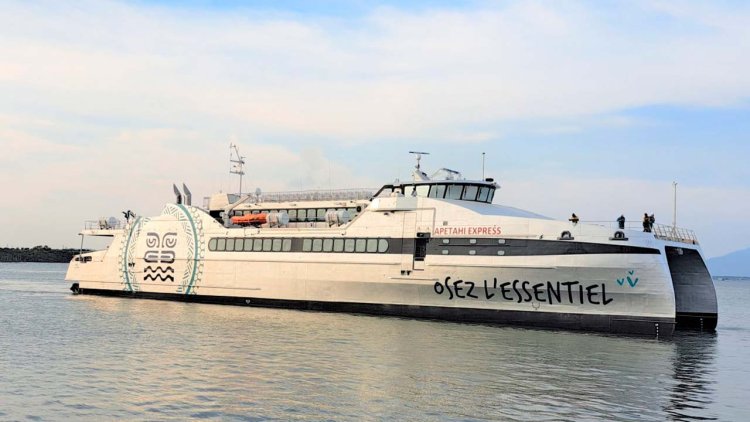
Austal Vietnam has successfully launched a new high-speed catamaran built at the company’s shipyard in Vung Tau for the Degage Group of French Polynesia.

The 66 metre ‘Apetahi Express’ (Austal Hull 425) is undergoing final fit-out, prior to sea trials which are due to commence in May. 

Austal Limited Chief Executive Officer Paddy Gregg said the new catamaran is a striking, yet practical design that adds further value to the company’s extensive portfolio of high-speed commercial ferries.

“Austal’s latest catamaran design offers operators an impressive looking vessel that is both highly efficient and flexible, with multiple indoor and outdoor decks for passengers and a large cargo space accommodating up to 16 tonnes for high-speed inter-island transportation.

“I know that The Degage Group, who have bought five ferries from Austal over the past couple of decades are excited about adding Apetahi Express to their fleet and introducing a superior service to their customers in French Polynesia; and we’re delighted to be partnering with them on this project.”

Austal Vietnam President Mark Dummett congratulated his team on the launch of Apetahi Express which is the 3rd vessel constructed at the shipyard since opening in 2018.

“The Austal Vietnam team have worked exceptionally hard to launch this new catamaran, for one of our most loyal commercial customers, The Degage Group and I congratulate them all on a job well done – the ship looks fantastic.

“We’re looking forward to delivering the 6th ship from Austal to the Degage Group and seeing Apetahi Express sailing the beautiful waters of French Polynesia, soon.”

The new Austal ‘Passenger Express 66’ catamaran features a length overall (LOA) of 66.4 metres, beam of 15.2 metres and draft of 1.8 metres. Over two passenger decks, the vessel can accommodate 574 passengers, with an additional 80 seats available on an external sun deck. Crew accommodation includes 7 two-berth cabins and 2 single-berth cabins. The vessel has four passenger access ramps and can carry up to 16 tonnes of cargo loaded via two cranes.

Fitted with four diesel engines and four waterjets, as well as Austal’s renowned Motion Control System (including active interceptors and T-foils) and the latest MARINELINK-Connect program, the new ferry will have a contracted top speed of 35.8 knots and a range of up to 360 nautical miles (excluding a long-range tank, fitted).

Austal has previously designed and built five vessels for The Degage Group, comprising two 69 metre monohull cruise ships (Austal Hulls 172 and 173), a 56 metre vehicle passenger catamaran ferry (Austal Hull 266), an 80 metre vehicle passenger catamaran ferry (Austal Hull 201) and a 49 metre vehicle passenger ferry (Hull 421).

The new ferry is anticipated to commence operations between Pape’ete (Tahiti) and Vaitape (Bora Bora) in French Polynesia in July 2023.  

Damen delivered two RSD Tugs 2513 to the Fairplay Towage Group

0

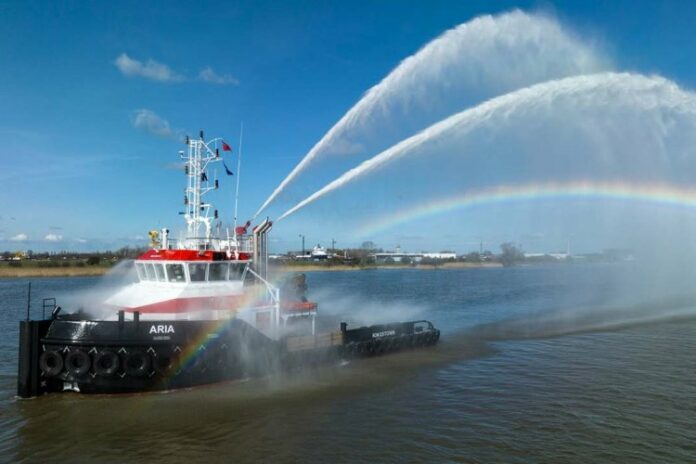
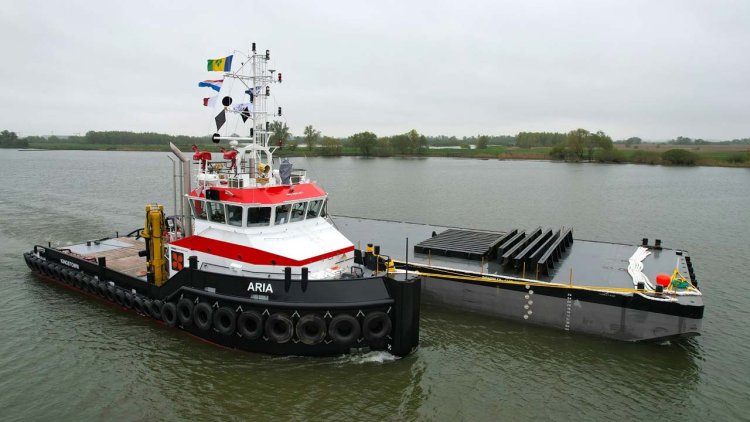
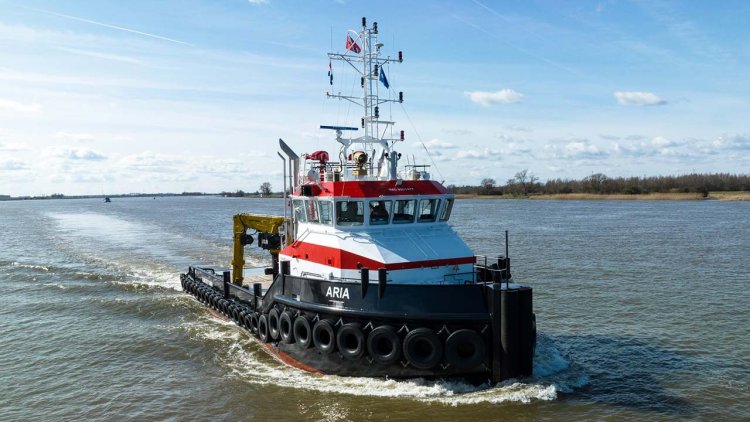
Damen signed the contract for the Shoalbuster with its customer in December 2021. Closer to completion of the vessel, the shipbuilder was able to deliver the pontoon within a month after contract effectiveness thanks to its practice of building vessels in series and keeping them in stock for short lead times.

The combination of the Shoalbuster and the Stan Pontoon will soon leave the Damen construction yard in Gorinchem, the Netherlands, to work in the marine contracting business in the Southern Caribbean. With the industry around the construction of roads, hotels, shore bases and other buildings booming in Guyana, the vessels will have no time to loose to get to work.

With the hull of the Shoalbuster already constructed, Damen was able to accommodate all wishes from the customer in a relatively short time span. The electrical network has been adapted to be better suited in the region that the vessel will operate. The large working deck, alongside the heavy duty crane and winch, will provide the perfect working tools for the rough work required. Also, the vessel can fulfil her duties offshore as a Fire Fighting 1 system including spray has been fitted.

As part of ship delivery support, Damen Services provides a contact person who is available round the clock to provide any information that the customer may require. Additionally, Damen handles contact with the carrier, export documentation, drawings and calculations, transfer to location and all lashing and loading operations.

Damen sales manager for Germany Joschka Boddeling said:

“Starting with the Fairplay 37, the company has ordered a total of seven Damen vessels over the last eighteen months. It’s an honour to see the relationship between our two companies continue to develop in this way and I’m looking forward to continuing our collaboration.”

Philip-Alexander Harmstorf, Managing Director of Fairplay Towage said:

“These tugs will help to increase the commonality of our fleet, increasing the efficiency of our operations. Throughout our previous orders with Damen, the communication and response has been excellent; they have always done what they have said they will do. Furthermore, we really value the local presence they have established in Hamburg for both sales and service.”