-0.7 C
New York
Home Blog Page 301

Tallink Grupp teams with ABB to achieve environmental goals

0

Tallink Grupp is the first Estonian company to join international technology giant ABB’s global sustainability movement, Energy Efficiency Movement, the aim of which is to enhance environmental protection through increased energy efficiency and emissions reduction projects and activities. 

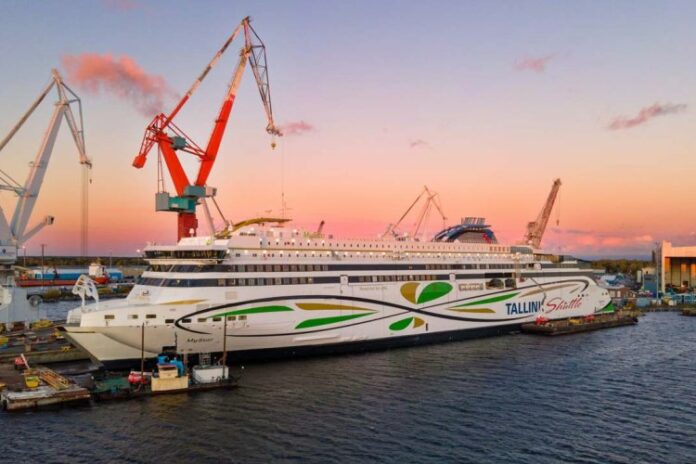
Although Tallink has taken steps to increase the company vessels’ energy efficiency for many years already, it was the launch of the shipping company’s newest fleet member MyStar on the Tallinn-Helsinki route in late 2022 that pushed the company to take the step and join the movement.  

MyStar represents the next generation of passenger ferries, where efficiencies and green solutions are an integral part of every process and function on board. ABB has produced MyStar’s electrical switchboards, shore power equipment, main electrical engines and generators. MyStar’s five generators have all been manufactured at ABB’s Estonian motors and generators factory.  All this equipment on board MyStar produced by ABB helps achieve the global sustainability goals of the movement. Using the shore power equipment alone during longer ports stays overnight, helps reduce MyStar CO2 emissions by a whopping 1344 tons a year. 

In order to join ABB’s global movement, companies must make a pledge to increase energy efficiency and reduce emissions. Tallink Grupp has pledged to reduce the absolute emissions of the company’s vessels by 2% annually and similarly to increase energy efficiency of the vessels by 2% annually. The International Maritime Organisation has set a goal for global shipping companies to reduce their emissions by 50% by 2030 compared to the emissions of the baseline year 2008. Tallink Grupp’s vessels CO2 emissions have already been reduced by 51.9% compared to 2009 thanks to different investments into the ships, new solutions and technologies. 

According to Jukka Patrikainen, manager of ABB Baltics, the whole global industrial sector has now turned its attention to increasing cooperation and developing sustainable solutions.  

“The We demand and you produce way of working has been replaced with a dialogue between the different parties and mutual support, where those who need and order the solutions also expect the producers and manufacturers to proactively offer fresh ideas and new technologies for achieving goals in a sustainable way.  MyStar is an excellent example of clever and modern solutions, such as optimising software, economical electric engines, and constant application of power to the ship’s propulsion equipment, have helped reduce the ship’s energy consumption, noise and GHG emissions,” Patrikainen said. 

“Tallink is a pioneer in shipping and great proof of the fact that even companies with significant infrastructure, can make substantial changes in their fleet and technologies that lead to a cleaner living environment and more sustainable operations,” Patrikainen commented and added that it definitely pays off for companies to make investments into energy efficient and environmentally friendly technologies.   
KOTUG Canada and Sc’ianew First Nation sign Mutual Benefits Agreement

0

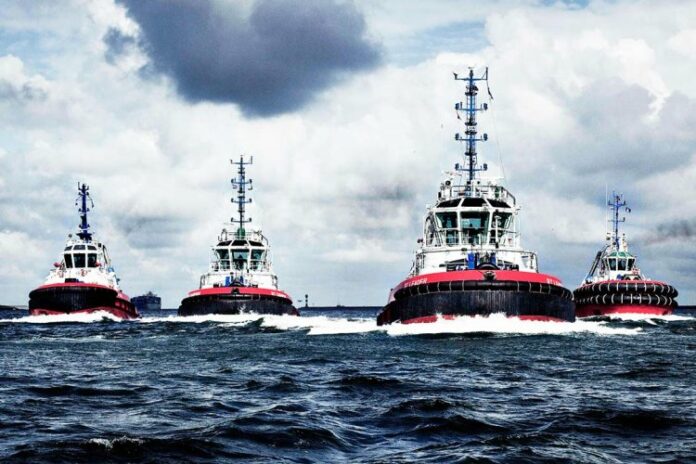
KOTUG Canada and Sc’ianew First Nation have signed a Mutual Benefits Agreement (“MBA”), outlining details of the unique and meaningful partnership that supports KOTUG Canada’s long-term agreement with Trans Mountain for the Trans Mountain Expansion Project (“TMEP”). 

The agreement includes the related training and development of Sc’ianew community members to ensure they gain the necessary experience and knowledge in the field of advanced safe tug operations and marine response. The partnership between KOTUG Canada and the Sc’ianew First Nation provides vessel crews opportunities to learn from traditional knowledge and operate with respect and appreciation of the unique natural habitat of British Columbia’s coastal environment.

In preparation for the upcoming TMEP, KOTUG Canada has worked closely with the Beecher Bay community to create new career opportunities and train Sc’ianew marine cadets on KOTUG Canada and parent company vessels. This provides Indigenous cadets with mandatory experience and knowledge in advanced safe tug operations and marine response. The cadets trained on the Horizon Arctic and the oil-spill-response-vessel (OSRV)  in the North Sea and will return home to BC and join the crew of the K.J. Gardner, a 187 tonnes bollard pull anchor-handling tug supply (AHTS) vessel, suitably equipped for enhanced spill response duties as well as emergency towage and support duties.

Another important element that the Mutual Benefits Agreement (MBA)outlines is installing and operating a new floating docking facility in Cheanuh Marina in Beecher Bay, British Columbia. This floating docking facility consists of an existing barge that will be refitted and transformed to act as a breakwater and a berthing facility for KOTUG Canada’s OSRV and two dedicated Escort Tugs.

Signing the MBA represents a major milestone in KOTUG Canada’s partnership with the Sc’ianew First Nation, located on the southern tip of Vancouver Island, strategically located along the Trans Mountain Shipping lanes. Using Beecher Bay as KOTUG Canada’s home base for its operations allows for fast response times in case of emergencies. Additionally, the barge supports further enhancement of the Cheanuh Marina commercial activities in Beecher Bay within Sc’ianew Territory.

To protect the environment and delicate marine life in our oceans, all KOTUG Canada vessels will be coated with a revolutionary non-toxic vessel hull coating developed in Canada by Graphite Innovation & Technologies that reduces underwater radiated noise. Further, KOTUG Canada has strict policies in place to reduce any impact on the environment.
 

Holland America Line installs SpaceX’s Starlink on first ship in Alaska

0

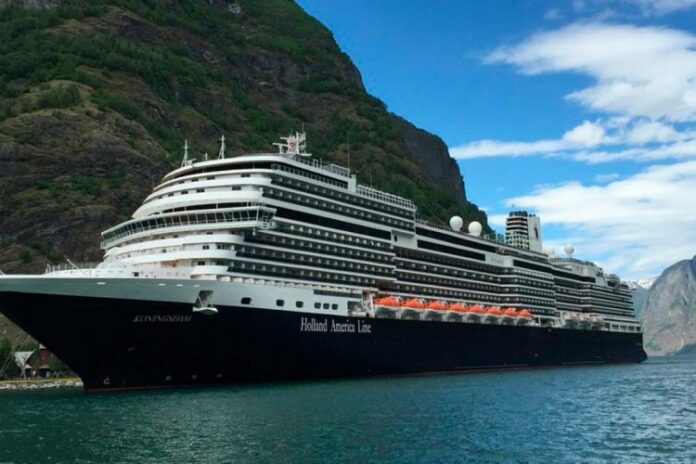
Holland America Line guests and crew have begun using next generation internet with the introduction of SpaceX’s Starlink on its Pinnacle Class ship Koningsdam, now sailing in Alaska. The technology was installed during an April drydock and has been operating for four weeks.

Starlink is the leader in Low Earth Orbit (LEO) satellite technology aimed at providing faster and more reliable Wi-Fi on a global scale. This is particularly important for internet access on ships in Alaska where weather interference and blockage from structures and mountains can challenge traditional technology.

“For our guests and our team members, maintaining the connectivity they are accustomed to at home is an important part of the cruise experience,” said Gus Antorcha, president, Holland America Line. “Added bandwidth means our guests can share the joys of exploring Alaska in real time and our team can stay in touch with their loved ones back home.”

Since receiving the new technology, Koningsdamhas sailed an 18-day cruise roundtrip from Vancouver to Hawaii and has begun sailing its 7-day Alaska Inside Passage voyages from Vancouver, including Glacier Bay, Juneau, Ketchikan and Skagway.

“While it’s early in our usage, the feedback from guests and team members has been very positive so far,” said Kathleen Erickson, vice president of technology for Holland America Line. “We’re hearing from guests that emails and social media are performing well, and team members tell us that internet calls home to loved ones are much stronger. That’s a connection that means a lot.”

“High-speed, low-latency internet is critical to our modern lifestyle. We’re excited that Holland America Line is seeing strong results in Alaska,” said Jonathan Hofeller, vice president of commercial sales for Starlink. “And we look forward to helping Holland America Line and other Carnival Corporation ships continue to bring the connectivity experience for their guests and crew into the modern age.”

Koningsdam sails with the Starlink internet capability this summer on over 20 voyages from Vancouver to Alaska’s ports. Further ships will add the technology later this year with the goal of Starlink being available across the full Holland America Line fleet.

Maersk completes divestment of Maersk Supply Service

0

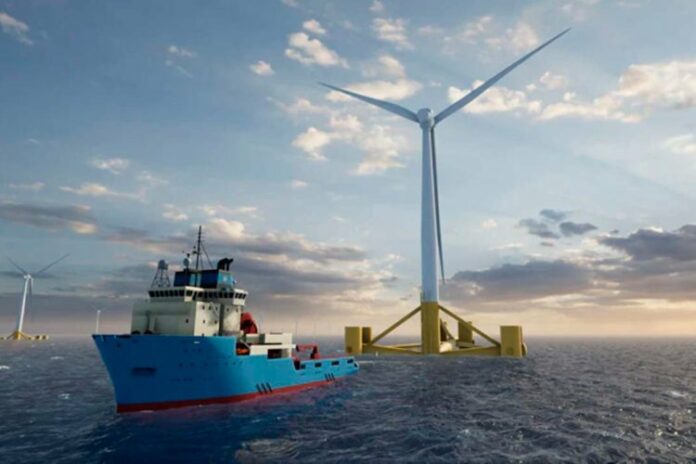
A.P. Moller – Maersk (Maersk) announces the completion of its divestment of Maersk Supply Service (MSS), a leading provider of global offshore marine services and project solutions for the energy sector.

At closing, A.P. Moller Holding, the parent company of the A.P. Moller Group, will assume full ownership of MSS. Maersk Supply Service will continue trading under its current name and will be using the Maersk seven-pointed star logo as part of its brand.

Peter Wikstrom, Head of M&A and Strategic Brands at A.P. Moller – Maersk, said:

“The divestment of Maersk Supply Service marks the completion of our previous decision to divest all energy related activities and focus on truly integrated logistics. At the same time, we are very pleased to see that Maersk Supply Service will be able to continue to further develop new solutions for the green energy transition under a new long-term ownership.”

In 2016, Maersk adopted its new strategy around integrated logistics, and a separation of the existing energy related activities was initiated. Maersk Tankers, Maersk Oil & Gas and Maersk Drilling were divested in the period 2017-2019. Today with the divestment of Maersk Supply Service the final divestment of the energy related activities will be completed.

ReefWorks granted Australia’s first permit-free marine tech testing status

0

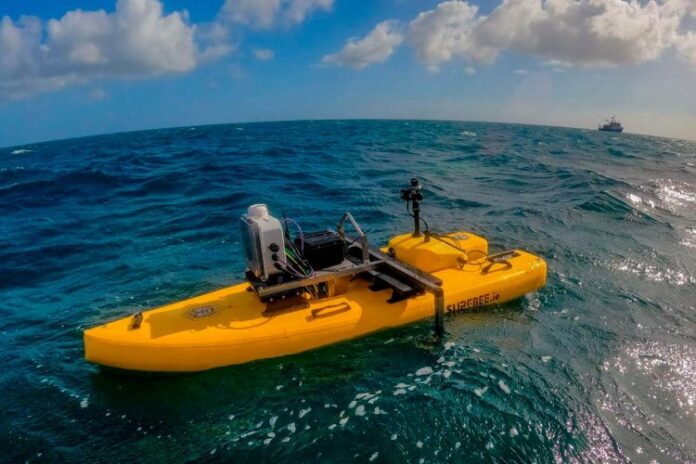
The AIMS ReefWorks inshore test range, near Townsville in north Queensland, was granted regulatory sandbox approval for uncrewed vessels from the Australian Maritime Safety Authority (AMSA).

It’s the first approval issued under a proposed Australian Maritime Regulatory Sandbox advocated by Trusted Autonomous Systems (TAS), AIMS and AMC Search.

The five-year agreement allows for permit-free testing and evaluation of vessels up to 12m in length, travelling up to 20 knots within the test range.

It removes a time-consuming hurdle and uncertainty for developers and helps clear the path for development of Australia’s fledgling autonomous marine technology sector.

It will also allow ReefWorks to share lessons learnt with regulators to help reduce risk and drive legislative changes.

IAI presents its BlueWhale autonomous underwater vehicle

0

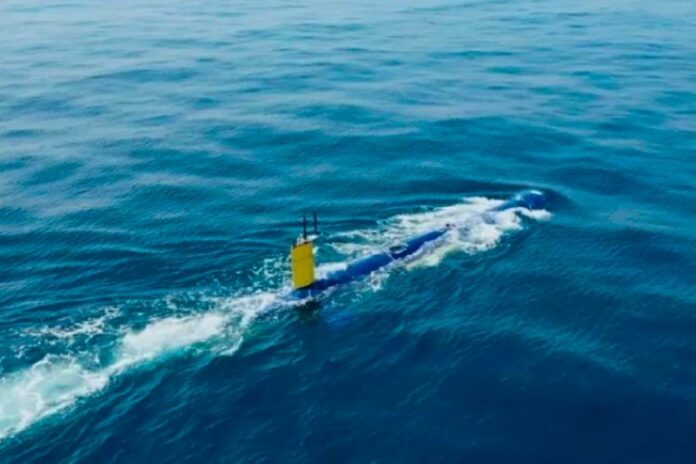
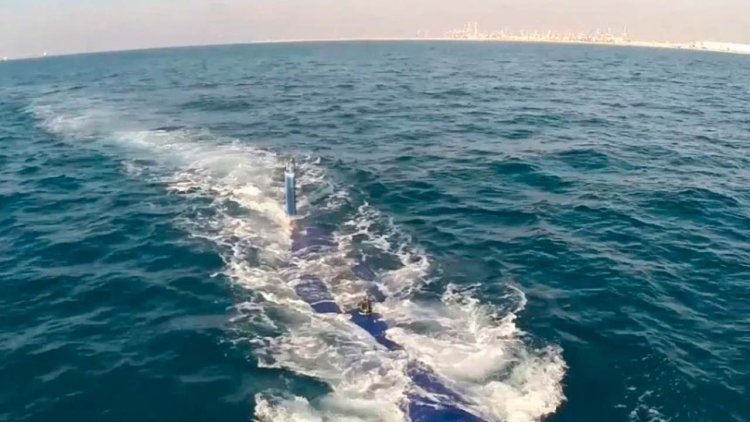
Based on ELTA’s sophisticated BlueWhale autonomous underwater multi-mission platform, a large uncrewed underwater vehicle with a wide range of advanced sensor systems, the system incorporates ATLAS ELEKTRONIK’s unique, towed passive sonar triplet array. 

In contrast to existing towed sonars, the combined system is designed to function at depths traditionally exploited by submarines to avoid detection. A transmitter developed by ATLAS ELEKTRONIK, deployed from an autonomous or crewed surface vessel, enables the bistatic location and tracking of submarine targets by BlueWhale ASW.

IAI is a pioneer in the field of uncrewed systems in the air, land, space and sea domains. The world’s first uncrewed aerial vehicle (UAV) was developed by IAI for the Israel Defense Forces. During recent decades, IAI became a leader for robotic ground systems, uncrewed vessels, loitering munitions and more. The BlueWhale ASW platform has been successfully tested for thousands of diving hours, performing a wide range of missions, including ISR (Intelligence, Surveillance & Reconnaissance), EW/ESM (Electronic Warfare Support Measures) and MCM (Mine Countermeasures).

Michael Ozegowski, Chief Executive Officer of ATLAS ELEKTRONIK, said:

“The joint development of BlueWhale ASW demonstrates once again the long-standing and trusting cooperation between German and Israeli naval industry partners. In close collaboration with ELTA, we developed a state-of-the-art system solution enabling high-impact ASW operations with minimum infrastructure requirements.

The ATLAS ELEKTRONIK towed passive sonar triplet array and advanced transmitter solution is optimized for long-endurance autonomous operations. A solution that meets operational needs and capabilities in an efficient and cost-effective way.”

Eyal Shapira, Vice President and General Manager of ELTA’s division for Air Defense and Naval Systems, said:

“This new joint development is a result of the close relationship between IAI ELTA and ATLAS ELEKTRONIK, and between Germany and Israel. BlueWhale ASW will rely on ELTA’s extensive experience in the realm of machine learning and AIdriven autonomous systems together with the company’s advanced payloads, including AESA radars, SIGINT systems and secure, long-range communication systems. Highly developed, on-board processing ensures that the incoming intelligence data is exploited in a timely and efficient manner.”

The ATLAS ELEKTRONIK towed sonar array incorporates the company’s legacy of more than 100 years in the design, development and production of naval systems. It is based on the company’s proven ACTAS (Active Towed Array Sonar) platform, a deep-water sonar system originally designed for surface vessel deployment. The system utilizes a lowfrequency sonar system that facilitates excellent area coverage while maintaining high sensitivity at depths previously beyond the reach of conventional sonar systems.

Technical specifications of BlueWhale ASW:

  • Length: 10.9 m
  • Diameter: 1.12 m
  • Weight: 5.5 t
  • Endurance: 10 – 30 days (depending on the mission)
  • Speed, operational: 2 – 3 knots, max. 7 knots (submerged)
  • Depth rating capability: 300 m

TECO 2030 completes production of first stack in Narvik

0

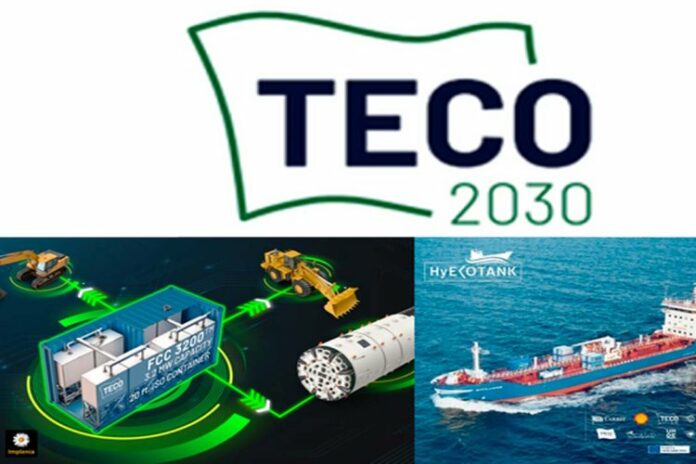
Among the first TECO 2030 fuel cell stacks which be deployed is in Implenia Norway’s 800kW HydroPilot container which will be in operation end of 2023. 

A land-based stationary fuel cell application  to provide renewable power output for demonstrating a zero-emission power generator at a construction site. The HydroPilot container is funded by the Norwegian-state owned funding company ENOVA SF with approx. EUR 1.5 million.

“We are now making a transition into commercial production of the first fuel cell stacks at our own facility in Narvik. This is a big milestone, and I am grateful for what the team has achieved together with our strong partners. Today we can offer the first bottom-up developed marine and heavy-duty PEM fuel cell technology,” says Tore Enger, Group CEO, TECO 2030. “This brings us one step closer to cleaner operations in energy intensive industries such as marine shipping, and mobile and stationary heavy-duty applications with a scalable plug and play solution ranging from 400kW’s and upwards.” 

Following the production of Implenia’s container, TECO 2030’s Narvik team will start the production of the fuel cell stacks for the EU-funded Horizon Europe HyEkoTank project. HyEkoTank will demonstrate the world’s first and largest 2.4MW marine fuel cell system for a retrofit installation onboard a product tanker owned by Tarbit Shipping AB sailing on charter to a Shell plc subsidiary.

The 100kW fuel cell stacks which are now being produced at the TECO 2030 Innovation Center in Narvik are designed with cutting-edge fuel cell technologies, optimized for high efficiency and durability. TECO 2030’s fuel cell systems can easily be adapted and customized to meet specific power requirements in a variety of heavy applications. This flexibility allows for seamless integration into a diverse portfolio of applications, ranging from maritime and transportation to industrial sectors.

TECO 2030 is building up Europe’s first Giga production facility of hydrogen PEM fuel cell stacks and modules in Narvik, Norway. The production capacity will be built up through 2023 and early 2024, targeting an output capacity of up to 120 MW of fuel cells in 2024, 400 MW in 2025 and 1.6 GW in 2030.

TECO 2030 is committed to continue its mission towards zero emission by eliminating and reducing the harmful emissions in several heavy-polluting industries.

Wartsila announces LNG reliquefaction retrofit contract

0

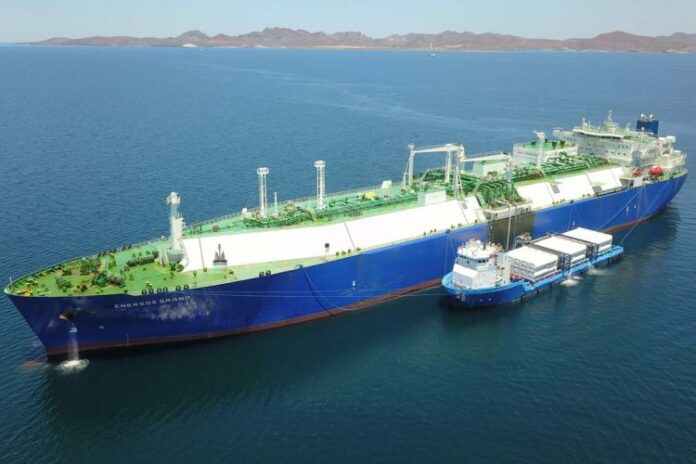
The Wärtsilä system allows the boil-off-gas (BOG) from the LNG onboard to be reliquefied and returned to the cargo tanks rather than being wasted. 

The vessel, the ‘Energos Grand’ is owned by Connecticut, USA based operator Energos Infrastructure, and is being chartered by New Fortress Energy. The order was booked by Wärtsilä in March 2023.

The solution contributes to a significant reduction in emissions and creates cost savings, as well as optimizing the LNG cargo level.

“Wärtsilä’s experience and expertise in LNG reliquefaction and gas handling are well known and we had no hesitation in selecting their equipment and services for this project,” said Tim Twomey, Senior Vice President Fleet Technical, Energos Infrastructure. “We are therefore glad to again team up with Wärtsilä as a critical partner for our conversion projects, and view their reliability and robust technology as an important factor to proceed with this project.”

“This project shows New Fortress Energy’s and Energos’ commitment to improving the environmental profile of their fleet, and we are happy to once again be shown the trust of these partners in this conversion project. Our robust and reliable Compact Reliq technology is a perfect match for such applications. It combines cost-efficiency with low maintenance to deliver a solid environmental and commercial return,” commented Pål Steinnes, Head of Sales and Business Development Midstream, Wärtsilä Gas Solutions.

The Wärtsilä equipment is scheduled for delivery during the second half of 2024.

Svitzer orders tugboats from Uzmar Shipyard

0

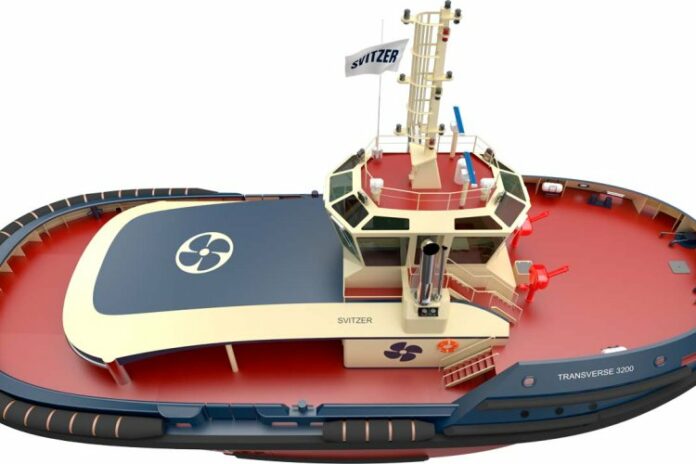
The TRAnsverse tugs are a revolutionary tug design, created in collaboration with Robert Allan Ltd, which set a new standard in tug efficiency, power and manoeuvrability, and deliver an estimated 10-15% reduction in fuel use compared to other tugs on the market. 

The new tugs will be built to a specification that also enables biofuel operations bringing tank-to-wake carbon emissions to zero. 

The TRAnsverse tug’s omnidirectional hull form, in combination with its unique towing staple and propulsion system, provides towage capabilities that are unmatched by other tug designs. Its design enables it to maximise the forces necessary for braking and steerage during towage, as it manoeuvres steadily in the water, and consequently without compromising safety, even at full speed range. It maintains position with lower propeller input power than tug designs where the thrusters are mounted side by side, and overall brings a significant increase in stability and freedom of movement.

As a result of these features, the TRAnsverse tug meets the full range of complex harbour and terminal towage environments, providing benefits such as the ability to reduce overall time of tug jobs, greater availability in poor weather conditions, reduced emissions and enhanced safety. 

The two new tugs will be deployed to Svitzer Australia’s Port of Newcastle (NSW) operations in 2025 becoming the first TRAnsverse tugs to be deployed to Australia, and only the second and third to be deployed globally. The Port of Newcastle is a busy, diverse port operation with a complex harbour, tidal restrictions and channel environment requiring active escort towage, and direct and indirect towage capabilities. Newcastle sees a range of vessels calling from capsize vessels carrying coal, to bulk, container and cruise ships. The complexity of Newcastle’s towage operations and range of vessels that call on the port will showcase the full range of the TRAnsverse tug’s capabilities.

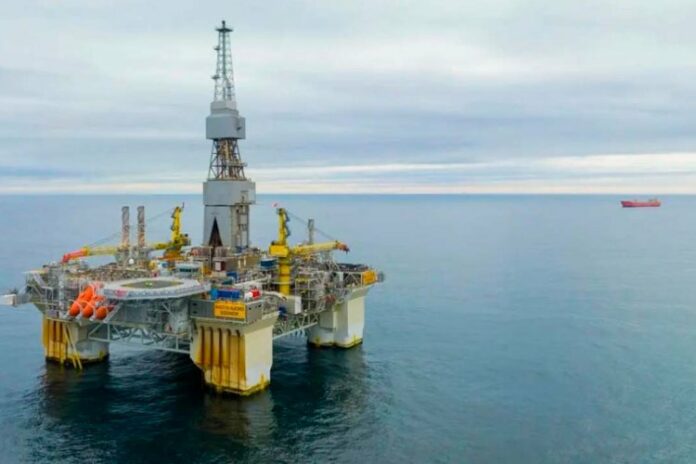
Official opening of the Njord field – ready for 20 more years

0

The Njord field started production in 1997 and was originally supposed to produce until 2013. However, systematic work with increased recovery means that there are still large volumes of oil and gas left. New discoveries in the area can also be produced and exported via Njord.

“With the war in Ukraine, the export of Norwegian oil and gas to Europe has never been more important than now. Reopening Njord contributes to Norway remaining a stable supplier of gas to Europe for many years to come,” says Terje Aasland, Minister of Petroleum and Energy.

In 2016, the platform and FSO were disconnected from the field and towed to shore for extensive upgrades. On 27 December 2022, production resumed from the Njord field.

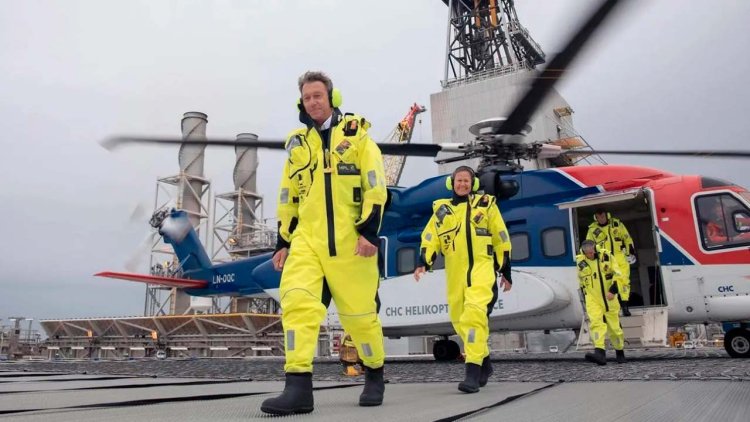
“This is the first time a platform and an FSO have been disconnected from the field, upgraded and towed back offshore. We have now doubled the field life,” says Grete B. Haaland, Equinor’s senior vice president for exploration and production north, and continues:

“It has been a big and demanding job, partly carried out during a pandemic, and I would like to thank everyone involved in preparing Njord for continuing its supply of oil and gas to the market. With the prices we anticipate in the coming years this comprehensive upgrading project will be repaid in in just under two years after startup.”

It is not just the field life that has been doubled. The ambition is also to double production and produce approximately the same volume from Njord as we have produced so far, around 250 million barrels of oil equivalent.

Ten new wells will be drilled on Njord from an upgraded drilling facility, discoveries have previously been made in the Njord area and more exploration will be carried out close to the field.

In addition, two new subsea fields have already been tied back to Njord. On 8 April, the Equinor-operated Bauge field started its production, while the Fenja subsea field, operated by Njord partner Neptune Energy, came on stream on 27 April. Recoverable volumes from the two fields combined are 110 million barrels of oil equivalent.

Plans call for future partial electrification of the Njord field based on power from shore via the Norwegian Sea Draugen platform, thereby reducing annual CO2 emissions by around 130,000 tonnes.