-0.7 C
New York
Home Blog Page 300

Seaeye Falcon picked for archaeology and offshore energy

0

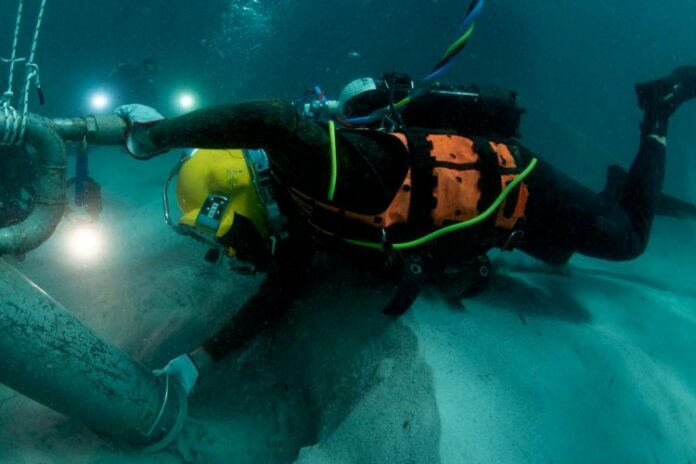
The Seaeye Falcon DR will be employed by Naples-based DST, a commercial diving business, across its operations supporting offshore energy and maritime archaeology in both shallow and deep waters. The Falcon package includes a Tritech Super SeaPrince sonar and skid-mounted five function manipulator and rope cutter.

“The Falcon DR will extend our operational capabilities,” says Alessandro Scuotto, CEO of DST. “It will operate in both single configuration and for diver support and we plan to further enhance the vehicle with new system options in the future.”

During diving operations, the Falcon can helpfully preview dive sites, watch over divers and save time by transporting tools and materials back and forth. 

The Seaeye Falcon has a reliability record covering over a million hours underwater. Its success comes from having the power and intelligent control to handle a wide range of resources for undertaking numerous intricate and demanding tasks in strong currents and turbulent waters.

Just a metre in size, the Falcon is easily manhandled, and its iCON™ intelligent control architecture, combined with five powerful thrusters, allows precise manoeuvrability amongst complex structures, whilst loaded with various cameras, sensors and tooling, typically found on much larger robotic vehicles.

WinGD powering LNG-hybrid vessels

0

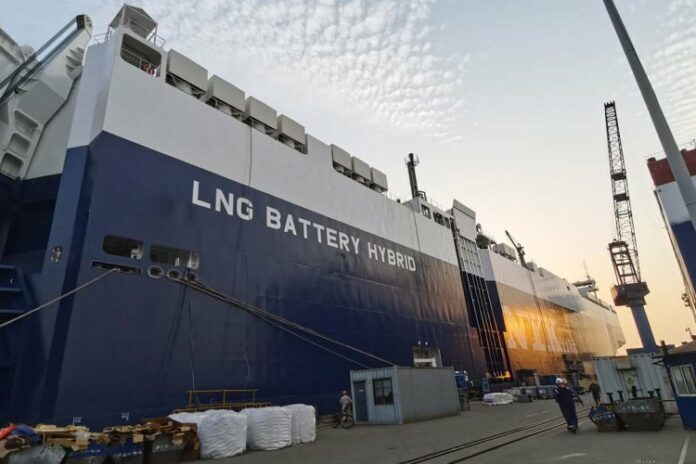
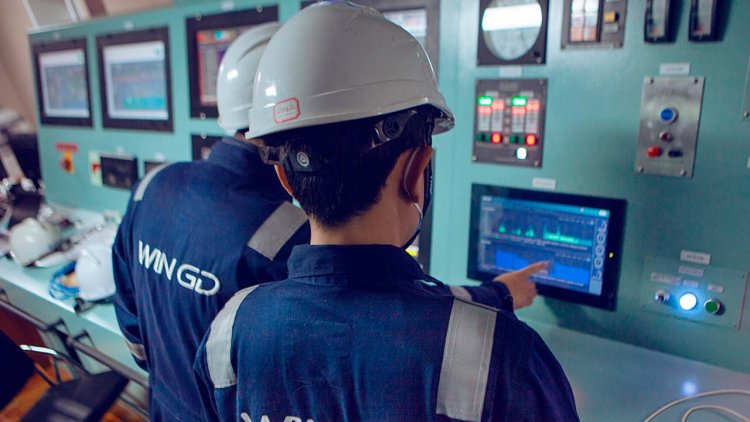
The vessels feature its cutting-edge emissions reduction technology, energy management and digital optimisation solutions with the engine at the heart of the energy ecosystem.

The vessels feature the most comprehensive installation to date of WinGD’s ecosystem of solutions. The highly advanced WinGD technologies which feature in the sophisticated LNG-hybrid vessels include WinGD’s X-DF2.0 iCER (Intelligent Control by Exhaust Recycling), X-EL Energy Manager and WiDE (WinGD integrated Digital Expert).

The state-of-the art 7,000 Car Equivalent Units (CEU) pure car and truck carriers Jasmine Leader and Wild Rose Leader are the first of a four-strong series of vessels for NYK Line using the same, extensive suite of WinGD solutions.

The LNG-battery hybrid configuration comprises WinGD’s latest 7X62DF-2.1 two-stroke engines coupled with shaft generator, DC-links, batteries and bow thruster drives, with system integration and holistic energy management also provided by WinGD.

The vessels are the first in operation with WinGD’s X-DF2.0 iCER technology which is designed to cool and recirculate part of the exhaust gas through a low-pressure path during operation in gas mode. The iCER technology reduces methane slip by 50% while providing significant efficiency gains.

NYK Line has noted that the new vessels, which also feature an enhanced hull design and other fuel economy features, will be 40% more energy efficient than conventionally fuelled ships in the same NYK Line fleet. That efficiency takes the vessels well beyond current and future CII requirements and past International Maritime Organization’s (IMO) current greenhouse gas emission target for 2030.

The vessels also showcase the first deployment of WinGD’s electrical energy solution, X-EL Energy Management, offering a new battery-hybrid power integration and sustainability service. By integrating two-stroke marine engine control into the electrified vessel power system, X-EL widens the range of vessels that can benefit from electrification as shipping seeks to improve efficiency and reduce emissions.

WinGD has optimised energy flow to run the main engine constantly at its optimal point while avoiding less ideal energy usage. The whole energy system is managed by X-EL Energy Manager.

The car carriers also feature the WiDE engine monitoring and diagnostics, which uses a digital twin of the unique system to compare ideal and actual behaviour based on real-time operation and conditions. Anomalies from expected behaviour are detected, diagnosed and communicated to crew and shoreside teams with advice for troubleshooting and maintenance.

WinGD General Manager, Sustainability Solutions, Stefan Goranov, said:

“This is the first deployment of X-EL Energy Manager and the first delivery of our X-DF2.0 technology. The vessels demonstrate how efficiency can be achieved through a holistic ecosystem approach to vessel power and propulsion.”

NYK Line Mr. Keita Fukunaga, Deputy Manager/Ship Design Team/Technical Group said:

“These LNG-hybrid vessels are among the most sophisticated and efficient car carriers ever built and are central to our fleet renewal plan targeting net-zero emissions by 2050. With WinGD’s engine, energy management and digital monitoring systems onboard, they mark an important step towards delivering decarbonised vehicle transport for our customers.”

The vessels were delivered from Jinling Shipyard in China, where the remaining sister vessels will also be built.
 

Saipem: two new offshore contracts awarded

0

Saipem has been awarded two new offshore contracts, one for Engineering, Procurement, Construction and Installation (EPCI) project in the Black Sea and one for decommissioning activities in the North Sea. 

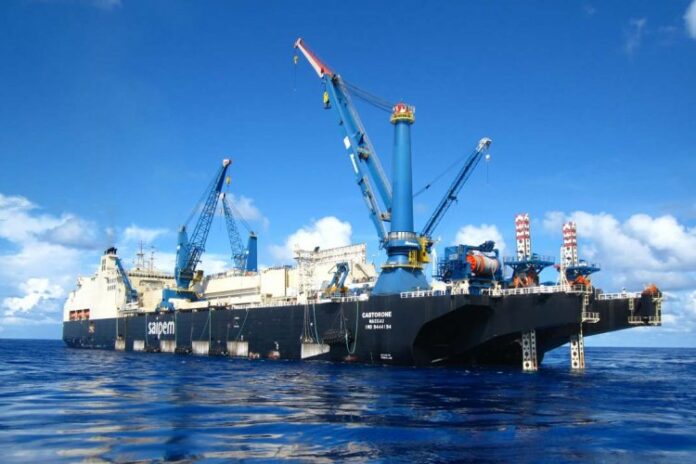
The first contract has been assigned by Turkish Petroleum OTC for the second phase of Sakarya FEED and EPCI Project and entails the Engineering, Procurement, Construction and Installation of a 16” pipeline, 175 km long, at 2,200-meter water depth, in the Turkish Black Sea waters. The offshore operations are to begin in summer 2024 and will be conducted by Saipem’s flagship vessel Castorone. Saipem has recently completed with success the first phase of Sakarya Gas Field Development project, awarded by Turkish Petroleum OTC in 2021.

The other contract has been assigned by EnQuest Heather Limited for the decommissioning of the existing Thistle A Platform, located in the UK sector of the North Sea, around 510 kilometres northeast of Aberdeen, in a water depth of 162 meters. Saipem’s activities entail the engineering, preparation, removal and disposal of the jacket and topsides, with possible extension to further subsea facilities. The activities will be carried out by the Saipem 7000, one of the largest semi-submersible heavy lifting vessels in the world.

Fabrizio Botta, Saipem Chief Commercial Officer, commented:

“These important awards demonstrate Saipem’s excellent competitive positioning in the Offshore Engineering & Construction market, a sector that is experiencing a full expansion momentum of which Saipem is ready to seize the opportunities. The contract awarded in the Black Sea is a confirmation of Saipem’s prominent positioning and of its long-standing relationships with clients. The North Sea contract, finally, is a further example of Saipem’s capabilities in a segment where the combination of innovative engineering, unique assets and safe operations is crucial”.

First phase of the renewal of the Europa Terminal is underway

0

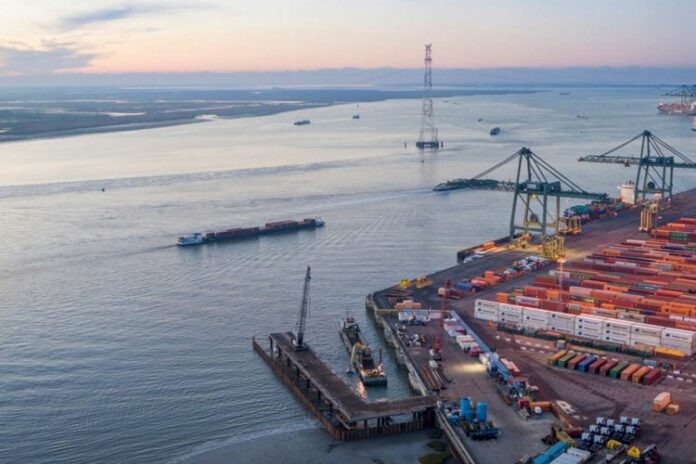
In order to continue to compete at the top level of world ports and offer customers additional container capacity and a high-performance infrastructure, Port of Antwerp-Bruges and PSA Antwerp are investing in the upgrade of the quayside and automated yard of the Europa Terminal.

The works are being split up into three major phases, with a third of the new quayside being upgraded each time, while the remainder remains operational.

With preparatory work and tests completed, the first phase of the extensive works can now get underway. In this phase, the Temporary Partnership of four contractors – Artes-Roegiers, Artes-Depret, Herbosch-Kiere and Boskalis – will be demolishing the existing quayside, installing temporary structures for further implementation and starting construction of the first section of the 1,200-metre-long new quayside, which will boast a 16-metre draught.

Working in three phases will allow the terminal to remain operational throughout the entire 10-year period of the works and allow ships to continue to dock. In order to ensure a smooth service to customers and to continue to encourage the modal shift, a temporary barge quay will provide additional mooring space for inland navigation. Construction of this new 150-metre quay was completed in April and after extensive testing, it is now ready to handle barges until the end of the works. Port of Antwerp-Bruges will be in charge of the operationality of the quay during the works.

Annick De Ridder, Port Alderwoman of the City of Antwerp and Chair of the Board of Directors of Port of Antwerp-Bruges:

“Thanks to the Europa Terminal being deepened from 13.5 to 16 metres, together with PSA Antwerp, we will be able to continue to receive the largest container ships. This new barge quay will provide additional mooring space for inland navigation during the extensive works. This project is essential to the competitiveness and sustainable growth of our port, the economic engine of Flanders.”

Cameron Thorpe, CEO PSA Belgium:

“It is essential that we maintain a high level of operational delivery to our customers during the investments to upgrade the Europa Terminal. We are convinced that in cooperation with the port and our customers, this temporary quay will ensure that we can continue to serve the barges calling at PSA Antwerp.”

Damen Shipyards delivers new ultra shallow vessel to Herman Sr. BV

0

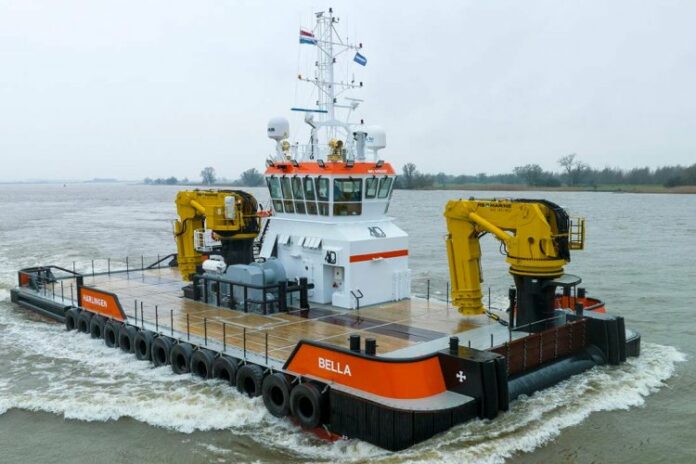
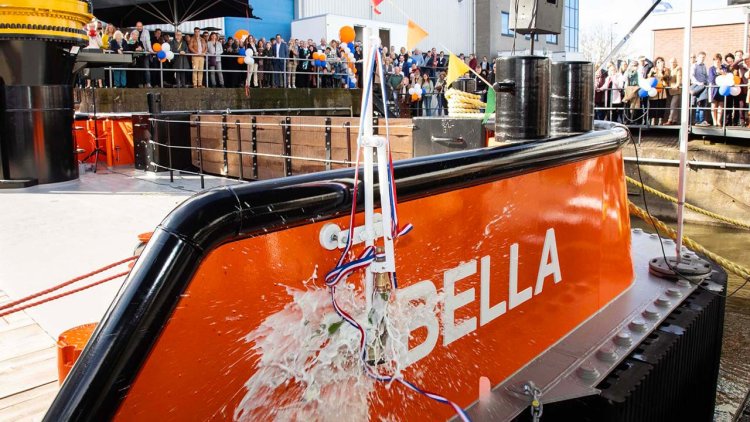
In a ceremony held at Damen Shipyards Hardinxveld, the second of the new Multi Cat (MuC) 3313 SD class was handed over to workboat operator Herman Sr. BV in front of hundreds of guests.

The MuC 3313 SD is one of the largest types in Damen’s Multi Cat range and so its extensive deck area enables it to be equipped with a wide range of equipment. Bella has two powerful deck cranes and a bollard of over 30 tonnes which, together with an anchor winch and towing pins, makes her ideal for dredging, anchor handling and construction projects.

The van Dodewaard family, the owners of Herman Sr BV, has been a client of Damen since 1947 and this latest acquisition takes the number of vessels that they have purchased to nineteen – a mix of Multi Cats and Shoalbusters. In 2021, the second generation in the form of Erwin and Chris van Dodewaard took the helm on the retirement of managing director Jack van Dodewaard.

“We are very pleased to add yet another ultra shallow vessel to our existing fleet of vessels build by Damen,” said Erwin van Dodewaard. “Bella is a unique Multi Cat with extremely powerful cranes for her draft which is unique in the workboat sector. With this new vessel we can serve our clients even better in the years to come.”

“It was a great pleasure to hand over this new and highly capable Multi Cat to the van Dodewaard family.” says Jeroen van Woerkum, commercial manager of Damen Shipyards Hardinxveld. “Each new vessel renews what is a very special relationship for us and we wish them every success with her.”

Hanzevast Shipping contracts Castor Marine for vessel IT network upgrade

0

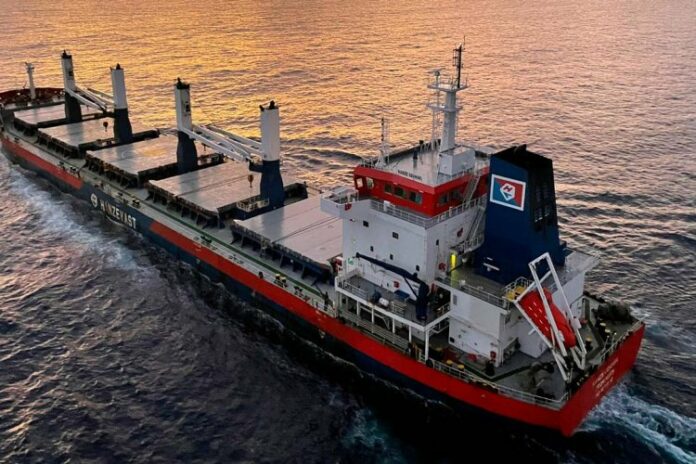
Bulk carrier operator and investor Hanzevast Shipping BV and Dutch maritime IT and SatCom infrastructure provider Castor Marine have completed the renewal of all onboard IT communications systems on Hanzevast’s Hanze Gdansk, Hanze Gendt, Hanze Genua and Hanze Göteborg. All four ships are now fully up to par, with the crew being supported by Castor Marine’s Service Desk.

Hanzevast Shipping operates 4 Handysize bulk carriers, each double-hulled, 35.000 DWT vessels with four 30-ton cranes and a Green Passport. In addition, Hanzevast has chartered the OSV Noordhoek Pathfinder to N-Sea Group. This is a max. 40 persons, 62m support and maintenance vessel for North Sea Offshore Wind installations.

The master of the Hanze Gendt comments:

“In a positive way, the system really does make a difference. Consider troubleshooting, for example: we now don’t need an IT person actually having to come onboard to fix problems. That is handled remotely and saves a lot of time. I feel we’re in good hands with Castor Marine.”

Peter Dekker, Director at Hanzevast Shipping and Hanzevast Capital, states:

“At Hanzevast we do not just operate any vessels, we take a very close interest in their performance, both from a commercial and financial position and from a sustainable and crew welfare point of view. This means we want our vessels to always be well-maintained. When it became apparent that the existing onboard communications infrastructure was no longer fit for purpose, we quickly decided to seek options and alternatives. One of the reasons we chose Castor Marine was that they offer 24/7 remote monitoring and support services, which we feel is crucial. The more so because our vessels operate worldwide. The fact that the software can be monitored and updated remotely was an deciding factor.”  

Mark Olthuis, director at Castor Marine, says:

“We are very pleased and grateful to welcome Hanzevast as our new client. And it has been an interesting process. For example, it took about 20 minutes from their first call to the moment I sat down in Hanzevast’s HQ in Groningen. We always try to respond fast to new enquiries, but in this case we really made a flying start! Together we made a plan and I am pleased to say that the project has been successfully completed. We delivered and installed the full network, incl. servers, access points, switches, firewalls, Thin clients, printers and more. In addition, Hanzevast has subscribed to our support services, which means that the crew can literally call on us at any time in the knowledge we will help them to the best of our abilities.” 

Wartsila and Corsica Linea sign 10-year agreement

0

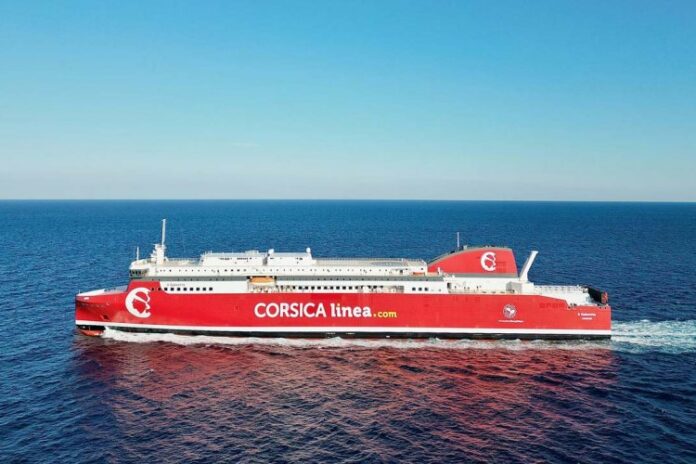
Technology group Wärtsilä has signed a ten-year Guaranteed Asset Performance (GAP) agreement with French ferry operator Corsica Linea. 

The 206-metre-long ship was built at the Visentini yard in Italy. It features two Wärtsilä 50DF dual-fuel main engines and two Wärtsilä 20DF dual-fuel auxiliary engines. The GAP agreement was included in Wärtsilä’s order book in December 2022.

The scope of the agreement includes scheduled maintenance of the main and auxiliary engines, the LNGPac fuel gas handling system, and the gas valve units. Maintenance will be carried out following data-driven dynamic maintenance planning principles. This optimises overhaul intervals and allows maintenance work to be performed only as needed without compromising the reliability of the equipment. Remote operational support is provided round-the-clock from Wärtsilä’s globally located Expertise Centres. This ensures the fast resolution to possible issues without the need for onboard service visits.

Furthermore, Wärtsilä’s unique Expert Insight predictive maintenance service secures asset availability by preventing potential problems before they occur. Through constant attention to the operational data from the engines, optimal performance can be achieved. Any deviation can be detected and resolved utilising advanced diagnostics and machine learning, backed by the company’s depth of expertise. The agreement also covers guaranteed field service support availability and time needed for major engine overhauls. The overall result of these services is to ensure the efficiency and reliability of the assets, while delivering improved financial predictability.

“Wärtsilä’s vast experience in LNG systems and solutions is unmatched in the industry, and their engines and related equipment were selected for this vessel. It is entirely natural therefore that we look to them to undertake the maintenance responsibilities, for which they are uniquely qualified,” says Lionel Adenet, Technical Director, Corsica Linea.

“With this agreement, we can support our customer with the most advanced partnership solution, including performance guarantees. It delivers cost predictability over the ten-year span, and will maximise the ship’s uptime, optimise performance and carbon footprint. This is all part of Wärtsilä’s lifecycle support approach, serving the customer with an optimal total cost of ownership,” says Henrik Wilhelms, Director Agreement Sales at Wärtsilä.

The agreement covers the ship’s engines, the Wärtsilä LNGPac fuel storage, supply and control system, the gas valve unit (GVU), and all related auxiliaries. The ‘A Galeotta’ entered commercial service in January 2023.

Corsica Linea and Wärtsilä have had a long-standing relationship covering more than 30 years. Various ships within Corsica Linea’s fleet are fitted with Wärtsilä solutions, and a large-frame agreement has been in place since 2010.

Neptune Energy awards +$100 million contract for drilling activities

0

Neptune Energy has announced the award of a +$100 million contract to Tenaris to provide equipment and services to support drilling activities on the Norwegian Continental Shelf.

Initially this will include support for one exploration well and one appraisal well in the Neptune-operated Gjøa area in the Norwegian Sea in 2023.

The five-year contract has two two-year extension options.

Neptune’s Head of Supply Chain Management & Logistics in Norway, Kjell-Petter Schou Andreassen said:

“The new contract strengthens our collaboration with Tenaris which has supported our strong operational and safety performance across all of our drilling activities.”

Tenaris’ Country Manager in Norway, Christer Andersen said:

“We look forward to continuing to add value to Neptune`s operations in the years to come with our global industrial footprint, state of the art technology and our advanced, low carbon product portfolio.”

The contract between the parties came into effect in mid-April 2023.

Consortium completes land-based NH3-fuelled engine tests

0

NYK Line, IHI Power Systems, Nihon Shipyard, Japan Engine Corporation, and ClassNK have announced that the world’s first four-stroke ammonia-fueled engine has successfully completed a land-based test for the stable combustion of fuel ammonia having an 80% co-firing ratio as part of a demonstration project for the commercialization of vessels equipped with an ammonia-fueled engine.

It was initiated in October 2021 by NYK, Japan Engine Corporation, IHI Power Systems, and Nihon Shipyard as part of the Green Innovation Fund Project of the New Energy and Industrial Technology Development Organization (NEDO).

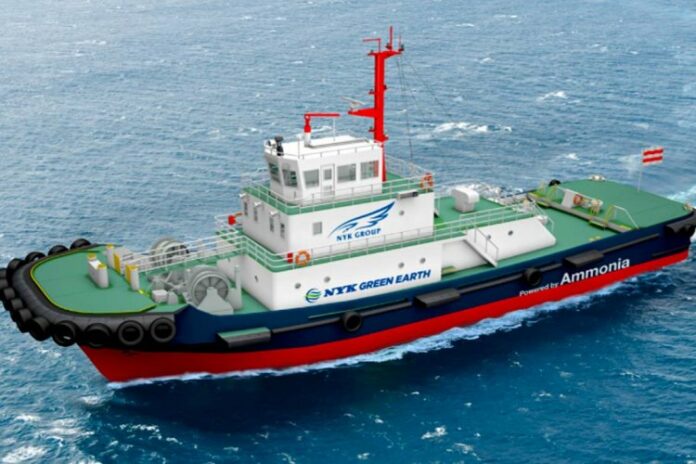
In April 2023, IHI Power Systems commenced operational tests at its Ota plant (Gunma Prefecture) on a 280 mm bore four-stroke ammonia-fueled marine engine for the main engine of coastal vessels (i.e., ammonia-fueled tugboats, hereafter “A-Tug”).

Ammonia does not emit CO2 during combustion and is therefore expected to be a next-generation fuel that contributes to combating global warming, but it is a difficult substance to handle due to its toxicity. This time, while thoroughly ensuring safety, a test increased the mixing ratio of fuel ammonia within the engine to 80%, and tests were conducted on the exhaust gas aftertreatment devices and fuel supply systems, etc., and the stable integrated operation of these systems was successfully achieved for the first time.

The tests also confirmed that emissions of dinitrogen monoxide (N2O), which has a greenhouse effect about 300 times greater than carbon dioxide (CO2), and unburnt ammonia were virtually zero, and there was no ammonia leakage from all demonstration equipment during operation and after shutdown.

Prior to the test, a demonstration equipment inspection and technical review meeting were held on 11 April at IHI Power Systems’ Ota plant by NYK, IHI Power Systems, Nihon Shipyard, and ClassNK. Keihin Dock Co., Ltd., which is responsible for the conversion of the A-Tug, and Shin-Nippon Kaiyosha, which is responsible for the operation and management of the vessel, also participated in the inspection of the demonstration equipment to confirm the technologies involved in its construction and operation.

The engine will be installed on A-Tug, which will be completed in June 2024, after further land-based testing of the engine to maximize greenhouse gas (GHG) reductions through further improvement of the co-firing rate.

Furthermore, based on this research and development for the Japanese vessels, efforts will be made to develop a 250 mm bore engine for the auxiliary engine of an oceangoing vessel. That auxiliary engine will be installed on an ammonia-fueled ammonia gas carrier (AFAGC, scheduled for delivery in October 2026) under joint development by NYK, Nihon Shipyard, Japan Engine, IHI Power Systems, and ClassNK.

Starting with the success of this demonstration test, the consortium will continue to work together to strengthen the international competitiveness of the Japan maritime cluster, with the aim of building the world’s first ammonia-fueled ships and achieving safe navigation, including by contributing to the development of international rules.

NCL’s new Incat Crowther 25 cruise tenders hit the water

0

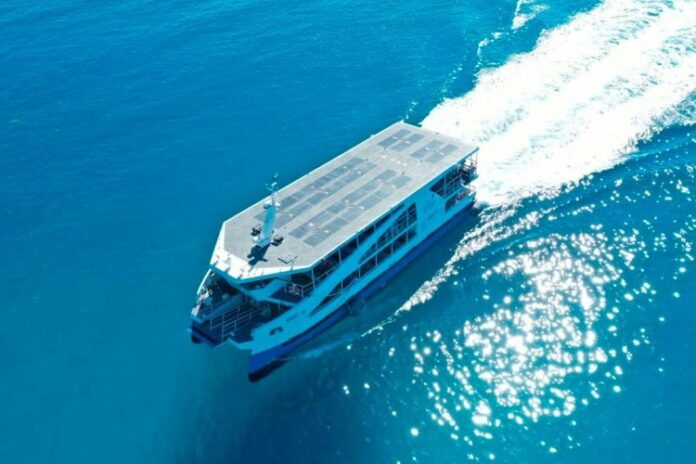
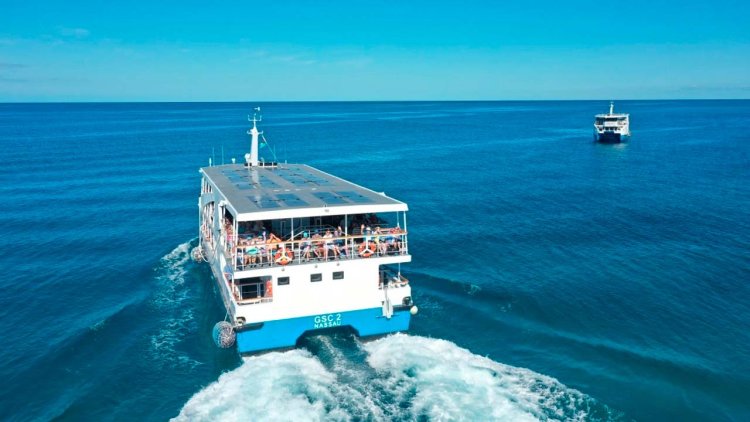
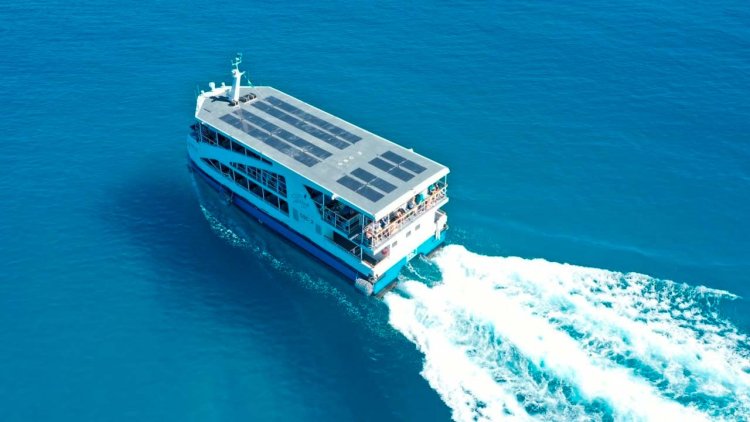
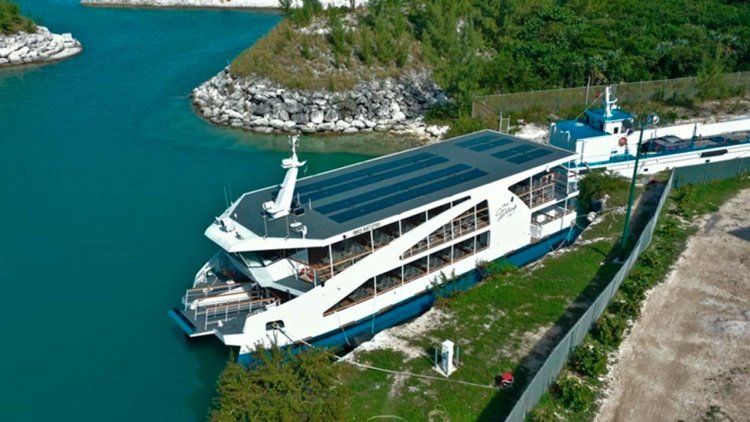
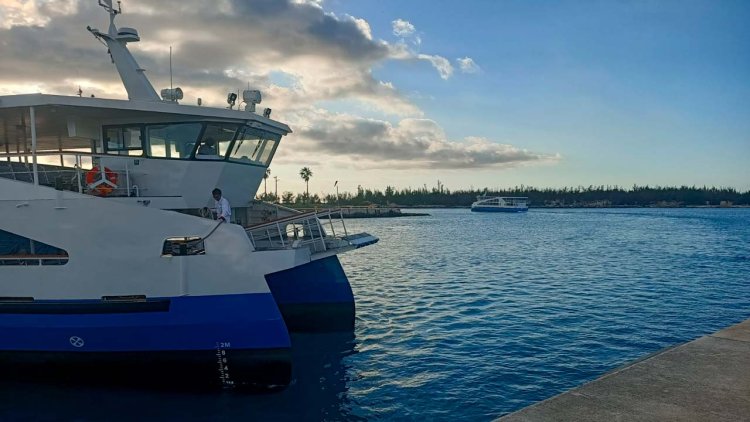
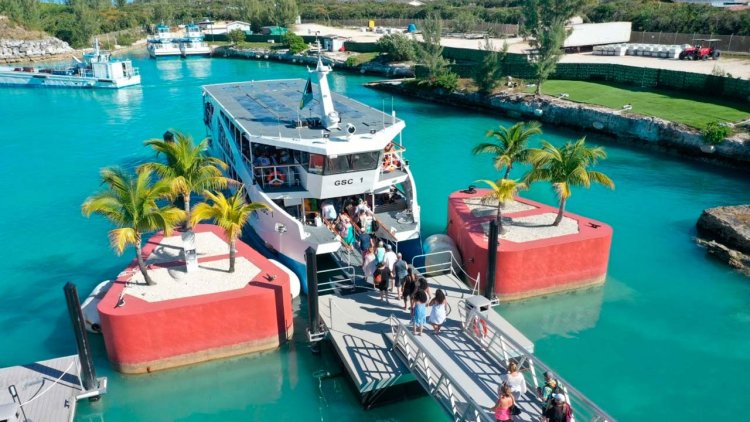
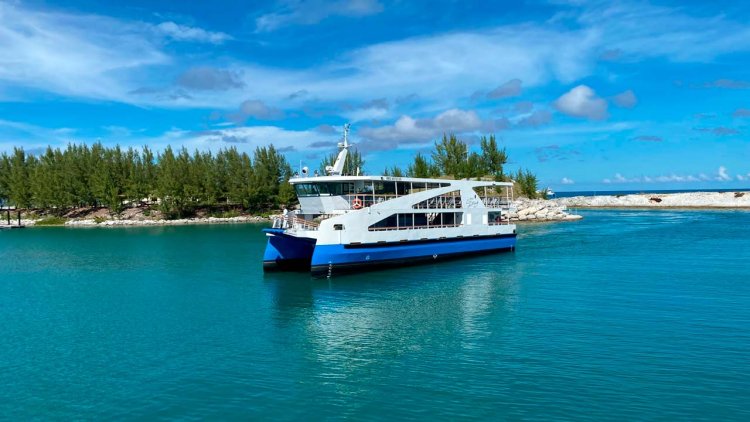
Stationed at NCL’s base at Great Stirrup Cay in the Bahamas, the tenders are designed to efficiently transport 354 passengers in comfort and safety from NCL’s cruise ships to NCL’s private island resort.

Accessibility is a key design feature of each vessel with two wheelchair-accessible spaces on the main deck, as well as three toilets, one of which is wheelchair accessible. The vessels, built by Singapore’s Penguin Shipyard International, also include a wheelchair lift to provide access to the upper deck. The upper deck of each vessel seats 188 people and offers covered outdoor seating for guests. The main deck seats 164 passengers in air-conditioned comfort.

The design of each vessel has optimised disembarkation and boarding via bespoke main deck bow ramps that interface with the existing tender docks at NCL’s Great Stirrup Cay resort. While disembarkation and boarding are also possible from two access points on the upper deck. The vessels also feature elements of Incat Crowther’s trademark catamaran design expertise including deep hulls for maximum comfort.

Incat Crowther’s Managing Director for Europe, Ed Dudson, said the project was the latest in a long line of tailored design projects for clients around the world.

“This project required Incat Crowther to work closely with Norwegian Cruise Lines to ensure the tenders were designed specifically for pre-existing infrastructure,” said Mr Dudson.

“Our digital shipbuilding process helped to ensure these tenders were operationally efficient, as well as providing guests with the luxury experience you would expect while on a Caribbean holiday with Norwegian Cruise Lines. The project also proves that our world-leading catamaran hull designs can be applied across multiple sectors and in almost any environment – from the open ocean to tourist transportation routes such as this one in the Bahamas,” said Mr Dudson.