-0.5 C
New York
Home Blog Page 299

Wärtsilä will carry out Decarbonisation Modelling for Corsica Ferries vessels

0

The study will create a digital model of the two ships to simulate the effect of various decarbonisation technologies on their environmental compliance. 

This will enable accurate evaluation of the efficiency gains possible through the implementation of the latest technical innovations. The order was booked by Wärtsilä in March 2023.

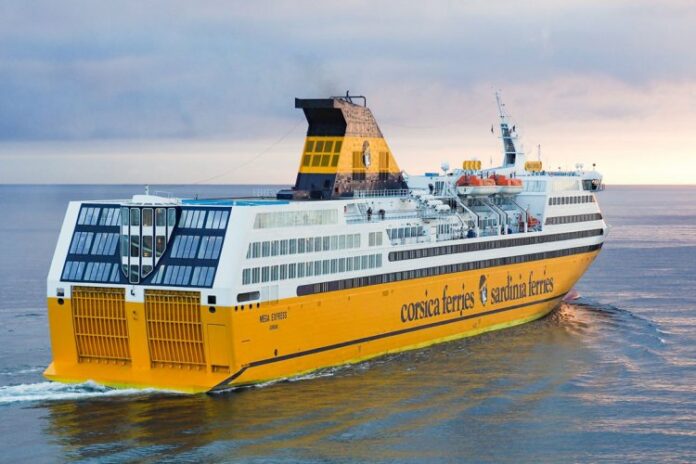
The ‘Mega Express’ and ‘Mega Express II’ are 176 metre-long sister vessels. Both operate with Wärtsilä engines and propellers. Propeller re-blading and hybridisation will be among the technologies to be evaluated during the modelling, as will Wärtsilä’s Energoprofin energy saving propeller cap solution, and the company’s fuel consumption reducing Air Lubrication system.

“It is a huge benefit to be able to simulate in advance how various products, solutions, and systems will impact efficiency. This will help us in our efforts to decarbonise fleet operations and meet our sustainability goals. We respect Wärtsilä’s experience and capabilities, and are pleased to continue the good relationship between our companies with this modelling programme,” says Nicolò Verrina, Energy Transition Naval Architect & Ocean Engineer, Corsica Ferries.

“The IMO’s Carbon Intensity Indicator (CII) legislation is driving the industry’s move towards greater efficiencies and reduced CO2 emissions,” says Giulio Pacini, Manager Decarbonisation Services, Project Services at Wärtsilä. “Wärtsilä’s Decarbonisation Services provide the means by which companies can attain a detailed understanding of the best way forward before making hit-or-miss decisions on product purchases.”

Wärtsilä’s Fleet Decarbonisation Service is designed to tackle the challenge of environmental regulatory compliance. By combining data-driven assessments with expert advice and recommendations, the service enables operators to decide on the optimal route to decarbonised operations with cost-effective investments. The service is in line with Wärtsilä’s lifecycle support strategy, and enhances the company’s position as a trustworthy partner to its customers.
Austal USA wins U.S. Navy TAGOS-25 contract

0

Austal USA has been awarded a US$113,906,029 fixed-price incentive (firm target) and firm-fixed-price contract for detail design of the Auxiliary General Ocean Surveillance Ship T-AGOS 25 Class for the United States Navy. 

The contract includes options for detail design and construction of up to seven T-AGOS 25 class ships which, if exercised, would bring the cumulative value of the contract to US$3,195,396,097.

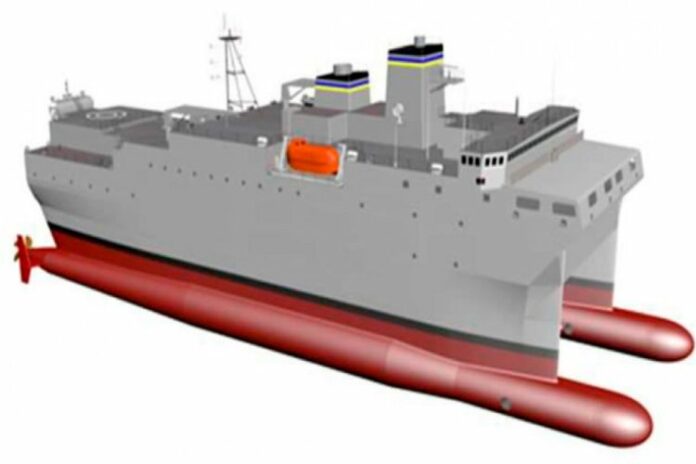
T-AGOS ships, operated by United States Military Sealift Command (MSC), support the anti-submarine warfare (ASW) mission of the commanders of the Atlantic and Pacific Fleets by providing a platform capable of passive and active anti-submarine acoustic surveillance. The 110 metre, steel ‘small waterplane area twin hull’ (SWATH) vessels support the Navy’s Integrated Undersea Surveillance System (IUSS) by gathering underwater acoustical data using Surveillance Towed-Array Sensor System (SURTASS) equipment.

Austal Limited Chief Executive Officer Paddy Gregg said the T-AGOS contract adds to Austal USA’s growing portfolio of steel shipbuilding programs and is a further demonstration of the US Government’s trust in Austal USA’s capabilities.  

“T-AGOS is a unique auxiliary naval platform that plays an integral role in supporting Navy’s anti-submarine warfare mission. Austal USA is honoured to be selected to deliver this critical capability for the Navy, utilising our advanced manufacturing processes, state-of-the-art steel shipbuilding facilities and our growing team of shipbuilders.

“The T-AGOS contract is a clear acknowledgment of Austal’s capabilities in steel naval shipbuilding, that includes the Navy’s Towing, Salvage and Rescue (T-ATS) ships, an Auxiliary Floating Drydock Medium (AFDM), and the US Coast Guards’ Offshore Patrol Cutters.

“These four steel naval shipbuilding projects, and our continuing successful delivery of the Independence-variant Littoral Combat Ship and Spearhead-class Expeditionary Fast Transport programs, are positioning Austal USA exceptionally well to meet the growing demands of the US Navy and Coast Guard,” Mr Gregg said.

As prime contractor for the contract, Austal USA is teaming with L3Harris Technologies, Noise Control Engineering, TAI Engineering, and Thoma-Sea Marine Constructors to deliver the TAGOS-25 program, from the company’s new steel shipbuilding facility in Mobile, Alabama. 

TenneT awards transport slots for 2GW offshore platforms to Allseas and Heerema

0

The fourteen 2GW converter stations will be installed in the Dutch and German parts of the North Sea. The framework agreement covers at least twenty-eight slots until 2031; fourteen slots for transport and installation of a jacket and fourteen slots for transport and installation of a topside.

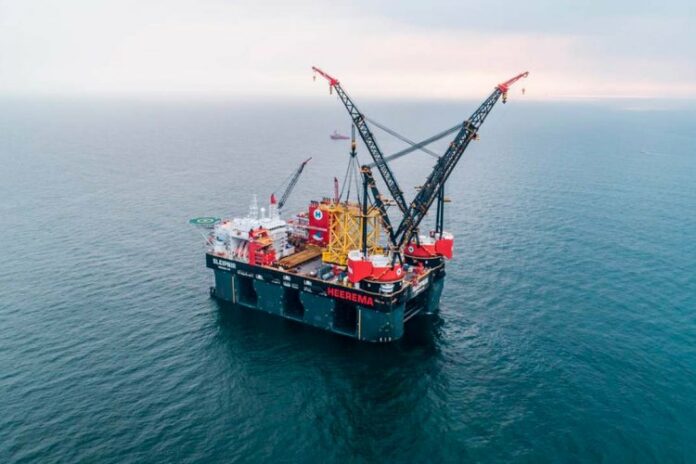
Heerema will deploy the Semi-Submersible Crane Vessel (SSCV) Sleipnir as well as an owned floatover barge, Allseas will use its single-lift installation vessel Pioneering Spirit for the installation of the jackets and topsides. Both vessels have been used several times in recent years to install jackets and topsides for TenneT in the Dutch and German North Sea.

Heerema has been awarded about 60% of the available slots, while Allseas has been awarded approximately 40% of the slots. Additional work can be added to the awarded contracts. The awarded slots are not linked to specific 2 GW projects. The HVDC suppliers building the jackets and topsides for TenneT (Hitachi Energy/Petrofac, GE/Sembcorp, GE/McDermott and Siemens/Dragados) can choose from the suppliers whereby Heerema and Allseas can install both jackets and topsides. 

Boskalis will act as a subcontractor to Allseas, building one or two new transport vessels specifically for the 2GW Program that will meet the most stringent future legislation standards on sustainability and emissions.

Tim Meyerjürgens, COO at TenneT, says:

“With this agreement we secure global marine transport and the heaviest offshore installation capacity in the market for our HVDC partners while expanding transport capacity in the market. We are proud to have signed this framework agreement with these Dutch and Swiss-Dutch suppliers. These European partners once again prove that they are global market leaders in offshore transport and installation. They have the equipment to carry out projects of such magnitude safely and successfully.”

Recently, TenneT awarded framework agreements for the civil works for the land stations in the Netherlands, offshore and onshore converter stations and the cable connections of the fourteen 2 GW projects in the Netherlands and Germany. The new tendering approach accelerated the process, with agreements being reached with all suppliers in a short period of time. Marco Kuijpers, Director Large Projects Offshore at TenneT:

“With the partnership values in these long-term agreements, we offer a strong basis for the successful implementation of the projects. These contracts give planning certainty and predictability to our suppliers, which they need to invest.”

Pieter Heerema, Allseas’ President, said: “We are delighted that Allseas’ superior single-lift technology has been selected to help TenneT realise its ambitious 2GW Program, and play a key role in Europe’s energy transition. When my father, Edward Heerema, devised the single-lift concept in 1987, no one could have envisioned it would be deployed for a landmark offshore energy project of such strategic importance four decades later. Pioneering Spirit’s unique transport and installation capability has been used to great effect to deliver critical assets for offshore wind developments across Europe. The ship’s large lift capacity and high workability ensure that the installations can be safely performed all year round, creating maximum flexibility in the vast and complex building schedules. We look forward to strengthening our relationship with TenneT and getting started on this prestigious project.”

Jeroen van Oosten, Heerema’s Chief Commercial Officer said:

‘We are proud to be selected to work alongside TenneT to deliver clean energy for the Netherlands and Germany. The award of this framework agreement is an important showcase of the benefits of forming trust-based partnerships between clients and contractors. To ensure clean energy demands are met, there should be a continued focus on collaborative, forward-looking agreements that recognize the need to secure transport and installation capacity.’

Port of Oakland okays plan for green upgrades at TraPac terminal

0

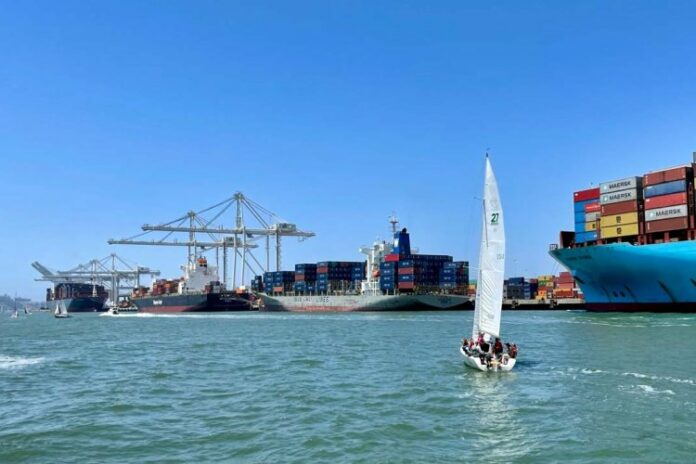
Port Commissioners unanimously voted to amend terminal operator TraPac’s lease to include green upgrades to cargo handling equipment at its terminal facilities.

“This is a vital step towards our plan to become a zero-emissions seaport,” said Port Board President Barbara Leslie. “These investments in hybrid cargo handling equipment will cut diesel emissions by 95 percent.”

TraPac will retrofit three rubber-tired gantry cranes (RTGs), converting them from diesel fuel to hybrid-diesel fuel, reducing emissions from this equipment by 95%. This transformation will take place by the end of 2024, subject to Trapac securing grant funding.

“This landmark lease agreement will bring the port closer to its goal of achieving zero emissions operations,” said Port Executive Director Danny Wan. “We have multiple projects underway that are modernizing the seaport and building the Port of Oakland into a hub of zero emissions innovations.”

TraPac will also purchase four new hybrid RTGs by the end of 2024, which will similarly reduce emissions by 95%.

“We appreciate the fact that our tenant, TraPac, is collaborating with us on the large investments needed to implement these major changes in cargo handling equipment,” said Port of Oakland Maritime Director Bryan Brandes. “Oakland is an efficient and convenient seaport for importers and exporters and TraPac is stepping up by going green.”

The Port of Oakland is providing a financial incentive for TraPac. It will reimburse TraPac up to 35%, or $945,000 – whichever is less – for the cost of the RTG retrofits. While TraPac, alone, will finance the cost of the four new hybrid RTGs.

The passage of this legislation is significant because it is the first time a terminal operator has been called upon in a Port of Oakland lease agreement to upgrade cargo handling equipment to significantly reduce emissions.

TraPac has been operating at the Port of Oakland since 1991. The company underwent a two-year expansion project beginning in 2016 that nearly doubled its footprint at the port. TraPac’s latest investment highlights their confidence in the Port of Oakland as they invest in long-term success through upgrades of their facilities and equipment.

ABP Southampton names two new pilot vessels

0

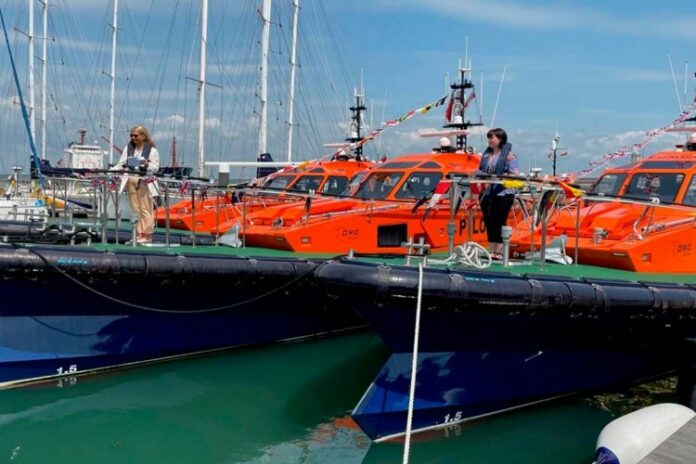
ABP’s Port of Southampton has officially named its two brand-new pilot vessels, Majestic and Mary Rose. The ceremony took place at the ABP Pilot Station at Endeavour Quay, Gosport.

The vessels were named and blessed in a traditional ceremony by the Sailors’ Society’s Port Chaplin, Phil Hiscock, who was joined by the vessels’ Godmothers, Helen Downing and Lucy Masters. ABP employees and representatives from Goodchild Marine were also invited to attend the blessing.

On the International Day for Women in Maritime, it is only fitting that two women who have served the maritime sector are recognised as Godmothers for these vital vessels.

Helen has worked in various roles at ABP for over 25 years and is currently Executive Assistant to Alastair Welch, ABP Regional Director for Southampton. Lucy Masters is married to ABP Southampton Harbour Master Steve Masters, and it is a Southampton maritime tradition that the Harbour Master’s wife is given the title of Godmother to such a significant vessel. Lucy has had a significant career in the maritime sector and spent almost 20 years as a Merchant Navy Cadet Training Officer and today works as a Lead Recruiter within the Cruise sector for Faststream Recruitment Group, a specialist recruiting agency for the maritime industry.

Majestic and Mary Rose are the final two of three new launches for ABP’s Southampton region and three of nine across ABP’s ports, representing a total investment of around £9m. Each faster, more fuel-efficient vessel delivers an approximate 40% fuel saving through an innovative forward ‘beak’ and double chine hull design that enables the vessel to cut through the waves. The vessels are constructed in Great Yarmouth, Norfolk, by Goodchild Marine. Majestic and Mary Rose will join Mayflower (the first of the new vessels named last year) at the ABP Pilot Station in Gosport. The three Pilot Vessels safely transport Southampton Marine Pilots to and from ships entering and leaving the port.

Steve Masters, Southampton Harbour Master, said:

“It is fantastic to have the three vessels in use across Southampton Water and the Solent. The vessels take our Marine Pilots back and forth to board/debark large vessels and support our Pilot team when bringing in the largest container, oil tanker and cruise ships through the Solent and Southampton Water. To have three in service will provide vital support throughout the busier summer months.”

Fincantieri to build fourth Constellation-class frigate for the US Navy

0

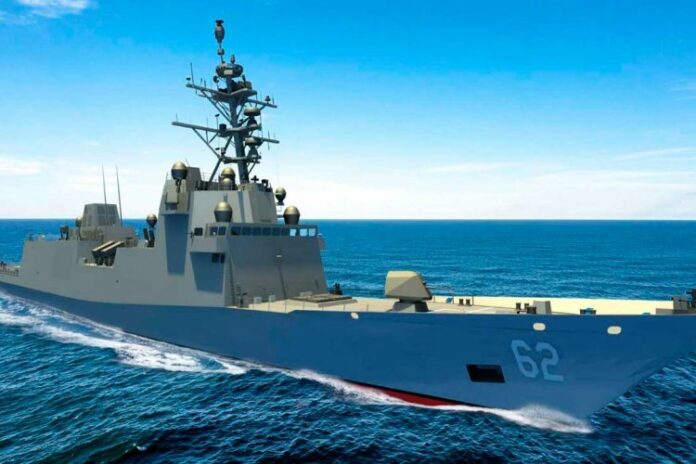
The Department of Defense announced that Fincantieri US subsidiary, Marinette Marine (FMM), was awarded a 526 million dollars contract to build a fourth Constellation-class frigate for the US Navy.

The contract for the lead frigate and 9 option ships, signed in 2020, has a cumulative value of 5.5 billion dollars, including post-delivery availability support and crew training.

Fincantieri succeeded in such a high-profile tender, distinguishing itself among several major U.S. shipyards thanks to a project considered as the most innovative and cutting-edge. The Group’s proposal is based on the FREMM frigate platform, globally recognized as the most technologically advanced, and the backbone of a 10-unit program for the Italian Navy which Fincantieri is currently completing.

Construction on the first frigate, the future USS Constellation, began in late August last year in Marinette, Wis., and FMM is scheduled to deliver it in 2026.

Pierroberto Folgiero, CEO of Fincantieri, stated:

“Our commitment is to support the largest Navy in the world with a ship that represents the highest possible degree of innovation. We look specifically at the digital profile of the vessels, in terms of cybersecurity and data analytics, two fundamental fronts for the industrial competition of the future”.

FMM is the spearhead of Fincantieri Marine Group (FMG), which controls two other shipyards also located in the Great Lakes (Wisconsin) – Fincantieri Bay Shipbuilding and Fincantieri Ace Marine. The company serves commercial and government customers in the US. FMM is committed to the Littoral Combat Ships program for the US Navy and the Multi-Mission Surface Combatants (MMSC) program for the Kingdom of Saudi Arabia as part of the US Foreign Military Sales plan.

Marlink adds Endpoint Security solution to CyberGuard portfolio

0

Marlink has unveiled the latest upgrade to its suite of cyber security tools, adding next generation Endpoint Security to the CyberGuard portfolio.

CyberGuard EDR (Endpoint Detection & Response) has been developed based on latest cyber security technology to create the most advanced solution of its type available to the maritime industry.

The new solution is optimised for the satellite communications environment, in particular by operating in a Master/Client architecture, which permits the regular, automated distribution of signature updates locally to all connected clients – even when they do not have an internet connection.

CyberGuard EDR provides a vital function in the cyber security framework by detecting and neutralising malware on operationally-critical computers onboard. The solution is built on signature and behaviour-based malware detection powered by AI algorithms. Suspicious devices may be put in quarantine in order to safeguard other computers in the local network, thereby limiting the potential consequences of a cyber incident. CyberGuard EDR will succeed Marlink’s SkyFile Anti Virus solution, which will be retired on 1 July 2023, after almost 15 years of reliable service.

Vessel operators can use CyberGuard EDR to implement an IT policy for all business devices onboard the ship, providing a vital component of onboard cyber hygiene. To secure onboard computers when external content is shared through removable drives, the solution’s USB device management module can be configured to force a scan upon connection or restrict USB device usage.

Marlink’s CyberGuard portfolio includes advanced threat detection, endpoint and network security and can extend to managed and customised services, to suit specific operational needs. Benefitting from the integration across CyberGuard solutions, users will be able to view alerts detected by the EDR in the CyberGuard Portal and benefit from the advice of Marlink’s Maritime Security Operations Centre (SOC). 

“This latest addition of Marlink’s CyberGuard portfolio is a vital tool to help vessel operators secure the shipboard element of their networks, protecting their systems and their people, said Nicolas Furgé, President Digital, Marlink. CyberGuard EDR enables vessel operators to protect their onboard computers from zero-day cyber security threats thanks to a next-generation endpoint security solution which is compatible with any kind of maritime communication channel, including those outside the Marlink Teleports such as 5G and new LEO services.”

LR, SDARI and MAN ES join forces on ammonia dual-fuel containership for MSC

0

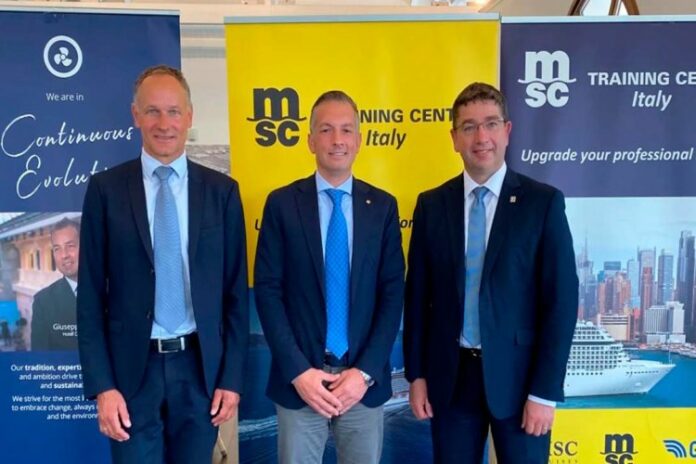
Lloyd’s Register (LR), Mediterranean Shipping Company (MSC), Shanghai Merchant Ship Design & Research Institute (SDARI) and MAN Energy Solutions (MAN-ES) have signed a Memorandum of Understanding (MOU) for a design for the ammonia dual-fuel operation of an MSC container ship.

Under the MOU, a technical specification and the associated design documents will be developed for a variant of SDARI’s twin island 8200 TEU container ship design for a vessel contracted to LR class by MSC.

As part of the project, SDARI will prepare the specification and design documentation of the ammonia dual-fuel variant, whilst LR will verify that the design conforms with safety standards and rules relating to the usage of ammonia as a marine fuel. MAN-ES will deliver data for the engine design and ammonia fuel supply and emission abatement systems. 

Increasingly seen as one of the most promising alternative fuels to support the maritime energy transition, ammonia emits no CO2 when it is burned, and its stability and comparatively reasonable energy-to-volume ratio creates opportunities for long-distance transportation.

Nick Brown, CEO, Lloyd’s Register said:

“LR is delighted to join this landmark project with MSC, SDARI and MAN Energy Systems for MSC’s new ammonia dual fuel container ship design. The application of ammonia as a marine fuel for the container ship sector will be crucial for our industry to achieve the emission reduction targets set by the IMO and this cross-supply chain collaboration marks a vital step in the maritime industry’s energy transition.” 

Giuseppe Gargiulo, Head of Newbuilding, MSC said:

“Proactive collaboration between ship operators, ship designers, class and engine makers has never been so important. MSC is pleased to enter in this project to evaluate if Zero Carbon Fuels like Ammonia can be safely adopted and the impact they will have on vessel operation.”

Wang Gangyi, CTO of SDARI, said:

“Under this MOU, we will produce the technical solution for an ammonia dual fuel variant of our 8,200 TEU containership design for MSC, a world-leading shipping company. Project like this are vital for helping us evaluate the risks and opportunities of using ammonia for propulsion and for sharing these learnings across the maritime supply chain.”

Three Crowley-managed tankers awarded roles in defense fleet with Stena Bulk

0

The program ensures a commercial fleet can readily transport liquid fuel supplies in times of need for the U.S. Department of Defense.

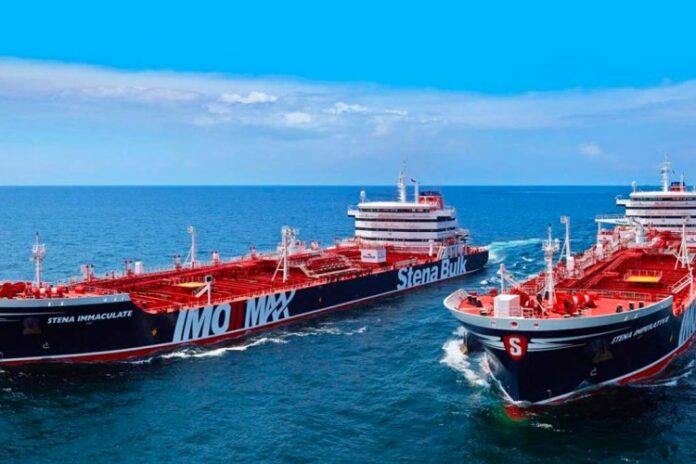
The selected medium-range tankers are part of a joint venture between Crowley and Stena Bulk USA awarded TSP participation. The vessels — Stena Immaculate, Stena Imperative and Stena Impeccable – will be reflagged as U.S. registered vessels with U.S. crews. The tankers will continue international commercial operations but can be chartered on a short-term basis to serve the U.S. government’s operations.

Three Crowley-managed tankers have been selected by the U.S. Maritime Administration (MARAD) to serve in its Tanker Security Program. The program ensures a commercial fleet can readily transport liquid fuel supplies in times of need for the U.S. Department of Defense.

The selected medium-range tankers are part of a joint venture between Crowley and Stena Bulk USA awarded TSP participation. The vessels — Stena Immaculate, Stena Imperative and Stena Impeccable – will be reflagged as U.S. registered vessels with U.S. crews. The tankers will continue international commercial operations but can be chartered on a short-term basis to serve the U.S. government’s operations.

“Crowley appreciates the U.S. government and military’s continued trust in our capabilities to serve the nation’s needs. Crowley’s team with Stena Bulk offers government customers a deep, full suite of capabilities to maintain an efficient, dependable supply chain with management that adds value by being able to meet needs quickly and innovatively,” said Gavin Hughes, vice president, Crowley Government Solutions, the company’s business unit for government services.

A federal law requires the U.S. Department of Transportation, which includes MARAD, work with the Defense Department to establish a fleet of active, commercially viable, militarily useful, and privately-owned product tank vessels to meet national defense and other security requirements. The initial fleet size is 10, and companies receive a stipend for each ship enrolled in support of the nation’s defense forces.

Crowley and Stena Bulk partnered before to serve the energy needs of the government and military. For example, Crowley won the Military Sealift Command charter contract in 2022 to run the Stena Polaris, an Ice Class tanker serving bulk fuel needs of the U.S. Department of Defense in the Arctic and Antarctic regions as well as transporting fuel in the Mediterranean Sea region.

Seabed 2030 and NORBIT Oceans join forces to accelerate global ocean mapping efforts

0

The global effort inspiring the complete mapping of the world’s ocean floor – The Nippon Foundation-GEBCO Seabed 2030 Project – has announced its newest partnership with NORBIT Oceans, a leading provider of underwater imaging and mapping technology.

A collaborative project between The Nippon Foundation and the General Bathymetric Chart of the Oceans (GEBCO), Seabed 2030 seeks to inspire the complete mapping of the world’s ocean by 2030, and to compile all the data into the freely available GEBCO Ocean Map. Seabed 2030 is formally endorsed as a Decade Action of the UN Ocean Decade. GEBCO is a joint programme of the International Hydrographic Organization (IHO) and the Intergovernmental Oceanographic Commission (IOC), and is the only organisation with a mandate to map the entire ocean floor. 

With a focus on providing technology solutions to global maritime markets, NORBIT Oceans is one of three segments within the global technology company NORBIT ASA, headquartered in Norway. NORBIT Oceans offers advanced solutions for seafloor mapping, environmental monitoring, tailored products for the aquaculture and security markets, as well as customised cables.

Under the partnership, which was entered into in Monaco during the 3rd IHO Assembly, NORBIT Oceans will strengthen the capabilities of Seabed 2030 and its network by providing innovative solutions involving bathymetric survey data sets, research voyages, as well as general survey activities. 

Just last month NORBIT Oceans launched its next-generational stabilised multibeam sonar system in Southampton, ahead of Ocean Business. The company introduced the new ‘iWBMSh Stabilised’ system which provides active roll, pitch, and yaw stabilisation as well as dual swath capability in a compact and lightweight form. 

“NORBIT Oceans’ technology solutions and expertise in underwater imaging will be invaluable to our mission of mapping the entire ocean floor,” commented Jamie McMichael-Phillips, Seabed 2030 Project Director. “This collaboration will bring us closer to achieving our ambitious goal, whilst advancing scientific understanding of the world’s marine environment.”

“We share Seabed 2030’s values in social responsibility and sustainability,” said John Fraser, NORBIT UK and Middle East Director. “We’re therefore delighted to join the project and support the delivery of its crucial objective, which is essential to the sustainable management of the planet.”

All data collected and shared with the Seabed 2030 project is included in the free and publicly available GEBCO global grid.