0 C
New York
Home Blog Page 298

VWMS and Damen sign a contract for DP2 MultiCat

0

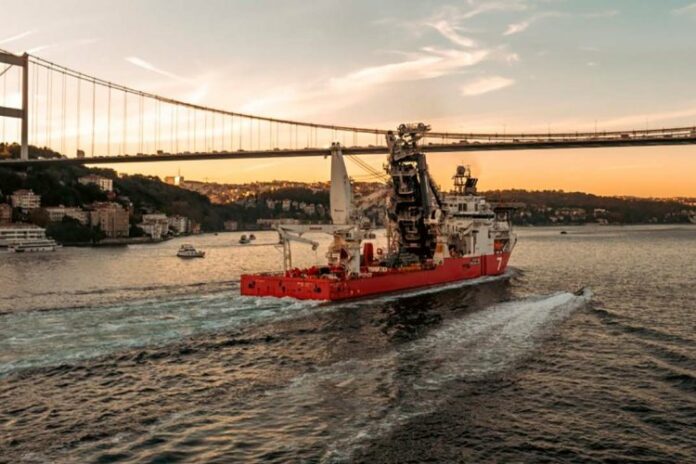
The new Multi Cat 3713, to be named Waddenstroom, is currently in build at Damen Shipyards Hardinxveld as part of the Damen philosophy of building for stock and will be delivered on 26th October this year. The 37-metre DP2 vessel is the largest and most innovative model in Damen’s highly regarded Multi Cat range.

The Waddenstroom is being fitted out to the highest standards. As part of Van Wijngaarden Marine Services’ (VWMS) commitment to crew welfare, crew capacity and comfort is most important. The design of the accommodation on board the MuC 3713 is for up to 16 persons. Ten of these will be in cabins located above the main deck level, a first for the Multi Cat series. The remaining six personnel will be in cabins below the main deck.

A DP2 system will ensure that the vessel can meet the requirements of the renewables sector. The innovative propulsion design features two 360 degrees thrusters plus one conventional propulsion arrangement aft, combined with two compact jet bow thrusters in the bow. Together these will provide excellent positioning capability. The diesel-electric propulsion system will ensure efficient fuel consumption. Preparations for the future connection of a deck-mounted containerised battery package will be installed for zero-emission operations. The bollard pull will be up to 35 tonnes.

The vessel will be equipped for maximum sustainability. VWMS has opted for a Damen Marine NOx Reduction System with its advanced active emissions control system using selective catalytic reduction (SCR), to make it IMO Tier III certified.

Additional capabilities that will be added include the steelworks required to accommodate multiple A-frames to do ploughing and similar works. The 190m² deck is also being modified to allow for the fixing of mission containers.

In keeping with the Damen Multi Cat ethos, the MuC 3713 will be fitted with cranes fore and aft, with a capacity of 13.5 tonnes @18.5 metres. Anchor handling, towing and tugger winches, together with bow and stern rollers and towing pins, will enable it to undertake a wide range of support roles both offshore and, with its minimum draft of just 2.3 metres, close to shore.

VWMS is a long-standing and valued client of Damen. Their fleet of workboats includes five Damen Shoalbusters and in 2019 it took delivery of its first Damen Multi Cat, a 30-metre DP1 MuC 3013.

Peter van Wijngaarden, Managing Director of Van Wijngaarden Marine Services, said:

“As a family owned company we are very pleased with the good cooperation between Damen Shipyards Hardinxveld and our team / crew regarding the ideas and philosophy that form the basis of a vessel that combines a shallow draft and sustainability with high standards of crew welfare and a future-proof propulsion system. All our wishes regarding above are being implemented in this DP2 Multi Cat.”

Jeroen van Woerkum, Commercial Manager of Damen Shipyards Hardinxveld, added:

“We are very pleased that Peter van Wijngaarden and his team have returned for a second Multi Cat. VWMS has great experience in shallow water operations and their confidence in our vessels is a source of much pride. We look forward to delivering the Waddenstroom in the autumn.”
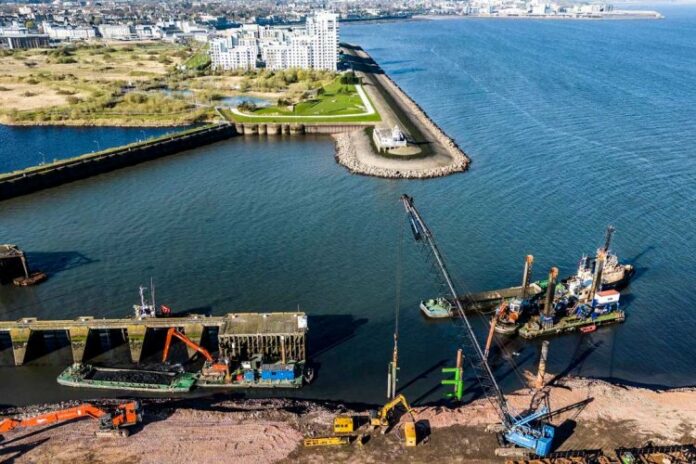
Work under way to create new riverside renewables berth at Port of Leith

0

Forth Ports’ ambitious £50m project in Leith will create Scotland’s largest renewable energy hub on a 175-acre site – supporting Scotland’s economic recovery, energy transition plans and the achievement of the country’s net zero carbon emissions targets.

The bespoke riverside berth will be capable of accommodating the world’s largest offshore wind installation vessels and will feature a heavy lift capability of up to 100 tonnes per square metre (t/m2), backed up by 175 acres of adjacent land for logistics, marshalling and manufacturing. Working with specialist contractors, GRAHAM, the berth is being created immediately outside the port’s lock gates, meaning that vessels do not need to enter the locked port itself, leading to faster ship turnaround times and the ability to accommodate larger vessels. Works began in January on the marine and land-side port infrastructure upgrades, with completion expected in summer 2024.

The Leith Renewables Hub will be part of the Forth Green Freeport’s strategically located tax and customs sites which aim to reindustrialise central Scotland, bringing up to 50,000 high-quality green jobs by increasing trade and supporting the growth of businesses across the Firth of Forth.

Commenting on the project, Charles Hammond OBE, Group Chief Executive of Forth Ports, said:

“The work under way in Leith will pave the way for Scotland to maximise the supply chain value and jobs from the ScotWind offshore wind leasing round. We are committed to playing our part in making Scotland’s renewables future a reality and the construction of this new berth in Leith is a significant step forward.

“Our major investment in Leith’s logistics and marine infrastructure will be crucial to the success of the Forth Green Freeport. With existing and future offshore wind farm development plans in the North Sea, this renewables hub has the potential to support offshore wind construction projects for the next 30 years.”

 Leith’s proximity to the important North Sea offshore wind sites, coupled with the natural deep waters of the Firth of Forth and existing skills base, makes the port a strong location to support planned developments, as well as the anticipated pipeline of ScotWind projects, both fixed and floating. 

The Leith Renewables Hub has the potential to:

  • Make a major contribution to Scotland achieving its 2045 net zero greenhouse gases target
  • Secure the Firth of Forth as the driver for Scotland’s just energy transition
  • Support up to 1,000 high quality, long term direct jobs and about 2,000 indirect jobs to Leith specifically
  • Further underpin the position of Scotland’s Central Belt as a leading area of engineering and manufacturing skills and capabilities.

As the Port of Leith transitions to become Scotland’s premier renewables hub, the Harbour 31 development planned elsewhere in the port will see the regeneration of land adjacent to FirstStage Studios, providing a place to live and work, for both creative and green jobs. The port will also benefit from the new Edinburgh Trams extension.

This month, Forth Ports also outlined its commitment and the actions it is taking to achieve a Net Zero carbon operation by 2042.  The company, which is Scotland’s biggest port operator, also outlined an interim target of achieving carbon neutral emissions by 2032, while creating an infrastructure platform to help accelerate the UK’s path to a decarbonised economy.

Port of Tallinn signed an agreement to build a new quay in Paldiski South Harbour

0

Port of Tallinn signed an agreement with the Estonian branch of Akciju Sabiedriba BMGS and Insenerehituse AS for the design and construction of multi-functional quay number 6A and the area beyond the quay in the Paldiski South Harbour.

The cost of the contract at the moment of is 53.2 million euros, and according to the possibility of indexation provided for in the contract, it can reach up to 55.9 million euros. The quay with the beyond area will be completed in July 2025.

The investment is co-financed by European Commission in the amount of EUR 20 million through the military mobility project EstMilMob, which aims to improve transport connections to Tapa over the next five years. The rest of the investment cost is financed from loan capital and as the company’s own financing. The additional loan amount related to the project is between 20-27 million euros, and during the investment period, Tallinna Sadam plans to continue the current dividend policy.

Due to the favorable location of Paldiski South Harbour, the construction of the new quay will create preconditions for Tallinna Sadam to become an important partner in the construction and subsequent maintenance of offshore wind farms in the Baltic Sea region.

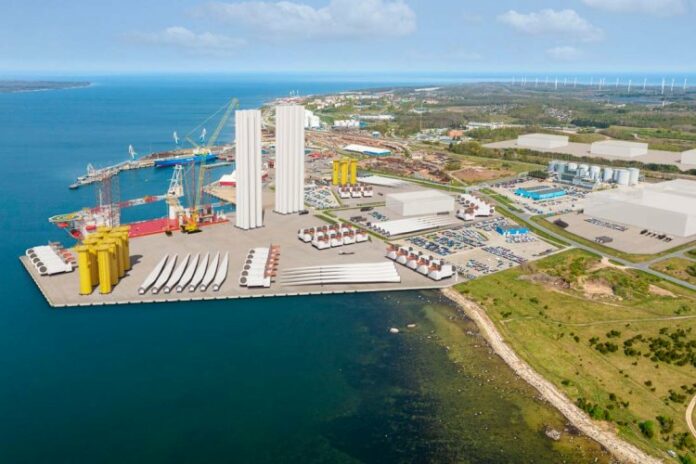
The new quay will ensure the capacity of the port to receive high-draft special-purpose vessels for the construction of offshore wind farms and the transport of wind turbine components. The large rear area beyond the quay allows various preparations for the manufacture and storage of generators and wind turbine blades before being loaded on a ship. There is 40ha of free land around the new quay, where it is possible to establish industrial and production companies related to wind farms. This area is well connected to the new quay and back area by the road network within the port. In addition, the new quay can be used to service ro-ro vessels if required.

Johan Sverdrup produces at increased plateau

0

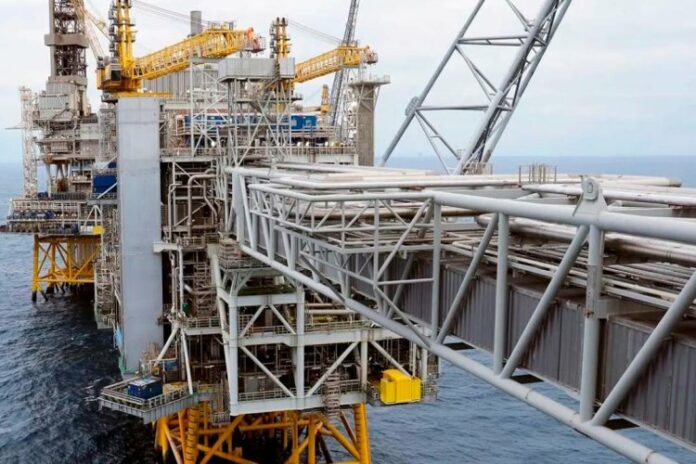
During a capacity test at Johan Sverdrup, the field reached a record-high production level of 755,000 barrels of oil per day.

This equals six to seven percent of the daily European oil consumption.

“This process capacity test at Johan Sverdrup confirms technically very robust facilities and was safely performed with no unwanted incidents. This is an important milestone, and the result of systematic and targeted efforts, says Marianne Bjelland, vice president Exploration and Production for Johan Sverdrup in Equinor.

Equinor and partners Aker BP, Petoro and TotalEnergies aim to maintain production levels of oil from the field up towards this level going forward.

In addition, Johan Sverdrup produces 31,500 barrels of oil equivalents of gas per day.

Ørsted breaks ground on pioneer e-methanol project in Sweden

0

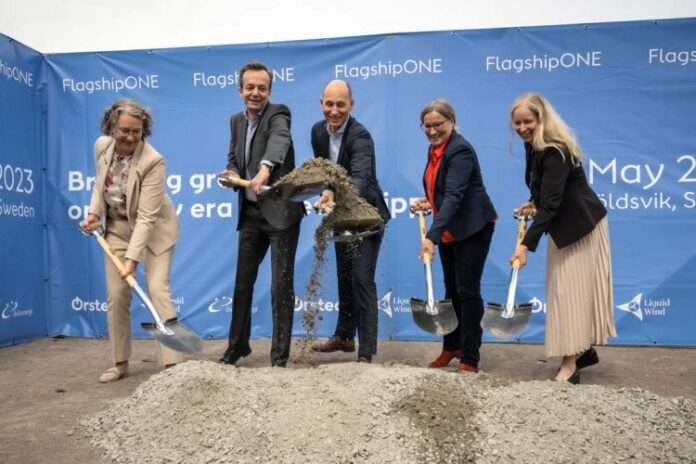
Today, at an event in Örnsköldsvik in Northern Sweden, Ørsted broke ground on Europe’s largest e-methanol project, FlagshipONE. 

The groundbreaking of FlagshipONE not only marks the construction start of the project, but also the first steps in a new green era of shipping, where large-scale methanol production facilities will supply a constantly growing fleet of methanol-powered vessels. Currently, over 110 e-methanol vessels have been ordered or are in operation, up from 80 vessels at the end of 2022. At the same time, new regulation such as Fuel EU Maritime is also increasing the demand for new, green maritime fuels. FlagshipONE will start production in 2025 when it will produce 50,000 tonnes of e-methanol yearly.

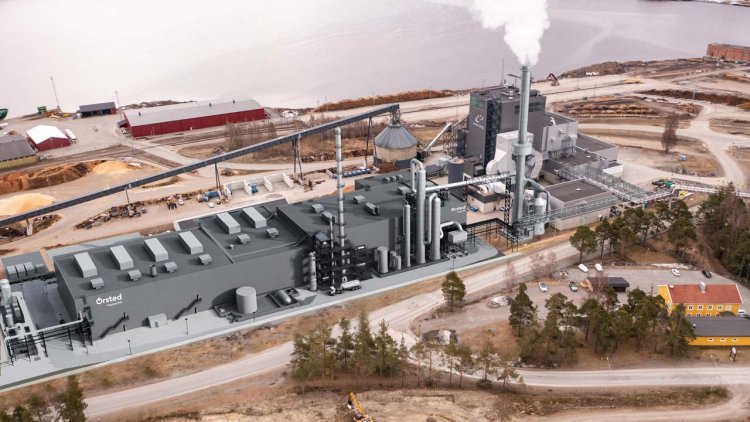
Originally developed by the Swedish e-fuels company Liquid Wind, FlagshipONE will be located next to Övik Energi’s combined heat and power plant Hörneborgsverket in Örnsköldsvik, where the groundbreaking event also took place. The event was attended by political representatives from both local, regional, national, and international bodies as well as by representatives from partner companies, including Siemens Energy, Carbon Clean, and Topsoe, who will deliver the electrolysers and control system, the carbon capture equipment, and the methanol synthesis equipment, respectively. In addition to these major equipment suppliers, local companies are already involved in the project, and the operation of the plant will also create direct and indirect jobs in Örnskoldsvik.

Among the speakers at the event were also Klimatklivet, a part of the Swedish Environmental Protection Agency, who have supported FlagshipONE with SEK 151 million. The groundbreaking was done by Anna Dahlberg, State Secretary to the Prime Minister of Sweden; Anna-Britta Åkerlind, Chair of the municipality board of Örnsköldsvik Municipality; Anders Nordstrøm, COO of Ørsted P2X; Claes Fredriksson, founder and CEO of Liquid Wind; and Kristina Säfsten, CEO of Övik Energi.

The event in Örnsköldsvik focused on the need to decarbonise global maritime transport and on the large potential for Sweden to become a key market for the production of e-methanol, which is emerging as shipping’s preferred route to zero emissions in the 2020s. Sweden has ample opportunity to develop renewable energy, like onshore and offshore wind, and has a world-leading forest industry to supply the biogenic carbon needed to produce e-methanol. Örnsköldsvik is one of the centres of the Swedish forest industry, having a large commercial presence from advanced forest-based industries.

Claes Fredriksson, CEO and founder of Liquid Wind, says:

“FlagshipONE will soon become the largest commercial-scale electrofuel facility in Europe and at Liquid Wind we are thrilled that Ørsted is now starting the construction phase of the project. FlagshipONE is our first sold project and is just the beginning of our journey to become the leading developer of electrofuel facilities. This milestone will hopefully inspire many others to also contribute to the decarbonization of shipping.”

Global shipping accounts for around 3 % of global carbon emissions, and the sector is a focus area for Ørsted as the company expands its presence in Power-to-X across Northern Europe and the US. FlagshipONE is the first e-methanol project in Ørsted’s ambitious green fuel pipeline; the company is also developing the 300,000 tonnes/year ‘Project Star’ in the US Gulf Coast area and the ‘Green Fuels for Denmark’ project in Copenhagen, which will also produce significant volumes of e-methanol to enable the decarbonisation of shipping.

FlagshipONE is located on the grounds of the biomass-fired combined heat and power plant Hörneborgsverket in Örnsköldsvik, operated by Övik Energi. The e-methanol from FlagshipONE will be produced using renewable electricity and biogenic carbon dioxide captured from Hörneborgsverket. In addition, FlagshipONE will use steam, process water, and cooling water from Hörneborgsverket, and excess heat from the e-methanol production process will be delivered back to Övik Energi and integrated into their district heating supply.

Fugro and Fraunhofer IWES secure survey for BSH’s German EEZ wind farm sites

0

Germany’s Federal Maritime and Hydrographic Agency, the Bundesamt für Seeschifffahrt und Hydrographie (BSH), has awarded Fugro a geophysical survey contract for two offshore wind farm sites in the German exclusive economic zone (EEZ) in the North Sea.

Working in collaboration with Fraunhofer Institute for Wind Energy Systems (IWES), Fugro’s Geo-data will be integrated with its ultra high resolution multichannel seismic data (UHR MCS) and used by BSH to develop geological models of the offshore sites and support subsequent geotechnical investigations.

The project is due to start this week, with Fugro mobilising a dedicated survey vessel to perform high-precision positioning, sub-bottom profiling recording and interpretation. Additionally, Fraunhofer IWES will be responsible for conducting the multichannel seismic survey, dedicated data processing and interpretation. A dense data raster will be generated totalling 2393 km survey lines. The sub-bottom profiler data provides detailed structural imaging of sediments up to 15 m below the seafloor while the UHR MCS data penetrates more than 100 meters to capture images of small sedimentary bodies and deep valley structures carved by glaciers and filled with younger sediments.

The collaboration of know-how and resources between both teams, will guarantee a safe and efficient survey that meets BSH’s stringent planning schedule. The final result will be a preliminary subsurface model that can be used as the basis for future geotechnical survey campaigns as well as to reduce the risk for the future installation of the windfarms.

Connor Schulze, Fugro’s Business Development Manager of Renewables in Germany, adds:

“Our demonstrated track record of delivering high-quality Geo-data efficiently has proven to be a great fit with BSH’s workflow. Fugro is committed to supporting the German government’s energy transition goals, and we are excited to continue our successful partnership with BSH to contribute to the development of German offshore wind farms.”

Dr. Julia Haberkern, Group manager of the Geophysical Site Characterisation group in Fraunhofer IWES and project lead explains:

“The geophysical investigation is one of the first steps in the planning phase of offshore wind farms. We support the wind energy sector by providing timely, high quality MCS data, maintaining a focus on developing the technology and providing suitable solutions.”

The sites are due to be auctioned in the coming years and will play a significant role in Germany’s energy transition plan, which aims to achieve a target of 30 GW by 2030.

Damen and Boluda to cooperate on bringing zero-emissions tugs to Europe

0

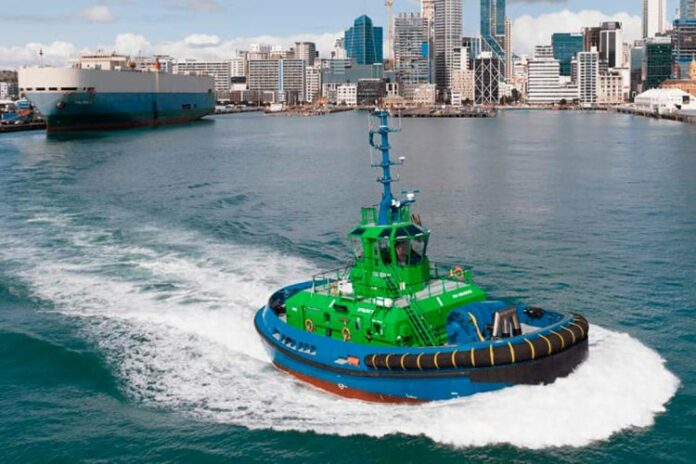
Damen Shipyards and Boluda Towage have joined forces to bring zero-emissions tugs to Europe. In a groundbreaking move the two organisations, which have nearly 200 years of tugboat experience between them, aim to launch the first newbuild methanol tug in Europe. 

Damen is currently developing the methanol powered tug as part of its mission to be the world’s most sustainable shipbuilder. This completely new design is based on Damen’s experience and knowledge thanks to its extensive R&D capability in alternative sustainable propulsion systems.

Boluda as a leading global towage company and Damen as a leading innovative shipbuilder, share a strong commitment towards environmental sustainability, safety and operational excellence. Boluda Towage has been investing for years in order to achieve cleaner and greener operations in the port. An important milestone in its ambition to work towards lower emissions has been a multiple order of IMO Tier III tugs in 2020. These pioneering vessels set a new standard for all its subsequent newbuilds.

Boluda Towage and Damen Shipyards look forward to working with other maritime stakeholders to accelerate the transition to cleaner vessels, particularly those operating in or close to urban areas. In the harbour and towage sector, electric and methanol-fueled propulsion systems currently offer the best and most available route to achieve this. 

Vicente Boluda Ceballos, Vice Chairman of Boluda Towage, said:

“We know that we are in an increasingly complex environment that requires us to always be at the leading edge of solutions to increase safety in our operations, limit our environmental carbon footprint and meet the needs of our customers. With that purpose in mind, we are eager to continue our journey towards the future as a leader in the towage and maritime industry.”

Arnout Damen, CEO of Damen Shipyards Group, commented:

“Not only is this project in keeping with our own values, we also aim to give added momentum to the transition to sustainable harbor towage as the benefits that both electric and methanol-driven vessels deliver will be there for all to see. To aid this process we are already building RSD-E Tugs 2513 for stock and a number will be available for delivery in 2024/25.”

Subsea7 confirms major contract offshore Türkiye

0

The award for this two-phase subsea development was announced in redacted form on 12 May 2023. The first phase has been recorded in the backlog in the second quarter of 2023 and the second phase, expected in 2024, remains subject to sanction by the client. 

The contract is awarded to a consortium including Subsea7 and its partner in Subsea Integration Alliance, OneSubsea®2, as well as SLB and Saipem. The integrated project scope of the engineering, procurement, construction, and installation (EPCI) contract will cover the subsurface solutions including subsea production systems (SPS), subsea umbilicals and flowlines (SURF).   

The scope of work to be executed by Subsea7 comprises the EPCI of approximately 37 kilometres of infield flowlines, 47 kilometres of control umbilicals and associated subsea equipment in water depths of 2,000 metres.  The contract also includes additional FEED studies and options to further extend the scope of work.

Project management and engineering will be managed from the Subsea7 office in Istanbul, Türkiye and offshore activities are expected between Q2 2025 and Q3 2025, with optional scope between Q4 2026 and Q4 2027 subject to final investment decision by the client.

Franck Louvety, Africa, Middle East & Caspian Vice President said:

“Through the close collaboration of Subsea7, OneSubsea® and Turkish Petroleum, first gas from Sakarya Phase 1 was delivered just 30 months after discovery. Subsea7 looks forward to extending this relationship for Phase 2 and continuing our contribution to the development of the energy industry in Türkiye.”

ENGIE and BVS team up for advisory and risk management partnership

0

Bureau Veritas Solutions Marine & Offshore (BVS), part of Bureau Veritas, is joining forces with ENGIE’s entity Global Energy Management & Sales (GEMS), the energy management arm of ENGIE, to develop a suite of advisory and market access services to help shipping interests to thoroughly understand upcoming regulatory requirements, manage their risk and identify the optimal low-carbon emissions roadmap for their operations.

This partnership aims to provide vessel owners, operators and charters with the expertise and insight they require in managing their marine fuels and carbon prices exposures in the context of an increasingly differentiated marine fuels market, by fuel type, geographic location, and carbon intensity. This will provide BVS and GEMS’s customers with a low carbon emission transportation roadmap that fits with their commercial and operational requirements and aligns with their risk management needs.

Paul Shrieve, President of Bureau Veritas Solutions Marine & Offshore, said:

“For customers facing unprecedented complexity in global energy markets and an increasingly diverse marine fuels landscape, this partnership between BVS and GEMS offers a one-stop-shop for clarity and expert guidance on developing the appropriate fleet GHG strategy, and associated risk management. Understanding the operating profile of your vessels, your marine fuel requirements and GHG impact is an essential step, but it’s important to also understand how that translates into a low-carbon operating model that meets your operating needs, spanning different vessel types and fuels, and different regions and regulatory regimes.”

Marc Pannier, Executive Committee member at ENGIE business entity ‘Global Energy Management & Sales’, said:

“In an increasingly complex carbon market, the move to include maritime emissions in the EU Emissions Trading System is another important consideration for shipping organisations that want to chart a course towards a low-carbon roadmap that meets their fleets’ needs and cuts their emissions, whilst also limiting their exposure to price volatility. Through this partnership with BVS, we will work with shipping organisations to develop and execute strategies that manage the risks they face and seize the opportunities in today’s global energy markets through the right choice of hedging tools, as well as carbon offsetting solutions.”

By assessing the energy consumption and carbon emissions of an organization’s fleet, trading patterns and routes, in conjunction with access to global energy markets and a wide range of risk management strategies, BVS and GEMS will help developing the optimal solution for commercial exposure and carbon objectives.

This will include support on how to best align an organization’s GHG emissions reduction strategies with the proposal from the European Commission’s ‘Fit for 55’ package regarding the progressive inclusion of emissions from maritime transport in the EU ETS, and the upcoming FuelEU Maritime initiative.

BVS and GEMS will also guide owners, operators and charters on the evolving regulatory and voluntary landscape for managing carbon emissions from shipping operations, including current and impending regulatory requirements, as well as advice on managing their wider sustainability footprint. This can also include the opportunity for carbon offsetting strategies and products, as part of a wider low-carbon strategy.
 

Equinor put Trollvind on hold

0

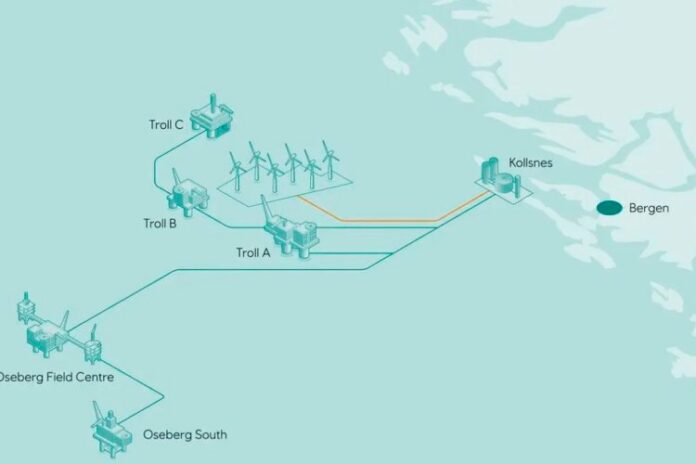
Equinor will postpone a further development of the Trollvind offshore wind initiative indefinitely. 

Equinor has previously announced reduced activity in the project due to technical, regulatory, and commercial challenges to the project.

“We appreciate all the positive response towards Trollvind from politicians, suppliers, and authorities. Trollvind was a bold industrial plan to solve pressing issues concerning electrification of oil and gas installations, bringing much needed power to the Bergen-area, while accelerating floating offshore wind power in Norway. Unfortunately, we no longer see a way forward to deliver on our original concept of having an operational wind farm well before 2030,” says Siri Espedal Kindem, vice president of renewables Norway.

Behind the decision of putting Trollvind on hold are several challenges facing the broader offshore wind industry. Rising costs have challenged the original concept that Trollvind would not require any financial support and it is no longer a commercially sustainable project.

Furthermore, changes in the technical solutions due to preferred technology not being available has made the concept less viable. Finally, time was always going to be a challenge with the proposed timeline, and despite all the big effort it has not been possible to mature Trollvind to the level needed to go forward at this time.

As Equinor has taken this decision the company is also looking forward. Our ambition is still to lead in building an offshore wind industry in Norway. The knowledge and learning from working on Trollvind will be applied to other projects as Equinor remain committed to developing floating offshore wind power at Utsira Nord and outside Norway.