0 C
New York
Home Blog Page 296

ABB unveils revolutionary propulsion concept to significantly increase ship efficiency

0

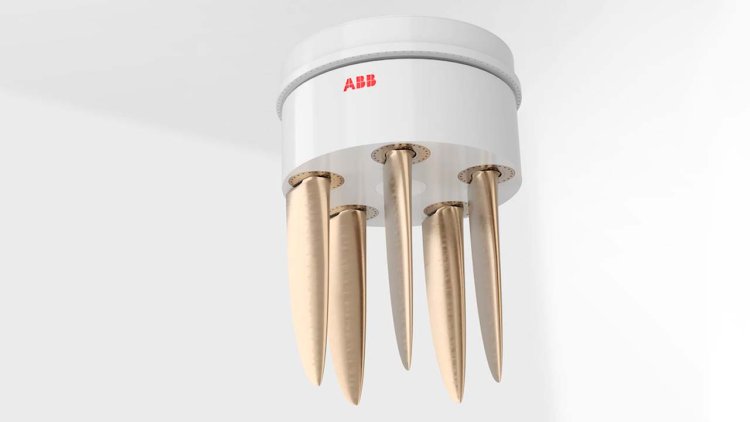
ABB has introduced ABB Dynafin™, a new concept representing a revolutionary propulsion system breaking new ground for efficiency in the marine industry. Inspired by the dynamic motions of a whale’s tail, the innovative concept is the result of over a decade of research, development, and testing.

ABB’s combined extensive experience and expertise in the marine industry, along with its innovative heritage, are the driving forces behind this new concept. ABB estimates the first prototype to be available in 2025.

“ABB Dynafin™ shows what is possible when marine engineers pursue radical innovation and progress, inspired by the interplay of evolution and technology,” said Juha Koskela, Division President, ABB Marine & Ports. “This solution is all about operational efficiency and emissions avoidance, leveraging innovations from the brightest minds in marine and propulsion engineering. I want to thank the whole team for their persistence, resilience, innovativeness, and years of hard work.”

The new propulsion concept features a main electric motor that powers a large wheel rotating at a moderate 30-80 rounds per minute. Vertical blades, each controlled by an individual motor and control system, extend from the wheel. The combined motion of the wheel and blades generates propulsion and steering forces simultaneously, enabling ground-breaking operational efficiency and precision for ships. The concept follows ABB’s proven design philosophy in marine propulsion of gearless power transmission.

An independent study of ABB Dynafin™ from OSK-ShipTech A/S of a passenger vessel design equipped with different propulsion solutions has verified savings in propulsion energy consumption of up to 22 percent compared to conventional shaftline configuration. This can deliver significant savings in fuel consumption and help to avoid emissions. As part of an electric propulsion power system, the concept is also fully compatible with zero-emission battery and fuel cell technologies.
Initially available in the power range of 1–4 MW per unit, the new propulsion concept is particularly effective for medium-sized and smaller vessels, including ferries for passengers and vehicles, offshore support vessels operating at wind farms, and yachts. By reducing vibrations and noise levels, the system improves passenger and crew comfort. In addition, the propulsion concept delivers superior maneuverability, and positioning performance, i.e., the capacity of the vessel to maintain the desired position and heading.

The new concept is the latest addition to ABB’s portfolio comprising electric, automated and digital technologies. With its market-leading expertise in electric and hybrid propulsion, the company has been pushing the boundaries of technology, and driving efficiency, performance, and sustainability to new levels through the 30-year plus track record of Azipod® propulsion. The new propulsion concept will complement the existing propulsion portfolio.

The shipping industry contributes to almost 3 percent of global greenhouse gas emissions annually. If it were a country, it would be the sixth largest emitter. However, with about 90 percent of global trade being carried on ships, it is central for the movement of goods. If no action is taken, shipping could be responsible for up to 13 percent of global emissions by 2050. At the same time, the International Maritime Organization has set the goal to cut annual greenhouse gas emissions by at least 50 percent by 2050, against 2008 levels. While there is consensus in the industry that no single solution can provide a ‘silver bullet’, low-carbon fuels, alternative power sources, data analytics and energy-saving devices all have a part to play, and the role of new innovations may become notable.
Kongsberg Digital to digitalise Odfjell’s logbook and reporting systems

0

The traditional hand-written logbook onboard a vessel is a vital reporting tool for the crew, stating their course, actions, and engine status. Though an essential daily task for the officers onboard, reporting in the logbook is also time-consuming, making the officers spend critical time reporting during a voyage. 

To optimise the crew’s efficiency and reduce administrative tasks, Odfjell Ship Management has started its digital voyage by installing Kongsberg Digital’s K-fleet digital logbook system. The digital logbook collects data from ship systems into central data storage. It enables easy recording of event-based data related to navigation, engine, oil record book, garbage handling, port calls and other operational activities defined by the logbooks being supplied. 

“Accurate and efficient reporting is very important for us and our crew, and we strongly believe that digitalization is a necessary step towards improving safety, efficiency and sustainability in the maritime industry. The traditional hand-written logbook has long been a vital tool for recording the vessel’s route, voyage, actions, and engine status. But it can be a time-consuming process. That’s why we’ve taken the step to modernize and optimize our operations by implementing Kongsberg Digital’s effective digital logbook and reporting system,” says Vidar Børve, Manager Electrical & Automation at Odfjell.

Kongsberg Digital provides industrial software to heavy asset industries, the maritime industry included. Through the vessel-to-cloud infrastructure Vessel Insight, data is gathered from the vessel’s sensors and systems to provide actionable insight from the analysis of operational vessel data. The consistent and standardised way of collecting data through Vessel Insight enables quality reporting, empowers transparency, and allows in-depth analysis to optimise vessel and fleet performance.

“The logbook represents the story and heritage of a vessel, making it an essential tool for the crew onboard. Kongsberg Digital is committed to making operations smarter, safer and greener. By digitalising the logbook, shipowners can utilise the historical data of the vessel in a way not possible before, as we can use the data to optimise voyage and fuel consumption. We are happy to welcome Odfjell onboard for their digitalisation journey, and we look forward to a close and great collaboration”, says Christopher Bergsager, VP Growth Digital Ocean at Kongsberg Digital.

Hydrogen-powered barge to receive battery packs from Ebusco

0

Ebusco has signed a framework agreement to provide Oechies Elektrotechniek with maritime battery packs for inland shipping for one year. 

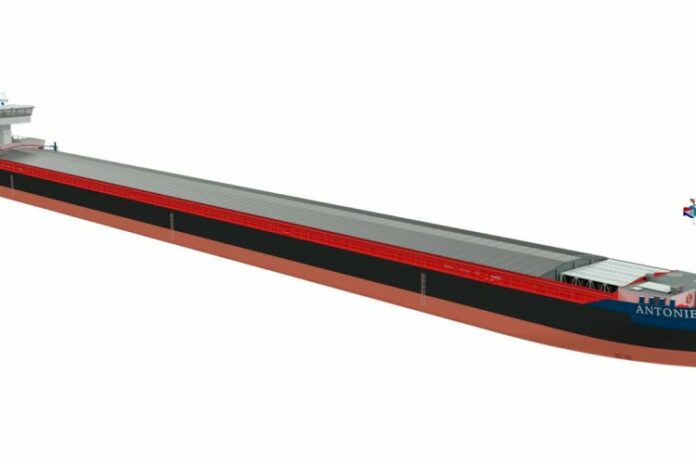
Initially, the deal involves the delivery of 36 battery packs for the WEVA Antonie 1, the first-ever new-build hydrogen-powered inland vessel. In total, the agreement includes over 10 megawatts of battery capacity.  

The first delivery of 36 battery packs and 6 BMS systems accounts for a total capacity of 1,089 kWh, enabling the full substitution of a large diesel generator.

The Ebusco Maritime Batteries have obtained maritime certification and are tested for strict requirements, including water tightness and fire safety. Thanks to the usage of LFP technology, the maritime batteries are not only a safe choice but also boast high power density and stability.

Oechies Elektrotechniek will use the first delivery of Ebusco Maritime Batteries to power the first-ever new-build hydrogen-powered barge. Dutch shipbuilder Concordia Damen will build the WEVA Antonie 1 on assignment from Lenten shipping, the vessel will have a length of 135 metres. With a carrying capacity of 3,700 tons, the barge will eventually be used to transport salt between Delfzijl and the port of Rotterdam. The WEVA 1 Antonie will sail for Nobian Industrial Chemicals B.V.

Johan van der Sluis, director at Oechies Elektrotechniek, responds:

“The completion of the first-ever new-build hydrogen-powered barge is an important step to make the sector more sustainable. We are excited to partner with other pioneers in the energy transition for the realization of this project. Thanks to Ebusco’s longstanding experience in the transition to zero emission buses, we can rely on an experienced and smart partner in the field of battery technology.”

The order is in line with the recent agreement by the Council and the European Parliament to use renewable and low-carbon fuels to reduce the carbon footprint of the maritime industry. Offering maritime battery systems is thus a logical step in Ebusco’s mission to contribute to a better environment by enabling transport ecosystems.

Peter Bijvelds, CEO at Ebusco, adds:

“Over the past decade, we have gained extensive experience in the application of batteries amongst heavy energy users. By extending our expertise in battery technology to other industries, we can make an even greater impact on our journey towards zero emission transport. We are therefore proud to join forces with Oechies Elektrotechniek on our way to clean inland shipping.”

Pherousa launches its technology for Zero Emission deep-sea shipping

0

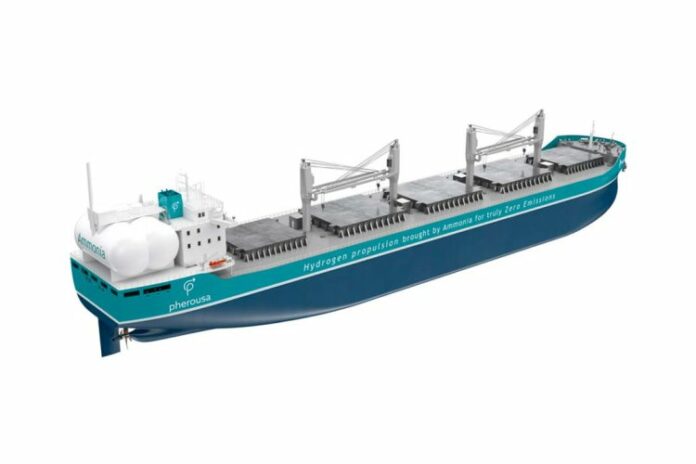
The only fuel that truly has zero carbon emissions is hydrogen, but hydrogen storage is the biggest challenge for deep-sea shipping. Pherousa Green Technologies AS (PGT) has solved this challenge by developing and proving the technical feasibility of an ammonia cracker allowing the use of ammonia as a hydrogen carrier onboard vessels in deep-sea shipping.

Pherousa Green Shipping AS (PGS) is in the design stage of placing an order for up to 6  modern green-profiled Ultramax dry bulk carriers, designed by Deltamarin in Finland. The initial ship design is based on an existing Deltamarin ultramax model, adapted for the Pherousa Green Technology using ammonia, enabling true zero-emission propulsion.

At the core of this project is  PGT’s advanced ammonia cracking technology, which allows the ship’s engines to be operated with a minimal amount of pilot fuel, hence providing a truly zero-emission vessel using enriched ammonia and hydrogen as fuel. The system also enables the use of pure hydrogen in PEM fuel cells instead of direct ammonia fuel cells for electric power production.

The PGT’s cracking system provides the next step in making deep-sea shipping truly zero emissions and allows the use  of ammonia and hydrogen in a cost-efficient way.

Deltamarin has developed an innovative long endurance ammonia fuelled Ultramax bulk carrier concept together with PGT.

“The only fuel that is truly zero emission is hydrogen, but hydrogen storage is the biggest challenge for deep-sea shipping. Ammonia is the only readily available hydrogen carrier that has no carbon in its molecule, therefore the only truly zero-carbon hydrogen carrier. The ammonia cracking technology developed by PGT is a game changer that could become a major contributor toward the realization of the world´s zero-emission shipping” says the PGT Group Chairman Hans Bredrup.

PGT will deliver the “plug and play” ammonia crackers to PGS for installation onboard the newbuildings. The two companies also aim to enter into a strategic partnership agreement to drive the development of ammonia technology for use within the deep-sea segment.

The initial fleet of 6 Ultramax dry bulk carriers is aimed at the worldwide copper industry. Copper is a key component in global decarbonisation. The Copper industry has ambitious emission-cutting goals, including to reduce the emissions produced whilst copper is transported to end users, usually across the Pacific Ocean, either from South America or Australia. Ongoing & advanced conversations have been held with leading international mining companies for their employment of the new buildings.

Thales and Team Vigilance launch the Royal Canadian Navy’s patrol vessel

0

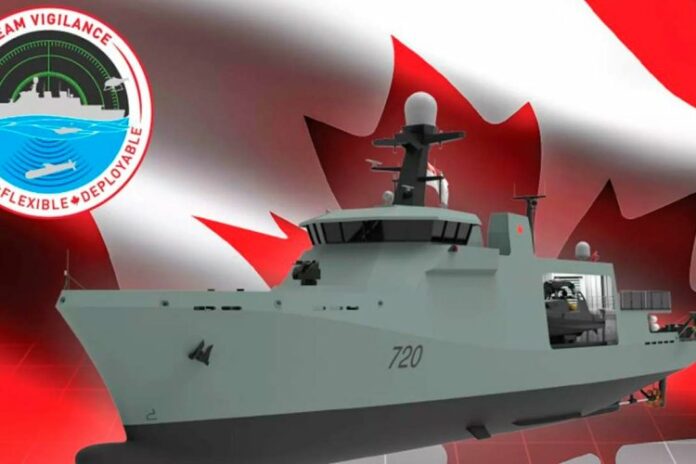
Thales has announced at CANSEC 2023 – alongside its Team Vigilance partners – that it will provide Combat Systems Integration (CSI) and Electronic Systems Integration (ESI) for the Vigilance Class OPV to modernize the Royal Canadian Navy’s future fleet and ensure paramount performance for meaningful missions at home and abroad.

“It’s energizing to envision what Canada’s sailors and the RCN could gain from a paradigm shift in mid-sized OPVs: fewer crew needs through digitization and uncrewed systems; mission adaptability via modern sensor-suites; and future-proofing by way of artificial intelligence, connectivity, big data and IoT technologies. All this in a fully integrated, compact and versatile vessel – the outcome of a deep commitment among Team Vigilance partners to both Canada and to collaboration.” Chris Pogue, CEO, Thales Canada

Collectively, Team Vigilance has both the capabilities and experience to meet the needs of the most demanding naval operators, whether it is in ship design, Canadian and global shipbuilding, the integration of combat and offboard systems, modular payload systems, or life-cycle solutions that are both sustainable and eco-conscious. And, together, Team Vigilance can deliver to Canada a new class of multi-mission OPVs with the capabilities to fulfil any mission assigned to it at home or abroad.

APM Terminals Bahrain to become region’s first fully solar energy-powered seaport

0

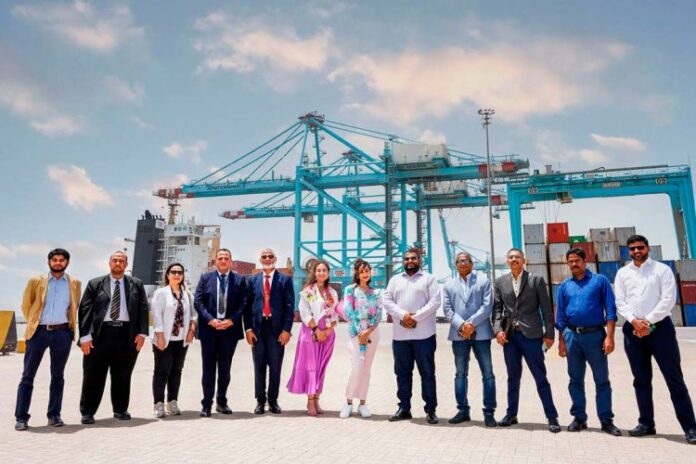
APM Terminals Bahrain, the operator of Khalifa Bin Salman Port, has officially announced the launch of a ground-breaking solar power project worth approximately BHD3.8 million (USD 10 Million), which will make the port energy self-sufficient by the end of 2023.

By implementing this project, the terminal will reduce its carbon emissions by 65% while also securing a reliable and sustainable source of energy, effectively making Khalifa Bin Salman Port the region’s first fully energy-sufficient seaport.

The solar power project is part of APM Terminals’ global decarbonisation plans, which aim to reduce greenhouse gas emissions by 70% by 2030 and achieve net zero by 2040.  

“We are very excited to take the first major step in our decarbonisation plans, which will make Khalifa Bin Salman Port the region’s first seaport to be fully powered by renewable energy. Our decarbonisation strategy for the port is in line with the vision of HM The King and the commitment of HRH the Crown Prince and Prime Minister for Bahrain, as well as APM Terminals’ global goal of being safer, better, and bigger” shared Farooq Zuberi, Chief Finance Officer and Interim Managing Director, APM Terminals Bahrain. He continued, “We are constantly striving to develop more sustainable and responsible business practices in order to serve better our customers and the communities in which we work.” 

By the end of the solar implementation project, APM Terminals Bahrain will have installed 20,000 solar photovoltaic panels capable of generating 18.5 Gigawatts of electricity per year. This renewable energy source will produce clean and sustainable energy for powering various port operations, including container handling, crane operations, and lighting, setting an example for the entire maritime industry. APM Terminals Bahrain is excited to contribute to the government’s efforts to realise a carbon-neutral Bahrain and be part of A.P. Moller – Maersk’s goal to achieve net-zero GHG emissions in 2040 across all business entities.

Fincantieri will build the third NFS submarine for the Italian Navy

0

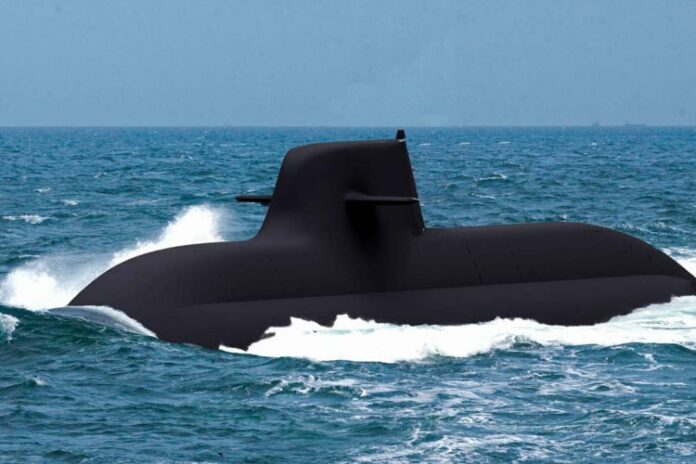
The construction of the third new generation submarine related to the U212NFS (Near Future Submarine) program for the Italian Navy and assigned to Fincantieri has received parliamentary approval and will now follow the standard administrative procedure.

The programme, which includes two vessels contracted in 2021, as well as the creation of a Training Center, is led by OCCAR (Organisation Conjointe de Coopération en matière d’Armement, the international organization for joint armament cooperation).

Pierroberto Folgiero, Chief Executive Officer of Fincantieri, commented:

“Within the NFS program we are both design authority and prime contractor. The prosecution of the program acknowledges Fincantieri’s technological and managerial leadership, in full continuity with the pillars set out in our business plan. The submarine is a unique strategic and industrial asset, combining shipbuilding and its highest standards with the underwater, a sector in which crucial games will be played also thanks to our vision of the future”.

The first two vessels will be delivered in 2027 and 2029, with the steel cutting of the second unit scheduled for June 6th.

The U212NFS submarines will be highly innovative, with significant design modifications which will all be developed independently by Fincantieri in accordance with the requirements of the Navy. The program responds to the need to secure adequate underwater spatial surveillance and control capacity, considering the future complex scenarios of underwater operations and that the operational lifetime of the 4 “Sauro” class submarines, currently in service, is drawing near. It also aims at upholding and further developing Fincantieri’s acquired strategic and innovative industrial know-how, as well as consolidating the technological lead attained by the company and its supply chain, major industries, and small and medium-sized enterprises of the sector, enhancing the presence on board of technologically advanced component parts developed by Italian industries.

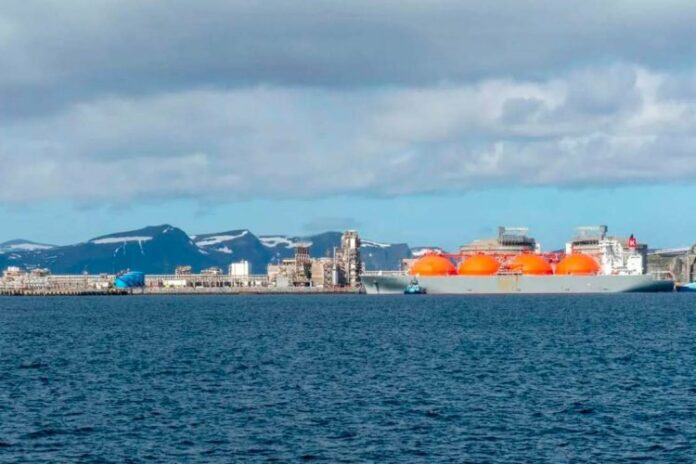
Gas leak at Melkøya stopped

0

Equinor’s emergency response organisation has been demobilised and the emergency services have left Melkøya.

The leak occurred in connection with a valve in one of the plant’s cooling circuits. The gas that leaked is used for cooling during production of liquid natural gas (LNG).

Equinor’s emergency response organisation was mobilised and the incident was handled in collaboration with emergency services. Relevant authorities were notified. There were 98 people present at the factory when the incident occurred. All personnel are accounted for and no injuries were reported.

It is too soon to say when production at the plant can be resumed.

Study finds fuel savings from Norsepower Rotor sails and weather routing

0

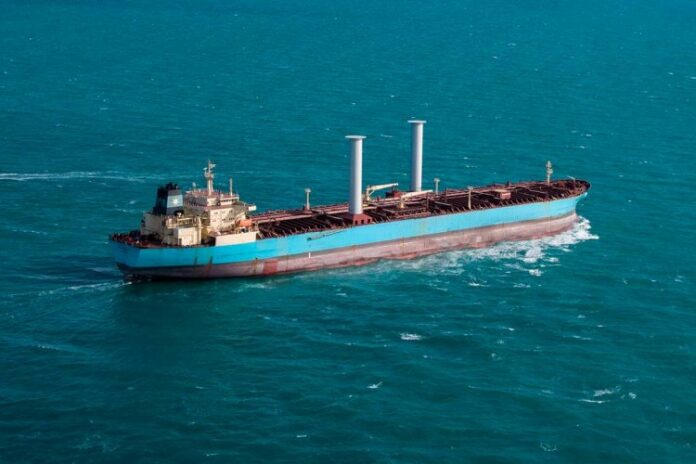
NAPA, Norsepower and Sumitomo Heavy Industries Marine & Engineering Co., Ltd. (SHI-ME) have announced the results of phase one of their joint simulation project looking at the fuel saving and emissions reduction potential of combining Norsepower Rotor SailTM and NAPA Voyage Optimization onboard SHI-ME’s wind propulsion ship.

Phase one of the simulation project (from December 2022 to March 2023) found that the combination of NAPA Voyage Optimization with the Norsepower Rotor SailTM can deliver emissions reductions of 28%, on average, on the Atlantic route between New York and Amsterdam. Of these average CO2 emissions savings, the contribution of NAPA Voyage Optimization can be estimated at 12%.

The joint simulation project leveraged insights from NAPA’s ship performance model and its voyage simulation tools, as well as Norsepower’s actual performance data. Using nowcast weather data from 2022 and specifications provided by Norsepower and SHI-ME, the digital twins developed by NAPA were able to simulate the performance of the tankers in selected sea areas. Focusing on the annual voyages of six popular trading routes, the study evaluated the tankers’ estimated CO2 reduction and potential fuel saving with NAPA Voyage Optimization and Norsepower Rotor SailsTM, and compared these with using only NAPA Voyage Optimization. Looking at results across all six routes, the study found an average CO2 reduction of 19% when using NAPA Voyage Optimization alongside Norsepower Rotor SailsTM, with NAPA Voyage Optimization contributing 10% of these emissions reductions. Using insights from the simulation, the study also explored how to predict vessel performance at the design stage, testing how the ship could handle varying sea and weather conditions.

Phase two of the research project (May 2023 onwards) is designed to build on phase one and enhance the performance of vessels with Norsepower Rotor SailsTM. Using fleet data, the study will conduct advanced performance analysis to improve operational performance and explore new optimization strategies. The project is part of SHI-ME’s plan to develop a new proof of concept for wind-assisted ships, which will be equipped with Norsepower Rotor SailsTM.

The project and its findings will help strengthen the business case for investing in wind-assist technology at a time when the industry is under increasing pressure to decarbonize. Using NAPA’s operational voyage simulation technology alongside the technical expertise of Norsepower and SHI-ME, the collaborative study brings critical insight and assurance to inform commercial and operational decisions as early as the design stage.

Pekka Pakkanen, Executive Vice President, NAPA Shipping Solutions, said:

“This joint simulation project shows the significant potential for combining wind propulsion with voyage optimization for planet-positive impact. At a time when the industry is racing to comply with environmental regulations, digital solutions are enabling greater collaboration with stakeholders across the maritime value chain. This joint simulation project was no different. Our findings are promising and can help bring much-needed clarity to help the industry meet its sustainability goals.”

Jukka Kuuskoski, CSO, Norsepower, added:

“Norsepower’s mission is to lead shipping towards zero carbon emissions, so it has been an honor to work alongside top experts such as NAPA and SHI-ME. At a time of growing international regulatory and public pressure to save fuel and reduce the industry’s environmental impact, this performance data on the benefits of adopting clean technologies will give the industry the necessary confidence to invest in decarbonization. We are proud of this project and its future impact.”

Yuji Arai, Senior Engineer, Sumitomo Heavy Industries Marine & Engineering Co., Ltd. (SHI-ME), said:

“SHI-ME’s vision is to deliver innovative and state-of-the-art vessels for shipping’s decarbonization. The Norsepower Rotor SailTM, NAPA’s knowledge of weather routing and SHI-ME’s expertise in tall-ship design are all vital pieces to materialize the vision of a greener industry. Looking at the findings from this study, we think the CO2 emissions reduction figures exceed customers’ expectations.”

Future Proof Shipping launches first hydrogen-powered inland container ship

0

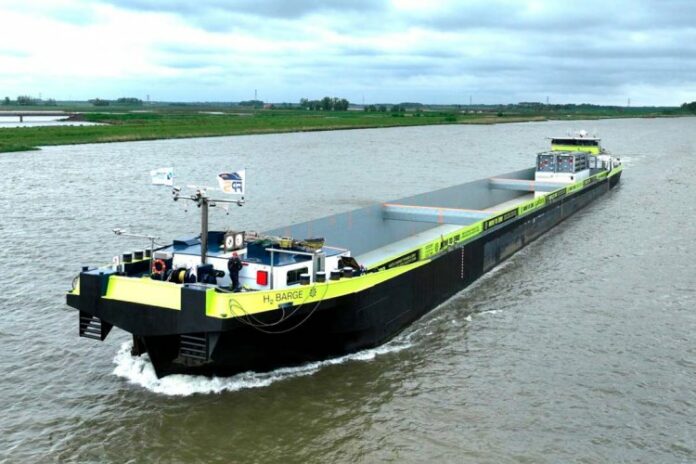
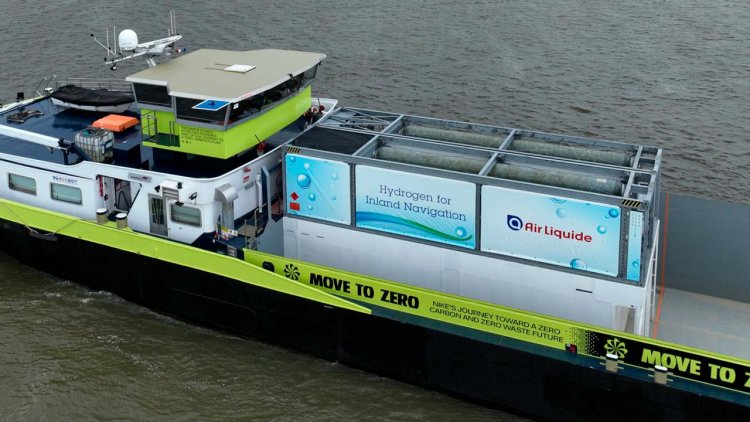
Earlier in the week, Nike introduced the H2 Barge 1 at its European Logistics Campus in Laakdal, Belgium. As part of its journey toward a zero carbon and zero waste future, Nike is partnering with Future Proof Shipping (FPS) and BCTN Network of Inland Terminals, to accelerate zero-emission shipping. 

Future Proof Shipping’s zero-emissions 110m x 11.45m inland containership, H2 Barge 1 is chartered by BCTN on behalf of Nike EMEA. The vessel, expected to reduce greenhouse gas emissions by 2000 tonnes of CO2e per year, will sail between Rotterdam and BCTN’s inland terminal in Meerhout several times a week.

The official launch of H2 Barge 1 took place in Rotterdam on 25 May. 

Minister of Infrastructure & Water Management in the Netherlands, Mark Harbers, was in attendance to present FPS Founder, Huib van de Grijspaarde, with a special A-Zero (A0) emission label awarded only to zero-emission vessels.

During the presentation of the label, Minister Mark Harbers said:

“It’s my pleasure to present the very first A-Zero emission label to H2 Barge1, as it is the first vessel to truly qualify as zero emission. An achievement worth applauding. I hope this achievement by Future Proof Shipping will persuade other shipowners to make the transition to emission free transport too, and that many more A-Zero emission labels will be handed out in the future.” 

Also present to celebrate this collective achievement, were the FPS team and various partner representatives from Air Liquide, BCTN Network of Inland Terminals, Holland Shipyards Group, Koedood Marine Group, Kooiman Marine Group, Nedstack Fuel Cell Technology, Rabobank, and Nike. 

“We have been working for a couple of years now to ensure we tread more lightly on the planet. This shipping project proves that moving cargo with zero-emissions and zero impact is possible, and we hope it accelerates the industry to follow in Nike’s footsteps and move to zero. I would like to thank our dedicated FPS team, our founder Huib van de Grijspaarde for his unwavering belief in us and the project and all our trusted partners for enabling us to see it through. This is a pivotal moment, not just for Future Proof Shipping but for the future of shipping.” Richard Klatten, CEO – Future Proof Shipping. 

“Nike’s ultimate goal is to create a zero carbon, zero waste future. We’ve been on this journey for decades, and we’re setting even bolder goals for the future. The H2 Barge 1 is an important example of how we are investing in sustainable progress across logistics and transportation to protect the environment for future generations.” Eb Mukhtar, Vice President Operations & Logistics – Nike EMEA 

“Green and blue are our colours: we navigate the inland waterways and respect nature. We wish to be the preferred inland operator of our customers. Sustainability is part of our DNA, and together with the right partners, we are building a zero-emission future.” David Huybrechts, General Manager Belgium – BCTN 

The FPS Maas/H2 Barge 1 retrofit project is supported by grant funding from the Interreg North Sea Region Programme (Zero Emission Ports North Sea – ZEM Ports NS), Netherlands Enterprise Agency (RVO), Port of Rotterdam and Expertise- en InnovatieCentrum Binnenvaart.