0.8 C
New York
Home Blog Page 295

Correll Group secure works on Dogger Bank Wind Farm from DEME Offshore

0

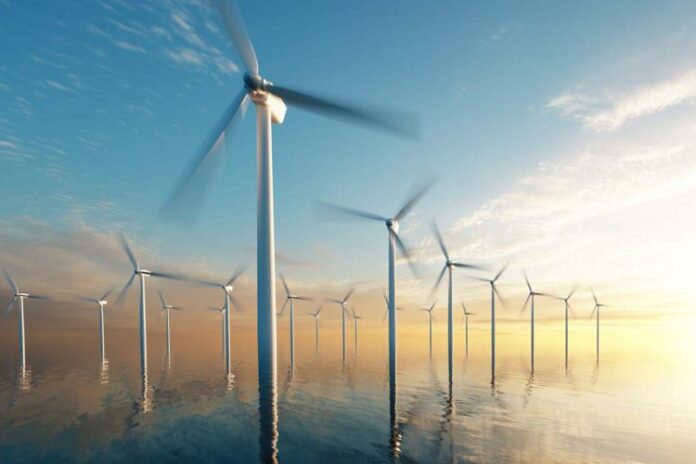
The Correll Group, Electrical Engineering Division, has been contracted by Deme Offshore NL B.V. to complete the 66kV inter-array cable (IAC) termination & testing on 95 WTG’s and the offshore substation platform on the first phase of Dogger Bank Wind Farm, including the installation of a Cable Monitoring System.

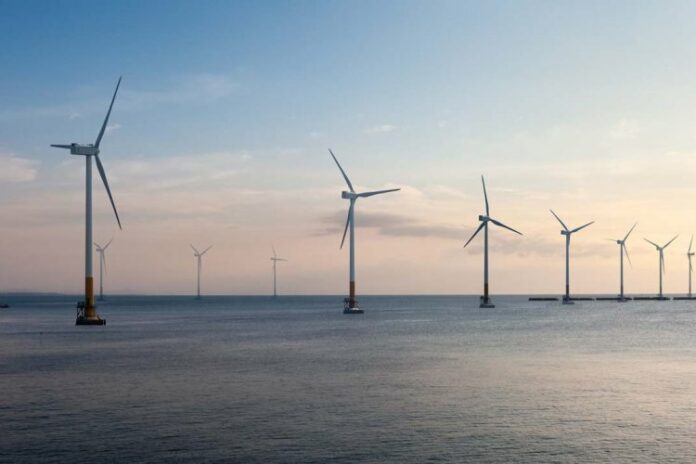
The offshore wind farm is being constructed in three 1.2GW phases; Dogger Bank A (with 95 wind turbines), Dogger Bank B (with 95 wind turbines), Dogger Bank C (with 87 wind turbines). The 3.6GW project will be the world’s largest offshore wind farm when completed in 2026.

This world-leading project under construction in the North Sea more than 130km off the North East coast of England is a joint venture between SSE Renewables (40%), Equinor (40%) and Vårgrønn (20%).

SSE Renewables is leading on the construction and delivery of all three phases, and Equinor will operate Dogger Bank upon completion for its anticipated lifetime of up to 35 years. Over 400 long-term jobs have been created locally to support Operations and Maintenance from South Tyneside for the 35-year life of the wind farm.

Onshore construction began in 2020 and is currently underway for all three phases, while offshore construction on Dogger Bank A began in Spring 2022. First power is expected in Summer 2023 and Summer 2024 for Dogger Bank A and B, respectively. Turbine installation for Dogger Bank C will begin in 2025.

Dogger Bank Wind Farm will use some of the world’s largest and most powerful offshore wind turbines in operation today, GE’s Haliade-X. As the first order for the Haliade-X 13MW and 14MW machines, Dogger Bank will be the first time the ground-breaking turbines are installed in the world. Each GE Haliade-X turbine has a power output of up to 14MW and one rotation of the Haliade-X turbine blades can power one UK home for more than two days.

Dogger Bank Wind Farm marine package manager, Alan Evans, said: “Correll Group will play an important role in the safe installation and testing of sub-sea equipment in preparation for first power this summer.

“They will join a number of UK-based firms helping to build the critical marine infrastructure needed for this world-leading project including the manufacturers of our cable protection and cable monitoring systems.”
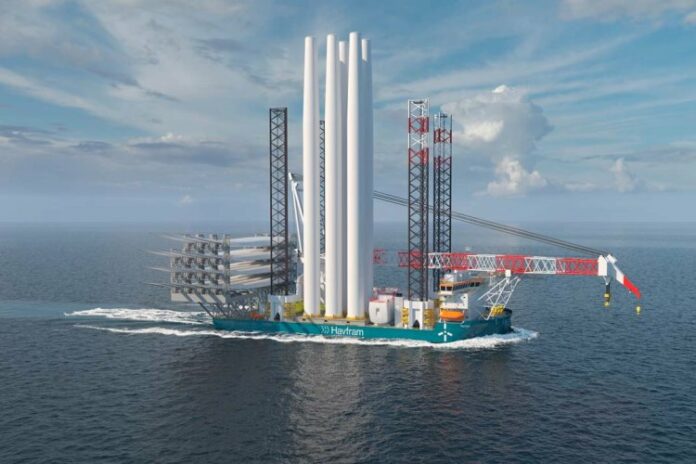
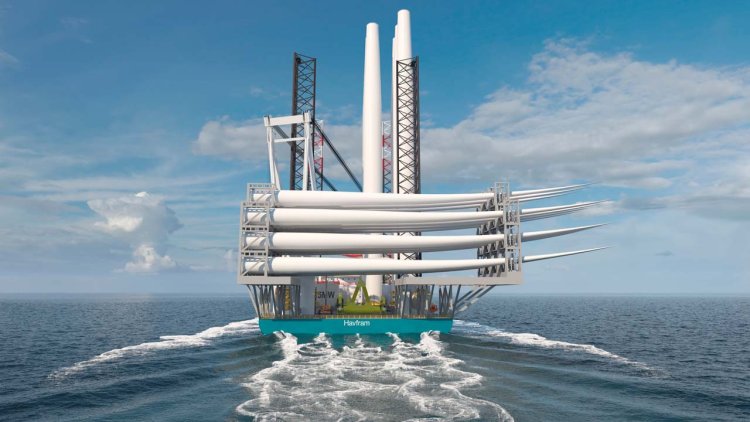
ABB wins large systems order for Havfram Wind’s two new vessels

0

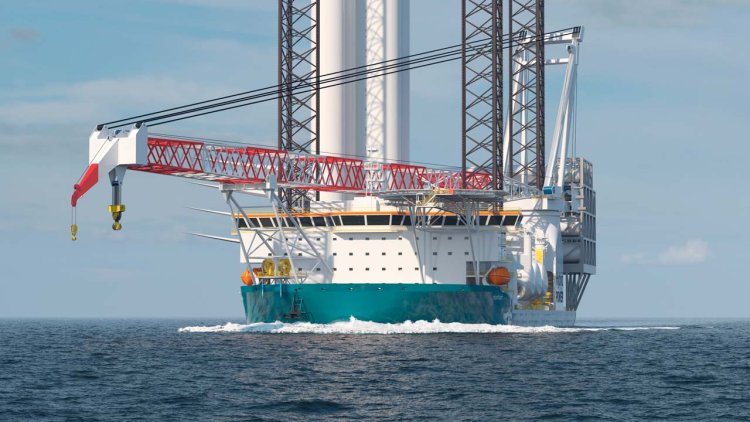
ABB has secured a large order with one of the largest offshore shipbuilders in China, Yantai CIMC Raffles Offshore Ltd., to deliver an integrated bridge-to-propeller technology for Havfram Wind’s two new NG20000X-HF Wind Turbine Installation Vessels (WTIVs).

The vessels, incorporating the latest battery-hybrid drivetrain technology, will be among the most energy-efficient designs to operate in the offshore wind industry. Other features are the capability of installing offshore wind turbines with a rotor diameter of more than 300 meters, as well as XXL monopiles weighing up to 3,000 tons at water depths of up to 70 meters.

ABB scope comprises four Azipod® electric main propulsion units with a total propulsion power of 17 MW; the Onboard DC Grid™ power distribution system; a 4.1MWh energy storage installation; ABB Ability™ Marine Pilot Control with Dynamic Positioning System for advanced vessel control, as well as a comprehensive package of automation and digital technology. Once in operation, the vessels will be able to leverage the benefits of connecting digitally to the ABB Ability™ Collaborative Operations network for remote support and predictive maintenance.

As turbine numbers multiply and sizes increase, latest predictions by the independent expert in assurance and risk management DNV1 suggest that by 2050, offshore wind will provide as much energy as offshore oil. The Havfram Wind vessels will have specific capabilities that future-proof them as the offshore wind sector is progressively moving further offshore. These capabilities include instant load power and enhanced dynamic performance available to batteries, plus the maneuverability and station-keeping accuracy brought by Azipod® propulsion. In addition, weight benefits provided by Azipod® propulsion system can be up to 30 percent compared to traditional mechanical thruster solutions.

Designed to optimize vessel responsiveness, efficiency and safety across the entire operating profile, ABB Ability™ Marine Pilot Control allows for seamless transition from position control to joystick maneuvering. The DP2 functionality adds redundancy in technical design, ensuring that in the event of a single system fault, the vessel’s position will be maintained. This is particularly important for safe and reliable operations of construction and wind farm vessels working alongside fixed structures.

“The performance of our Wind Turbine Installation Vessels will be pivotal in meeting the needs of the offshore wind market today and tomorrow. To ensure superior performance, we chose the broad scope of ABB power, control, propulsion and automation technology, complemented by the through-life support from ABB’s remote diagnostics and global service capabilities,” said Even Larsen, CEO Havfram Wind.

The new Havfram Wind vessels will benefit from ABB’s extensive experience in closed-bus and closed-ring solutions for dynamically positioned vessels. Closed bus-tie and closed ring operations bring significant benefits and efficiency gains compared to traditional open-ring solutions which require a greater number of online engines and total installed power.  Moreover, they meet critical safety regulations, increase operational flexibility, efficiency, and allow cost savings.

“We at ABB are in these projects to support the customer throughout the vessel lifetime, and being able to deliver future-proof solutions is of utmost importance for us. I am especially proud of this order, demonstrating the benefits of efficiency, safety and reliability our bridge-to-propeller solution can deliver to our customers in this rapidly growing and demanding market,” said Juha Koskela, Division President, ABB Marine & Ports.
 

ONE to receive its first 24000 TEU class Megamax vessel

0

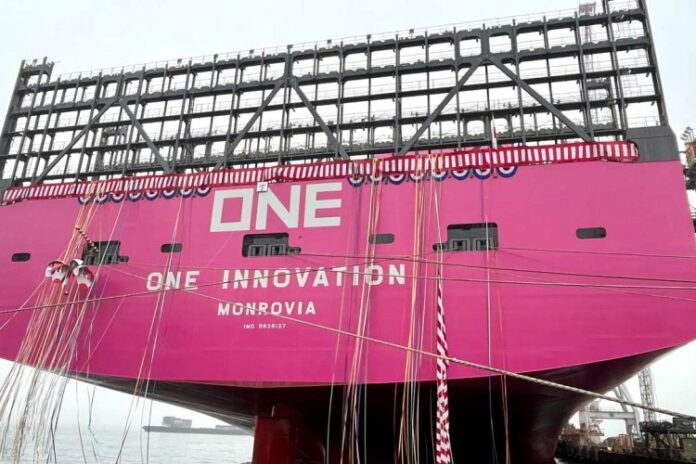
Ocean Network Express (ONE) has announced that “ONE INNOVATION”, the company’s first ever 24,000-TEU class Megamax, was successfully delivered at Kure Shipyard of Japan Marine United Corporation on 2 June 2023.

The vessel, ONE INNOVATION, with a capacity up to 24,136 TEU, will help bring economies of scale and significantly lower carbon emissions through a state-of-the-art hull design that aims to maximize cargo intake and minimize fuel consumption. The vessel is equipped with a bow windshield, an energy saving device, and an exhaust gas cleaning system to meet the emission regulations of IMO. She is also the first of the six new Megamax vessels to joining ONE’s core fleet.

She will be deployed on the Asia to Europe (FE3) service, under THE Alliance (THEA). 

“ONE INNOVATION is the largest vessel in our fleet, and we are proud to have it as our flagship. This newly built vessel will help us pave the way for the sustainable development of global logistics and respond to customer requests with the world’s No. 1 quality of service,” Said Yu Kurimoto, Managing Director of ONE, during the commemorative party. “Last year, we announced our ‘Green Vision’, which aims to achieve net-zero by 2050. We are actively working to reduce greenhouse gas emissions from our fleet, and we are confident that this vessel will contribute to this effort and bring innovation to global logistics.”

BlueFloat Energy advancing offshore wind energy in the Philippines

0

The Philippine offshore wind roadmap released in April 2022 by the Department of Energy and the World Bank Group, estimated that the Philippines has the potential to install 21GW of offshore wind power by 2040.

BlueFloat Energy has been working more than 18 months on unlocking this offshore wind potential by exploring the development of floating wind. BlueFloat Energy has announced its market entry in the Philippines through the acquisition of the Wind Energy Service Contracts (WESCs) for four sites in the Philippines – Central Luzon, South Luzon, Northern Luzon, and Southern Mindoro.

Carlos Martin, CEO of BlueFloat Energy, said during his visit to the country announcing the company´s market entry into the Philippines:

“We are thrilled to bring BlueFloat Energy’s expertise and experience in offshore wind energy to the Philippines. We believe that by tapping into the country’s vast clean energy potential, we can make a significant contribution towards reducing carbon emissions and fostering a sustainable future for generations to come.”

The Philippines, known for its abundant natural resources and favorable coastal conditions, is well-positioned to harness the power of offshore wind. The country’s total technical potential for offshore wind is estimated at 178 GW in the World Bank’s offshore wind roadmap for the Philippines. Large areas around the country’s coast have technically extractable wind resources.

BlueFloat Energy plans to leverage its floating wind expertise and global experience to develop projects along the Philippine coasts.

Raymund Pascual, Country Manager of BlueFloat Energy in the Philippines, said:

“We see and believe that our plan aligns well to enable the Transformative Agenda of the Philippine Development Plan 2023-2028 as it focuses on developing and protecting the capabilities of individuals and families, enables production sectors to generate more quality jobs and competitive products, and of course consequently, economic prosperity.”

BlueFloat Energy will work closely with the local communities, government entities, and other stakeholders to ensure that its projects comply with environmental regulations, respect local cultures, and provide long-term benefits for the communities in which it operates.

Titan acquires two small scale LNG carriers for bunkering capability retrofit

0

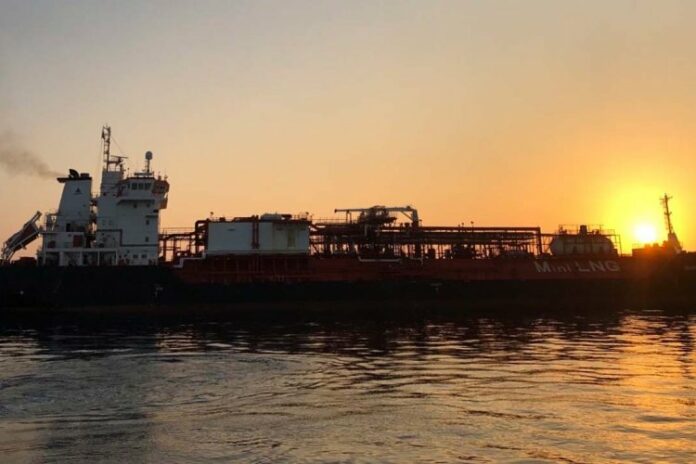
Titan has acquired two small scale LNG carriers – the Seapeak Unikum and Seapeak Vision – from Seapeak, the Canadian gas transportation company formerly known as Teekay LNG Partners. 

The vessels will be retrofitted to ensure suitable LNG bunkering capabilities, enabling them to both transport and bunker LNG, liquefied biomethane (LBM), and in the longer-term hydrogen derived e-methane (e-LNG).

Both sister vessels have a cargo capacity of 12,000 cubic metres (cbm) and are 152m in length by 19.8m in width. The two vessels will join Titan’s fleet in March this year. They will operate in the Mediterranean and Northwestern Europe and will cater for increased demand for LNG and LBM (bio-LNG) in these regions.

The vessels and the retrofit are financed by Sole Shipping Group through a long-term bareboat charter leasing structure. Sole Shipping Group is a major European provider of financial leasing structures. Titan was advised on this transaction by Endegeest Consulting BV.

Titan’s expanding fleet already includes a mix of owned and chartered vessels. Furthermore, Titan has an ambitious newbuild program consisting of Titan Krios and Titan Hyperion designs. The two new additions to the fleet allow Titan to deliver fuel to a wider range of LNG-powered vessels, including all container ships. Before operations begin, the LNG carriers will be retrofitted to improve LNG bunkering capabilities and to meet Titan’s quality standards. After the upgrades, the vessels will be able to load at all major LNG terminals and perform ship-to-ship bunkering and loading operations.

Thanks to its cargo conditioning capabilities, the vessels are also capable of doing more complex projects, including gas-up cool-down operations and commissioning parcels. On top of this, the cargo tanks are made of stainless steel, making them compatible with propylene, ethylene, and ammonia.

Douwe de Jong, fleet development director at Titan, commented:

“Retrofitting these ships so that they can trade and bunker LNG, LBM, and in the longer-term hydrogen derived e-methane, offers Titan even more flexibility in its clean fuel operations. The team is currently specifying the upgrades and finding a suitable shipyard for the retrofit work.”

Niels den Nijs, owner and CEO of Titan, added:

“A Solid double digit EBITDA in 2022 has allowed us to make this additional investment in our fleet. This decision aligns with Titan’s ambitious growth strategy in Europe and the Mediterranean. We look forward to continuing to work with our partners, like Sole Shipping Group, to expand our fleet to support our LNG and LBM distribution targets and serve our customer’s long-term demand.”

Damen unveils new compact ASD Tug 2111

0

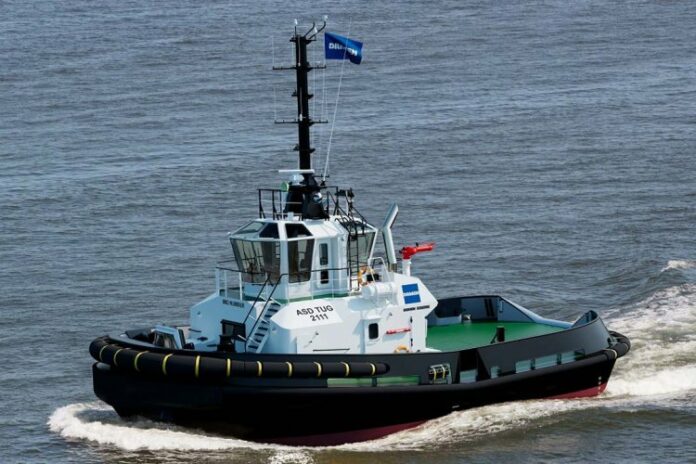
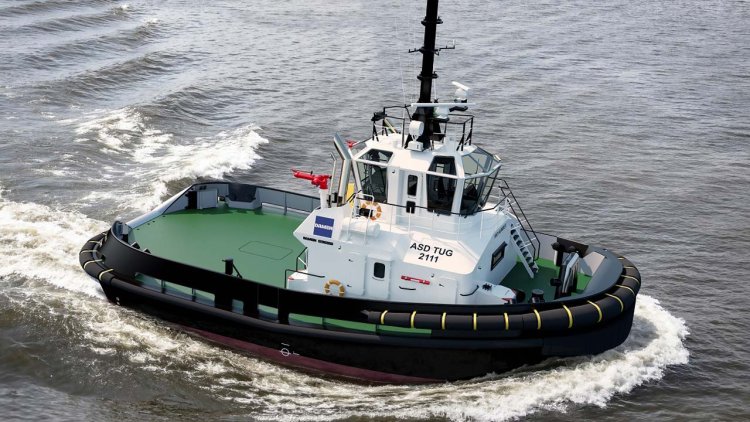
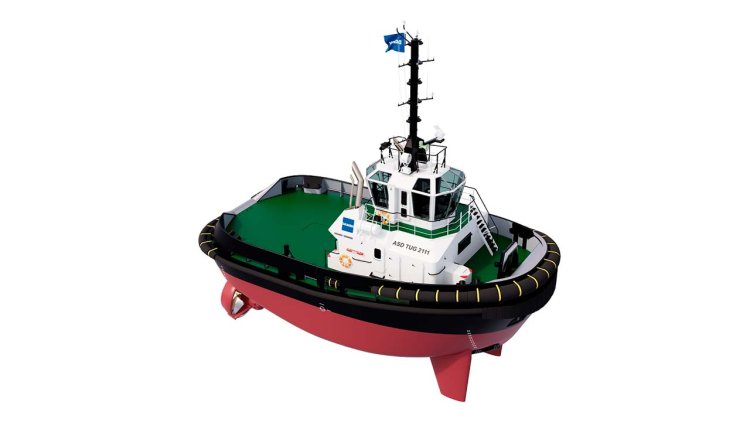
Damen Shipyards Group has unveiled the latest vessel in its Compact Tugs product platform. The ASD Tug 2111 joins the ASD Tug 2312 in the innovative range, combining proven technology with innovation to advance safety, sustainability, reliability, and efficiency.

Siebe Cieraad, Damen Product Portfolio manager explains the thinking behind this next generation series of tugs. “As sea-going ships continue to increase in size, new challenges are arising in ports. Tugs are required to operate – safely – with less space, at the same time needing increased power to perform. This 21-metre harbour tug with 50 ton bollard pull is therefore a very exciting addition to our portfolio.”

The ASD Tug 2111, in common with other vessels in Damen’s portfolio, features numerous safety features. For example, it boasts a high freeboard, which keeps water on deck to an absolute minimum. It also features ample tumblehome, enabling it to get safely up close to an assisted vessel.  A further feature is the tug’s full vision bridge. This provides a 360-degree view from the deck house over the surrounding waters as well as the deck both fore and aft.

Making the ASD Tug 2111 even safer, are its spacious, clutter-free decks. A crucial factor in this is the location of the winch in the deck house. With this, fore and aft towing operations are conducted with a single winch. As well as making the decks clutter-free, this has the added advantage of sheltering the winch from the elements, thereby reducing maintenance.  

Low maintenance is in the ASD Tug 2111’s DNA. The design features the shipbuilder’s proven closed loop keel cooling system. Reducing the amount of on board sea water systems to an absolute minimum, lowers the amount of erosion-related maintenance.

Damen has incorporated a new electric power generation system to its Compact Tugs range. The system is able to create electricity by drawing on the ample available power of the main engines, reducing fuel consumption and emissions as a result.

A further boost to efficiency comes from the tug’s 2.4 metre diameter propeller, the large size of which offers increased thrust. The ASD Tug 2111 also features the patented Damen Twin Fin to ensure outstanding course keeping and predictable sailing behaviour during both free sailing and bow to bow operations.

It is Damen’s ambition to be the world’s most sustainable and connected shipbuilder in the world. This goal can be clearly felt throughout the design of the ASD Tug 2111. The vessel is provided with all necessary equipment to be remotely connected via the Damen Triton system and is technically suitable for two man operation.

Fitted with IMO Tier II compliant engines, the tug can achieve IMO Tier III certification thanks to the optional fitted Damen Emission Reduction System. This in house designed exhaust gas aftertreatment system reduces the nitrogen oxides (NOX) from the vessel’s emission before they reach the atmosphere. This system can be fitted in the existing exhaust silencers. Making it also an easy retro fit in the vessel at a later stage in the life time of the vessel.

 Additionally, Damen is working on full electric versions of its compact ASD tugs. These vessels will follow in the footsteps of the successful RSD-E Tug 2513, Damen’s first fully electric zero emissions tug, a milestone on the road to maritime decarbonisation.

Siebe said: “We are very pleased to announce this development in our Compact Tugs range and are looking forward to the next stages. In line with our construction of tugs in series for stock, we are already building six ASD Tugs 2111 at Damen Shipyards Changde. In this way, as of Q3 this year, we will be able to offer operators fast access to the latest in tug technology with all the increases in safety, sustainability, reliability, and efficiency this implies.”

LDA, VPLP and Alwena join forces to develop the low emissions container vessels

0

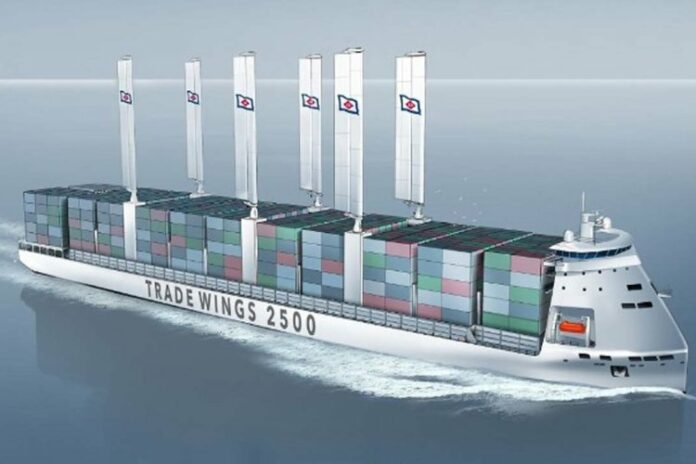
Louis Dreyfus Armateurs’ subsidiary Louis Dreyfus Freight Solutions (LDFS) has called on VPLP Design and Alwena Shipping to develop a wind assisted/propelled container ship solution.

It is based on the Trade Wings 2,500 – an innovative concept for “small-size” container ships of 2,500 TEU. With an overall length of 197m and a breadth of 32m, the vessel offers a deadweight of 32,500 tons. Suitable to short sea shipping operations or feedering in Europe, Central America, Caribbean Islands and China, the Trade Wings 2,500 can also operate on transatlantic trades and be tailored to meet the Clients’ requirements and volumes.

The preliminary project which has been granted an approval in principle (AiP) by Bureau Veritas runs on a hybrid propulsion comprising of six wing sails and a diesel-electric system. It is also designed to burn clean fuels such as liquefied natural gas (LNG) or methanol.

On a typical transatlantic voyage, we can expect to save on average 35% CO2-equivalent emissions compared to a conventional design, with a 2-stroke engine, single shaft and without wingsails, at the same speed. This concept sets the pathway for what could be the low emissions container vessels of the near future.

Mathieu Muzeau, Transport & Logistic General Manager, Louis Dreyfus Armateurs, said:

«We are very pleased to establish a partnership with Alwena and VPLP. It is fully aligned with the LDA strategy to accelerate shipping’s decarbonization, and especially linked to the innovations we are implementing such as the use of wind-propulsion systems and alternative fuels.»

Statsbygg selects Framo pumping systems for the Norwegian Centre for Ocean Technology

0

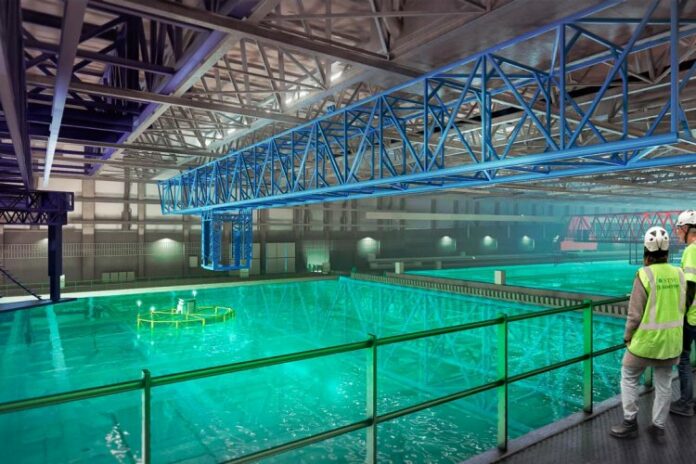
Norwegian government agency Statsbygg has awarded Framo the development contract to supply pump systems for the Norwegian Ocean Technology Center, currently under construction in Trondheim. 

The Center will be used by the Norwegian University of Science & Technology (NTNU) and the SINTEF energy research institute to carry out the research, education and innovation that ocean industries require in order to succeed. The goal is to develop and test new technology related to the ocean, increase the safety and efficiency of existing technology, and strengthen Norway’s position as a leading ocean technology nation.

The basin at the research facility is 60 metres long, 50 metres wide, and 12 metres deep, making it possible to test innovations and large, complex structures under realistic conditions. This will allow the development, testing, securing and improving of installations such as offshore structures, ships, fish farms, and ocean wind turbines before they are put into use.

“This is the largest single installation we have ever delivered in terms of pump quantity,” said sales manager Terje Ljones of Framo Aquaculture. “Our system will pump enormous amounts of water to simulate ocean currents together with realistic waves. The capacity is 225 cubic metres per second, equivalent to 810,000 cubic metres per hour. That’s approximately double the normal flow rate of the Nidelven River in Trondheim. That says something about the capacity.”

The pump system is designed and developed at Framo’s factory on Flatøy island outside Bergen. This is part of a series of pumps with high capacity and low lift heights, which have been initially developed to serve aquaculture facilities. The energy-optimized pumps will be installed in return channels within the pool wall, and will have individual speed control to provide great flexibility in varying the flow rate at different depths. The order also includes water straighteners in front and behind the pump, frequency converters, installation equipment, and a control system that will be integrated together with the plant’s main control system.

“This is the first contract for the new pump model SX1000, a permanent magnet motor-driven pump based on the pump systems we have designed and developed since 2018. The pumps have a proprietary motor and propeller blades. The fact that we are now delivering a large series also means that we can invest more in our factories, optimize production, and increase our delivery rate. With this delivery, we can demonstrate that this technology is also well-suited and competitive in other segments besides aquaculture. Statsbygg’s choice of Framo is recognition of our capabilities, and an excellent reference for us as a supplier,” commented Ljones.
 

Inmarsat Maritime launches its new Fleet Reach coastal LTE service

0

Inmarsat Maritime, a Viasat business, has announced its new Fleet Reach coastal LTE service for maritime connectivity, which brings uninterrupted high-speed broadband to merchant, offshore, energy and fishing customers – even when they are sailing near the coast or are docked in-port.

Traditionally, coastlines and ports are congested connectivity hotspots. With a high number of people and vessels accessing networks at the same time, connections are not always reliable. This is a regular headache for seafarers around the world, with the average vessel spending up to 40% of its time in-ports or in coastal areas.

Inmarsat Maritime’s Fleet Reach – optimised by Fleet Xpress – offers supercharged coastal connectivity thanks to added terrestrial mobile connectivity. This enables faster speeds, increased signal strength, lower latency and more reliable connectivity when sailing near coasts or docked in-port. This means that seafarers can enjoy consistent connectivity wherever the vessel is, with the service seamlessly switching between technologies to ensure an always-on connection.

Connectivity has a huge impact on operations at sea, where the need to safely collect and distribute data is vital to get the most out of modern systems, especially with the increasing number of sensors and applications onboard ships. It is also vital for crew welfare, helping those onboard keep in touch with family and friends at home, or stay entertained by streaming and gaming. A recent Inmarsat study found demand for these services is currently soaring: with an annual increase of 131% for business applications and a staggering 149% for crew applications.

Fleet Reach also comes with security credentials which far outweigh the existing method of using dongles for connectivity when in-port. This means customers can maintain security standards and policies company-wide, without increased risk of cybersecurity threats.

The new service forms part of Inmarsat ORCHESTRA, the satellite company’s ‘network of networks’ which uses multiple technologies in multiple orbits to deliver connectivity wherever and whenever it is needed. Fleet Reach constantly monitors signal quality and selects the right technology for the best connection as and when required, drawing on mobile terrestrial technologies as well as satellite connectivity to deliver uninterrupted broadband connectivity.

Ben Palmer, President, Inmarsat Maritime, said:

“We know the enormous impact that seamless connectivity at sea has for seafarers – both on productivity and crew welfare – especially with so much time being spent in-port. Our new Fleet Reach service – the latest update to our Fleet Xpress solution – is a major step forward, enabling uninterrupted connectivity from sea, to shoreline, to port, and back again, wherever and whenever it is needed.

“The power of Inmarsat’s multi-technology, multi-orbit ORCHESTRA platform is the backbone behind this seismic change in coastal connectivity, taking advantage of our world-class GX constellation as well as terrestrial technologies. Five more Global Xpress satellite payloads and the three recently announced Inmarsat-8 L-band satellites are set to enter service over the coming years to bolster this connectivity and the certainty it brings even further. We look forward to seeing the maritime sector reap the rewards of this consistent, reliable connectivity.”

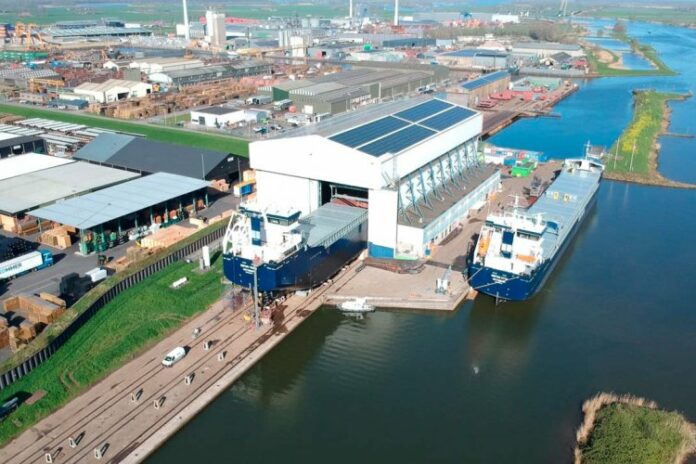
Thecla Bodewes Shipyards announced the new SALMO series

0

Thecla Bodewes Shipyards announces the unveiling of the SALMO: its latest product line of innovative Diesel-Electric Propelled Dry Cargo Vessels of 5,000dwt (208,860 cuft) and 6,500dwt (314,330 cuft). This state-of-the-art vessel series marks a significant milestone in the yard’s commitment to sustainable shipping solutions, aligning with the importance of implementing the Energy Efficiency Design Index (EEDI) in new vessel design.

The SALMO series is the successor to the LABRAX series and features a hull form which is specifically  developed for diesel-electric propulsion and includes all the experience gained from the larger LABRAX series. Both the SALMO 5,000dwt and 6,500dwt dry cargo vessel offer outstanding advantages in terms of an especially efficient hull shape and reliable diesel-electric propulsion system and fulfils all demands on a dry cargo vessel with highly efficient cargo hold, high stowage numbers, low fuel consumption, and low emission.

The layout of the SALMO series incorporates provisions for future alternative fuel sources and has space allocated for future installation of a fuel supply skid such as methanol, ammonia or hydrogen. Energy storage systems for peak-shaving and low emission harbour operations are possible add-ons to the sophisticated diesel-electric propulsion system, which is a standard feature of the SALMO series vessel.

Wilco Smit, Project Developer:

“At Thecla Bodewes Shipyards we recognize the urgent need for sustainable solutions that balance economic growth and environmental responsibility. Our SALMO dry cargo vessel series is a testament to our commitment to advancing energy-efficient and eco-friendly shipbuilding practices. By integrating cutting-edge technologies and adhering to lowering the EEDI numbers, we have developed a vessel that significantly reduces fuel consumption and emissions, making it an ideal choice for environmentally conscious shipping companies.”

Thecla Bodewes Shipyards acknowledges the crucial need to reduce carbon emissions and optimize energy consumption in maritime transport. By incorporating innovative technologies, advanced propulsion systems and optimized hull designs, the shipyard offers its clients vessels that not only comply with environmental regulations but also deliver enhanced fuel efficiency and operational performance.

With 2,999 GT the SALMO-5000 vessel is most suitable for dry cargo, containers on deck and project cargo. The optional Open-Top class notation provides for a full deck opening for larger project cargo transports. With a further optional Ice Class 1A notation the vessel is the ideal match for operating in the Scandinavian waters. The SALMO-5000 measures 87.3m length overall, 13.7m beam and a draught of 6.30m. The single hold layout offers a loading capacity of no less than 208,860 cuft (5,900 m³) loading capacity.

Based on the same hull platform the SALMO-6500 incorporates two holds featuring a total hold volume of 314,330 cuft (9,800 m³). With a hull length of 118.5m, a beam of 13.70m and draught of 5.7m the SALMO-6500 is highly competitive compared to other vessels within the same deadweight range.