-2.4 C
New York
Home Blog Page 291

Corvus Containerized battery room awarded Type Approval from DNV

0

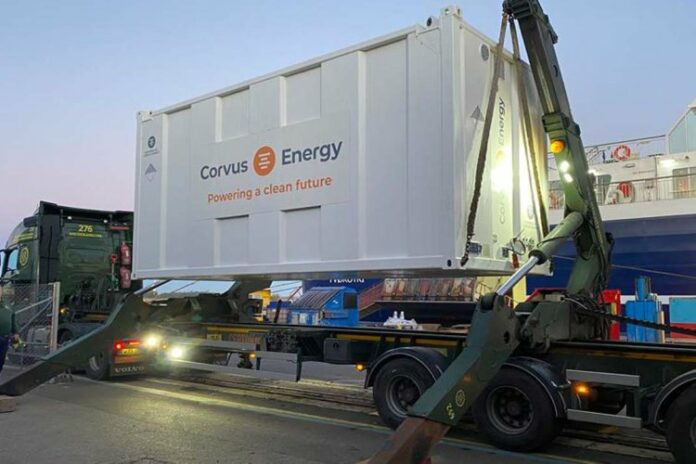
The Corvus BOB is a standardized, plug-and-play battery room solution available in 10-foot and 20-foot ISO high-cube container sizes designed for easy integration with existing ship systems.

The A60 battery room container comes with batteries, a battery management system (BMS), HVAC, Thermal Runaway Exhaust, in addition to firefighting and detection systems.

The containerized solution provides a safe, compact, and space-efficient solution for housing batteries on board a ship, either on deck or below deck. Multiple containers can be combined to create larger energy storage capacities, providing scalability based on the ship’s energy requirements. It also integrates with all power management systems. This flexibility makes it easier to adapt the system to different ship sizes and power demands.

The standard shipping container dimensions make transport less complex and more predictable, as it provides easy storing, stacking and installation. Off-hire and installation time can be significantly reduced as the battery room is fully tested before it arrives at the shipyard.

Halvard Hauso, Chief Commercial Officer at Corvus Energy explains:

“Ship integrators, yards and owners want to minimize interfaces and potential complications onboard. With a pre-approved battery room solution you ease the classification process, you have limited interfaces and all surrounding structures and systems can be prepared prior to delivery” He continues, “We believe containerized solutions will be an important part of the ongoing transition towards cleaner and more sustainable maritime transportation due to scalability and also due to the ability for new business models like “power-by-the-hour” and leasing options.

The Corvus BOB system is based on use with the marine battery system with the highest installation count worldwide – the Corvus Orca Energy.attery portfolio.

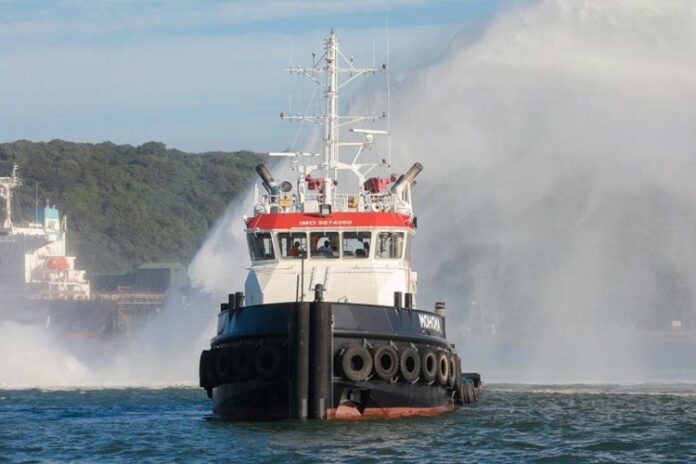
Damen delivers new plough tug Mohoma to TNPA

0

Damen Shipyards Cape Town (DSCT), has successfully delivered a new plough tug to the Transnet National Ports Authority (TNPA).

Based on a standardised and successful Damen Design this vessel is well-suited to various maritime tasks, operating efficiently in shallow and deeper waters with unrestricted sailing capability. DSCT’s extensive experience in constructing ‘low maintenance’ vessels ensured that all installed high-quality components are optimally laid out for easy maintenance.

“This vessel has 45 tonnes of bollard pull, is 32 metres long and 9 metres wide, and can plough up to 25m deep. With a spacious working deck, this versatile workboat will serve as an asset for TNPA’s ports and dredging operations. It showcases the Damen Group’s design knowledge, the skill of our South African Shipbuilding team and our first-class local equipment manufacturers and co-makers,” said Sefale Montsi, Director of Damen Shipyards Cape Town.

The addition of the plough tug to TNPA’s Dredging Services fleet marks a significant enhancement of its infrastructure. The vessel was officially handed over during a ceremony held in Durban on 17 May 2023. This acquisition is part of TNPA’s ongoing fleet upgrade program, aimed at expanding port capacity to accommodate larger vessels and meet growing demand.

Dr Popo Molefe, Chairperson of the Transnet Board of Directors, expressed his satisfaction at the handover ceremony.

“The demand for dredging services has increased in the region, and the addition of this plough tug will increase the berth capacity of the ports. Managing the demand is part of TNPA’s growth plan, which will see the continuous improvement of port infrastructure.”

Christopher Huvers, DSCT Regional Sales Director for Africa, emphasised the importance of localisation in this project, stating, “This project has played an important role in creating skilled new jobs through the Cape Town training centre. Furthermore, the project has acted as a catalyst for the development and localisation of our supply chains. We are proud to claim that we delivered a vessel in Africa for Africa, with an overachievement of local content used”.

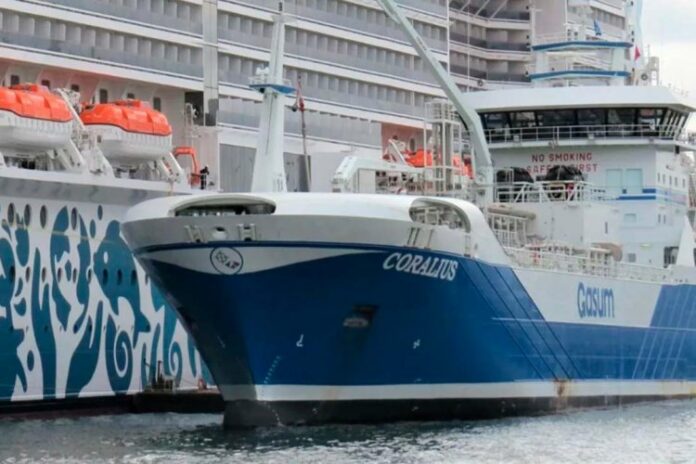
Gasum and MSC Cruises partner for LNG and renewable e-LNG

0

Gasum and the Cruise Division of MSC Group have signed a long-term agreement for the supply of LNG to the new flagship of its MSC Cruises brand, MSC Euribia, as well as a Letter of Intent with the goal of cooperating on the supply of synthetic e-LNG made with renewable energy.  

The companies also signed a long-term agreement on the delivery of liquefied natural gas, LNG, to MSC’s new flagship MSC Euribia. With this agreement Gasum supports MSC Cruises in cutting emissions with the immediate use of LNG.

Using LNG removes nearly all sulfur oxide and particle emissions, greatly reduces nitrogen oxide emissions and significantly lowers greenhouse gas emissions. In addition, LNG technology on board enables MSC Cruises to switch at any time to fully renewable liquefied biogas (bio-LNG) or synthetic gas (e-LNG) in order to reach greenhouse gas emissions reductions of up to 100 per cent.

MSC Euribia recently demonstrated that emissions neutral cruising is possible already today by sailing the historical first ever net zero greenhouse gas emissions cruise voyage benefiting from the emissions reductions allowed by liquefied biogas procured by Gasum. The ship sailed for four days from Saint-Nazaire in France to Copenhagen, Denmark and utilised bio-LNG with a mass-balance approach, the most environmentally efficient method of delivering the benefits of renewable biogas. 
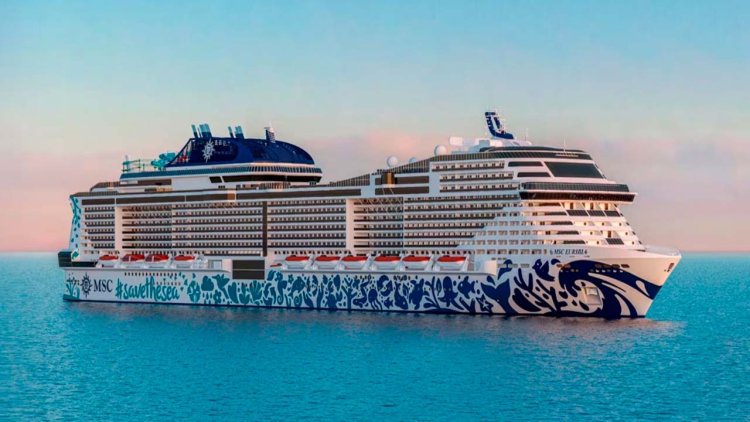
MSC Cruises purchased over 400 tons of bio-LNG from Gasum to show its commitment to the deployment of drop-in renewable fuels and energy transition measures towards the pioneering net zero gas emissions voyage.  The line is the industry’s first deep sea ocean cruise operator to buy bio-LNG as a fuel source that proved to allow significant lifecycle emissions reductions.

“Securing a reliable supply of LNG and e-LNG is of critical importance to our decarbonization efforts, and the LOI and long-term agreement that we have announced today are significant steps on that journey. Partnering with Gasum will enable us to access new and cleaner fuels needed to make net zero cruising a reality. We need more suppliers like Gasum to step up and support our industry with its environmental targets. We are ready and waiting to buy more of these new fuels”, Linden Coppell, Vice President of Sustainability and ESG for MSC Cruises, said.

“This LOI on e-LNG is a landmark agreement for the shipping industry as it demonstrates that e-LNG will be available to the maritime transport sector within a short timeframe. We are also very happy about the long-term LNG supply agreement which we believe is the start of long-lasting cooperation”, Mika Wiljanen, CEO of Gasum, stated.

E-LNG gas can be produced synthetically through the Power-to-Gas process. First hydrogen is produced from water using renewable electricity, for example wind or solar power. The produced hydrogen can then be further processed into methane by adding non-fossil carbon dioxide obtained from carbon capture.

This resulting synthetic renewable methane gas is fully interchangeable with natural gas and biogas. When it is liquefied it is likewise fully interchangeable with LNG and liquified biogas. This means that it can be transported through already existing infrastructure – trucks, ships, pipelines also using the existing gas grids.

It also means that synthetic gas can be directly used in the dual fuel engines fitted on board currently running on natural gas, biogas, LNG or liquefied biogas at any ratio. There is no need for any additional investments in new equipment or modifications.

Unlike alternative fuels such as ammonia or methanol which are still in the development stage both in terms of production and infrastructure, synthetic gas, or e-LNG, is a concrete pathway to decarbonizing maritime as well as land transportation in the next few years.

TNB Renewables and TNB Research sign LoI with SolarDuck and Hydro

0

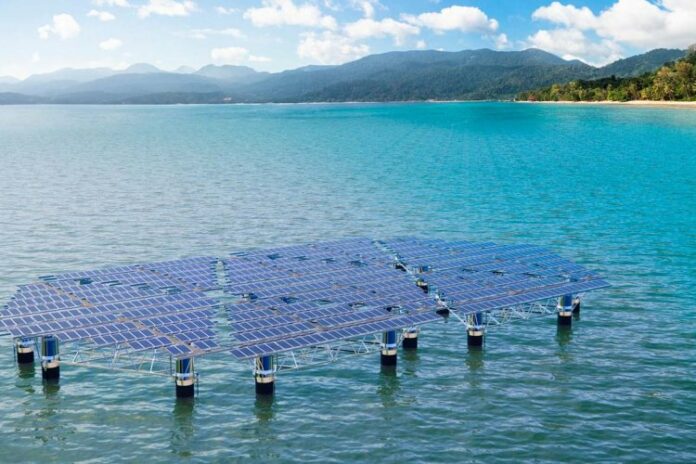
SolarDuck AS together with its project partners, TNB Renewables Sdn Bhd (TRe), TNB Research Sdn Bhd (TNBR), and Hydro Extrusion Norway AS have announced an exciting new project in Malaysia. 

“We are extremely pleased to start our work together with TRe, TNBR and Hydro. For SolarDuck this means that we are building a footprint in Malaysia, a country in a region with the world’s largest potential for OFS”, says Koen Burgers, CEO SolarDuck.

SolarDuck will install a 780kW offshore floating solar (OFS) plant off the coast of Tioman island in Malaysia, to assess technical and economic feasibility of OFS in Malaysia. The installation is targeted to be completed by 2025. The Tioman island project will accelerate technology development for stand-alone use in the tropical areas, and support to drive the cost competitiveness of OFS as the most affordable marine energy technology by 2030.

This collaboration represents a significant step towards a net zero future for Malaysia, as the country seeks to diversify its energy mix and create a renewable energy system.

“The main goal of TNB is to get to net zero while providing a reliable and cost competitive energy supply without jeopardizing the environment. Offshore floating solar provides an exciting opportunity for achieving this”, says Zarihi Hashim, Chief New Energy Officer, TNB.

Southeast Asia is wind scarce and therefore lacks opportunities for wind energy. Furthermore, large scale solar developments on land in Southeast Asia are increasingly hampered by land scarcity issues and increasing public resistance. Taking solar out to sea, allows for new and unprecedented opportunities for TNB, Malaysia and the region.

The focus on renewable energy and circularity is also shared by Hydro which will supply the aluminium profiles for the project. As aluminium is a highly circular material, recycling is at the core of this circularity approach, and Hydro actively participates in innovative projects and new industry initiatives. The project with TNB will include deliveries from Hydro plants in Lichtervelde, Belgium, and Magnor, Norway.

“Solar energy is an important part of the necessary shift to renewable energy, and aluminium profiles is the perfect fit for such installations being light-weight and requiring no maintenance for several decades”, says Bruno D’hondt, senior vice president in Hydro Extrusions.

Louis Dreyfus orders CTV against Siemens Gamesa charter

0

This new vessel will be built by Strategic Marine, a shipyard based in Singapore. 

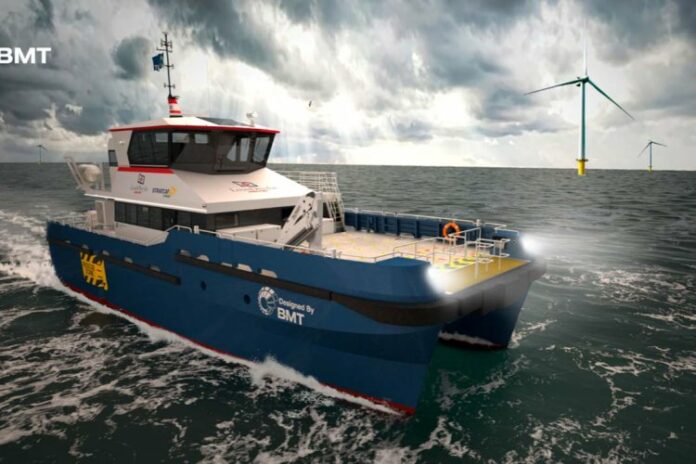
Following an international call for tenders, Siemens Gamesa selected LD Tide (a joint venture between LOUIS DREYFUS ARMATEURS and TIDAL TRANSIT) to provide a high-performance 24 passenger CTV (Crew Transfer Vessel). LD Tide will operate the CTV for the safe transfer of maintenance technicians on the Fécamp offshore wind farm. This contract is a new success for LOUIS DREYFUS ARMATEURS Group in the field of renewable energy, this last vessel being the fourth newbuilt CTV owned and operated by LD Tide.

The construction of this new unit has been entrusted to Strategic Marine, a shipyard based in Singapore, specialized in building vessels supporting the offshore wind industry. The yard has accumulated considerable experience in the design and construction of such vessels. They have delivered dozens of units over the last years, which are recognized for their performance and endurance. The StratCat27 CTV is a high-specification 24 pax vessel, benefiting from a well-known design, upgraded in 2022 to enhance the level of performance, safety and comfort on board.

The CTV will be manned with French crew.

With 71 7MW wind turbines, the Fécamp offshore wind farm will offer an installed capacity of 500 MW and will supply 60% of the electricity consumption of the Seine-Maritime department, in France. 

“We are very pleased to start our collaboration with Siemens Gamesa, a market leader in the renewable energy field.”, said Kamil Beffa, CEO, Louis Dreyfus Armateurs. “This long-term contract is part of our strategy to expand our Offshore Renewables business.  We continue to support the development of the French maritime industrial sector dedicated to offshore wind.”

Project Greensand receives official safety approval from DNV

0

On Wednesday, 8 March, HRH Crown Prince Frederik of Denmark officially opened the underground storage of CO2 in Denmark, following speeches by such figures as Lars Aagaard, Denmark’s Minister for Climate, Energy and Utilities, and Ursula von der Leyen, President of the European Commission. Later in the day, representatives from DNV, the independent energy expert and assurance provider, appeared onstage at the First Carbon Storage event in Esbjerg to present the Statement of Conformity to Project Greensand.

The presentation of this framed safety verification follows years of involvement by DNV of the entire value chain’s concept, design, components, underground sites and facilities. DNV has also analysed all safety aspects of Project Greensand’s pilot phase. 

Mick Cramer Jakobsen, Regional Head of Customer Relations for DNV and project director for the safety verification, reports:

“Our safety verification of Project Greensand’s entire pilot phase clearly shows that the project is fit for purpose, safe and compliant with all relevant Danish and international regulations and the highest standards. Naturally, it will be advantageous to have the safety verification already in place before the next phase of Project Greensand commences.” 

The safety verification covers everything from the fabrication by the individual subcontractors to the actual offshore installation. It was received with pride by the partners behind Project Greensand. 

With the safety of the pilot phase verified, Project Greensand is now able to continue working along the same lines to fulfil its ambition to store up to 1.5 million tonnes of CO2 per year in 2025/2026, and potentially up to 8 million tonnes of CO2 per year by 2030. Project Greensand complies with the Offshore Safety Directive, which sets the highest safety standards in connection with the storage of CO2 in the North Sea, just as it does with oil and gas activities. 

Mads Gade explains:

“Exceptionally strict requirements have been set for the safety procedures for operations in the North Sea – for instance, through the Offshore Safety Directive. The safety requirements for CO2 storage onshore are not quite so stringent, but despite the many safety procedures we see these strict requirements as a great asset. The Offshore Safety Directive and other complex laws and regulations mean that our work in the North Sea is protected by both belt and braces. Along with the safety verification from DNV, we have a solution that has already been tested and shown to be safe and effective, and we should continue this going forward when Denmark’s CCS market is to be scaled up further in the future.” 

DNV’s work in connection with Project Greensand has involved extensive analyses of plans, the suitability of the underground sites, and the practicability of the storage and designs, along with DNV’s physical presence during a stress test of the individual sub-elements and approval of the connection and installation of offshore systems throughout the value chain and across national borders. 

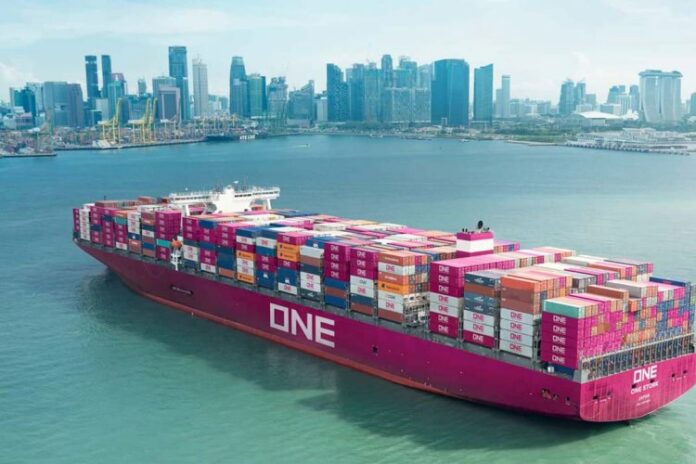
ONE to install telematic devices on its reefer box fleet

0

This new investment demonstrates ONE’s strong commitment to the containerized reefer trade.

Key benefits of installing telematic devices on ONE’s reefer box fleet include:
●    Enhanced visibility: Telematic devices will provide ONE with active monitoring data about temperature, humidity, and other conditions inside reefer containers. With this information, ONE can better track the cargo’s condition and identify any potential problems as soon as they arise.
●    Proactive decision-making: With active monitoring data, ONE will be able to make more proactive decisions about cargo handling. 
●    Improved customer service: ONE can provide its customers with more detailed information about the condition of their cargo. Using this information will help customers make better supply chain decisions.

Kenichi Michida, Senior Vice President, Strategic Yield Management, ONE, said:

“The installation of telematic devices on our reefer box fleet is a testament to our unwavering dedication to enhancing customer experience while driving digital transformation in the containerized reefer trade. We believe technology-enabled containers are the future of shipping, and we are excited to embark on this next step in our digital transformation journey using cutting-edge solutions to benefit our customers and industry.” 

Kongsberg to supply Penguin Shipyard with waterjets for two fast ferries

0

Each of the new 56-metre Ropax ferries will be equipped with four KONGSBERG Kamewa 71 S-4 waterjets and control systems.

Designed by Incat Crowther UK, the ferries will have a capacity of 250 passengers and 25 cars. The 71 S-4s are from the KONGSBERG Kamewa Steel series of waterjets, with a maximum power of 3600kW each.

The ferries were ordered by Abu Dhabi Ports Group and will replace two older ferries that connect the UAE mainland and Dalma Island, which is 42 kilometres offshore.

Jay Chia, Sales Director Waterjets, Asia Pacific, said:

“Penguin Shipyard is a very important customer for KONGSBERG, and this order gives us the opportunity to strengthen our new relationship. This order also shows our strength and capability in the fast ferry market, which is a key segment for KONGSBERG Kamewa Waterjets.”

Commenting on the collaboration, Penguin International Limited’s Managing Director James Tham said:

“KONGSBERG was our logical choice for this project. They supported us from the pre-tender stage all the way to contract award.”

This new contract follows directly from the first contract signed last year between Kongsberg Maritime and for the supply of a series of S56-3/CA Kamewa steel waterjets for two patrol boats for Nigeria Customs.

“Top-of-the-line propulsion is a key element in many of our Flex workboats, particularly crew transfer vessels for offshore windfarms,” said James Tham. “KONGSBERG is a reliable partner for best-in-class products and worldwide service support.”

Penguin International Limited is a Singapore-based designer, builder, and operator of aluminium high-speed craft. Since 1995, Penguin has delivered close to 200 aluminium workboats, patrol craft and ferries, as well as offshore crew transfer vessels for windfarms.

RWE to install recyclable rotor blades at Thor offshore wind farm to drive sustainability

0

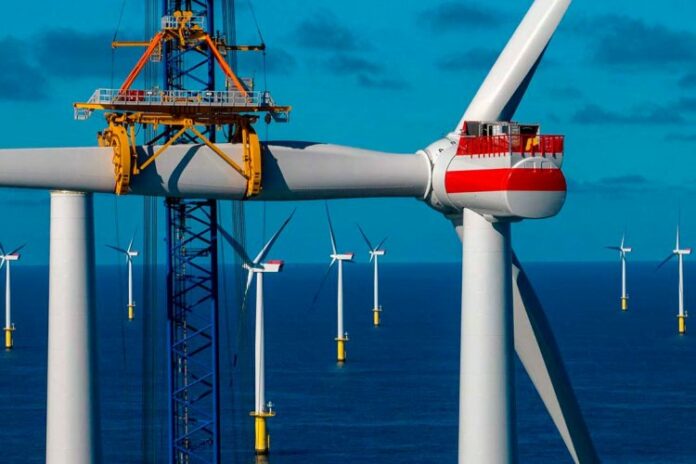
RWE is using the worldwide-first recyclable rotor blades at its Danish offshore wind farm Thor. 40 of the 72 (SG 14-236 DD) wind turbines will be equipped with recyclable rotor blades manufactured by Siemens Gamesa.

Installation at sea is expected in 2026. In addition, RWE is piloting CO2-reduced steel towers at half of the project’s turbines. The GreenerTower from Siemens Gamesa will ensure a CO2 reduction of at least 63 percent in the tower steel plates compared to conventional steel.

Sven Utermöhlen, CEO RWE Offshore Wind, said:

“At RWE we are fully committed to working towards circularity and net-zero emissions. We are already testing the world’s first recyclable wind turbine blades under real-life conditions at our German offshore wind farm Kaskasi and we have decided to install them at Sofia. By using these rotor blades at our Thor offshore wind farm, too, RWE continues lead the way towards a circular offshore sector. And we are doing even more. We are the first developer in the world to pilot Siemens Gamesa’s CO2-reduced steel towers, which significantly reduce the carbon footprint of wind turbines. This is the right direction for the future of our sector, which has sustainability at its core.”

Rotor blades can be recycled at the end of their life cycle

While many components of a wind turbine already have established recycling practices, recycling the composite materials used in wind turbine blades has been more challenging. Now, for the first time, thanks to a new type of resin with a special chemical structure the composite materials used in Siemens Gamesa’s recyclable blades can be separated again. This process ensures that the properties of the individual materials remain intact so that they can be reused in new casting applications, for example in the automotive industry or in consumer goods.

Maximilian Schnippering, Head of Sustainability at Siemens Gamesa, said:

“More than one million tons of blade material are expected to be installed globally every year. Our recyclable blades can avoid those materials ending their life in a landfill and give them a second use.”

Thor to supply green electricity to more than one million Danish households

RWE will build the Thor wind farm in the Danish North Sea, approximately 22 kilometres from Thorsminde on the west coast of Jutland. With a planned capacity of more than 1,000 MW, Thor is Denmark’s largest offshore wind farm to date. Once fully operational, which is planned no later than the end of 2027, the wind farm will be capable of producing enough green electricity to supply the equivalent of more than a million, or one in three Danish households. In 2010, RWE has already completed and now operates the Danish Rødsand 2 offshore wind farm, which is located south of the Danish island of Lolland.

RWO’s CS-MBR makes ferry debut with New Zealand’s KiwiRail Interisland service

0

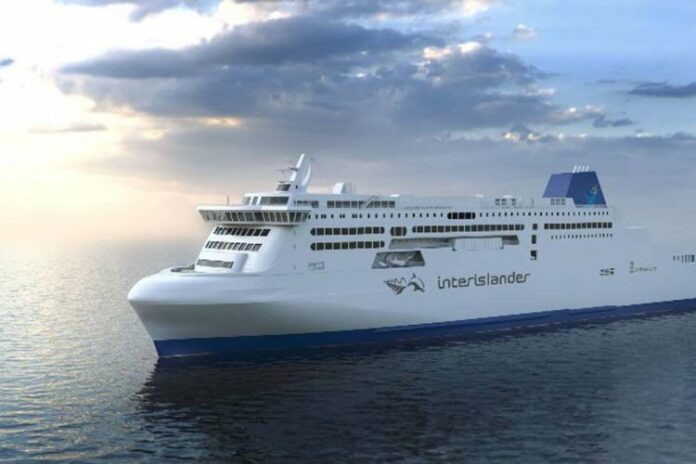
RWO has been selected by KiwiRail to supply its next-generation advanced water treatment system (AWTS) – the CleanSewage Membrane Reactor (CS-MBR) – to New Zealand’s Inter-Island Resilient Connection Project (iReX).

Two brand-new custom-built Interislander ROPAX ferries have been ordered to service the connection between Wellington and Picton. Environmental protection is a key priority for the project and both vessels, which are being built at Korean shipyard Hyundai Mipo Dockyard (HMD), will have RWO’s CS-MBR system installed.

RWO’s CS-MBR is a sustainable biological treatment technology that has been designed specifically to minimise a vessel’s impact on the environment, achieve the highest standards for effluent discharge and exceed regulatory requirements. The CS-MBR is also fully type approved in accordance with IMO MEPC.227(64) including section 4.2 which addresses nitrogen and phosphorus removal.

Massimo Soprano, Ships Programme Director, iReX, KiwiRail, said:

“The iReX project will transform the Interislander connection by upgrading the existing fleet to improve passenger experience and increase capacity and efficiency. The new ferries will be faster, safer and greener, in line with our aim to create a service that will last generations and contribute to New Zealand’s zero-carbon future.

“The sustainability credentials of RWO’s CS-MBR system will help ensure environmental impact is kept to a minimum, while the technology itself will provide a treatment system that goes beyond regulatory requirements and offers a range of operational benefits.”

Valentin Kirsch, Area Manager for CS-MBR at RWO, said:

“The CS-MBR offers a future proof solution for managing wastewater onboard, including nitrogen and phosphorus removal. Its unique two-tank design addresses the needs of each treatment process, while the system’s submerged ultrafiltration membranes in the final stage remove solids down to bacteria, virus and microplastic levels and guarantees compliance with the strictest requirements.

“This is a feature that is unique to the CS-MBR and contributes to its sustainability profile as not only does it ensure the highest effluent standards, but the treated water is clean enough to be re-used in technical water applications, i.e., serving the CS-MBR itself and making the system independent from any other technical water sources.”

The first ferry is due to be delivered in 2025, with the second to follow in 2026.