-2.4 C
New York
Home Blog Page 290

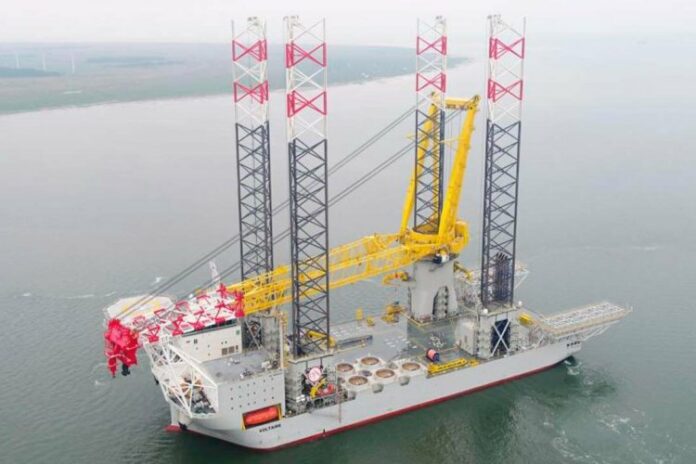
Jack-up vessel Voltaire arrives in the UK to build largest wind farm in the world

0

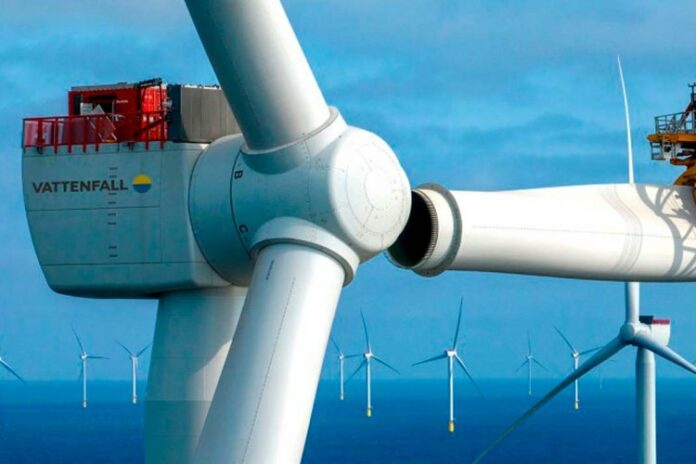
The largest offshore jack-up installation vessel ever built, Voltaire, has  arrived in the port of Able Seaton, UK. 

In total, the vessel will be responsible to install an impressive 277 units, making the combination of these three wind farm phases the largest offshore production facility in the world. Voltaire will sail out in early July to install the very first GE Haliade-X offshore wind turbine.

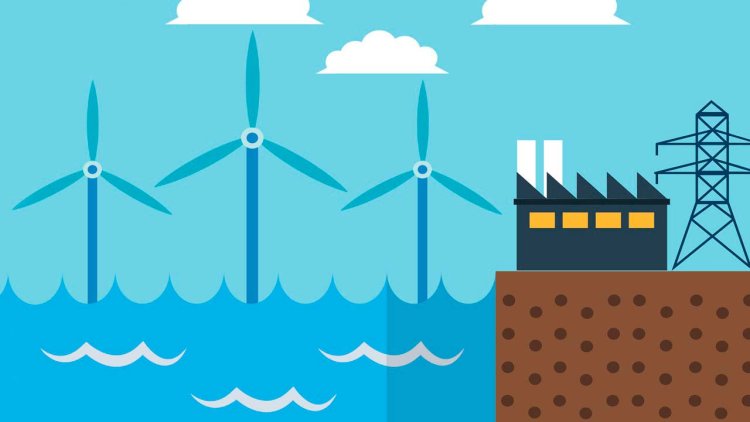
The 3.6 GW Dogger Bank Wind Farm is being built off the East Coast of England in three 1.2 GW phases: Dogger Bank A, B and C. It is a joint venture partnership between SSE Renewables (40%), Equinor (40%) and Vårgrønn (20%). SSE Renewables is leading on the development and construction of Dogger Bank Wind Farm, and Equinor will operate the wind farm on completion for its expected operational life of around 35 years. Once completed in 2026, it will be the world’s largest offshore wind farm.

Mid-2020, Dogger Bank Wind Farm and Jan De Nul Group announced the signing of the final contract for the transport and installation of the GE Haliade-X offshore wind turbines at Dogger Bank A and Dogger Bank B, 130 km off the Yorkshire coast. Mid-2021, the signing of the final contract for the transport and installation of 87 GE Haliade-X 14 MW offshore wind turbines for Dogger Bank C followed, 200 km off the Yorkshire coast.

Olly Cass, Dogger Bank Wind Farm Project Director:

“As offshore wind technology grows in scale and power, the industry needs stronger vessels that are capable of meeting these engineering challenges. With its lifting capacity of more than 3,000 tonnes and ultra-low emissions design, we can’t wait to see this next generation vessel take on the challenge of installing some of the world’s largest and most powerful turbines, as we head towards first power for Dogger Bank A this summer.”

Jan Van Impe, Manager Jan De Nul Offshore Renewables:

“Dogger Bank Wind Farm is exactly the type of project we had in mind when we took the decision to build our Voltaire. The scale and characteristics of the offshore Dogger Bank turbines offer the perfect challenge for this next generation state-of-the art jack-up installation vessel. We are excited to continue our contribution to the energy transition together with industry leaders SSE Renewables, Equinor and Vårgrønn by installing the offshore wind turbines at Dogger Bank A, B and C in the most efficient and clean manner possible.”

When complete, Dogger Bank will generate enough energy to power up to 6 million UK homes every year.
French container service adds Belfast to its Irish Sea schedule

0

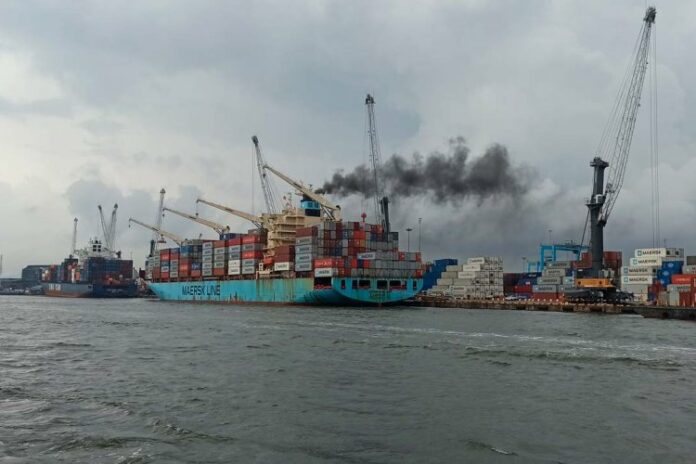
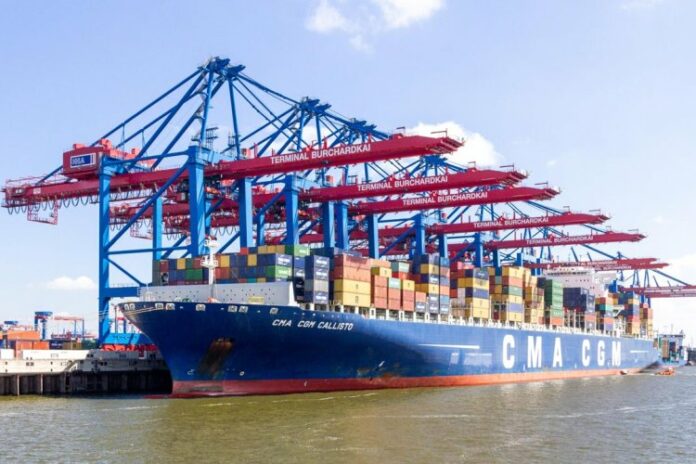
Belfast Harbour has announced that CMA-CGM is to add a new call in Belfast to its Irish Sea Express CS container feeder service, which will boost capacity and service options for both importers and exporters in Northern Ireland.

The service will run between Belfast Harbour’s Victoria Terminal 3 and a number of UK and European ports, including Dunkirk and Rotterdam.

Operating on a weekly rotation, the service will see vessels including the Mistral, Allegro and ELBTEAM calling at Belfast Harbour.

Since 2018, over £30m has been invested by Belfast Harbour in Victoria Terminal 3 (VT3), including the installation of fully electric ship-to-shore cranes in 2020, significantly improving safety, sustainability, efficiency and capacity, and making VT3 one of the most modern container terminals on the island of Ireland.

Following the recent investment, the terminal handled 126,000 container units in 2022 and a record 132,000 the previous year, which was the highest level of container traffic since 2008.

The CMA CGM Group is a global player in sea, land, air and logistics solutions, serving more than 420 ports around the world across 5 continents, with a fleet of around 600 vessels. The Group is present in 160 countries through its network of more than 400 offices and 750 warehouses.

Michael Robinson, Port Director at Belfast Harbour, said:

“This new service from CMA-CGM will provide increased frequency of container services calling at Belfast, offering benefits for both importers and exporters in Northern Ireland.”

Alan Horner, Managing Director of CMA-CGM, said:

“In line with CMA CGM group’s innovative approach to maritime development we are delighted to add Belfast to our global port coverage where we will leverage the synergies between our shipping services on the main intercontinental routes and our revamped intra-regional lines in the Irish Sea. The additional port call at Belfast gives our Northern Ireland clients direct access to our over 257 shipping routes and 420 ports of call worldwide.” 

Consortium awarded contract for first phase of Yangtze Canal project

0

The consortium and the Port of Rotterdam Authority signed the relevant contracts today. The work will involve constructing 500 metres of quay wall with space for 12 tugs to berth. The project is scheduled to be completed in spring 2025.

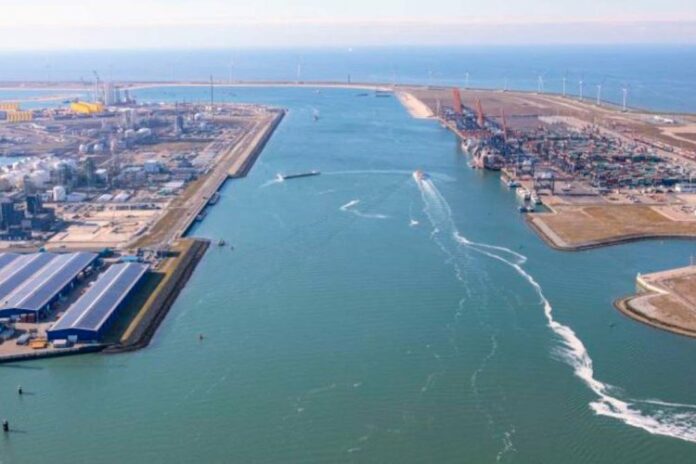
Van Oord, Hakkers and De Klerk will construct the new tug quay at the entrance to the canal on the south side, close to the largest container terminals.  In addition to the 500 metres of quay wall, which will take the form of a composite wall, the consortium is also responsible for removing the existing bed and bank protection, installing new bed protection and dredging approximately 800,000 square metres of sand and clay to widen the canal and clear space for the new quay.

The Yangtze Canal is the access channel to various Port of Rotterdam container terminals, including those in Prinses Amaliahaven, Prinses Arianehaven and Prinses Alexiahaven. The Yangtze Canal welcomes the largest container ships travelling to and from terminals in the Maasvlakte II section of the port. Construction of tug quay is part of a programme to widen the Yangtze Canal so that it can accommodate more traffic and the latest generation of container ships.

The decision to award the contract to this particular consortium is in line with the Port Authority’s commitment to sustainable port development. The Port Authority based its decision on both price and quality, also known as the Most Economically Advantageous Tender (MEAT). Working with MEAT principles helps to leverage the innovativeness and creativity of the market. The Van Oord – Hakkers – De Klerk consortium received very high marks for measures designed to prevent nuisance and damage. It will also make a substantial effort to improve sustainability on the construction site itself. This includes deploying a trailing suction hopper dredger equipped to operate on the more sustainable fuel LNG, and using equipment powered by electricity to reduce emissions significantly during construction.

Mark van der Hoeven, Area Manager at Van Oord:

‘Ever since Van Oord undertook land reclamation for the Maasvlakte 2 port expansion programme, it’s been involved in projects there on a continuous basis. For example, we’re currently also constructing quays in Amaliahaven. So we’re very much looking forward to working for the Port of Rotterdam Authority and in partnership with Hakkers and De Klerk on the Yangtze Canal, a familiar waterway for us. Not only do the three consortium partners complement one another in terms of disciplines, but we’re all equally passionate when it comes to sustainability.’ 

Hein van Laar, Hakkers, Chief Commercial Officer:

‘We’re proud to be participating in a project of this magnitude. The port of Rotterdam is like home to us and we are currently working at various locations across the port zone. It’s great that we can make a positive contribution to the Port Authority’s sustainability targets with our environmentally responsible construction methods. We’re looking forward to a successful partnership with our consortium partners Van Oord and De Klerk.’

Henry Schaap, Operational Director at De Klerk:

‘A great project that we as De Klerk are looking forward to, together with Van Oord and Hakkers, complementing each other from our areas of expertise. The Port of Rotterdam Authority is a client with whom we have had an enduring relationship for years and from that experience there is a lot of confidence for the realisation. Of course it is extra nice that the ambitions regarding sustainability of all parties involved are reflected within this project.’

The last turbine for Hollandse Kust Zuid has been installed

0

Almost two years after construction of Hollandse Kust Zuid began, the last turbine of the offshore wind farm has been installed. 

Project director Ian Bremner said:

“We are immensely proud of reaching this milestone. The installation of the last turbine is a key moment for the project. Not only for us, but also for our partners and all the suppliers and contractors who helped us get here. Hollandse Kust Zuid is the world’s first subsidy-free offshore wind farm and we look forward to delivering this project.”

David Molenaar, Siemens Gamesa’s Managing Director in the Netherlands, said:

“Today we are celebrating the final installation of our biggest ever offshore project. The nacelles were manufactured at our factory in Cuxhaven in Germany and the blades came from Aalborg, Denmark. This project once again underlines how the wind industry can offer Europe energy security through its own, clean and competitive sources,”. 

Siemens Gamesa was supported for the transport and installation of all 139 offshore wind turbines by Cadeler’s wind installation vessel Wind Osprey. The work required skilled engineers and good cooperation between the partners.

Kevin Metcalfe, package manager at Vattenfall and responsible for installing the turbines:

“The completion of the turbine installation is an important milestone for Hollandse Kust Zuid. During the 12 months of continuous installation, all teams involved worked closely together and maintained focus to achieve this milestone in a safe and efficient manner. Now that the installation is complete, the teams can start focusing on final commissioning and the operation of the wind farm.” 

This brings the total number of turbines to 139, one less than the 140 originally planned. Last year, one of the foundations was damaged after a collision with cargo ship Julietta D which lost power during a storm and drifted through the wind farm. The foundation was damaged so badly in the process that installing a full turbine at this location is not considered responsible. After consultation with partners, contractors and the authorities, it was decided not to replace the foundation and to remove it in 2024. As yet, there are no concrete plans for the space that is now vacant.

Ulstein lays keel for Acta Marine’s CSOV

0

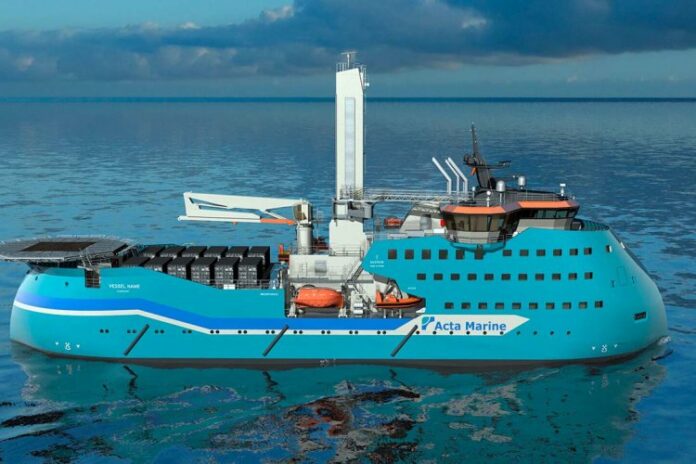
The keel laying ceremony for the Yno 1121, one of the Ulstein-designed Acta Marine TWIN X-STERN CSOVs at the Tersan Shipyard, was arranged on 1 June 2023.

Acta’s vessels were the first CSOVs to incorporate the TWIN X-STERN.

The offshore wind service vessel designs from Ulstein have been developed for effective support of the commissioning, operation and maintenance of offshore wind farms.

All four CSOV vessels are based on the ULSTEIN SX216 design. The SX216 vessel has a length of 89,9m, a beam of 19,2m and accommodates up to 135 POB. It has a walk-to-work (W2W) motion-compensated gangway for safe personnel transfer to the turbines, a 3D-motion-compensated crane for cargo transfer, and it can carry a daughter craft for in-farm transfers.

RES expands offshore wind development in two new markets

0

RES has commenced development activities in two new offshore wind markets: Norway and Australia. 

In Norway, RES and Zephyr AS have established a new consortium, SIRAVIND, to bid for one of the three areas in the Utsira Nord offshore wind tender process. 

The area under consideration will utilise floating wind technology and deliver approximately 500MW.  The tender was announced by The Ministry of Petroleum and Energy in March and bids are due to be submitted in September 2023.  The three areas at Utsira Nord have a total installed capacity of 1.5 GW and plan to be operational by 2030, supporting the Norwegian Government’s vision of 30GW of offshore by 2040.  

RES is exploring a number of areas along the Australian coast and in particular looking at sites off the southern coast of Victoria in the Gippsland area, where it can propose suitable projects that contribute to the state’s 20% offshore target whilst delivering inward economic investment in local supply chains and long-term careers in renewable energy. 

Rob Fradley, Offshore Commercial Director for RES, commented:

“To reach net-zero we need to maximise all forms of renewable energy.  We have been involved in offshore wind from the very beginning, and with that brings an ability for us to realise projects that contribute to decarbonisation and at the same time support economic growth.

“Our focus is on how we can help build the local industries in both Australia and Norway to capitalise on the growth in the offshore wind sector, by supporting local production/fabrication and employment opportunities as we know these are the elements that will foster success.” 

Scaled-up investments will unlock offshore renewables potential, IRENA says

0

Offshore renewables – such as offshore wind and ocean energy – have significant potential to accelerate the global energy transition and create new economic and social opportunities.

According to the latest data from the International Renewable Energy Agency (IRENA), the installed capacity of offshore wind grew 18-fold to over 55 gigawatt (GW) in 2022 and ocean energy had installed capacities of 0.535 GW in 2021. Offshore wind and ocean energy can reach 380 GW and 350 GW in 2030, respectively, if key barriers such as slow permitting protocols and increased investments are successfully addressed.

At the 6th meeting of IRENA Members’ Collaborative Framework on Offshore Renewables (CFOR), participants discussed IRENA’s latest brief, Scaling up investments in ocean energy technologies, in cooperation with Ocean Energy Europe (OEE). Representatives from 38 Member States, and 55 representatives from industry and other international organisations, who attended the meeting also discussed the ongoing preparation of the upcoming brief, Enabling Frameworks for Offshore Wind Scaleup: innovation in permitting, in cooperation with the Global Wind Energy Council (GWEC).

The upcoming IRENA-GWEC brief provides key recommendations addressing the main challenges arising from current permitting protocols for offshore wind, including but not limited to, the complexity of the administrative processes, and the need for centralised authorities to oversee this process.

In the same way that wind and solar energy were supported with public money to allow consumers to access markets, governments need to offer similar support to ocean energy. For that reason, the objective of the IRENA-OEE brief is to provide a concise guide to decision-makers on how different financial instruments can be leveraged to encourage investments in ocean energy technologies, both wave and tidal.

“Ocean energy technologies must be part of our sustainable energy future. While this technology continues to improve its competitiveness, it cannot rely solely on market actors to deploy projects. Private investors will not engage without market visibility and unclear targets by governments,” said Lotta Pirttimaa, Senior Policy Officer of OEE.

“Offshore renewables and ocean energy are a tangible solution to create a decarbonised, sustainable, and secure energy eco-system,” said Angela Sarmiento, Head of the Office of Regulatory and Business Affairs of the Ministry of Mines and Energy of Colombia, currently co-facilitator of (CFOR). “To reap the benefits from ocean energy, it is necessary that investments in this technology are scaled up.”

France to push shipping carbon tax at finance summit

0

French President Emmanuel Macron will push the issue at an international conference next week to discuss revamping the global development aid system where Brazilian leader Luiz Inacio Lula da Silva, Saudi Crown Prince Mohammed bin Salman as well as a host of African heads of state are expected.

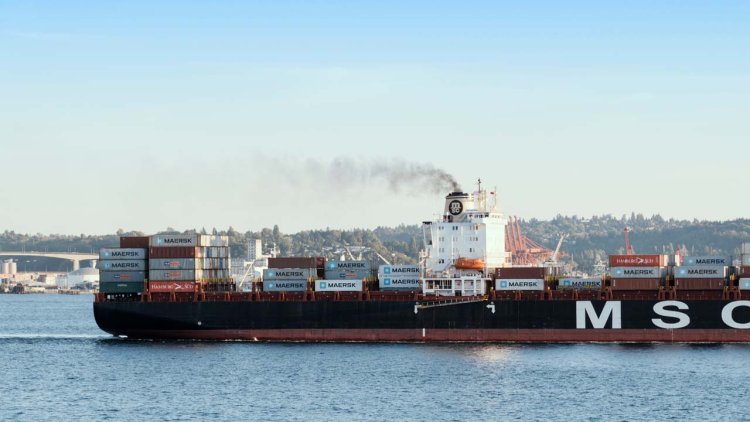
The shipping industry transports around 90 percent of traded goods worldwide and accounts for around three percent of global carbon emissions, which are currently unregulated.

Two Pacific nations exposed to the risk of rising sea levels, the Marshall and Solomon islands, have been pushing over the last decade for a $100-per-tonne tax on maritime industry emissions which would create incentives for operators to cut their pollution.

“We hope that we will give a real political boost” to the proposal at the summit, an aide to said on condition of anonymity on Friday.

Macron will host dozens of foreign leaders at the Summit for a New Global Financing Pact in Paris from June 22-23 and a pledge from participating countries such as China, Saudi Arabia or Brazil would represent a concrete achievement from the talks.

French officials believe it would add pressure on shipping groups and the International Maritime Organization (IMO), a United Nations agency, which is set to host a summit in two weeks’ time where the carbon tax is expected to be discussed.

The Marshall and Solomon Islands proposals would add tax of around $300-400 to the price of a tonne of heavy oil used by container ships, raising approximately $60-80 billion (55-73 billion euros) of tax receipts per year, according to the World Bank.

These funds could then be used by emerging countries to help finance their transition to a low-carbon economy and adapt to climate change.

The shipping industry, which operates across multiple jurisdictions and often in international waters, is “currently completely exempt from tax either on their sales or their emissions,” the French presidential aide said.

“We need new resources” to fight climate change and poverty as the “needs are so huge”, the official said.

The United Nations warned in November last year that carbon emissions from shipping were growing and it called on the vast industry to scrap old, polluting vessels and upgrade infrastructure to speed up its green transition.

While the world is becoming increasingly aware of the need to slash greenhouse gas emissions to avert catastrophic climate change, the global maritime fleet saw emissions rise by 4.7 percent between 2020 and 2021 alone, the UN’s trade and development agency UNCTAD.

It also raised concerns about the average age of ships sailing the seas, which currently stands at nearly 22 years, meaning they rely on older, more polluting engines.

The IMO has set a target for shipping to halve its annual emissions between 2008 and 2050, which is less ambitious than other industries targeting net-zero over the same period.

The European Commission says on its website that there has been “relatively slow progress in the IMO” to spur efficiency measures in the estimated 90,000 commercial vessels plying the world’s seas.

Some companies are investing in new technologies, however, including engines that can run on hydrogen or liquefied natural gas, or be powered by the age-old technology of sails.

The French push follows previous unsuccessful efforts by Britain to nudge the shipping industry into taking greater action. London urged the sector to adopt net-zero targets for 2050 at the time of the COP26 climate summit in 2021.

Source: AFP

Australian reefs a lifeboat for sharks and rays as global populations decline

0

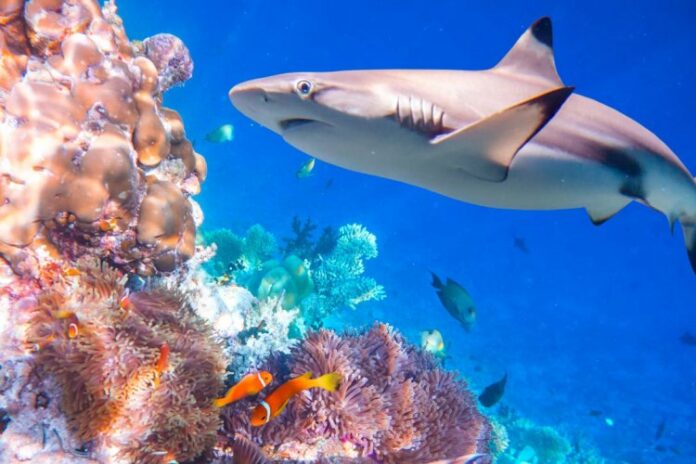
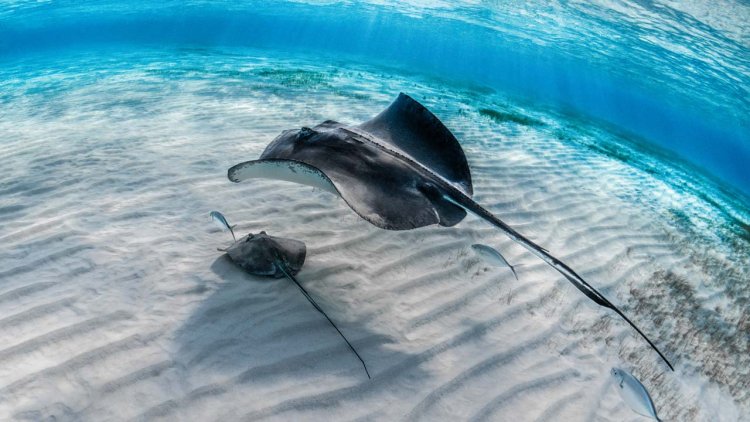
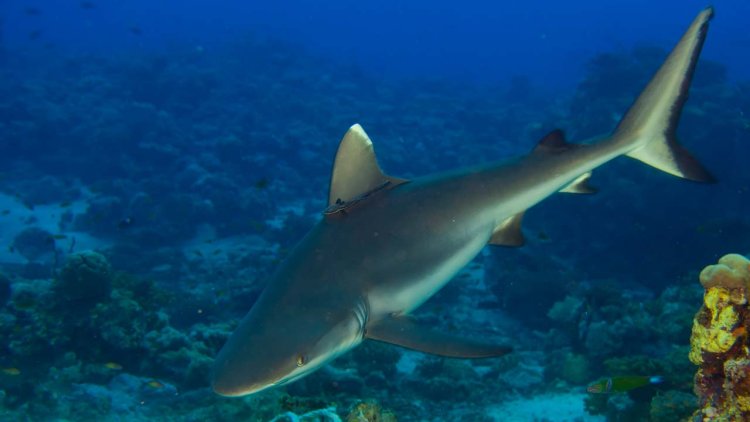
Sharks and rays found on Australian coral reefs are faring better than the same species in other countries, but populations are still being depleted where there is less protection from fishing, according to a new study co-authored by Australian Institute of Marine Science (AIMS) researchers.  

The results are part of Global FinPrint, a five-year international study published today in the journal Science, which has found that the five main shark species that live on coral reefs worldwide – grey reef, blacktip reef, whitetip reef, nurse and Caribbean reef sharks – have declined globally by an average of 63%. 

The main driver of the population declines was found to be widespread overfishing. 

In Western Australia, AIMS scientists found a ‘mixed bag’ of population results with some areas more depleted than others. Coral reefs with marine protected areas and fishing restrictions, a long way from human populations were found to have the healthiest shark and ray populations. 

Dr Conrad Speed, a Perth-based marine ecologist at AIMS, was a key investigator for Global FinPrint on shark populations in the Indian Ocean. 

“Compared to other regions around the world, the shark and ray populations in WA reefs are doing well,” he said. 

“In the isolated reefs of the Rowley Shoals, located 270 miles off Broome and in part covered by a Marine Protected Area which has been preventing fishing of any kind for three decades, we saw good populations of the reef sharks and rays as well as the big, transient species like tiger sharks. 

“However, the results were not as positive on Scott Reef – another isolated reef 200km north west of Broome. Here, the waters are open to fishing and accessible to fishers using traditional methods. We found fewer sharks here and have previously observed fewer large prey species. Other natural pressures that may impact reef shark communities include bleaching events and cyclones, although the extent of these combined pressures along with fishing is largely unknown. Fewer sharks on reefs may impact reef recovery times.” 

Dr Speed said there is some evidence to suggest that sharks assist coral reef recovery by controlling numbers of carnivorous species like snapper that in turn prey on herbivore species like parrotfishes. These parrotfishes are important because they are known to eat turfing algae that may inhibit young corals from settling- these young corals are an essential start to coral reef recovery processes after an impact like a cyclone or coral bleaching event. 

He added that sharks and rays have a number of other vital ecosystem roles in coral reefs. Scientists observed different species of both in abundance in healthy reefs. 

But in some of the degraded reefs Dr Speed studied elsewhere in the Indian Ocean, he was only seeing rays. 

“This is because there is limited fishing protection for a variety of social and economic reasons, meaning reef sharks have been overfished, resulting in only rays remaining. Some of these regions don’t have the resources to manage reefs and their shark populations effectively,” he said. 

AIMS scientists also led surveys in the Western Pacific, including the Great Barrier Reef for the study, and the northern section was found to be one of the few locations with very high diversity (27 species) including both sharks and rays. Most of the Great Barrier Reef was found to have shark populations in a relatively intact state, with low levels of depletion of all main resident reef shark species. 

The results of this research were collated from 22,000 hours of video footage from baited (underwater) cameras across 391 reefs in 67 nations and territories. The study was supported by the Paul G. Allen Family Foundation and led by Colin Simpfendorfer, Adjunct Professor of Marine and Aquaculture Science at James Cook University in Australia. 

More than 150 researchers from more than 120 institutions across the world contributed to the research.

EPS celebrates 100th LNG bunkering operation

0

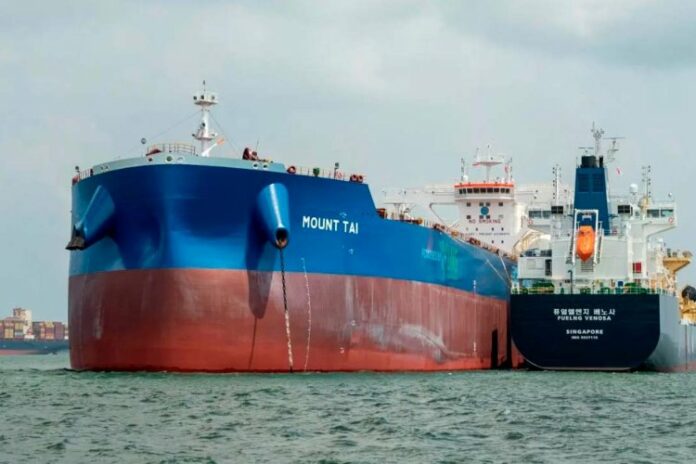
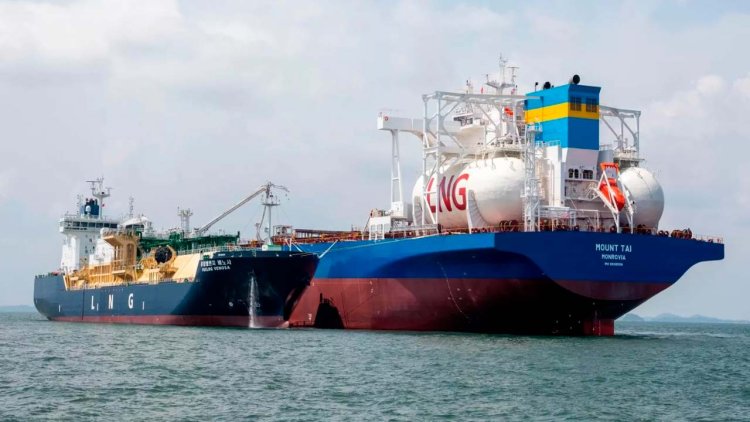
Eastern Pacific Shipping (EPS) has reached a new milestone for its dual-fuel fleet following the successful 100th LNG bunkering operation in Singapore for its managed 210,000 dwt Newcastlemax, M/V Mount Tai.

FueLNG, a joint venture between Seatrium Offshore & Marine and Shell Singapore, deployed its latest LNG bunker vessel, FueLNG Venosa, to provide M/V Mount Tai with 4,887 cubic metres of LNG.

“This is a historic event for EPS as it proves that the viability and infrastructure to carry out LNG bunkering already exists for those who are willing to take action today. Mount Tai will be our first Newcastlemax to operate in the spot market. With the volatility in LNG pricing, bunkering our managed spot vessels showcases our commitment towards the industry’s energy transition to lower emissions,” shared EPS CEO, Cyril Ducau.

This is the first bunkering operation for FueLNG Venosa, which was built in Hyundai Mipo Dockyard Co., Ltd. The state-of-the-art vessel has a total capacity of 18,000 cubic metres, bringing significant economies of scale with its ability to carry out simultaneous cargo handling and bunkering operations.

Saunak Rai, General Manager of FueLNG, said,

“We are delighted to celebrate the first successful LNG bunkering operations of FueLNG Venosa with Mount Tai, alongside the remarkable achievement of our valued customer EPS on completing their 100th LNG bunkering operation. This milestone signifies our collective dedication to advancing sustainable shipping. Congratulations to both the crew and officers of FueLNG Venosa and Mount Tai on these accomplishments!”

Tahir Faruqui, head of Shell DownstreamLNG said:

“Working with like-minded customers like EPS is crucial in accelerating the energy transition. Shipping companies can meet decarbonisation targets until around 2030 to 2035, just by switching to fossil LNG[2]. Their progress toward net zero will be further improved when bio-LNG and ultimately renewable synthetic LNG are available for blending. It is great to see EPS investing in new vessels with close-to-zero methane slip[3], showing that options are available today for those who are serious about avoiding methane emissions.”

Like all EPS managed LNG dual fuel vessels, M/V Mount Tai, which is chartered on consecutive voyages with BHP, is equipped with ME-GI (M-type, Electronically Controlled Gas Injection) two-stroke engines that have negligible levels of methane slip. M/V Mount Tai will be a part of EPS’ low carbon emission fleet, transporting iron ore along the green corridor from West Australia to Northeast Asia.