0.2 C
New York
Home Blog Page 29

Ukrainian naval drones attack oil export infrastructure in Russia’s Tuapse

0

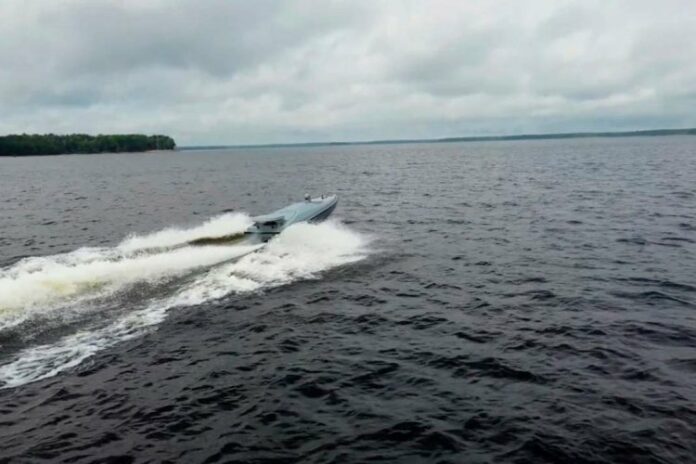
Ukrainian naval drones attacked Russian oil export infrastructure in the Black Sea port of Tuapse for the first time.

According to the Bloomberg, Russian ports suspended oil shipments after receiving a warning about a drone attack.

CyberBoroshno’s OSINT analysts reviewed video footage of the strike on Tuapse.

They concluded that one of the oil-loading piers in the port was hit. The video shows the moment of impact as the drone exploded on contact with the structure.

Earlier today, strike drones also targeted an oil refinery in the city of Salavat, about 1,400 kilometers from the Ukrainian border.

The refinery, part of Gazprom, is the largest oil-processing plant in southern Bashkortostan.

Sources: militarnyi

US Coast Guard awards contract to build 66 new cutter boats

0

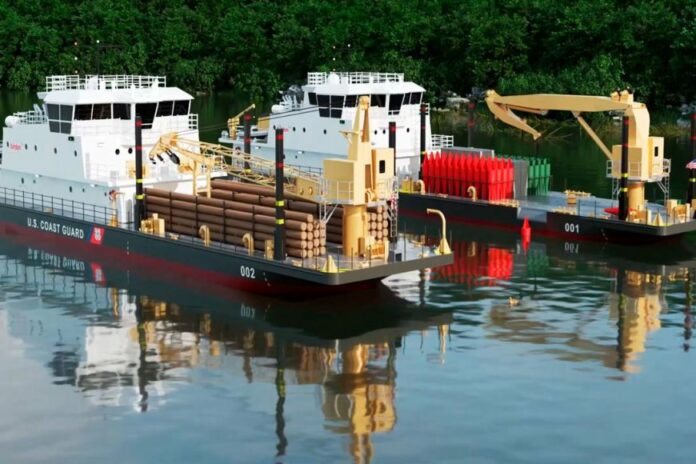
The Coast Guard on Aug. 29 awarded a fixed price, indefinite-delivery, indefinite-quantity contract to North River Boats of Roseburg, Oregon to procure up to 66 cutter boats to support critical aids to navigation (ATON) and other missions that maintain the safety and security of America’s waterways. 

The total potential value of the contract, which was awarded as a total small business set aside, is approximately $11.8 million.  

The boats, designated as cutter boat – aids to navigation – small or CB-ATON-S, will be deployed with the Coast Guard’s future waterways commerce cutters (WCCs). They will also be used by the Service’s shore-based aids to navigation teams (ANTs) to access buoys, lighthouses, maritime navigational aids and smaller waterways and shorelines out of reach for larger vessels. The capability provided by these boats will allow the Coast Guard to facilitate commerce vital to the economic security and strategic mobility of the nation’s Marine Transportation System, which supports more than $5.4 trillion in economic activity every year. 

The aluminum monohull boats will be 21 feet in length with two outboard engines that can deliver speeds up to 25 knots. Designed specifically for ATON work, the boats will be able to hoist up to 3,000 pounds and feature 50 square feet of open deck space.  

The CB-ATON-S will be the standard cutter boat used across all three WCC variants: river buoy tenders (WLRs), inland construction tenders (WLICs) and inland buoy tenders (WLIs).  

Germany presents drone-torpedo project for submarines

0

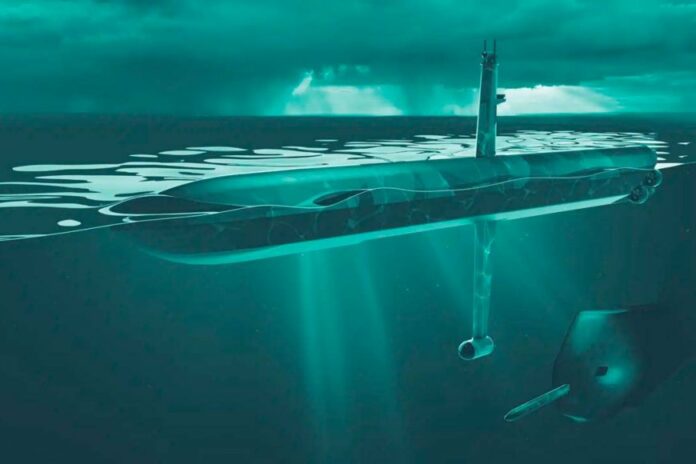
The developers shared the project’s details on their social media channels. The Ranger reconnaissance drone and Raider attack drone have 4.5-meter-long hulls and are fully compatible with standard submarine torpedo tubes, including 533-mm launchers used by NATO countries.

The underwater-launched drones use electric propulsion, allowing them to operate with low acoustic visibility.

Ranger is a reusable reconnaissance drone equipped with real-time surveillance systems. Its design allows submarines to deploy and rotate the drone without detection.

In the illustration, the deployed reconnaissance drone has an extended keel with sensors and a mast with an optical module for semi-submerged observation.

Raider, by contrast, is intended for strike missions at significant distances from the submarine, keeping the launch platform beyond the reach of enemy detection or counterattack.

Specific performance details for the drones were not disclosed, likely due to the early stage of development. Their general capabilities can be compared to those of electric torpedoes of similar size, such as Leonardo’s Black Shark or the German DM2A4.

With an additional 2 meters in length, these torpedoes can cover roughly 50 kilometers and reach maximum speeds of up to 50 knots (93 km/h), with warheads weighing between 200 and 350 kilograms.

These torpedoes can be guided from the submarine after launch via a fiber-optic cable, with the option to switch to autonomous navigation using sonar and other active or passive sensors.

The primary advantage of the new unmanned platforms is expected to be extended operational range, achieved through coordination between the strike drone and an autonomous reconnaissance drone that provides target detection and designation

Sources: militarnyi

Third Incat Crowther-designed dual-fuel fast Ro-Pax ferry launched

0

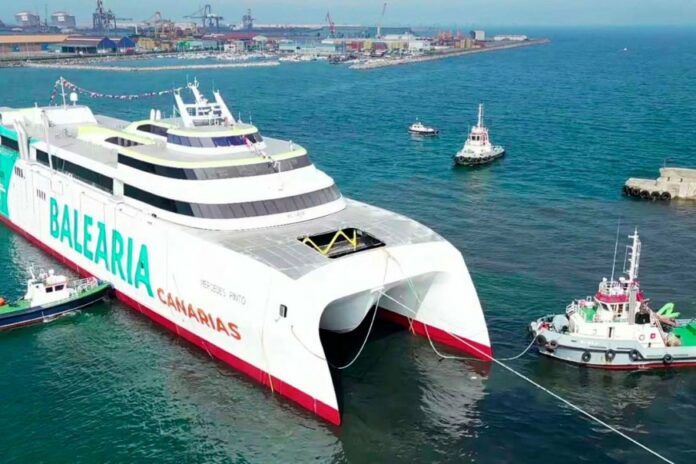
Mercedes Pinto, the third new 123-metre dual-fuel Ro-Pax fast ferry Incat Crowther has designed for Spanish operator Baleària, has been successfully launched by shipbuilder Astilleros Armon Gijon S.A in  Spain. Work on the vessel’s internal fit-out will now continue before sea trials in early 2026.

The new vessel comes after the success of its twin vessels Eleanor Roosevelt and Margarita Salas, also built by Astilleros Armon Gijon S.A. Margarita Salas has been in operation since 2024, successfully servicing Baleària’s busy route between Barcelona and the Balearic Islands of Mallorca and Menorca, while Eleanor Roosevelt has been in service since 2021, operating between Denia on the Spanish mainland and the islands of Ibiza and Mallorca.

Capable of transporting 1,200 passengers and 425 vehicles, Mercedes Pinto features an iterative design based on the successful, proven and customised platforms of Eleanor Roosevelt and Margarita Salas. Like Margarita Salas, the second vessel in the fleet, Mercedes Pintofeatures a range of design improvements on the original platform, including an additional passenger deck with a spacious lounge area in the bow and an expanded aft terrace with an outdoor bar service.

In addition, Mercedes Pinto features several design customisations to enhance the customer experience, including a redesigned atrium between the main and upper passenger decks, a larger aft terrace, improved seating in the VIP lounge and an elongated crew area behind the vessel’s wheelhouse. The vessel also features two decks of lounge seating, various cafeterias both inside and on the terrace, an exclusive children’s area, and digital enhancements including free internet services, an onboard digital entertainment platform and a pet surveillance system.

Like other vessels in the Ro-Pax ferry fleet, Mercedes Pinto has been designed with operational sustainability and efficiency in mind and is powered by dual-fuel natural gas engines. Mercedes Pinto is future-proofed for a low and zero-emissions future with the capability to operate on 100% biomethane or green hydrogen blends of up to 25%. The vessel also features energy efficiency systems, smart sensors and integrated emissions monitoring equipment, and enhanced real-time navigation systems, reinforcing Baleària’s commitment to sustainability and fleet digitalisation.

The new vessel is named after Spanish writer, journalist, and human rights activist Mercedes Pinto, and is expected to join its twin vessels, in service in 2026.

Baleària President Adolfo Utor said: “The addition of Mercedes Pinto to our fleet of state-of-the-art Ro-Pax fast ferries highlights Baleària’s commitment to pioneering innovation, advancing sustainability and setting new standards in customer experience. The successful launch of Mercedes Pinto is a major milestone for Baleària, and we’re proud to welcome yet another Spanish-built Ro-Pax fast ferry to our fleet .”

Incat Crowther’s Technical Manager Dan Mace said: “Mercedes Pinto is the fifth large Ro-Pax fast ferry Incat Crowther has designed for Baleària in the last six years and represents a continuation of our team’s strong commitment to support Baleària and Astilleros Armon. With Eleanor Roosevelt and Margarita Salas already in operation, and two new 87-metre 100% electric, zero-emission Ro-Pax fast ferries also set to be built in Spain, the launch of Mercedes Pinto demonstrates our ability to deliver at scale. Working with Armon, we are providing the capability to design and construct multiple large fast ferries simultaneously in Europe. We’re now looking forward to seeing Mercedes Pintoperform during sea trials and begin operation.”


Van Oord and Ecowende kick off with nature-enhancing scour protection

0

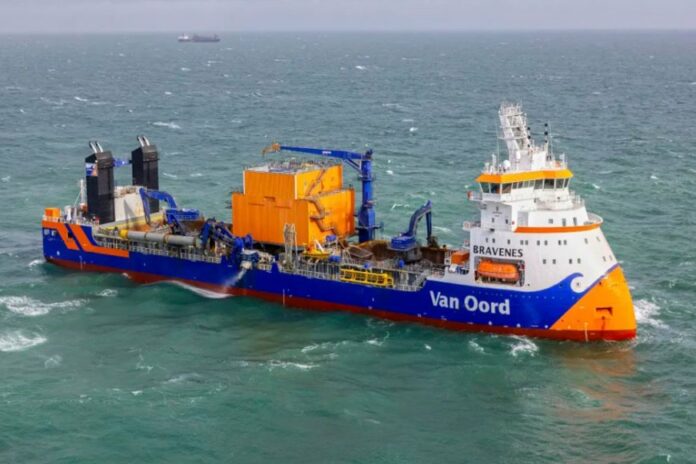
Offshore operations at Ecowende’s Hollandse Kust West wind farm have officially commenced with the start of eco-friendly scour protection works. This marks a significant milestone for the wind farm, which is set to be the most ecological of its kind. 

Scour protection is generally installed around the base of a monopile to prevent erosion caused by strong currents and waves. Stabilising the seabed in this way ensures the structural integrity of the turbine’s foundation. In the Hollandse Kust West project, scour protection is being taken to a new, nature-inclusive level of design. 

In close collaboration with Ecowende, Van Oord has developed four innovative scour protection designs, each progressively more complex. These designs use stones of varying sizes, including a grading of 60–300 kg and with some stones up to 450 kg, to create larger openings and crevices between the rocks. These gaps provide shelter for fish and other marine species, while specially designed bays along the scour protection extend the length of habitat available. The combination of variations in stone size and crevices, together with bay structures, enhances lee zones and creates more variety in open spaces; the rock–sand interface stimulates a richer and more diverse marine ecosystem, supporting species such as the threatened Atlantic cod.

Van Oord’s and Ecowende’s approach transforms scour protection from a protective measure into an active contributor to marine biodiversity. Once installed, the different designs will be carefully monitored to evaluate their ecological performance and long-term impact.

A milestone for Van Oord is the installation of the 60–300 kg grading, including rocks weighing up to 450 kg, with the Bravenes. This sets a new benchmark for large-scale, biodiversity-focused scour protection works in offshore wind. 

Successful ship-to-ship transfer of 23,000 tons of liquefied ammonia achieved

0

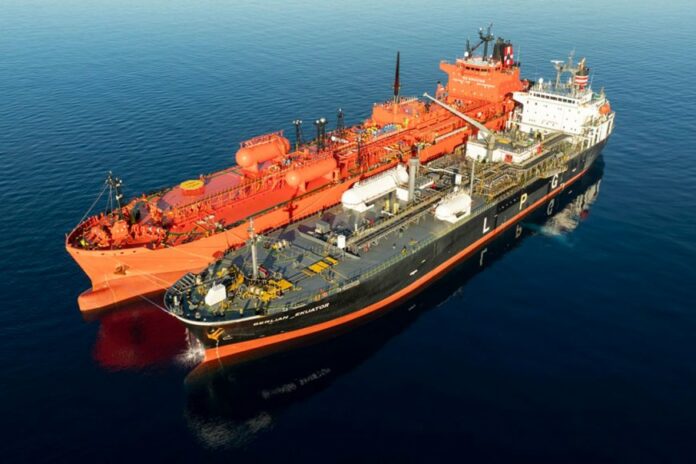
On September 2, a ship-to-ship (STS) ammonia transfer was executed from the ammonia carrier Berlian Ekuator — owned by NYK and time-chartered by Mitsui & Co., Ltd. — to the ammonia carrier Eco Enchanted, operated by Trammo, Inc., a leading ammonia trader. 

The transfer was conducted in accordance with stringent safety protocols on the high seas off the coast of Ceuta, Spain.

While NYK has experience with STS transfers involving crude oil, liquefied natural gas (LNG), and liquefied petroleum gas (LPG), this marks the first operation involving liquefied ammonia.

Beyond its existing applications in fertilizers and chemicals, ammonia is emerging as a next-generation clean energy source, especially valued for its carbon-free combustion. It is expected to be used in various applications, including marine fuel. With demand expected to increase, the STS method, which is not constrained by port size or onshore equipment, is attracting attention as a flexible supply method compared to conventional land-based cargo handling methods. The success of this operation marks a significant milestone in developing an international supply network for ammonia.

NYK will build on the insights and experience gained from this successful transfer to further advance next-generation fuels and strengthen safe maritime transportation systems, thereby contributing to the broader goal of achieving a decarbonized society.

Sallaum Lines celebrates launch of LNG dual-fuel flagship Ocean Breeze in Antwerp

0

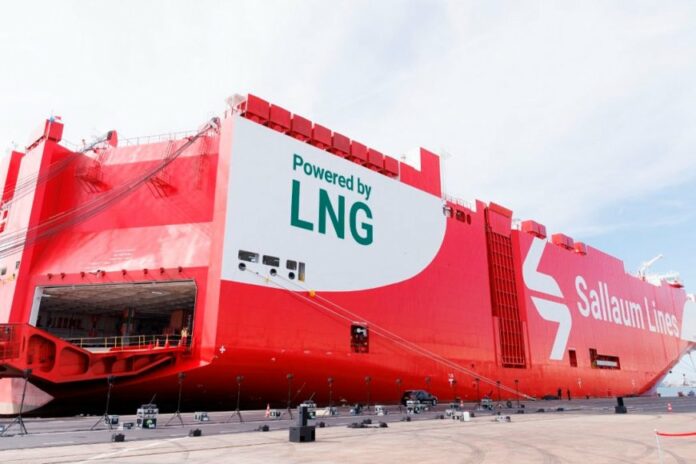
Sallaum Lines has celebrated the European debut of its first LNG dual-fuel newbuilding, the Ocean Breeze, with a landmark ceremony in the port of Antwerp. 

The milestone was marked on 19 September with a celebration at Sallaum Terminal, attended by international guests including government officials, OEM representatives, port executives, and industry partners. Guests toured the Ocean Breeze and the upgraded terminal facilities before joining a ceremony that featured keynote speeches by Ms. Natalie Sallaum and Mr. Johan Klaps, Deputy Mayor for Port and Economy, City of Antwerp. A panel discussion on the future of automotive logistics and an official ribbon-cutting underlined the significance of the occasion for both Sallaum Lines and the wider industry.

The Ocean Breeze has capacity for 7,500 CEU and is powered by dual-fuel LNG engines. The vessel delivers substantial reductions in CO₂, NOₓ, and particulate emissions compared to conventional tonnage. An optimized hull design and energy-saving devices further increase efficiency.

“The Ocean Breeze is not just about capacity, but about shaping a cleaner, more resilient supply chain for the decades ahead,” said Chief Relationship Officer Natalie Sallaum of Sallaum Lines. “Our customers demand scale, sustainability, and reliability: the Ocean Breeze proves we can deliver all three. More than a vessel, it represents a new chapter in automotive logistics, preparing us for the next wave of vehicle flows between Asia, Europe, and beyond.”

To accommodate its growing fleet, Sallaum Terminal Antwerp recently completed a €20 million expansion. Capacity has been increased from 10,000 to 17,000 CEU with a new multi-level Parkhouse and upgraded berth infrastructure, enabling four RoRo vessels to be handled simultaneously. Additional facilities for pre-delivery inspection, breakbulk handling, warehousing, and intermodal connections ensure faster and more reliable services for OEMs.

“The expansion turns Antwerp into the backbone of Sallaum’s European network,” said David Van Ballaert, Managing Director of Sallaum Terminal. “With greater capacity and faster processing, we are giving our partners unmatched efficiency at a time when the automotive supply chain is rapidly evolving.”

The Ocean Breeze is the first of six LNG dual-fuel PCTCs to join the Sallaum Lines fleet by 2027, adding over 45,000 CEU in capacity and strengthening Sallaum Lines’ position among the top global RoRo carriers. Supported by the expanded Antwerp hub, these vessels are part of Sallaum’s global green logistics network. The company is also preparing to implement shore power connections and solar energy systems at its terminal, reinforcing its 2030 net-zero ambition.

Romania plans to introduce new rules for vessels passing through the Sulina Canal

0

This was told to USM by one of the market participants.

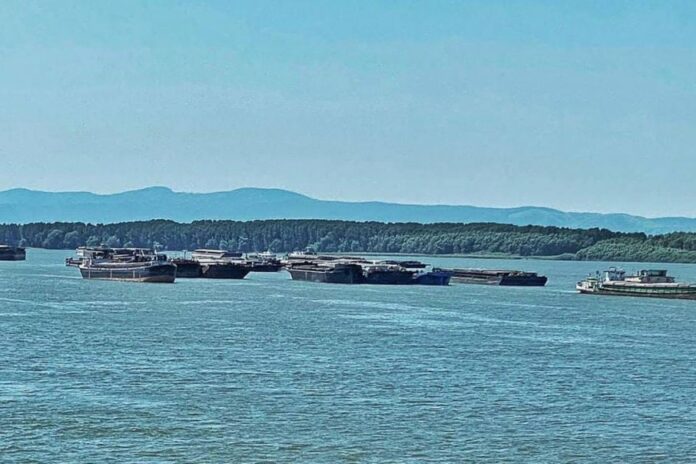
From November, only one tanker per day is proposed to be allowed to pass through the Sulina Canal. At the same time, such a decision by the Romanian government may significantly reduce the throughput capacity of the mouth, and accordingly, the impact on logistics will be felt.

At present, the reasons for such a proposal remain undisclosed.

It is also worth mentioning that the supply of petroleum products from the Romanian port of Constanta to Ukraine is currently under threat. That is why market participants emphasize that possible sanctions and a change in logistics will lead to ship downtime and additional costs, which will also be one of the reasons why fuel will become more expensive.

“Given that the Bystre mouth will not be able to provide 7 meters of draft, queues of ships, as well as downtime and an increase in fuel prices are inevitable,” the expert noted.

As a reminder, in September this year, a working meeting of USPA representatives with the European Commission’s delegation on Mobility and Transport (MOVE) and the Danube Commission took place. The parties discussed the operation of the Ukrainian Bystre estuary and the Romanian Sulina Canal, as well as the mechanisms that will be included in the Rapid Response Plan for unforeseen situations, which is currently being developed jointly with the European Commission.

Source: USM

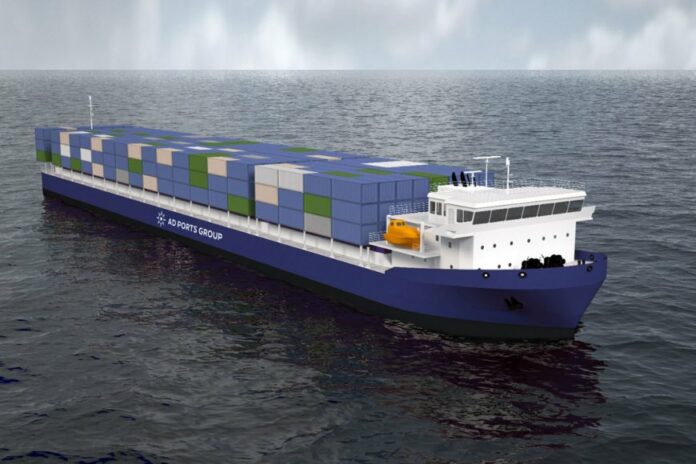
AD Ports Group awards contract for two shallow-draft container vessels

0

The contract was signed with the public legal entity “Azerbaijan Transport and Communication Holding” (AZCON), acting on behalf of “Baku Shipyard”.

These shallow-draft vessels specifically designed for use within the Caspian Sea, will play a pivotal role in enhancing maritime connectivity, boosting trade volumes, and strengthening the trans-Caspian logistics corridor. The newbuilds have been designed to support the growing demand for containerised cargo capacity in the region and to ensure more efficient, reliable, and sustainable transport solutions.

Captain Mohamed Juma Al Shamisi, Managing Director and Group CEO, AD Ports Group, said: “This step aligns with the vision and directives of our wise leadership in the United Arab Emirates, and reaffirms AD Ports Group’s commitment to supporting the growing trade needs of the Caspian region. Partnering with Baku Shipyard ensures that these new vessels will meet the highest international standards of quality and efficiency, enabling us to deliver greater capacity, improved service reliability, and contribute to the long-term growth of supply chains.”

The vessels, expected to be delivered in Q4 2027, will be deployed on key routes to optimise connectivity between key trading hubs within the Caspian Sea.

This step follows AD Ports Group and its subsidiaries’ recent ventures in the Central Asian region, driven by their strategic priority to increase the efficient transportation of energy resources to global markets, while connecting diverse regions and stimulating economic growth.

In June 2025, the Group announced the inauguration of the first phase of Tbilisi Intermodal Hub, Georgia’s first modern, bonded container and intermodal terminal, and a key logistics link in the Group’s emerging Central Asian transport strategy. The state-of-the-art, rail-linked logistics centre connects the Caspian and Black seas through Georgia, forming a vital part of the Middle Corridor, the shortest trade route between Asia and Europe.

In July 2025, a Comprehensive Economic Partnership Agreement (CEPA) was signed between the United Arab Emirates and the Republic of Azerbaijan, marking a significant new step toward strengthening the UAE’s economic, trade, and investment presence in the Caucasus region, and deepening engagement and partnership with the southern Caspian countries, in line with the UAE’s vision to enhance strategic partnerships with high-potential markets.

NYK, MTI, and Grid develop and launch AI-based Car Carrier allocation System

0

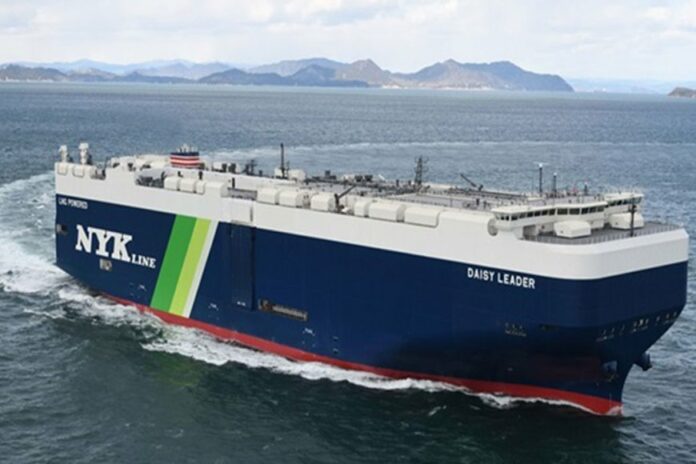
Nippon Yusen Kabushiki Kaisha, MTI, and Grid have jointly developed an AI-based system that automates and optimizes the allocation plan of car carriers. Full-scale operations of the system were launched at NYK in July.

NYK operates more than 100 car carriers, the largest fleet in the world. Historically, ship allocation planning has been an extremely complex and labor-intensive process, requiring the comprehensive evaluation of numerous conditions for hundreds of voyages several months in advance.

To overcome these issues, NYK sought to develop a system designed to enhance planning accuracy and efficiency by organizing and structuring the data and decision-making factors involved in shipping and scheduling.

This system uses AI to generate an optimal plan within approximately 10 minutes after evaluating millions of potential shipping schedules for several months ahead. The system analyzes numerous factors — including customer requirements, fleet operating status and repair schedules, and port congestion risks — to optimize KPIs such as vessel utilization, transport efficiency, and transport costs.

Additionally, by integrating considerations for the effective use of next-generation fuel ships and carbon pricing, the system is expected to reduce greenhouse gas (GHG) emissions, thereby contributing to both economic efficiency and environmental sustainability.