0.2 C
New York
Home Blog Page 30

Sperry Marine to deliver Integrated Bridge Systems for Samskip ships

0

Sperry Marine has been selected to supply the complete Integrated Bridge Systems for two highly innovative container vessels under construction for Samskip.

Built by Cochin Shipyard Limited, the groundbreaking vessels will be delivered achieving zero-emission propulsion and ready for future autonomous navigation.

The 135-meter length vessels are scheduled for delivery in 2027 to operate between Oslo Fjord and Samskip’s home port of Rotterdam, as part of a pioneering green corridor initiative. The two ships combined are expected to reduce CO₂ emissions by approximately 25,000 tons annually when operating in zero-emission mode using green hydrogen.

At owner’s request, each IBS will feature open architecture that makes it possible to integrate emerging autonomous navigation solutions. Today, no industry-wide standards exist covering autonomous ship navigation. However, Sperry Marine’s modular design and open interfaces will allow shipowners to innovate at their own pace. The IBS package on board will include Sperry Marine’s new ‘self-adaptive’ NAVIPILOT 4500N autopilot, which dynamically adjusts to vessel characteristics and changing conditions, resulting in measurable fuel savings and reduced bridge workload.

“Samskip’s level of ambition on emissions requires partners like Sperry Marine, with similar objectives for innovation and the willingness to invest in the future,” said Jeroen Hollebrands, Head of Newbuilding and Projects, Samskip Group. “These ships are a milestone for the maritime industry, delivering hydrogen fuel cells and autonomous-ready navigation as a clean and renewable technology.”

“What sets this IBS apart is its open and flexible architecture, combined with Sperry Marine’s resilient sensor technology and robust cyber protection. This creates a secure and future-proof navigation platform, ready for today’s hydrogen powered operation and tomorrow’s autonomous services,” said Pascal Göllnitz, Sperry Marine’s Product Line Manager for Integrated Bridge Systems.

Also on board will be Sperry Marine’s Advanced ARPA tracking, whose streams operate separately from radar video, meaning performance is unaffected by anti-clutter settings. As well as consistently reliable target tracking, even in difficult conditions, the system provides tracking ranges of 40NM to ensure early awareness among bridge teams. The full scope of supply includes Sperry Marine’s Secure Maritime Gateway cyber threat protection, and remote diagnostics and support.

“Sperry Marine is proud to collaborate with Samskip and Cochin Shipyard Limited on this transformative project,” said Guy Millard, Managing Director Sperry Marine. “This contract demonstrates how our navigation technologies are sought out by the maritime industry’s true innovators in ship safety, efficiency, and sustainability.”
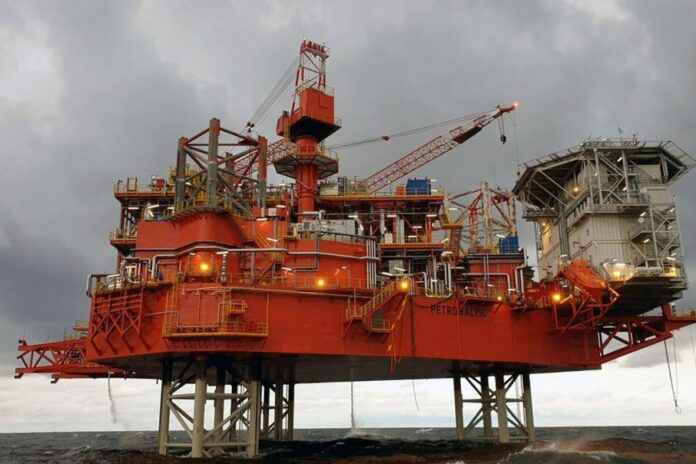
Two Russian fighter jets fly at low altitude over Polish oil platform in the Baltic Sea

0

Two Russian fighter jets flew at low altitude over the Petrobaltik oil platform in the Baltic Sea, violating its security zone.

This was reported by the maritime unit of the Polish Border Guard.

The Border Guard Service reported that the platform’s security had informed them of the incident, while stating that the planes had not violated the Polish state border.

“Polish airspace was not violated, and a military response was unnecessary,” Lieutenant Colonel Jacek Goryszewski of the Polish Armed Forces Operational Command confirmed to Interia.

Goryshevsky also said that the Russian planes had crossed the no-fly zone, which was defined at a distance of 500 meters from the mining platform. The platform is located 70 kilometers north of Yastarnia.

Karolina Gałecka, a spokeswoman for the Ministry of Interior and Administration, stated on X that the fighter jets had been flying at an altitude of approximately 150 meters.

This was the second Russian provocation on September 19th, after three Russian MiG-31 interceptors entered Estonian airspace without permission in the morning near Vaindloo Island and remained there for almost 12 minutes.

The planes had no flight plans and their transponders were turned off. At the time of the violation, they also did not maintain two-way radio communication with Estonian air traffic control.

The Ministry of Foreign Affairs summoned the Russian Charge d’Affaires in Estonia to protest and deliver a note regarding the airspace violation.

In addition, the Estonian government has decided to initiate consultations with its allies in accordance with Article 4 of the NATO agreement over this violation of Estonian airspace by Russian fighter jets.

Article 4 stipulates that “the parties shall consult each other whenever, in the opinion of any of them, there is a threat to the territorial integrity, political independence or security of any of the parties.”

After the Russian MiG-31 interceptors were intercepted by Italian F-35s, they were escorted by Swedish JAS 39 fighters over the Baltic Sea. Given the NATO escort and the time difference between the incidents, it is unlikely that the two provocations were carried out by the same aircraft.

Source: militarnyi

DEME orders Offshore Construction Vessel to strengthen subsea cable installation capacity

0

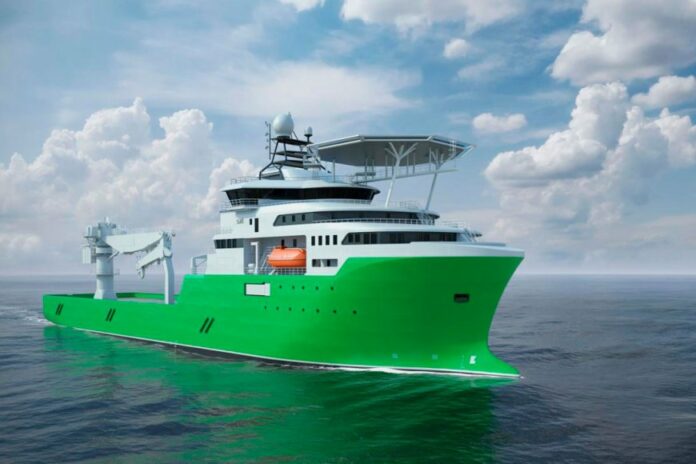
DEME is expanding its fleet with a new Offshore Construction Vessel (OCV), strengthening its subsea cable installation capacity to meet the evolving global offshore wind market. 

Based on the advanced Norwegian SALT 310 design, the 123-meter OCV will be equipped with a DP2 dynamic positioning system, a 150-ton active heave-compensated offshore crane, a hangar for two Work Class ROVs, a hybrid 1,000-kWh battery system, and a methanol-ready propulsion design for future fuel flexibility. Below deck, the vessel is configured to accommodate two 2,500-ton cable carousels, enabling swift deployment and seamless transitions between trenching, burial, and cable-laying operations. The vessel can accommodate up to 123 people.

Trenching and cable burial are vital steps in subsea cable installation, ensuring cables are safely positioned beneath the seabed. From the vessel, an ROV trencher can be launched to execute these operations, working in synergy with DEME’s cable installation fleet. Representing a sizable investment, the OCV will be constructed by PaxOcean at the Zhoushan shipyard in China and is scheduled for delivery in 2028.

Hugo Bouvy, Managing Director Offshore Energy, said:“With more than 5,000 km of subsea cables installed across wind farms in Europe and the United States, DEME continues to support clients in delivering offshore projects efficiently and reliably. Building on this track record, the new OCV further enhances DEME’s cable installation capabilities and expands its versatile fleet of vessels and solutions.”

EverWind celebrates tugboat fleet christening

0

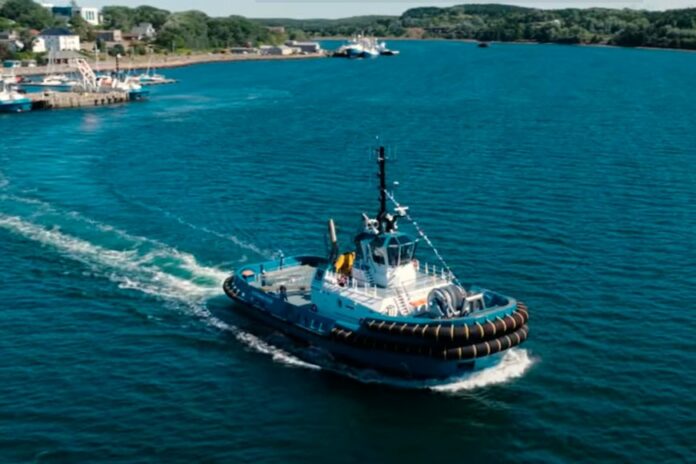
Local community members, government officials, and industry leaders gathered at the Strait of Canso Yacht Club and Port Hawkesbury Pier to celebrate the christening of EverWind’s new purpose-built tugboat fleet: EverWind Pride, EverWind Rose Gold, and Dawson Duck.

The ceremony, emceed by Warden of Richmond County Lois Landry, featured keynote remarks from The Honourable Julie Dabrusin, Minister of Environment and Climate Change of Canada, along with The Honourable Trevor Boudreau, Nova Scotia’s Minister of Energy, EverWind CEO Trent Vichie, and Port Hawkesbury Mayor Brenda Chisholm-Beaton. 

Guests also enjoyed a traditional Mi’kmaw performance by the Stoney Bear Singers and Kate Jadis and Leon Julien, followed by a Mi’kmaw prayer led by conductor of ceremonies, Jeff Ward. A traditional bottle-breaking ceremony followed, featuring Minister Dabrusin, Chief Terry Paul of Membertou, Warden Landry, and Mayor Chisholm-Beaton.

This $50 million investment is one of the largest private sector commitments in the Strait of Canso region in more than 50 years. The new fleet represents a major step forward for local industry, creating at least 15 skilled jobs and delivering long-term economic benefits through locally owned and operated vessels.

“These vessels are not just an investment in EverWind’s operations. They are an investment in the Strait Area’s future, supporting economic growth, environmental leadership, and Canada’s role in the global energy transition,” said Trent Vichie, CEO of EverWind.

The tugboats are critical infrastructure for EverWind’s Point Tupper Green Fuels Project, which will produce and export green hydrogen and ammonia to global markets. The fleet will strengthen marine operations throughout the Strait of Canso and support Nova Scotia’s growing clean energy sector.

The vessels meet International Maritime Organization (IMO) Tier III emissions standards, cutting nitrogen oxide emissions by 80 percent and carbon dioxide emissions by 25 percent compared to older models. EverWind also plans to transition the fleet toward zero-carbon operations as its renewable energy projects come online.

With its deep-water, ice-free port and strategic location, the Strait of Canso is a key trade hub for Atlantic Canada. This investment enhances the region’s ability to support both traditional industries and new clean energy opportunities.

Saab to lead NATO’s new underwater battlespace project

0

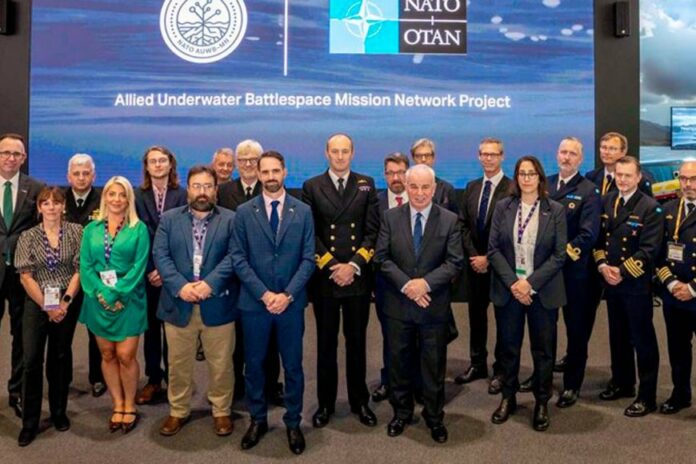
The project formally commenced 1 September 2025 and will deliver interoperability for Maritime Uncrewed Systems and conventional platforms across allied nations.

The project is designing a Reference Architecture and a Test and Reference Environment for a mission network that leverages both crewed and uncrewed  systems, above, on and below the water.

The mission network will facilitate rapid and secure information exchange, and integration across domains, supporting combined operations between all branches of the military. The outcome is expected to become a new standard for NATO.

 “Saab is delighted to lead this pivotal project for NATO. All of the MANGROVE consortium’s expertise and collaborative focus for the next 12 months will be on the successful development of a mission network for NATO’s operations in the underwater battlespace. As all aspects of the underwater domain grow in their strategic significance, this will be a critical contribution to our collective maritime security and defence,” said Mats Wicksell, head of Saab’s business area Kockums.

“The AUWB-MN project is a significant step forward in the modernisation of our warfighting capabilities and the ability for NATO allies to operate effectively together in the underwater domain of the future. We are confident that Saab and the Mangrove consortium will deliver a robust and effective mission network that strengthens NATO’s maritime defence,” said David Burton, Project Director, NATO Antisubmarine Warfare Barrier Smart Defence Initiative.

The consortium was selected on 16 July, 2025 and the project is part of NATO’s Digital Ocean and Antisubmarine Warfare Barrier Smart Defence Initiative. It is sponsored by twelve different nations led by the UK, together with Sweden, the US, Australia, Spain, Germany, Italy, Portugal, Canada, the Netherlands, Denmark, and Norway. Together they have committed to adopting the standard developed through this project.

Saab’s business area Kockums is leading the multinational consortium, MANGROVE, comprising CETENA and IDS part of Fincantieri Group, FlySight, GraalTech, Miraya, Saab UK and BlueBear, S2IX and the University of Plymouth.

Al Seer Marine and BGN JV announces delivery of third VLGC Merak

0

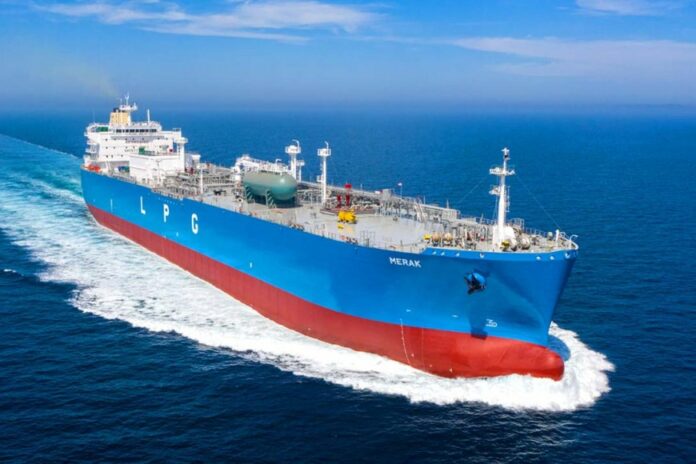
Al Seer Marine has announced with BGN the successful delivery of Merak, its third Very Large Gas Carrier (VLGC) equipped with ammonia-carrying capability.

Delivered on 14 August 2025 by Hyundai Samho Heavy Industries (HSHI) in South Korea, with a capacity of 86,423 CBM, the vessel further establishes Al Seer Marine’s leadership in the global shipping industry. A syndicated sharia-compliant facility, led by the Abu Dhabi Islamic Bank (ADIB), was used to finance the purchase of the Merak and two additional VLGCs.

Managed by Fleet Management Singapore, Merak has begun her first voyage to the US Gulf to load her initial shipment of propane and butane. Following the delivery of Merak, ABGC DMCC now anticipates the arrival of the two carriers currently under construction from its order placed in 2023: a VLGC from South Korea’s Hyundai Samho Heavy Industries, expected in November 2025, and an LPG/NH3 carrier from Japan’s Kawasaki Heavy Industries, scheduled for delivery in October 2025.

Guy Neivens, Chief Executive Officer of Al Seer Marine, said: “From the outset, we recognised the significant role of alternative fuel shipping in the transition of the global energy supply. Driven by this insight, we have shaped our strategy around fleet and cargo diversification to meet evolving market demands. This well-founded approach is reflected in the strong financial results for the first half of 2025, with a 20.2% increase in operational revenues and an 81.7% rise in gross profit. With the recent delivery of Merak, we reinforce our position at the forefront of holistic maritime solutions.”

Rüya Bayegan, BGN group CEO, commented: “We are pleased to be taking delivery of Merak, and the third in our strategic partnership with Al Seer Marine. This state-of-the-art vessel adds to our growing fleet of dual-fuel gas carriers capable of operating on both traditional fuels and lower emissions alternatives and underlines our commitment to contributing to industry-wide decarbonization efforts. With its advanced capabilities, the Merak also supports BGN’s strategic ambitions as we build on our success in the LPG market and scale our operations to expand into ammonia trading, which has always been a key objective in our growth plans.”

With the addition of Merak, Al Seer Marine currently operates a diverse fleet of 16 vessels, through direct ownership and joint ventures, spanning LPG carriers, crude and product tankers, Very Large Crude Carriers (VLCCs), Medium Range (MR) tankers, bulk carriers, and VLGCs. This extensive fleet provides comprehensive coverage across key energy markets and underpins sustainable revenues and strong returns for investors.

Cadeler signs firm contract with Ocean Winds for WTG installation

0

The signing of this firm contract follows the Vessel Reservation Agreement (VRA) signed in February 2025 between Cadeler and Ocean Winds. 

When fully completed, BC-Wind will have a total capacity of up to 390 MW, supplying clean electricity to nearly half a million Polish households. The Project is located about 23 km from the Polish coastline, north of the Pomeranian Voivodeship. It is Ocean Winds’ first project in Poland and will play an important role in the country’s ambitious offshore wind plans.

The installation is set to start in 2028 and to continue for approximately 4 months. Cadeler will deploy one of its O-class wind turbine installation vessels and will operate from the Port of Gdańsk in Poland.

Cadeler and Ocean Winds have worked together previously, most recently on the Moray West offshore wind farm off the coast of Scotland, but this contract represents their first direct contractual partnership.

Mikkel Gleerup, CEO of Cadeler, comments: “With this firm contract now signed, we are ready to bring our best-in-class fleet and experienced crews to support Ocean Winds on this important project. Poland is establishing itself as a key offshore wind market in Europe, and this project will be a significant step in strengthening the country’s renewable energy ambitions. We look forward to expanding our presence in the Polish Baltic Sea, building on the strong pipeline of projects we have already secured in the region.”

This project reaffirms Cadeler’s strong position in the Polish offshore wind market and is a natural continuation of four other milestone projects in Cadeler’s Polish pipeline.

This July, Cadeler began installation work on the Baltic Power project, which will become Poland’s first offshore wind farm. From the Port of Rønne on the Danish island of Bornholm, Cadeler will execute the transportation and installation of 76 Vestas 15 MW turbines. The 1.2 GW project will have the capacity to power over 1.5 million households with green energy once fully commissioned next year.

In February 2024, Cadeler signed a contract with Ørsted and PGE Polska Grupa Energetyczna for the transport and installation of Siemens Gamesa 14 MW turbines at Baltica 2, part of the Baltica Offshore Wind Farm. The project is scheduled for completion by the end of 2027.

In October 2024, Cadeler signed firm contracts with Equinor and Polenergia joint ventures for the installation of two offshore wind farms, Bałtyk 2 and Bałtyk 3, with operations scheduled to begin in 2027.

Equinor drills dry well in the North Sea

0

Wildcat well 34/8-20 S was drilled in the “Narvi nord” prospect. This prospect is located in production licence 554 E, which was awarded in 2023 through APA 2022 (Awards in pre-defined areas).

This is the first well drilled in this production licence.

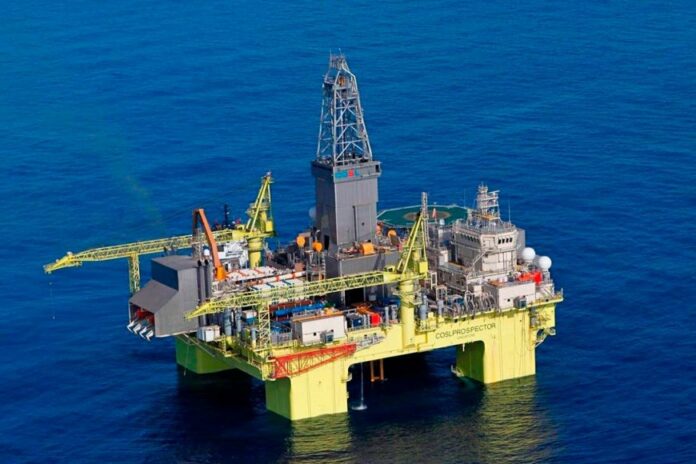
The wildcat well was drilled by the COSL Innovator rig.

The objective of the well was to prove petroleum in reservoir rocks in the Brent Group from the Middle Jurassic.

The well encountered the Brent Group with a vertical thickness of 148 metres, 74 metres of which was sandstone with moderate to good reservoir quality. The reservoir was aquiferous, and the well is classified as dry.

Well 34/8-20 S was drilled to respective vertical and measured depths of 3435 and 3280 metres below sea level, and was terminated in the Drake Formation from the Early Jurassic.

Water depth at the site is 375 metres. The well has been permanently plugged and abandoned.

FLOWRA and EMEC to collaborate

0

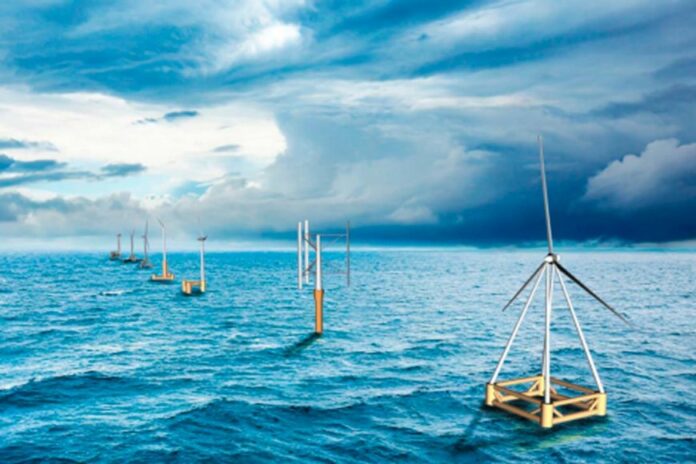
The Floating Offshore Wind Power Technology Research Association (FLOWRA) of Japan and The European Marine Energy Centre (EMEC) Limited have signed a Memorandum of Understanding to explore technology development cooperation in the field of floating offshore wind.

FLOWRA is a technical research association that works with overseas organisations to research and develop common basic technologies for floating offshore wind to reduce costs and risks.

Based in Orkney, Scotland, EMEC is the world’s leading accredited test laboratory for demonstrating new marine energy technologies. A not-for-profit company, EMEC’s mission is to reduce the time, cost and risk to progress innovative sustainable technologies to market.

Building on its experience with wave and tidal testing, EMEC has designed a floating offshore wind test and demonstration site. The site will offer floating wind developers the opportunity to prove performance and de-risk technologies in some of the most challenging metocean conditions in the world.

Comment by Masakatsu Terasaki, Chairperson of the Board, FLOWRA:

“EMEC is recognised as the world’s first centre for testing power generation technologies in real-sea conditions, serving as a leading global hub for innovation in the marine renewable energy sector and driving the development and commercialisation of new technologies. What makes EMEC truly remarkable is not only its role as a testing centre, but also its strong research and development networks, its contribution to regional economic growth, and its active engagement with local communities.

It is a great honour for FLOWRA to collaborate with EMEC, an organisation with a proven track record and deep expertise. By combining our efforts, we aim to accelerate the development of core technologies for floating offshore wind, establish robust verification and evaluation methodologies, and contribute to the expansion of the floating offshore wind market – ultimately helping to realise a sustainable society.”

Comment by Matthew Finn, Managing Director, EMEC:

“Floating wind is set to play a major role in the global energy transition, and EMEC is committed to supporting its development. Our MoU with FLOWRA marks an exciting step forward in international collaboration, enabling knowledge exchange and accelerating innovation.

By leveraging our experience in offshore renewables with the aim of expanding our testing infrastructure, including a new floating wind demonstration site in Scotland, we aim to help developers de-risk technologies in real-world conditions before large-scale deployment. Together, we want to bridge the gap between innovation and investment, advancing the global floating wind market.”

Pulsar International and Inmarsat Maritime expand partnership with 300+ NexusWave rollouts

0

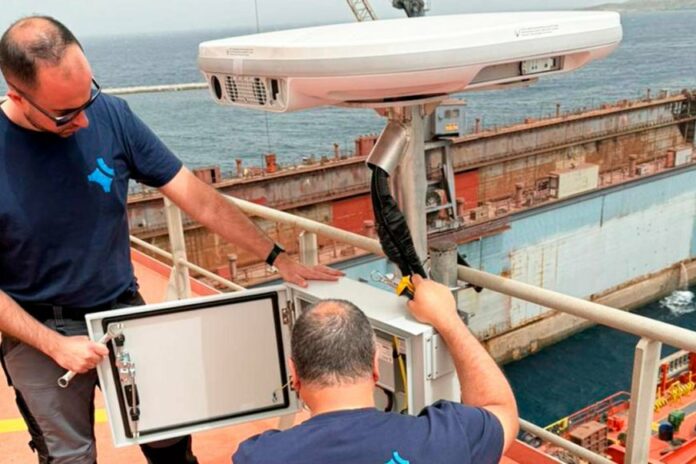
NexusWave, Inmarsat’s bonded multi-network service, combines GEO Ka-band, LEO, LTE and L-band to deliver reliable performance. 

Built on secure-by-design infrastructure, NexusWave empowers shipping companies to accelerate digitalisation, support decarbonisation strategies, and enhance crew welfare by providing both home-like and office-like internet experiences onboard.

To support the ambitious rollout, Pulsar will expand its global reach and local sales teams, and its project management and service delivery capabilities, ensuring customers benefit from seamless planning, installation and round-the-clock support. This investment reflects Pulsar’s commitment to helping operators harness the full value of digital connectivity at scale.

Robert Sakker, President and CEO of Pulsar International, said: “Our customers expect solutions that are secure, dependable and future-ready, enabling both the operational performance of their fleets and the well-being of their crews. By investing in our workforce and expanding our local sales teams, and our project management and service delivery capabilities, Pulsar is committed to ensuring every NexusWave installation delivers maximum value from day one. We are proud to extend our partnership with Inmarsat Maritime and bring this transformative solution to more than 300 vessels over the coming year.”

Ben Palmer, President of Inmarsat Maritime, said: “Pulsar has long been a trusted partner, and this commitment to NexusWave at scale reflects the momentum we are seeing across the industry. Shipping companies are looking for connectivity that goes beyond bandwidth, delivering an ecosystem that is secure, bonded across multiple networks, and assured by service-level guarantees. Together with Pulsar, we can enable owners and operators to run smarter and more sustainable fleets while ensuring their crews stay connected to home wherever they sail.”

With installations commencing in October 2025, the programme will play a pivotal role in supporting shipping operators in enabling the digital ecosystem onboard, and strengthening both operational resilience and welfare at sea.