-8.2 C
New York
Home Blog Page 288

Maersk orders six methanol powered vessels

0

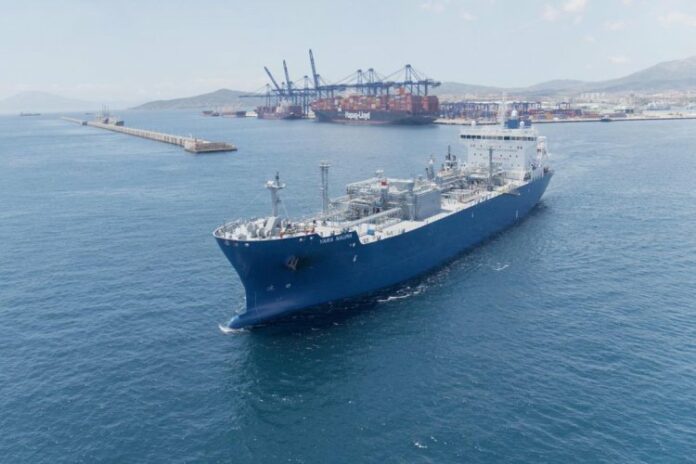
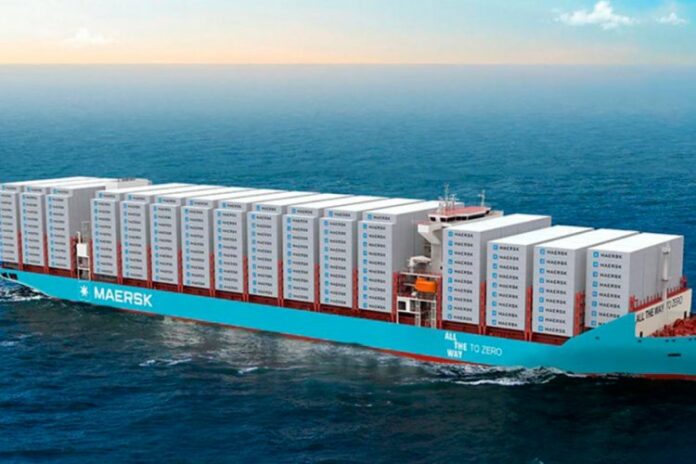
Maersk (Maersk) has made an order of six mid-sized container vessels – all having dual-fuel engines able to operate on green1 methanol. 

Rabab Boulos, Chief Infrastructure Officer at Maersk, said:

“With this order, we take another step in the green transformation of our fleet and towards our target of becoming net-zero in 2040. As with all our other vessel orders for the last two years, these ships will be able to run on green methanol.”

In 2021, Maersk ordered the world’s first methanol-enabled container vessel following a commitment to the principle of only ordering newbuilt vessels that can sail on green fuels. Just two years later, the global orderbook stands at more than 100 methanol-enabled vessels.

By ordering additional six vessels, Maersk now has 25 methanol-enabled vessels on order.

Rabab Boulos, Chief Infrastructure Officer at Maersk, said: 

“For these six container vessels, we have chosen a design and vessel size which make them very flexible from a deployment point of view. This will allow these vessels to fill many functions in both our current and our future network, thereby offering the flexibility our customers demand. Once phased in, they will replace existing capacity in our fleet.”

Later this summer, the first methanol-enabled vessel, a 2,100 TEU feeder vessel, will be delivered to Maersk.

About the six new vessels:

  • They have a capacity of 9,000 containers (Twenty Foot Equivalent – TEU)
  • Yangzijiang Shipbuilding Groupwill build the six vessels in China
  • The ships will be delivered from 2026 and with last delivery in March 2027
  • All of them have dual fuel engines making them able to operate on both fuel oil and methanol
  • Upon delivery, the vessels will replace existing capacity in the Maersk fleet
  • Replacing vessels in a similar size segment, the new vessels will reduce Maersk’s annual greenhouse gas emissions by about 450,000 tons CO2e per year on a fuel lifecycle basis when operating on green methanol.

Prysmian Group and Giancarlo Pedote launch Sailing4Ocean project

0

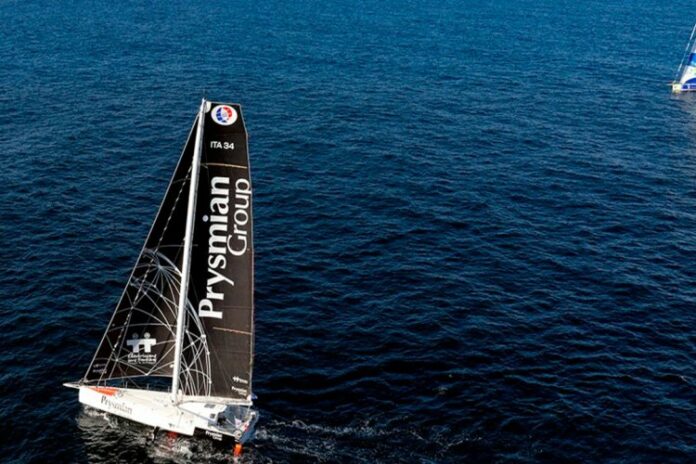
Prysmian Group together with Giancarlo Pedote have announced the launch of the Sailing4Ocean project, in partnership with the Euro-Mediterranean Centre on Climate Change (CMCC) to monitor the state of the oceans’ health using the Group’s proprietary PRY-CAM technology.

Thanks to the contribution of the CMCC advanced scientific research, it will allow to monitor the health of the oceans using ai algorithms and the Group’s patented sensing technologies

Developed primarily for electric power applications, the PRY-CAM technology is based on AI algorithms and on the Group’s patented sensing technologies. It is extremely flexible and it can be used everywhere there is a need to collect quantitatively measurable data.

Pedote’s Prysmian Group IMOCA has been equipped with sensors — designed in partnership with EOSS, the Electronics and Optical Sensing Solutions Division of Prysmian Group, and the Euro-Mediterranean Centre on Climate Change (CMCC) — able to collect data relating to various parameters in the geographical areas of navigation. When sailing, the data measured by the sensors is collected, digitised and transmitted to CMCC via the PRY-CAM MINILOG devices, which acquire data in analogue mode and transfer it to the boat’s transmission devices in MOD-BUS digital mode.

More specifically, the data collected refers to: the boat’s GPS position, boat speed, ambient CO2 concentration, ambient atmospheric pressure, water temperature on the boat’s two sides and keel bulb, temperature inside the boat, ambient humidity, ambient dew point and ambient irradiation.

The test navigation carried out in August 2022 was the first major test and sensors reacted positively, demonstrating the effectiveness of the installation solutions adopted to withstand the high stresses to which they are subjected during navigation.

The data will then be analysed and validated by CMCC before being made available free of charge to the international scientific community through interactive marine-weather forecast applications, the Emodnet portal and the Copernicus Marine Service platforms, i.e., the European Union’s set of Earth observation systems dedicated to monitoring our planet and its environment for the benefit of all European citizens. The same data will also be used by the CoastPredict programme which, as part of the UNESCO Decade of Ocean Science, redefines the coastal sea forecasts and observations on a global scale so that science can respond in an increasingly effective and timely manner to the needs of society.

In particular, the data collected by the Prysmian Group IMOCA boat will be used by the UN Ocean Decade project PredictOnTime to provide new services, products and marine forecasting capabilities based on innovative and integrated systems at global level. The data acquisition and transmission system will allow information to be collected in geographical areas of the globe not easily accessible with traditional data collection devices and monitoring to be carried out of the state of health of the waters that will be crossed by Giancarlo Pedote, during his next great challenge: the Vendée Globe 2024.

Giancarlo Pedote sailor said:

“Knowing that every time I train or compete I contribute to the ocean’s preservation is for me an additional motivation. Knowing that I can do this thanks to the support of my main sponsor, which has accompanied me for 17 years, and of an important institution like CMCC is something that goes even further: I feel even more accompanied in every one of my solo navigations.”

Giovanni Coppini, Director of CMCC’s Ocean Predictions and Applications Division, stated:

“Sea forecasting and the collection of data on which the CMCC advanced and multidisciplinary scientific research is based constitute a crucial frontier for ensuring the sustainable development of societies and economic activities, as this cannot ignore the protection of coasts and marine ecosystems. This collaboration with Prysmian Group and Giancarlo Pedote is very important for us because, on the one hand, it underlines the importance of close interaction between industry, the world of technological innovation, sports and scientific research for the sustainability of the sea. On the other hand, CMCC’s contribution ensures that the data collected will assume a highly operational function at global level, will be used to improve our knowledge of the sea and to produce increasingly detailed and accurate global, regional and coastal marine forecasts, which will be made available to decision-makers, businesses, societies and citizens through the applications developed by CMCC and used in European and non-European international contexts.”

Yara Clean Ammonia and Bunker Holding sign an MOU

0

The two companies signed a Memorandum of Understanding to explore opportunities to work together to accelerate plans to supply the shipping industry with ammonia as a fuel. 

Yara Clean Ammonia (YCA) and Bunker Holding Group signed an MOU establishing the intention to collaborate to accelerate the development of the market for clean ammonia as a shipping fuel. This agreement connects two key elements of the supply chain needed to achieve the use of clean ammonia as a shipping fuel, namely a global supplier of clean ammonia and the largest bunker supplier today in terms of end users.

This commitment will cover multiple global geographies and focus on serving First Mover initiatives spanning different regions.

Clean ammonia is one of the most effective alternatives for decarbonizing maritime transport. As of 2026, shipping companies are expected to expand the use of this sustainable fuel to reduce CO2 emissions by up to 100% on a full life cycle basis.

The development and use of sustainable fuels contributes to several of the 2030 Agenda’s Sustainable Development Goals: SDG 7 (Affordable and clean energy), SDG 8 (Decent work and economic growth), SDG 12 (Responsible consumption and production), and SDG 13 (Climate action).

Murali Srinivasan, SVP Commercial of Yara Clean Ammonia, said:

“We look forward to collaborating with Bunker Holding to support the acceleration of the net-zero carbon energy transition for the Shipping Industry with clean ammonia. Our global assets and logistical footprint coupled with Bunker Holdings position as the world’s largest bunker player will bring safety, reliability, and security of clean ammonia supply as shipping fuel and will add more resilience and robustness to developing this value chain in the future”

Valerie Ahrens, Senior Director, New Fuels and Carbon Markets of Bunker Holding, said:

“We are excited to work with Yara Clean Ammonia on developing a credible commercial offering for the supply of low- and zero-carbon ammonia to our global customer base. We at Bunker Holding are committed to playing a leading role in facilitating the decarbonization of the maritime sector and as such it is vital for us to collaborate with partners who can offer the market confidence around the scale and security of supply of low-carbon fuels.” 

Nauticus is contracted by Petrobras to develop and test the AUV Aquanaut in Brazil

0

Petrobras has ramped up efforts recently in robotics and artificial intelligence and is pioneering their application to the offshore sectors. 

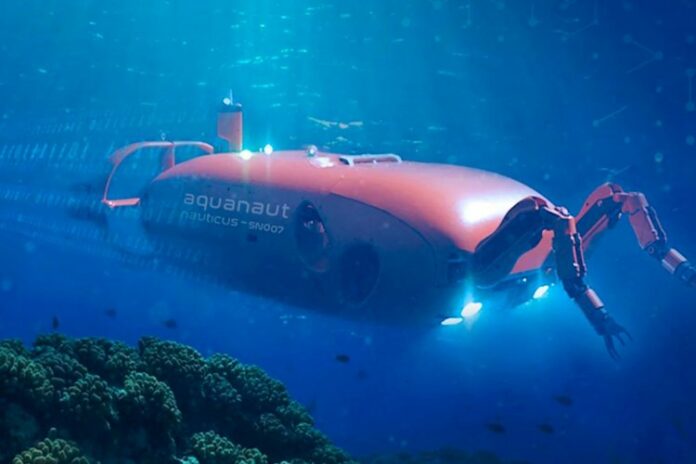
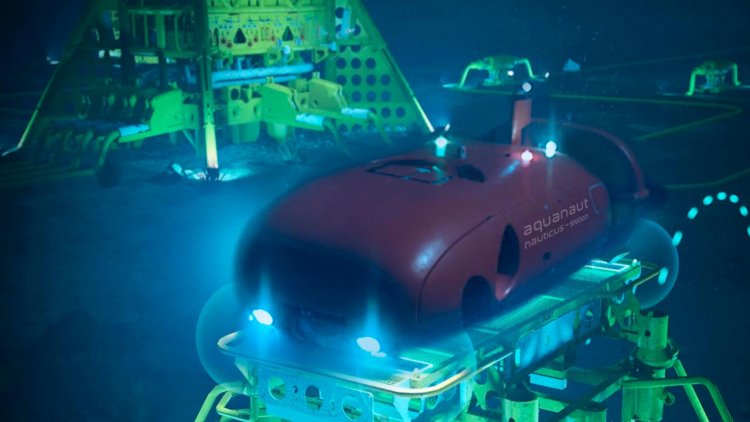
Toward that end, this relevant contract was competitively awarded to Nauticus and will utilize Aquanaut in Petrobras’ Deepwater Production Field using supervised autonomy for infield inspection services. The contract consists of approximately two months of subsea inspection time and is one of the largest awarded contracts of its kind to date worldwide. Nauticus’ success in winning this initial award places it as a relevant player for potential subsequent contracts that Petrobras estimates to be carried out and expands Nauticus’ growing international presence to South America with a leading operator.

Over the past several years, Nauticus has been developing a library of autonomous behaviors based on the latest techniques in machine learning and artificial intelligence, which enable its subsea robots to learn and adapt to the dynamic conditions of working underwater. The fully electric Aquanaut carries an array of multi-spectral perception sensors that allow the robot to detect, classify, inspect, and act upon subsea infrastructure using its pair of manipulators without direct operator control. This method provides significant cost and greenhouse gas emissions reductions over conventional methods.

“A contract with another worldwide leading operator for Nauticus speaks to the state-of-the-art technologies of our autonomous robots as we further penetrate the global markets,” said Nicolaus Radford, CEO of Nauticus. “The market opportunity for Nauticus in offshore Brazil is significant, as it is one of the world’s most active offshore energy basins; we are pleased to enter this market through a world class operator. We competed through a rigorous tender process with many well-respected industry competitors to earn this business with Petrobras and eagerly await the deployment of our assets to validate our capabilities. We continue to build our robust pipeline of opportunities, giving us confidence to execute on our mission and deliver long-term value to shareholders.”

Petrobras is one of the world’s largest and most active offshore operators, managing 57 platforms, ten thousand miles of oil and gas pipelines, and producing 2.6 million barrels of oil equivalent per day.

Ocean Gate statement lost Titanic tour sub crew

0

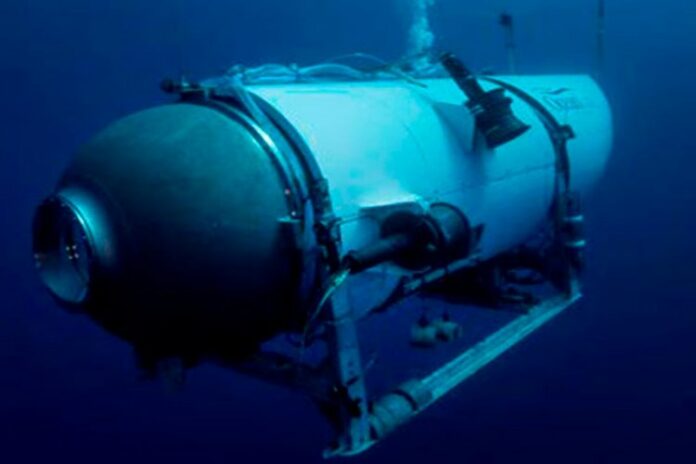
“We now believe that our CEO Stockton Rush, Shahzada Dawood and his son Suleman Dawood, Hamish Harding, and Paul-Henri Nargeolet, have sadly been lost,” OceanGate said in a Thursday statement.

“These men were true explorers who shared a distinct spirit of adventure, and a deep passion for exploring and protecting the world’s oceans,” the statement continued. “Our hearts are with these five souls and every member of their families during this tragic time. We grieve the loss of life and joy they brought to everyone they knew.”

The U.S. Coast Guard said in a Twitter post earlier Thursday that a remotely operated vehicle discovered a debris field within the search area for the Titan submersible. At a press conference later in the afternoon, the Coast Guard confirmed the debris was “consistent with catastrophic loss of the pressure chamber.”

“Upon this determination, we immediately notified the families,” said Rear Adm. John Mauger, the First Coast Guard District commander, at the press briefing. “On behalf of the United States Coast Guard and the entire unified command, I offer my deepest condolences to the families. I can only imagine what this has been like for them.”

Mauger added that the debris was found about 1,600 feet from the bow of the Titanic ship wreckage that lies more than 2 miles beneath the ocean surface, which is where the Titan submersible was headed before it lost communication less than two hours into its dive on Sunday. He said remotely controlled vehicles will continue to remain on the scene to gather additional information about the debris.

“And so we will begin to demobilize personnel and vessels from the scene over the course of the next 24 hours,” Mauger said. “But we’re going to continue remote operations on the seafloor, and I don’t have a timeline for when we would intend to stop remote operations on this floor at this point.”

When asked about whether efforts will be made to recover the passengers of the Titan, Mauger said it is an “incredibly unforgiving environment down there on the sea floor, and the debris is consistent with a catastrophic implosion of the vessel.”

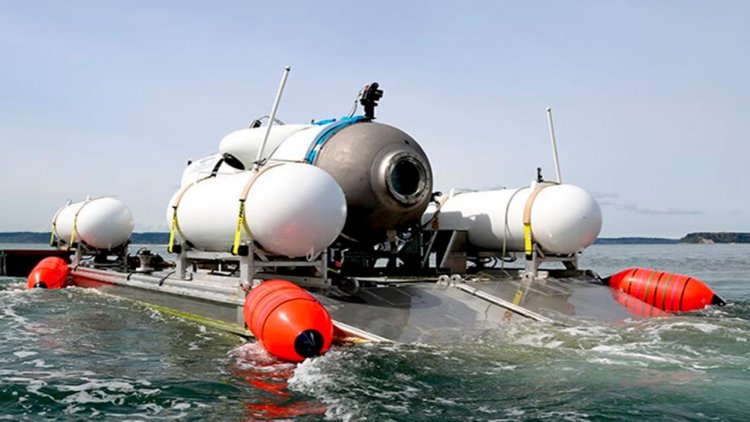
The submersible Titan—a 21-foot vessel—as well as its five-person crew, disappeared in the Atlantic Ocean on June 18 just over an hour into their OceanGate Expeditions tour while en route to the RMS Titanic wreckage.

Following Titan’s disappearance, a massive search-and-rescue mission was launched to find the passengers onboard.

Prior to the discovery of the debris, Coast Guard officials estimated that Titan’s 96-hour oxygen supply was expected to run out in the morning of June 22.

Source: The Hill, Enews

Cybersecurity gaining importance in energy sector

0

Not only since the Russian war of aggression on Ukraine and the attack on the Nord Stream 1 and 2 gas pipelines has the security of energy plants come into sharp focus.

This week, Germany’s Federal Minister of the Interior Nancy Faeser, together with the President of the German Federal Office for the Protection of the Constitution (BfV), Thomas Haldenwang, presented the 2022 report on the protection of the constitution.

The findings therein are not surprising:

“The danger from espionage, disinformation campaigns and cyber attacks has further intensified since the Russian war of aggression against Ukraine. State actors are increasingly using social media to spread their disinformation. The majority of activities against Germany in this regard come from the Russian Federation, the People’s Republic of China and the Islamic Republic of Iran. The criminal war of aggression against Ukraine has changed the security situation throughout Europe. We have taken strong measures to arm ourselves against espionage, disinformation campaigns and cyber attacks.”

Geopolitical and geo-economic upheavals always create increased vulnerability for companies and research institutions. Europe is particularly at risk due to its geographic proximity to Russia. This is because the energy supply is vulnerable, as demonstrated not only by the attacks on the Nord Stream 1 and 2 gas pipelines. In March of last year, for example, the KA-SAT satellite network became victim of a cyberattack, which caused disruptions in communications with wind turbines at dozens of wind farms in Germany that lasted for weeks. Individual companies such as Vestas and Deutsche Windtechnik have also been targeted by hackers in recent months.

Although this ultimately did not restrict the German energy supply, there has nevertheless been a great deal of focus on protection against attacks since then. The new President of German Wind Energy Association (BWE), Bärbel Heidebroek, makes it clear:

“Shortly after the Russian attack on Ukraine began, a large number of wind turbines in Europe were affected by a cyber attack. The incident raised awareness among both companies and the public that cybersecurity must be given a high priority.”

That’s because the wind industry has been on permanent alert ever since. In recent weeks, there have been repeated reports from various European countries of sightings of alleged Russian research vessels near offshore energy installations such as offshore wind farms. That Russia is apparently conducting espionage activities on a larger scale than previously known under the guise of civilian shipping was then suggested by a report from various public broadcasters in Scandinavia. In a documentary called ‘The Shadow Files’, the media referred to intelligence information from the respective countries.

In Germany, the Future Energy Lab of German Energy Agency dena is thus trying to raise awareness and has launched a platform. The ‘Cyber Security in the Electricity Industry’ platform, which is funded by the German Federal Ministry of Economy, aims to support companies along the value chain of the electricity industry by connecting key players in the energy and digital industries. The goal is to build a dialog format with relevant actors as well as cross-industry competence for the topic of cyber security, to reduce uncertainties and to strengthen awareness for cyber security in the electricity industry, according to their website.

BWE President Bärbel Heidebroek said:

“We consider the initiative […] an important step from an industry perspective. The attacks [on the satellites] have shown the great resilience of a decentrally organized, renewable energy supply: Even when communication with the plants was disrupted, they continued to operate and generate electricity. Renewable energies are safer than fossil energies in this respect. Nevertheless, we must recognize: As wind energy expands, it becomes more attractive as a target for disruptive actions. Companies can therefore not afford to neglect the security of their IT systems,” Heidebroek emphasized and announced an intensive commitment.

Participants in the new platform want to push the development of preventive measures and recommendations for action. So that the power does not fail at some point after an attack.

Author: Katrin Radtke
Source: Windfair

Proposed acquisition of Neptune Energy by Eni and Vår Energi

0

Neptune Energy has announced that Eni International BV has signed a sale and purchase agreement to acquire Neptune Energy Group Limited, with Vår Energi ASA simultaneously signing an inter-conditional sale and purchase agreement to acquire Neptune Energy Norge AS for an aggregate enterprise value (subject to customary adjustments) of $4.9 billion.

Neptune’s business in Germany is not part of the transactions and will continue to be owned and operated by the ultimate existing Neptune shareholders as a standalone group.

The Boards of Eni, Vår Energi and Neptune believe the proposed combinations will enhance their technical and financial capabilities to provide energy security and participate in the energy transition. 

The existing upstream portfolios of the companies are low carbon intensity gas-focused, with complementary geographic exposure, providing Eni and Vår Energi with increased scale in growth areas and high-value markets, and enhanced decarbonisation opportunities.

Completion of the acquisitions is conditional upon, among other things, the receipt of necessary regulatory and governmental clearances. The transactions are expected to close by the end of Q1 2024.

First foundation installed on South Fork Wind offshore project

0

Governor Kathy Hochul today announced that South Fork Wind, New York’s first offshore wind farm, has achieved its “steel in the water” milestone with the installation of the project’s first monopile foundation. In the coming days, South Fork Wind will install the project’s U.S.-built offshore substation. 

The project remains on-track to become America’s first utility-scale offshore wind farm to be completed in federal waters when it begins operations by the end of this year and supports the Climate Leadership and Community Protection Act goal to develop 9,000 megawatts of offshore wind by 2035.

Once completed, the wind farm will generate enough renewable energy to power roughly 70,000 homes helping New York meet its ambitious Climate Act goals, while eliminating up to six million tons of carbon emissions, or the equivalent of taking 60,000 cars off the road annually over a 25-year period. Hundreds of U.S. workers and three Northeast ports will support South Fork Wind’s construction through late fall helping to stand up a new domestic supply chain that’s creating hundreds of local union jobs across the Northeast.

First approved by the Long Island Power Authority (LIPA) in 2017, South Fork Wind was selected under a 2015 request for proposals to address growing energy needs on the east end of Long Island.

Group EVP and CEO Americas at Ørsted David Hardy said:

“South Fork Wind is now one giant step closer to meeting our mission to deliver renewable offshore wind energy to Long Island’s East End. As we reach a milestone nearly a decade in the making, we’re reflective of all those who have long championed this project in the East Hampton community, and beyond. The bold leadership of the Biden-Harris and Hochul administrations is putting New York and the nation on a path to a cleaner future. Thanks to American ingenuity, South Fork Wind is jumpstarting a new U.S. jobs engine and tackling climate change head-on.”

Eversource Energy’s President, Chief Executive Officer and Chairman Joe Nolan said:

“South Fork Wind is on-track to become the nation’s first completed utility-scale offshore wind farm in federal waters and will soon deliver enough clean, renewable energy to power nearly 70,000 homes.”

With today’s milestone, South Fork Wind officially enters its wind turbine installation phase, the final construction period on the 12-turbine, 130-megawatt project. South Fork Wind launched in February 2022, beginning with the onshore export cable system. The project is one of five offshore wind projects New York State has in active development, the largest portfolio in the nation.

This current portfolio totals more than 4,300 megawatts and will power more than 2.4 million New York homes, and it is expected to bring a combined economic impact of $12.1 billion to the state. The projects are also expected to create more than 6,800 jobs in project development, component manufacturing, installation, and operations and maintenance. Achieving the State’s 9,000 megawatts by 2035 goal will generate enough offshore wind energy to power approximately 30 percent of New York State’s electricity needs, equivalent to nearly 6 million New York State homes, and spur approximately 10,000 jobs.

Wärtsilä simulator selected for upgrading of NSB Group’s maritime training capabilities

0

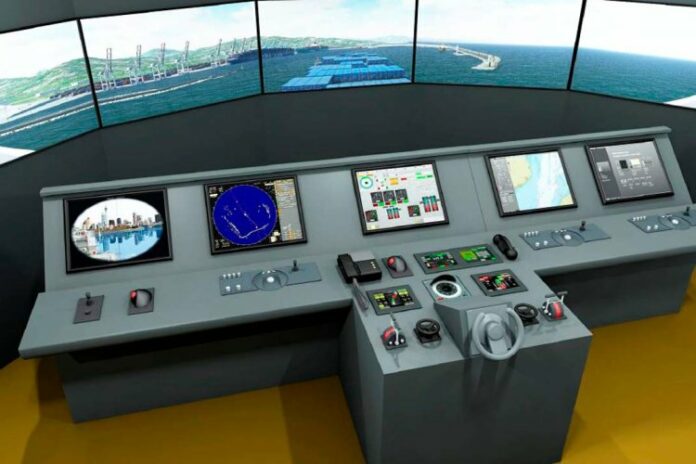
Technology group Wärtsilä will supply its state-of-the-art simulator to global maritime service company NSB Group. The order was booked by Wärtsilä in February 2023.

The simulator will feature the latest versions of Wärtsilä’s Navi-Trainer professional simulation software, as well as the latest NACOS Platinum bridge systems which include multi-pilot workstations for Electronic Chart Display and Information System (ECDIS), radar and conning applications. The simulator is combined with a high-performance visualisation system, modern Interactive Bridge Information Display (IBID) technology, a 55-inch (1.4-metre) voyage planning table connected to the main bridge, a video and audio recording and playback system, as well as a new sound system.

“This upgrade will help us practice ‘what-if’ scenarios to meet our high standards in shipping and our ability to respond and improve in a very personalised way to meet the needs of our customers. Wärtsilä’s simulator makes it possible to connect different training centres in a way that has never been done before. After the first opening in 2007, we now again have a sophisticated stand-alone training facility,” commented Tim Ponath, NSB’s CEO.

“The skills shortage is a real issue facing the maritime industry today. Since COVID-19, many have left the industry and new recruits are not coming in fast enough to replace them. It’s clear we need to be able to get mariners up to speed quickly and ensure they undergo robust training to maintain high standards,” said Johan Ekvall, Head of Product Simulation & Training, Wärtsilä. “NSB Group does great work in bridging this gap and delivering enriching training programmes to students across shipping.”

Evgeny Vdovin, Director, Port Optimisation and Simulation, Wärtsilä added:

“It’s exactly for this reason that we, at Wärtsilä, are pleased to support NSB Group with their commitment to safety, training and education by providing the vital technology that is helping to shape the crews of tomorrow.” 

The new simulator complies with DNV Standard 0029 for maritime training centres. It will be used for the further training of officers, for briefings and familiarisation, and to prepare seafarers for promotions. The courses are designed to accommodate both NSB personnel and external trainees.

Norvic Shipping becomes a ship owner and expands tanker division

0

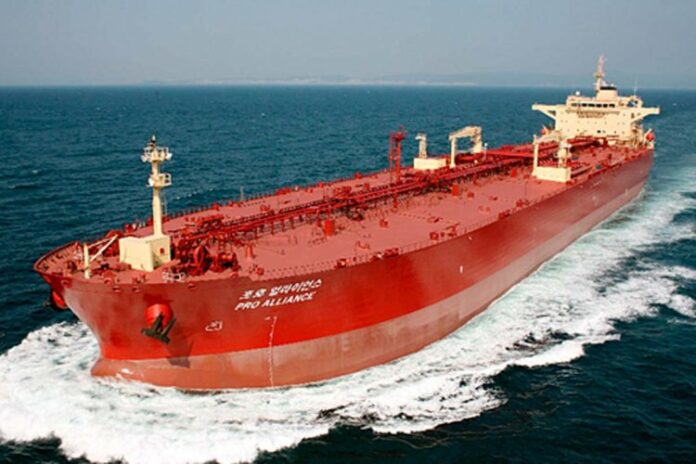
The acquisition of the vessel, which has been renamed Norvic Monia, sees Norvic owning its first ship outright, marking a strategic shift from an operator to owner-operator model.

While deploying Norvic Monia, a 105,348 dwt aframax LR2 vessel, on routes around the world, Norvic will consider buying more tankers to grow the fleet and to expand its tanker division.

Meanwhile, the company is pushing ahead with plans to take delivery of three newbuild dry bulk vessels from Japanese yards, which have been taken on long-term charters. This includes two handymax vessels from Onomichi Yard and one ultramax from Imabari yard. All vessels will be delivered between Q3 and Q4 of this year. The company is also in talks to to take further newbuild dry bulk vessels on long-term charters.

Purchasing Norvic Monia marks a return to Norvic’s origins with the company launched as a tanker operator in 2006 in Canada. Since expanding to dry bulk in 2012, Norvic has grown into a US$1.3 billion+ turnover company.

AJ Rahman, Group Chairman and CEO, commented:

He continued: “Unlike dry bulk, the tanker segment is relatively stable with demand expected to grow faster than supply this year and next. Demand in 2024 for crude tankers will be up 4.5% to 6.5% from 2022, according to BIMCO, while supply is likely to fall 0.6%. Given the lack of a new order book in the tanker segment, we believe the time is now to move into ownership.”