-4.7 C
New York
Home Blog Page 287

New radar and camera network in Antwerp port area

0

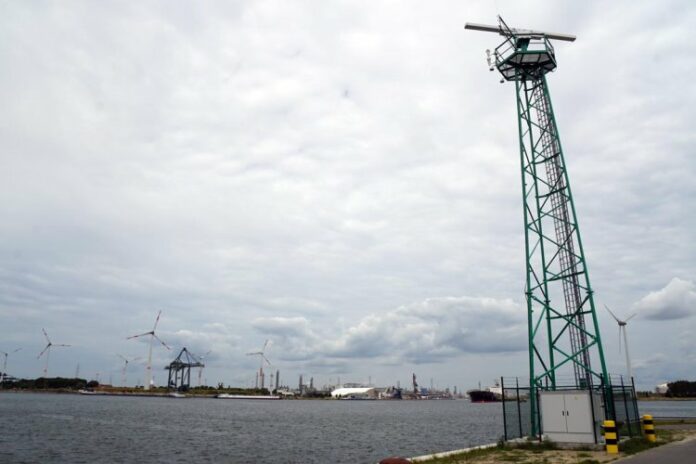
This equipment scans the entire Antwerp port area and will become the backbone of safe and efficient shipping traffic. Following the recently launched drone network, this represents another important step towards the realisation of a complete digital nervous system covering the area.

The vast Antwerp port area covers more than 120 km2 with 11,000 hectares of waterways and quays. More than 300,000 shipping movements take place in the port every year. In order to continuously monitor the entire area, as well as all shipping movements, Port of Antwerp-Bruges has expanded and digitised it’s camera and radar infrastructure.

The 460 cameras and 22 radars are directly connected to the Antwerp Coordination Centre and provide operational services such as Vessel Traffic Services (VTS) and the Harbour Master’s Office with a comprehensive view of the port. This allows them to closely monitor shipping and incidents and to manage waterways and moorings more efficiently and safely according to the highest IALA (International Association of Lighthouse Authorities) standards. The images are then viewed and analysed by colleagues with police powers and can also be shared with security services and other authorities.

With this network launching today, the port now has one of the most advanced and high-performance systems of any port in the world. Thanks to the digitisation of the entire network, it is also ready to be connected to APICA (Advanced Port Information and Control Assistant), the port’s digital twin. This digital copy of the entire port area provides a scan every second to create a real-time picture of what is happening at the port based on thousands of pieces of data from a network of cameras, sensors and drones. Operational since 2022, APICA supports port workers to quickly gain visibility into the situation on the ground, and, therefore, to carry out their work more safely and efficiently.
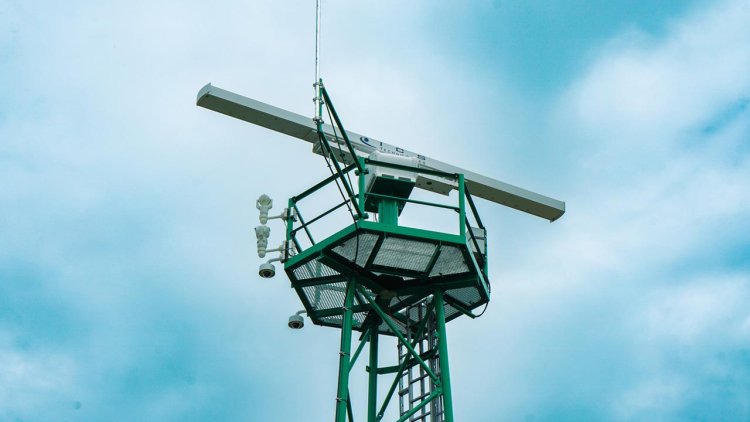
The smart cameras are equipped with specially designed artificial intelligence that allows them to recognise ships. In combination with detailed radar data, this real-time data will further increase situational awareness in the future in order to evolve towards predictive and steering behaviour.

Rob Smeets, Chief Operations Officer Port of Antwerp-Bruges:

“This network is a great asset to our port in terms of safety and operational efficiency. The new sensors form the technological backbone of shipping guidance. In the past, there were a few blind spots in the port area where we had no insight into unexpected shipping movements or incidents.”

Erwin Verstraelen, Chief Digital and Innovation Officer Port of Antwerp-Bruges:

“This network is essential for the further rollout of a digital nervous system across the physical port to support a safer and more secure port. Integrating this data into the digital twin brings us closer to the goal of having a finger on the pulse of what is happening in the vast port area permanently and everywhere.”  

Annick De Ridder, Vice-Mayor of the City of Antwerp and President of the board of directors of Port of Antwerp-Bruges:

“This extensive state-of-the-art radar and camera network is a first in the port world. It’s also coming online less than three months after the launch of our unique drone network. This shows that our port continues to invest heavily in the very latest technologies and infrastructure. The aim? To make the Antwerp port area with its 11,000 hectares of waterways and quays one of the safest and most efficiently run in the world and to improve and strengthen our service to customer companies.”
Norwegian government go-ahead for Irpa, Verdande and Andvare

0

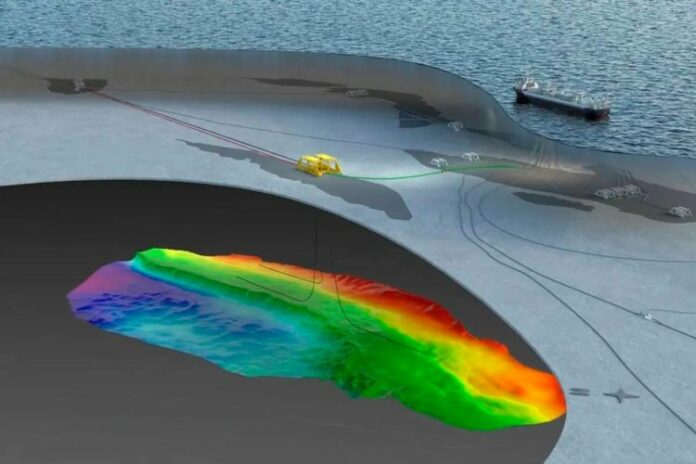
The gas field Irpa will be tied back to Aasta Hansteen, whereas the oil field Verdande and the Andvare well will be tied back to Norne.

“We are experiencing a strong demand for oil and gas from the Norwegian continental shelf in the current geopolitical situation. By utilising the Aasta Hansteen and Norne infrastructures, these development projects will quickly bring new production to market with low development costs, while extending the activity on the host platforms,” says Trond Bokn, Equinor’s senior vice president for project development.

The Irpa gas volumes may supply just over 2.3 million UK households with gas for seven years. The gas discovery is located almost 80 kilometres from the Aasta Hansteen field, and the development will extend the field’s productive life by seven years, up to 2039. The discovery also supports the 350 person-years of employment (direct and indirect) associated with the operation of Aasta Hansteen during this period.

Irpa, the second subsea field tied back to Aasta Hansteen, will be the deepest field on the Norwegian continental shelf, at 1350 metres.

It was recently announced that Westcon Helgeland will deliver large parts of the Irpa subsea facility as a TechnipFMC subcontractor. Momek in Mo i Rana is a subcontractor of Aibel, responsible for modifying the platform for Irpa gas tie-in.

Verdande, an oil discovery with some associated gas, will be tied back to Norne. Here, too, the field’s productive life will be extended by several years, which helps support the 900 person-years of employment (direct and indirect) associated with the operation of the Norne field.

Equinor, on behalf of the partners, recently awarded a contract to Aibel where most of the work will be performed by Aibel’s M&M community in Harstad, which will also use other subcontractors in the north. Aibel will also make modifications to the FPSO related to Andvare, a well that will be drilled as a side-track from one of the existing subsea templates on the Norne field.

“For Equinor and our partners, it is important that our activity in the north also has ripple effects here, and the projects will also result in increased and prolonged activity at the logistics base in Sandnessjøen and the helicopter base in Brønnøysund,” says Bokn.

UECC collaborates with GoodFuels and NYK to slash carbon emissions

0

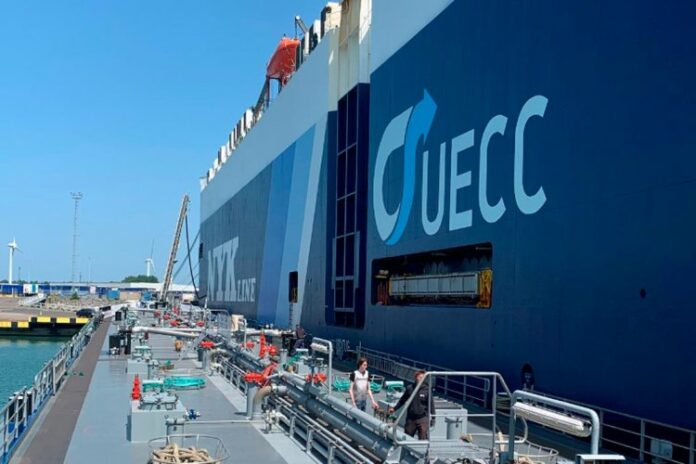
This operation marks the first time a UECC time-chartered vessel, m/v Emerald Leader, has been bunkered with biofuel, further solidifying UECC’s position as a leader in sustainable maritime transport.

The successful biofuel bunkering operation was made possible through the close partnership between UECC, GoodFuels, and NYK. GoodFuels, the leading biofuels provider for the global transport industry, delivered the B30 blend – 470 tonnes of VLSFO and sustainable biofuel – to UECC in the port of Vlissingen, Netherlands, on 27 May, 2023. NYK, the joint owner of UECC, provided invaluable technical support throughout the operation and is working closely with UECC to monitor the biofuel’s performance on m/v Emerald Leader.

GoodFuels’ biofuel, which reduces CO2 emissions by up to 90% compared to conventional fossil fuels, is sourced from renewable and sustainable feedstocks that are certified as 100% waste or residue, and do not compete with food production or cause deforestation. By incorporating this biofuel into its operations, UECC is taking a proactive approach to reducing its environmental impact while delivering cleaner and more sustainable transportation to customers across Europe.

Mr. Daniel Gent, Energy and Sustainability Manager for UECC, said:

“This momentous delivery of next-generation biofuel represents another significant step forward in our sustainability journey. We are proud to partner with GoodFuels and NYK to bring this innovative and environmentally friendly solution to our customers. By bunkering biofuel for the first time on a UECC time-chartered vessel, we demonstrate our unwavering commitment to reducing our carbon footprint and providing cleaner transportation options.”

Bernard van Haeringen, Commercial Manager at GoodFuels, said:

“We are thrilled to partner with UECC and NYK to deliver our advanced sustainable biofuel for the first time to m/v Emerald Leader. This collaboration showcases the commitment of all parties involved to combatting climate change and accelerating the energy transition in the shipping industry. We are confident that biofuels will play a crucial role in decarbonising the maritime sector.”

The utilisation of advanced sustainable biofuel on the Emerald Leader, which operates on UECC’s North South Trade, connecting the Eastern Mediterranean with Northern Europe, will significantly reduce the carbon intensity of UECC’s operations.

Consortium awarded €20m by European Commission for 10MW offshore hydrogen project

0

The HOPE (Hydrogen Offshore Production for Europe) project consortium has signed a €20 million grant agreement with the European Commission. This followed the positive evaluation of the proposal submitted by the partners in response to the call for proposals issued by the Clean Hydrogen Partnership, co-founded and co-financed by the European Union.

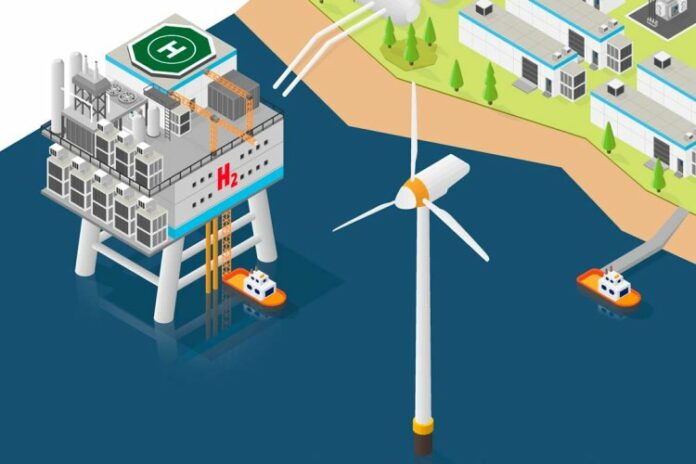
The consortium aims to pave the way for the deployment of large-scale offshore production of renewable hydrogen. The HOPE project involves developing, building and operating the first 10 MW production unit in the North Sea, off the coast of Belgium, by 2026. The aim is to demonstrate the technical and financial viability of this offshore project, and of pipeline transport for supplying onshore customers.

Lhyfe completed a first step in 2022 with a world first – the inauguration of Sealhyfe, the world’s first pilot production plant for offshore hydrogen already integrating Plug’s technology and powered by a 1 MW floating wind turbine.

This large-scale project (10 MW) will be able to produce up to four tonnes a day of green hydrogen at sea, which will be exported to shore by composite pipeline, compressed and delivered to customers for use in industry and the transport sector. HOPE is the first offshore project of this size in the world to begin actual implementation, with the production unit and export and distribution infrastructure due to come on stream in mid-2026.

HOPE will benefit from an ideal location, one kilometre from the coast, in the offshore testing area in front of the port of Ostend (Belgium), which aims to be the central link in the hydrogen chain in Belgium and has contributed to the development of the project since its inception.

The production site will be powered by electricity supplied under PPA (Power Purchase Agreement) contracts that guarantee its renewable origin. The water used for electrolysis will be pumped from the North Sea, desalinated and purified.

The production site will comprise three units: production and compression (at medium pressure) at sea, export by composite pipeline, then compression (at high pressure), storage and distribution onshore.

The first kilos of HOPE hydrogen could be produced as early as 2026. They will supply mobility needs and small industries in Belgium, northern France and the southern Netherlands, within a 300-kilometre radius.

This project has been selected for funding under the Clean Hydrogen Partnership call for proposals co-financed by the European Union. HOPE is thus recognised as a flagship project making a decisive contribution to energy transition. By means of a first large-scale demonstration, the project will make it possible to improve the technological solutions for the production of renewable hydrogen offshore and its export onshore, helping to reduce the investment risks for much larger-scale projects in the years to come and paving the way for the production of massive quantities of renewable hydrogen in Europe.

The grant awarded by the European Commission covers a period of five years. This includes three years to develop the demonstrator, and then two years to demonstrate the technical reliability and commercial viability of the model. The commercial operation of the hydrogen production, export and distribution infrastructures developed in this context is intended to continue beyond the duration of the project.

The €20 million grant will be used to finance the design phases, the supply of equipment and the construction work, as well as research, development and innovation work focusing mainly on optimising technological solutions and the operation of this type of infrastructure. The techno-economic analysis of offshore renewable hydrogen production solutions on a much larger scale will be another of the areas of work.

Thanks to an ambitious plan to disseminate and utilise the results, the consortium intends to accelerate the deployment of large-scale offshore hydrogen solutions to help achieve the target set by the European Commission of 10 Mt of clean hydrogen produced in the European Union by 2030 to decarbonise the European economy.

HOPE will combine the expertise and know-how of each of the nine partners involved, covering the entire renewable hydrogen value chain.

Main Key Innovations to be Developed in the Project

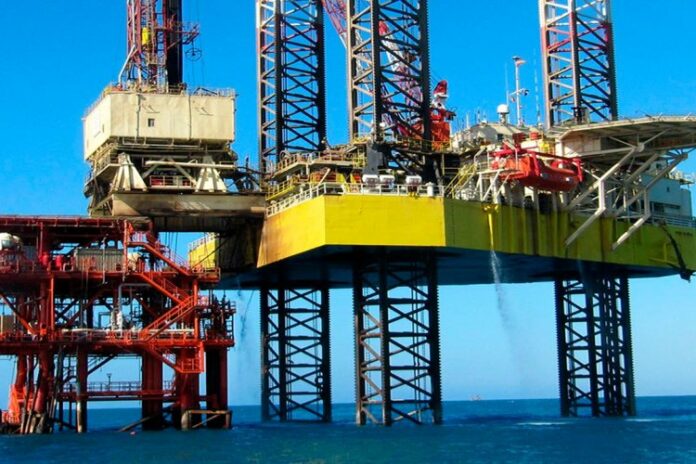
  • Recycled offshore barge: The structure housing the production unit will be a second-hand jack-up barge, demonstrating that it is possible to transform infrastructure previously used for oil and gas and give it a second life for the production of renewable energy, while helping to reduce costs and lead times.
  • 10 MW PEM electrolyser: This highly compact electrolyser will be the first of its size to be installed offshore.
  • Seawater treatment system:This low-energy system which is compact, economical and able to use the heat emitted by the electrolyser, will be used for the first time to produce green hydrogen from seawater purified by evaporation.
  • Underwater flexible hydrogen pipeline for hydrogen export: The hydrogen will be exported ashore via a flexible thermoplastic composite pipeline of over a kilometre long, which for the first time will transport hydrogen produced at sea after having been technically certified for this specific use.

Expertise and Role of Partners (ranked by requested EU contribution):

  • Lhyfe (France): Engineering, equipment procurement, works supervision, operation, optimisation of the overall production, export and distribution system, project coordination.
  • Plug (the Netherlands): Supply and engineering of the 10MW electrolyser.
  • EDP NEW (Portugal): Contribution to the optimisation of operations and impact analysis. Steering of techno-economic studies for large-scale developments.
  • POM West-Vlaanderen (Belgium): Project implementation support in the testing area (studies, permits) and analysis of the social, economic and environmental impacts of the project.
  • CEA (France): Optimisation of operations via digital simulation.
  • Strohm (the Netherlands): Supply of the subsea flexible thermoplastic composite pipeline (TCP).
  • Alfa Laval (Denmark): Supply of the seawater treatment system.
  • DWR eco (Germany): Communication and dissemination of project results throughout Europe.
  • ERM – Element Energy (France): Coordination support.

Saipem: two new offshore drilling contracts totaling approximately 550 million dollars

0

In the Middle East, Saipem has ensured the continuity of the ongoing activity of the Perro Negro 7 jack-up drilling unit from the second half of the year by securing a ten-year extension to the existing contract, thanks also to the excellent performance achieved by the asset during the execution of the activities. 

The 10-year extension is a record duration in the area, which in the past had only been granted to an international contractor on limited occasions, and further strengthens Saipem’s strategic positioning in the drilling segment. After having recently expanded its presence in the area from three rigs in 2021 to seven expected at the end of 2023 thanks to the acquisition of various multi-year contracts, with this contract renewal Saipem sees, once again recognition of its commitment to executing projects efficiently with attention to safety and the environment in the main “shallow water” market worldwide.

Furthermore, in the Mediterranean Sea, Saipem has been awarded a contract for the utilization of the semisubmersible unit Scarabeo 9 for an estimated period of around six months plus an optional period. The unit is a sixth-generation semisubmersible drilling rig equipped with a dual ram rig and is capable of operating in ultra deep water, i.e., at depths of up to 12,000 feet.

Wärtsilä to accelerate Stena Line’s decarbonisation journey through methanol conversions

0

As methanol is one of the key components of decarbonisation in the maritime industry, this contract will equip the vessels with unmatched fuel flexibility, thus marking an important milestone in Stena Line’s journey towards becoming a leader in sustainable shipping. 

The conversions will include the fuel supply system and engine modifications, as well as integrating the new installations with the ships’ existing systems. The contracts were booked as order intake by Wärtsilä in June 2023.

Converting ferries for methanol fuel will enable them to be compliant with various existing and upcoming regulations, including the Carbon Intensity Indicator (CII), FuelEU Maritime, and IMO 2050 GHG reduction target.

“As we continue to implement our strategy to decarbonise all our operations, we see methanol as a viable alternative fuel that will help us achieve this ambition. Wärtsilä has proven its capabilities to carry out the necessary conversions. This was shown eight years ago when they converted the Stena Germanica to operate with methanol, and our experience from this ground-breaking innovation has been very positive,” said Ian Hampton of Stena Line.

“We have had close cooperation with Stena Line for many years and we are pleased to be supporting them again in this important conversion project. Like Stena Line, Wärtsilä is committed to making decarbonised shipping operations a reality, and we have invested heavily in developing our engine portfolio to be capable of utilising carbon neutral and zero carbon fuels,” commented Roger Holm, President of Wärtsilä’s Marine Power business.

The full scope of Wärtsilä’s supply package will include fuel tank instrumentation and valves, transfer pumps, low pressure pump skid, fuel valve trains, Methanol Fuel Pump Units and the automation of the system, engine conversions, and automation upgrade for the engine control room.

ISWAN launches survey to understand the impact of decarbonisation on seafarers

0

In recent years, seafaring has undergone huge technological change, as the maritime sector begins to respond to the climate emergency and the urgent need to decarbonise shipping. Seafarers are at the heart of this transformation and are being called upon to rapidly adapt to operating new technological systems onboard and dealing with the challenges of working with new and often potentially hazardous fuels.

The drive to decarbonise brings with it the enormous challenges of ensuring that seafarers have the training and skills that they need to manage new technologies and fuels safely. A recent study commissioned by the Maritime Just Transition Task Force found that up to 800,000 seafarers could require additional training to handle alternative fuels and technologies by the mid-2030s.

It is, however, crucial that seafarers’ wellbeing is not overlooked amidst the urgent imperatives to upskill seafarers and to meet environmental targets. The rapid technological changes in maritime come at a time when seafarers have already faced unprecedented levels of challenge: the COVID-19 pandemic, the crew change crisis and the lack of shore leave have all added additional pressures to what was already a highly demanding and often stressful profession. These factors are already leaving some seafarers to seek alternative careers on shore, contributing to a growing recruitment and retention crisis in the shipping industry.

ISWAN is launching a new survey that seeks to better understand the impact that the adoption of new decarbonising technologies and the associated inspection regimes are having on the welfare of both seafarers and onshore staff. As well as understanding the difference – whether positive or negative – that technological change is making to working in maritime, the survey also seeks to gain insight from seafarers and shore-based staff into how shipping companies and crewing agents can best support them to adapt to the rapid pace of change.

Chirag Bahri, ISWAN’s International Operations Manager, said:

‘This year, IMO’s Day of the Seafarer focuses on seafarers’ central role in protecting the marine environment. Nowhere is this more apparent than in the vital role seafarers play in implementing the wide-reaching changes that will be needed for the maritime industry to reach zero carbon. However, this cannot be at the expense of seafarers’ wellbeing. ISWAN’s new survey aims to shed light on how the shipping industry can give seafarers the support they need to put into practice the technological changes that will be needed to meet international decarbonisation goals. This will be crucial in ensuring that the maritime industry can recruit and retain the skilled and motivated crew that they will need to operate the zero-carbon global fleet of the future.’

Gotland Company and H2GS work together for green hydrogen-supply to shipping

0

H2 Green Steel (H2GS) and Swedish shipping company Gotland Company, have entered into an agreement to explore the possibility to establish a production plant with the capacity to supply part of Gotland Company’s fleet with green hydrogen.  

Leveraging the expertise from the preparatory work from that site, and in line with the company’s strategy to use green hydrogen to reduce emissions in hard to abate industries, H2GS now takes a step into a new field, namely green fuels for shipping.  

Together with Gotland Company, which develops, charters and operates passenger ferries, H2GS will perform a technical and economic feasibility study to evaluate the possibility to supply fossil free fuel in the form of green hydrogen to Gotland Company’s future ships.  

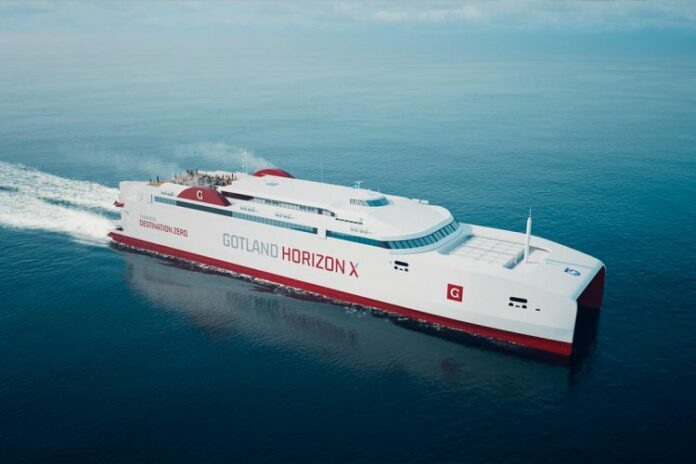
Gotland Company is developing two new ships that will be able to operate on hydrogen gas, the Horizon series. The goal is to have a minimum of one ship operational by 2030 the latest. The Horizon series will operate on gas turbines with so called multi fuel, which enables the ships to operate on several fossil free fuels. To operate the traffic between Gotland and the mainland on 100 percent hydrogen gas, approximately 20,000 tonnes of hydrogen gas will be required annually.  

“Our investment in the Horizon series is our most ambitious initiative to reduce the climate footprint from the shipping industry. The ships’ engines can operate on several fossil free fuels, but our goal is to run the ships on 100 percent hydrogen gas. Hydrogen gas combined with the gas turbine enables us to maintain a high availability for our passengers, but also reach a climate-neutral service with water as the main emission. Since our ships will need a large amount of hydrogen gas, development of both production and infrastructure is essential. Therefore a collaboration like this is important to help us to reach our climate goals”, says Håkan Johansson CEO Gotland Company. 

“At H2GS, our purpose is to accelerate the decarbonization of hard-to-abate industries, and green hydrogen holds the key to true industrial transformation. Collaborating with Gotland Company signifies expanding our competence in large scale hydrogen production beyond iron and steel. Joining forces with a Swedish partner sharing our passion for climate change matters and acting as the front runner to reduce emissions in the important ecosystem in the waters around Sweden, naturally feels especially strong and relevant”, says Kajsa Ryttberg-Wallgren, Head of Hydrogen Business at H2 Green Steel. 

The feasibility-study is a first step towards being able to supply hydrogen as fuel to Gotland Company’s ships that operate the route between the island of Gotland and mainland Sweden. The feasibility-study includes identifying locations for both production and infrastructure to transport the hydrogen to the harbors. The electrolyzer capacity required is estimated at about 300 MW.

AD Ports Group signs agreement with Karachi Port Trust for container terminal

0

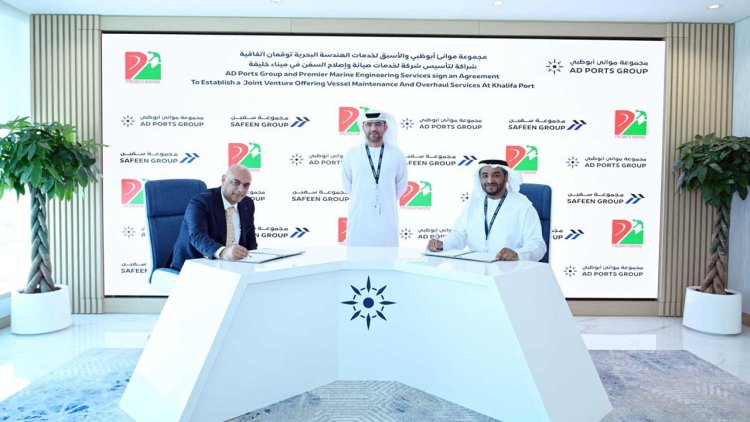
The joint venture is structured as a 51% ownership by AD Ports Group and 49% by Premier Marine.

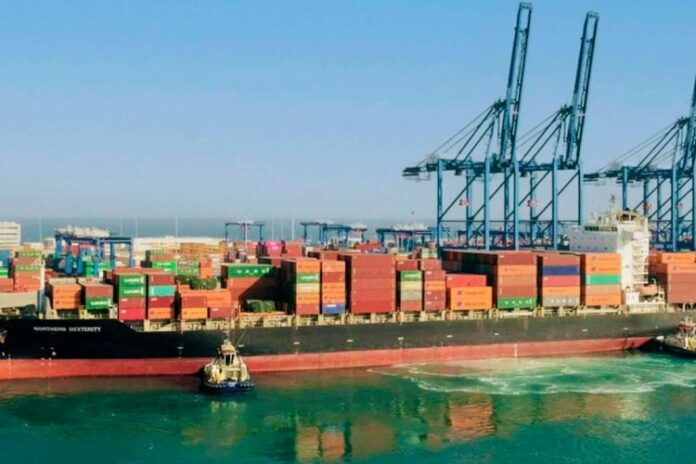
The new enterprise will offer a broad range of vital services including drydocking, afloat repairs, ship building and refurbishment. The hub of SAFEEN Drydocks’ operations will be located at Khalifa Port and encompass a 45,000m2 shipyard and repair facility, 350m quay wall for vessel afloat repair, and a floating dry dock for vessel maintenance and refurbishment. 

The floating dry dock is expected to commence operations in July of 2023, while the shipyard has already begun work with construction of two barges for a UAE-based client. Once fully up and running, the hub will be operated by SAFEEN Drydocks and be fully equipped to accommodate a range of vessel types including tankers, bulk vessels, container ships, offshore vessels and jack-ups. 

Through the new joint venture, AD Ports Group will leverage its reputation and experience as one of the world’s premier facilitators of maritime logistics, industry and trade, and contribute quay space at Khalifa Port for the development and operations of the new services hub. Premier Marine will, in turn, contribute its technical knowledge and experience in helping customers build, repair and maintain vessels and other maritime assets in an environmentally sustainable manner. Together, the two entities will serve the needs of not only SAFEEN Group’s maritime fleet, but also of broader regional and international client base spanning the shipping and offshore maritime sectors.

Captain Ammar Mubarak Al Shaiba, Acting CEO Maritime Cluster and SAFEEN Group, AD Ports Group, said:

“The establishment of SAFEEN Drydocks is a milestone development for SAFEEN Group as it significantly broadens our scope of services and ability to serve the regional maritime industry. We look forward to working closely with our partners at Premier Marine in bringing together our global reach and their strong multi-decade track record in developing what we envision will be a regional and global hub and centre of excellence for maritime ship building, repair and maintenance.” 

Hemant Tandon, Managing Director of Premier Marine Engineering Services, said:

“We are privileged and honoured to collaborate with AD Ports Group during this exciting period to establish a customer-centric marine hub at Khalifa Port. This joint venture marks a new beginning for us, and through our partnership, our teams of highly skilled experts, coupled with the formidable expertise provided by the Group, we aim to achieve great success within the shipbuilding industry.”

DNV, Damen and NAPA use 3D model-based approval to streamline ship design approval

0

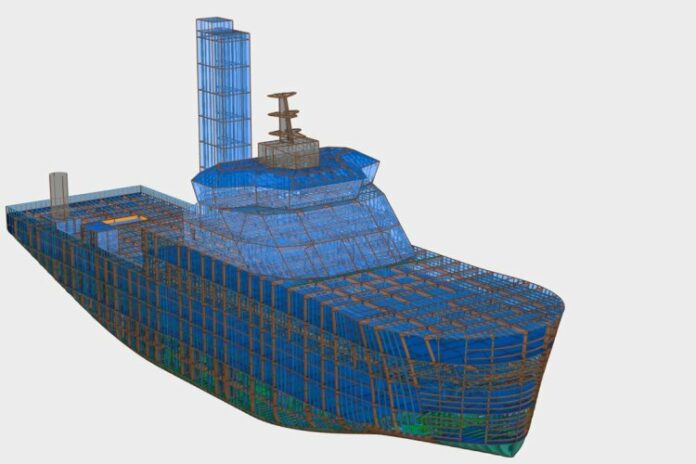
Damen Engineering decided to involve DNV classification experts in the first review of its new design of a Commissioning Service Operation “Walk to Work” Vessel (CSOV 9020). 

Collaboration started during work on the Design Proposal, the very first stage of the project, using new cutting-edge technology based on 3D model exchange and approval through the OCX file format.

The new CSOV design was developed by Damen engineers using NAPA’s 3D design tools, which enable the export of 3D models in the OCX format. This functionality allowed Damen and DNV to work in parallel on the same 3D model, saving the time and effort needed to agree and prepare 2D documentation.

Katarzyna Romantowska-Jaskólska, Manging Director at Damen Engineering, said:

“Environmental, safety, regulatory and other external pressures, combined with the competitive need to create ever-better designs, mean doing things the way we always did them is no longer sufficient. The OCX format allows us to take a new approach that is beneficial to everyone involved in the development of a vessel design, and the project execution process. In collaboration with DNV and NAPA, we arrived at a solution that connects disciplines and facilitate quick decision making while reducing risks in the early stages of a design.”

Mikko Forss, Executive Vice President for Design Solutions at NAPA, added:

“At NAPA, streamlining the hull structure approval process through efficient collaboration and swift feedback loops among stakeholders is one of our top priorities. As a result of several joint industry development projects, NAPA’s 3D design solutions can support efficient information exchange between ship designers and classification societies, enabling quicker and more accurate approvals. Our support for the OCX format is a key part of this effort, as it enables the standardized exchange of 3D model data and reduces the time and effort required for efficient communication.”

Ivar Håberg, Director of Approval at DNV, concluded:

“The earlier class starts the design approval process, the easier it is to find good rule compliant design solutions in cooperation with the yards. By using the OCX file format to exchange information on 3D design models, DNV can more efficiently interact and cooperate with the designers and yards already in the early design development phase.”

OCX is a new standard for 3D model-based class approval, aimed at breaking down the barriers between different design and classification software platforms to enable the seamless exchange of idealized geometry and metadata between them. The OCX 3D model can also replace the traditional 2D structure drawings for classification purposes, thereby saving time for the yards, and allowing class to respond more quickly to designers’ needs.

The OCX standard is the result of the joint industry project ‘Approved (2016-2020)’ headed by DNV. The standard is now jointly owned and managed by the OCX Consortium established in 2021. This consortium has brought together more than 30 industry leaders to jointly promote and maintain the standard. The consortium members consist of all the major classification societies, leading CAD providers and several designers and yards.