-4.7 C
New York
Home Blog Page 286

Global shipping can halve emissions without impacting trade, study

0

The global shipping industry can reduce emissions by nearly 50% by the end of the decade, according to a new study by CE Delft. These findings come as the UN’s International Maritime Organization (IMO) is about to reach an agreement on climate targets to reduce greenhouse gas emissions from ships in July.

Civil society groups call on the IMO’s 175 member states to urgently support halving shipping emissions by 2030 and reaching zero by 2040 to put the industry on the zero-emission pathway required for achieving the 1.5°C temperature warming limit agreed under the Paris Agreement. The study from CE Delft provides evidence to policymakers that these targets are also economically and technologically feasible.

The analysis shows that ships can achieve 36-47% emissions reduction by 2030 compared to 2008 levels by deploying 5-10% zero or near-zero emission fuels, wind-assist technologies, and by ‘climate optimising’ the speed of ships. 

The study also concludes that costs associated with these emissions cuts would be manageable. Halving emissions in this decade would only add around 10% to the total cost of shipping operations, a sum that would be dwarfed by the cost of climate related damages to the industry and wider society if shipping fails to cut emissions. University College London estimates that every year of inaction this decade will add an extra $100 billion to the cost of shipping decarbonisation. 

John Maggs, Seas At Risk,said:

“The science is crystal clear, emissions from shipping have to halve by 2030 if we are to stand any chance of keeping warming below the Paris Agreement’s 1.5°C temperature limit. What was less clear until now was if this was possible without impacting trade. Now we know not only that it is possible and shipping has a clear pathway to halving its climate impact by 2030, but that it can do so at minimal cost.”

Faïg Abbasov, Transport & Environment, said:

“Waiting until 2050 to decarbonise is a bit like waiting until your house burns down before you call the fire brigade. This would be irresponsible and disingenuous.  The evidence shows that halving emissions by 2030 is technically possible and that the costs are manageable. What is needed is the political will. The IMO cannot afford to miss this opportunity.”

Delaine McCullough, Ocean Conservancy, said:

“Countries and shipping companies have raised real concerns about the technological and economic feasibility of achieving the 1.5°C-aligned goal of halving emissions by 2030. This analysis clearly shows that these reductions are possible and that costs are not a barrier. The evidence couldn’t come at a better time. The IMO must not squander what may be the last best opportunity to put shipping on track to prevent a climate disaster. ”

Antonio Santos, Pacific Environment, said:

“The findings are in: global shipping can halve its climate-wrecking emissions this decade without disrupting trade. The costs are minimal for the industry to step up and meet their responsibilities for decarbonization, steering shipping into alignment with a 1.5°C world, while helping to avoid the worst impacts of climate change. The upcoming IMO Marine Environment Protection Committee meeting in July is a historic opportunity to decarbonize international shipping, and including science-based 2030 and 2040 targets are essential to meeting this moment.”
Seaway7 awarded offshore wind contract in UK

0

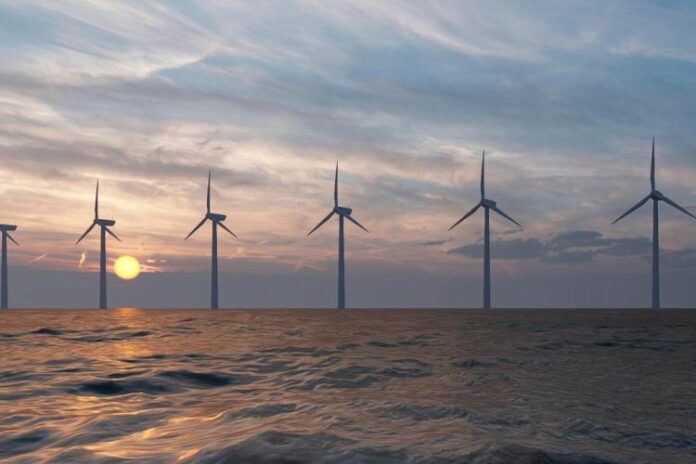
Subsea 7 S.A. has confirmed the award to Seaway7, part of the Subsea7 Group, of a very large contract by ScottishPower Renewables for the transport and installation of the foundations and inner-array cables for the East Anglia THREE offshore farm. The award comes a year after the preferred bidder agreement was announced.

East Anglia THREE – located in the Southern North Sea, 69 kilometres off the Suffolk coast – will be the world’s second largest windfarm when it begins operation in 2026. Its 95 14.7MW turbines will have a combined capacity of 1,400MW, generating enough green electricity to power the equivalent of more than 1.3 million homes.

Seaway7’s scope of work includes the transport, logistics and installation of 95 monopile foundations, associated seabed preparation and scour protection along with the engineering, supply and installation of the 95 inner-array cables. In addition to the heavy lifting and cable lay vessels, Seaway7 will also utilise its heavy transportation fleet to handle the significant transportation scope.

Execution of the scope will be led from Seaway7’s Aberdeen and Sutton offices in the UK. The project will progress from early engineering works throughout 2023 with offshore activities scheduled to commence in 2024.

Ross Ovens, ScottishPower Renewables’ Managing Director for the East Anglia Hub offshore windfarms, said:

“It’s fantastic to confirm this major contract with Seaway7 for East Anglia THREE. We’ve been moving at pace to put all the building blocks in place to ensure East Anglia THREE can get to work as quickly as possible, producing more green electricity in the UK, for the UK. I’m very proud that there’s more of the same to come while driving that transition to a cleaner, greener net zero future alongside partners like Seaway7.”

Stuart Fitzgerald, CEO Seaway7, said:

“This award builds upon our leading position in the UK market. The integrated nature of the award, combining the installation of both foundation and inner-array cables, as well as the utilisation of our heavy transportation vessels, is further testimony to the range of capabilities we have secured across the complete value chain. We look forward to building our relationship with ScottishPower Renewables as, together, we deliver one of the world’s largest offshore wind complexes, representing a significant contribution to the UK’s renewable target”.

WinGD and AET sign ammonia engines and training collaboration agreement

0

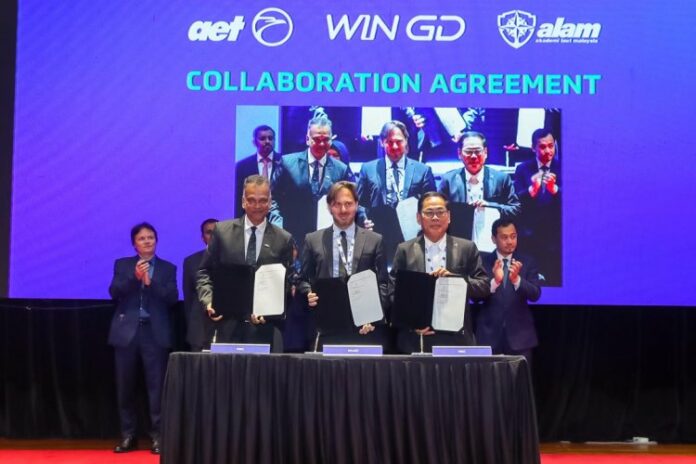
Swiss marine power company WinGD has entered into a collaboration agreement with ship owner and operator AET and maritime academy Akademi Laut Malaysia (ALAM), both part of MISC Group,  to develop technology and training for ammonia engines.

The agreement will see the partners work towards the potential introduction of X-DF-A ammonia-fuelled engines on vessels which would be among the first ammonia dual-fuelled tankers in the world. The project timeframe is in line with WinGD’s previously announced roadmap, bringing the first engines for Suezmax or Aframax tankers into service from 2025. 

Zahid Osman, President & CEO, AET said:

“I am pleased that we were able to formalise the collaboration with WinGD to develop the required ammonia engines and training materials that will help seafarers to safely manage the new generation of zero emission vessels. The outcomes of this collaboration will support AET and MISC Group to deliver on our commitment to deliver more energy with lower emission.”

WinGD will develop a crew training syllabus and support its implementation, preparing some of the first seafarers in the world on ammonia-fuelled vessels to handle the new fuel and engines with confidence. The arrangement will provide the opportunity for ALAM to train its seafarers and supervisors on the operation, maintenance, monitoring, repair and health and safety procedures specific to the new engines.

Rudolph Holtbecker, Director Operations WinGD said:

“This cooperation between engine designer, shipowner and training institution marks a powerful push towards realising the potential of ammonia as a maritime fuel. As well as preparing our engines for integration within a key vessel type, the training developed under this project will also feed into the knowledge pool needed for operators and their crews to confidently, safely and efficiently operate these new fuelled vessels.”

Contract signed for new anti-submarine warfare frigates

0

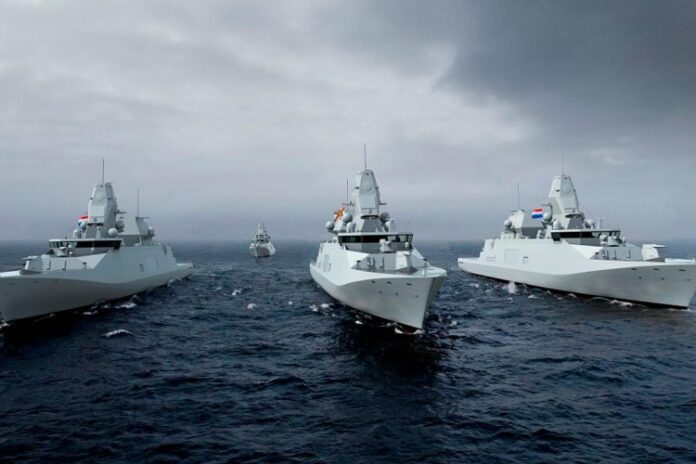
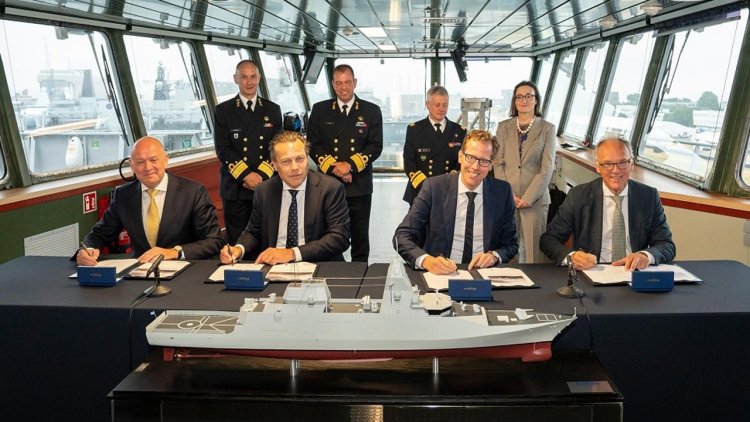
The Dutch Ministry of Defence, Damen and Thales have signed the contract for the design, construction, and delivery of four Anti-Submarine Warfare (ASW) Frigates; two for the Netherlands and two for Belgium. 

The agreement was signed on HNLMS Karel Doorman by Defence State Secretary Christophe van der Maat, Damen Shipyards Group CEO Arnout Damen, Damen Naval Managing Director Roland Briene, and Thales Netherlands CEO Gerben Edelijn during the first day of the Sail Den Helder maritime festival.

The ASW frigates are the replacements for the current Karel Doorman Class multipurpose frigates. They can be deployed for multiple tasks; however, the emphasis will be on anti-submarine warfare. The ships will have hybrid diesel-electric propulsion and will be designed to sail as quietly as possible, to avoid detection by submarines as much as possible. On board will be a comprehensive suite of sensors to detect submarines.

Dutch State Secretary Christophe van der Maat:

“The acquisition of the ASW frigates is taking place in the way I prefer: through intensive cooperation, between countries, armed forces, and industry. In time, the result will be an innovative and powerful weapon system. This will benefit us as direct users, but also Europe and NATO.”

Gerben Edelijn, CEO of Thales Netherlands, said:

“The crew of the ASW frigates will be able to rely on our ultramodern Above Water Warfare System that provides effective defence against current and future threats. Together with the German F126 ships, the Belgian and Dutch ASW frigates will use identical, advanced technology for their defence and protection of high-value objects.”

The frigates will measure 145 metres in length, with an 18-metre beam. They will have a draught of 5.5 metres at a displacement of 6,400 tonnes. On board, there will be room for a 117-strong crew and capacity for additional personnel to sail with them. Among other things, the ASW frigates will be equipped with an Under Water Warfare Suite (UWWS), an Above Water Warfare System (AWWS) and underwater decoys. The ships will be armed with a 76mm gun, MK54 torpedoes, Rolling Airframe Missiles (RAM) and the Naval Strike Missile.  The frigate can also accommodate other weapons, such as more powerful missiles and High Energy Lasers. There are also unmanned craft and aircraft on board for use on and under water as well as in the air.

The entire project is a joint operation with the Dutch Ministry of Defence, with some of the work to be carried out by the Ministry itself. Arnout Damen continues:

“We have almost 150 years of knowledge, skill, and technology to coordinate and execute the design and construction of complex naval vessels. This is done not only in the Netherlands, but also at our yard in Romania, where the hulls will partly be constructed.”

These hulls then come to Vlissingen for further completion, the installation and integration of weapon systems and, ultimately, commissioning of the frigates for deployment to the Belgian and Dutch navies.

The current Multipurpose frigates of the Karel Doorman Class were built from 1985 by Damen Naval (then called Koninklijke Maatschappij de Schelde). Between 1991 and 1995, eight M-class frigates were delivered, six of which were eventually sold to other countries, including two to Belgium. With the end of the service life of these ships in sight, the Netherlands and Belgium decided to jointly replace the ships with these ASW frigates. The first ship is expected to be delivered in 2029.

Saipem awarded contracts for an overall amount of approximately 1 billion USD

0

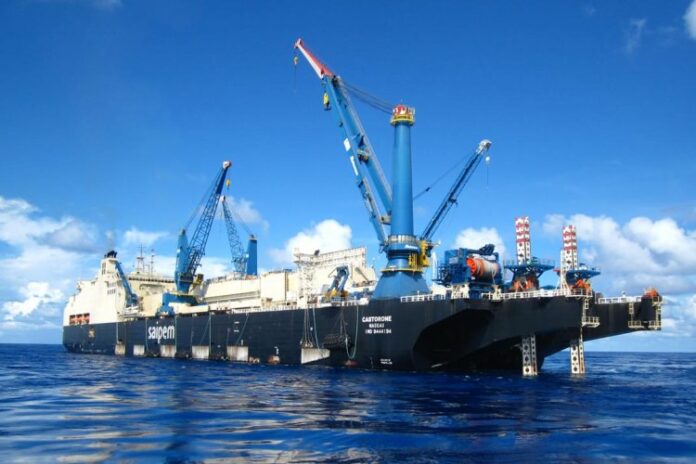
Saipem has been awarded two new contracts, one for EPCI offshore activities in the Middle East and the other for the development of underwater drones in Brazil. The overall amount of these new acquisitions is approximately 1 billion USD.

Under the existing Long-Term Agreement (LTA) with Saudi Aramco, Saipem has been selected to be awarded a new offshore project. The scope of work involves the engineering, procurement, construction, and installation of five platforms and associated subsea pipelines, flowlines, and cables in the Marjan field, offshore Saudi Arabia, featuring an entirely in-Kingdom fabrication scheme. The effectiveness of the contract is subject to the fulfilment of the customary conditions precedent.

Furthermore, Saipem has been awarded a contract by Petrobras for the development and testing of an autonomous subsea inspection robotic solution, which will be based on Saipem’s fleet of underwater drones, starting from the Flatfish AUV, as well as the qualification of related autonomous drone-based services, enabling future inspection contract options offshore Brazil.

EPS teams up with GIT for propeller coatings

0

Eastern Pacific Shipping (EPS) continues to drive decarbonization by implementing Graphite Innovation & Technologies  (GIT) graphene-based, biocide-free propeller coating across its fleet. 

This propeller coating – XGIT-PROP – is an extremely effective way to improve and maintain CII rating over the drydocking cycle.

The two companies started working together a year ago. EPS applied XGIT-PROP on the propeller of an LPG tanker, QUEBEC. Since application, the vessel has seen improved vessel performance, and has maintained its CII rating. Because of that, EPS decided to expand the adoption of the technology and plans to apply the coating on 15 vessels drydocking in 2023 and 2024.

XGIT-PROP is a graphene-based eco-friendly propeller coating that improves propulsion efficiency while keeping propeller surface smooth and free from biofouling. Applying this coating ensures no harmful toxins and biocides are released into the ocean. This adoption supports EPS’s ambitions in reducing GHG emissions and helps the company achieve aggressive sustainability goals.

Pavlos Karagiannidis, Fleet Optimisation Manager at EPS, stated:

“We see GIT’s propeller coatings as part of our portfolio of solutions to achieve long-term fuel efficiency and reduce emissions. We are pushing to make a positive impact on our oceans, and see GIT and their coatings as a key way to do that. This is another sustainable step forward for our company.”

As a sustainable coatings company, GIT has developed several marine coatings for fleets that are interested in reducing their impact on the environment while improving vessel performance. GIT’s XGIT-PROP is a 3-layer graphene-based coating technology that is specifically designed to withstand harsh operational conditions. It had a powerful ability to release biofouling while maintaining smooth surface and reducing the need for propeller ‘polishings’. It also maintains the propulsive efficiency of the propeller and reduces damage due to cavitation, thereby lowering noise emissions.

Mitsubishi Shipbuilding and NYK Line obtain AiP for ammonia and LCO2 carrier

0

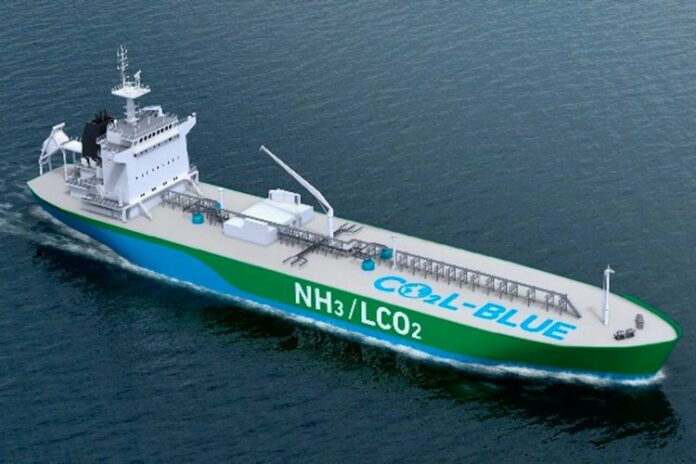
Mitsubishi Shipbuilding and NYK Line have been granted Approval in Principle (AiP) from the Japanese classification society ClassNK for a ship that can transport ammonia and liquefied CO2 (LCO2).

LCO2 carriers play an important role as one of the means of efficiently transporting captured and liquefied CO2 to storage sites or effective use sites in the CCUS (Carbon dioxide Capture, Utilization and Storage) value chain, which is attracting attention as one of the means to realize a low-carbon and decarbonized society. Ammonia is attracting worldwide interest as a next-generation clean energy that does not emit CO2 during combustion. The movement to strategically utilize ammonia in decarbonization is also gaining momentum worldwide.

Mitsubishi Shipbuilding and NYK Line have been working on the technological development of ammonia or LCO2 dedicated carriers, and both companies have already been collaborating on the technical development of large LCO2 carriers. With this acquisition of AiP, the two companies will utilize their accumulated knowledge of ammonia and LCO2 to aim for the safe and economical transportation of ammonia and LCO2 on the same carrier. In that case, the carrier could transport ammonia to thermal power plants on the outbound route and then carry CO2 emitted from thermal power plants to storage sites on the return route.

MHI Group is strategically working to strengthen the energy transition business, and Mitsubishi Shipbuilding is promoting the development and commercialization of ammonia and LCO2 carriers as a marine system integrator, aiming to build a value chain that spans land and sea and realize a decarbonized society. In addition, NYK Line will continue to develop various technologies, including “ammonia and liquefied CO2 carriers,” through the AiP acquired this time, utilizing its knowledge of ship operations. 

Høglund and Veracity by DNV partner to ease emissions reporting for shipowners

0

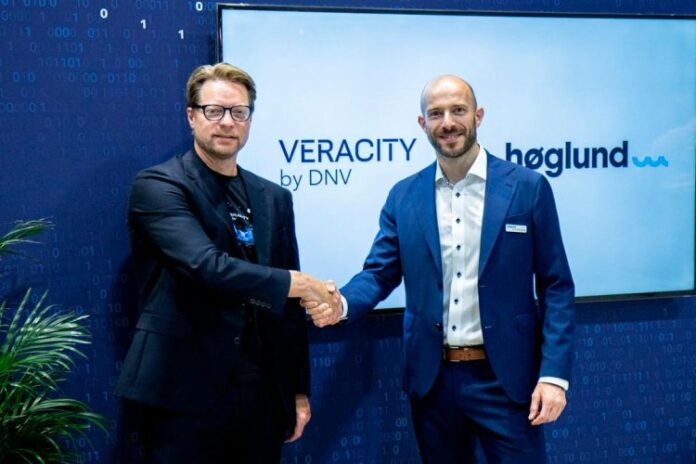
Høglund has entered a partner agreement with DNV’s leading industry cloud platform, Veracity.

The maritime industry stands to benefit significantly from the digitization of data collection, compilation, processing, analysis, distribution, and interconnectivity. 

By consolidating valuable information from vessels that are operating with Høglund’s systems and their Connect portal, and running it over Veracity, the two partners enable stakeholders to access and utilize verified and trusted data efficiently. This integration promotes transparency, innovation, sustainability, and improved decision-making that benefits both customers and affiliated companies, as well as society as whole.

The partnership has generated excitement among many customers, including Swedish shipowner and operator, Sirius Shipping. Benjamin Fhager, Environmental Manager at Sirius Shipping, says:

“We are thrilled to be offered this innovative solution by DNV and Høglund. It unlocks new possibilities for optimizing our operations and enhancing efficiency in the maritime sector. We look forward to the positive impact this collaboration will bring to our business, by offering a secure digital pipeline for standardized and scalable data exchange.”

Mikkel Skou, Executive Director at Veracity, says:

“This integration between Veracity and Høglund marks yet another milestone in our mission to transform the maritime industry through trusted data and connectivity between reputable and reliable partners. As verified emissions data becomes increasingly important toward compliance and contractual obligations, we can help fleet managers and owners like Sirius Shipping with a more secure and streamlined process of sharing relevant information across the value chain. ”

Peter Morsbach, COO at Høglund, said:

“We are thrilled to join forces with DNV on this ambitious venture. By integrating our automation solutions and vessel operational data within the DNV Veracity Platform, we can drive innovation, optimize vessel performance, and create a more connected maritime ecosystem. Together, we will shape the future of the maritime industry.”

Spark and Hutchison sign Saudi dryport concession agreement

0

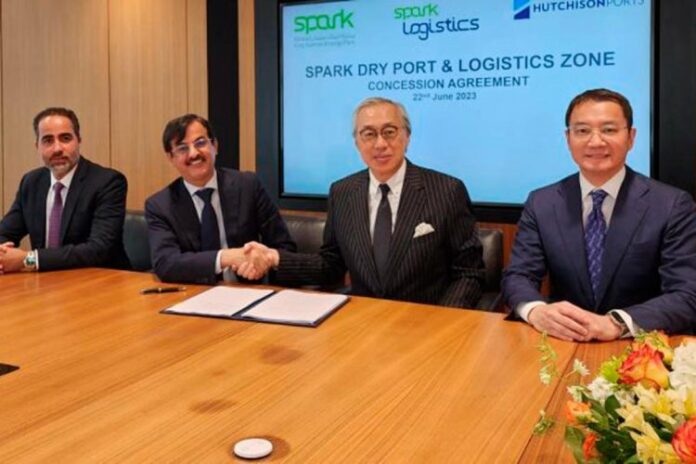
King Salman Energy Park (“SPARK”) and Hutchison Ports have announced the signing of the concession agreement to manage and operate SPARK’s dry port and bonded logistics zone (“Dry Port”).

The concession was awarded to a newly established joint venture, Energy City Logistics Company (“ECLC”), between SPARK and Colour Path Holdings Limited, a Hutchison Ports company. A signing ceremony was held to commemorate the special occasion, and it was attended by senior management from both companies.

SPARK is a 50 km2 global energy hub that is in the Eastern Province of Saudi Arabia. Under the concession, ECLC will be an exclusive operator to a $400M state-of-the-art logistics facility in SPARK. The new facility will provide services for handling containers, breakbulk and project cargo, storage yards, warehousing, customs clearance, bonded and non-bonded logistics solutions tailored to the needs of SPARK energy ecosystem. The Dry Port will accelerate the Eastern Province’s development as a regional logistics powerhouse with the integration of future GCC rail link, GCC highway and multiple expressways connected to SPARK site.

Speaking on the occasion, Eng. Saif Al Qahtani, SPARK’s President and CEO said,

“The Dry Port is one of the key enablers for SPARK’s ecosystem. The signing of the concession agreement marks an important milestone for the Dry Port moving to the operation readiness phase.  ECLC will be ready for SPARK tenants from day one with integrated logistics solutions and efficient services, so they can focus on their productivity and value creation activities.”

Mr. Eric Ip, Group Managing Director of Hutchison Ports, said,

“We are very pleased to participate in this mega project and contribute to the success of the Saudi Vision 2030 of developing the Kingdom into a global logistics hub. This partnership represents Hutchison Ports’ continued commitment to the Kingdom, and we look forward to a fruitful partnership with future business opportunities.”

Ramboll wins new multimillion energy island contract

0

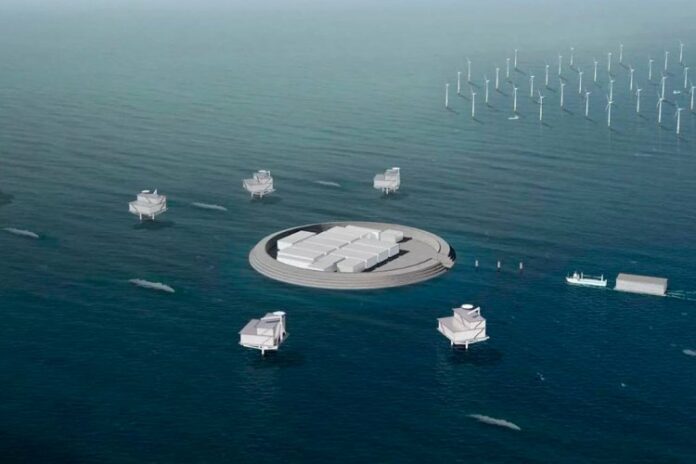
The energy island in the North Sea will be key to powering Europe with renewable energy.

By 2033, the island will have a capacity of 3 GW zero carbon electricity, equivalent to approximately half of Denmark’s electricity consumption today. By 2040, this figure rises to 10 GW– enough to power 10 million homes in Northern Europe.  

“The North Sea energy island positions Denmark as a frontrunner in the implementation of renewable energy at large scale. Not only will this transformative project be crucial in helping achieve Denmark’s national climate targets, it will also serve as an energy hub for Europe,” says Hannes Reuter, managing director for Ramboll’s global Energy division.  

“We believe the energy island can be a showcase for innovative and efficient offshore electrical infrastructure, helping pave the way for the future build-out of renewables, including green hydrogen, at global scale,” he adds.

Acting as a hub, the energy island will gather the power produced by nearby offshore wind farms and distribute it to Denmark and neighbouring countries. As the client consultant, Ramboll will assist the Danish transmission system operator Energinet in establishing the artificial island’s electricity infrastructure.  

The project will be one of the world’s first and largest offshore electrical infrastructure projects of its kind. With a total value of DKK 225 million (approx. EUR 30. million), and an option for subsequent maintenance, the project will employ 35 full-time Ramboll experts across the organisation in the coming 10 years.