-3.8 C
New York
Home Blog Page 285

Tasmania shows potential for green hydrogen exports to Rotterdam, says study

0

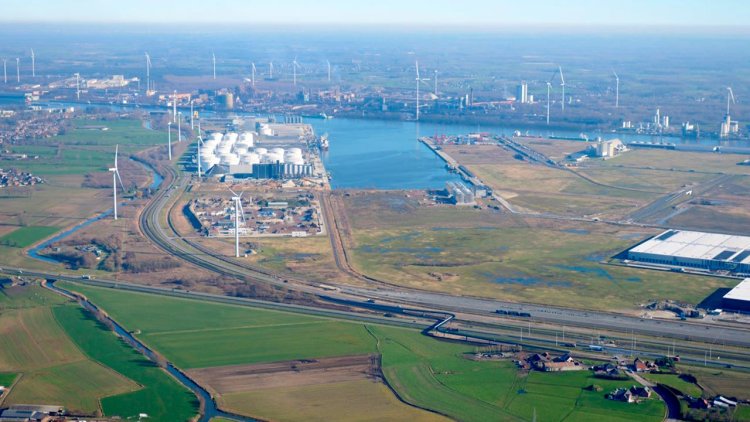
In Tasmania, much electricity can be produced from wind, a bit of solar and balancing with hydroelectric power, leading to one of the lowest costs for the production of green hydrogen in the world. The cost of transportation over a longer distance is relatively small and not a limiting factor. 

The Tasmanian government and the Port of Rotterdam signed a Memorandum of Understanding in December 2021 to assess the feasibility of exporting green hydrogen to Rotterdam. Since then officials from the Tasmanian government and the Port of Rotterdam Authority have been working together intensely to study the potential supplychain to export green hydrogen to Rotterdam from Tasmania. One of the conclusions of the study was that the distance from the Tasmanian port of Bell Bay to Rotterdam is not a limiting factor.

The cost of overseas transportation is canceled out by the relatively low cost of producing green hydrogen in Tasmania where wind and hydroelectric power are abundant. There are good opportunities for large-scale off-shore wind farms in the Bass straight, north of Tasmania, where the country can benefit from the Dutch knowledge and experience in that sector. The market opportunities are also favorable; demand for green hydrogen will continue to grow rapidly in Northwest Europe for the industry to achieve its CO2 reduction targets.

It is important that the Tasmanian government takes a leading role in further developing the necessary infrastructure and scaling up green power and hydrogen production; first of all to meet the local demand and then for exports. Close cooperation with Europe is critical where regulation and certification are concerned for exporting to Europe.

MPA Singapore and Lloyd’s Register sign Silk Alliance MoU

0

The Maritime and Port Authority of Singapore (MPA) and Lloyd’s Register Maritime Decarbonisation Hub (LR MDH) have signed a Memorandum of Understanding. 

This MoU is aimed at collaborating on a fleet-specific decarbonisation strategy and implementation plan for ‘The Silk Alliance’ cross-industry initiative to enable zero-emission shipping across the Indian and Pacific Oceans.

Both parties will strengthen their commitment to developing partnerships in co-creating the green corridor to trial decarbonisation strategies for container ships operating primarily in Asia to achieve significant emission-saving impact. 

LR MDH, which is a joint initiative between Lloyd’s Register Group and Lloyd’s Register Foundation, won the International Maritime Organisation (IMO)-MPA NextGEN Connect Challenge for the “Development of a Route-based Action Plan Methodology based on The Silk Alliance”.

The collaboration includes driving investments into scalable fuel supply infrastructure to meet the demand aggregation signal of members of The Silk Alliance and potential wider regional bunkering demands for alternative fuels. 

Nick Brown, Chief Executive Officer, Lloyd’s Register, said:

“Flag and port authorities play a crucial role in increasing the industry’s confidence in zero-emissions shipping, and as the world’s largest bunkering hub, we see Singapore and the MPA as a driving force in advancing the safe uptake of low-to-zero emissions fuel in the global shipping industry.”

Teo Eng Dih, Chief Executive of MPA, said:

“The Silk Alliance will enable key stakeholders in Singapore to chart the transition towards low- and zero-carbon options. As the world’s largest transhipment container port and bunkering hub, Singapore will take active steps to support the decarbonisation of the container trade in line with IMO’s Revised Strategy to reduce emissions from shipping.”

Launched in May 2022 with 12 leading cross-supply chain stakeholders, The Silk Alliance brings together an integral group of organisations from both the private and public sector across the entire value chain of shipping. Inaugural members include:

  • port operator, PSA;
  • shipowners, MSC Shipmanagement Ltd., Pacific International Lines (Pte) Ltd (PIL), Wan Hai Lines, X-Press Feeders, Yang Ming Marine Transport Corp.;
  • shipyard, Seatrium;
  • bunker logistical supplier, Singfar International;
  • engine manufacturer, Wärtsilä;
  • ship manager, Wilhelmsen Ship Management;
  • and financial institutions, the Asian Development Bank and ING.  

The Silk Alliance was initially focused on a baseline fleet that predominantly bunkers in Singapore and sails across Asia, East Africa, the Middle East, Australia, and the Pacific Islands. As the implementation phase rolls out, the baseline fleet’s demand is expected to eventually aggregate further to other regional hubs and deep-sea routes, such as the Singapore-Rotterdam green and digital shipping corridor.

Damen Naval contracts RH Marine for new anti-submarine warfare frigates

0

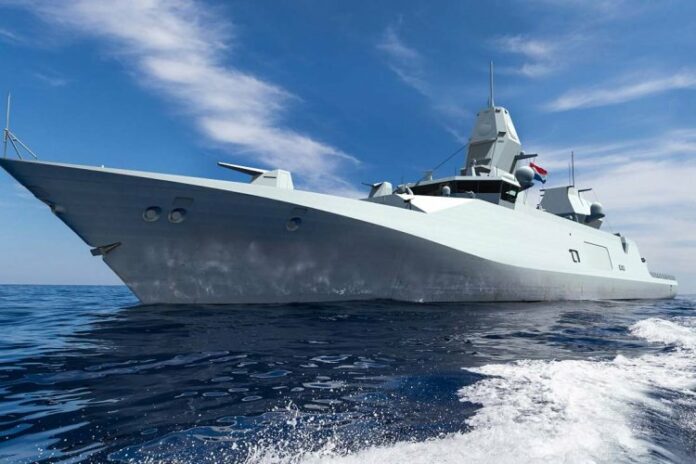
Damen Naval has signed a contract with the first Dutch supplier for the new Anti-Submarine Warfare (ASW) Frigates. 

Netherlands-based RH Marine will supply the Integrated Mission Management System (IMMS), the Integrated Navigation Bridge System (INBS) and the Integrated Platform Management System (IPMS) for each of the four frigates for the Dutch and Belgian Navies. 

The announcement of the cooperation follows the official contract signing last week between the Dutch Ministry of Defence and Damen for the design, construction, and delivery of the new frigates.

“One of our objectives is that we want to share the enormous knowledge accumulation we gain from this kind of high-quality, launching customer project with as many Dutch suppliers as possible. This way, the Netherlands maintains its place in the world’s top tier of complex naval construction and strengthens our position within existing and new European partnerships,” explains Damen Naval’s Managing Director Roland Briene. “This contract with RH Marine is an excellent example of that. We have been working closely together for many years and once again I am looking forward to a great project with a wonderful end result.”

The systems supplied by RH Marine are based on the latest cybersecurity, network, and data centre technology, on which RH Marine’s next-generation platform automation, bridge and mission management applications will run. The systems will allow the ship to operate with a smaller crew, with a much higher and smarter degree of automation supporting them.

“As a company, we are immensely proud of our contribution to the ASWF project,” said Hugo Loudon, Managing Director RH Marine. “Over the past few years, in an excellent collaboration between COMMIT, Damen and RH Marine, an innovative foundation has been established for automation in relation to the manning and operations concept. This will form the blueprint for the ships of the future of the Dutch and Belgian navies.”

The new frigates will be deployable for multiple tasks, although the emphasis will be on anti-submarine warfare. The vessels will be equipped with a comprehensive suite of sensors to detect submarines. The technology used will create a fast, robust, and easily maintainable system that lends itself extremely well to further growth and continuous improvement.

RH Marine’s IPMS system uses Industrial Internet Of Things (IIoT) connectivity, which gives the platform flexibility in connection and configurability. This connectivity also provides the ability to store huge amounts of data from connected systems and sensors. Analysis of these data can be used to improve operational processes and support predictive maintenance.

The ASW frigates are the replacements for the current Karel Doorman-class of multipurpose frigates built between 1985 and 1991 by Damen Naval (then the Koninklijke Maatschappij de Schelde). Eight M-class frigates were delivered, of which six were eventually sold to other countries, including two to Belgium. With the end of the service life of these ships in sight, the Netherlands and Belgium decided to jointly replace the ships with these ASW frigates. The first ship is scheduled to be delivered by Damen Naval in 2028.

Enlargement Twente canals officially completed

0

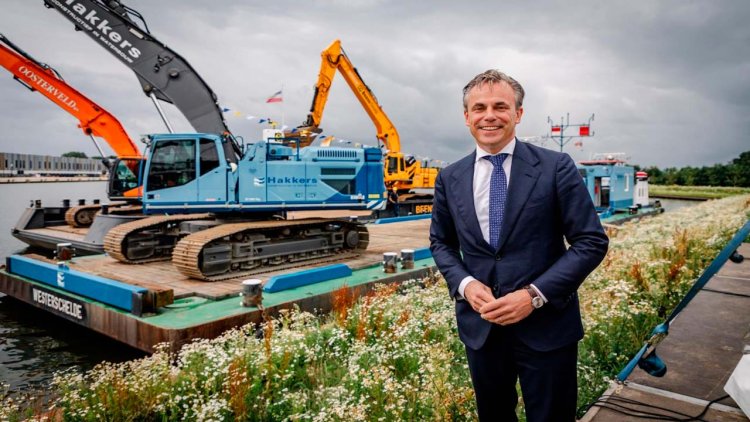
The Dutch Minister of Infrastructure and Water Management, Mark Harbers, attended an event celebrating the completion of the enlargement of the Twente Canals. 

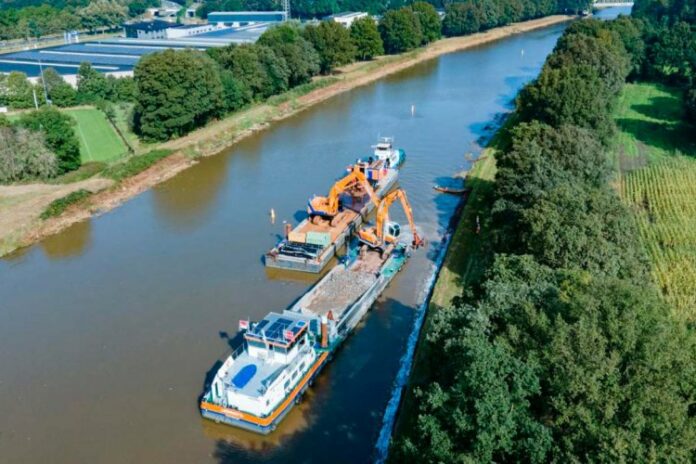
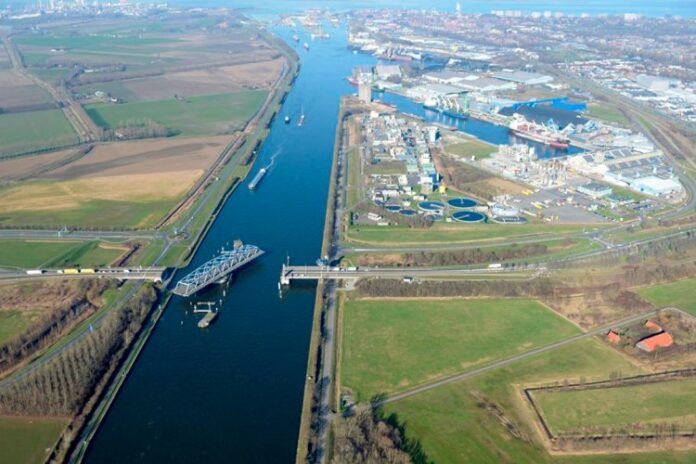
The Twente canals are an important logistical connection for the transportation of goods by water. By enlarging the waterway, the ports of Almelo, Hengelo and Enschede are more accessible and larger vessel can sail through more safely and smoothly. This boosts regional economy and makes water transport even more attractive.

The Van Oord – Hakkers – Beens consortium was commissioned by Rijkswaterstaat, the executive agency of the Dutch Ministry of Infrastructure and Water Management. The consortium was responsible for enlarging the canal, replacing the sheet piling over a length of 35 kilometres and applying a self-sealing layer at the bottom of the canal. The consortium also created 13 kilometres of nature-friendly river banks.

During project execution, the Twente canal remained accessible and in use at all times. At the same time, up to 80 pieces of floating equipment worked on the canal. The project paid a lot of attention to sustainability. Part of the sheet pile walls and the dredged material were reused on projects in the area.

Ronald Schinagl, Managing Director Netherlands, said:

‘As a consortium, we are proud to contribute to the objective of the Twente canal project: the improvement of the accessibility of the waterway. In cooperation with Rijkswaterstaat and all other stakeholders, we got the job done with limited disruption and an eye for sustainability.’

Ports of Los Angeles and Nagoya sign agreement to expand cooperation

0

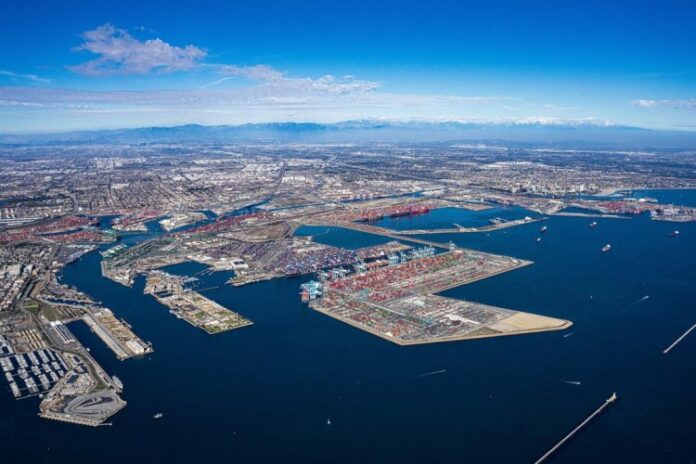
Officials from the ports of Los Angeles and Nagoya, Japan, have signed a new Memorandum of Understanding (MOU) to broaden cooperation on key sustainability and operational efficiency initiatives, including port community systems and digital supply chain information sharing, zero-emission vehicle and equipment testing, and a new Green Shipping Corridor between the two ports. The new three-year agreement builds upon the 2020 MOU.

Port of Los Angeles Executive Director Gene Seroka said: “This agreement is a testament to the success that can be achieved when ports commit to work together, share ideas and advance mutual priorities.”  

Yuji Kamata, Executive Vice President of the Nagoya Port Authority, said:

“This agreement paves the way to advance environmental sustainability and operational efficiencies at both of our ports. We look forward to further cooperation with the Port of Los Angeles so that both ports can further prosper as we move toward a new era of achieving carbon neutrality.”

The new three-year MOU involves sharing best practices and exchanging information on issues of operational efficiencies, such as the development, deployment and promotion of port community systems for end-to-end supply chain information sharing. These include the Port Optimizer™ that has been in use at the Port of Los Angeles since 2017, and has helped revolutionize the Port’s ability to plan, forecast and track cargo on a real-time basis.

Under the new agreement, both ports also agreed to continue collaborating on the development and testing of zero-emission vehicles and equipment; environmental initiatives focused on terminal operations, ships in port and drayage trucks; and on energy use and alternative energy sources.

Central to sustainability efforts in the agreement will be the establishment of a new Green Shipping Corridor in the coming years, guided by a port decarbonization plan. This endeavor will focus on the reduction of greenhouse gas emissions from cargo movement between Nagoya and Los Angeles, and encourage the use and promotion of low and zero-carbon ships and fuels.

Cooperation between Los Angeles and Nagoya dates back to 1959, when the two cities established a Sister City Affiliation as part of President Eisenhower’s Citizens’ International Exchange Program. Over the decades, the two ports’ relationship has been celebrated by numerous visits, exchange programs, meetings and most recently, agreements on operational and environmental cooperation.

NYK joins GCMD as strategic partner to accelerate shipping’s decarbonisation

0

The Global Centre for Maritime Decarbonisation (GCMD) and Nippon Yusen Kabushiki Kaisha (NYK) have announced the signing of a five-year Strategic Partnership agreement. 

Numbers from Clarksons Green Transition Team indicate that Japan leads other nations in alternative-fuel-ready vessel orders, constituting about 10% of the global equivalent.

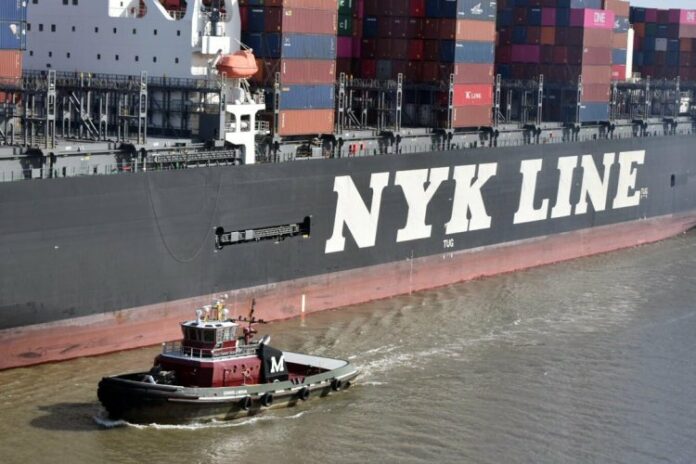
NYK is the first shipping company in Japan to independently obtain an approval-in-principle (AiP) for an ammonia bunkering vessel (ABV) from ClassNK and is on track to retrofit Sakigake, an LNG-fuelled tugboat, with an ammonia-fuelled engine. The resulting ammonia-fuelled tugboat (A-Tug) is expected to commence operation in 2024. Additionally, NYK is making efforts with partner companies to deliver an oceangoing ammonia-fueled ammonia gas carrier (AFAGC) by 2026. NYK was therefore a natural partner in the GCMD-commissioned ammonia bunkering pilot safety study that was completed in April. As one of 22 Study Partners, NYK contributed significantly to the safety study by sharing the learnings from its experience with ammonia.

For GCMD’s pilot on developing an assurance framework for drop-in biofuels, NYK trialled VLSFO (B24) on board Lycaste Peace in February 2023, contributing to the successful completion of the second of five supply chains of the full pilot. With this data and data from the four other supply chains, GCMD is developing a robust framework for quality and quantity assurance of drop-in biofuels and GHG accounting. GCMD is also conducting a green premium cost-benefit analysis of deploying biofuels with NYK and other partners involved in the pilot.

Professor Lynn Loo, CEO of the Global Centre for Maritime Decarbonisation, said:

“We are proud to have NYK, a prominent Japanese shipping line, join us as a Strategic Partner, given its strong commitment to decarbonisation and Japan’s standing as a major maritime nation. This Strategic Partnership agreement with NYK formalises and strengthens our existing relations in working on low-carbon solutions for international shipping. We look forward to levelling up the engagement with NYK to further accelerate collective efforts towards shipping’s decarbonisation.”

“We are honored to be GCMD’s strategic partner, and I am very confident that this partnership will greatly empower our efforts to reduce GHG emissions from the maritime sector,” said Takaya Soga, President and CEO of NYK. “Through the partnership, I am looking forward to cooperating with GCMD and all its partners to realize the widespread social implementation of various decarbonisation solutions in our industry.”

Seabed 2030 and Ocean Census partner up to map the seabed

0

Both programmes have been initiated and supported by The Nippon Foundation, Japan’s leading philanthropic organisation which works to solve global issues through social innovation. 

“By integrating seafloor mapping data with a deeper understanding of where and what lives in our ocean, we can gain a holistic understanding of ocean ecosystems, their role in oxygen production, climate regulation and food security. In combination, we will be able to identify areas of high conservation priority so we can develop effective strategies to safeguard ocean life – the life that makes all life on Earth possible,” explained Yohei Sasakawa, Chairman of The Nippon Foundation.

The Nippon Foundation and Nekton launched Ocean Census in April this year, with the aim of revolutionising our understanding of marine life. Scientists maintain that we have discovered slightly more than 10 per cent of the species that live in the ocean, despite it being home to an estimated 2.2 million species. The rate of discovery has remained relatively unchanged since the 1800s, with approximately only 2,000 new ocean species described per year. 

However recent technological advances in high resolution imaging, DNA sequencing, and machine learning mean that scientists can now considerably accelerate the process, and Ocean Census has set itself the ambitious target of discovering 100,000 new species over the next decade.

This will be achieved through expeditions to the ocean’s biodiversity hotspots, with species discovered on expeditions sent for imaging and DNA sequencing at Ocean Census Biodiversity Centres. Ocean Census is being undertaken by a coalition of partners uniting the resources and expertise of science, media and civil society with government, philanthropy and business.

Seabed 2030 is a collaborative project between The Nippon Foundation and GEBCO to inspire the complete mapping of the world’s ocean by 2030 and to compile all bathymetric data into the freely available GEBCO Ocean Map – it is also a formally endorsed Decade Action of the UN Ocean Decade. GEBCO is a joint programme of the International Hydrographic Organization (IHO) and the Intergovernmental Oceanographic Commission (IOC), and is the only organisation with a mandate to map the entire ocean floor.

Seabed 2030 Project Director Jamie McMichael-Phillips said:

“This partnership will leverage the respective strengths of both parties in pursuit of a unifying and essential goal – to better understand the planet and ensure its sustainable management. 

“Ocean Census’ mission seamlessly aligns with Seabed 2030’s goal. Together, we can help fill in the critical gaps in our knowledge and ensure policymakers and stakeholders are able to make evidence-based decisions that protect and safeguard the ocean for generations to come.”

This partnership is a testament to the collective commitment of Seabed 2030 and Ocean Census to unite and inspire global efforts in mapping and preserving the world’s ocean. All data collected and shared with the Seabed 2030 project is included in the free and publicly available GEBCO global grid.

EU grant to fund railway development in North Sea Port

0

In order to realise the rail development between Terneuzen and Ghent, a lot of preparatory work is needed: further research ahead of the construction work and setting up mechanisms for the involvement and participation of local stakeholders. Thanks to this financial contribution, the Rail Ghent Terneuzen project organisation, consisting of ProRail, Infrabel and North Sea Port, will now be able to take this next step.

“The Dutch government and the Belgian federal government have already pledged nearly €240 million for the construction of the rail link between Terneuzen and Ghent.” – Daan Schalck, CEO North Sea Port

Daan Schalck, CEO, North Sea Port: “Currently, some 10% of freight transport between the port and the hinterland takes place by rail. The Dutch government and the Belgian federal government have already pledged nearly €240 million for the construction of the rail link between Terneuzen and Ghent. With this pledge of support from Europe, we can work together to facilitate the necessary research into sustainable rail transport in our port area.”

Benoît Gilson, CEO Infrabel: “This cross-border rail development project in the port area aims to promote rail freight transport and so support the modal shift, the switch from road to rail transport. Together with the other infrastructure projects and rail investments, Infrabel wants to contribute to sustainable and customer-focused solutions in and around North Sea Port. After all, ports are the engines of our economy and mobility, and as such represent an essential link in our society.”

ProRail CEO John Voppen also welcomes the additional funding for international rail freight.”Obviously, rail freight doesn’t stop at the border. It goes all over Europe. For that reason, it is good to look beyond borders in our planning and studies, and to support each other in achieving our shared goals. So I am very pleased with this development.”

The grant was awarded by ‘The Connecting Europe Facility’ (CEF) to help accelerate the sustainable modal shift in transport networks across Europe (the Trans-European Transport Network – TEN-T). This will provide a further impetus to achieving the European Green Deal. The rail developments in North Sea Port fit perfectly within those efforts, with a commitment to sustainable rail transport that can provide an alternative to road transport. As well as giving an economic boost to the region, the new rail link will contribute to a favourable and sustainable business climate.

The study into rail developments will also focus on engagement with local stakeholders. In this way, the partners aim to secure social and economic added value for businesses, the region and local residents alike.

Previously, it was announced that existing rail transportation in the port area will be upgraded with the following three extensions:

  • A new railway line on the east bank of the Ghent-Terneuzen Canal between Axel in the Netherlands and Zelzate in Belgium;
  • A new curve in the track east of the Sluiskil bridge in the Netherlands;
  • A rail connection on the north side of the tracks at Kluizendok towards the Netherlands (Belgium).

Preliminary analyses will begin after the summer of 2023. In this phase, local stakeholders will be involved. ProRail and Infrabel will be engaging with local residents and organisations. At the start of the study phase, Infrabel will publish an initial memorandum and a project memorandum, and ProRail will publish a notification of intention in the Netherlands. These documents will also describe how local stakeholders will be involved.

MERA spearheads world-leading wave energy hydrodynamics project

0

Funding has been secured through the Australian Research Council’s Linkage Project scheme, which recently awarded more than $40 million to 81 projects performing collaborative research in a wide range of fields to transform industries and strengthen the Australian economy.

Uniting world-leading expertise from across industry and academia, the project aims to harness a unique combination of numerical, laboratory and field data. This includes operational data from CorPower Ocean’s first full scale wave energy deployment taking place in northern Portugal, through the HiWave-5 Project.

Senior Research Fellow at the University of Western Australia (UWA) Hugh Wolgamot said the intensive research will help address a fundamental issue for wave energy – modelling how high-performance WECs interact with the ocean.

“Scientifically, the guiding principles of wave energy have been clear for some time, with resonance between the waves and the WEC motion enabling maximum power absorption,” he said. “In this project we are partnering with CorPower Ocean, a leading WEC developer, whose ingenious negative spring mechanism represents perhaps the purest realisation of these principles. Our ultimate goal is to maximise the amount of energy captured and converted by these WECs from the ocean environment. By focusing efforts on performance in moderate seas, which occur most frequently, we will identify ways to boost hydrodynamic performance, increasing overall efficiency and driving down cost – which is paramount to enabling large-scale utilisation.”
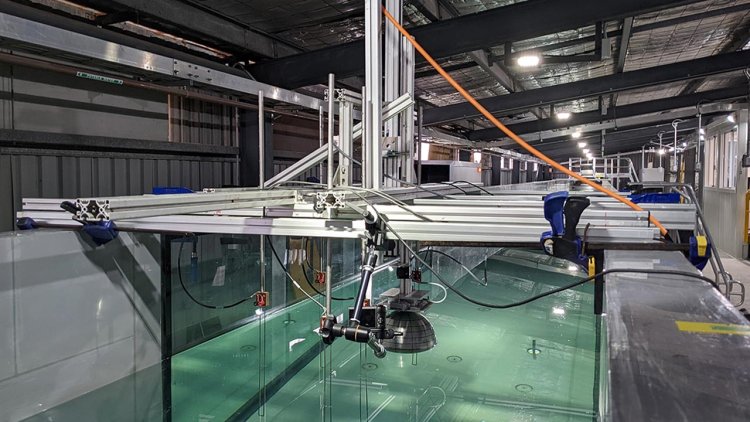
The first phase of the project involves lab experiments through high-precision model-scale wave flume experiments. These are designed to isolate nonlinear dynamic features through careful post-processing and analysis of the data. A second phase will focus on numerical model development, informed by the laboratory measurements. The third and final phase will see new hydrodynamic models carefully validated against full-scale field measurements, comparing WEC simulations with CorPower Ocean’s fully instrumented ocean deployment.

CorPower Ocean Lead Scientist Jørgen Hals Todalshaug said numerical modelling underpins much of wave energy engineering, and new advances in the field will play a key role in driving down technology costs.

“This project will deliver new numerical models specifically concerning critical nonlinearities from large amplitude WEC motions,” he said. “While there has been progress in this area, the different nonlinear effects and their treatment have not been systematically investigated and fully validated. As there is no standard method to account for these force components in an accurate way, the outcomes of this Linkage Project will be of profound interest to our industry.

“The vast majority of numerical model advancement is undertaken by the academia field alone. However, the collaborative nature of this research project drawing in industry, combined with the ability to test alongside a full-scale WEC deployment, enables us to operate at the sharp edge of innovation.”

Australian Ocean Energy Group General Manager Stephanie Thornton said the new Linkage Project plays into the organisation’s broader strategic effort to shift the industry paradigm from ‘technology push to market pull’.

“AOEG, was established in 2018 to accelerate the nation’s response to climate change,” she said. “Our work focuses on decarbonising Australia’s Blue Economy by building demand, where none previously existed, for rapidly emerging ocean energy technology. As such, we recognise the huge importance of research efforts like this latest Linkage Project, specifically addressing areas such as WEC efficiency and cost. This sort of work is crucial if we are to bridge the gap between technology development and end-users and attract the necessary investment and interest.”

Unique vessel for the Fehmarnbelt project is being built in Poland

0

When the large elements for the Fehmarnbelt tunnel are lowered into place in the tunnel trench, it will be done on a cushion of gravel. It requires a unique vessel to be able to lay out the cushion with the right precision at a depth of 40 meters. At Crist Shipyard in Gdynia, Poland, the contractor FLC is having this special vessel built for the Fehmarnbelt project.