-1 C
New York
Home Blog Page 281

Damen to supply Air Cavity System to Amisco for reduced emissions

0

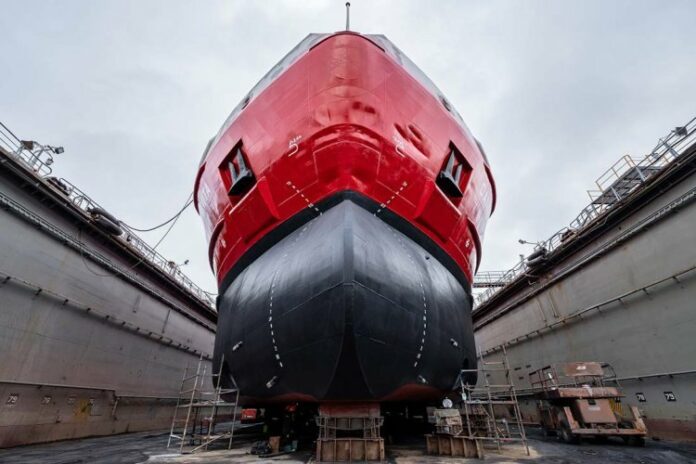
Damen Shipyards Group has announced the first sale of its innovative Damen Air Cavity System (DACS) to Amisco. 

DACs is an air lubrication system, borne out of a collaboration between Damen and the Delft University of Technology (TU Delft). It maintains a thin layer of air over the flat bottom of a vessel’s hull, reducing resistance in the water, thereby lowering drag and friction. As a result, the efficiency of the vessel is improved with fuel consumption reduced by up to 15%. 

With DACS installed to Danita, Amisco will achieve the CII rating necessary to continue operating in the Baltic Sea in the face of new, stricter emissions regulations. At the same time, the considerable reduction in fuel consumption allows for a rapid return on investment. 

Allan Noor, CEO of Amisco, said:

“The Air Cavity System is a game-changer for us, allowing us to lower the fuel consumption and reduce the CO2 emissions of our current fleet. This marks the initial phase in our continuous commitment to delivering value to our partners through our existing fleet, while collectively minimizing the environmental impact across the entire supply chain.” 

During the verification of the fuel saving results, Damen was supported by the IACS class society, RINA. RINA played a pivotal role in verifying the impressive fuel-saving results achieved by Damen’s technology and thoroughly examined the working principle of the air lubrication system. 

Damen received independent validation of the significant fuel savings realized through the implementation of Damen air lubrication system. 

Petrofac secures integrated services contract for FPSO in Africa with CNR International

0

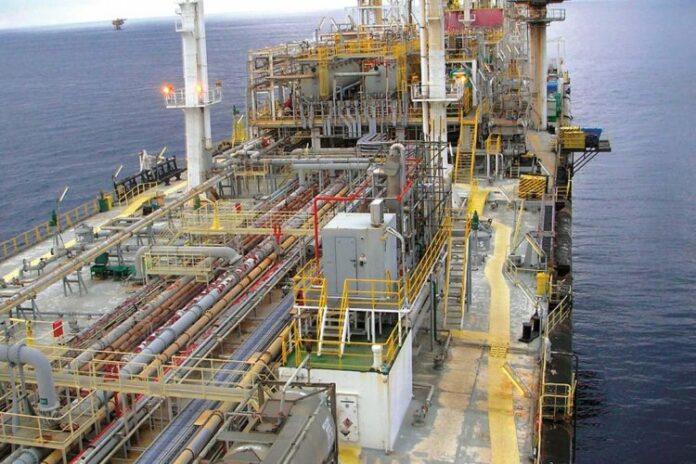
Petrofac has been awarded a facilities management contract by CNR International (CNRI) offshore the Ivory Coast, West Africa.

Around 110 personnel currently supporting the FPSO, including those onshore and on the vessel, will transition to Petrofac from BW Offshore following the recent sale of the vessel to CNRI. The transition of people and operatorship is expected to complete before the end of July.

The contract will be managed from Petrofac’s technical hub in Aberdeen, using decades of experience in the mature and highly regulated UKCS market.

Nick Shorten, Chief Operating Officer for Petrofac’s Asset Solutions business, said:

“I’m delighted that we are continuing to grow our presence in Africa with this latest contract from CNRI. We bring our considerable global FPSO experience to the Ivory Coast, adding to our portfolio of service contracts in Africa. Petrofac is expanding across the continent, providing local jobs, developing local skills and collaborating with local partners.

“We look forward to deploying our expertise and working collaboratively with CNRI and our new employees to effect a safe and seamless transition through to operation of the asset.”

This latest award builds on contract successes achieved throughout 2022, including decommissioning in Mauritania for Tullow Oil, operations and maintenance for Tullow Oil in Ghana and the provision of offshore operations services for bp’s Greater Tortue Ahmeyim (GTA) Project, including an FPSO, in Mauritania and Senegal.

Deep-Sea Trench: Garbage dump on the sea floor

0

A team of scientists from the Senckenberg Research Institute and Natural History Museum Frankfurt, the University of Basel, and the Alfred Wegener Institute, Helmholtz Centre for Polar and Marine Research, has completed the most comprehensive study of (macro)plastic waste at depths of up to 9,600 meters. 

In their study, published in the journal “Environmental Pollution,” the researchers analyzed the amount, material, and type of plastic debris in the Pacific Kuril-Kamchatka Deep-Sea Trench. They show that most of the plastic debris originates from regional shipping routes and fisheries. The team warns that deep-sea trenches could become “garbage dumps of the seas.”

At least since 2018, when the headlights of a submersible revealed a shopping bag at a depth of 11,000 meters in the Mariana Trench, the presence of plastic waste in the deep sea has been undeniable. 

“Even though there is now a growing awareness of the plastic problem, the amount of plastic produced worldwide has increased very significantly over the last 70 years – 391 million tons were produced in 2021 alone,” relates Dr. Serena Abel, currently a postdoctoral researcher at the University of Basel, and she continues, “The interconnectedness of the oceans via ocean currents, combined with the transportability of buoyant plastic materials, makes plastic pollution a global problem. Especially in abyssal and hadal depths, where the main degradation factors such as photodegradation (i.e., changes under the influence of sunlight) and wave action are absent, plastic accumulates and persists for a long time – up to several hundred years. Recent records from deep-sea trenches show the omnipresence of the human footprint even in places inaccessible to us humans.”

In her new study, the research associate, together with Senckenberg marine scientist Prof. Dr. Angelika Brandt and colleagues from the Alfred Wegener Institute, Helmholtz Centre for Polar and Marine Research, investigated the presence of plastic waste in the Kuril-Kamchatka Trench, a 2,250-kilometer-long deep-sea trench in the northwestern part of the Pacific Ocean. With the help of trawl nets and an epibenthic sled, the scientists sampled 13 stations at depths between 5,134 and 9,582 meters. 

“To our knowledge, this is the deepest deployment of trawl nets for the study of plastic pollution ever,” explains Brandt, and she continues, “Our results are alarming: in all of our samples we found (macro) plastic debris – with a total of 111 objects.”

Industrial packaging and material attributable to fishing were the most common waste components in the Kuril-Kamchatka Trench, most likely originating from long-distance transport through the Kuroshio Expansion Current or from regional shipping routes and fisheries. At 33 percent, strings and cords were the most common debris, followed by plastic fragments (23%) and industrial packaging (11%). Obvious labels in Japanese, Korean, and Spanish were evident on six pieces of plastic waste.

“By categorizing the anthropogenic waste according to its intended use, it was possible to distinguish the two main sources of plastics that settle on the bottom of the trench – packaging and fisheries. Our spectroscopic analyses also allowed us to identify the main types of polymers, namely polyethylene, polypropylene, and nylon. These polymers are quite stable in the marine environment as they are not hydrolytically degraded and are most likely to end up at the bottom of the trench without breaking down into smaller components,” adds Abel

The remote location and high sedimentation rates of the Kuril-Kamchatka Trench favor it as a potential site for extensive plastic pollution, which could turn the trench into one of the world’s most contaminated marine areas and an oceanic plastic deposition zone, according to the study. 

“Our findings emphasize the urgent need for new policies on waste treatment and plastic production! The sea floor must not become a dumping ground for plastic waste!” demands Brandt.

PGS in production on first offshore wind contract

0

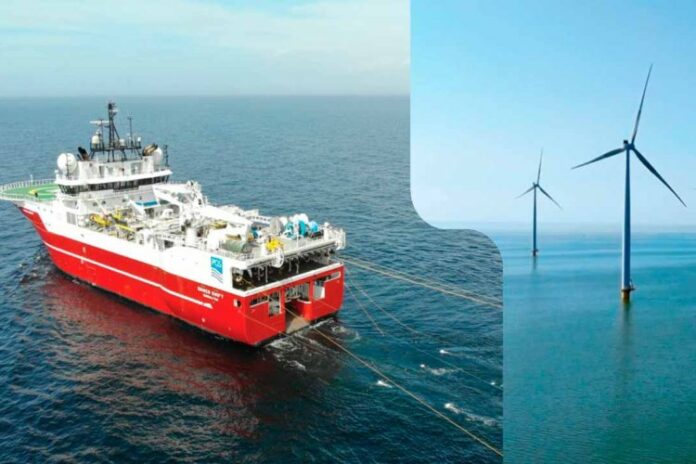
Earlier this year PGS was awarded its first site characterization acquisition contract by partners bp and EnBW, for the ongoing development of the Morgan and Mona offshore wind farms in the Irish Sea.

These projects could help achieve the UK’s ambition to generate 50GW of offshore wind power by 2030.

The 3D vessel Sanco Swift mobilized for the survey in April and is expected to complete acquisition near the end of July. The subsurface data is acquired with PGS’ market-leading ultra-high-resolution 3D (UHR3D) P-cable system which provides significantly more detailed subsurface data for shallow targets, compared to traditional seismic acquisition systems. The data is continuously quality controlled and processed by PGS’ experienced Imaging team offshore and finalized onshore shortly after completion of acquisition.

“Our UHR3D system acquires near-surface data significantly more efficiently than conventional solutions and builds on our geophysical expertise and vessel operation experience. By meeting our client’s objectives in our first ultra-high-resolution windfarm site characterization project, I am increasingly confident that our geophysical approach to understand the shallow subsurface layers has a proven market fit. Our business is ready to be scaled further to increase our market share in offshore wind site characterization,” says Berit Osnes, Executive Vice President New Energy in PGS.

World Fuel Services completes first LNG bunkering in China for Hapag-Lloyd

0

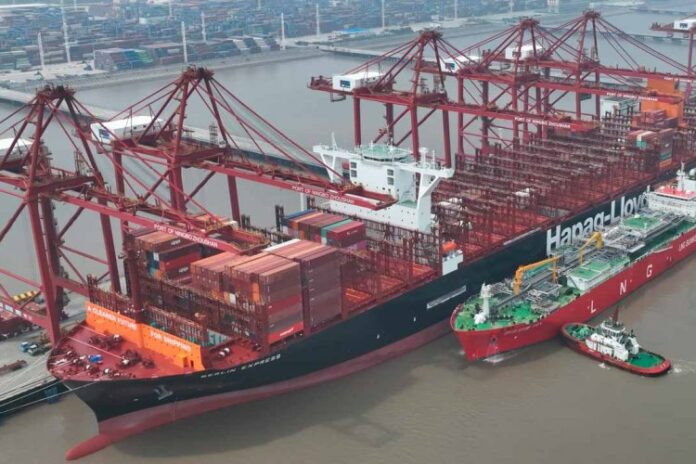
World Fuel Services Corporation has completed an LNG bunkering operation for the refueling of a carrier at a Chinese port, with the new Hapag-Lloyd ship Berlin Express becoming only the second carrier to be refueled with bonded LNG in the port.

With the support of both the Ningbo-Zhoushan Port authority and local supplier CNOOC, the dual-fuel Berlin Express took delivery of 6,000 cubic meters of bonded LNG fuel in an operation that lasted around 20 hours. The Berlin Express is a 24,000 TEU ultra-large container ship on its maiden voyage, having been launched in June.

Jan Christensen Head of Global Fuel Purchasing at Hapag-Lloyd says:

“The refueling of our new Berlin Express demonstrates great collaboration and innovation to achieve efficient LNG bunkering at a major international port. It’s a first of many steps forward in our journey to a low-carbon future and illustrates what can be achieved when suppliers and port authorities coordinate operations and work together towards a greener global shipping industry.”

Mark Tamsitt, Senior Vice President Marine, EMEA & Asia at World Fuel Services, says:

“World Fuel is dedicated to accelerating the energy transition into lower carbon fuels in the marine industry by connecting customers with the right suppliers and ports. The successful LNG fueling of Hapag Lloyd’s Berlin Express exemplifies the power of collaboration, with support from the Ningbo-Zhoushan Port Authority and local supplier CNOOC. By working together, we can support the movement towards a more sustainable future in the marine sector, reducing emissions and fostering a cleaner, greener industry. World Fuel remains committed to driving innovation, cultivating collaboration, and bringing to market fuels that align with our customer’s emission goals as we lead the way towards a more sustainable marine industry.”
 

Need to know much more about deep sea mining, say research groups

0

On June 20th, the Norwegian government presented its plans for commercial seabed mineral mining on the Norwegian continental shelf. 

Research groups at NTNU have been working on this topic for more than a decade. Interdisciplinary research teams have looked at technological, geological, social, ethical and environmental aspects through the NTNU Oceans pilot programme on deep-sea mining, among others.

This research project is headed by Professor Steinar Løve Ellefmo. He has the following comments on the government’s plans:

“Society needs minerals. Deep-sea mineral mining must be regarded as a ‘source’ along with recycling and reuse, reduced consumption and onshore mineral mining. This is the best way to ensure coordinated, holistic management of our mineral resources. The time is more than ripe to find out whether underwater mineral mining can be done responsibly. We have been working on this for many years, and this work should continue.

Allowing mineral activities on the Norwegian continental shelf will also increase the opportunities for collecting the data we need for good decision-making in the future about whether to go ahead with mining. Numerous technological concepts have been proposed, but none of the technologies have undergone full-scale testing. Work is now being done on this, and opening Norwegian waters for mineral activities will enable the necessary testing of both mining technologies and environmental monitoring technologies, for example.

Norway has many years of experience in marine operations, and over the decades the country has developed a sound resource management system with strict environmental legislation. Prior to any start-up of operations and extraction, we need to collect additional data to characterize deep-sea ecosystems and geological structures, as well as to describe and assess possible consequences of deep-sea mining.

By taking these necessary management-related steps, Norway will be in a good position to demonstrate what sound management of mineral resources on the seabed actually entails. NTNU has been working on marine mineral extraction from an interdisciplinary perspective for a number of years and will continue to do so through the TripleDeep project, for example. NTNU will be able to contribute valuable knowledge and expertise in connection with any award of mining licences.”

The main objective of the TripleDeep project is to investigate whether deep-sea mining can be developed as a new source of critically important minerals in a sustainable way. The TripleDeep Project Group is a multidisciplinary team consisting of historians, marine biologists, economists, geologists and engineers, including Steinar Ellefmo.

The research project is headed by Professor Mats Ingulstad. Here’s what he had to say about the government’s decision to allow deep sea mineral mining:

“The TripleDeep project is still relatively young, and we consequently can’t give any clear answesr as to whether seabed mining can be carried out in a sustainable way. The issues are too broad and complex, and the knowledge gaps are still too great. What worries me personally, as someone who researches the political economy of natural resources, is that the government has not taken this complexity seriously enough. The political haste and Norway’s decision to go it alone are incompatible with the precautionary principle.

There is also a lack of recognition that environmental problems – and their solutions – require a very broad-based approach with extensive international collaboration on research and resource management. Not only do we currently know far too little about the conditions at the bottom of the ocean, we also know nothing about how this industry might affect us on land. What new vulnerabilities might this kind of mining unleash – in terms of environmental impacts, in value chains, and in international politics – for Norway and for the rest of the world?

Reference is often made to the fact that Norway has a great deal of experience in making money from commercial activities at sea. Before allowing any commercial operations, there should be a minimum requirement that the state invests some of the profits from the oil and gas industry, through the Research Council of Norway or other channels, to ensure the establishment of a solid knowledge base.

The fact that there is uncertainty regarding the relevance of a tax on ground rent income is just one of many indications of the lack of both hard knowledge and political understanding of the issues. There is a need for much more research, with a very broad approach, at NTNU and elsewhere.

If history can teach us anything, it is that allowing new types of business activities in unknown waters will give rise to a multitude of unforeseen challenges. It is essential to be properly prepared, and today we are not.”

Siri Granum Carson, director of NTNU Oceans, says:

“The overall verdict from NTNU’s experts on the government’s public consultation is that there is so much uncertainty, especially in terms of the potential effects on ecosystems, that now is definitely not the time to start mining, and perhaps not even to allow commercial exploration as is currently being done.”

Minerals on the seabed are found along the mid-ocean ridges where the tectonic plates meet in the Atlantic and Pacific Oceans. These are areas with high volcanic activity, most of which takes place at depths of several thousand metres. In places where the Earth’s crust has split open, openings form and seawater seeps down several kilometres into the Earth’s mantle. In geology, this process is called hydrothermal activity.

This water is heated up to temperatures of about 400 °C by liquid magma, and is then shot up again in an underwater geyser called a hydrothermal vent. The seawater extracts minerals and metals from the crust and brings them up to the seabed. When this superheated water comes into contact with cold water, metals including gold and silver, copper and cobalt, zinc and lead are deposited on the ocean floor.

The minerals we currently mine on land were formed by these same processes. The metal ore deposits in Sulitjelma, Kongsberg and Røros were under water some 500 million years ago.

Source: NTNU 

German shrimp fishermen will stop the use of Dolly Ropes

0

German fish producer organisations for North Sea shrimp fishing have extensively deliberated and decided to voluntarily abstain from using Dolly Ropes.

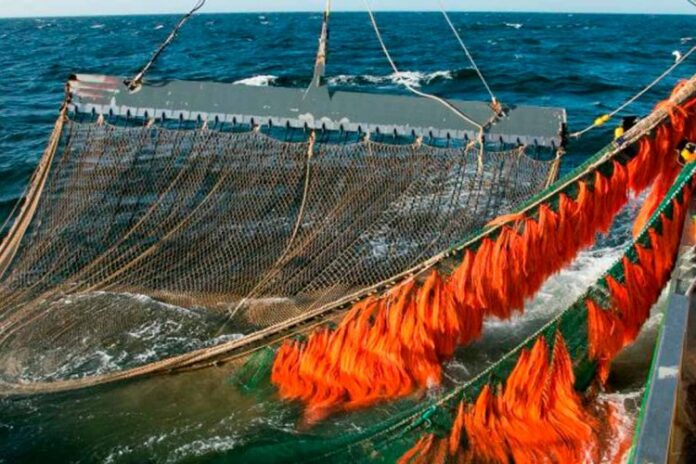
Dolly Ropes are thread-like abrasion protection for fishing nets, used to prevent net damage, especially on stony ground and on rocky coasts.

Detached threads from nets equipped with such ropes contribute to the pollution of the marine environment with plastic, and they are commonly found in the wrack line along the seashores. When they appear in the catch of shrimp fishermen, they increase the sorting effort. The producer organisations aim to advocate for a Europe-wide ban on Dolly Ropes.

Captain Dirk Sander says, “In shrimp fishing on flat, sandy surfaces, net abrasion can be prevented in other ways. We want to avoid the nets coming into contact with the seabed anyway, as it only increases drag and fuel costs. And if necessary, abrasion protection can also be achieved with other materials, such as yak leather. It weathers quickly and is environmentally friendly when it wears off or gets lost.”

Dolly rope is the name for orange or blue plastic threads that are used to protect bottom trawling nets against wear and tear. During fishing operations or maintenance work on the net, threads or bundles of dolly rope threads may end up in the sea. The result is that this material is commonly found along beaches in northern Europe and floating out at sea. This poses a threat to marine wildlife and a safety hazard to marine traffic.” 

Source: The Fishing Daily

Scientists have developed a novel solution to mapping deep ocean

0

Like much of the Global South, there has until now been little scientific exploration of the South Atlantic and knowledge of its diversity is limited as a consequence.

This hinders the management of such areas, something increasingly seen as being of critical importance as talks continue around the development of High Seas Marine Protected Areas.

To address that, an international team of researchers – led by the University of Plymouth – began investigating whether a technique combining mathematical modelling and underwater video footage of deep-sea coral reefs from the well-studied North Atlantic could be applied to the poorly-understood South Atlantic.

In the new research, published in the Journal of Environmental Management, researchers then used the very few known locations of reefs in the South Atlantic to assess the new predictions provided by the model and found it performed well.

They also found that more than two-thirds of the seabed areas identified as being suitable for deep water corals in the South Atlantic are currently covered by nationally managed Marine Protected Areas, and therefore protected from activities such as trawl-fishing. 

Amelia BridgesAmelia Bridges, Research Fellow, said:

“Until recently, there has been very little research in the deep South Atlantic Ocean. With the UN High Seas Treaty on the horizon, the designation of Marine Protected Areas in these vast and isolated areas is becoming a reality. As a result, it’s crucial we have accurate maps of where species live so that we can sustainably manage our oceans, ensuring their future conservation.”

The new study builds on research used to create the most comprehensive map yet of the UK and Ireland’s coral reefs in 2022 – also led by the University. This model, published last year by Professor of Deep-Sea Ecology Kerry Howell and her team, used decades of data collected across several oceanic expeditions in the northeast Atlantic.

Kerry HowellKerry Howell, Professor of Deep-Sea Ecology, said:

“We do not have good maps of where different ecosystems are found in the deep sea. This research shows that our methods can help fill those vast data gaps, enabling us to better map life in the deep sea. This is critical because maps form the basis of decisions on where we allow human activities like bottom trawling to take place, and where we protect.”

The potential value of this pioneering approach is clear, in that it provides some of the first predictive habitat maps for never-before-seen areas.

Dr Lizette Voges, a co-author on the study, is Executive Secretary of the South East Atlantic Fisheries Organisation which is responsible for managing fisheries in much of the South Atlantic. She said:

“This work represents a significant enhancement in our ability to sustainably manage fisheries in the High Seas. By providing maps of where Vulnerable Marine Ecosystems (VMEs) are likely to occur, we can inform area-based management. This could, for example, enable us to prohibit fishing activity in areas where VMEs are highly likely to occur, and make informed decisions on areas which had previously been closed as a precaution due to lack of information.”

In addition to researchers at the University of Plymouth, the study involved partners at the Centre for Environment, Fisheries and Aquaculture Science, British Antarctic Survey, and the Institute of Marine Research in Norway. It was made possible through a UK-Norway-Namibia collaboration and used newly collected data for the South Atlantic from organisations including the EAF-Nansen Programme and National Geographic.

NYK to commence operation of CTV for Ishikari Bay New Port offshore wind farm

0

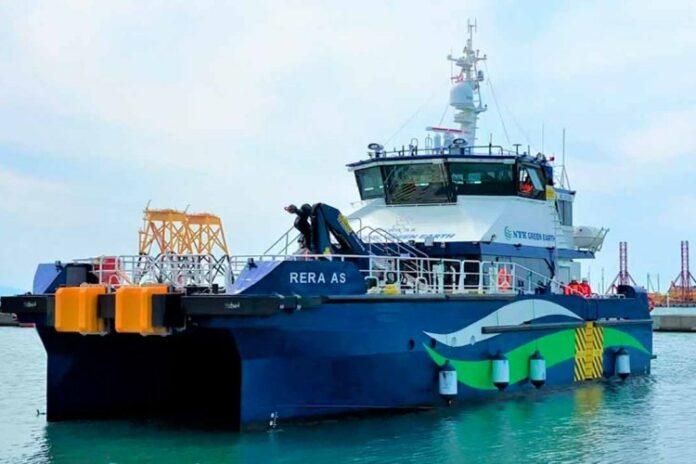
In accordance with a time-charter contract with Siemens Gamesa, the NYK Group’s Hokuyo Kaiun Co. Ltd. will manage and operate the vessel. In July, the CTV will begin transporting workers involved in maintenance for offshore wind power generation facilities. 

This vessel is the first CTV owned and operated by the NYK Group and is the largest gross tonnage CTV currently in operation in Japan (according to NYK research).

The vessel has been certified by ClassNK (Nippon Kaiji Kyokai) to comply with the ISM Code, which confirms that the vessel has established a ship safety management system meeting international standards. The CTV also received a “Wind Farm Support Vessel (WFV)” notation, which recognizes that the vessel is fully equipped with facilities and manuals necessary for the safe transportation of workers. This ship is the first domestic CTV to be recognized as a WFV.

The vessel was completed in Singapore in April, and its flag was changed to Japan after equipment modifications, such as fenders and radio equipment, and other inspections at the Oppama factory of Keihin Dock Co. Ltd.

The CTV is receiving technical and commercial support from Northern Offshore Service (NOS, Sweden), a subsidiary of Northern Offshore Group AB (NOG), one of the largest CTV operators in Europe and with which NYK has partnered. The ship arrived at Ishikari Bay New Port on June 27 after a series of training sessions in Hokkaido, including ship operation and classroom lectures, under the guidance of a captain dispatched by NOS. On June 28, a commemoration ceremony for the vessel’s arrival at Ishikari Bay New Port was attended by about 40 guests, including Ishikari City Mayor Tatsuyuki Kato.

NYK named the vessel Rera As (meaning “wind blows”), derived from the Ainu language and registered in Ishikari, based on the belief that the Ainu culture, which values nature, is highly compatible with the philosophy of promoting renewable energy. The NYK Group will use this project as a foothold for further development in Japan’s offshore wind power generation business, which is expected to expand in the future.

Study: The ocean’s color is changing as a consequence of climate change

0

In a study in Nature, the team writes that they have detected changes in ocean color over the past two decades that cannot be explained by natural, year-to-year variability alone. These color shifts, though subtle to the human eye, have occurred over 56 percent of the world’s oceans—an expanse that is larger than the total land area on Earth.

In particular, the researchers found that tropical ocean regions near the equator have become steadily greener over time. The shift in ocean color indicates that ecosystems within the surface ocean must also be changing, as the color of the ocean is a literal reflection of the organisms and materials in its waters.

At this point, the researchers cannot say how exactly marine ecosystems are changing to reflect the shifting color. But they are pretty sure of one thing: Human-induced climate change is likely the driver.

“I’ve been running simulations that have been telling me for years that these changes in ocean color are going to happen,” says study co-author Stephanie Dutkiewicz, senior research scientist in MIT’s Department of Earth, Atmospheric and Planetary Sciences and the Center for Global Change Science. “To actually see it happening for real is not surprising, but frightening. And these changes are consistent with man-induced changes to our climate.”

“This gives additional evidence of how human activities are affecting life on Earth over a huge spatial extent,” adds lead author B. B. Cael Ph.D. ’19 of the National Oceanography Center in Southampton, U.K. “It’s another way that humans are affecting the biosphere.”

The study’s co-authors also include Stephanie Henson of the National Oceanography Center, Kelsey Bisson at Oregon State University, and Emmanuel Boss of the University of Maine.
Above the noise

The ocean’s color is a visual product of whatever lies within its upper layers. Generally, waters that are deep blue reflect very little life, whereas greener waters indicate the presence of ecosystems, and mainly phytoplankton—plant-like microbes that are abundant in upper ocean and that contain the green pigment chlorophyll. The pigment helps plankton harvest sunlight, which they use to capture carbon dioxide from the atmosphere and convert it into sugars.

Phytoplankton are the foundation of the marine food web that sustains progressively more complex organisms, on up to krill, fish, and seabirds and marine mammals. Phytoplankton are also a powerful muscle in the ocean’s ability to capture and store carbon dioxide. Scientists are therefore keen to monitor phytoplankton across the surface oceans and to see how these essential communities might respond to climate change. To do so, scientists have tracked changes in chlorophyll, based on the ratio of how much blue versus green light is reflected from the ocean surface, which can be monitored from space.

But around a decade ago, Henson, who is a co-author of the current study, published a paper with others, which showed that, if scientists were tracking chlorophyll alone, it would take at least 30 years of continuous monitoring to detect any trend that was driven specifically by climate change. The reason, the team argued, was that the large, natural variations in chlorophyll from year to year would overwhelm any anthropogenic influence on chlorophyll concentrations. It would therefore take several decades to pick out a meaningful, climate-change-driven signal amid the normal noise.

In 2019, Dutkiewicz and her colleagues published a separate paper, showing through a new model that the natural variation in other ocean colors is much smaller compared to that of chlorophyll. Therefore, any signal of climate-change-driven changes should be easier to detect over the smaller, normal variations of other ocean colors. They predicted that such changes should be apparent within 20, rather than 30 years of monitoring.

“So I thought, doesn’t it make sense to look for a trend in all these other colors, rather than in chlorophyll alone?” Cael says. “It’s worth looking at the whole spectrum, rather than just trying to estimate one number from bits of the spectrum.”
The power of seven

In the current study, Cael and the team analyzed measurements of ocean color taken by the Moderate Resolution Imaging Spectroradiometer (MODIS) aboard the Aqua satellite, which has been monitoring ocean color for 21 years. MODIS takes measurements in seven visible wavelengths, including the two colors researchers traditionally use to estimate chlorophyll.

The differences in color that the satellite picks up are too subtle for human eyes to differentiate. Much of the ocean appears blue to our eye, whereas the true color may contain a mix of subtler wavelengths, from blue to green and even red.

Cael carried out a statistical analysis using all seven ocean colors measured by the satellite from 2002 to 2022 together. He first looked at how much the seven colors changed from region to region during a given year, which gave him an idea of their natural variations. He then zoomed out to see how these annual variations in ocean color changed over a longer stretch of two decades. This analysis turned up a clear trend, above the normal year-to-year variability.

To see whether this trend is related to climate change, he then looked to Dutkiewicz’s model from 2019. This model simulated the Earth’s oceans under two scenarios: one with the addition of greenhouse gases, and the other without it. The greenhouse-gas model predicted that a significant trend should show up within 20 years and that this trend should cause changes to ocean color in about 50 percent of the world’s surface oceans—almost exactly what Cael found in his analysis of real-world satellite data.

“This suggests that the trends we observe are not a random variation in the Earth system,” Cael says. “This is consistent with anthropogenic climate change.”

The team’s results show that monitoring ocean colors beyond chlorophyll could give scientists a clearer, faster way to detect climate-change-driven changes to marine ecosystems.

“The color of the oceans has changed,” Dutkiewicz says. “And we can’t say how. But we can say that changes in color reflect changes in plankton communities, that will impact everything that feeds on plankton. It will also change how much the ocean will take up carbon, because different types of plankton have different abilities to do that. So, we hope people take this seriously. It’s not only models that are predicting these changes will happen. We can now see it happening, and the ocean is changing.”