-1 C
New York
Home Blog Page 280

FuelTrust analysis finds fuel content discrepancies in 39% of global bunkers

0

FuelTrust has released a new report examining bunker discrepancies in the maritime industry, which includes examples of unethical practices and fraudulent activities related to bunkering.

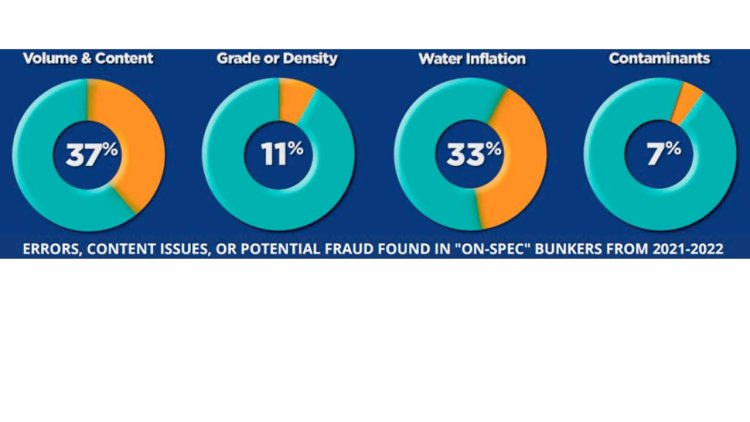
FuelTrust’s analysis found that between 2021 and 2022, more than 39% of global bunkers exhibited a fuel content delta of 2% or more compared to the amounts stated in their delivery paperwork. The primary issue identified was the introduction of water into the fuels during the journey from onshore storage tanks to the ship’s bunker tank. This problem typically involved an increase from 0.1% to above 0.25% water content, which, although below the regulated threshold, still resulted in average losses of $14,910 per affected delivery.

The maritime fuel market has a long history of not being transparent. Bunker fuels account for more than 50% of a vessel’s operational expenses, meaning fraudulent practices and inadequate supply chain management can significantly affect the profitability of vessel owners and charterers, and fuel suppliers. Just this month, eleven Ships lost propulsion, and over 100 ships were affected in a single incident of fuel contamination in Houston.

Even fuel considered “on-spec” (meeting specified quality standards) experiences volume or content issues, leading to financial losses or engine problems. In the past year, over 600 vessels were disabled through fuel problems, despite the fuel being ‘on-spec’, resulting in estimated global supply chain losses exceeding $5 billion. Both fuel suppliers and shipowners incurred financial losses, which are difficult to detect and make claims against.

FuelTrust’s AI-based approach to creating a trusted fuel ecosystem through transparency and traceability addresses the challenges in the fuel supply chain, particularly in the maritime sector. By providing visibility into the final outcomes of fuel products, fuel suppliers can better understand and validate their offerings, while fuel buyers can combat fraud, minimize losses, and mitigate environmental risks.

Jonathan Arneault, CEO and Co-Founder of FuelTrust commented:

“This new research across the global bunkering market emphasizes the need for better transparency. By providing visibility, traceability, and security throughout the fuel supply chain, FuelTrust is improving operational efficiency, helping reduce environmental impact, and fostering trust among all stakeholders.”

“As the latest contamination case demonstrates, it’s essential that ship owners, bunker suppliers and charterers can gain better insight into their fuel supply chains. Better information on the fuel we use is also a foundational block of any serious GHG reduction strategy.”

Russia bombards Ukraine ports, threatens ships, jolting world grain markets

0

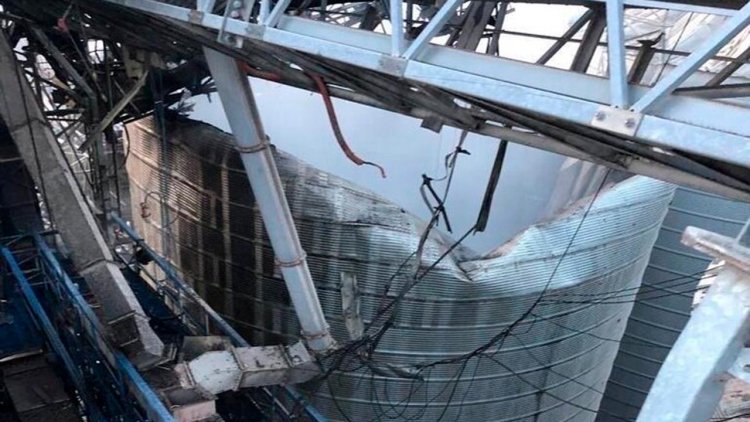
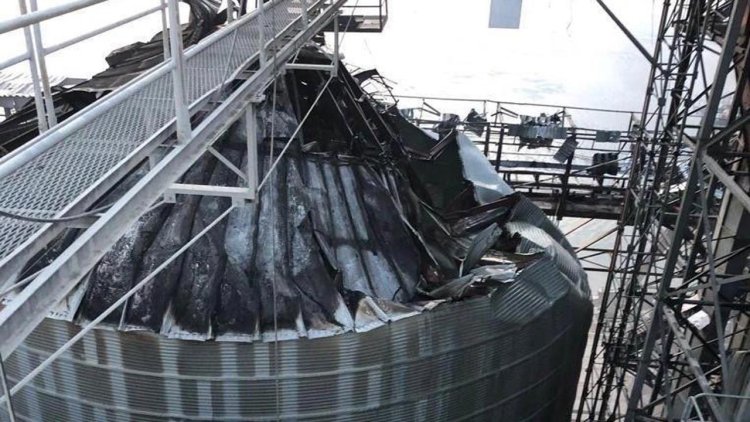
At least 27 civilians were reported hurt in the air strikes on the ports, which set buildings ablaze and damaged China’s consulate in Odesa.

The United States said Russia’s warning to ships indicated Moscow might attack vessels at sea following Moscow’s withdrawal this week from a U.N.-brokered deal to let Ukraine export grain. The signals that Russia was willing to use force to reimpose its blockade of one of the world’s biggest food exporters set global prices soaring.

Moscow says it will not participate in the year-old grain deal without better terms for its own food and fertiliser sales. The United Nations says Russia’s decision threatens food security for the world’s poorest people.

Kyiv is hoping to resume exports without Russia’s participation. But no ships have sailed from its ports since Moscow pulled out of the deal on Monday, and insurers have had doubts about whether to underwrite policies for trade in a war zone.

Since quitting the deal, Moscow has rained missiles down nightly on Ukraine’s two biggest port cities, Odesa and Mykolaiv. Thursday’s strikes appeared to be the worst yet.

In its most explicit threat yet, Russia’s military announced it would deem all ships heading for Ukrainian waters from Thursday morning to be potentially carrying weapons, and their flag countries as parties to the war on the Ukrainian side. It said it was declaring parts of the Black Sea to be unsafe.

Kyiv responded on Thursday by announcing similar measures, saying it would consider vessels bound for Russia or Russian-occupied Ukrainian territory also to be carrying arms.

Washington called Russia’s threat a signal that Moscow might attack civilian shipping, and said Russia was also releasing new mines into the sea.

“We believe that this is a coordinated effort to justify any attacks against civilian ships in the Black Sea and lay blame on Ukraine for these attacks,” White House National Security Council spokesperson Adam Hodge said.

WHEAT PRICES JUMP

The Black Sea escalation pushed U.S. wheat futures up an additional 1.5% in the early hours of Thursday, after they jumped 8.5% on Wednesday, their fastest single-day rise since the initial days of Russia’s invasion in February last year.

Both Ukraine and Russia are among the world’s biggest exporters of grain and other foodstuffs. The United Nations says withdrawing tens of millions of tonnes of Ukrainian grain from the market would cause worldwide shortages.

Russia, which shut Ukraine’s ports in the early months after its invasion, let them reopen a year ago under the grain deal, with Turkey and the United Nations supervising inspections of vessels with Russian participation.

A parallel deal offered guarantees for Russia’s own food and fertiliser exports. Moscow says this has not been fully implemented. Western countries say Russia has had no difficulty selling its food, which is exempt from financial sanctions.

Ukraine’s President Volodymyr Zelenskiy said in his nightly television address that Russia’s attacks on Ukraine’s ports proved that “their target is not only Ukraine, and not only the lives of our people”.

Writing by Peter Graff Editing by Angus MacSwan
Source: Reuters

Houlder and Shell sign decarbonisation collaboration agreement

0

Design and engineering consultancy, Houlder, and Shell International Trading and Shipping Company Limited (Shell), have agreed to work together to identify, evaluate, and further develop solutions to accelerate the decarbonisation of the maritime industry.

The agreement will focus on both retrofit and newbuild vessel opportunities of benefit to the wider maritime community. The collaboration will span market research, technical analysis of clean solutions from a design and engineering perspective, safety and risk assessment studies, and greenhouse gas emissions abatement quantification and verification.

Rupert Hare, Chief Executive Officer at Houlder, commented:

“The maritime industry has to choose technology pathways, supported by regulation, which offer credible and low-cost routes to a net-zero emissions future by 2050. We must collectively do more to accelerate change – and this is one of the cornerstones of our forward-thinking collaboration with Shell.”

Jonathan Strachan, Chief Technical Officer at Houlder, added:

“There are a myriad of maritime decarbonisation solutions available. The challenge is cutting through the noise to find the right solutions for a ship type, specific ship, and its unique operating profile. Our collaboration with Shell will support the company in making the right decarbonisation decisions, underpinned by technical design and engineering expertise.”

Through leading and participating in like-minded collaborations and coalitions, Shell and Houlder’s overarching aim is to see commercially operating ships with lower emissions on the water in the 2030s. They believe this can be achieved through a combination of existing technologies and fuels, while more radical change will be required to achieve alignment with the new International Maritime Organization (IMO) target of net-zero emissions close to 2050. 

Safety is another core component of Houlder and Shell’s agreement. With maritime decarbonisation requiring new technologies and operating procedures, safety remains a central focus for the industry. Changes could introduce risks that may not be adequately managed or eliminated by today’s standards, skills and procedures.

News of this collaboration agreement comes after Houlder announced its work for Shell on the concept design of liquid hydrogen (LH2) carriers, and studies on hydrogen as a cargo or fuel. The news also comes after the IMO’s MEPC 80 meeting and revised greenhouse gas strategy, which requires a well-defined industry view on green solutions to achieve.

First hybrid Superstar freight-passenger vessel delivered to Finnlines

0

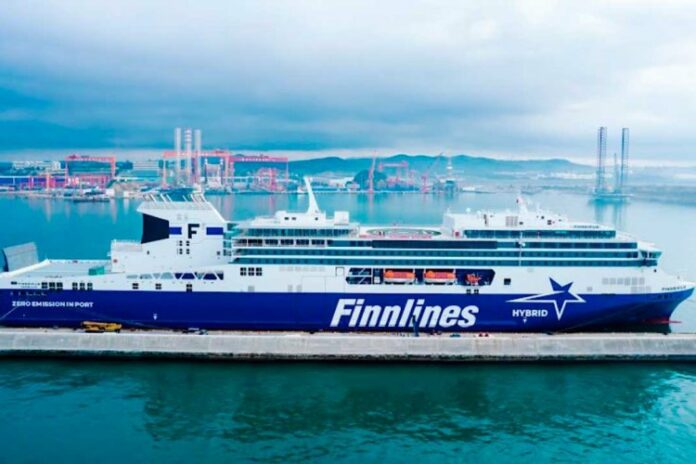
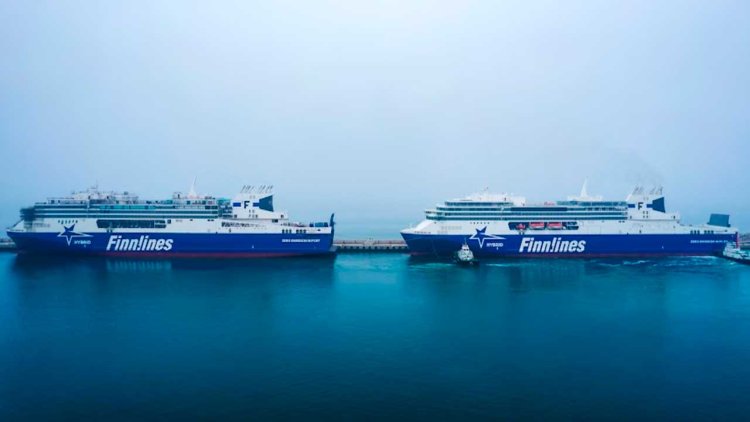
The first hybrid ro-pax vessel, whose construction started in June 2021, was delivered to Finnlines on 18 July 2023. Finnsirius will start operating on the Naantali–Långnäs–Kapellskär route in September 2023. 

The second vessel, Finncanopus, is expected to be delivered by the end of 2023. The two ships are the largest ro-pax vessels in the Finnlines fleet. The cargo capacity will increase by nearly 24 per cent to 5,200 lane metres and passenger capacity will double from today’s 554 to 1,100.

The new ro-pax vessels are part of Finnlines EUR 500-million Green Newbuilding Programme, which comprises both ro-pax and ro-ro vessels, all equipped with state-of-the-art sustainable solutions. Three new hybrid ro-ro vessels started operating in summer 2022.

Tom Pippingsköld, President and CEO of Finnlines, says:

“Finnlines’ Green Newbuilding Programme has been a massive investment which will benefit our freight customers and private passengers. These hybrid ro-pax vessels are not only the largest in the company fleet so far, but they transport cargo in a more sustainable manner. For example, the vessels have been equipped with enormous high-powered battery banks and onshore power supply in order to have zero emissions while at port. In addition, port operations will also be more efficient with auto-mooring. Smooth freight traffic in the Baltic Sea is the backbone of the region’s economies and national security of supply. For example, around 90 per cent of both Finnish and Swedish exports and imports are carried along shipping routes. Finnlines combines cargo with passenger traffic in this Naantali–Långnäs–Kapellskär route, and therefore our investment will strengthen services to our freight customers as well as to our passengers.”

Antonio Raimo, Line Manager at Finnlines, says:

“Finnlines is proud to introduce the first Superstar and Finnsirius will be Finnlines’ flagship in both size and technology. As the Superstar ro-pax vessels enter the traffic, we will further increase economies of scale to support new business development and opportunities for our freight customers. In addition, we will be able to offer upgraded services for passengers, including several themed restaurants, a wide range of cabin categories, meeting rooms, a large shop, lounges, to name a few.”


Costa Cruises installs SpaceX’s Starlink Wi-Fi

0

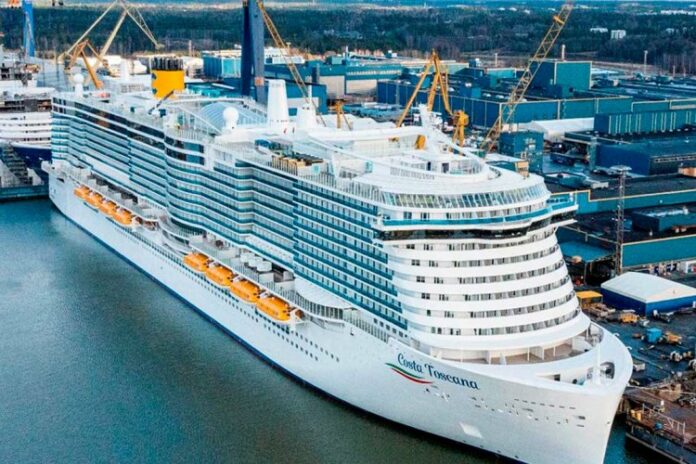
Costa Cruises has announced the successful introduction on its flagship Costa Toscana of the next generation Wi-Fi connectivity with SpaceX’s Starlink, the leader in Low Earth Orbit (LEO) satellite technology.

The new service is already operating, offering our best available Wi-Fi experience to Costa Toscana guests, as they explore some of the most interesting destinations in Western Mediterranean on one-week cruises.

After Costa Toscana, SpaceX’s innovative Starlink broadband service will be gradually extended to the rest of the Costa fleet, starting with Costa Smeralda, sister ship of the Costa Toscana. Installation on all ships of the Costa fleet is scheduled to be completed by December 2023.

“Costa remains committed to embracing innovative solutions that enhance the onboard services and exceed guest and crew expectations. Thanks to the revolutionary capabilities of Starlink low orbit satellites, our ships will have access to high-speed, reliable internet connectivity like never before. Our goal is to transform the way our ships operate, delivering an even better experience to our guests and crew, through a combination of different technologies, services and broadband connections” – said Giuseppe Carino, VP Guest Experience & Onboard Revenues of Costa Cruises.  

Starlink will offer the opportunity for fast internet connection, global coverage to stay connected even in remote areas, and enhanced experience for web surfing onboard, sharing experience in real-time with no struggles. 

The new service will improve communication between ships and shore offices, optimizing various aspects of ship operations, and ensuring a smoother and more efficient cruise experience. Private use of the Internet by crew members will also be greatly improved, allowing them an even more reliable and faster connection with loved ones back home or to access their social media.  On Costa Toscana, and soon on other Costa ships, Guests will have the opportunity to purchase “Pay per Minute”, “Whatsapp”, “Social” and “Full” packages which includes the connection with Starlink.

MOC programme of The Cavour and Horizon-Class Ships awarded to OSN

0

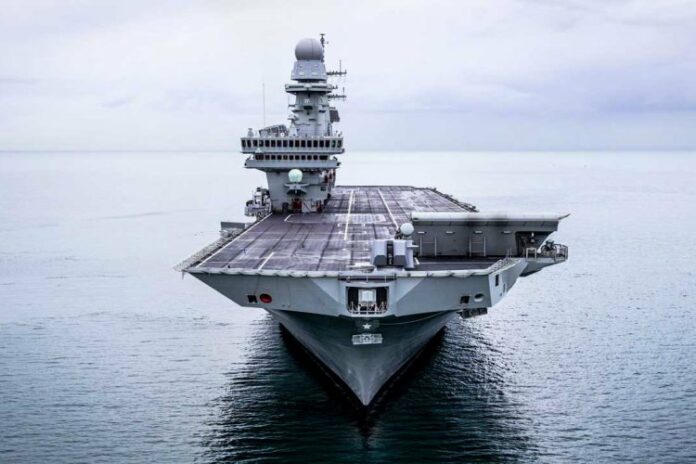
Orizzonte Sistemi Navali (OSN), the joint venture owned by Fincantieri and Leonardo with respective stakes of 51% and 49%, has signed, with the Directorate of Naval Armaments of the Secretariat General of Defence / National Armaments Directorate, the Maintenance in Operational Conditions (MOC) Framework Agreement for the Cavour aircraft carrier and the Andrea Doria and Caio Duilio Horizon-class destroyers of the Italian Navy.

 The Agreement has a maximum total value of euro 190 million and will conclude at the end of 2028. The signing of the first implementation contract between the prime contractor OSN and Navarm will take place in the coming days, covering the first two years of service.

Specifically, the activities envisaged refer to the platform and combat systems and equipment of the units covered by the Agreement in the period 2023-2028, in order to ensure the maintenance of their operational conditions and the increased expertise of Navy personnel.

Fincantieri will be responsible for the in-service support activities of the platform systems and equipment, including the engine, automation system, electrical generation and air conditioning systems, manoeuvring and propulsion mechanisms, as well as the aircraft elevators of the Cavour ship and the helicopter transport system of the Horizon class units.

Leonardo will be tasked with all subsystems related to the Combat System, radar sensors, Combat Management System, launchers and weapon systems of the two classes of ships, at the La Spezia and Taranto naval bases. The Leonardo subsystems involved in the maintenance amount to about 50 pieces of equipment.

The Crown Estate increases its investment in ECOWind by £2 million

0

The Crown Estate has announced an increased investment of £2 million in ECOWind – a four-year research programme led by the Natural Environment Research Council (NERC) that brings together experts from science, policy and industry to understand how offshore wind affects ecosystems, species and habitats. 

The additional funds will be used to bring forward a fourth project, Benthic-Offshore Wind Interactions Evaluation (BOWIE). Through BOWIE, the University of Southampton will work with partners to investigate the impact of offshore wind expansion on seabed invertebrate and fish species, taking into consideration other pressures on the marine environment such as climate change and trawling. The project findings will then assist in informing Defra’s Offshore Wind Environmental Improvement Package (OWEIP), which is an integral part of the British Energy Security Strategy (BESS), ultimately helping to overcome issues that can create uncertainty in consent decision making processes. 

Three existing ECOWind projects, funded through a £7.5 million investment from NERC and The Crown Estate, are already working alongside each other to address environmentally focussed knowledge gaps, and provide new evidence in support of marine policy and the sustainable management of offshore wind development. These projects are called ECOWind-ACCELERATE, ECOWINGS, and PELAgIO, and are being delivered by Bangor University, UK Centre for Ecology & Hydrology, and University of Aberdeen, respectively.  

The UK Government has set ambitious targets for offshore wind and the recent report into accelerating deployment of offshore wind farms by Tim Pick, the UK’s first offshore wind champion, highlighted the vital contribution data and evidence must play in tackling climate change. 

BOWIE is the 28th project supported by funds drawn down from the Offshore Wind Evidence and Change Programme, a unique £50 million initiative that enables the gathering of data and evidence to support the sustainable development of offshore wind in the UK.  The programme is led by The Crown Estate, in partnership with the Department for Energy Security and Net Zero and the Department for Environment, Food and Rural Affairs, and brings together a 27-member steering group with representation from environmental NGOs and industry bodies as well as governments from all four nations, to ensure data and evidence can positively impact the whole of the UK. 

Mandy King, Programme Director of the Offshore Wind Evidence and Change Programme said:

“The seabed offers exciting potential to support nature recovery, unlock huge opportunity for renewable energy, and play a major role in energy security. That means it is becoming an increasingly busy space so it is more important than ever before to build a holistic, evidence-based view of the whole of the seabed so that we can maximise its potential for the benefit of the nation and the natural world.” 

Philip Turner, Marine Policy Development Manager at The Crown Estate said:

“Collaboration between the many stakeholders across our marine environment – from industry and policymakers to fishers and coastal communities – is key to successfully meeting the UK’s renewable energy targets. That’s why I’m delighted the programme can support a project that brings together the academic community and offshore wind industry. The BOWIE project will provide vital data and evidence on a range of impacts as a consequence of undersea cabling from not only offshore wind, but also other industries.” 

The aquaculture sector is aiming at better plastic recycling

0

Results emerging from a recent research project are indicating that the aquaculture sector can help to reduce waste and at the same time generate wealth by recycling its industrial hard plastics.

“We’ve been looking into everything from administrative terms of reference to rules and regulations, the current state of our knowledge and, not least, levels of acceptance within the industry”, says SINTEF researcher Sigrid Damman. “These factors are just as important as any technological developments”, she says.

The creation of so-called ‘circular economies’ is a complex process.

Firstly, we have to be aware of the opportunities available when it comes to utilising resources. Then we have to have stable administrative and regulatory frameworks in place. The latter will enable us to utilise new materials and products without entailing high levels of risk. Moreover, the right legislation and regulations must be in place to facilitate new initiatives.

This is why researchers are now presenting specific recommendations both to the aquaculture sector and the public authorities. They are working on a project called POCOplast, which has been established to look into all aspects of the value chain – from the manufacturers of plastic components to those that supply both components and services, as well as the aquaculture companies which in turn deliver used plastics for recycling.
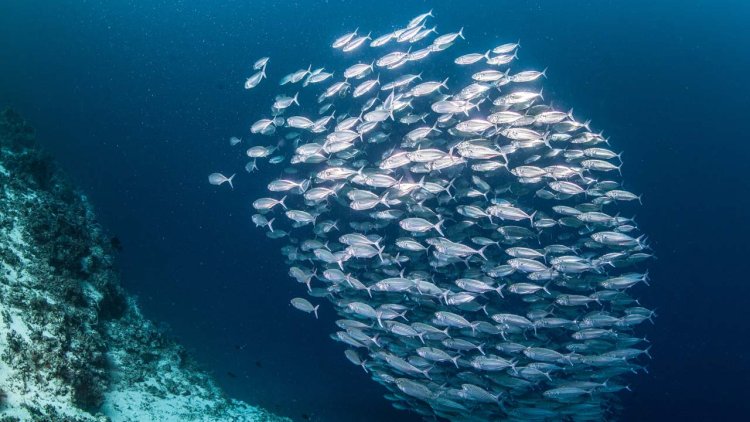
Researchers at SINTEF have been working together with seven partners to conduct a thorough analysis based in part on almost thirty interviews with a variety of stakeholders.

“We’ve been looking into what goes on among the various actors in the value chain, and have also tried to understand the barriers that exist in the current regulations”, says Damman.

POCOplast is an abbreviation of “Pathways to sustainable post-consumer plastics in aquaculture”. The project is defined as a so-called KSP (competence and collaboration project), established with the aim of investigating how companies in the aquaculture sector can achieve a greater level of circularity in their use of plastics. It was launched in 2020 and is being funded by the Research Council of Norway. The project will be completed in the autumn of 2023.

The EU has already made a number of amendments to its rules and regulations and is also offering more funding for research. 

“Perhaps we can go even further by requiring that recycled plastic material be incorporated during the manufacture of industrial plastic products”, says Damman. “This will boost development, but it will be a bad move to stipulate new requirements before we’re sure that we have sufficient capacity in place. Nevertheless, we ought to be setting more specific targets for the levels of incorporation of recycled material in the manufacture of industrial hard plastics”, she says.

Damman says that many companies are interested in recycling plastic and developing new products, but that they are all demanding greater assurances when it comes to materials flow.

“For example, it’s crucial to users of the material that they have reliable access to products of uniform quality”, she says. “And those who receive the plastics for recycling have to know that there is sufficient demand. They also need to understand, and be able to document, that they are supplying plastic that meets the needs of their own customers”, says Damman.

Researchers believe that a key to success will be the introduction of new arrangements that place greater levels of responsibility with the manufacturers. Such an arrangement, established to cover plastics derived from the fisheries and aquaculture sectors, and which is in line with the EU’s Single-Use Plastic Directive, will be in place before the end of 2024. It will entail manufacturers assuming complete responsibility for the life cycle of entire products.
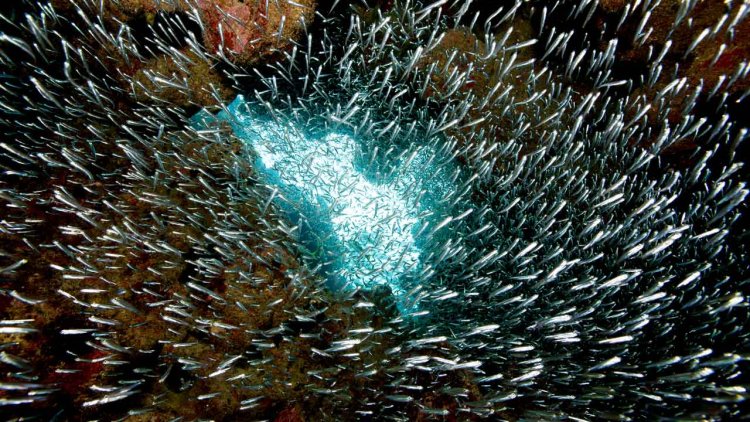
There is also talk of introducing funding programmes that will make it commercially viable to design products that are suitable for recycling. 

“The happy outcome of all this is that we will be able to create new products, and jobs in the districts, based on resources that were previously classified as waste.

“The most important thing here is to set targets for materials recycling, including industrial hard plastics”, says Damman. “This will offer greater predictability, which will in turn encourage a greater willingness among actors to invest in circular economy systems”, she says, adding;

“We need to stipulate clearer requirements for the recycling of all plastics, including hard industrial plastics. Current requirements offer only the wording ‘plastics suitable for recycling’, which, of course, makes it somewhat unclear as to the materials that are included”.

In order to develop a circular value chain for plastics, it is important to establish acceptance of the new materials and products.

According to Damman, if the sector is to start using new materials and making new products, it will have to have assurances that they will work, and that they are as robust and reliable as existing ones.

She believes that it is important to direct a greater focus on the challenge linked to plastics, as well as other sustainability challenges in the aquaculture sector, and that norms and standards will be developed in step with the new materials and products.

“Last, but not least, it will be crucial to establish dialogue with the relevant public authorities”, says Damman. “Good intentions will be to no avail if the authorities cannot offer a regulatory framework that enables the industry to see the benefits of adopting innovative materials and products.

The establishment of a circular economy centred on the use of plastics in the aquaculture sector will be important for many reasons.

Firstly, marine plastic waste has a negative impact on ecosystems and is harmful to marine plants and animals. A circular economy will contribute towards reducing the volumes of micro- and nanoplastics currently entering marine ecosystems. Circular economy initiatives are also important for reducing the use of ‘virgin’ plastics, which in turn will result in less greenhouse gas emissions and will help to reduce global warming. 

“Furthermore, there will be environmental benefits linked to the fact that less plastic will be combusted or sent to landfill, where pollution due to water run-off can be a problem”, says Damman. “The happy outcome of all this is that we will be able to create new products, and jobs in the districts, based on resources that were previously classified as waste”, she says.

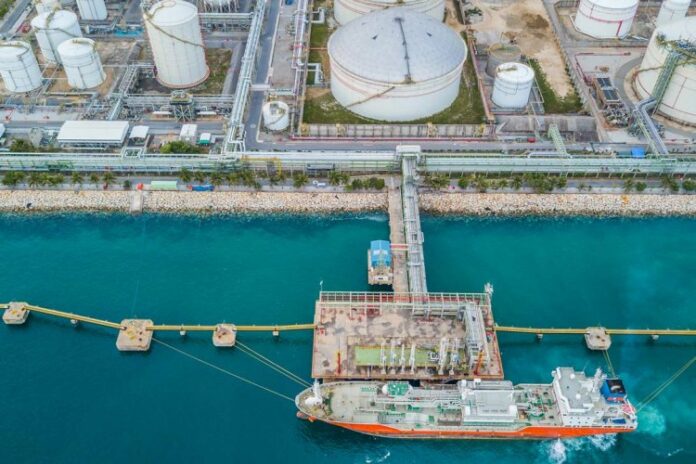
Damen to supply Air Cavity System to Amisco for reduced emissions

0

Damen Shipyards Group has announced the first sale of its innovative Damen Air Cavity System (DACS) to Amisco. 

DACs is an air lubrication system, borne out of a collaboration between Damen and the Delft University of Technology (TU Delft). It maintains a thin layer of air over the flat bottom of a vessel’s hull, reducing resistance in the water, thereby lowering drag and friction. As a result, the efficiency of the vessel is improved with fuel consumption reduced by up to 15%. 

With DACS installed to Danita, Amisco will achieve the CII rating necessary to continue operating in the Baltic Sea in the face of new, stricter emissions regulations. At the same time, the considerable reduction in fuel consumption allows for a rapid return on investment. 

Allan Noor, CEO of Amisco, said:

“The Air Cavity System is a game-changer for us, allowing us to lower the fuel consumption and reduce the CO2 emissions of our current fleet. This marks the initial phase in our continuous commitment to delivering value to our partners through our existing fleet, while collectively minimizing the environmental impact across the entire supply chain.” 

During the verification of the fuel saving results, Damen was supported by the IACS class society, RINA. RINA played a pivotal role in verifying the impressive fuel-saving results achieved by Damen’s technology and thoroughly examined the working principle of the air lubrication system. 

Damen received independent validation of the significant fuel savings realized through the implementation of Damen air lubrication system. 

Petrofac secures integrated services contract for FPSO in Africa with CNR International

0

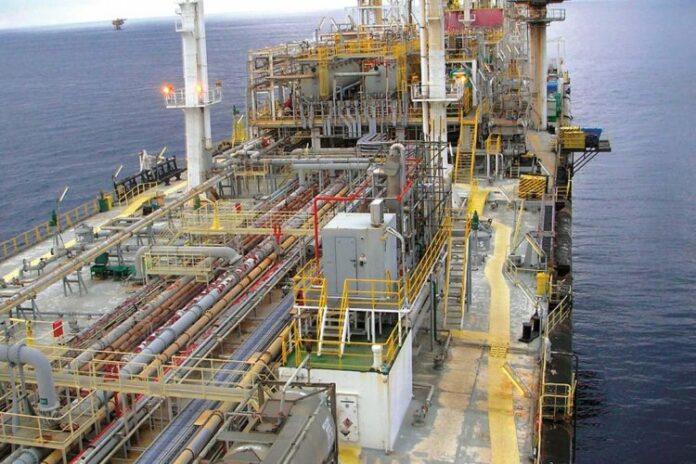
Petrofac has been awarded a facilities management contract by CNR International (CNRI) offshore the Ivory Coast, West Africa.

Around 110 personnel currently supporting the FPSO, including those onshore and on the vessel, will transition to Petrofac from BW Offshore following the recent sale of the vessel to CNRI. The transition of people and operatorship is expected to complete before the end of July.

The contract will be managed from Petrofac’s technical hub in Aberdeen, using decades of experience in the mature and highly regulated UKCS market.

Nick Shorten, Chief Operating Officer for Petrofac’s Asset Solutions business, said:

“I’m delighted that we are continuing to grow our presence in Africa with this latest contract from CNRI. We bring our considerable global FPSO experience to the Ivory Coast, adding to our portfolio of service contracts in Africa. Petrofac is expanding across the continent, providing local jobs, developing local skills and collaborating with local partners.

“We look forward to deploying our expertise and working collaboratively with CNRI and our new employees to effect a safe and seamless transition through to operation of the asset.”

This latest award builds on contract successes achieved throughout 2022, including decommissioning in Mauritania for Tullow Oil, operations and maintenance for Tullow Oil in Ghana and the provision of offshore operations services for bp’s Greater Tortue Ahmeyim (GTA) Project, including an FPSO, in Mauritania and Senegal.