-1 C
New York
Home Blog Page 279

Wärtsilä tech delivering efficiency gains and emission reductions for Vitol tankers

0

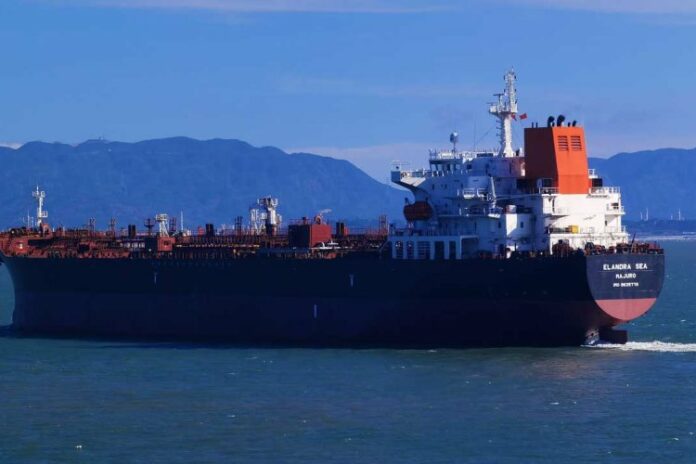
The vessels, Elandra Sea and Elandra Star, owned by global energy company Vitol, and managed by Latvian operator LSC Group, had tailored Wärtsilä EnergoFlow and EnergoProFin systems installed during summer 2022.

EnergoFlow is an innovative pre-swirl stator that creates an optimal inflow for the propeller, reducing fuel consumption and emissions in all operating conditions. The EnergoProFin is an energy saving propeller cap with fins that rotate together with the propeller. It reduces the energy losses created by the propeller hub vortex, increasing overall propulsion efficiency and significantly reducing underwater noise. 

What’s more, the efficiencies from these two devices will help the vessels achieve their EEXI requirements and CII ratings, whilst reducing operational costs for Vitol.

“Following the successful installation of Wärtsilä products on the Elandra Sea and Elandra Star, we are pleased that two long range product tankers – the Elandra Bay and Elandra Sound – have recently left dry-dock, equipped with Wärtsilä energy efficiency products. The joint analysis of the data on the Elandra Sea and Elanda Star from last year’s installation is extremely encouraging and we will be installing future devices in 2024. This is one of a number of measures that Vitol will continue to invest in to reduce emissions and improve efficiencies across the fleet,” said Ian Butler, Head of Energy Transition – Shipping, Vitol.

“We are pleased to support Vitol in their efforts to decarbonise their fleet operations. EnergoFlow and EnergoProFin provide a benefit to cost ratio that is extremely favourable compared to alternative technologies and are clearly delivering positive results for these vessels. Furthermore, once they are installed no maintenance is required and there are no additional costs,” commented Francois Emin, Product Manager – Propulsion, Wärtsilä. 

Following the success of these installations, Vitol has recently ordered an additional three EnergoFlow systems and at least four more are being considered for next year.
LiDAR buoy deployed off the Brindisi coast for in-depth studies

0

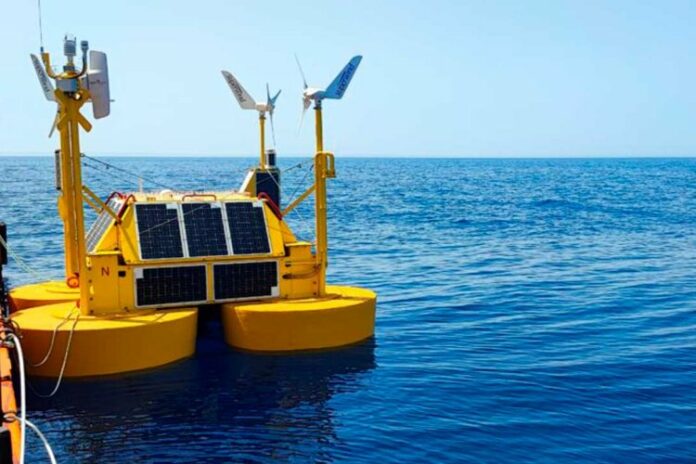
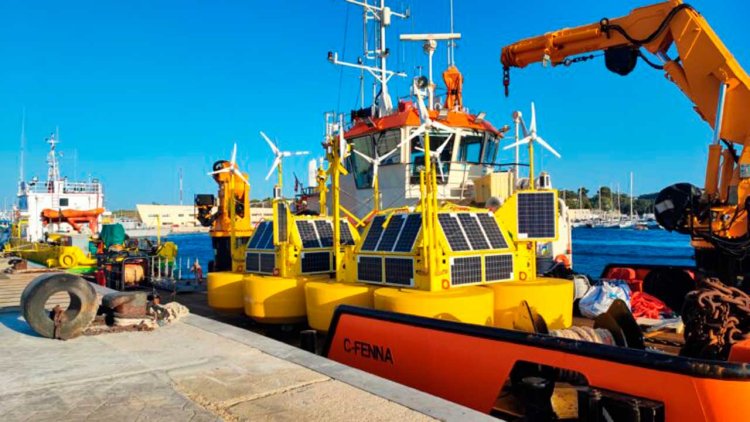
A floating buoy housing a ‘Lidar’ (Light Detection and Ranging) and other sensors has been positioned in waters off the coast of Brindisi to conduct necessary surveys and preparations for the construction of the Kailia Energia and Lupiae Maris floating offshore wind farms. 

The buoy was placed thanks to the collaboration between the companies that, in partnership, are promoting the construction of the two wind farms respectively : Renantis and BlueFloat Energy for Kailia Energia, and Gruppo Hope and Galileo for Lupiae Maris.

Equipped with fully autonomous remote sensing devices, the buoy will remain inside the water for a minimum of 12 months to obtain detailed information on the characteristics of the stretch of sea where the floating platforms of the two wind farms will be located. More specifically, the buoy will collect data on wind, weather conditions, and wave motion in the water.

The decision for these two partnerships to collaborate stems from the desire to create positive and proactive synergies between companies that have chosen to invest in Puglia, a region with significant potential for the development of new floating offshore wind technology. The shared goal is to work together in accelerating the country’s energy transition process and contribute to identifying renewable solutions to reduce dependence on foreign energy supplies.

Ksenia Balanda, Managing Director for the Renantis-BlueFloat Energy partnership in Italy, expressed,

“The deployment of this buoy at sea represents the first activity that we are developing in collaboration with the joint venture promoting the Lupiae Maris wind farm. We are confident that creating synergies with other operators and pooling different experiences can only benefit the development of such an innovative sector.“

Michele Scoppio, sole director of Gruppo Hope, added,

“The initiation of the campaign to measure the wind resource off the coast of the lower Adriatic confirms the progress of the projects and the commitment and determination of its partners to complete the preliminary phases leading to the start of plant construction. Our partnership with Galileo and the collaboration with Renantis-BlueFloat Energy demonstrate how the maturity and professionalism of the companies involved in the offshore wind sector provide fertile ground for building synergies and teamwork to benefit the country’s energy system, efficiently achieving the challenging goals ahead of us.“

Kailia Energia

Kailia Energia is a floating offshore wind farm jointly promoted by Renantis and BlueFloat Energy off the coast between Brindisi and Lecce. The Kailia Energia park, consisting of 78 turbines, will have the capacity to produce 3.5 TWh of clean energy per year, equivalent to the consumption of approximately one million households. The estimated investment for the project is EUR 3.5 billion, creating employment opportunities for around 1,500 people during construction. 

Lupiae Maris

Lupiae Maris s.r.l. is a special purpose company established by Galileo, a pan-European platform for renewable energy development, and Gruppo Hope, a holding company active in designing renewable energy and green hydrogen plants. The joint venture’s purpose is to construct an offshore wind farm with a capacity of 525 MW, comprising 35 wind turbines with a capacity of 15 MW each, positioned in the Otranto Channel between Brindisi and Lecce. The plant will be connected to Terna’s National Transmission Grid through the Brindisi station, located near the Cerano power plant.

RST and Samskip join forces to launch first shore power green initiative

0

Rotterdam Shortsea Terminals (RST) and Samskip have announced the successful launch of their Green Shore Power initiative, which aims to dramatically reduce CO2 emissions produced by vessels docked by providing new clean shore powered energy solutions.

The joint initiative is an example of what companies can do if they have a common goal and join forces in the energy transition towards CO2 neutrality. The shore power solution is the first of its kind for a container terminal in the Netherlands ports.

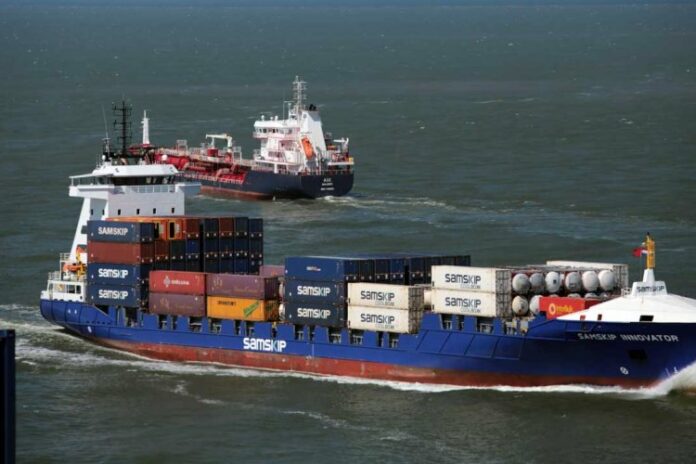
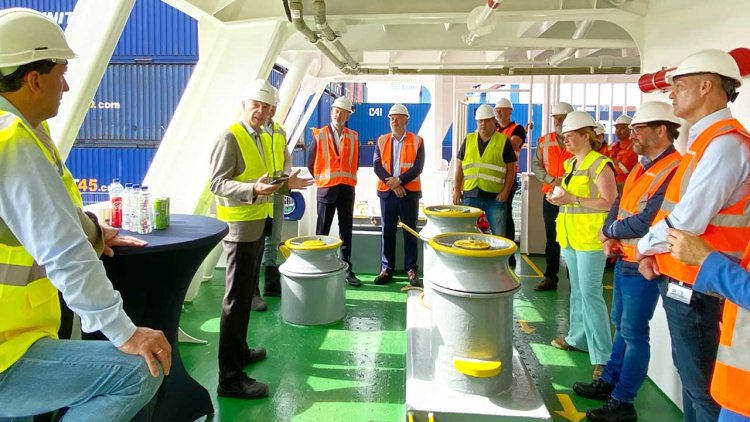
The celebration of this event was on Friday, July 21st, where delegations from Samskip, RST, Port of Rotterdam (HBR), Municipality of Rotterdam and HES gathered. During the celebration, “Samskip Innovator” provided an onsite demonstration of the smooth transition between ship power and the new shore power.

The new shore power endeavor was largely possible through the expertise of Harbour Electronical Services (HES) which both prepared and outfitted Samskip’s shortsea vessel “Innovator” to receive shore power. The power supply unit at the quay of RST has been installed by Jolectra.

Onshore power supply systems are a critical step towards the decarbonization of the shipping sector. Given that docked vessels currently leave their engines running to generate onboard electricity while burning gasoil constantly, the impact of green onshore power becomes abundantly clear. For the entire shipping sector, shore-side electricity is expected to reduce CO2 emissions by 5 megatons1 of CO2 per year (3.7% of global shipping emissions).

With this innovation, Samskip also takes a leading position in preparing for the FuelEU Maritime regulation, which will require shore-power connectivity from 2030 on.

Head of Fleet Management – Vessel, Erik Hofmeester, said:

“There are many ways to reduce CO2, such as: Samskip vessels using bio-fuel, the CO2 capturing systems also installed on Samskip vessels, WASP (Wind Assisted Ships Propulsion) and last but not least shore power. Green shore power facilitates clean and silent ship-operations in the ports of Rotterdam. We have set ambitious decarbonization targets for the upcoming years, with a clear aim to achieve net-zero emissions by 2040. Remarkably, this goal puts us a decade ahead of the legally mandated requirement for the maritime industry, which is currently set at 2050.We will also continue to use all our resources to protect the future of our company, our customers and partners and our planet”.

CEO of RST – Arno Storm, said:

“RST is committed to be a frontrunner in energy transition and is taking a leading role in the port of Rotterdam to work on practical solutions to serve the planet and RST’s customers. I am truly proud to be able to say that we are the first container terminal in the Netherlands which has a shore power connection. For me, keying in on the path towards CO2 neutrality means partnering with customers and suppliers and I am thrilled that together with Samskip, HES and Jolectra, we have been able to take a first step. Furthermore, I would like to extend my gratitude towards the Port of Rotterdam authorities who have played an active role in the support and establishment of this pilot”.

NYK Bulkship to introduce NYK Group’s first wind-assisted ship-propulsion unit

0

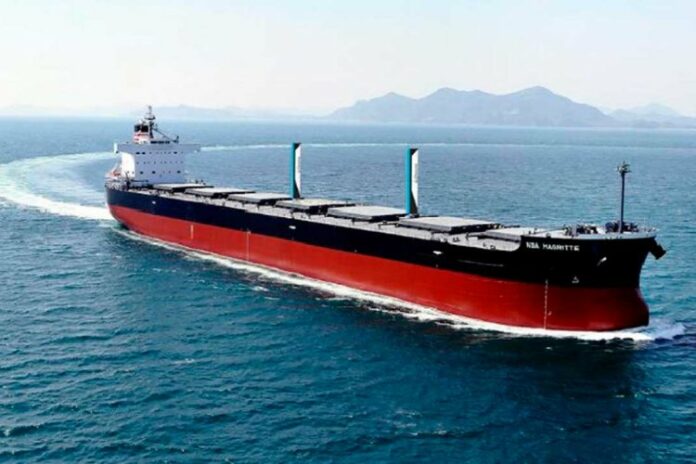
NYK Bulkship will introduce a wind-assisted ship-propulsion unit on a bulk carrier engaged in a long-term charter contract with Cargill International S.A. This will be the first time for a unit of this type to be installed on an NYK Group vessel.

NBAtlantic will equip the bulk carrier with the VentoFoil wind-assisted propulsion unit from Econowind B.V., wingsail producer based in the Netherlands. This unit is expected to help reduce greenhouse gas (GHG) emissions during vessel navigation. NBAtlantic will collect data on the propulsion generated by this equipment, in addition to meteorological and ocean conditions during navigation, and measure the unit’s effectiveness in collaboration with Cargill International S.A.

Sitting on a 20-foot-long (approximately 6-meter) flat rack container with no walls, VentoFoil has a 16-meter vertical wing that plays the role of a sail. Like an airplane wing, VentoFoil creates propulsion with the pressure difference on both sides of the wing. 

The unit takes in wind through its suction port and obtains greater propulsion by amplifying the pressure difference. VentoFoil is smaller than similar equipment, keeping it more out of the way of cargo handling. It is also easy to install and relocate.

Consortium to receive grant for passenger ferry project

0

TECO 2030 with partners have been invited for HORIZON EUROPE funding of EUR 13.5 million to build and demonstrate a passenger ferry powered by TECO 2030 fuel cells. 

The consortium consists of 14 partners from seven European countries covering the whole innovation value chain, including technology developers, academic institutions, maritime engineering, class society, digital transformation and a shipyard.

The project is a Horizon Innovation Action that aims to develop, build and demonstrate a 35 meter, 300 passenger capacity vessel that will be powered by the FCM400 fuel cell system by TECO 2030. The vessel will be operated in Southern Europe. 

The project proposal was submitted in April 2023 and has been evaluated by experts in the European Commission in terms of Excellence, Impact and Quality. The project was among the highest-scoring proposals of this Call and has now been invited for Horizon Europe Grant Agreement Preparation. 

“I’m proud to announce that we have won our second Horizon Europe project! Winning two EU-projects out of two attempts is an extraordinary achievement, and I would like to thank our partners and our internal proposal writing team for their strong efforts,” said Fredrik Aarskog, Director of Business Development, TECO 2030.

“We are thrilled to continue to showcase how hydrogen can contribute to the reduction of harmful emissions within the marine industry. This project has the potential to enable seaborn passenger transport, without any emissions,” said Tore Enger, Group CEO, TECO 2030. “Our fuel cells are the first purpose-developed marine fuel cells, with an industry leading footprint without compromising efficiency,” Enger concludes.

Renewable hydrogen is universally considered to be an important energy vector in the global efforts to combat climate change by limiting greenhouse gas emissions to the “well below 2°C scenario”, as agreed by more than 190 states in the 2015 Paris Agreement.

Waterborne transport, in particular the use of large seagoing vessels, remains a major contributor to greenhouse gas emissions and this sector must step up its efforts significantly and through a wide range of measures. Within the International Maritime Organization (IMO), a global agreement was reached in 2018 to reduce total GHG missions from maritime transport by at least 50% by 2050 compared to 2008 as a base year.

Hollandse Kust Noord: inter-array cables installed

0

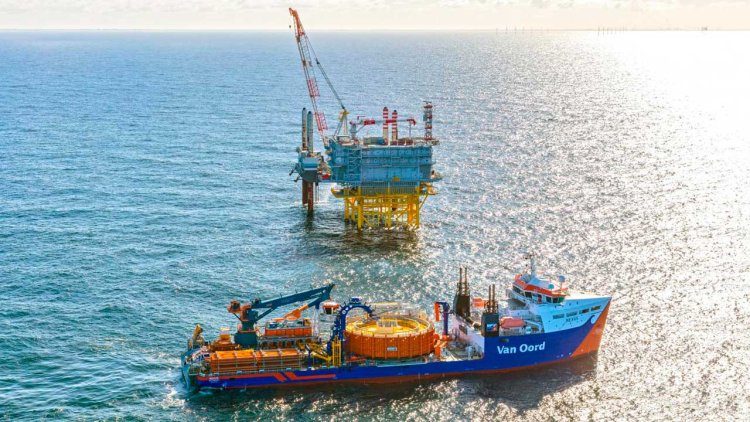
Van Oord has completed installing and burying inter-array cables at CrossWind’s Hollandse Kust Noord offshore wind park, bringing it a step closer to being fully operational by the end of this year. 

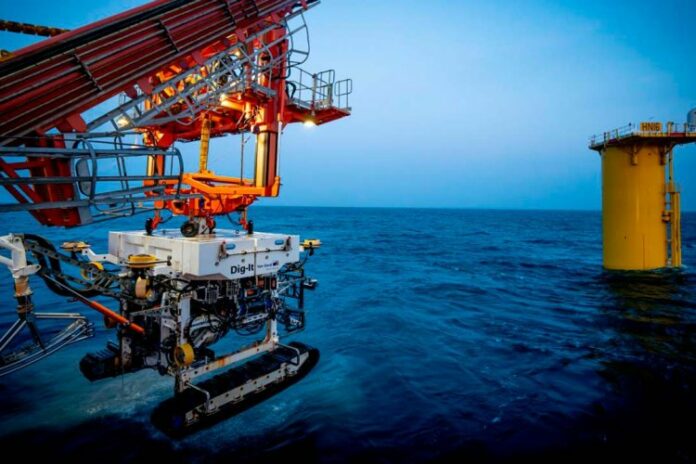
The cables are used for connecting the offshore wind turbines and transmitting electricity. Van Oord’s top duo cable-laying vessel Nexus and trencher Dig-It (a remotely-operated vehicle operated from vessel Subsea Viking) have installed a web of 69 inter-array cables measuring 140 km in total. The offshore wind park is located 18.5 kilometres off the coast of the Netherlands, near the seaside resort of Egmond aan Zee.

Van Oord designed a 66kV inter-array grid for the Hollandse Kust Noord offshore wind park, to guarantee reliable and safe transmission of the generated electricity. Dutch manufacturer TKF (Twentsche Kabelfabriek) supplied the cables. Nexus, equipped with a large 5,000 tonnes capacity cable carousel, installed the inter-array cables. Trencher Dig-It subsequently buried the cables to the required depth of between 1.0 and 1.5m. The Dig-It, a Tracked Remotely Operated Vehicle (TROV), can be used for burying cables both in “jetting mode” for sandy soils and in “chain cutter mode”’ for harder soils. At the Hollandse Kust Noord project both modes were used successfully.

Wind park developer Crosswind, a joint venture between Shell and Eneco, contracted Van Oord for the complete Balance of Plant scope for the construction of the offshore wind park. As a Balance of Plant contractor, Van Oord’s activities encompass the design, engineering, procurement and transport and installation of the wind turbine foundations, inter-array cables, as well as the transport and installation of the wind turbines themselves. Earlier this year, Van Oord completed the installation of all 70 monopile foundations for the wind park. Currently, Van Oord is deploying two offshore installation vessels to install the wind turbine generators and is also performing the electrical termination works of the cables in the wind turbine generators.

While construction is still in full swing, the Hollandse Kust Noord offshore wind park already produced its first megawatt hours (MWh) of green electricity and delivered it to the Dutch mainland. In coming months, production capacity will be constantly increased. Once finished, the wind park will have a total installed capacity of 759 MW, generating at least 3.3 TWh per year. This is enough renewable electricity to meet 2.8% of the Netherlands’ electricity demand.

Saildrone redeploys “Hurricane Sam” ocean drone for 2023 mission

0

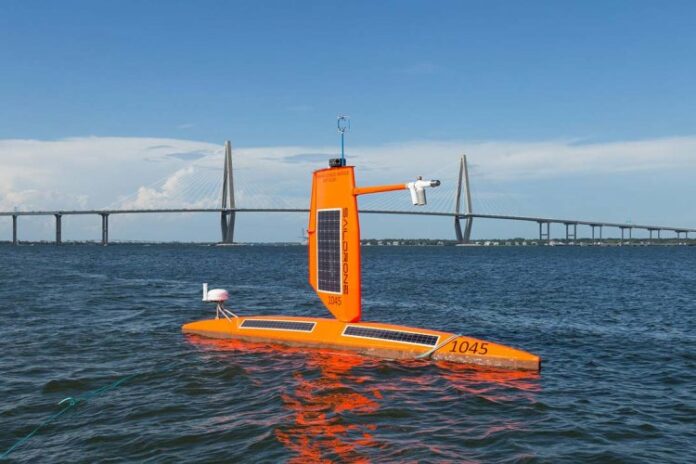
Saildrone has announced the redeployment of their famous Saildrone Explorer SD 1045 for the 2023 Atlantic hurricane season, in partnership with the National Oceanic and Atmospheric Administration (NOAA). 

This USV made global headlines in 2021 for capturing the first-ever video from inside a major hurricane at sea. The data collected by SD 1045 provided invaluable insights into the dynamics and intensity of these powerful storms.

SD 1045 is one of 12 deployed this summer; it was deployed from Charleston over the weekend and will be stationed off the coast of South Carolina for the duration of the mission.

“Off the coast of South Carolina is a particularly complex area of the ocean with relatively shallow waters combined with the strong, warm currents of the Gulf Stream that supply energy to a storm. When hurricanes go over these warm waters, they often intensify, potentially right before they make landfall, so it’s really important to understand how the ocean interacts with the storms in this area,” said Greg Foltz, a NOAA oceanographer and one of the mission’s principal investigators.

Battling massive waves and winds over 100 mph, SD 1045 not only survived Hurricane Sam intact but collected important data about the physical interactions between the ocean and atmosphere that revealed new insights about hurricane intensification. Typically, strong winds mix up colder water from below, cooling the ocean and limiting the heat energy that intensifies a storm. However, the real-time data from SD 1045 revealed that the ocean wasn’t cooling. Fresh water, likely emanating from the Amazon River, may have been keeping the surface of the ocean warm, fueling the hurricane.

“SD 1045 sailing through the eye of Hurricane Sam was really a seminal moment for this field campaign with NOAA, proving that we could sail into a major hurricane and deliver data in near real time to scientists working to improve hurricane forecasting. To redeploy SD 1045 this year for the same mission further demonstrates the endurance, durability, and reliability of the Saildrone platform,” said Matt Womble, Sr. Director of Ocean Data Programs.

Hurricane track forecasting has steadily improved in recent years. However, predicting rapid intensification—when wind speeds increase at least 35 mph over a 24-hour period—is still a significant challenge. The Atlantic Hurricane mission aims to improve understanding of why some tropical storms rapidly intensify.

With its mission to collect data and capture video footage, this cutting-edge USV will be at the forefront of studying hurricanes during the 2023 season. The Saildrone fleet will transmit metocean data, including air temperature and relative humidity, barometric pressure, wind speed and direction, water temperature and salinity, sea surface temperature, and wave height and period to scientists at NOAA’s Atlantic Oceanographic & Meteorological Laboratory (AOML) and Pacific Marine Environmental Laboratory (PMEL).

Powered exclusively by the wind for propulsion and solar energy for onboard computers and sensors, Saildrone’s environmentally friendly uncrewed surface vehicles (USVs) are designed to perform multiple long-endurance missions over many years. Prior to the 2021 Atlantic Hurricane mission, SD 1045 sailed from San Francisco to Eugene, OR, to San Diego, and back to San Francisco on a 60-day NOAA mission to assess stocks of Pacific hake and five coastal pelagic species along the US West Coast.

FuelTrust analysis finds fuel content discrepancies in 39% of global bunkers

0

FuelTrust has released a new report examining bunker discrepancies in the maritime industry, which includes examples of unethical practices and fraudulent activities related to bunkering.

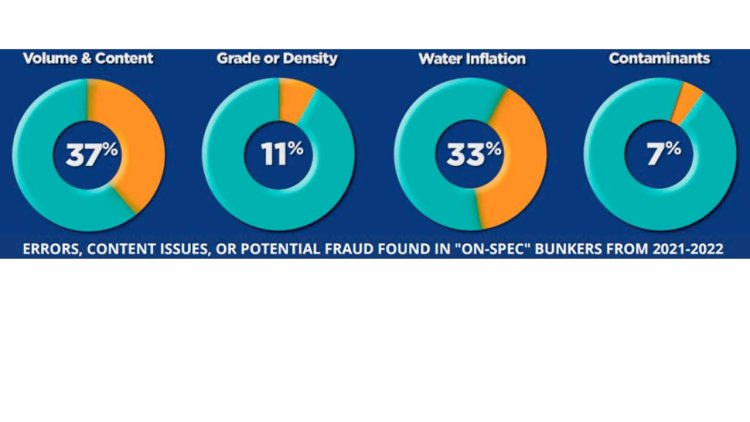
FuelTrust’s analysis found that between 2021 and 2022, more than 39% of global bunkers exhibited a fuel content delta of 2% or more compared to the amounts stated in their delivery paperwork. The primary issue identified was the introduction of water into the fuels during the journey from onshore storage tanks to the ship’s bunker tank. This problem typically involved an increase from 0.1% to above 0.25% water content, which, although below the regulated threshold, still resulted in average losses of $14,910 per affected delivery.

The maritime fuel market has a long history of not being transparent. Bunker fuels account for more than 50% of a vessel’s operational expenses, meaning fraudulent practices and inadequate supply chain management can significantly affect the profitability of vessel owners and charterers, and fuel suppliers. Just this month, eleven Ships lost propulsion, and over 100 ships were affected in a single incident of fuel contamination in Houston.

Even fuel considered “on-spec” (meeting specified quality standards) experiences volume or content issues, leading to financial losses or engine problems. In the past year, over 600 vessels were disabled through fuel problems, despite the fuel being ‘on-spec’, resulting in estimated global supply chain losses exceeding $5 billion. Both fuel suppliers and shipowners incurred financial losses, which are difficult to detect and make claims against.

FuelTrust’s AI-based approach to creating a trusted fuel ecosystem through transparency and traceability addresses the challenges in the fuel supply chain, particularly in the maritime sector. By providing visibility into the final outcomes of fuel products, fuel suppliers can better understand and validate their offerings, while fuel buyers can combat fraud, minimize losses, and mitigate environmental risks.

Jonathan Arneault, CEO and Co-Founder of FuelTrust commented:

“This new research across the global bunkering market emphasizes the need for better transparency. By providing visibility, traceability, and security throughout the fuel supply chain, FuelTrust is improving operational efficiency, helping reduce environmental impact, and fostering trust among all stakeholders.”

“As the latest contamination case demonstrates, it’s essential that ship owners, bunker suppliers and charterers can gain better insight into their fuel supply chains. Better information on the fuel we use is also a foundational block of any serious GHG reduction strategy.”

Russia bombards Ukraine ports, threatens ships, jolting world grain markets

0

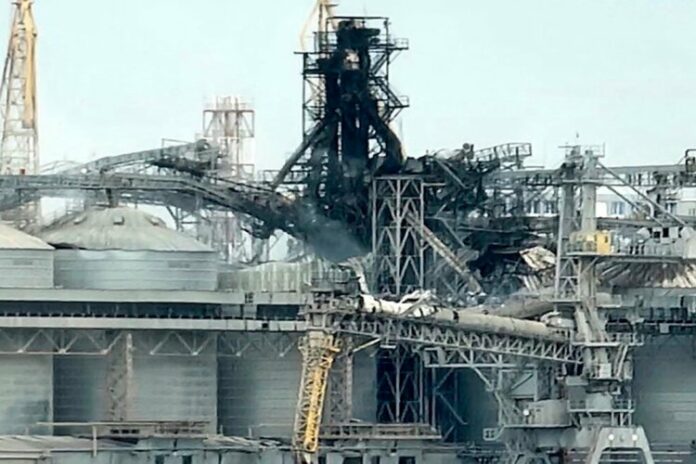
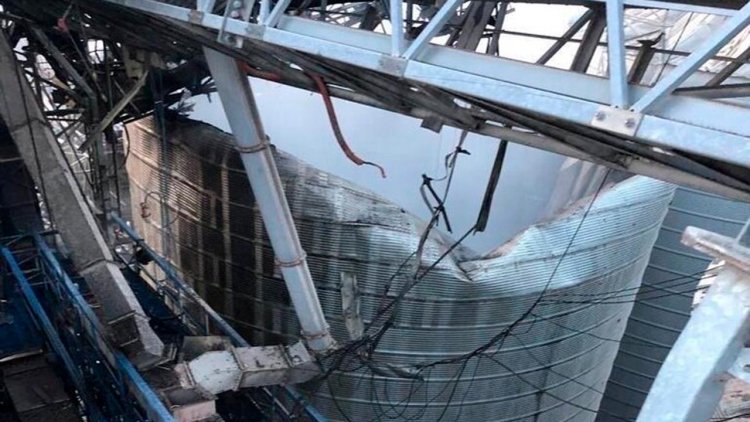
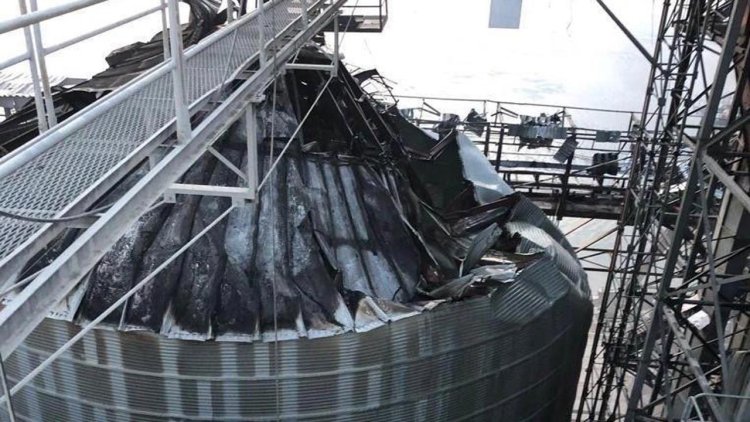
At least 27 civilians were reported hurt in the air strikes on the ports, which set buildings ablaze and damaged China’s consulate in Odesa.

The United States said Russia’s warning to ships indicated Moscow might attack vessels at sea following Moscow’s withdrawal this week from a U.N.-brokered deal to let Ukraine export grain. The signals that Russia was willing to use force to reimpose its blockade of one of the world’s biggest food exporters set global prices soaring.

Moscow says it will not participate in the year-old grain deal without better terms for its own food and fertiliser sales. The United Nations says Russia’s decision threatens food security for the world’s poorest people.

Kyiv is hoping to resume exports without Russia’s participation. But no ships have sailed from its ports since Moscow pulled out of the deal on Monday, and insurers have had doubts about whether to underwrite policies for trade in a war zone.

Since quitting the deal, Moscow has rained missiles down nightly on Ukraine’s two biggest port cities, Odesa and Mykolaiv. Thursday’s strikes appeared to be the worst yet.

In its most explicit threat yet, Russia’s military announced it would deem all ships heading for Ukrainian waters from Thursday morning to be potentially carrying weapons, and their flag countries as parties to the war on the Ukrainian side. It said it was declaring parts of the Black Sea to be unsafe.

Kyiv responded on Thursday by announcing similar measures, saying it would consider vessels bound for Russia or Russian-occupied Ukrainian territory also to be carrying arms.

Washington called Russia’s threat a signal that Moscow might attack civilian shipping, and said Russia was also releasing new mines into the sea.

“We believe that this is a coordinated effort to justify any attacks against civilian ships in the Black Sea and lay blame on Ukraine for these attacks,” White House National Security Council spokesperson Adam Hodge said.

WHEAT PRICES JUMP

The Black Sea escalation pushed U.S. wheat futures up an additional 1.5% in the early hours of Thursday, after they jumped 8.5% on Wednesday, their fastest single-day rise since the initial days of Russia’s invasion in February last year.

Both Ukraine and Russia are among the world’s biggest exporters of grain and other foodstuffs. The United Nations says withdrawing tens of millions of tonnes of Ukrainian grain from the market would cause worldwide shortages.

Russia, which shut Ukraine’s ports in the early months after its invasion, let them reopen a year ago under the grain deal, with Turkey and the United Nations supervising inspections of vessels with Russian participation.

A parallel deal offered guarantees for Russia’s own food and fertiliser exports. Moscow says this has not been fully implemented. Western countries say Russia has had no difficulty selling its food, which is exempt from financial sanctions.

Ukraine’s President Volodymyr Zelenskiy said in his nightly television address that Russia’s attacks on Ukraine’s ports proved that “their target is not only Ukraine, and not only the lives of our people”.

Writing by Peter Graff Editing by Angus MacSwan
Source: Reuters

Houlder and Shell sign decarbonisation collaboration agreement

0

Design and engineering consultancy, Houlder, and Shell International Trading and Shipping Company Limited (Shell), have agreed to work together to identify, evaluate, and further develop solutions to accelerate the decarbonisation of the maritime industry.

The agreement will focus on both retrofit and newbuild vessel opportunities of benefit to the wider maritime community. The collaboration will span market research, technical analysis of clean solutions from a design and engineering perspective, safety and risk assessment studies, and greenhouse gas emissions abatement quantification and verification.

Rupert Hare, Chief Executive Officer at Houlder, commented:

“The maritime industry has to choose technology pathways, supported by regulation, which offer credible and low-cost routes to a net-zero emissions future by 2050. We must collectively do more to accelerate change – and this is one of the cornerstones of our forward-thinking collaboration with Shell.”

Jonathan Strachan, Chief Technical Officer at Houlder, added:

“There are a myriad of maritime decarbonisation solutions available. The challenge is cutting through the noise to find the right solutions for a ship type, specific ship, and its unique operating profile. Our collaboration with Shell will support the company in making the right decarbonisation decisions, underpinned by technical design and engineering expertise.”

Through leading and participating in like-minded collaborations and coalitions, Shell and Houlder’s overarching aim is to see commercially operating ships with lower emissions on the water in the 2030s. They believe this can be achieved through a combination of existing technologies and fuels, while more radical change will be required to achieve alignment with the new International Maritime Organization (IMO) target of net-zero emissions close to 2050. 

Safety is another core component of Houlder and Shell’s agreement. With maritime decarbonisation requiring new technologies and operating procedures, safety remains a central focus for the industry. Changes could introduce risks that may not be adequately managed or eliminated by today’s standards, skills and procedures.

News of this collaboration agreement comes after Houlder announced its work for Shell on the concept design of liquid hydrogen (LH2) carriers, and studies on hydrogen as a cargo or fuel. The news also comes after the IMO’s MEPC 80 meeting and revised greenhouse gas strategy, which requires a well-defined industry view on green solutions to achieve.