2.1 C
New York
Home Blog Page 278

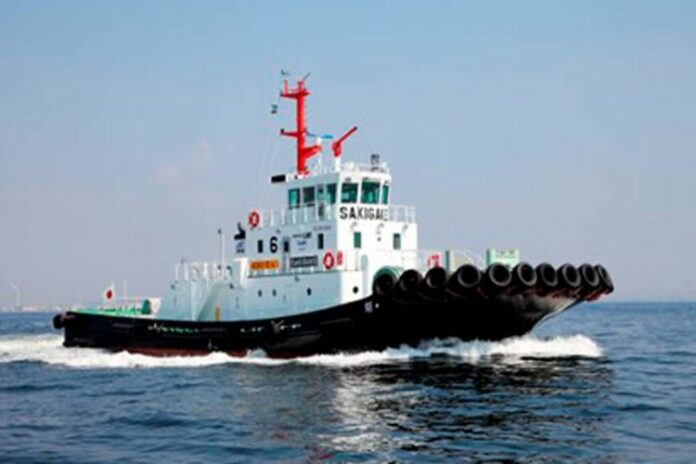
NYK’s Tugboat DX Project using digital technology to improve the industry

0

As part of a DX project aimed at improving the attractiveness of the tugboat industry, which is concerned about future labor shortages, NYK, in collaboration with AIS Co., Ltd. (AIS), a software developer, will implement functions to improve the efficiency of attendance management and allowance calculations by introducing TRANS-Crew, AIS’s labor management system for seafarers. 

Starting with this, NYK will also promote DX for inspection work and skill transfer among crew members in the future, aiming to address issues in the tugboat industry.

To make the tugboat industry an attractive workplace, NYK launched its Tugboat DX Project in 2022 to use digital technology to address problems in this industry. As NYK researched tugboat-related operations, the issue of improving the efficiency of seafarer attendance and benefit calculation emerged.

Tugboat operations and crew embarkation plans change frequently according to the schedules of large vessels. As a result, tugboat companies spend a lot of time and effort managing time and attendance, such as linking crew members’ embarkation plans to their actual performance. They also calculate complex allowances that change with the crew’s position and time on board. In April 2022, the Seafarers’ Law concerning labor contracts and working hours for seafarers was revised, requiring strict control of seafarers’ working hours.

Based on the needs NYK has gathered from its affiliate tugboat companies, NYK will implement complex attendance management and allowance tabulation functions unique to tugboats, which have been considered challenging to systemize, into AIS’s TRANS-Crew. NYK and AIS plan to release the first of the new functions of TRANS-Crew in the fall of 2023 and the final version by the end of the year, aiming to link the information entered and tabulated in TRANS-Crew with commercially available payroll systems.

In the future, NYK will further promote its Tugboat DX Project to improve the attractiveness of the tugboat industry and the sustainability of the NYK Group’s tugboat business.
JERA acquires Belgium’s offshore wind developer Parkwind

0

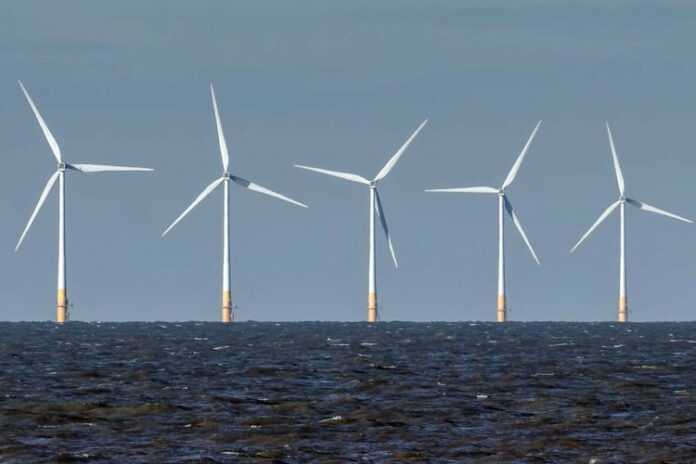
After the initial agreement announced in March 2023, JERA Co., Inc. (JERA) has successfully closed an acquisition of 100% of the shares of Parkwind NV (“Parkwind”) from Virya Energy. The transaction has been approved by competition and other regulatory authorities. 

Parkwind is Belgium’s largest offshore wind platform which operates 4 offshore wind projects in Belgium, totaling 771MW. The recent completion of Arcadis Ost 1 adds another 257MW in Germany’s Baltic Sea. The future development pipeline of Parkwind comprises more than 4.5GW and together with JERA’s complementary capabilities and financial support, Parkwind will continue to strengthen its global presence.

JERA’s acquisition of Parkwind comes at a time when the world is increasingly recognizing the importance of renewable energy sources and the urgent need to increase low-carbon and renewable energy sources. By adding Parkwind’s offshore projects to the existing portfolio of offshore wind projects in Taiwan and the United Kingdom, JERA will be able to increase its renewables capacity and potential to further diversify the existing renewable energy offerings. The acquisition aligns with JERA’s long-term vision to scale up its clean energy platform of renewables and low greenhouse gas thermal power, contributing to sustainable development around the world.

François Van Leeuw and Eric Antoons, co-CEO’s of Parkwind NV, express their enthusiasm and optimism for the future:

“This partnership represents a significant milestone for our company and aligns perfectly with our long-term vision of creating a sustainable future powered by renewable energy. With the combined expertise and resources from both JERA and Parkwind, we are confident in our ability to accelerate our growth, expand our portfolio, and contribute even more to the global clean energy transition.”

Nathalie Oosterlinck, Managing Executive Officer, Head of the Global Renewable Energy Division, JERA:

“I am delighted to announce that we have successfully completed the acquisition of Parkwind. This marks a significant milestone in JERA’s journey to achieve our mission to provide cutting-edge solutions to the world’s energy issues. We are excited to welcome the talented team of Parkwind to the JERA family. Their strong track record and excellent in-house development and team capabilities will help us to grow our ambitions of scaling up our renewable capabilities globally. Together, we can leverage great talent, shared values and business culture.  Parkwind fuels JERAs growth ambitions of scaling up our position as a global leader in the renewable energy sector.”

The transition is expected to be seamless, with no disruptions to ongoing projects, partnerships or services.

thyssenkrupp and MDL sign contract for modernization of Indian submarine

0

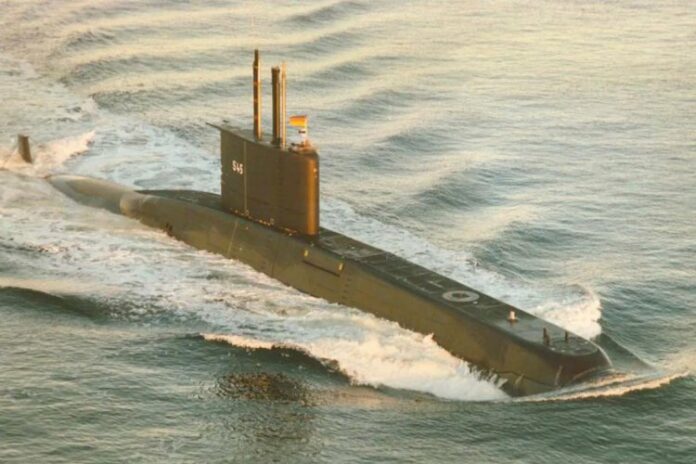
After thyssenkrupp Marine Systems and Mazagon Dock Shipbuilders Ltd. concluded a Memorandum of Understanding in June this year for the local construction of submarines for the Indian Navy, the partners have now teamed up again for the overhaul and modernization of the Indian submarine INS SHANKUSH.

INS SHANKUSH is the second submarine in a series of four HDW Class 209 Type 1500 boats that are all still in service today. The submarines were built and delivered for the Indian Navy in the 1980s as part of a German-Indian cooperation. After seeing service for decades, INS SHANKUSH is now due for a planned extension of its operational capability.

Over the next three years, INS SHANKUSH will be modernized in close partnership with the state-owned shipyard Mazagon Dock Shipbuilders. thyssenkrupp Marine Systems will be responsible for supplying material packages of selected systems, equipment and components as well as for on-site technical support and pressure hull inspection. Mazagon Dock Shipbuilders will act as general contractor up till on-time delivery of the submarine. Drawing on many years of experience, knowledge and expertise, both companies have already cooperated in the implementation of major projects in India.

“We look forward to working again with Mazagon Dock Shipbuilders and continuing a tradition that goes back to more than four decades. This contract once again reaffirms our long-standing commitment to India and represents another cornerstone in maintaining the operational capabilities of the Indian submarine fleet,” emphasized Oliver Burkhard, CEO, thyssenkrupp Marine Systems.

The business relationship between Mazagon Dock Shipbuilders and thyssenkrupp Marine Systems started back in the 1980s when thyssenkrupp Marine Systems joined hands with the Indian Navy and Mazagon Dock Shipbuilders for the construction of four diesel-electric submarines. The first two boats were built in Germany, whereas boats three and four were constructed at the Mazagon Dock Shipbuilders shipyard in India.

With the Medium Refit Cum Life Certification (MRLC) of the first boat INS SHISHUMAR signed in 2018, thyssenkrupp Marine Systems and Mazagon Dock Shipbuilders had already extended the service life of one of the four Indian submarines for another ten years. The modernization of INS SHISHUMAR will be completed after sea trials this year.

The signing of this contract for the second Indian submarine INS SHANKUSH has once again demonstrated the expertise and competence of thyssenkrupp Marine Systems’ Services business unit in the submarine field.

newcleo, Fincantieri and RINA working on feasibility study for nuclear naval propulsion

0

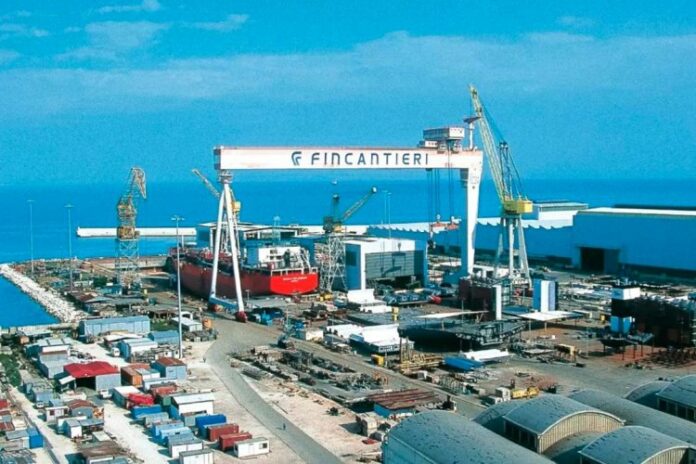
newcleo, the clean and safe nuclear technology company developing innovative Generation IV reactors using nuclear waste as fuel, announced today that it has signed an agreement with Fincantieri, one of the largest shipbuilding companies in the world, and RINA, the inspection, certification, ship classification and consulting engineering multinational.

Under the terms of this agreement, the three companies are combining their deep international expertise and innovation experience to carry out together a feasibility study for nuclear applications to the shipping industry, including newcleo’s lead-cooled small modular reactors (SMRs) technology.

The deployment of newcleo’s innovative LFR (Lead-cooled Fast Reactor) for naval propulsion would involve placing a closed mini reactor on vessels as a small nuclear battery producing a 30MW electric output. This would require infrequent refuelling (only once every 10-15 years), very limited maintenance and easy replacement at end of life.

Using clean nuclear energy to power marine vessels would help rapidly decarbonise a sector grappling with huge fossil fuel consumption and its consequent carbon emissions. The shipping industry, via the International Maritime Organization (IMO), approved last week at MEPC(80) the new targets for GHG emission reduction, to reach net-zero GHG emissions by or around (i.e. close to) 2050.

While the shipping industry still carries 90% of the world’s goods, and the fourth IMO GHG Study 2020 confirms that its carbon dioxide emissions are less than 3% of the total global man-made CO2 emissions, the actions of the big players of this industry have the potential to drive trends and markets.

Also, using nuclear power on ships would safeguard the marine ecosystem in the event of an accident. With newcleo’s design the liquid lead inside the reactor would solidify as it cools down in contact with the cold water, enclosing the reactor core in a solid casing, and containing all radiation thanks to the shielding properties of lead.

Finally, the newcleo naval propulsion reactors would eliminate the current need for frequent refuelling, and at the end of its life, the whole LFR unit would be simply removed and replaced with a new one in the ship, and the spent unit taken away for decommissioning and reprocessing.

Stefano Buono, newcleo Chairman and CEO, commented:

“I am delighted that we are launching a project for civil nuclear naval propulsion with this important feasibility study. Fincantieri and RINA are two global leaders in the shipping sector, and combining their expertise with our technology innovation can bring a real solution to the issue of carbon emissions in maritime transport.

From our conception, newcleo’s ambition is to contribute to accelerating decarbonisation and providing clean, sustainable and affordable energy to meet the needs of communities and businesses. 

I look forward to the results of the feasibility study and the next steps of the project.”

Pierroberto Folgiero, CEO and General Manager of Fincantieri, commented:

“Fincantieri reaffirms its vocation to be a pioneer and catalyst for progress in the maritime sector with cutting-edge, efficient and sustainable technologies. Indeed, the agreement allows us to explore the possibility of adding a new and visionary solution among those at our disposal to achieve the ambitious decarbonisation goals the industry has set for itself.

Nuclear power holds enormous potential and, as such, it needs the best expertise to be expressed, and we are proud to join with partners like newcleo and Rina to help get this done”.

Ugo Salerno, Chairman and CEO of RINA, commented:

“The improvement of fuel efficiency and vessel design is already giving good results in reducing shipping footprint. But, in order to reach the targets fixed for this industry, we need alternative fuels with low carbon content from well to waste.

Nuclear will be one of the answers to these objectives.

In addition, small modular reactors will be the most efficient solution to apply nuclear to shipping”.

Digital tool boosts cargo visibility at Port of Long Beach

0

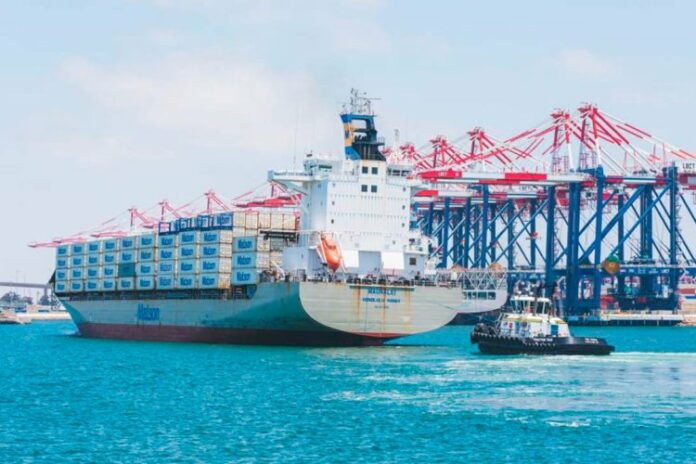
The Long Beach Board of Harbor Commissioners on Monday received an update about the capabilities of the Supply Chain Information Highway, a robust digital tool created to maximize the efficiency and visibility of cargo shipments moving through the Port of Long Beach.

Now in its second phase of development, the Supply Chain Information Highway is undergoing field testing to refine its ability to deliver aggregated data that will help logistics partners to better plan, schedule and track cargo movement in real time from origin to destination.

“We are merging technology and collaboration to enable information sharing and connectivity across every link of the supply chain,” said Port of Long Beach CEO Mario Cordero. “By increasing cargo visibility, the Supply Chain Information Highway will deliver a more accurate record of container movement through the port complex, reduce delays and aid the entire goods movement industry from end-to-end and coast-to-coast.”

“The Supply Chain Information Highway maximizes efficiency by enabling our industry partners to schedule and plan for the arrival of cargo through our Port, as well as expedite deliveries to consumers and retailers,” said Long Beach Harbor Commission President Sharon L. Weissman. “This is truly a game-changer for the 200,000 shippers who move their goods through the Port of Choice.”

All six marine terminals at the Port are using a beta version of the Supply Chain Information Highway. Three new features were introduced at a public meeting of the Board of Harbor Commissioners on July 24, features created to significantly enhance the digital platform’s functionality while meeting the key objectives this initiative was designed to achieve:

  • A dashboard designed for beneficial cargo owners allows customers to access information about the location of their containers within the Port complex, highlighting which containers have arrived, which are undergoing inspection by the U.S. Customs and Border Protection, and which are ready to be picked up.
  • A public “track and trace” page allows users to access the most up-to-date information about the status of containers moving through the Port of Long Beach. After inputting a unique tracking number, the user will be presented with a detailed list tracing every step the container goes through from the time it is loaded onto a vessel until it is unloaded on the docks.
  • A public port operations dashboard that contains much of the information currently found in the Port’s Weekly Advance Volume Estimate, or WAVE Report, including projected container volumes, vessel calls and turn times for trucks accessing marine terminals.

The Supply Chain Information Highway is anticipated to be compatible with similar data-sharing platforms across the maritime logistics industry, with a goal of using the tool at other seaports across the nation. The Port of Oakland, the Northwest Seaport Alliance, the Utah Inland Port Authority, PortMiami, the South Carolina Ports Authority and the Port of New York/New Jersey have previously agreed to collaborate with the Port of Long Beach and participate in the project.

HEMEXPO and DNV sign agreement covering energy-saving devices capability assessment

0

Hellenic Marine Equipment Manufacturers and Exporters has reached an agreement with DNV for the assessment of energy-saving devices (ESDs) produced by HEMEXPO member companies.

Under the terms of the agreement, in the first instance, DNV will review a makers list provided by HEMEXPO to identify ESDs that fall in the category of energy saving devices, according to DNV expertise. In the second step, DNV will assess which regulatory metrics – i.e., the Carbon Intensity Indicator (CII) and the Energy Efficiency Existing Ship Index (EEXI) – the relevant ESDs affect. Finally, the classification society will issue a letter of professional opinion for the HEMEXPO products that fall into the ESD category.

Eleni Polychronopoulou, HEMEXPO President, said:

“Our agreement with DNV is a significant breakthrough as it aligns closely with the need for an international standard on ESDs, and HEMEXPO’s endeavours to encourage the marine equipment industry’s transition towards green solutions, which HEMEXPO is working towards. ESDs support ship owners and yards in meeting their environmental sustainability objectives, and this agreement will facilitate the acceptance of impactful technologies within the maritime industry.”

Whether selected for retrofit or at the newbuilding stage, ESDs can help shipping companies improve their CII, EEXI and EEDI (Energy Efficiency Design Index) ratings – and as the maritime regulatory landscape evolves, their importance will only grow, Polychronopoulou added.

Chara Georgopoulou, Head of the Maritime R&D and Advisory – OCCS Manager for DNV Greece, commented:

“We are pleased to sign an agreement with HEMEXPO to assess its energy-saving devices. The maritime industry has set ambitious sustainability targets and improvements to vessel efficiency and ESDs, alongside new fuels and digitalisation, can significantly contribute to achieving those goals. ESDs can be instrumental in helping to reduce fuel use, cut greenhouse gas emissions and fully contribute towards compliance. For wider adoption however, the industry needs confidence in the technology. By working together to review HEMEXPO member products, DNV is proud to help build this confidence and ensure that the shipping industry can use ESDs to meet its decarbonisation goals.”

Nexans to build third generation cable laying vessel

0

This strategic decision will allow the Group to meet the increasing demand for electrification, especially in the American and European markets, driven by a record project backlog and recently strengthened by the historic €1.7 billion contract with TenneT, and €1.43 billion contract for EuroAsia Interconnector project.

This new strategic asset will also directly and indirectly create hundreds of jobs worldwide during its construction and operational period.

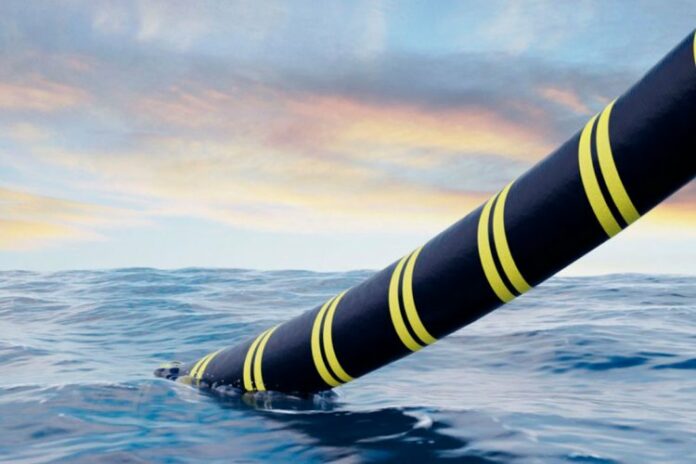
Building upon the cutting-edge technology featured on Nexans’ flagship vessel, the Nexans Aurora, this new ship goes further with improved design, comfort and capabilities. Equipped with three turntables, offering a 13,500-tonne loading capacity, and hosting a large range of subsea tooling including jetting and ploughing tools, this vessel will be capable of laying up to four cables simultaneously to meet specific customer requirements, especially on large-scale projects. This vessel will be delivered in 2026.

By adding this vessel to its fleet, Nexans is also enhancing its versatility and flexibility covering a widening geographical footprint.

From an environmental standpoint, the new vessel with its increased load capacity, an advanced hybrid power system and capable of running on biodiesel mix, will offer a significant reduced footprint, reflecting the Group’s strategic environmental vision.

Vincent Dessale, Nexans Chief Operations Officer and Senior EVP, said:

“This new vessel will be the most technologically advanced cable layer ever deployed. Fitted with a range of high-tech cable installation and burial equipment, it will enhance the capabilities of our subsea cable operations to tackle projects on an unprecedented scale. This new strategic asset will support the Group’s long-term growth, consolidating its leadership in the interconnection and offshore markets. It perfectly embodies Nexans’ strategy to electrify the future, and its innovative features illustrate our ever-increasing commitment to meeting our partners’ needs. ”

New combat marine drone developed in Ukraine

0

The National Industrial Portal media reported that the Ukrainian state enterprise “SpecialTechnoExport” developed the drone.

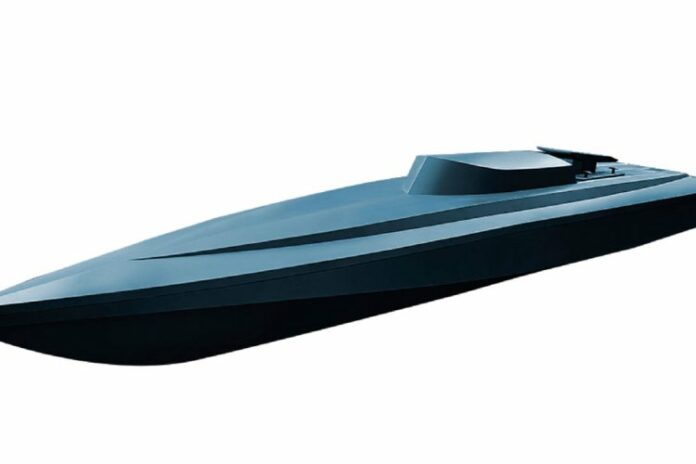
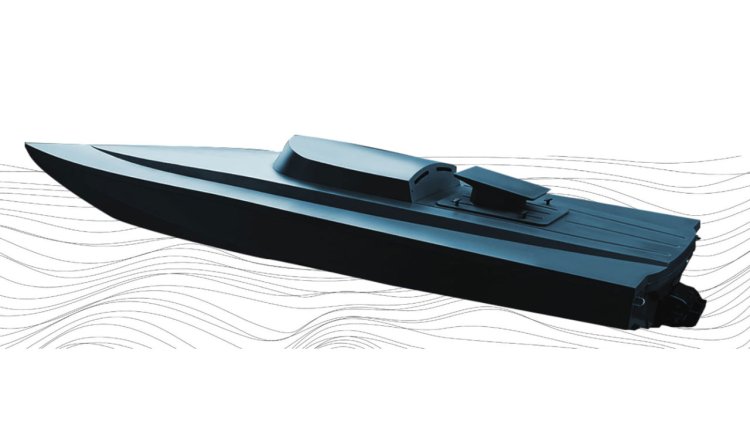
Maritime Autonomous Guard Unmanned Robotic Apparatus (MAGURA) V-type is a new generation multi-purpose unmanned surface vessel developed in Ukraine.

It can perform a variety of operations such as surveillance, reconnaissance, patrol, search and rescue, mine countermeasures, marine protection, and combat missions.

The hydrodynamic body and graceful profile allow it to move covertly with excellent maneuverability.

“This is an affordable solution that can be easily launched from any remote location. Unmanned control minimizes the need for human resources to perform missions, reducing potential fatalities while operating in harsh environments,” the developers say.

Declared characteristics of MAGURA V5 are:

  • Length: 5500 mm or 5.5 m;
  • Width: 1500 mm or 1.5 m;
  • Height above the waterline: 500 mm;
  • Cruising speed: 22 knots;
  • Maximum speed: 42 knots;
  • Range: 450 nautical miles (approximately 833 km);
  • Payload: 320 kg;
  • Communication: mesh radio with an aerial repeater or satellite communication.

The drone itself vaguely resembles one of those that recently attacked the Russian Priazovye reconnaissance ship, which may be its development.

Then, the Russian ship was attacked by new Ukrainian drones of an indeterminate type, one of which was called “Cat and Raccoon.”

In March, volunteers also presented a new version of the Ukrainian military naval drone. The photos captured two drones called “Bakhmut” and “For Raccoon.”

ABS awards AiP for ammonia-fuelled container vessel

0

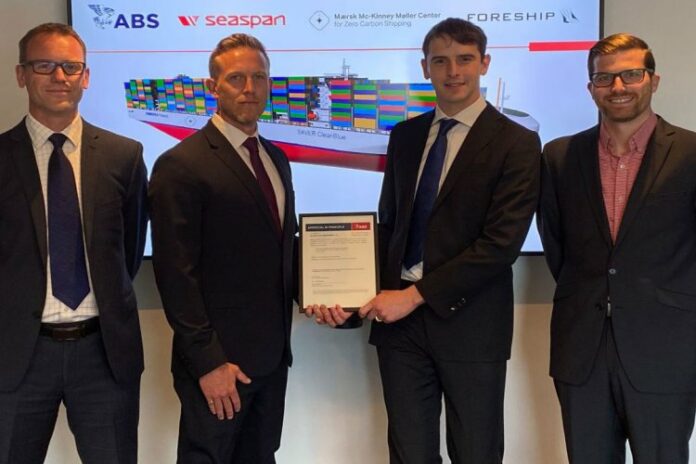
Classification society American Bureau of Shipping (ABS) awarded Seaspan Corporation and the Mærsk Mc-Kinney Møller Center for Zero Carbon Shipping (MMMCZCS) in collaboration with Foreship an Approval in Principle (AiP) for the design of a 15,000 TEU ammonia-powered container vessel. The certificates were presented at the ABS office in Copenhagen on July 25th, 2023.

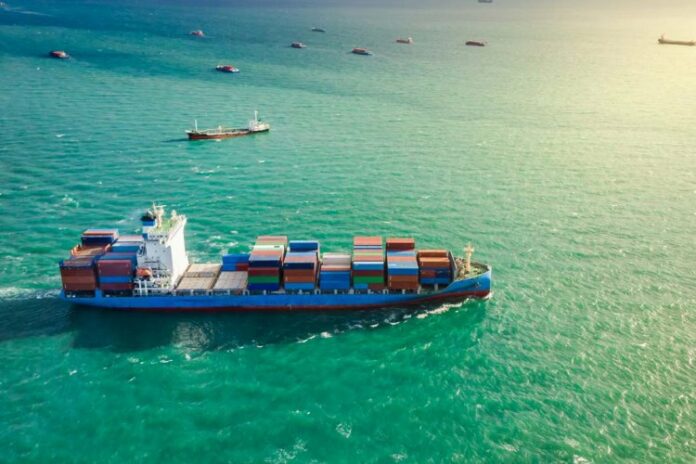
Ammonia is a promising alternative marine fuel. However, there are currently no ships capable of sailing on ammonia. In 2022, Seaspan and the MMMCZCS jointly initiated a project to better understand the challenges and opportunities of designing a large ammonia-fueled container vessel. A concept design for a 15,000 TEU container vessel was developed in close collaboration with ship designer Foreship and classification society ABS. The project included defining the safety objective, impact of ammonia as a fuel on vessel performance, completion of a hazard identification (HAZID) qualitative risk assessment and development of the concept design. Documentation included a fuel range and endurance analysis, ammonia tank and system location assessments, general arrangement, main machinery and electrical system design, and initial vessel stability calculations.

The project is connected to the Singapore Ammonia Bunkering Feasibility Study (SABRE) consortium, focusing on developing and demonstrating an ammonia supply chain in Singapore. Phase 1 performed an end-to-end technical and commercial feasibility study of ammonia bunkering in Singapore along with a preliminary ammonia bunkering vessel design. Phase 2 is investigating how to mature the commercial feasibility so that contractual terms across the supply chain are prepared and can be executed to establish an ammonia bunkering operation in Singapore. The 15,000 TEU vessel was designed as a potential receiver of ammonia fuel from bunker vessels currently under design and development.  

Speaking on the presentation of the AiP, Peter Jackson, Senior Vice-President Assets & Technology at Seaspan Corporation, said:

“This is a very good example of industry collaboration, where leading maritime organizations are working together and taking tangible steps to decarbonize the maritime industry. Ammonia is a very promising future marine fuel and this project is a vital and significant step in the development and realization of ammonia powered containerships.”

Panos Koutsourakis, ABS Vice President, Global Sustainability, said:

“This landmark vessel is an important step towards helping ship owners and operators benefit from ammonia’s zero-carbon tank-to-wake emissions profile. However, ABS recognizes that ammonia presents a specific set of safety and technology challenges, and we are committed to leading the industry in supporting its safe adoption at sea” 

Shaun White, Managing Director UK at Foreship Ltd, added:

“Foreship has a clear strategy and focuses on decarbonization services and supporting the marine industry to achieve net zero targets. This innovative project demonstrates how Foreship works in collaboration with ship owners, classification societies and research organizations applying industry-leading naval architecture and marine engineering expertise to ship designs using promising alternative fuels.”

GTT receives AiP from ClassNK for liquefied hydrogen carrier CCS and CHS

0

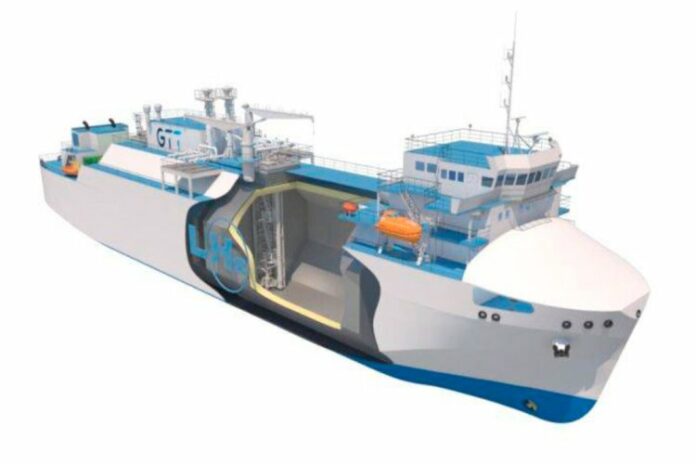
As part of the energy transition towards a carbon-free future, the ability to transport hydrogen in liquefied form at -253°C is one of the technological challenges to build a reliable, efficient and competitive hydrogen supply chain.

To this end, GTT has developed a scalable containment system, which can be adapted to any size of LH2 carrier without major design modifications, as well as the cargo handling system, the design of which has been validated on the basis of ClassNK rules accompanied by a risk analysis.

Philippe Berterottière, Chairman and CEO of GTT, declared:

“We are proud to have obtained this new approval in principle from ClassNK, whose in-depth technical and regulatory knowledge, as well as the solid experience in the hydrogen field, demonstrate the relevance of GTT’s technology in this domain. We are convinced that the development of containment systems for the transport of liquid hydrogen is a key element in accelerating the energy transition. GTT’s R&D teams are determined to push back the technological frontiers so that this solution is viable and rapidly available to the maritime transport and energy players.”

Masaki Matsunaga, Corporate Officer and Director of Plan Approval and Technical Solution Division of ClassNK, stated:

“ClassNK has issued the AiP for the LH2 cargo containment system and cargo handling system developed by GTT, following a review in accordance with our rules and guidelines dedicated to LH2 transportation as well as verification of the risk analysis’ results. Anticipating that hydrogen transport will play a significant role in a carbon-free society, we are delighted to participate in GTT’s pioneering initiative through our expertise in safety assessment.”