2.1 C
New York
Home Blog Page 277

BOEM finalizes wind energy areas in the Central Atlantic

0

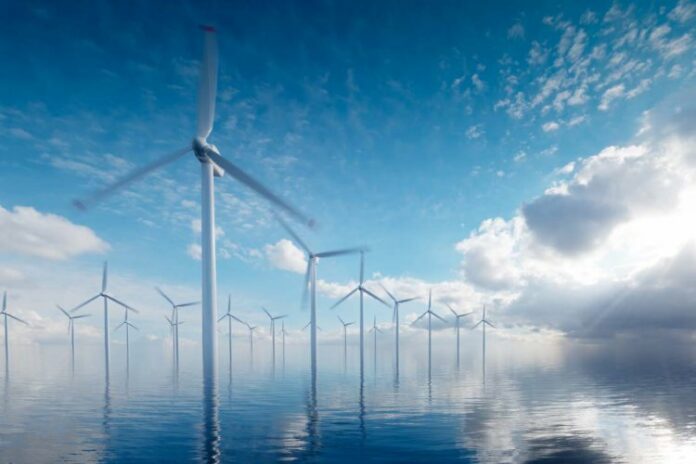
The Bureau of Ocean Energy Management (BOEM) has announced three final Wind Energy Areas (WEAs) offshore Delaware, Maryland, and Virginia, which were developed following extensive engagement and feedback from states, Tribes, local residents, ocean users, federal government partners, and other members of the public. 

If fully developed, the final WEAs could support between four and eight gigawatts of energy production.  

The three WEAs total approximately 356,550 acres. The first WEA (A-2) is 101,767 acres and located 26 nautical miles (nm) from Delaware Bay. The second WEA (B-1) is 78,285 acres and about 23.5 nm offshore Ocean City, Md. The third WEA (C-1) is 176,506 acres and located about 35 nm from the mouth of the Chesapeake Bay, offshore Virginia. A map of the final WEAs can be found on BOEM’s website. 

“BOEM values a robust and transparent offshore wind planning process, which requires early and frequent engagement with Tribal governments, the Department of Defense, NASA, other government agencies, and ocean users” said BOEM Director Liz Klein. “We will continue to work closely with them, and all interested stakeholders, as we move forward with our environmental review.”

BOEM partnered with the National Oceanic and Atmospheric Administration’s National Centers for Coastal Ocean Science (NCCOS) to develop a comprehensive, ecosystem-based ocean planning model that assisted in the selection of the final WEAs. 

This model leveraged best available data on natural resources, ocean industries like fisheries and energy production, and areas of national security activities to identify areas with high wind energy resource potential while reducing potential impacts to other ocean users and sensitive environmental resources. This comprehensive approach not only provided valuable insights about the seascape and uses of the ocean region, but also facilitated greater transparency and positive coordination with government partners and ocean stakeholders through direct engagement and incorporation of their feedback into the NCCOS model.

On November 16, 2022, BOEM announced and requested public comment on eight draft WEAs on the U.S. Outer Continental Shelf offshore North Carolina, Virginia, Maryland, and Delaware, covering approximately 1.7 million acres. The draft WEAs represented a subset of the original 3.9 million acres that the Department of the Interior identified for public comment in April 2022.

The final WEAs are in comparatively shallow water. BOEM may identify additional WEAs in deepwater areas offshore the U.S. Central Atlantic coast for future leasing once further study of those areas has been done.

Wärtsilä to supply methanol-fuelled auxiliary engines for six CMA CGM container vessels

0

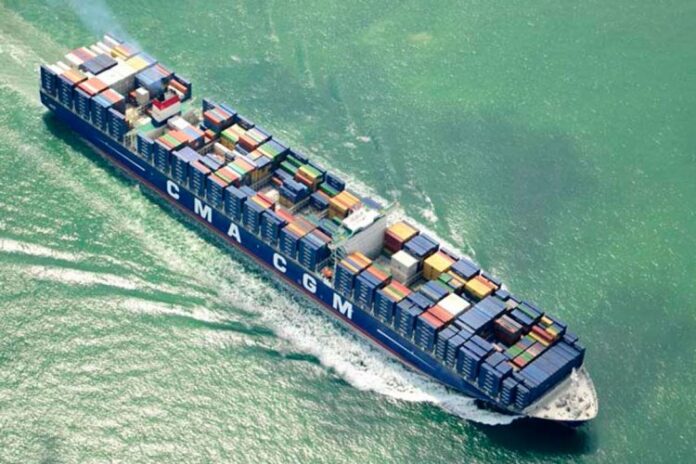
Technology group Wärtsilä will supply methanol-fuelled auxiliary engines for the French shipping company CMA CGM. The order was booked by Wärtsilä in Q2 2023.

The six container vessels will be the first CMA CGM vessels ordered to operate on methanol fuel. The choice of methanol is stated to be central to the company’s current decarbonisation ambitions; as operating an engine on methanol produces fewer pollutants than diesel and can be produced from sustainable, renewable-based energy sources.

“Our goal is to achieve carbon neutrality by 2050. By fitting our future fleet with methanol systems, we will be making a serious contribution towards achieving this target. For this reason, we require the experience and technological leadership that Wärtsilä provides in the development of reliable engines capable of operating with new, sustainable marine fuels,” said Xavier Leclercq, Vice-President of CMA SHIPS.

“We have worked closely with CMA CGM for many years, with both our companies sharing a commitment to decarbonising marine operations. We are, therefore, honoured to have been selected to supply the methanol-fuelled engines for these newbuild vessels. We look forward to continuing to collaborate with CMA CGM on creating more responsible, more efficient, and more sustainable transportation solutions for the industry,” said Roger Holm, President of Wärtsilä’s Marine Power business.

For each of the vessels, the full Wärtsilä scope includes three six-cylinder and one seven-cylinder Wärtsilä 32M engines fitted with selective catalytic reduction (SCR) systems. The equipment is scheduled for delivery commencing in late 2024, and the vessel is expected to be delivered in autumn 2025.

Three civilian ships ran Russia’s naval blockade of Ukraine

0

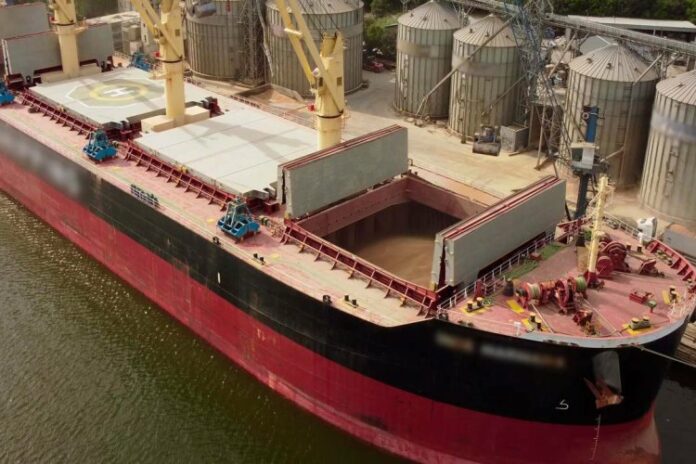
Twenty-two days after Moscow canceled a deal with Kyiv—which had allowed Ukraine safely to export tens of millions of tons of grain—and then threatened to halt maritime traffic to Ukrainian ports, the world has called the Russians’ bluff.

“Reports of three civilian ships sailing to Ukraine unhindered may suggest that Russia is either unwilling or unable to enforce such searches at this time,” the Institute for the Study of War in Washington, D.C. noted.

As pointed out by Markus Jonsson, a flock of NATO aircraft carefully monitored the ships as they sailed toward Izmail, a small Ukrainian port just across from Romania on the Danube River. The vessels presumably will load grain in Izmail then sail back into the Black Sea and onward to foreign ports.

The Israeli vessel with the ship-tracking handle Ams1, as well as the Greek vessel with the handle Sahin 2, sailed north from the Bosporus Strait, while the Turkish-Georgian Yilmaz Kaptan sailed west from northern Turkey.

Overhead, no fewer than four NATO warplanes patrolled: a U.S. Navy P-8 patrol plane, a U.S. Army Challenger with a surface-scanning radar, a U.S. Air Force RQ-4 drone and an E-3 early-warning plane from NATO. None of the planes routinely carries weapons, but NATO fighters—including Italian Eurofighters and Romanian F-16s—were nearby in Romania.

The three cargo ships made no effort to obscure their intentions. They all switched on their radio transponders, making their location and course visible to anyone with access to the internet and ship-tracking websites.

The Russian navy’s battered Black Sea Fleet, which has lost several ships to Ukrainian missiles and has been bottled up in the Black Sea since Russia widened its war on Ukraine 17 months ago, signaled it would stop—or even attack—ships sailing to Ukraine.

Shortly after Moscow unilaterally canceled the 11-month-old Black Sea Grain initiative, which had facilitated the export of 32 million tons of Ukrainian grain, the Black Sea Fleet deployed the corvette Sergey Kotov to the southern Black Sea within striking range of the main sea routes from the Bosporus Strait to Odesa, Ukraine’s strategic port.

Neither Sergey Kotov nor any other Russian ship intervened as the three civilian ships made their way not to Odesa, but to Izmail. Kyiv has been redeveloping its Danube ports as a wartime alternative to Odesa.

Russian missiles regularly strike Odesa, but attacks on the Danube ports are less frequent, likely owing to the proximity of these ports to NATO territory. It’s just a few hundred yards from Izmail to Romanian soil. A July 24 Russian drone strike on a grain warehouse in Reni, another Ukrainian port on the Danube, narrowly missed hitting Romania.

Sunday’s successful blockade run could signal to international shippers that it’s reasonably safe to resume operations from Ukrainian ports. “Russian forces appear to be unwilling or unable to forcibly stop and search neutral vessels headed to Ukraine through the Black Sea despite ostensibly setting conditions to do so,” ISW noted.

Whether any shippers will risk the longer run to Odesa, 100 miles north of the Danube Delta, is an open question. The Danube ports lack the capacity fully to replace Odesa as a grain port.

Source: Forbes

France and Italy’s Horizon-class destroyers to receive mid-life upgrade

0

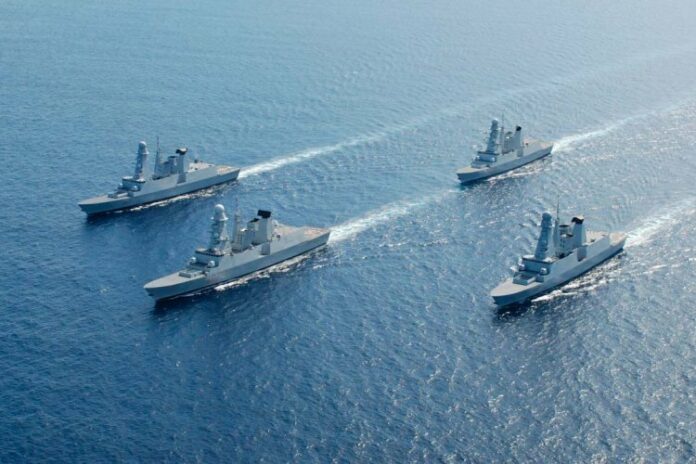
OCCAR (Organisation for Joint Armament Cooperation) has awarded Naviris and eurosam a contract for the Mid-Life Upgrade (MLU) of the French and Italian Horizon frigates. 

Naviris and eurosam, will work in close relationship with their shareholders, Fincantieri and Naval Group for the frigate, MBDA Italia, MBDA France and Thales for the new generation of Principal Anti-Air Missile System & Long-Range Radar (PAAMS & LRR).

The value of the contract for Naviris and eurosam is euro 1.5 billion. More in detail, in the coming days Naviris will finalize subcontracts, including the one with Fincantieri, which will have a value of 211 million euros and constitutes a major related party transaction defined in compliance with the relevant applicable regulations.

With this upgrade, Horizon class frigates will receive a state-of-the-art modernization of the entire vessel and the enhancement of their anti-warfare capabilities. New weapon systems and associated Command and Control, and electronic warfare suites will provide highest capabilities and performances against the most modern threats. Regarding anti-air warfare, the new generation of PAAMS & LRR is a very significant upgrade and the system will be able to defeat the threats of the decade to come as missiles (hypersonic, ballistic, supersonic sea-skimmer, high velocity cruise), UAVs and highly maneuvering aircrafts, in a saturation attack scenario.

Damien Raby, Naviris’ CEO and Enrico Bonetti, Naviris’ COO declared:

“We are very proud of today’s achievement; the contract signed today is the result of a route, jointly walked with our partner eurosam and our Customers: OCCAR, which we sincerely thank for the excellent work done, Directorate of Naval Armaments of the Secretariat General of Defence / National Armaments Directorate and French Armament General Directorate (DGA), started with the award of the feasibility studies which will make even more solid the execution of the programme. This contract is a fundamental step for Naviris in demonstrating its capability to execute a multinational programme and it further reinforces the role of the joint venture as center of gravity in the cooperation among Fincantieri and Naval Group, also with the partnership of Leonardo and SIGEN (ELT and Thales)”.

Eva Bruxmeier, Managing Director of eurosam stated:

“PAAMS & LRR, unique System deployed on the four French and Italian frigates, has been successfully engaged all over the world for more than 15 years in synergies with PAAMS & LRR – UK variant deployed on the six Type-45 destroyers. This new generation of PAAMS & LRR for the frigates, developed and produced by eurosam through MBDA Italia, MBDA France and Thales and integrated jointly with Naviris on the frigates, relies on an enhanced missile (ASTER Block 1 NT), an upgraded launcher, two new AESA radars (Kronos Grand Naval from Leonardo and SMART-L MM/N from Thales) and a new open software architecture command and control system”.

The Horizon frigates were originally built between 2000 and 2010 as part of a joint programme between Fincantieri and Naval Group, providing the Italian and French navies with innovative frigates with antiair capabilities. The PAAMS & LRR system was originally developed and produced, under eurosam responsibility, for the four Horizon class frigates.

Damen and Feyz Group sign contract for three new cargo vessels

0

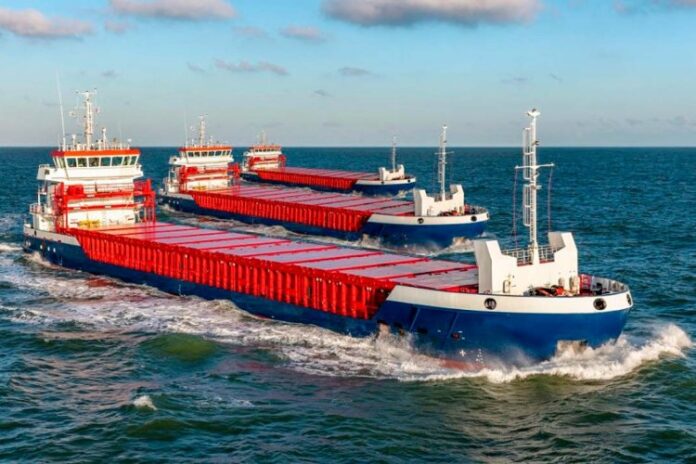
The highly successful Combi Freighter (CF) 3850 is a recently re-designed general cargo vessel with a deadweight of 3,850 tonnes. 

With a length overall of 89.70 metres and a 12.50-metre beam, it is capable of maintaining speeds of more than 10 knots in headwinds when fully loaded, due to the hydrodynamic properties of the hull shape. This delivers not only exceptional performance, it also results in it requiring less power than comparable vessels, leading to a smaller engine (1104 kW) that consumes considerably less fuel and requires less maintenance.

The cargo hold tank top strength is reinforced to carry 15 tonnes per square metre and the CF 3850 can carry up to 172 containers; 108 in the hold and 64 on deck. Movable bulkheads enable partial tween-decks flexibility, allowing a wide range of cargos to be carried on a single voyage.

The CF 3850 is built along with the other members of the Damen Combi Freighter range at the Damen Yichang Shipyard in China. Series construction enables competitive pricing of new-build vessels while also guaranteeing the quality of the construction and allowing for any modifications required by clients.

“We see this moment as a start of a long term relationship with Damen” says Engin Aynaci, General Manager of Feyz Group.

“Turkey’s shipping operators represent the largest fleet in the world of cargo vessels of this size,” added Remko Bouma, Commercial Director Damen Cargo Vessels. “So we are delighted that Feyz Group, a leading Turkish ship management company, has chosen Damen Group for its latest freighters.”

Regional sales director, Boran Bekbulat said,

“This is a significant moment for the market, marking the first time that a Turkish ship operator has bought newbuild cargo vessels. It will be pleasure seeing these vessels calling in at European ports under the excellent management of Feyz Group.”

Two new tugs arrive at Caofeidian Port in Northern China

0

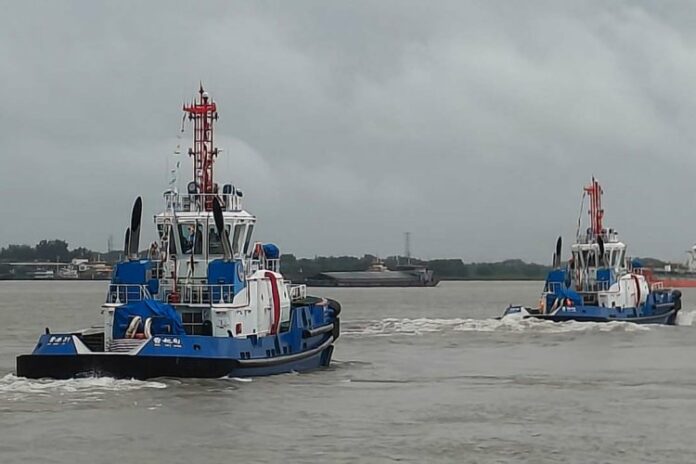
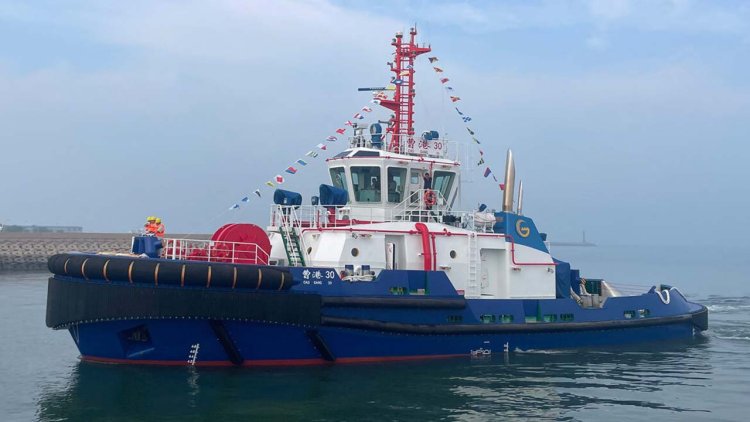
With the required 34.8 metre vessel length, bollard pull of 80 tonnes, and a gross tonnage not greater than 500, which was up to the limit, the design was quite challenging.

Substantial but well-worthwhile efforts were spent in the development of hull form and arrangement to provide sufficient displacement; single cabins for 10 crew members as per Chinese Statutory requirement; machinery arrangement for the large equipment of the propulsion system, as well as a fire-fighting system of Fi-Fi 1 Class notation.

Key particulars of the Cao Gang 30 and Cao Gang 31 are:

  • Length, overall (excluding fenders): 34.7 m
  • Beam, moulded: 11.1 m
  • Depth, least moulded: 5.19 m
  • Maximum draft (navigational): 4.94 m
  • Gross Tonnage: < 500

Main tank capacities are:

  • Fuel oil: 85 m3
  • Potable water: 30 m3
  • Ballast: 110 m3
  • Fire-fighting foam: 10 m3

The tugs were designed and constructed to the following CCS Class Notation:

★ CSA, TUG, R1, FIRE FIGHTING SHIP 1, WATER SPRAYING

★ CSM, AUT-0

Propulsion machinery consists of two Yanmar main engines of 8EY26W 2390 kW at 750 rpm and a pair of Schottel Z-drive SRP 460FP, Ø2700, FP.

Each of the multi-purpose tugs is equipped with deck machinery, including a hawser winch two individual windlasses at the bow; a towing winch on the aft deck. Deck machinery equipment is provided by Karmøy Winch AS, Norway.

Fenders for ship-handling at the bow consist of an upper row of cylindrical fenders and a lower course of W-fender. Sheer line fendering consists of “D” rubbers and a W-fendering at the stern.

The accommodations have been outfitted for a crew of ten including two cabins with a living room for the master and chief engineer, mess, and a galley arranged in the deckhouse, eight other crew cabins located on the lower accommodation deck. The wheelhouse is designed with a split-type control station which provides maximum all-round visibility with exceptional visibility to the bow and side fendering, as well as operation on the aft deck.

‘Faster than anything else in the Black Sea’: See Ukraine’s latest sea drone

0

At a secret makeshift military base a nondescript van and pickup truck tow two gray objects covered by tarpaulin mounted on trailers.

In the driving rain, they resemble something more akin to a Boston Whaler, rather than hiding one of Ukraine’s most closely guarded secrets.

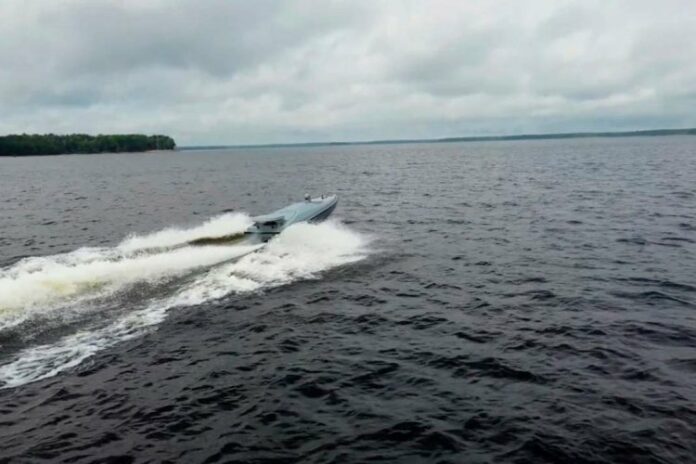
As the tarps are drawn back, a gun-gray, sleek hull appears. Just over five meters (16 feet) in length, its narrow shape resembles a wide canoe.

These naval drones, never before shown to journalists, are increasingly allowing the Ukrainians to attack and surveil the Russians in the Black Sea and on the Crimean Peninsula. A country with no real fleet to speak of is outmanned and outgunned off their own coastline, but these sea drones are proving a vital tool in countering the Russians.

A government-linked Ukrainian fundraising organization called United24 has sourced money from companies and individuals all around the world, pooling the funds to disperse it to a variety of developers and initiatives from defense to soccer matches.

The entire outfit is very security conscious, insisting on strict guidelines on filming and revealing identities. Those who CNN met with declined to give their full names or even their ranks within Ukraine’s armed forces.

On a creaky wooden jetty, a camouflaged sea drone pilot says he wants to go by “Shark.” In front of him is a long black hardshell briefcase. He unveils a bespoke, multi-screened mission control – essentially an elaborate gaming center, complete with levers, joysticks, a monitor and buttons that have covers over switches that shouldn’t be accidentally knocked, with labels like “blast.”

The developer of the drone, who asked to remain anonymous, said their work on the sea drones only began once the war started. It was “very important, because we did not have very many forces to resist the maritime state – Russia. And we needed to develop something of our own, because we didn’t have the existing capabilities”.

Ukraine is now starting to show those capabilities, even if missions are have varying degrees of success.

The latest versions of the drone seen by CNN weigh up to 1,000 kilograms (2,200 pounds), with an explosive payload of up to 300 kilograms (661 pounds), a range of 800 kilometers (500 miles) and maximum speed of 80 kph (50 mph).

Multiple sea drone attack carried out on Russian assets in Crimea and the Black Sea have grabbed recent headlines, with dramatic videos posted online. Some, but by no means all, have been claimed by the security services themselves.

Ukrainian defense sources confirmed to CNN that sea drones were involved in at least two recent attacks: the Kerch Bridge in July and in Crimea’s Sevastopol port last October.

On 14 July the Ukrainian security services, alongside the navy, claimed joint responsibility for the second attack in nine months on the much-derided Kerch Bridge.

The vital artery, a nearly $4 billion project by Russia and personally opened by President Putin, is a key target to disrupt and sever the resupply route for Russian forces in the illegally annexed peninsula and in occupied areas of the southern front.

The pre-dawn attack left a section of the bridge unpassable and out of service until September.
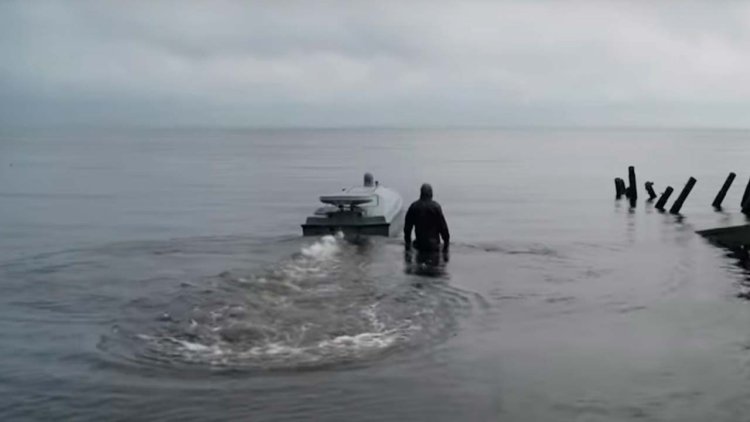
The developer, watching his brainchild churn water, says the “these drones are a completely Ukrainian production. They are designed, drawn and tested here. It’s our own production of hulls, electronics and software. More than 50% of the production of equipment is here (in Ukraine).”

The Russians have yet to adjust to Ukraine’s newest capabilities, they claim.

“It is very difficult for them to get into such a small drone, it is very difficult to find it,” the developer says. “The speed of these drones exceeds any sea craft in the Black Sea region at the moment.”

The speed and difficulties in detection may go some way to explaining how the drones that attacked the bridge traveled undetected in the dark across the Black Sea to the bridge.

Ukraine has also been aiming their new equipment at Russia’s Black Sea Fleet, which has cruised menacingly off the coast and become a recipient of many vicious volleys of missile attacks.

Before the recent attack left a key piece of Russian infrastructure bruised, other attempted attacks had already put the Russians on notice.

In October last year sea drones were responsible for the attack on the fleet’s flagship, the Admiral Makarov, which was docked in port in Sevastopol. Ukrainian defense sources told CNN that the internal security services (SBU) carried out the attacks.

There was never any real proof given to the damage caused to the vessel, and it later reappeared without any major damage, but the fact that the Ukrainians were able to get within striking distance of the Admiral Makarov reinforces the success rate of the Ukrainians.

The brazen attack also gave Kyiv’s forces a boost and some propaganda for the public. Especially since the Admiral Makarov was newly installed as the Black Sea flagship after the Moskva was famously sunk by Ukrainian forces in April 2022.

“Shark,” languidly guiding the sea-drone from his control station, says :”these drones are designed to destroy ships and the fleet… such things that are used quite successfully and terrify the Russians.”
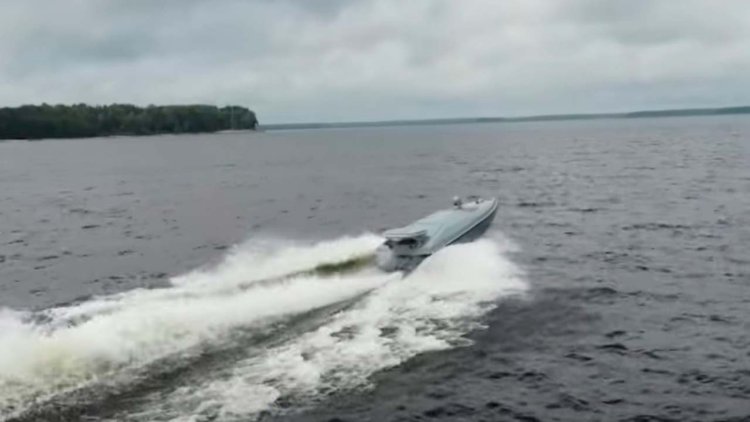
The damage sustained to the Admiral Makarov was unclear, but the intentions for Kyiv were on show.

The developer argues their work in against Russian naval targets forces them further into the Black Sea, therefore making deeper missile strikes into Ukraine harder. “300, 400, 600 kilometers is a long distance that makes some operations impossible and makes other operations more difficult.”

He said that makes cities like Odesa “safer.” But after the bridge strike, the city came under days of intense air attacks from drones and cruise missiles launched from the Russian Black sea fleet. Twenty-five UNESCO World Heritage sites across the city were hit. Russia claimed it was responding to an area it says was housing sea drones.

The drones’ capabilities and successes have given the developer some bravado though

“I think it will be five to 10 years or more before they (Russians) can effectively counter this type of equipment,” he says. “Their equipment is from the 20th century, ours is from the 21st. There are 100 years between us.”

Source: CNN

Dutch authorities delay plan to tow burning cargo ship

0

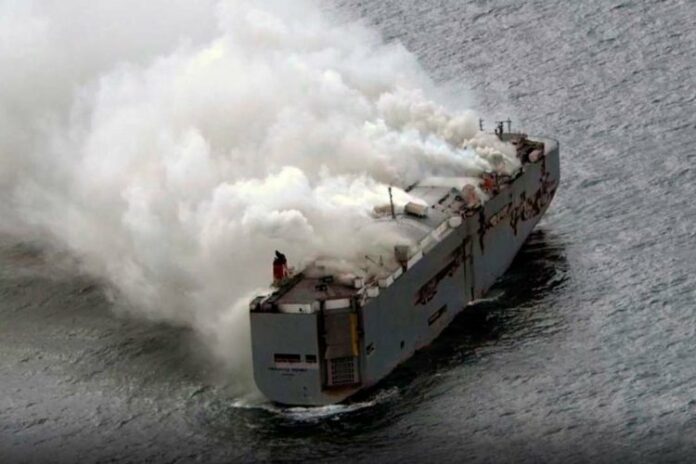
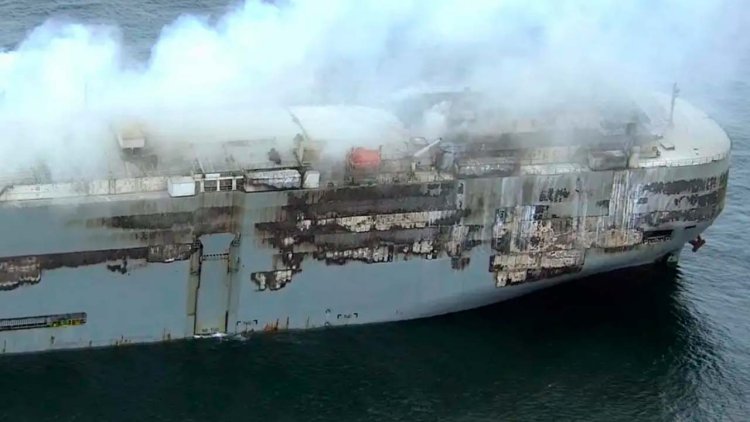
Dutch authorities started preparing on Saturday to tow away a vehicle-packed cargo ship which has been burning for days off the country’s coast.

The operation of moving the Fremantle Highway from the Dutch coast, a UNESCO World Heritage site for the aquatic and terrestrial species it hosts, and closer to the north of Schiermonnikoog island temporarily aims to avert an ecological disaster.

However, later on Saturday evening, authorities said the operation would likely be delayed by several days, having initially said they hoped to start over the weekend.

The decision to proceed with moving the ship comes after the flames eating at it have significantly subsided.

“The temperature on board the ship has dropped sharply and the intensity of the fire and smoke development has decreased,” said the Rijkswaterstaat, the national water management agency, in a statement.

The agency added that the cargo ship was also stable, “still intact below the waterline and does not tilt.”

Shortly before 10 p.m. the Rijswaterstraat issued an update saying that southwesterly winds meant it had decided it was not yet safe to start the operation. 

It said that the current winds would “ensure that the smoke is drawn over the tugboat during the entire towing operation of the ship.”

“So if the recovery company starts towing now, this is not without risks and the safety and health of the crew always comes first,” the authority said, adding that it anticipated similar winds for the next few days. 

Efforts to put down the fire for the past few days were carefully calculated, and water had to be used comparatively sparingly for fear of sinking the ship and consequently prompting an ecological disaster. The ship was carrying 3,783 cars, including 498 electric cars, its Japan-based charter company K Line said.

Authorities feared the car parts, batteries and fuel would damage the ecologically sensitive site and harm its inhabitants.

Ship owner Shoei Kisen Kaisha suggested the fire started on one of the electric vehicles, whose lithium-ion batteries can be very difficult to extinguish, and can spontaneously reignite, after they catch fire or explode. The actual cause of the fire has yet to be confirmed.

The towing operation is expected to take around 12 hours.

The fire killed one member of the all-Indian crew of the ship.

Source: DW

Liner with Russians departs Batumi early after being heckled by angry protesters

0

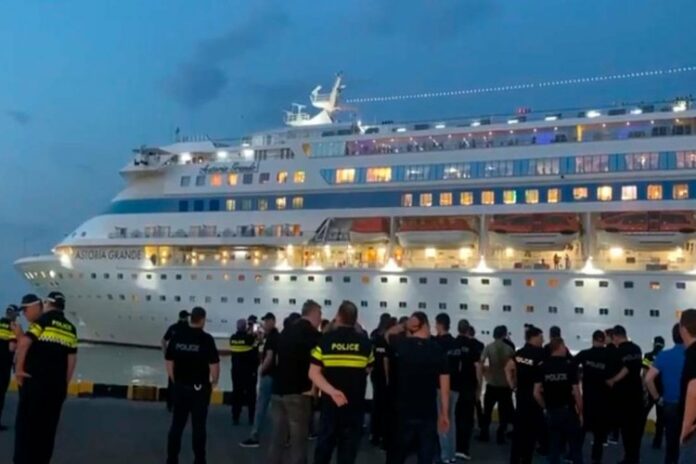
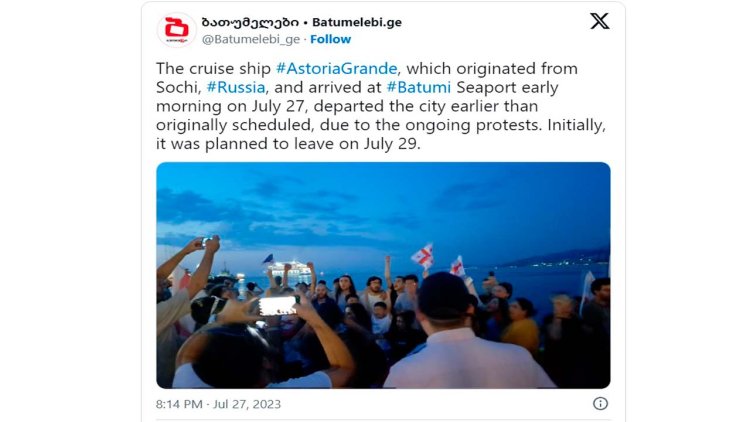
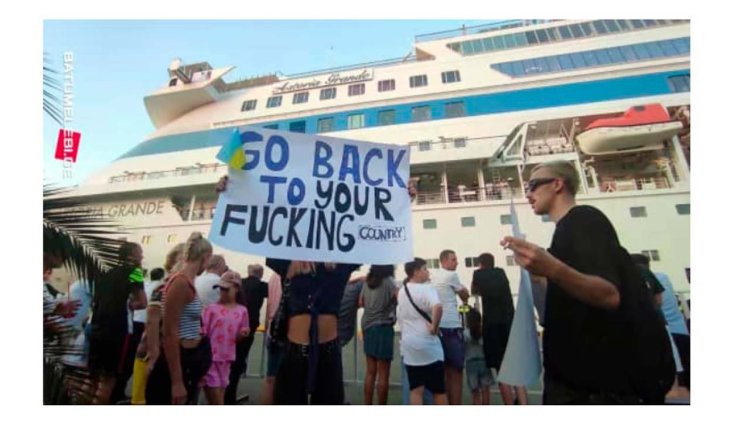
A cruise ship carrying Russian tourists left a port in Georgia early on Thursday to the sound of angry protesters cheering their hurried departure. The Astoria Grande docked in the Black Sea port of Batumi on Thursday morning, with passengers reportedly given a day to explore the historic city. 

But by evening, crowds angry about the invasion of Ukraine and some of the tourists’ comments to the press accusing Georgia of occupying the Abkhazia region gathered to protest the vessel’s presence.

Residents of Batumi chanted “Russian ship, go f**k yourself” and “Abkhazia is Georgian”, and brought photographs depicting Abkhazia and the events of the August war.

Those present at the pier where Astoria Grande docked also sang the Georgian national anthem.

Batumi residents were outraged by the arrival of the ship from Russia and the comments made by Russian tourists on board. In interviews with local media outlets, those Russians claimed that Russia had not occupied Georgia, “we are still in the Soviet Union”, and one of the tourists openly stated that she had visited Abkhazia, which is a violation of Georgian law.

During the rally, a Russian flag appeared in one of the ship’s cabins, but it was soon removed. 

An hour after the protest, the Astoria Grande finally left the port, with Georgian President Salome Zurabishvili tweeting that he was proud of the people “protesting peacefully the latest russian provocation.”

The Maritime Transport Agency of Georgia said the day before that the arrival of the Astoria Grande cruise ship was commercial. The liner is registered in the Seychelles in the name of Goodwin Shipping Limited and is not subject to international sanctions.

Source: Ukrainska Pravda

DMC awarded contract to supply energy efficient steering equipment to Chilean Navy

0

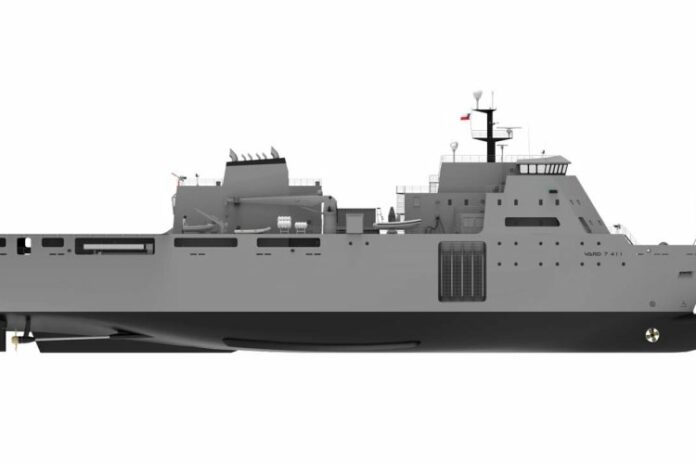
Wärtsilä has awarded Damen Marine Components (DMC) a contract to provide steering equipment to two Landing Platform Docks (LPD) of the Chilean Navy being built at ASMAR. DMC is supplying a range of energy efficient equipment to the vessels, which will reduce fuel consumption and resultant emissions. 

The LPDs are being constructed for the Escotillón IV project at the state-owned Astilleros y Maestranzas de la Armada (ASMAR) shipyard. The 110-metre long vessels will fulfil the dual purpose of increasing Chile’s defence capabilities as well as the nation’s ability to perform humanitarian operations. 

DMC will supply the two vessels with its Commander™ piston type steering system. This compact and efficient system is built to a standardised, proven design. 

Additionally, DMC will supply two Atlantic rudders including Silent Bulbs. The Silent Bulb is a fuel saving device designed to reduce the risk of cavitation on the rudder by lowering flow losses from the propeller, thereby expanding the lifecycle of the rudder. Additionally, the Silent Bulb increases propeller thrust, thereby enabling the vessel to sail at the required speed with considerably less power output. 

DMC’s Sales and Marketing Director, Wim Knoester, says,

“We are very pleased to be awarded this contract and I’d like to express my gratitude to Wärtsilä for placing their trust in DMC. These vessels will perform an important role in Chile. The equipment we are supplying to the project will enable them to fulfil their duties with increased efficiency, optimised performance and reduced underwater noise, greatly improving the sustainability of their operations.”

Simon Riddle, General Manager / Marine Solutions / Navy at Wärtsilä, adds,

“DMC’s energy efficient rudders are combined with the vessels’ high efficiency propeller and fairing caps. With the addition of the Silent Bulb to the rudders, testing has demonstrated that required power values are reduced by 3-4% for the desired sailing speed. This offers a reduction in fuel consumption of up to 1.5%, offering considerably increased efficiency during operations.”