-7 C
New York
Home Blog Page 272

Statfjord C changes its power solution to cut emissions

0

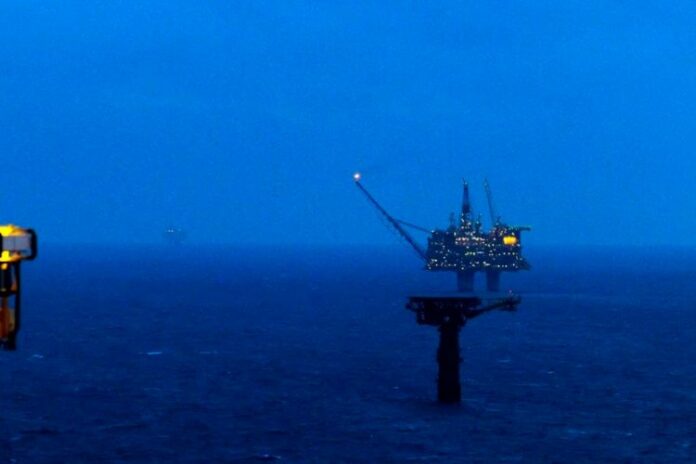
A new steam turbine will produce electricity based on surplus heat from two gas compressors. This will make the energy consumption more efficient and cut 25 per cent of total annual CO2 emissions on Statfjord C, equivalent to 50,000 cars.

“This is the first time this solution is used on an operated field at the Norwegian Continental Shelf (NCS). I am proud of employees and suppliers that have worked in an innovative way to streamline the energy being used at the platform. This is an important contribution to extend the field’s life to 2040,” says Camilla Salthe, Equinor’s senior vice president for Field Life eXtension (FLX).

Scheduled for start-up in 2026, the new steam turbine will give cost-effective emission cuts. It will be the first time this solution is introduced on the Norwegian continental shelf (NCS).

“Heat recovery for electric power production has been used on new fields, both on the NCS and internationally. Now, for the first time, the solution is introduced on a mature field in production. This is possible due to the development of low-weight solutions,” says Ketil Rongved, Equinor’s vice president for FLX projects.

The project also involves electrification of water injection and emission cuts related to other energy intensive processes on Statfjord C. The project, named “FLX Future Energy” was decided by the Statfjord partnership in July.

This project is one of many measures to cut emissions from the production at Statfjord. For instance, a heat recovery unit on Statfjord B has cut CO2 emissions by 20,000 tonnes every year since 2021.

Correll Group secures further contract from Seaway 7

0

The Correll Group, Electrical Engineering Division has been contracted by Seaway 7 to complete the termination and testing of 29 66kV inter-array cables (IAC) and four landfall export cables on Zhong Neng Offshore Wind Farm. Scope of work also includes pre and post engineering and logistical operations.

Located approximately 10km to 17km offshore from the west coast of Changhua in central Taiwan, Zhong Neng is adjacent to Changfang and Xidao offshore wind farm, and spread over an area of 36.54km2.

The project will be split into two campaigns, with the first campaign scheduled for July 2023.

The first phase involves the splicing and testing of the export fibre optic cables at the onshore Transition Joint Bay.

The second phase is expected to commence Q2 2024, and consists of the termination and testing activities for the high voltage power cores and fibre optic cables within the export and IAC subsea cables.

The Zhong Neng Offshore Wind Farm consists of 31 Vestas V174-9.5MW turbines with a combined capacity of 298MW, enough clean energy to power approximately 300,000 Taiwanese households annually.

Sam Dowey, Managing Director at Correll, commented;

“We are delighted to have been awarded this project and to be again working in close partnership with Seaway 7. This contract firmly establishes Correll Group as a leading service provider to the Taiwanese offshore renewable sector”.

New summer ocean temperature records set for two sites on ONC’s Pacific observatory

0

ONC, a University of Victoria initiative, operates the North-East Pacific Time-series Undersea Networked Experiments (NEPTUNE) observatory that powers scientific instruments and thousands of sensors, providing real time ocean conditions data. The 800-kilometre NEPTUNE cabled observatory is located off the west coast of Vancouver Island.

ONC senior scientist Kohen Bauer says recent state-of-the-ocean data show that two NEPTUNE sites located on the continental shelf of the northeast Pacific Ocean have been recording high temperatures this summer.

“Temperatures climbed steadily throughout July at ONC’s 95-metre water depth Folger Deep site within Folger Passage, eventually surpassing the highest daily average temperature recorded there for early August since ONC’s monitoring began 14 years ago,” he says.

“Additionally, further offshore at the Barkley Upper Slope site (roughly 400-metre water depth) record seasonal temperatures have mostly persisted since June, largely exceeding the 14-year daily average temperature range at that location. This reveals that even deeper waters at the shelf’s edge are anomalously warm for this time of year.”

For example, on Aug. 10, a new daily average temperature high of 8.57 Celsius (°C) was reached at Folger Deep, compared to the previous 14-year record for that date of 8.44 °C. On the same day at Barkley Upper Slope, a new record of 6.01 °C was reached, compared to the previous high of 5.90 °C on that date.

ONC scientific data specialist Stef Mellon evaluates the quality of the data coming from NEPTUNE’s many underwater instruments. She says the anomalous summer ocean temperatures at Folger Deep alerted the data analytics and quality team to conduct extra analyses, and multiple instruments have confirmed the data. [See State of the Ocean plots Figure 2 and 3]

Bauer says there could be a number of possible factors causing warmer summer waters at different locations in the northeast Pacific Ocean, including excess heat from climate change, changes in wind patterns, and variations in the upwelling of deeper waters.

“We live in a time of Earth system extremes, with record global air and ocean temperatures emerging as a major concern. Temperature plays a key role in many interconnected processes in the ocean, and although the mechanistic drivers of the warm summer temperatures we are seeing on the NEPTUNE observatory may not persist, it is worth investigating in more detail. Such observations highlight the importance of ocean monitoring networks in helping us understand these rapidly changing environments.”

MODEC’s FPSO Anita Garibaldi MV33 achieves First Oil

0

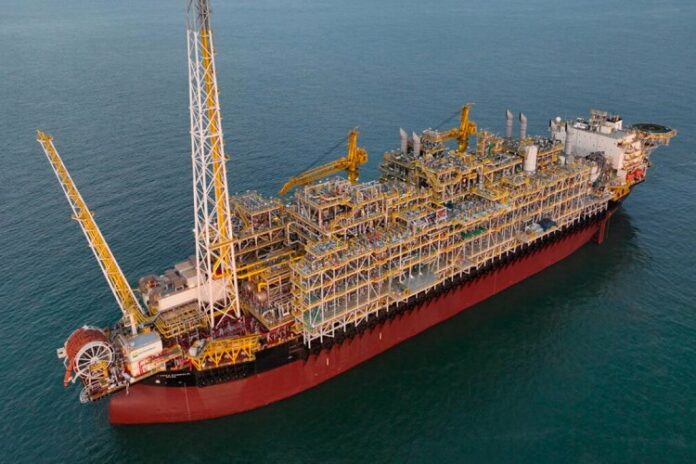
MODEC has announced that the FPSO Anita Garibaldi MV33 achieved First Oil production on August 16th, 2023. Deployed for production operations at the Marlim field in the Campos Basin off the coast of Brazil, the FPSO is leased on a 25-year time charter contract to Petróleo Brasileiro S.A. (“Petrobras”), the Brazilian giant oil company. This is one of the longest charters for MODEC to date.

“This is MODEC’s 14th project in partnership with Petrobras. We are proud to deliver the FPSO Anita Garibaldi MV33, which will play a critical role in Petrobras’ revitalization project in the Campos Basin,” says Soichi Ide, President & CEO of MODEC Offshore Production Systems (Singapore) Pte. Ltd.

“The implementation of the new platforms in the Marlim field this year represents greater longevity for our operations in the Campos Basin, whose production will increase significantly with the entry of the FPSO Anita Garibaldi. This project to revitalize the basin represents yet another learning experience for us, as well as an opportunity to contribute even more to the development of the region, as well as the local goods and services industry that serves us,” said Jean Paul Prates, Petrobras CEO.

The FPSO is the 16th FPSO/FSO vessel that MODEC has delivered to the Brazilian oil and gas sector. MODEC was responsible for its engineering, procurement, construction, and mobilization, including topsides processing equipment as well as hull and marine systems. SOFEC, Inc., a MODEC group company, was responsible for the design and procurement of the spread mooring system for the FPSO.

Moored some 150 kilometers off the coast of Rio de Janeiro, at a water depth of approximately 670 meters, the FPSO is capable of processing 80,000 barrels of crude oil and 7,000,000 cubic meters of gas per day and has a storage capacity of up to 1 million barrels of crude oil.

With a total overall weight of more than 40,000 tons, the topside is the largest the company has installed to date. The FPSO is also MODEC’s first to utilize the separation tank concept using the vessel’s cargo oil tanks in order to handle large volumes of produced water (up to 270,000 barrels per day) in the oil/water separation process.

“Delivering an FPSO to replace existing production facilities in the field was challenging in terms of design and engineering. The COVID-19 pandemic also brought unexpected and unprecedented challenges. Nevertheless, we are proud to have delivered the project safely through the teams’ hard work, solidarity and innovation,” Ide adds.

KVH and Intelsat reaffirm satellite partnership with three-year renewal

0

KVH Industries has announced the completion of a three-year renewal of its satellite services contract with Intelsat. 

The renewal includes increased network capacity, the flexibility to support future bandwidth adjustments, and reduced service costs that will enable KVH to offer even more competitive airtime rates for mariners.

Brent Bruun, KVH’s President and Chief Executive Officer, said:

“We are thrilled to extend our long-standing relationship with Intelsat, which began in 2017 when KVH proudly became the launch partner for Intelsat’s FlexMaritime network. More than 7,100 commercial, leisure, and military vessels worldwide rely on KVH and Intelsat’s FlexMaritime high-throughput satellites (HTS) to deliver connectivity, content, cybersecurity, and additional critical services. This network is the backbone of our KVH ONE™ hybrid network, which integrates Ku-band GEO services, low earth orbit (LEO) services, worldwide 5G/LTE cellular communications as fast as 200 Mbps down, and shore-based Wi-Fi services into a seamless, intelligently managed network to keep seafarers always connected.”

Mark Rasmussen, Senior Vice President, Mobility at Intelsat, said:

“Intelsat’s global FlexMaritime network delivers high-performing and reliable connectivity that, when combined with KVH’s innovative tools and support, give customers assured access to a wide range of capabilities and mission-critical applications.”

In addition to KVH’s terminals, the new KVH ONE OpenNet Program enables vessels with non-KVH VSAT antennas to enjoy global VSAT coverage from KVH, all thanks to a simple software update.

Innovasea adds AI biomass estimation to its suite of Atlantic salmon tools

0

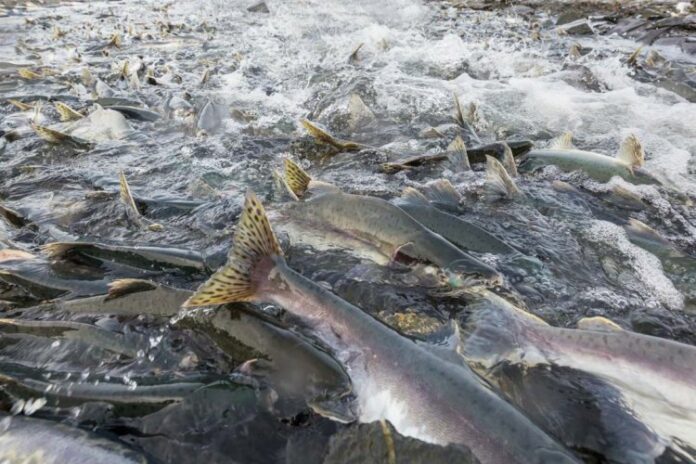
The company announced that its biomass cameras can now use BiomassPro, an AI-driven solution that enables users to estimate the size and weight of fish stocks inside net pens in real-time. The data, Innovasea said, allows farmers to optimize production and reduce feeding costs. 

“The technology behind BiomassPro continues to perform well in the field, which is exciting,” Innovasea Vice President of Engineering Rafael Cordero said. “Customers have been asking for some time when it would be available for Atlantic salmon, but we wanted to take time to fine-tune the algorithm and ensure we were bringing a quality product to the marketplace.”

The company said it performed field trials of the new AI-driven tool at Atlantic salmon farms in British Columbia, Canada, and found that the software, coupled with camera coverage, is “highly effective” at estimating the size and weight of the species in real-time. 

The tool has already been in use for other farmed finfish species. Innovasea said BiomassPro is currently in use at farms in Canada, Chile, New Zeland, the U.S., Mexico, Central America, and the Mediterranean region and is now available for six species – Atlantic salmon, cobia, king salmon, red snapper, totoaba, and yellowtail.

In May, Innovasea announced that Creative Salmon in Tofino, B.C. – a farmer of organic king salmon around Vancouver Island, B.C. – is using the company’s BiomassPro technology. Following a six-month pilot, Creative Salmon found the AI tool was 99.7 percent accurate when compared to actual harvest data.

“BiomassPro has performed incredibly well for Creative Salmon in providing spot-on biomass estimations over the last 12 months,” Cordero said. “The numbers they’ve seen from their actual harvests are almost identical to what BiomassPro projected. That’s invaluable for a fish farm in terms of tracking growth curves, planning feeding operations, and knowing the ideal time to harvest.” 

The expanded AI tool adds to the list of products the company has debuted this year, which includes the “FlowFeeder” waterborne aquaculture feeding solution.

Source: SeafoodSource

BlueInvest supports 13 Mari innovation for fuel efficiency

0

The company received coaching through the EU BlueInvest Readiness Assistance Programme and was able to secure more than USD 500,000 in funding.

Maritime transport plays is an important part of the EU economy. At the same time, it is also a significant source of greenhouse gas emissions. At the EU level, the sector accounts for approximately 3 to 4% of the EU’s total CO2 emissions. In 2019, this was over 144 million tonnes of CO2.

The commercial shipping industry needs to operate sustainably,  support cleaner waters, and reduce fuel bills. In fact, fuel costs are the number one expense in the international shipping industry, representing an astounding 50-75% of the total ship operation costs.

To address these challenges, 13 Mari developed a simple, yet effective approach to improve fuel efficiency. They introduced a composite element that reduces “drag,” the resistance faced by ships in water. By reducing drag, ships need less energy to move through water, resulting in lower fuel consumption and fewer CO2 emissions.

13 Mari’s solution involves attaching 15-30 composite elements to the ship’s hull, each providing a 10% faster water flow and 20% less drag locally. On average, major vessels, such as tankers and container carries, can reduce their drag by 3.7% by introducing the retrofits at the present stage. This can lead to fuel savings of at least 3.7% and an estimated potential annual elimination of 45,000,000 tonnes of CO2 emissions.

Odfjell first to install suction sails on deep-sea chemical tanker

0

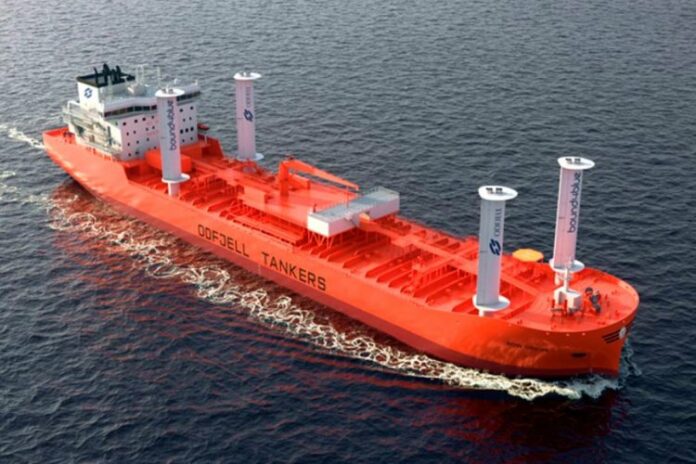
bound4blue’s eSAIL® system utilizes a cutting-edge wind-assisted propulsion system known as a suction sail. By promoting the use of wind power to propel vessels, this technology significantly reduces fuel consumption and pollutant emissions.

Odfjell has actively pursued decarbonization initiatives for many years, and recently documented a 51% improved carbon intensity compared to the 2008 baseline. The deployment of bound4blue’s eSAIL® system represents another significant milestone in the company’s implementation of innovative solutions to increase its fleet’s energy efficiency.

“We have been studying sail technologies as a potential energy efficiency measure for our fleet since 2020, and we are excited to now take the next step by partnering with bound4blue to implement their pioneering eSAIL® system on one of our chemical tankers,” said Jan Opedal, Manager Projects at Odfjell. “This technology has significant potential to reduce emissions by harvesting the energy on the ship itself and transforming it directly into a forward thrust.”

Odfjell’s partnership with bound4blue aims to expand access to the eSAIL® technology within the tanker shipping segment and further contribute to the industry’s efforts in decarbonization. The decision to collaborate with bound4blue was supported by an extensive study conducted by SSPA, evaluating various Wind Assisted Propulsion Systems (WAPS) for the Odfjell fleet. The pioneer installation will be completed in 2024. 

“This project marks another leap in our dedication to decarbonization. As the first tanker company to test the suction-sail technology, we demonstrate our innovative capabilities and dedication to a more sustainable shipping sector,” said Erik Hjortland, Odfjell’s Vice President of Technology. “We all have a responsibility to use as few resources as possible, and Odfjell’s long-time efforts in energy efficiency have significantly reduced our fleet’s emissions. The work continues, and we look forward to documenting further improvements with the installation of suction sails.”

“We are thrilled to team up with Odfjell for our first-ever installation in the tanker segment. They are true pioneers in innovation and sustainability, setting the bar for decarbonization in the industry. We are pleased that they have chosen our technology after their thorough analysis, confirming that we are headed in the right direction. Working with their open and collaborative team has been fantastic, and we are confident that our joint efforts will unlock significant value for the industry,” said David Ferrer, CTO of bound4blue.

NYK to develop Japan’s first bunkering boom for ammonia

0

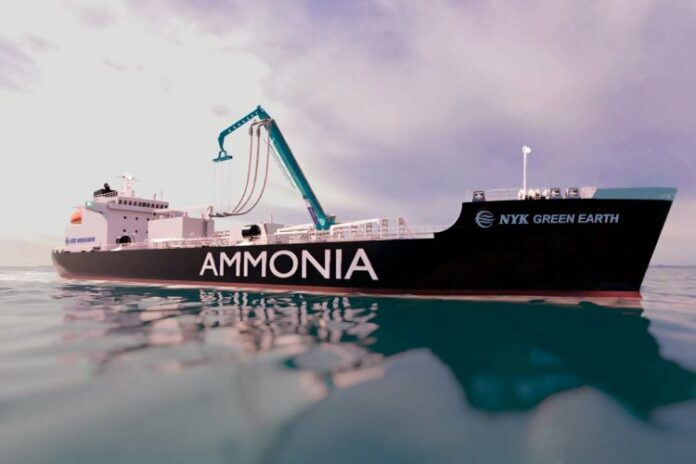
On August 16, NYK and TB Global Technologies Ltd. (TBG) signed a basic agreement to jointly develop Japan’s first bunkering boom for ammonia, a device used to supply ammonia fuel between ships.

NYK and TBG will significantly enhance the safety of supplying ammonia, which is highly toxic, to ships by employing TBG’s technology to ensure that the liquid does not leak. Ammonia is expected to contribute to the decarbonization of ships because it does not emit CO2 when burned.

TBG will receive from NYK data related to the development of its ammonia bunkering vessel (ABV), which received Approval in Principle (AiP) from ClassNK in September 2022*. NYK will also share with TBG the knowledge gained from Japan’s first LNG bunkering vessel, Kaguya, which is operated by Central LNG Marine Fuel Japan Corporation, an NYK affiliate.

A bunkering boom is a device consisting of rigid pipes and hoses that connect a bunkering vessel to the other vessel to supply fuel. It is highly durable because it is made of rigid pipe, and its swivel joints allow it to change direction freely, making it easy to operate. In this joint development, the two companies will employ TBG’s technology to prevent the liquid inside from leaking out when the bunkering boom is emergently released from a ship due to a natural disaster, thereby tackling the biggest challenge in ammonia fuel supply, i.e., preventing leakage.

Neptune Energy and partners awarded CO2 storage licence in Norwegian North Sea

0

The Norwegian Ministry of Petroleum and Energy has awarded the Trudvang carbon storage licence to Sval which will partner with Neptune and Storegga.

The Trudvang area has the potential to store up to nine million tonnes of CO2 annually for at least 25 years – a total of 225 million tons – with analysis indicating the storage potential could be even higher. 

Neptune Energy’s Managing Director in Norway and the UK, Odin Estensen, said:  

“We are pleased to secure our first CO2 storage licence in Norway. The North Sea has great potential to become a hub for carbon storage, given the proximity to CO2 emitters and the geology which is suitable for CO2 storage. 

“Neptune Energy was recently awarded three CO2 storage licences in the UK and we continue to progress our L10 carbon storage project in the Netherlands. Our ambition is to build a portfolio of carbon stores linked to our core areas in the North Sea.”  

The Trudvang storage licence is located in the Norwegian North Sea, to the east of the Sleipner field and about 200 kilometres from the coast.

The storage reservoir is at a depth of approximately 850 metres, in the Utsira formation.