-9 C
New York
Home Blog Page 269

Value Group welcomes Shell Ventures as investor to accelerate marine decarbonisation

0

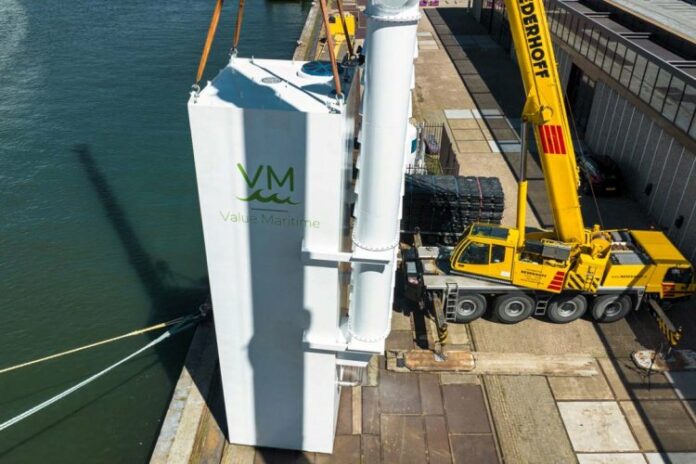
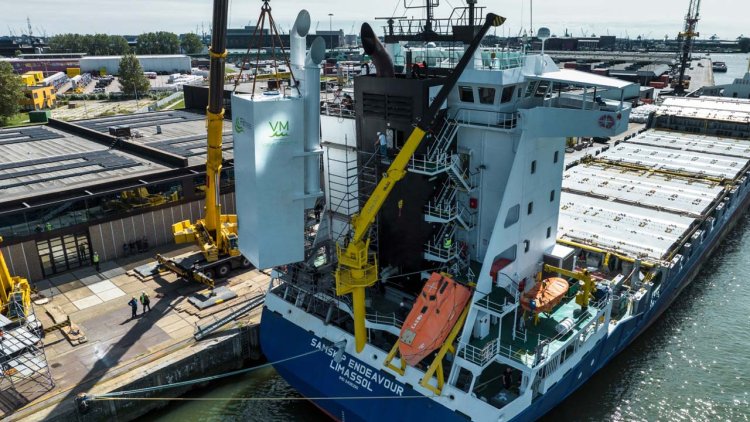
Value Maritime is the pioneering developer and installer of one of the first commercially viable hybrid CO2 capture and exhaust gas cleaning systems (Filtree), which shipowners and operators can lease to help them lower their emissions.

Shell Ventures, the corporate venture capital arm of Shell, supports companies in their early, scale and growth phases, providing investments that stimulate the development of new technologies and disruptive business models to lower emissions and accelerate the energy transition.

Since 2017, Value Maritime has supported multiple shipowners and operators in reducing their emissions with its Filtree System. This unique system cleans sulphur, ultra-fine particulate matter and CO2 from ships’ exhaust emissions as well as oil residue and particulate matter from the vessels’ washing water. As a result, the Filtree System supports both the lowering of CO2 emissions and a reduction of acidification of seawater.

The Filtree System also features an integrated carbon capture feature that allows ships to store the CO2 they collect onboard in dedicated fixed tanks or non-fixed battery containers. These onboard storage facilities are filled with CO2, which can then be sustainably offloaded in port for re-use or storage elsewhere.

Building on this effective business model, Value Maritime earlier this year announced the launch of sister company, Value Carbon. With this, the Value Group expanded its role with a focus on the entire process, from carbon capture to landside utilisation and/or storage.

With Shell Ventures’ support, Value Group aims to accelerate its strategy throughout the maritime value chain, including the expansion of CO2 offtake and monetisation of opportunities globally. Both parties believe strong partnerships between companies, governments, customers, and industries are needed to unlock the potential of CCUS to reduce emissions in the maritime industry.
Value Group Co-Founder and Director Maarten Lodewijks says,

“Shell Ventures will support us in many ways that will help our strategy moving forward and contribute to our development. The participation of Shell Ventures serves as confirmation that we are on the right path and is a huge compliment for our team.

We are dedicated to decarbonising shipping across the value chain from sustainable technology, equipment, installation and capturing with our Filtree and Carbon Capture system to reliable offtake and certification. This is an important milestone for our company and we look forward to building on it. Together with our key shareholders like Shell, our partners and clients and in cooperation with governmental and institutional bodies, we can significantly speed up the decarbonisation process.”

Shell Ventures’ Chief Investment Officer Robert Linck says

“This investment aligns with Shell’s aim to support the development of solutions that can help industries decarbonize, as part of our focus on delivering more value with less emissions. Shipping is a notoriously hard-to-abate sector where volumes have doubled over the last couple of decades and the upward trend is expected to continue.”

The Value Group brings together two pioneering sister companies. Leveraging the experience of Value Maritime and the expertise of Value Carbon they are on a journey towards decarbonising shipping and industry.

At the forefront, Value Maritime’s technology has been helping shipowners and operators to increase their competitiveness by achieving valuable emission reductions and noteworthy financial savings since 2017. Their vision is to dramatically decrease the environmental footprint of shipping and significantly contribute to improving the overall sustainability of the maritime industry.

In parallel, Value Carbon is innovating land-based carbon management, spanning the entire carbon value chain from carbon offtake, handling, resourceful re-use and efficient storage all underpinned with a green and financial dividend.
The first hydrogen powered container stacker arrives at the Port of Valencia

0

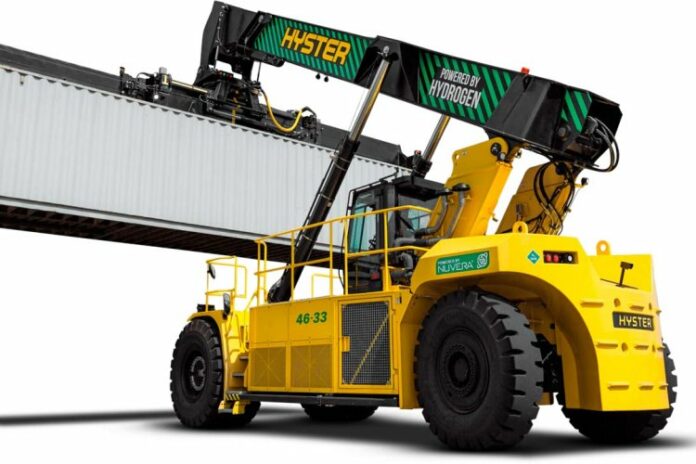
The Port of Valencia has taken delivery of the hydrogen-powered ReachStacker, developed within the framework of the European H2PORTS project.

This prototype joins the hydrogen-powered tractor unit and the mobile hydrogen supply station (HRS) which will be tested in real operating conditions in the Port of Valencia from this month until December 2024.

The hydrogen ReachStacker is the world’s first hydrogen powered ReachStacker and has been developed by Hyster, a leading forklift truck manufacturer with over 90 years of experience. The machine, which arrived disassembled and transported on three trucks, will be assembled next week and will receive its first hydrogen charge

The refuelling and operational tests will be supervised by the technical team of Hyster, MSC Terminal Valencia, Centro Nacional del Hidrógeno, Carburos Metálicos and the Valenciaport Foundation as coordinator of this project.

The fuel cell powered Hyster ReachStacker is expected to offer comparable performance to a diesel reach stacker in terms of capacity and lift and drive speeds, helping to maintain similar productivity levels, and will feature independent traction and hydraulics with different electric motors to serve different functions. 

When combined with the right application and operating intensity, Hyster expects this ReachStacker to provide up to two shifts of operation before a hydrogen refuelling is required. For convenience and flexibility, the Hyster ReachStacker is designed to comply with the standard hydrogen filling station connection (SAE standard), allowing global use. The design includes four hydrogen tanks as a standard option to store hydrogen inside the ReachStacker.

Hydrogen is a clean energy carrier with the advantages of easy storage and, when used, produces no emissions other than heat and water. The hydrogen fuel cell converts H2 into electricity, resulting in zero-emission equipment that, when combined with the use of environmentally friendly hydrogen, is also carbon neutral. This technology has some advantages compared to other zero-emission technologies available, such as pure electric versions. This hydrogen version also has a good range, a short run time, a short fuel consumption and a low fuel consumption.

Valencia, the first port in Europe to incorporate hydrogen technologies to reduce the environmental impact of its operations.

It should be noted that since January, as part of the H2PORTS programme, the Port of Valencia has had a hydrogen supply station (HRS). It is the only installation capable of supplying the needs of the terminals through the mobile hydrogen generator and the fixed tank that stores this fuel.

This hydrogen supply station includes a fixed part dedicated to the reception, storage and compression of hydrogen up to delivery pressure and a mobile part that stores the compressed hydrogen and has a dispenser for refuelling the port machinery.

In April, the 4×4 truck tractor unit powered by green hydrogen was commissioned to move containers within its terminals, to which is now added this container stacker, which will be tested at the MSC terminal.

For Joan Calabuig, president of the APV, “the arrival of this new container terminal yard machine at the Port of Valencia reaffirms our European leadership in decarbonisation and the use of hydrogen as an alternative energy to fossil fuels. It is a success for the Valenciaport Foundation, the Valencia Port Authority and all the companies and institutions collaborating in the H2PORTS project, which we celebrate with the entire port community of Valencia, a community that can be proud of its competitiveness, professionalism and willingness to innovate”.

Fincantieri completes modernization of two Crystal’s cruise ships

0

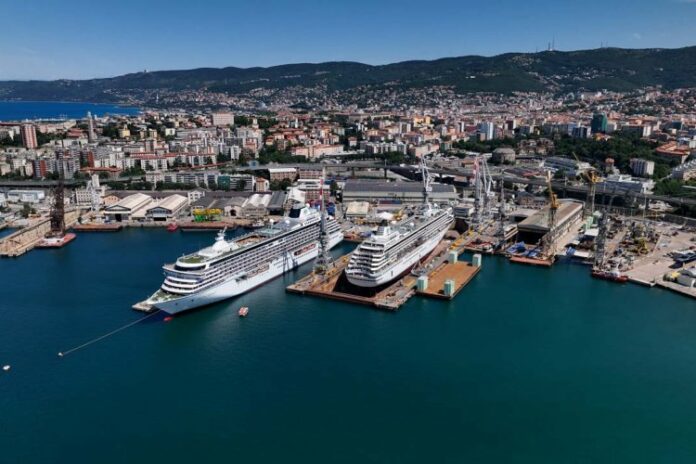
Fincantieri has completed the parallel modernization of two cruise ships for Crystal (A&K Travel Group), delivering Crystal Symphony in recent days. The first vessel, Crystal Serenity, rejoined the owner’s fleet on July 20.

The contract was finalized in December 2022, and, after an initial phase committed to engineering development, works lasted for about five months significantly raising the level of amenities and accommodations on board. The hotel part of the ships, both public areas and suites and guest rooms, was revolutionized, deeply affecting the systems part as well, in order to lengthen the operational life. The project was concluded with the usual drydocking activities preparatory to return to service.

On every ship, three decks were radically transformed with the installation of more than 100 new suites and guest rooms two, three and sometimes four times the size of the previous 230, generating environments of greater space and value, thanks to the refinement of the finishes used. Another 100 were completely modernized, without changing their size. Casinos have been removed to make room for generous lounges.

Aspects related to environmental sustainability have also been upgraded, with particular reference to wastewater treatment and energy recovery systems. Finally, the hulls have been treated with special state-of-the-art ecosilicone paints, which reduce friction and fuel consumption.

Pierroberto Folgiero, CEO of Fincantieri stated: “This is one of the most important orders managed at our Arsenale Triestino San Marco, allowing us to further consolidate Fincantieri Services’ leadership in the refitting and refurbishment sector globally, which will grow a lot in the coming years due to the ongoing digital and green revolution”. Folgiero concluded, “Supporting as a technology partner the re-launch of a brand like Crystal is a very significant achievement, which starts in the best possible way the relationship with a client like Crystal that today refers to a shipowner we know very well as Manfredi Lefebvre D’Ovidio”.

Crystal Serenity and Crystal Symphony have a length of nearly 240 meters, a gross tonnage of about 51,000 tons, and a maximum capacity that now stands at about 740 and 606 passengers respectively.

SCZONE celebrates concession for Container Terminal 2 in East Port Said

0

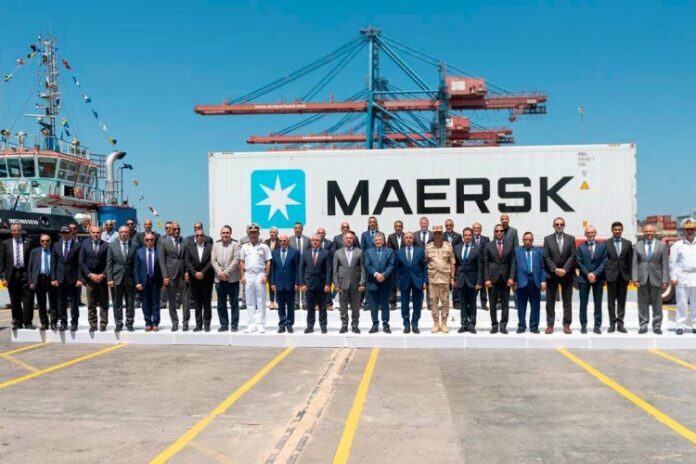
The General Authority for the Suez Canal Economic Zone (SCZONE) celebrated the announcement of the concession contract for Container Terminal No. 2 in East Port Said Port to the Suez Canal Container Terminal (SCCT). APM Terminals is the majority shareholder and operator of SCCT.

The contract includes financing, design, development, management, operation, maintenance, and re-delivery of the Container Terminal No. 2 following the Build-Operate-Transfer principal. The new terminal will provide the port with infrastructure for strategic projects.

“This year we celebrated the achievements of East Port Said Port – which handles nearly 80% of the total container transit trade in Egypt – by ranking 10th globally for container handling efficiency in 2022, according to a World Bank report,” stated Mr. Waleid Gamal El-Dien, Chairman of SCZONE.

“We also celebrated Mr. President’s ratification of the Container Terminal No. 2 concession agreement for the Suez Canal Container Terminal Company (SCCT), which is one of the most important success partners for SCZONE. The project will cover an area of 511,000 m2 with a berth length of 955 meters.”

The current terminal is operating with a berth length of 2,400m and a handling yard of 1.2 million sq. m and is the main operator in Port Said East Port, with annual throughput of 4 million TEUs. The expansion will increase volumes by 2 million TEUs to meet future customer demand.

The new, technologically-advanced terminal will operate on clean and renewable energy, based on electric equipment. This is fully in line with APM Terminals’ ambition to become fully carbon neutral by 2040.

The project will also employ the latest generation port equipment, including 12 ship-to-shore (STS) cranes, 30 rubber-tyred gantry cranes (RTGs) and 90 trucks, as well as supporting equipment and advanced IT systems. Once operational in 2025, the terminal will create over 1000 new direct jobs in Port Said, in addition to indirect jobs and business opportunities created within the whole port ecosystem.

“We appreciate the strong collaboration between the Egyptian government represented by SCZONE, SCA, the governor, and all governmental authorities, and SCCT to develop a world-class terminal in Port Said and encourage more investment in Egypt through Maersk group,” commented Mr. Steven Yoogalingam, Chairman of the Board of Directors of the Suez Canal Container Terminal.

“We cooperate through a deeply rooted win-win mindset to create good jobs, catalysts for supporting business activities, and contributions to local community welfare (CSR). We are also thankful for the dedication, hard work, and great effort provided by the SCCT team which is the main factor that led to our recent success, and achievements.”

It is worth noting that SCZONE’s Board of Directors approved this project in September 2022, and the contract was signed on the sidelines of the COP27 in Sharm El-Sheikh, last November. The Minister’s cabinet approved the project in May 2023, and the Economic Committee of the Egyptian People’s Assembly approved the project Last July 6. Egyptian President Abdel Fattah El- Sisi signed the law of the concession for Container Terminal 2 in East Port Said Port this August.

RWE wins in first US offshore wind auction in the Gulf of Mexico

0

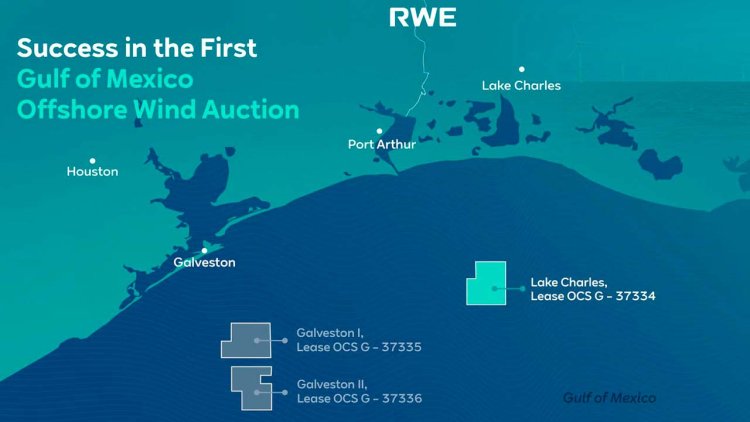
RWE has been successful in the U.S. Department of the Interior’s (DOI) first-ever Gulf of Mexico offshore wind lease auction, securing Lease Area OCS-G 37334 with a winning bid of USD 5.6 million. The DOI’s Bureau of Ocean Energy Management (BOEM) led the auction which consisted of three lease areas with the potential to host a total installed capacity of over 3.7 gigawatts (GW) in offshore wind.

Sven Utermöhlen, CEO of RWE Offshore Wind:

“With today’s success in the Gulf of Mexico, RWE continues to build its position in the U.S. offshore wind industry. In 2022 we entered the U.S. offshore market and quickly expanded from coast-to-coast. Entering a new region in the Gulf is an exciting milestone to further deploy over 20 years of expertise across the value chain and deliver a new energy resource into the region. We look forward to shaping this new market together with our stakeholders to activate the full potential of offshore wind for the region.”

RWE’s awarded site is 44 miles off the coast of Louisiana and has water depths of 10-25 meters. The lease area has the potential to host up to 2 GW of new capacity, enough to power over 350,000 U.S. homes with clean energy. The project is expected to be in operation by the mid-2030s, contingent upon permitting timelines. 

Under Governor John Bel Edwards’ Climate Action Plan Louisiana has set a goal to achieve 5 GW of offshore wind capacity by 2035. RWE has made early investments into jumpstarting the offshore wind industry in the region, including a collaboration with Greater New Orleans, Inc. to accelerate the engagement of Louisiana’s supply chain to identify companies with transferable capabilities for offshore wind. 

According to a report by the Business Network for Offshore Wind, the Gulf Coast has already received 24% of offshore wind contracts in the U.S. Additionally, RWE has a signed Memorandum of Understanding with Entergy, which owns and operates one of the cleanest large-scale US power generation fleets, to evaluate the delivery of clean energy from offshore wind to customers in Louisiana and Texas.

The next step for RWE is to ramp-up outreach with the local community, Tribal Nations, the commercial and recreational fishing industry, and other ocean users; engage with the domestic supply chain to localize content, create new local jobs and private investments.

Two COSL rigs awarded drilling contracts

0

The contract values are calculated at around USD 369 million for both firm periods.

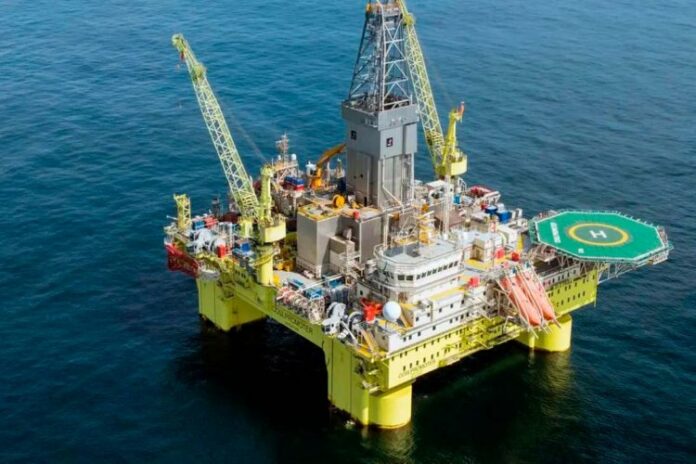
The COSLPromoter is already contracted to Equinor and will commence on the new contract in the first quarter of 2025. The firm contract is for one year, with options for a further four years. The COSLInnovator is contracted for two years, starting in the second quarter of 2025, and the contract includes options for a further three years.

The contract value includes running of casing, remote-operated vehicle (ROV), offshore waste management and cement unit maintenance. Mobilisation and demobilisation fees are also included.

“We plan to drill many production and exploration wells in the years to come. We are pleased to secure rig capacity which will enable us to deliver on our high ambitions. We signed a master frame agreement with COSL some years ago, and these contracts underline our commitment to continue working together creating value on the Norwegian continental shelf”, says Mette H. Ottøy, chief procurement officer.

Both rigs have been upgraded with energy efficiency measures and work processes to reduce emissions from operations.

“We have worked with COSL for many years, and we know these rigs well. The rigs have been upgraded with structural reinforcements and updated operational procedures to improve safety during operations in harsh weather conditions. COSL has demonstrated a good safety and performance culture over the years working together with us, and we expect safe and efficient operations in the years to come. We have seen a significant reduction in fuel consumption and emissions from COSL over the last years, and we are pleased that their development is aligned with our strategy,” says Erik G. Kirkemo, senior vice president for Drilling & Well.

Wärtsilä to supply LNG FGSS systems for new container vessels

0

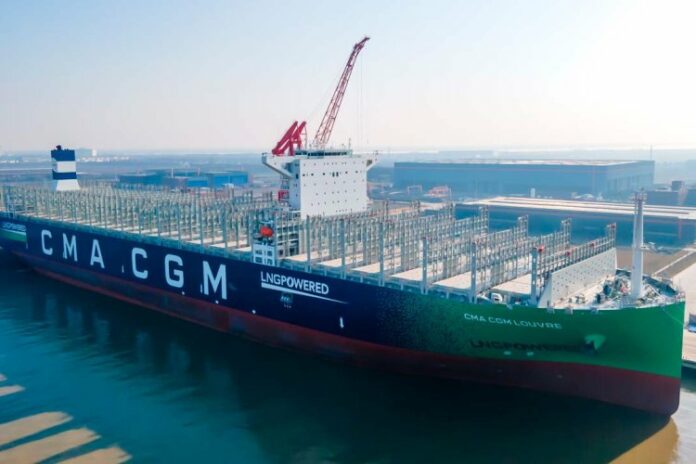
This latest order, which was booked as order intake by Wärtsilä in Q2, 2023, represents a continuation of Wärtsilä’s supply of fuel gas supply systems to CMA CGM vessels. During the past six years, Wärtsilä has been contracted to supply 30 of the company’s newbuild vessels with FGSS systems. 

Wärtsilä’s full scope of supply includes the system engineering, a dedicated material package, the boil-off gas compressor (BOGC) skid delivery, as well as the supervision, commissioning, and testing of the FGS systems.

“Our relationship with both the Hudong Zhonghua Shipyard and CMA CGM has been strong, and this repeat order endorses the value of that relationship. Our dedicated engineering ensures that all specific operational and classification society requirements are met, and that the system functions reliably and efficiently under all conditions,” commented Harald Øverland, Sales Manager, Wärtsilä Gas Solutions.

The Wärtsilä equipment is scheduled for delivery to the yard in early 2024. The first two vessels are expected to be delivered in Q4 2025, and the remaining two vessels during the second half of 2026.

DNV supports equipment manufacturer IWE with offshore wind diversification

0

By working with DNV IWE aims to speed up their wind team’s learning and improve the quality and safety of processes and procedures for the planning and execution of future projects for offshore wind customers.  

DNV will be the lead external consultant and provide advisory services. Its main responsibilities will involve supporting the IWE project team and IWE customers, assisting in requests for proposals and preparing a training programme.  

The move by IWE to diversify in renewable energy is validated by DNV’s Ocean’s Future to 2050 report which states that in 2022, 80% of capital expenditure (capex) in the Blue Economy was invested in the offshore oil and gas sector, but by 2050 that number will have dropped to 25%. By then, offshore wind will receive the largest investments, accounting for half of all capex.   

The chairperson of IWE Liao Shih-Ming said:

“Investing more in renewable energy and offshore wind is a global trend. We’re happy to have one of the international well-known advisors, DNV, to help achieve our ambition of providing safety and quality in our production process.” 

Brice Le Gallo, Vice President and Regional Director APAC, Energy Systems at DNV, said:

“We are honoured that IWE has chosen DNV to support its ambitions and that we have been able to build on the previous positive experience of working together. The contract also follows similar work we conducted for other customers to support localization efforts towards offshore project development and building up the local supply chain on Taiwan. The work for IWE will add to our understanding of how we can best assist local suppliers to maximize economic opportunities from offshore wind developments on Taiwan.”  

Roger Chang, Head of Offshore Infrastructure Technology, Taiwan at DNV, said:

“We are happy that our experience in supporting local fabricators has led to more suppliers becoming Tier 1 vendors to back the build-up of the local supply chain on Taiwan as part of its offshore wind ambition and localization requirements”.

Damen Triton and British Royal Navy announce collaboration

0

Damen Digital Solutions, the digital services division of Damen Shipyards Group, and the British Royal Navy’s innovation programme NavyX are pleased to announce an active collaboration. 

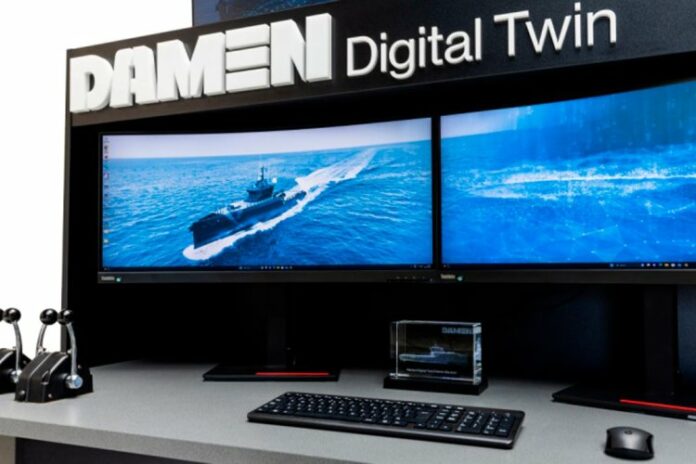
Under the arrangement, Damen will provide NavyX with its industry-leading Triton remote monitoring system and perform associated data collection. Damen delivered a digital twin model of the Damen Fast Crew Supplier (FCS) 4008 XV Patrick Blackett that the shipbuilder delivered to NavyX in July 2022. With this, the NavyX team will be able to explore future technologies in a safe environment, prior to onboard testing. 

This element of the partnership will aid NavyX to demonstrate the support advantage that can be gained from accurate and up to date engineering data compared to the predicted model which will in turn inform how Engineering Support is transformed across the Ministry of Defence to increase the overall effectiveness and efficiency.  

“We are delighted to be working with NavyX to develop innovative solutions that will enhance operational capabilities,” said Toine Cleophas, Managing Director of Damen Digital Solutions. “With our combined expertise, we will be able to work towards cutting-edge solutions tailored to the specific needs of NavyX. The NavyX team will additionally benefit from the intensive warranty and technical support from the Damen UK Service Hub.”

Col Tom Ryall, Head of NavyX, said, “It is exciting to be partnering with Damen Digital Solutions on this project to explore new ways of enhancing both our, and future, capabilities. By working together, we can leverage the latest technologies we can closely monitor XV Patrick Blackett’s performance and maintenance conditions and inform concepts for the future Royal Navy fleet.”

The collaboration started at the end of 2022. The next stage will be Damen’s delivery of the Triton remote monitoring platform and the digital twin model of XV Patrick Blackett. The two organisations are looking forward to exploring new opportunities for innovation and growth.

VIKING wins huge Hellenic Coastguard patrol boat order

0

The orders, covered in three separate contracts with the VIKING Life-saving Equipment subsidiary, are part of an EU-backed Hellenic Coast Guard procurement program which was initiated four years ago.

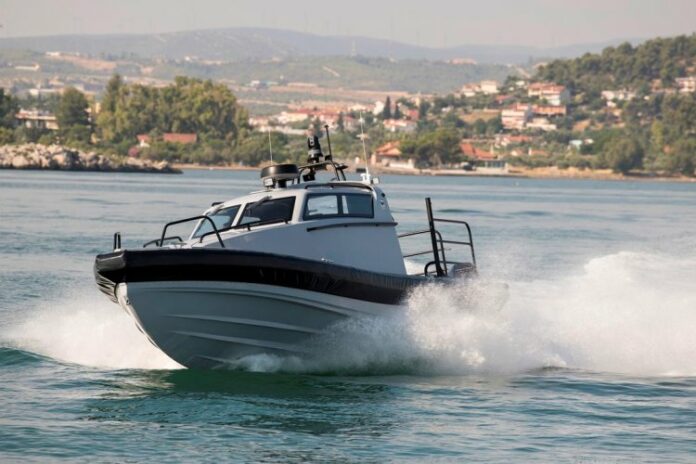
Two of the contracts cover 31 boats based on VIKING Norsafe’s proven Munin S1200 hull form, with the design adapted to meet client requirements. All of them feature 2X inboard diesel engines to support service speeds of 35 knots and top speeds of 50 knots.

In the first, co-funded by the Operational Programme for Fisheries and the Sea, VIKING will supply 10 x 11.3m length, 12-person patrol boats. In the second, co-funded by the Internal Security Fund (ISF), VIKING will deliver 21 boats to uphold border controls; in this case, one boat is also being co-funded by the Ionian Islands Regional Operational Programme.

The third contract, also co-financed by ISF, covers the supply of three high-speed ‘Metis 750’ RHIBS, which will be loaded onboard Hellenic Coastguard vessels to provide rapid patrol and rescue capability. These 7.5m length, 5-person vessels will be equipped with twin outboard 200hp engines, to achieve service speeds of 35 knots and top speeds of 45 knots.

“Given the multiple stakeholders involved and the different situations these vessels will need to handle, it is especially significant that VIKING Norsafe patrol boats are once again the preferred choice for Hellenic seaborne forces,” said John Georgiadis, General Manager, VIKING Norsafe Life-saving Equipment HELLAS. “Today, as well as designing and marketing a complete portfolio of boats from 5m in length up to 60-knot interceptors, we are building the full range, including in-house GRP manufacturing and assembly: we are in very good position to have worthwhile discussions with all types of clients.”

The contracts continue a run of success for VIKING Norsafe in support of Hellenic seaborne forces. An initial four Munin S1200 boats have recently been delivered to the Hellenic Army Special Forces, with three more to follow this summer as part of an extensive frame agreement. VIKING recently delivered eight ambulance boats to the Hellenic Coastguard and 11 VIKING Norsafe METIS RIBs to the Hellenic Navy.

“Securing these contracts is a huge achievement and a major endorsement of the reputation for excellence VIKING Norsafe continues to consolidate in Greece for the development, production, service support and crew training of its patrol and rescue boat portfolio,” added Eirik Møllergaard, Senior Sales Manager Defence & Professional, VIKING Life-Saving Equipment.