-9 C
New York
Home Blog Page 268

WinGD and SHI to cooperate on future fuel applications

0

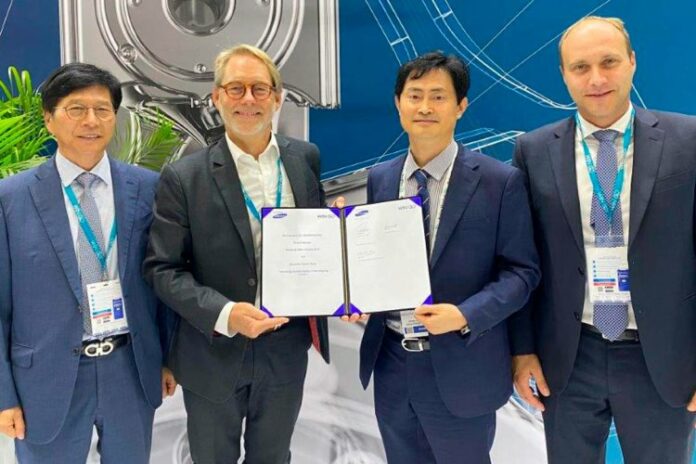
The cooperation will include preparing X-DF-A for integration with wider ammonia fuel systems and auxiliary machinery across a range of vessel designs, including oil tankers, container ships and ammonia carriers. The project is in line with WinGD’s previously announced timeframe of bringing X-DF-A ammonia engines into service from Q1 2025.

Haeki Jang, CTO, Samsung Heavy Industries, said:

“Working with WinGD to prepare its ammonia engines for integration with newbuild projects in key vessel segments will ensure that SHI can offer customers the future fuel vessel solutions they need to meet their decarbonisation targets.”

Volkmar Galke, Director Sales, WinGD, added:

“This collaboration offers WinGD the opportunity to participate in the future fuel preparations of one of the world’s biggest and most respected builders of high-quality vessels. The aim is to prepare engine and vessel designs as well as fuel system integration specifications that will lead to X-DF-A engines being deployed on a wide range of SHI-built, ammonia-fuelled vessels.”

WinGD is due to begin validation of its ammonia-fuelled engine concept on single and multi-cylinder test engines, in Winterthur and Shanghai, later this year. The validation tests follow combustion concept testing that began in 2021, in concert with simulation and rig tests to understand the emissions characteristics and injection requirements of ammonia fuel.

The X-DF-A, like its methanol-fuelled counterpart X-DF-M, will operate on a high-pressure Diesel-cycle combustion process, with liquid ammonia fuel injection supported with a low portion of pilot fuel.

Auramarine wins methanol fuel supply system order with Terntank hybrid tankers

0

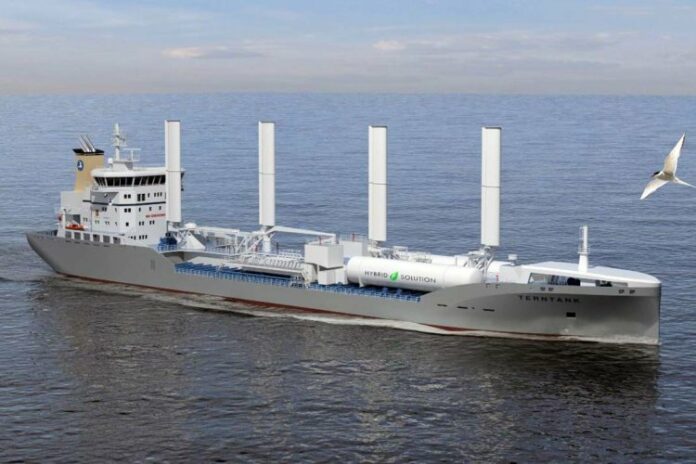
Auramarine Ltd has secured an order to supply methanol fuel supply systems for three 15,000 DWT hybrid tankers for Terntank.  

The ships are built at China Merchants Jinling Shipyard (Yangzhou), with the first vessel of the series to be delivered in March 2025. Auramarine’s system deliveries are scheduled between second half of 2024 and first half of 2025.

Each shipset comprises the methanol fuel system including the methanol supply unit (LFSS), bunker and transfer systems, control and monitoring system and the important safety system. 

The vessels are tailor made to optimally transport bio feedstocks to Terntank’s customer’s refineries. The new Hybrid Solution Plus series vessels will significantly reduce the carbon footprint and environmental impacts with methanol-powered engines, wind-assisted propulsion, hybrid battery system, and on-shore power. 

Commenting on the development, John Bergman, CEO, Auramarine, said:

“This is another milestone project for Auramarine, based on our recent intensive development work of methanol fuel systems and our almost 50 years of experience of delivering the most advanced solutions to market.  We recognise that the industry is experiencing rapid change and we are committed to supporting our clients through this process on their decarbonisation journey and we are delighted that Terntank has selected us to supply the methanol systems for these progressive vessels”.

Following Auramarine’s announcement of its investment in the development of one of the industry’s first Methanol Fuel Supply Units to address the growing demand for methanol as a viable future fuel, the company has generated substantial interest from shipowners, operators, OEMs, and shipyards regarding supply and installation.

John Bergman continued:

“Methanol is one of the most viable future fuels currently on the market.  We recognise that as well as price and availability, a key element of driving widespread uptake of these vital future fuels that will deliver industry decarbonisation, is ensuring that the right bunkering and onboard operational infrastructure is in place to inspire ship owner and operator confidence.  At Auramarine, we will continue to deliver this and innovate in order to bring to market new solutions that can effectively support the energy transition.”
 

HAV Group completes acquisition of Undheim Systems

0

Undheim Systems will be integrated with HAV Group’s subsidiary Norwegian Electric Systems (NES) to develop semi-autonomous and autonomous vessel capabilities.

“We are really pleased to acquire the dynamic positioning (DP) technologies that Undheim Systems has developed and commercialised. We will couple these with our own smart navigation system to provide solutions that control vessels at all speeds and enables semi-autonomous functionality,” says Gunnar Larsen, CEO of HAV Group.

Undheim Systems AS has successfully commercialised a highly flexible and competitive DP system for vessels of all sizes, including even the smallest workboats. So far Undheim Systems has delivered its DP systems to approximately 60 vessels, which include fishing vessels, workboats and service vessels in the fish farming industry, and others.

By merging NES’ Raven INS intelligent navigation system with Undheim Systems’ DP technology, NES will provide solutions that control vessels at all speeds and enable semi-autonomous functionality.

“The technology acquisition is a strategic move that accelerates our plans to offer digital functionality that meets the global maritime market’s needs for autonomous ship operations,” says Siv Remøy-Vangen, managing director of NES.

Undheim Systems will co-locate with NES’ office in Egersund, Norway.

“The delivery of automatic docking systems for ferries is one of the first steps we will explore together,” adds Remøy-Vangen.

HAV Group ASA has acquired 100 percent of the shares in Undheim Systems AS, settled partly in cash and partly through shares in HAV Group ASA.

SCHOTTEL to propel Orca Class heavy-lift vessels

0

The four-bladed controllable pitch propellers type SCP 129 will feature an input power of up to 8,810 kW and a propeller diameter of six metres. The contract has been signed with Wuhu Shipyard, China.

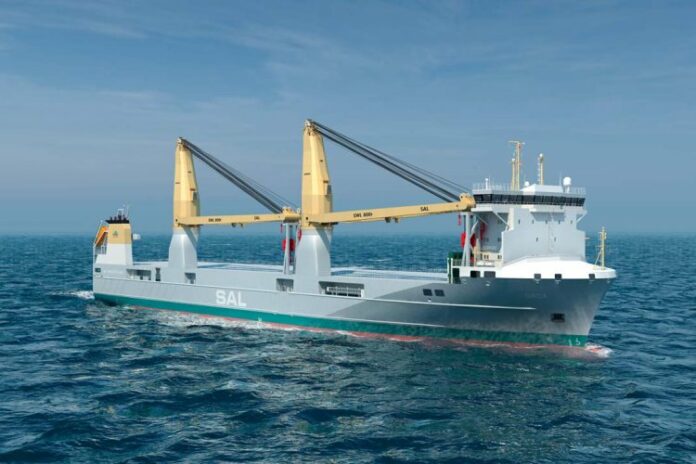
German shipping company SAL Heavy Lift and Netherlands-based Jumbo Shipping, two globally leading companies in the field of maritime heavy-lift and project logistics, have formed a commercial joint venture under the name of Jumbo-SAL-Alliance. With the combined input and experience of both companies, the Orca Class has been designed and developed by SAL Engineering.

“The Orca Class is setting new standards in global heavy-lift shipping. They represent the new benchmark both in terms of their technical capabilities and modern climate-friendly propulsion systems,” says Dr. Martin Harren, Owner and CEO of SAL Heavy Lift, SAL Engineering and the Harren Group. “The ships will be the most efficient vessels in their class, with consumption and emission figures far superior to any existing heavy-lift vessel today.”

The vessels will be equipped with dual-fuel engines and can be run on methanol as an alternative fuel. As soon as green methanol becomes available in key ports, the Jumbo-SAL-Alliance will be able to offer their customers carbon-neutral transport solutions following the sustainability goals of the Harren Group. In addition to the optimized hull form, the innovative engine and propulsion concept including a booster function offers a hybrid setup with the widest available range of economic speed settings and redundancy, while also reaching a maximum vessel speed of about 18.5 knots.

In order to find the optimal propulsion set to reach these targets, the results of hydrodynamic calculations from three market competitors, including SCHOTTEL, were analyzed by a committee of the two renowned independent model test facilities China Ship Scientific Research Center (CSSRC) and the Shanghai Ship and Shipping Research Institute (SSSRI).

The open water, self-propulsion and cavitation model tests were carried out and evaluated according to SAL’s pre-defined requirements, such as propeller efficiency, cavitation behaviour and propeller-induced hull pressure pulses. They verified SCHOTTEL’s customized propeller design with an almost cavitation-free operation and an optimized open water curve meeting SAL’s requirements to their fullest satisfaction.

The SCHOTTEL ControllablePropeller supports the elaborate green standard with a fully customized combination of propeller blades, propeller shaft, coupling, stern tube, hydraulics and sealing. The hydraulic and lubrication oil system is designed for the use of Environmentally Acceptable Lubricants (EALs). Considered a non-oil-to-water interface, the system complies with VGP regulations. In addition, the customer benefits from close cooperation between the propulsion expert and rudder manufacturer with a proposed solution to optimize the inflow, thus reducing the number of coordination paths.

The vessels measure 149.9 m x 27.2 m and provide a capacity of 14,600 dwt. Despite their compact outer dimensions, the vessels have a box-shaped single cargo hold with the largest dimensions in their class. Provided the hatch covers with a capacity of 10 t/m² are utilized for stowing super-heavy deck cargoes, such as 3,000 t cable carousels, the vessels can accommodate over-height cargo in the hold and sail with open hatch covers up to full scantling draft. The vessels will feature Ice class notation 1A, a Polar Code certification and the reduced design temperature of the hull and equipment allow the ships to safely operate in cold conditions as well. 

Fabrication begins on major projects Yggdrasil and Valhall PWP-Fenris

0

The milestone was celebrated by cutting the very first steel plates for Hugin A and Valhall PWP at Aker Solutions’ Stord yard. 

“These projects contribute high value creation and extensive ripple effects across the entire industry. Aker Solutions will have recruited more than 2,000 new colleagues in Norway, in addition to 100 new apprentices every year, going forward,” said Sturla Magnus, executive vice president, New Build, for Aker Solutions.

Aker Solutions and alliance partners on 16 December 2022 signed contracts with Aker BP worth a total value for Aker Solutions of close to NOK 50 billion, which was the company’s highest ever quarterly order intake. 

A large part of the scope is four new offshore platforms including steel jackets. The two largest — Hugin A and Valhall PWP — will be assembled and delivered from Aker Solutions yard at Stord. The work will be done together with Aker BP, Siemens Energy and ABB in the fixed alliance facilities. Cutting the first steel plates for Hugin A and Valhall PWP marked an important milestone for these major projects. Aker BP’s project director for Hugin A, Håkon Skofteland, and project director for Valhall PWP-Fenris, Rannveig Storebø, had the honor of pressing the start button, under supervision of Aker Solutions apprentices, Denise Åkerøy and Tor Litlabø. 

“This day is important not only for Aker BP, Aker Solutions, license partners and strategic partners, but for the entire supplier industry. After years of engineering and preparations, we are now entering the construction phase. These projects will involve hundreds of suppliers and provide large ripple effects in the form of revenue and jobs in local communities throughout large parts of Norway”, said Magnus. 

Hugin A is a part of the Yggdrasil development and consists of a 28-tonne production platform and a 20,500 tonne steel jacket that will be delivered from Aker Solutions yard in Verdal. In addition to Stord and Verdal, Aker Solutions’ yards in Egersund and Sandnessjøen will build modules, while Leirvik AS will deliver the living quarters. Hugin A will be the largest topside ever assembled in the Stord yard area. 

Valhall PWP is a 16,000-tonne production platform for the Valhall field that will be assembled at Stord. The 9,500 tonne steel jacket will be delivered from Verdal. In addition, Sandnessjøen, Worley Rosenberg and Nymo in Arendal will contribute to the construction work. 

The field developments also include the two unmanned platforms Hugin B and Fenris, which will be delivered from Verdal, while Aibel deliver the topside for Munin. 

Aker Solutions also has considerable subsea and modification deliveries to the Yggdrasil and Valhall PWP-Fenris fields. 

The projects provide activities and revenue that are important for the further development of the industry in the years to come. The majority of Aker Solutions 9,000 employees at the company’s 14 Norwegian locations will work on the execution of these and other projects that have come as a result of a stimulus program adopted by the Norwegian parliament in 2020. 

“In the transition to an industrial future of more renewable energy projects, these large installations give Aker Solutions the opportunity to plan long-term. Through a series of upgrades of our yards and facilities, extensive competence-building measures and considerable investments in digitalization, robotization and other technology, we improve our efficiency in the execution of these projects and strengthen our competitiveness. This will also provide a solid foundation, as we gradually increase our activity aimed at renewable energy markets, said Magnus. 

Including the knock-on effects to suppliers and surrounding communities, Aker Solutions’ enterprise in the area contributes to thousands of jobs. Projects won by Aker Solutions as a result of the stimulus package will allow for the recruitment of more than 2,000 new colleagues in Norway, as well as 100 apprentices a year, going forward.

Australian Defence Force to purchase smart sea mines

0

The Australian Defence Force (ADF) will purchase new, smart sea mines, which will reinvigorate Defence’s maritime mining capability, and are deployable from submarines, ships and aircraft.

RWM Italia was assessed as the market leading solution, demonstrating the ability to produce the quantities of sea mines needed, and the technical capability to meet ADF strategic objectives.

Rapidly deployable and technologically sophisticated, the smart sea mines will provide a new level of deterrence to potential adversaries.

The contract includes provision for the transfer of technology and expertise to Australia to enable local manufacturing and maintenance of the sea mines.

This includes potentially providing electronics services and recurring maintenance; and potentially filling the sea mines with Australian-made explosives and assembling them in Australia.

Delivery is expected to commence in 2023.

The quantity and types of sea mines that Defence will acquire remain classified.

Quotes attributable to Air Marshal Leon Phillips, Chief of Guided Weapons and Explosive Ordnance:

“The reinvigoration of a maritime mining capability for the ADF will increase its ability to deter through denial any adversary’s attempt to project power against Australia through our northern approaches, and protect Australia’s economic connection to our region and the world.

“We are providing the ADF with the capability it needs for the 21st century. Rapidly deployable and technologically sophisticated, smart sea mines will provide a profound step-up for the defence of Australia. The level of technology involved in this acquisition will take our forces to the cutting-edge of modern military hardware. The sea mines will be maintained in Australia and some elements may be manufactured here, potentially including the explosive fill.”

DNV issues approval to Moss Maritime for LH2 carrier containment system

0

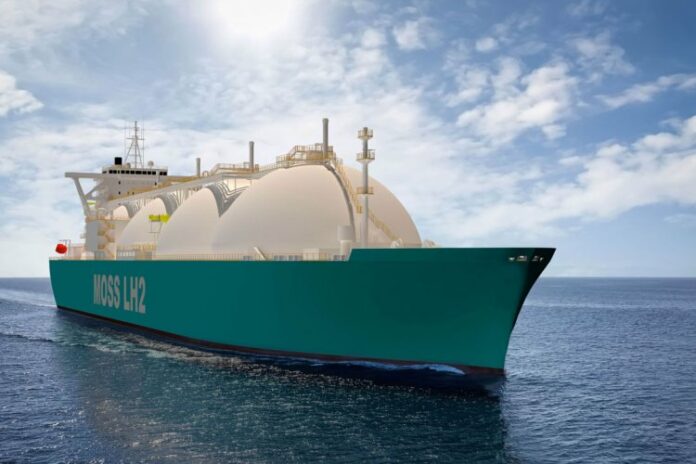
Moss Maritime has been granted an Approval in Principle (AIP) from the classification society DNV for a containment system for ship transport of liquefied hydrogen (LH2).

Ship transport of liquefied hydrogen is seen as one of the key technical challenges in realising the energy transition to a carbon-free future, and the approval in principle issued by DNV is an important step in validating Moss Maritime’s design.

The LH2 containment system design is inspired by the well-known Moss LNG spherical containment system, having 50 years of track record in the LNG shipping industry. The robust Moss LNG tank technology has been modified and upgraded to meet the strict requirements for transport of LH2 at a temperature of -253°C.

Moss Maritime has developed the design in cooperation with the Norwegian research institute SINTEF, as well as having received technical support from DNV and funding from the Research Council of Norway. Moss Maritime has also been supported by Shell International Trading and Shipping Company Limited (“Shell”), Equinor Energy (“Equinor”) and TotalEnergies EP Norge (“TotalEnergies”), who have contributed to, and participated in, the design development.

“Moss Maritime is very pleased to have been granted this Approval in Principle by DNV, which represents a significant milestone. We particularly appreciate the strong support and interest from Shell, Equinor and TotalEnergies. Thanks to our design, we are ready to bring forward this new technology to the shipping industry”, says Tor Skogan, Vice President Gas of Moss Maritime.

“The awarding of this AIP marks an important milestone for companies working in collaboration at the forefront of innovation in this sector. It is a step in the right direction towards the realisation of our shared vision for the safe, large-scale and commercial shipping of zero-carbon energy”, says Stephen Brown, Technology Manager at Shell.

“We are happy to be able to issue this Approval in Principle (AIP) to Moss Maritime for their LH2 carrier containment system. Transporting LH2 by sea is an important step towards our shared green energy aspirations. We look forward to working with them as the project progresses”, says Martin Cartwright, Global Business Director Gas Carriers and FSRUs at DNV. 

AIDA Cruises signs long-term agreement with the Hamburg Port Authority

0

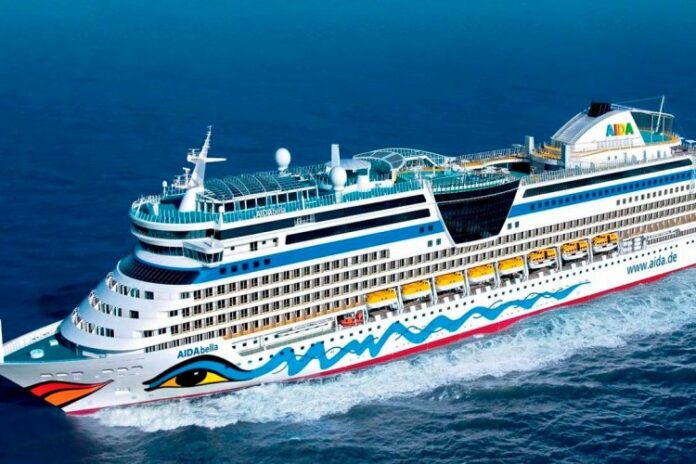
Hamburg’s Senator for Economic Affairs, Dr. Melanie Leonhard, the CEO of the Hamburg Port Authority, Jens Meier, and the President of AIDA Cruises, Felix Eichhorn, have signed a long-term agreement (LTA) to strengthen Hamburg as a cruise location.

AIDA Cruises signed a long-term agreement (LTA) with the Hamburg Port Authority on September 1, 2023. 

For more than 20 years, AIDA, the German market leader in the cruise sector, has been a regular guest on the river Elbe with its ships, and has attracted hundreds of thousands of tourists to the city with five ship inaugurations. In addition, the company has been a sponsoring partner of major maritime events, such as the Hamburg Harbour Birthday and the Hamburg Cruise Days, for about a decade. 

The cruise company and the city laid the foundation for sustainable development in Hamburg seven years ago, when Europe’s first shore-side power plant went into operation at the Cruise Center Altona.

Felix Eichhorn, President AIDA Cruises, explains:

“We were the first cruise line to start using shore power in Europe. Since 2017 until today, AIDAsol has been regularly purchasing shore power year after year during her calls at Altona. As a long-standing partner of the Port of Hamburg, we are happy to support the Hamburg Port Authority with our experience and expertise in both the shore- and ship-side integration tests and for the opening of the new facility at the Steinwerder cruise terminal.

Senator for Economic Affairs Dr. Melanie Leonhard:

“When a cruise ship enters or leaves the Port of Hamburg, it is an impressive and often unforgettable moment. This is true not only for the passengers on board, but also for the many spectators watching from the shore. The cruise industry makes an important contribution to adding value and employment in and around our port. Hamburg is one of the most popular cruise destinations in Europe and a pioneer in sustainability issues such as the expansion of shore power. Together with AIDA Cruises, we want to further develop our partnership and thus also Hamburg as a cruise location in a sustainable manner.”

Jens Meier, CEO HPA:

“AIDA Cruises has made a significant contribution to the fact that we will probably reach the magic number of one million passengers this year. We don’t want to rest on our laurels, but rather continue to work on it together – also with regard to our joint commitment in the area of sustainability.”

AIDA Cruises has been considering the use of shore power in the planning and construction of its ships since 2004. On the shore side, another ten years passed before Europe’s first shore power facility was opened in Hamburg Altona in 2017 and AIDA was able to start regular operations. Since 2021, AIDA ships have also been able to use shore power from renewable energies in Kiel and Rostock-Warnemünde. Thanks to the opening of additional facilities in Europe, the company expanded its use of shore power to ports in Norway, the United Kingdom, and Denmark last year and this year. By using shore power, AIDA ships can reduce their engine emissions to almost zero while at berth.

New artificial reefs bring new life to Hollandse Kust Zuid

0

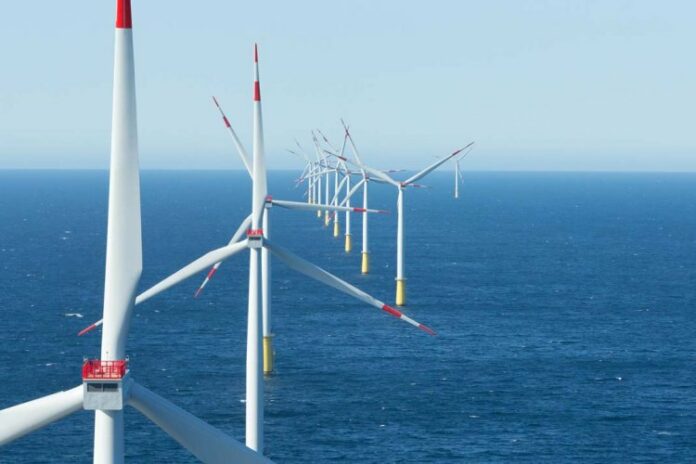
Sytske van den Akker, a marine biologist at Vattenfall’s Environment and Sustainability Department, works with the ecological impacts of offshore wind farms.

“When you construct an offshore wind farm, you face all kinds of environmental and other permit requirements. For us, too, the environment is a concern when we build a wind farm. With this in mind, we’ve taken several nature-inclusive measures for the HKZ project to further boost biodiversity. We set out to explore biodiversity trends at three different stages: in 2024, 2028 and 2033, in order to gain an understanding of long-term development.”

Vattenfall recently became a partner in the KOBINE project, which compares the costs of nature-inclusive measures with benefits to nature.

“This not only gave us a great opportunity to share our knowledge and learn from other participants in this project, it also allowed us to join an expedition earlier than expected to inspect the reefs in the HKZ. “We’re monitoring the reef for the first time ahead of our scheduled research effort.”

For example, before a mature community of a particular marine species establishes itself in and around the reefs, it could take as long as six to ten years.

“So, the data we’re collecting now gives us a first indication of the biodiversity that may develop.”

The KOBINE project investigates the state of fish, shellfish, starfish, anemones and other animals in two ways: water samples and video.

“All marine life leaves traces of its DNA behind. Scale particles from fish, for example, or flakes from the shell of a crab. Those water samples are filtered and examined in the laboratory. We can successfully trace fish using this method, but we can’t yet identify all species as it doesn’t yet work equally well for all species groups. As the technology develops, we’ll be able to identify more and more species.”

“There are also developments that will soon allow us to say something about the numbers of a particular species present in an area. However, even now, it already provides a good indication of biodiversity, making animals that you can’t see from video surveys visible, for example. Moreover, the method is quick and doesn’t disturb marine life.”

The other method of learning more about biodiversity on rocky reefs is to use video recordings.

“We use a small submarine for this purpose. Typically, we use an ROV, a vehicle that you operate remotely, but the KOBINE project has allowed us to use an autonomous underwater vehicle (AUV). You can pre-programme it, and it will find its own way in the water. We were trying out one of these for the first time and we had a line of communication allowing us to follow device footage on a large screen on board. Being able to observe that marine life live was a special experience,” says Van den Akker.

Given the strong currents in the North Sea, tides play a major role in planning.

“As tides turn the current briefly becomes weaker than normal. This allows an AUV to easily sail against the current or stay put in a single place, meaning we get good image quality.”
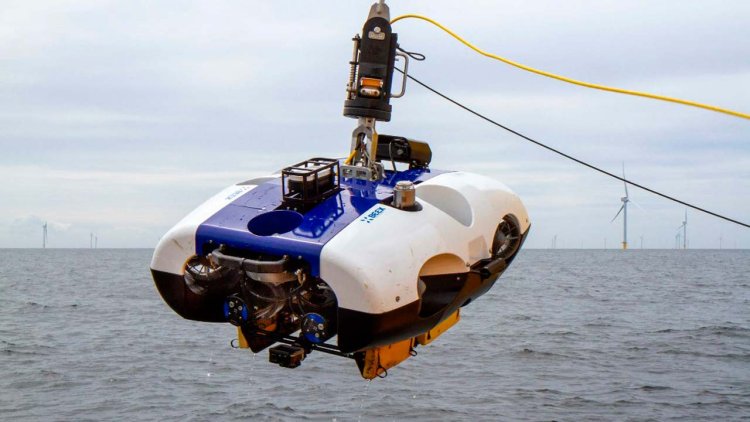
The beauty of combining water sampling and video imaging is that these methods complement each other. On video, you see some species less clearly because sometimes the animals are really small, or they might be under a rock or swimming out of camera view. In addition, the water in the North Sea can be murky, making images less clear. Water samples provide important additional information.

“Of course, the most rewarding thing is when you measure something with DNA and you then spot the same species on the video, too”, says Van den Akker.

“I didn’t know exactly what to expect within just over a year of the artificial reefs being deployed, but I was pleasantly surprised. For example, there were already huge layers of mussels on the monopiles. And on the rocky reefs below, large anemones and starfish were already in existence, and we also saw many fish.”

Seeing that life on the sea bed with your own eyes like this is wonderful, but ultimately Van den Akker is all about getting the facts right.

“All the details of this project will be made public. The knowledge we are gaining now will be a useful asset when constructing wind farms in the future.”

NOAA announces $28 million across 2 funding opportunities to tackle marine debris

0

The Department of Commerce and NOAA announced the availability of up to $28 million across two funding opportunities to address marine debris throughout the coastal U.S., Great Lakes, territories and Freely Associated States. 

These two Fiscal Year 2024 funding opportunities are part of NOAA’s Climate-Ready Coasts initiative under President Biden’s Bipartisan Infrastructure Law, and allow NOAA to support impactful, large-scale marine debris removal projects, as well as the installation, monitoring and maintenance of proven marine debris interception technologies. 

“Marine debris is a significant and increasing threat to coastal, ocean and Great Lakes economic activity, and the communities that rely on a healthy and productive marine environment,” said U.S. Secretary of Commerce Gina Raimondo. “These new funding opportunities — following on additional investments in marine debris removal through the Bipartisan Infrastructure Law — will go a long way toward addressing the harmful effects of marine debris head on.”

These two funding opportunities include:

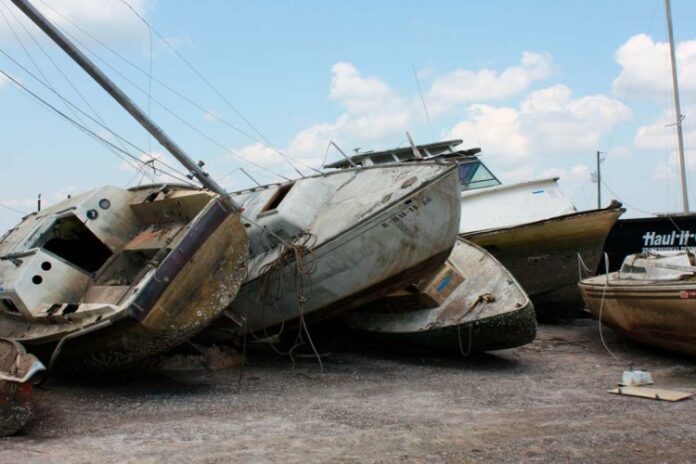
  • The Marine Debris Removal funding opportunity, which prioritizes the development of large-scale marine debris removal projects that focus on marine debris that is generally unable to be collected by hand, including abandoned and derelict vessels, derelict fishing gear and other large debris. Letters of intent are due on October 27, 2023.
  • The Marine Debris Interception Technologies funding opportunity, which prioritizes the installation, monitoring and maintenance of proven marine debris interception technologies that will capture marine debris at or close to known sources or pathways. Letters of intent are due on November 15, 2023.